Students estimated the population of buttercup plants growing on a lawn.
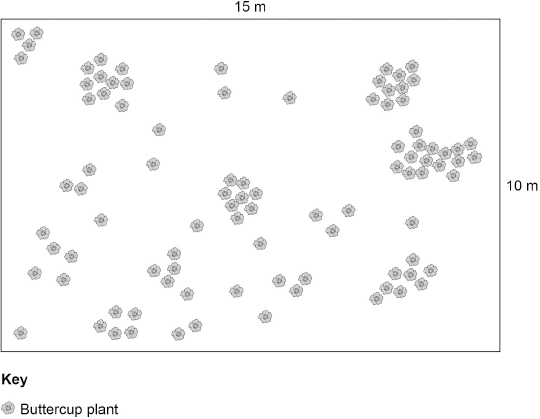
The lawn is a rectangle measuring 15 m × 10 m.
The figure below shows the lawn.

This is the method used.
1. Measure the length and width of the lawn.
2. Choose five locations to sample.
3. Place a 1 m × 1 m square frame at each location.
4. Record the number of buttercup plants in each square frame.
The length and width of the lawn should be measured
using a _.
The 1 m × 1 m square frame is called a .
How should the students choose the five locations to sample?
Tick (✓) one box.
The table below shows the results of sampling the field.
Sample number | Number of buttercup plants |
1 | 2 |
2 | 7 |
3 | 0 |
4 | 0 |
5 | 1 |
The students used their results to calculate the population of buttercup plants.
Multiply the length of the lawn by the width of the lawn to give the
lawn’s .
Add up the total number of buttercup plants and divide by 5 to give
the .
The students calculated that the population of buttercup plants on the lawn was 300.
How did the students use the results in the table above to calculate the population?
How could the students improve the accuracy of the estimate of the buttercups?
One abiotic factor that affects the number of buttercup plants on the lawn is soil pH.
Give one other abiotic factor that could affect the number of buttercup plants on the lawn.
Do not refer to soil pH in your answer.
The place where an organism lives which provides food, shelter and a place to reproduce is called a ...
Match the words with the correct definitions. Write the correct letter in each bo
| Stavka koja se može prevući | arrow_right_alt | Odgovarajuća stavka |
|---|---|---|
Food chain | arrow_right_alt | a feature of an organisms that helps it to survive |
Producer | arrow_right_alt | A model which shows how food is passed from one organism to another |
Adaptation | arrow_right_alt | An organism which eats plants |
Herbivore | arrow_right_alt | An organism which makes its own food |
Match the word with the correct definition
| Stavka koja se može prevući | arrow_right_alt | Odgovarajuća stavka |
|---|---|---|
Population | arrow_right_alt | a living individual |
Community | arrow_right_alt | the number of one type of organism in a specific area |
Organism | arrow_right_alt | Interacting populations of different species in a place |
What is made up of all the living organisms in a place, interacting with each other and their non-living surroundings?
Where do most ecosystems get their energy?
What is an ecosystem?
Animals, such as lizards, compete with each other.
Give two factors that animals compete for.
Tick two boxes.
Deer in a habitat compete with each other.
Give two factors for which animals may compete.
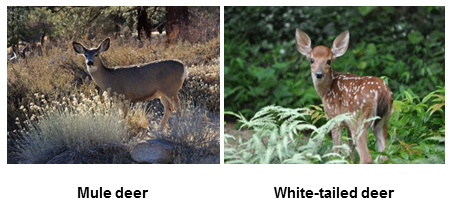
he photographs show a mule deer and a white-tailed deer.
Mule deer and white-tailed deer live together in the same national park in the USA.
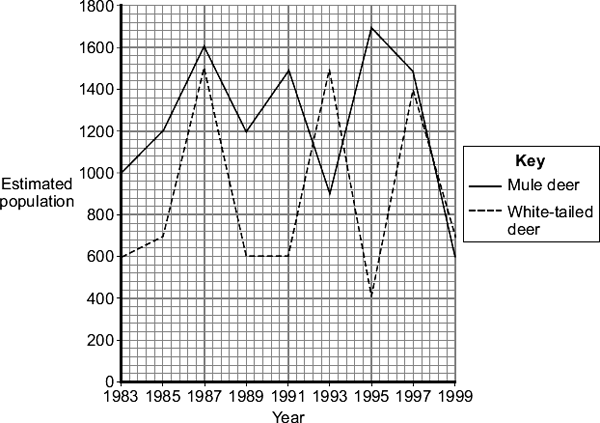
The graph shows changes in the populations of the two deer species between 1983 and 1999.
Describe the changes in the population of white-tailed deer between 1991 and 1995.
Use information from the graph to suggest an explanation for changes in the population of white-tailed deer between 1991 and 1995.

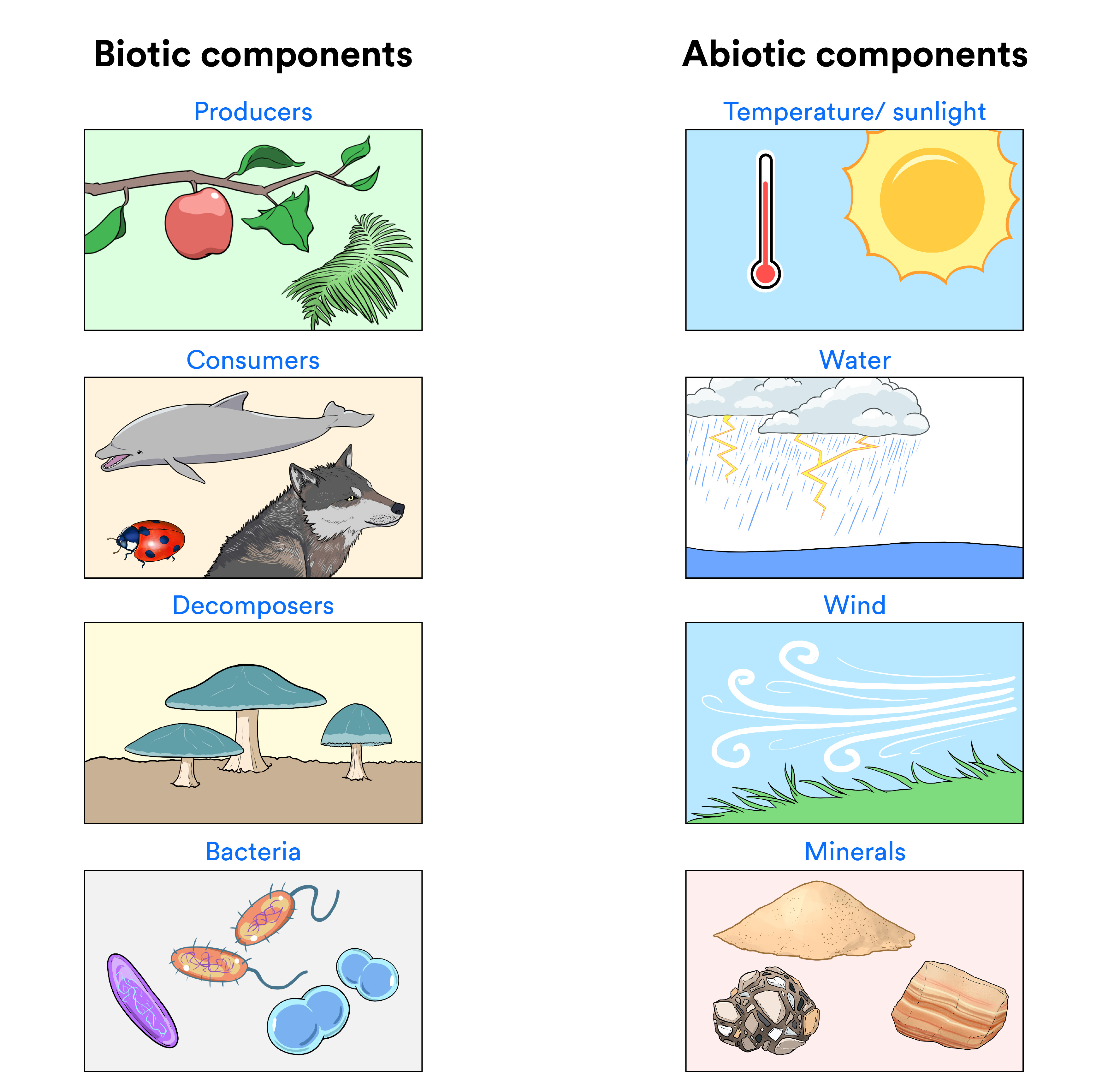
An ecosystem is made up of the interaction of all organisms in an area with all nonliving things. Organisms are living things like animals, plants, and microbes. Nonliving things include water, dirt, rocks and the sun. The living things are called biotic components and the nonliving things are called abiotic components.
There are a few different types of biotic components. Producers are living things that use a process called photosynthesis, which turns the sun's energy, water and carbon dioxide into fuel. Producers form the molecules that are the basis for all life on Earth, including plants, algae and some bacteria.
Consumers are animals that get their energy from eating other plants and animals. Decomposers are organisms that break down animal and plant material to make nutrients available. Examples of decomposers are bacteria, fungi and insects.
Abiotic components include temperature, sunlight, water, wind and minerals.
Which of the following are examples of non-living things (Mark all that apply).
Abiotic means ______________ and biotic means __________________.
What is made up of all the living organisms in a place, interacting with each other and their non-living surroundings? Tick 3 correct answers
Which of the following are biotic factors? Tick 2 correct answers
Predators hunt and eat prey. As the number of prey individuals decreases, what will happen to the population of predators? Tick 1 correct answer
The greenfly population increases in summer when it is warm. This is because there is plenty of food so the greenfly reproduce quickly. Greenfly are food for ladybirds. Which statement is correct? Tick 1 correct answer
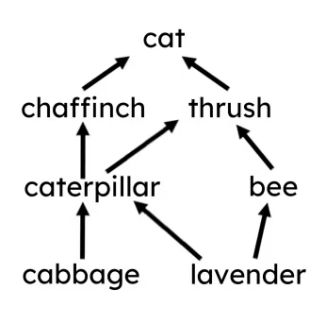
What will happen if the caterpillar population decreases? Tick 2 correct answer


Drag the adaptation to the correct reason.
Flexible leaves
Long, deep roots
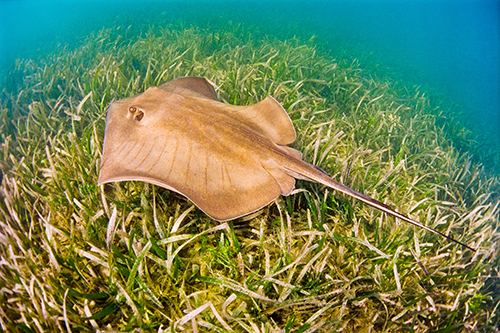
Keep seagrass in one place on the sea floor
Poison animals that try to eat the seagrass
Stop seagrass breaking in strong water currents
Which features might a plant living on a rainforest floor have?

Which adaptation would you expect to find in a bird that swims?
Where would an animal with thick white fur and a thick layer of fat most likely live
Which adaptation of this mountain lion enables it to catch the deer
Match the body adaptation to its purpose.
| Stavka koja se može prevući | arrow_right_alt | Odgovarajuća stavka |
|---|---|---|
Bioluminescence | arrow_right_alt | Helps the fish to look like a plant or other venomous/dangerous predator |
Skin secretes poison | arrow_right_alt | Helps fish to find mate or lure prey |
Mimicry | arrow_right_alt | Provides insulation to protect from cold waters |
Extra fats in cell membrane | arrow_right_alt | Protects fish from predators |
The food chain describes who eats whom in the wild. Every living thing — from one-celled algae to giant blue whales — needs food to survive. Each food chain is a possible pathway that energy and nutrients can follow through the ecosystem.
For example, grass produces its own food from sunlight. A rabbit eats the grass, then a fox eats the rabbit. When the fox dies, bacteria break down its body, returning it to the soil where it provides nutrients for plants, like grass.
Of course, many different animals eat grass, and rabbits can eat other plants besides grass. Foxes, in turn, can eat many types of animals and plants. Each of these living things can be a part of multiple food chains. All of the interconnected and overlapping food chains in an ecosystem make up a food web.
Organisms in food chains are grouped into categories called trophic levels. Roughly speaking, these levels are divided into producers (first trophic level), consumers (second, third and fourth trophic levels) and decomposers.
Producers, also known as autotrophs, make their own food. They make up the first level of every food chain. Autotrophs are usually plants or one-celled organisms. Nearly all autotrophs use a process called photosynthesis to create "food" (a nutrient called glucose) from sunlight, carbon dioxide and water.
Plants are the most familiar type of autotroph, but there are many other kinds. Algae, whose larger forms are known as seaweed, are autotrophic. Phytoplankton, tiny organisms that live in the ocean, are also autotrophs. Some types of bacteria are autotrophs. For example, bacteria living in active volcanoes use sulfur compounds to produce their own food. This process is called chemosynthesis.
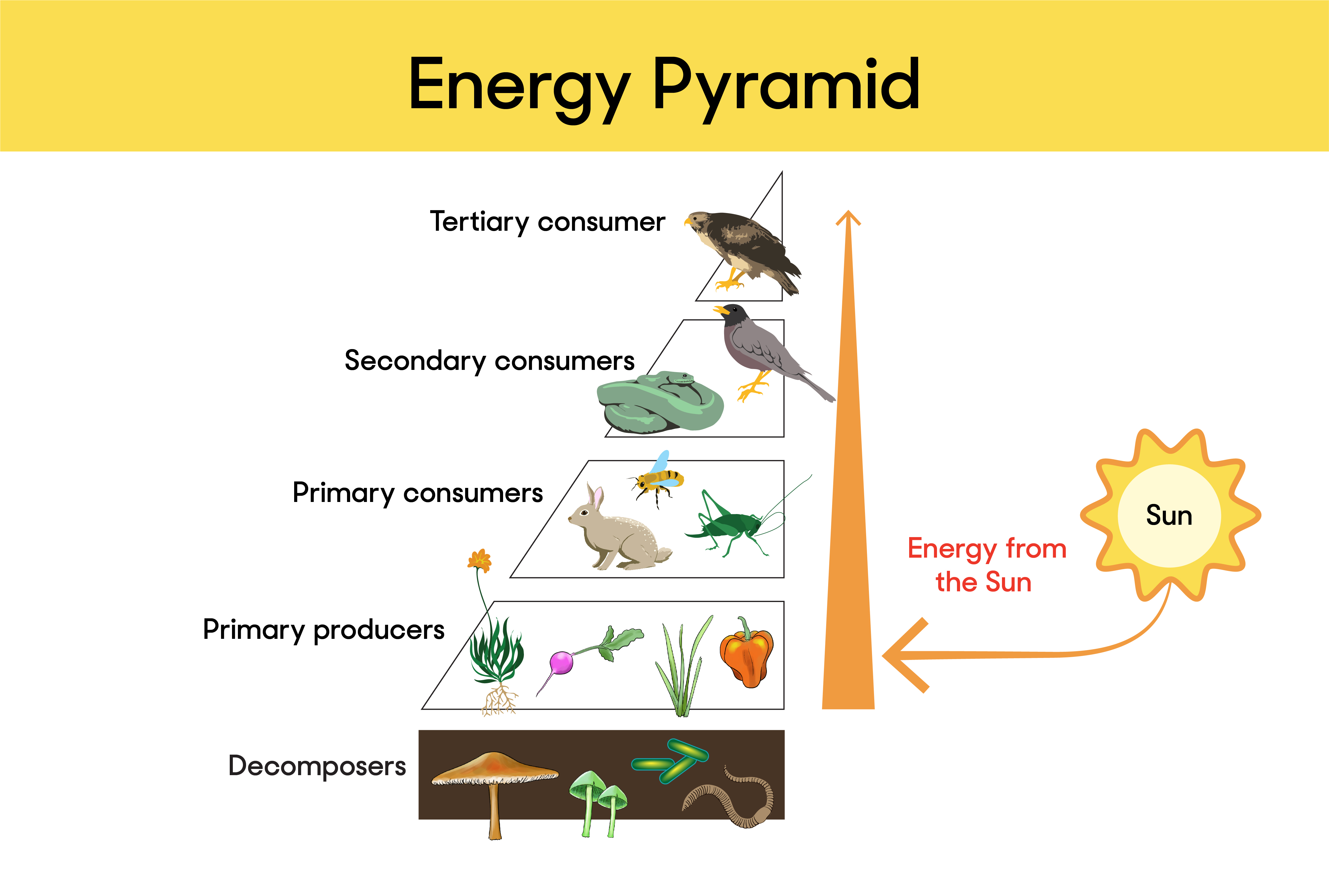
The second trophic level consists of organisms that eat the producers. These are called primary consumers, or herbivores. Deer, turtles and many types of birds are herbivores. Secondary consumers eat the herbivores. Tertiary consumers eat the secondary consumers. There may be more levels of consumers before a chain finally reaches its top predator. Top predators, also called apex predators, eat other consumers.
Consumers can be carnivores (animals that eat other animals) or omnivores (animals that eat both plants and animals). Omnivores, like people, consume many types of foods. People eat plants, such as vegetables and fruits. We also eat animals and animal products, such as meat, milk and eggs. We eat fungi, such as mushrooms. We also eat algae, in edible seaweeds like nori (used to wrap sushi rolls) and sea lettuce (used in salads).
Detritivores and decomposers are the final part of food chains. Detritivores are organisms that eat nonliving plant and animal remains. For example, scavengers, such as vultures, eat dead animals. Dung beetles eat animal feces.
Decomposers like fungi and bacteria complete the food chain. They turn organic wastes, such as decaying plants, into inorganic materials, such as nutrient-rich soil. Decomposers complete the cycle of life, returning nutrients to the soil or oceans for use by autotrophs. This starts a whole new food chain.
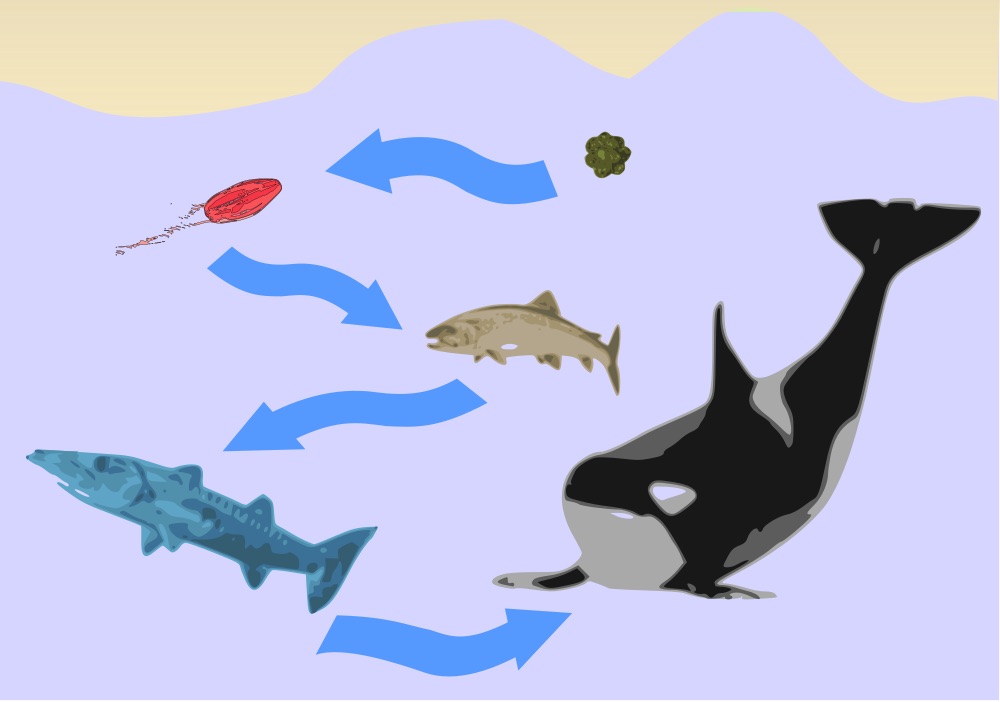
Different habitats and ecosystems provide many possible food chains that make up a food web.
In one marine food chain, single-celled organisms called phytoplankton provide food for tiny shrimp called krill. Krill provide the main food source for the blue whale, an animal on the third trophic level.
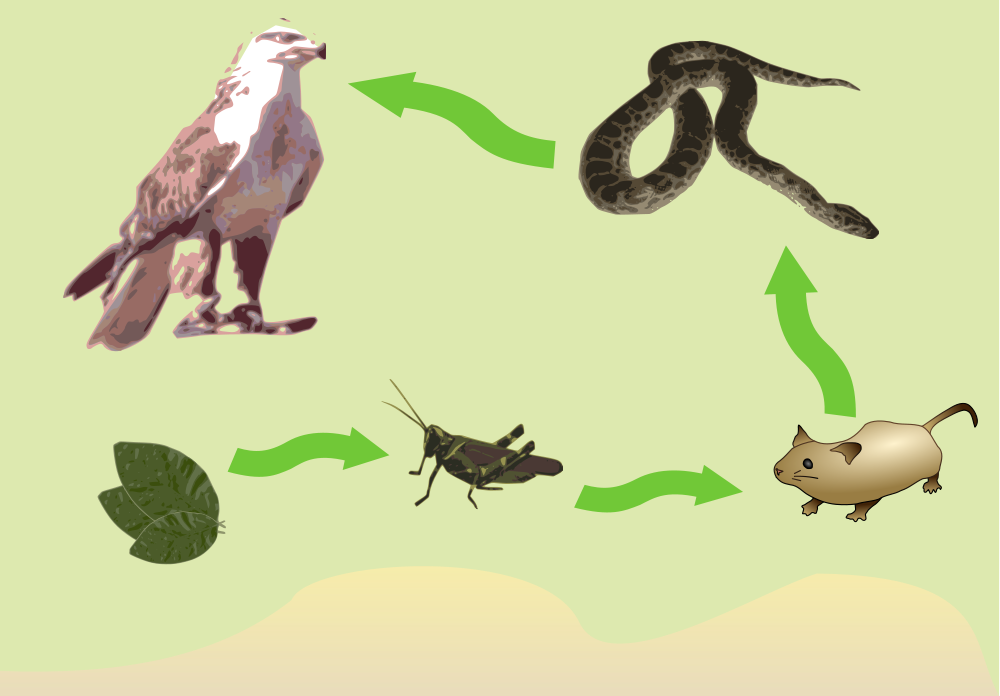
In a grassland ecosystem, a grasshopper might eat grass, a producer. The grasshopper might get eaten by a rat, which in turn is consumed by a snake. Finally, a hawk — an apex predator — swoops down and snatches up the snake.
In a pond, the autotroph might be algae. A mosquito larva eats the algae, and then perhaps a dragonfly larva eats the young mosquito. The dragonfly larva becomes food for a fish, which provides a tasty meal for a raccoon
Which of the following organisms is a top predator in the food chain:
grass → rabbit → cat → owl
Tick 1 correct answer
How many consumers are in the following food chain?
Phtyoplankton → zooplankton → small fish → large fish → shark.
Tick 1 correct answer
Ladybirds are eaten by birds. Birds are eaten by cats. Ladybirds eat greenfly. Greenfly eat lettuce. Which of the following is the correct food chain? Tick 1 correct answer

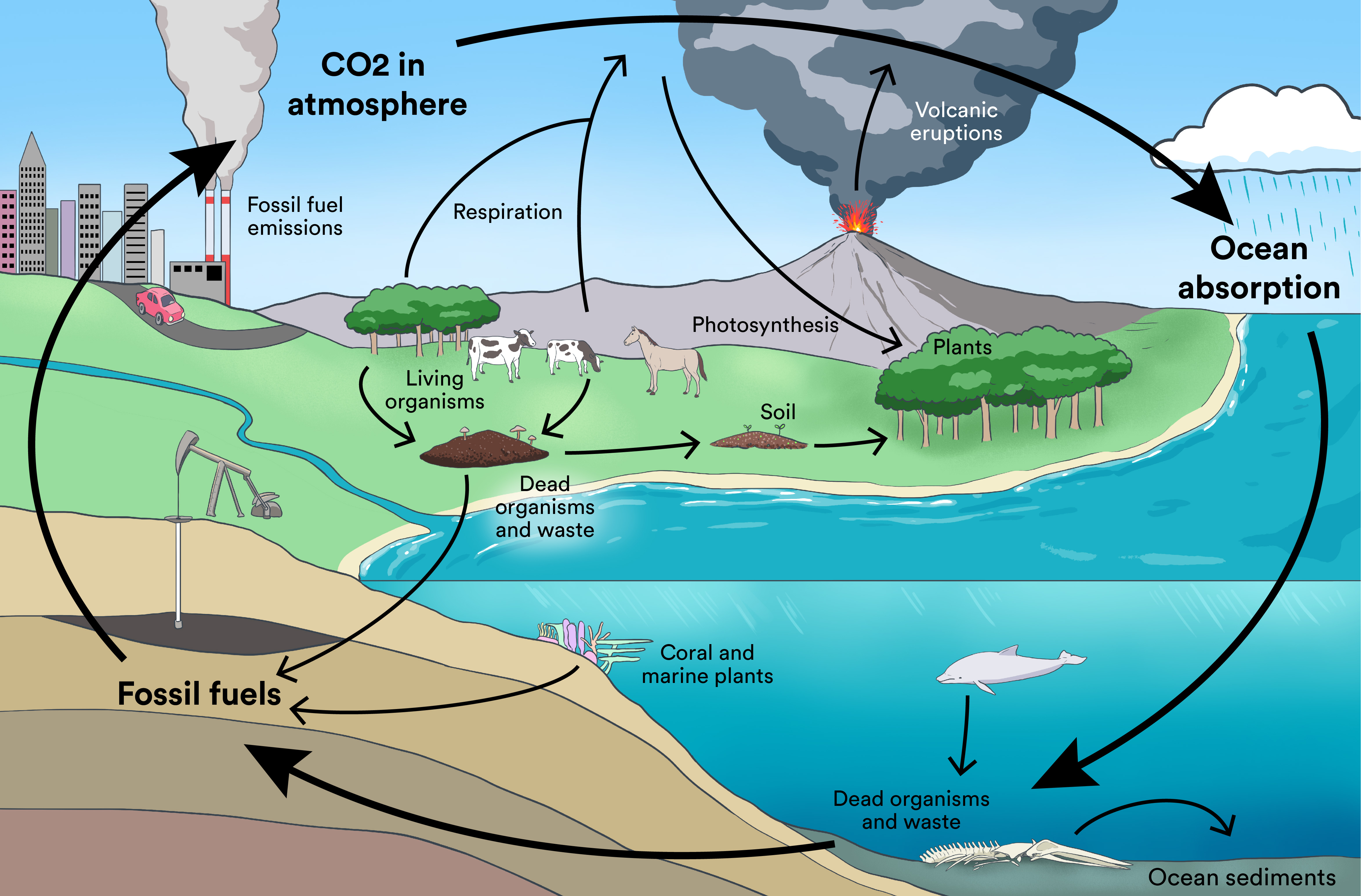
Carbon is one of the most important chemical elements found on Earth. It is stored in many different places, and these places are known as reservoirs.
For example, carbon is found as carbon dioxide in the atmosphere, which is the layer of gasses that surrounds a planet. It is found in the organic matter that makes up soil, and in living things like plants an animals. It is found in the oceans, fossil fuels and plant and animal life.
Carbon doesn't stay in one place, though. It transfers from one reservoir to another. The way carbon is used, converted and transferred through the world is called the carbon cycle.
For example, carbon enters the soil from decaying organisms like dead leaves or compost. The carbon in soil is consumed by plants, which are consumed by animals. Animals, and humans, release carbon dioxide gas into the atmosphere when they breathe out, or when they burn fossil fuels. Plants take up carbon dioxide from the air to use during photosynthesis, which is a process that converts sunlight and carbon dioxide gas into food.
Name the process by which plants take in carbon dioxide.
Identify two types of organism that carry out decay.
Suggest a reason why the decay cycle is important in nature.
Explain why farmers often spread animal waste on their fields.
State the temperature at which bacteria would be killed (and the enzyme stop working)
Why does the milk become more acidic as it decays?
What is the purpose of decay or decomposition?
What would have happened if the milk samples were heated to 70˚C before storing them at the different temperatures?
Give a reason why the students sterilised the flask before adding milk
Many farmers keep animals such as cows and chickens.
The animals produce a lot of manure (faeces).
The farmer can put the manure into a biogas generator.
In the biogas generator, microorganisms produce biogas.
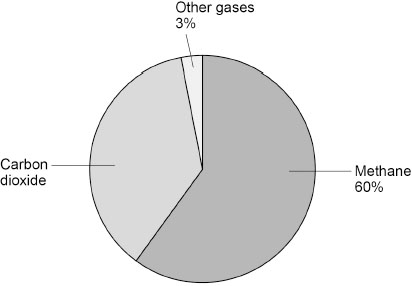
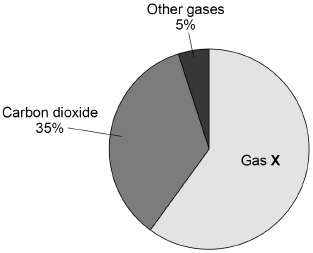
Figure 1 shows the percentages of the gases found in a sample of biogas.
Figure 1

Calculate the percentage of carbon dioxide in the biogas in Figure 1.
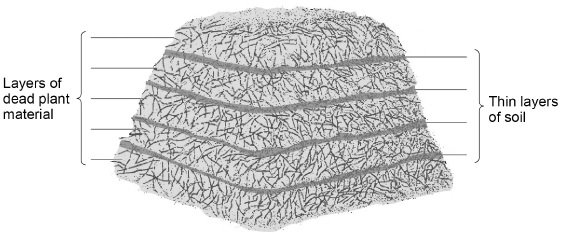
Gardeners sometimes make compost heaps from dead plant material.
The dead plants decay in the compost heap.
Figure 1 shows a compost heap.
Figure 1
The thin layers of soil contain organisms that cause decay.
Which two types of organism cause decay?
The rate of decay in the compost heap depends on several environmental factors.
Explain how the rate of decay would be affected by:
• an increase in oxygen concentration
• a temperature increase from 5 °C to 25 °C
Give one environmental factor needed for decay.
Do not refer to oxygen or temperature in your answer.
Dead plant material can also be decayed in a biogas generator.
Figure 2 shows the percentages of the gases found in a sample of biogas.
Figure 2
Gas X is the main fuel gas found in the biogas.
What is gas X?
Tick (✓) one box.
(1)
Dead plant material can also be decayed in a biogas generator.
Figure 2 shows the percentages of the gases found in a sample of biogas.
Figure 2
What is the percentage of gas X in the biogas?
The dead plant material in the compost heap and biogas generator does not decay completely.
Explain why a farmer might spread the remaining dead plant material onto his fields.
What is biodiversity?
Biodiversity is important because it contributes to ecosystem stability and resilience.
Wheat crops are grown in a field. The seeds are genetically identical. Which of the following is the most likely effect of planting an entire field with these seeds?
Which region would likely have the greatest amount of biodiversity?

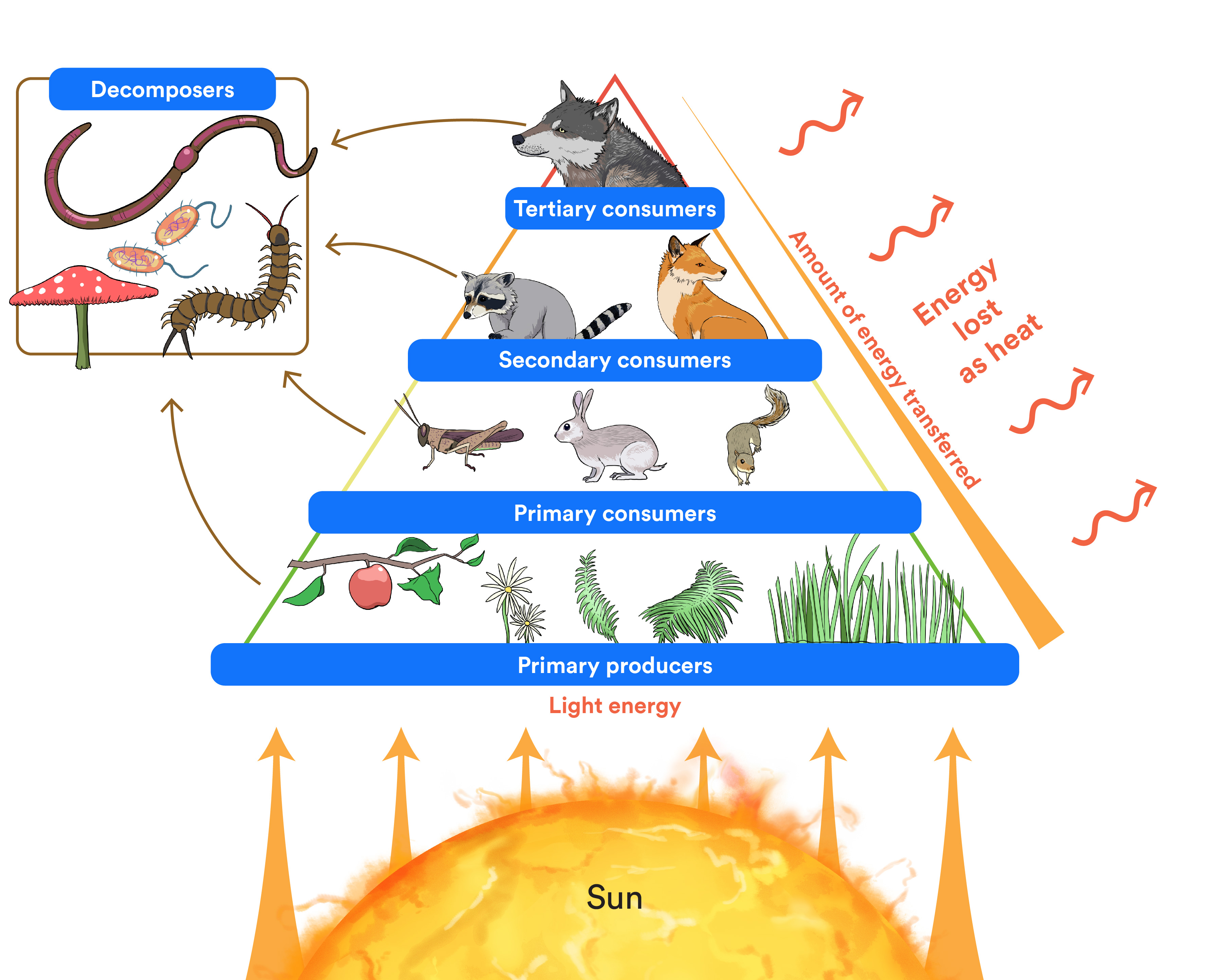
Which of the following is an accurate representation of the flow of energy in an ecosystem?
What does the arrow signify in the question above?

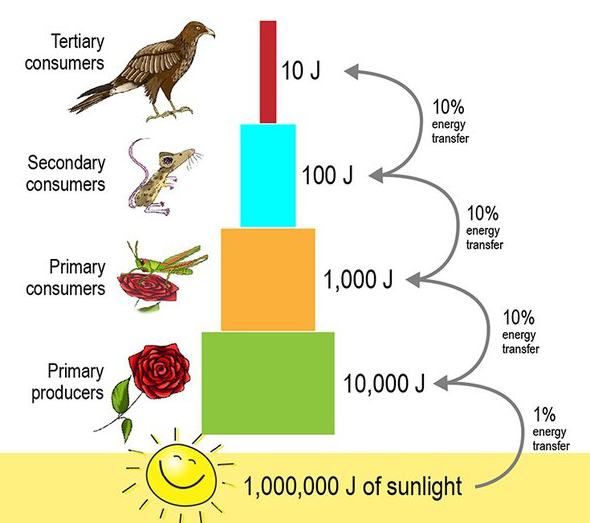
At which level of the energy pyramid would most biomass be found?
At which level of the energy pyramid would most energy be found?

How much energy passes to the next trophic level?
How much energy is lost as you move through each trophic level?
If the primary consumer had 10,000 J of energy, how much energy would pass on to the secondary consumer?
View details
Share
Translate

In an ecosystem, energy and nutrients are passed among living things. Different organisms play different roles. Some, such a plants, produce energy using a process called photosynthesis. Other organisms get their energy from eating these producers. This forms a complex web of organisms that produce and consume one another. If any species is removed from the ecosystem, the entire food web is affected.
Decomposers include fungi, bacteria and some insects. They feed on dead animals and plants. This process breaks down the dead organisms and returns nutrients to the soil. Primary producers are plants that make energy-packed food. Primary consumers, or herbivores, are organisms that eat only plants. Secondary consumers are organisms that eat primary consumers. Some secondary consumers eat only meat while others eat both meat and plants. Tertiary consumers eat primary and secondary consumers. Usually, they only eat meat, but some species eat plants too.
What is the trophic level definition in a food chain?
Damselfly Nymph (Eats: Midge Larva)
Midge Larva (Eats: Algae)
Green Algae (plant)
Periwinkle Snail (Eats: Cord Grass)
Herring Gull (Eats: Blue Crab)
Juvenile Steelhead Fish (Eats: Damselfly Nymph)
Blue Crab (Eats: Periwinkle Snail)
Cord Grass (plant)
Name ONE producer from the food web. (Spelling counts!)
Name ONE carnivore from the above food web. (Spelling counts!)
Name ONE herbivore from the above food web. (Spelling counts!)
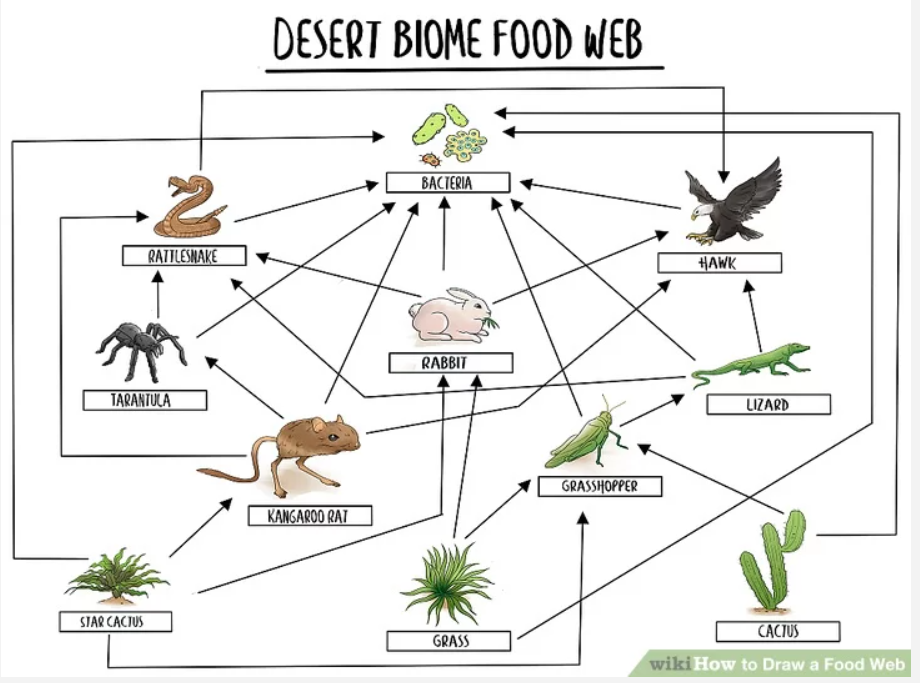
Based on the food web above, what does the rabbit eat? Select TWO!
What do the hawk and rattlesnake compete for? Select THREE!
What is the job of the bacteria? (name of the job)
What do the kangaroo rat, rabbit, and grasshopper compete for?
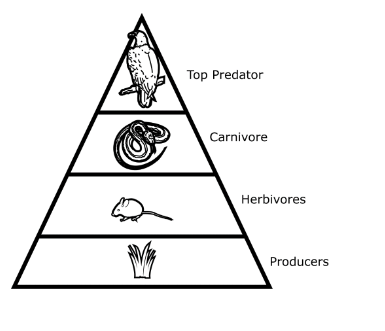
What would increase the amount of energy that moves to the carnivore level in this energy pyramid?