Carbon Cycle
Higher concentrations of atmospheric carbon dioxide have led to increased biomass of many species, while biomass of coral reefs has decreased across the Great Barrier Reef in the hydrosphere.
Carbon is cycled through the atmosphere and hydrosphere by photosynthesis and cellular respiration, as shown in Figure 1.
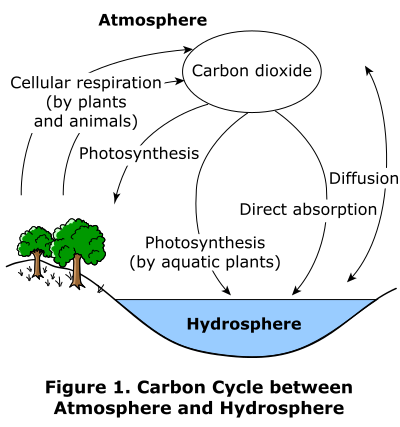
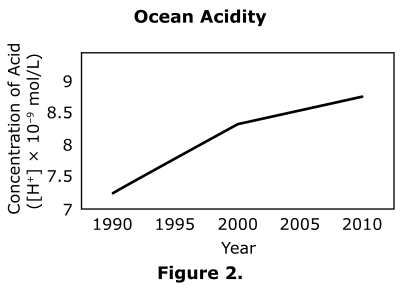
Figure 2 shows ocean acidity. Ocean acidity is expressed as a measure of the concentration of hydrogen ions present in a liter of ocean water, with higher concentrations indicating a higher acidity.
Carbon Cycle
Higher concentrations of atmospheric carbon dioxide have led to increased biomass of many species, while biomass of coral reefs has decreased across the Great Barrier Reef in the hydrosphere.
Carbon is cycled through the atmosphere and hydrosphere by photosynthesis and cellular respiration, as shown in Figure 1.
Figure 2 shows ocean acidity. Ocean acidity is expressed as a measure of the concentration of hydrogen ions present in a liter of ocean water, with higher concentrations indicating a higher acidity.
Large male salmon have the highest rates of reproduction, yet only small male salmon are observed mating in one river.
In male salmon, reproductive success is a measure of advantageous traits and fitness in terms of natural selection. Table 1 shows data on percentages of successful matings by adult male salmon from five different regions in Alaska.
Table 1. Reproductive Success (%) in Different Regions, by Size of Male Salmon
Region | Salmon Body Size (millimeters) | ||||
|---|---|---|---|---|---|
150 mm | 200 mm | 250 mm | 300 mm | 350 mm | |
A | 13 | 20 | 30 | 40 | 66 |
B | 20 | 23 | 30 | 43 | 66 |
C | 23 | 27 | 33 | 43 | 70 |
D | 27 | 27 | 37 | 43 | 70 |
E | 33 | 37 | 37 | 47 | 77 |
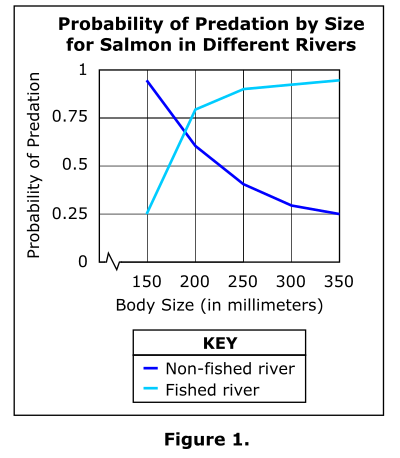
The graph shows data on the probability of predation for male salmon in a fished Alaskan river and in a non-fished Alaskan river.
Large male salmon have the highest rates of reproduction, yet only small male salmon are observed mating in one river.
In male salmon, reproductive success is a measure of advantageous traits and fitness in terms of natural selection. Table 1 shows data on percentages of successful matings by adult male salmon from five different regions in Alaska.
Table 1. Reproductive Success (%) in Different Regions, by Size of Male Salmon
Region | Salmon Body Size (millimeters) | ||||
|---|---|---|---|---|---|
150 mm | 200 mm | 250 mm | 300 mm | 350 mm | |
A | 13 | 20 | 30 | 40 | 66 |
B | 20 | 23 | 30 | 43 | 66 |
C | 23 | 27 | 33 | 43 | 70 |
D | 27 | 27 | 37 | 43 | 70 |
E | 33 | 37 | 37 | 47 | 77 |
The graph shows data on the probability of predation for male salmon in a fished Alaskan river and in a non-fished Alaskan river.
Large male salmon have the highest rates of reproduction, yet only small male salmon are observed mating in one river.
In male salmon, reproductive success is a measure of advantageous traits and fitness in terms of natural selection. Table 1 shows data on percentages of successful matings by adult male salmon from five different regions in Alaska.
Table 1. Reproductive Success (%) in Different Regions, by Size of Male Salmon
Region | Salmon Body Size (millimeters) | ||||
|---|---|---|---|---|---|
150 mm | 200 mm | 250 mm | 300 mm | 350 mm | |
A | 13 | 20 | 30 | 40 | 66 |
B | 20 | 23 | 30 | 43 | 66 |
C | 23 | 27 | 33 | 43 | 70 |
D | 27 | 27 | 37 | 43 | 70 |
E | 33 | 37 | 37 | 47 | 77 |
The graph shows data on the probability of predation for male salmon in a fished Alaskan river and in a non-fished Alaskan river.
Even though bison generally require large, open areas with dense grass coverage to survive, they are sometimes observed living in small areas with sparse grass coverage.
Scientists studied four areas in Canada’s Banff National Park to determine habitat suitability for bison.
Table 1. Characteristics of Bison Areas
Area | Size (km2) | Amount of Grassland (km2) | Total Grass Available (millions of kg) | Average Snow Depth (cm) |
1 | 435 | 130 | 6.53 | 110 |
2 | 424 | 148 | 7.42 | 80 |
3 | 286 | 57 | 2.86 | 100 |
4 | 245 | 74 | 3.68 | 60 |
Table 2 provides data for the different classes of bison. Bison individually consume an average of 2,300 kilograms of grass and require an average of 0.05 square kilometers of grassland during the entire winter period.
Table 2. Bison Data
Age Group | Average Body Mass (kg) | Average Rate of Grass Consumption (kg/day) | Proportion of Herd Population |
Adult male | 800 | 20.0 | 0.3 |
Adult female | 440 | 12.1 | 0.5 |
Juvenile | 220 | 6.60 | 0.2 |
Even though bison generally require large, open areas with dense grass coverage to survive, they are sometimes observed living in small areas with sparse grass coverage.
Scientists studied four areas in Canada’s Banff National Park to determine habitat suitability for bison.
Table 1. Characteristics of Bison Areas
Area | Size (km2) | Amount of Grassland (km2) | Total Grass Available (millions of kg) | Average Snow Depth (cm) |
1 | 435 | 130 | 6.53 | 110 |
2 | 424 | 148 | 7.42 | 80 |
3 | 286 | 57 | 2.86 | 100 |
4 | 245 | 74 | 3.68 | 60 |
Table 2 provides data for the different classes of bison. Bison individually consume an average of 2,300 kilograms of grass and require an average of 0.05 square kilometers of grassland during the entire winter period.
Table 2. Bison Data
Age Group | Average Body Mass (kg) | Average Rate of Grass Consumption (kg/day) | Proportion of Herd Population |
Adult male | 800 | 20.0 | 0.3 |
Adult female | 440 | 12.1 | 0.5 |
Juvenile | 220 | 6.60 | 0.2 |
Scientists plan to introduce a 100-bison herd into a potential habitat area. Which estimate for how much grass all of the juvenile bison in the herd will eat over a period of 30 days is supported by Table 2?
Even though bison generally require large, open areas with dense grass coverage to survive, they are sometimes observed living in small areas with sparse grass coverage.
Scientists studied four areas in Canada’s Banff National Park to determine habitat suitability for bison.
Table 1. Characteristics of Bison Areas
Area | Size (km2) | Amount of Grassland (km2) | Total Grass Available (millions of kg) | Average Snow Depth (cm) |
1 | 435 | 130 | 6.53 | 110 |
2 | 424 | 148 | 7.42 | 80 |
3 | 286 | 57 | 2.86 | 100 |
4 | 245 | 74 | 3.68 | 60 |
Table 2 provides data for the different classes of bison. Bison individually consume an average of 2,300 kilograms of grass and require an average of 0.05 square kilometers of grassland during the entire winter period.
Table 2. Bison Data
Age Group | Average Body Mass (kg) | Average Rate of Grass Consumption (kg/day) | Proportion of Herd Population |
Adult male | 800 | 20.0 | 0.3 |
Adult female | 440 | 12.1 | 0.5 |
Juvenile | 220 | 6.60 | 0.2 |
Peppered moths, Biston betularia, exhibit light- and dark-color variations. Over the years 1950–2000, changes to the trees inhabited by a population of peppered moths were observed.
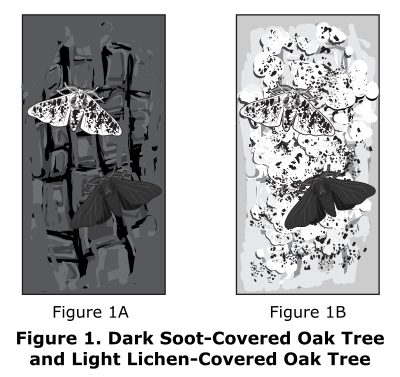
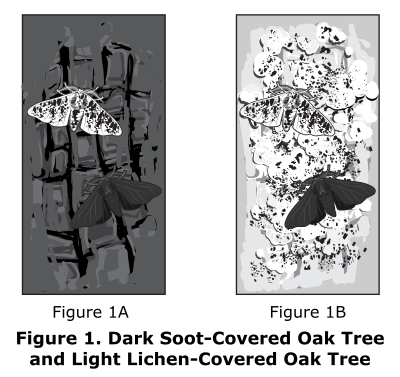
In 1950, trees were primarily dark and covered in soot, as shown in Figure 1A. In 2000, trees in the same areas were primarily light and covered in lichen, as shown in 1B. Light- and dark-colored moths are shown on each tree.
Table 1 shows percentages of dark and light moths in the population from 1950 to 2000.
Table 1. Dark and Light Moths in the Population
Year | Dark (%) | Light (%) |
|---|---|---|
1950 | 98.5 | 1.5 |
1960 | 95.9 | 3.1 |
1970 | 78.1 | 21.9 |
1980 | 64.7 | 35.3 |
1990 | 42.3 | 57.7 |
2000 | 19.0 | 81.0 |
Peppered moths, Biston betularia, exhibit light- and dark-color variations. Over the years 1950–2000, changes to the trees inhabited by a population of peppered moths were observed.
In 1950, trees were primarily dark and covered in soot, as shown in Figure 1A. In 2000, trees in the same areas were primarily light and covered in lichen, as shown in 1B. Light- and dark-colored moths are shown on each tree.
Table 1 shows percentages of dark and light moths in the population from 1950 to 2000.
Table 1. Dark and Light Moths in the Population
Year | Dark (%) | Light (%) |
|---|---|---|
1950 | 98.5 | 1.5 |
1960 | 95.9 | 3.1 |
1970 | 78.1 | 21.9 |
1980 | 64.7 | 35.3 |
1990 | 42.3 | 57.7 |
2000 | 19.0 | 81.0 |
Two marathon runners of similar athletic capabilities are running a marathon. Runner 1 ate a large meal of pasta the night before the race. Runner 2 ate tuna fish and salad. After 100 minutes of the race, one runner is farther ahead than the other runner.
Proteins, carbohydrates, and fats are dietary components that are the three basic nutritional building blocks of food. All of these can be converted to glucose, which is the body’s primary energy source.
Glucose can also be converted to glycogen, which is used as a source of energy while running when it is available, and stored in liver and muscle tissue.
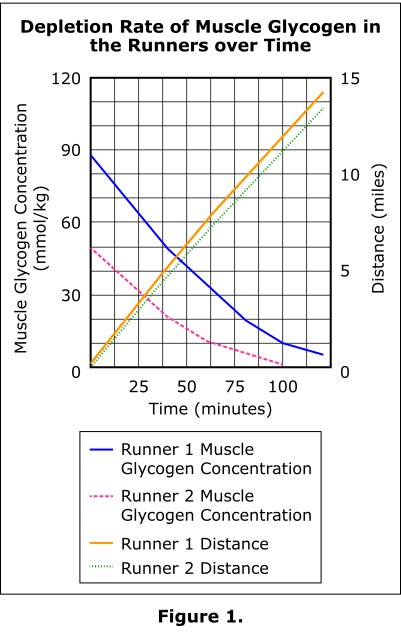
Figure 1 shows the glycogen levels of the two runners and the distances they traveled during the first 100 minutes of the race.
Two marathon runners of similar athletic capabilities are running a marathon. Runner 1 ate a large meal of pasta the night before the race. Runner 2 ate tuna fish and salad. After 100 minutes of the race, one runner is farther ahead than the other runner.
Proteins, carbohydrates, and fats are dietary components that are the three basic nutritional building blocks of food. All of these can be converted to glucose, which is the body’s primary energy source.
Glucose can also be converted to glycogen, which is used as a source of energy while running when it is available, and stored in liver and muscle tissue.
Figure 1 shows the glycogen levels of the two runners and the distances they traveled during the first 100 minutes of the race.
Based on the data, explain how the change in glycogen levels was different for each runner in the first 100 minutes of the race.
Enter your answer in the box. Support your answer with information from the data.
Two marathon runners of similar athletic capabilities are running a marathon. Runner 1 ate a large meal of pasta the night before the race. Runner 2 ate tuna fish and salad. After 100 minutes of the race, one runner is farther ahead than the other runner.
Proteins, carbohydrates, and fats are dietary components that are the three basic nutritional building blocks of food. All of these can be converted to glucose, which is the body’s primary energy source.
Glucose can also be converted to glycogen, which is used as a source of energy while running when it is available, and stored in liver and muscle tissue.
Figure 1 shows the glycogen levels of the two runners and the distances they traveled during the first 100 minutes of the race.
Two marathon runners of similar athletic capabilities are running a marathon. Runner 1 ate a large meal of pasta the night before the race. Runner 2 ate tuna fish and salad. After 100 minutes of the race, one runner is farther ahead than the other runner.
Proteins, carbohydrates, and fats are dietary components that are the three basic nutritional building blocks of food. All of these can be converted to glucose, which is the body’s primary energy source.
Glucose can also be converted to glycogen, which is used as a source of energy while running when it is available, and stored in liver and muscle tissue.
Figure 1 shows the glycogen levels of the two runners and the distances they traveled during the first 100 minutes of the race.
Two marathon runners of similar athletic capabilities are running a marathon. Runner 1 ate a large meal of pasta the night before the race. Runner 2 ate tuna fish and salad. After 100 minutes of the race, one runner is farther ahead than the other runner.
Proteins, carbohydrates, and fats are dietary components that are the three basic nutritional building blocks of food. All of these can be converted to glucose, which is the body’s primary energy source.
Glucose can also be converted to glycogen, which is used as a source of energy while running when it is available, and stored in liver and muscle tissue.
Figure 1 shows the glycogen levels of the two runners and the distances they traveled during the first 100 minutes of the race.
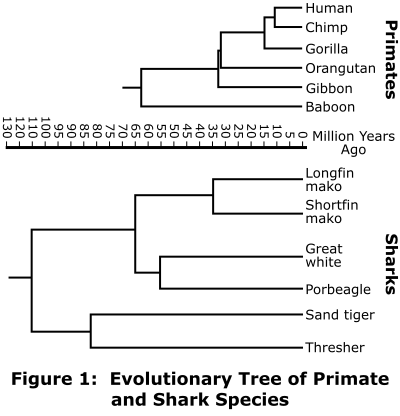
Sharks and primates are both successful groups of animals. Both groups have been on Earth for millions of years, but they seem to form species at different rates.
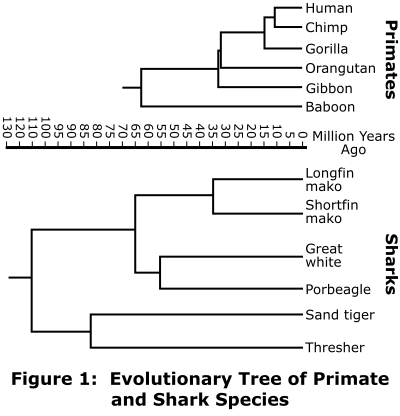
Figure 1 shows an evolutionary tree with estimated origination times of six shark and primate species. Locations where lines split represent the moment in time when two modern species last shared a common ancestor.
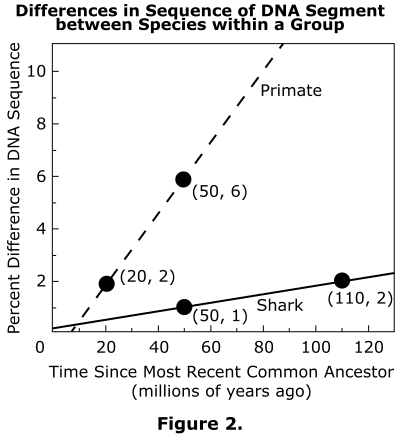
A particular segment of DNA shared by all six species in a group was sequenced and analyzed. Figure 2 illustrates percent differences observed in sequences of this DNA segment relative to time that had passed between successive species in each group.
Sharks and primates are both successful groups of animals. Both groups have been on Earth for millions of years, but they seem to form species at different rates.
Figure 1 shows an evolutionary tree with estimated origination times of six shark and primate species. Locations where lines split represent the moment in time when two modern species last shared a common ancestor.
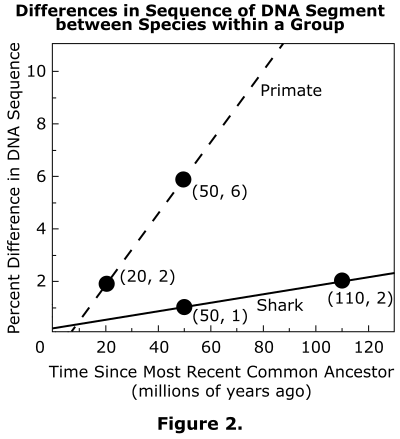
A particular segment of DNA shared by all six species in a group was sequenced and analyzed. Figure 2 illustrates percent differences observed in sequences of this DNA segment relative to time that had passed between successive species in each group.
Sharks and primates are both successful groups of animals. Both groups have been on Earth for millions of years, but they seem to form species at different rates.
Figure 1 shows an evolutionary tree with estimated origination times of six shark and primate species. Locations where lines split represent the moment in time when two modern species last shared a common ancestor.
A particular segment of DNA shared by all six species in a group was sequenced and analyzed. Figure 2 illustrates percent differences observed in sequences of this DNA segment relative to time that had passed between successive species in each group.
Sharks and primates are both successful groups of animals. Both groups have been on Earth for millions of years, but they seem to form species at different rates.
Figure 1 shows an evolutionary tree with estimated origination times of six shark and primate species. Locations where lines split represent the moment in time when two modern species last shared a common ancestor.
A particular segment of DNA shared by all six species in a group was sequenced and analyzed. Figure 2 illustrates percent differences observed in sequences of this DNA segment relative to time that had passed between successive species in each group.
Research on a particular species of locust of the Yangtze Delta area of Southern China has revealed trends in their population as it changed over centuries, from 950 to 1900 CE.
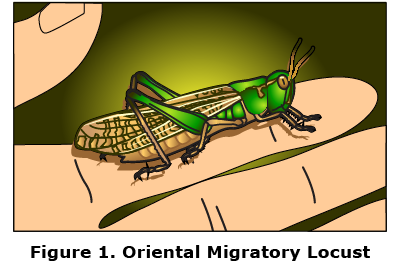
The Oriental migratory locust (Locusta migratoria manilensis) is shown in Figure 1. This species becomes a major agricultural pest when its population reaches a high density.

Research on a particular species of locust of the Yangtze Delta area of Southern China has revealed trends in their population as it changed over centuries, from 950 to 1900 CE.
The Oriental migratory locust (Locusta migratoria manilensis) is shown in Figure 1. This species becomes a major agricultural pest when its population reaches a high density.

Based on Figure 3, which time period has both the highest and lowest historical temperatures?
Research on a particular species of locust of the Yangtze Delta area of Southern China has revealed trends in their population as it changed over centuries, from 950 to 1900 CE.
The Oriental migratory locust (Locusta migratoria manilensis) is shown in Figure 1. This species becomes a major agricultural pest when its population reaches a high density.

The guppies studied are native to the Caribbean and South America but have been introduced widely for the control of mosquito larvae. These guppies and their parasites are now found almost worldwide, competing with and threatening native minnows.
Based on Figure 1, predict the impacts if short-term noise is introduced to an ecosystem that previously had no noise.
Select all the correct answers.
Increase | Decrease | |
|---|---|---|
Minnow Population | ||
Competition pressure on the minnows from guppies | ||
Mosquitoes eaten by guppies | ||
Parasite count in guppies |
Based on Figure 1, which environmental trends were generally experienced throughout the span of the Yuan Dynasty?
Select two (2) of the five statements.
A higher-than-normal mitotic index may be an idication of abnormal cell growth in tissues.
Based on Table 2, whih statement about effects of the drugs on the onion root tip is correct?
Based on the data, which statement best describes the relationship causing the decreased biomass of the coral reef species in the hydrosphere?
Based on Figure 1, which model describes the survival of salmon in the river where people do not fish?
Which best explains the selective pressure for size in the male salmon populations in the fished and non-fished rivers?
Select two of the five statements.
Based on the estimates of total grass available in the study areas and average grass consumption of an individual bison, which study areas could support a herd of 2,000 bison over the winter?
Which correlation between the peppered moth population and its environment is best supported by the data provided?
Based on Figure 1, which questions would best describe why the two runners’ meals caused them to run different distances?
Select two of the five questions.
Based on the data, identify the runner who traveled the greater distance, and describe how the food the runners ate correlates with the difference in distance traveled over 100 minutes.
Enter your answer in the box. Support your answer with information from the data.
Based on the data, predict if the rate of running for Runner 2 will be maintained after 100 minutes, and explain why.
Enter your answer in the box. Support your answer with evidence from the data.
Cellular respiration can be represented by the following equation:
C6H12O6+6O2→6CO2+6H2O+Energy
Based on Figure 1 and the cellular respiration equation, over the course of the race, identify how the inputs and outputs of cellular respiration change.
Select all of the correct answers.
Increases | Decreases | |
|---|---|---|
Total Energy Production | ||
Runner's Body Heat | ||
Oxygen Consumption | ||
Glycogen Stored in Muscles |
Based on Figure 2, choose one claim and one evidence statement that together would most accurately compare information about primates and sharks.
Select one claim from the three options.
Claim
Select one evidence statement from the three options.
Evidence
Based on Figure 2, which time periods show the least variation in locust abundance from normal?
Select two of the five time periods.
The populations of guppies and parasitic worms vary when humans are in their environment.
Scientists studied the Trinidadian guppy, Poecilia reticulata, and one of its parasites, the fish skin worm, Gyrodactylus turnbulli, when exposed to human-induced noise. In identical laboratory aquariums, populations of female guppies were exposed to long-term (several weeks) noise, short-term (1 day) noise, or no noise (control).
Next, each guppy was initially exposed to two worms, and then the guppies and their worms were observed for several weeks.
Figure 1 shows the number of worms parasitizing the noise-exposed and control guppies. Higher parasite counts usually indicate that the host’s immune systems and responses have been compromised.
Based on Figure 1, which claims about peak worm counts and guppy survival are best supported?
Select three (3) of the six claims.
On average, guppies exposed to
Table 1 shows the results of an experiment scientists performed using guppies.
Table 1. Guppy Investigation Results
Male Type | Male Color | Female Time Spent Near Male | Female Response to Male Mating Display |
|---|---|---|---|
Infected with worms | Dull orange | Less | Lower |
Uninfected | Bright orange | More | Higher |
Based on Table 1, which question were the scientists most likely investigating?
Climate Conflict China
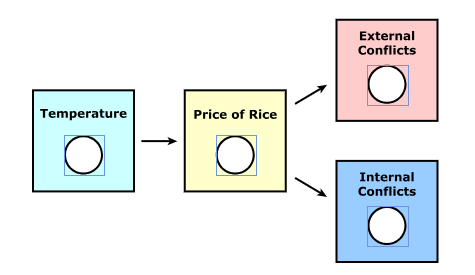
Some societal changes in the Yuan Dynasty of China may correlate with environmental changes from AD 1276–1367. Figure 1 shows changes in mean temperature and frequency of environmental factors during the Yuan Dynasty, spanning AD 1276–1367.
Figure 1
Which claim about possible associations between societal and environmental factors is best supported by the data?
Make a valid claim about the correlation between the price of rice and the frequency of external conflicts in the Yuan Dynasty. Support your claim using evidence from Figure 1 and Figure 2.
Traditional mining techniques used to extract materials such as copper are being abandoned in some cases in favor of other techniques that also produce these materials.
Removal of copper from Earth’s crust through mining has reduced this nonrenewable resource over time. Increased use of improved technologies, such as solvent extraction and electrowinning shown in Figure 1, has reduced the reliance on standard raw copper ore. These technologies are used in a process to extract copper from waste materials previously produced from traditional mining. The amount of waste available from previous mining makes the use of these technologies efficient for many years.
Based on Figure 1, which questions, if answered, would best help scientists determine the long-term economic and environmental impacts of using this process for extracting copper?
Select two of the six questions.
The solvent extraction-electrowinning technology has improved over time. Approximately 2.2 million tons of high-quality copper were produced using this technology in the year 2000. Table 1 shows the advancement of this technology, which includes how the solvent that extracts the copper has changed.
Which property of the solvent may be a limitation of the advancement of this technology in the future?
Supported | Not Supported | |
|---|---|---|
Extracted copper produces more energy. | ||
Recycled copper is worth 10% more than raw copper ore. | ||
Recycling requires only 10% of the energy needed for extraction. | ||
It is cheaper to recycle old copper than to mine and extract new copper. | ||
Recycled copper produces the same amount of air pollution as raw copper ore. |
A model describing correlations that support the claim that temperature indirectly affted all conflicts during years AD 1350-1367 can be developed from the data. The positive (+) symbol represents increasing and the negative (-) symbol represents decreasing.
Drag and drop the symbols in the correct boxes. The symbols may be used more than once.

Plant Mitosis
A chemical treatment increases mitosis in a plant, yet the plant is less healthy than an untreated plant.
Table 1 shows the four different phases of mitosis: prophase, metaphase, anaphase, and telophase. Interphase is the phase before and after mitosis in which the cell grows in size, replicates its DNA, and prepares for mitosis.
Based on Table 1, how can completing mitosis benefit an organism?
Select three (3) of the five statements.
Completing mitosis allows an organism to
Researchers want to do more studies on mitosis using the onion root tip cell model. For these new experiments, they want to produce the fewest daughter cells containing the highest percentage of chromosome changes.
Based on Table 2, which drug should the researchers use to produce cells for the additional studies?
Along with using new technology to extract copper, conserving copper through recycling also has long-lasting benefits.
Indicate which claims about the potential benefits of recycling copper are supported by Table 2 and which are not supported by Table 2.
Select all of the correct answers.