*Week 8 ELA Quiz - Jaguars in the Sky
star
star
star
star
star
Last updated 17 days ago
10 Nsɛmmisa
1 What would you name a predator at the top of its food chain? What if it was the only individual of its species known to live within your nation’s borders? When a jaguar was found near Tucson, Arizona, the students at Felizardo Valencia Middle School in Tucson thought it should be named “El Jefe,” Spanish for “The Boss.”
2 The students participated in a 2015 national naming contest. “Other names polled well in nationwide online voting, but El Jefe was the overwhelming choice of students at the school,” said Randy Serraglio of the Center for Biological Diversity, the nonprofit organization that held the contest.
3 Before casting their votes, students at Felizardo Valencia Middle School learned about jaguars. Other names the students considered were Spot, Rito, and Spirit. In spite of the results of the naming contest, many researchers prefer to call him simply the Santa Ritas jaguar.
4 El Jefe has been photographed over one hundred times by trail cameras in the Santa Ritas portion of the Sky Islands. To position these camera traps, conservationists used dogs to sniff out signs of jaguars. Then, they set up the cameras nearby. The photographs were used to identify and track individual jaguars by their unique spot patterns. Over a 34-month period, El Jefe was photographed once every 7.9 days. Therefore, researchers did not consider him a visitor; they believe Arizona was his home. For four years, El Jefe was the only jaguar known to be living in the United States.
predator-animal that hunts other animals for food |
|---|
How does the information in the text "Jaguars in the Sky" compare to the information in the text “The Purrfect Name”?
by Charles C. Hofer
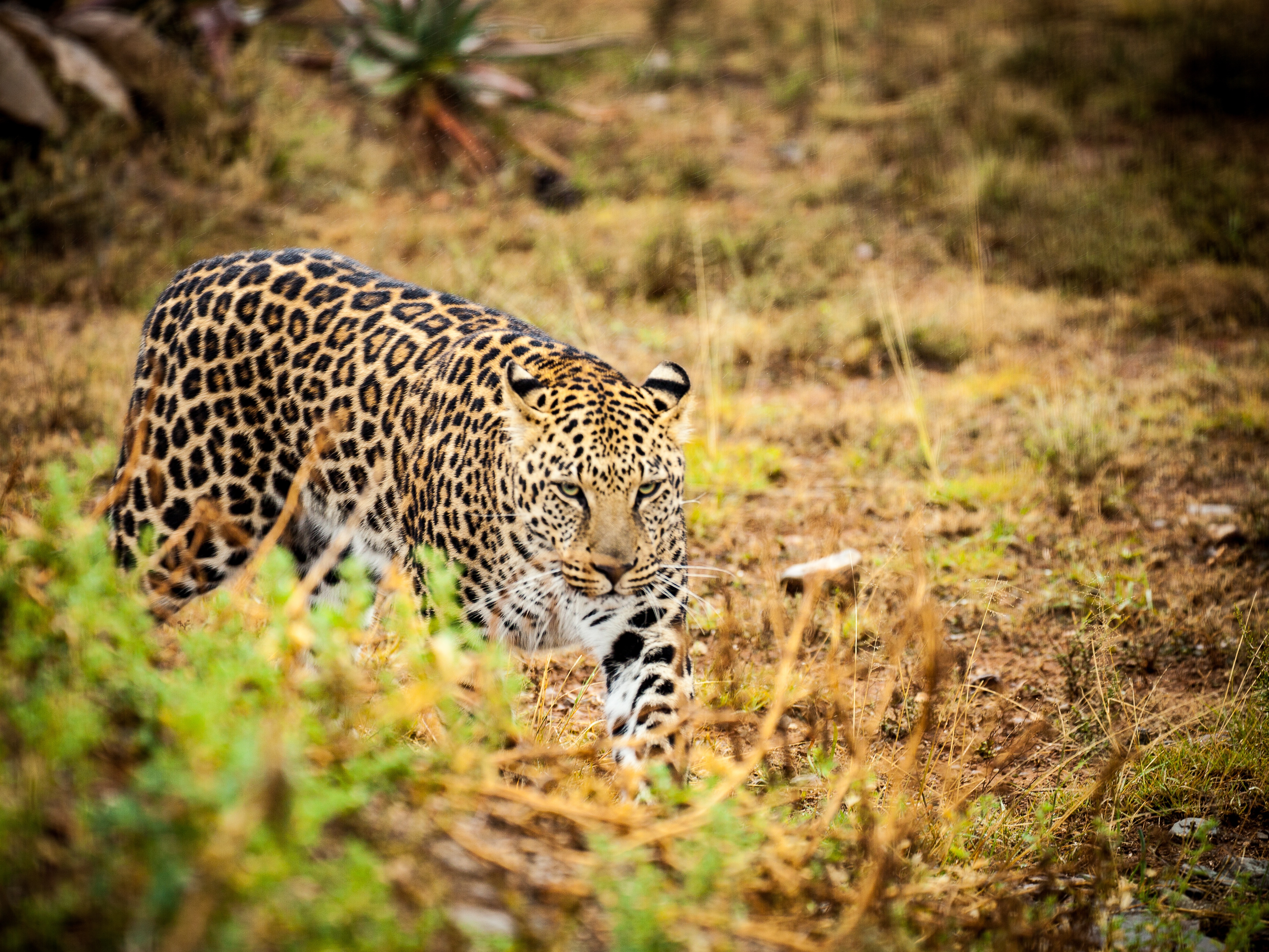
1 The jaguar is the largest cat in the Americas. It’s also the only American cat that roars, which officially makes it one of the “big cats,” along with lions and tigers. And jaguars are big—males weigh more than 200 pounds. Add deadly claws and a powerful jaw full of razor-sharp teeth, and you have one mighty cat.
2 Most jaguars live in the forests and jungles of Central and South America, where they hunt just about anything that moves. Jaguars like to swim and sometimes snatch fish from the water. They are also great climbers. Jaguars like to ambush their prey by leaping down out of a tree.
3 Jaguars once roamed the mountains of the southwestern United States, too, as far north as the Grand Canyon. But when people began to move into their territory, the jaguars left.
4 Then in 1996 a rancher spotted a jaguar in the remote mountains of southern Arizona. Another was seen less than a year later in the same area. Conservation and government groups quickly sprang into action to protect the jaguars and their mountain home.
5 Since then, one or two jaguars have been seen north of the border each year—all of them males. Experts think that’s because females tend to stay close to home to take care of their young. Males, on the other hand, like to wander. Some may roam 500 miles in search of food or mates.
6 Along the U.S.-Mexico border the jaguar rules over a strange land. Here wide flat grasslands and scrubby deserts are dotted about with jagged clumps of mountains, sticking up from the plains like islands. And that’s what people call them—the Sky Islands.
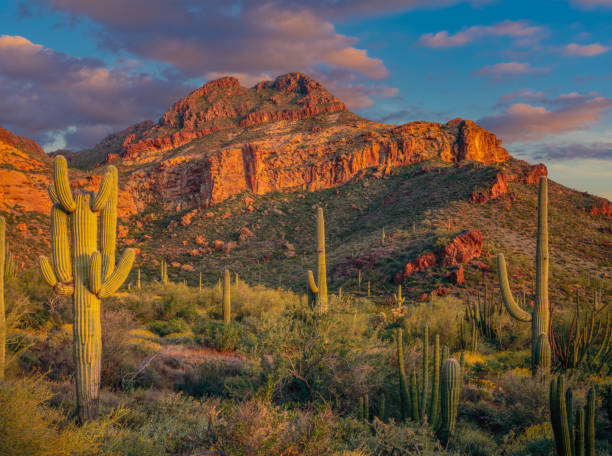 Desert landscape and mountain range in the Sky Islands of Arizona
7 A trip to the Sky Islands can be like visiting different worlds—all in the same afternoon. You might start out in the desert, filled with giant saguaro cacti, desert tortoises, and Gila monsters. But as you head up the mountain, you’ll soon find yourself in pine forests where bighorn sheep, black bears, and parrots dwell under snow-capped peaks.
8 These mountain islands form a secret highway for migrating birds and animals, linking the Rocky Mountains to the north and the Sierra Madre to the south. The wide range of climates, from dry deserts to cool, wet forests, attracts a rich variety of plants and animals. Some are natives of the cold mountains to the north. Others come from the lush jungles of South and Central America. The unusual mix of species all rub elbows here. “It’s like bringing tropical Central America and Canada together in the same place,” says Sergio Avila, a wildlife biologist for the Sky Island Alliance.
9 The forests, streams, and tasty prey draw jaguars to the Sky Islands too—along with bobcats and mountain lions from the north and ocelots from the humid jungles of the south. In the Sky Islands, as nowhere else, all these American cats live side by side.
10 Scientists would like to find out more about the jaguars in the Sky Islands. Where do they come from? How many are there? What do they eat? What paths do they use? Do they stay or only visit? And how can we best protect them?
11 Jaguars are well camouflaged and like to hunt in the dim light of dawn and dusk, so they can be hard to spot. But scientists have a secret weapon. They set camera traps in remote areas, along animal trails and other places the jaguar might visit. A switch snaps a picture whenever something (like a jaguar) walks through a beam of infrared light across the path. From photos, scientists can see where the cats go and what they’re up to.
12 Jaguars still face many threats from mining, road building, and illegal hunting. Border fences are another problem. Fences prevent the jaguars from moving freely around their territories.
13 Still, the jaguars seem to like their home in the sky enough to return again and again. Will we let them stay?
prey- animal hunted by another animal for food remote- far from other places conservation- protecting and preserving lands and animals scrubby- having small bushes or trees scattered across the land Gila monsters- large black and orange venomous lizards migrating- moving from one place to another species- types of animals camouflaged- hidden by blending in with the land around them infrared light- special light that is invisible to the eye mining- digging deep in the ground for valuable items such as gold or oil |
|---|
Which quotation from the text supports the main idea that jaguars have been found in certain parts of the United States after being gone from the area for many years?
Read the sentence from paragraph 8.
"These mountain islands form a secret highway for migrating birds and animals, linking the Rocky Mountains to the north and the Sierra Madre to the south."
What does the author mean by the phrase "mountain islands form a secret highway" in the sentence?
Which quotation supports the inference that some people may think that jaguars are harmful?
How did scientists know that jaguars had returned to the southwestern United States?
Part A: What does the word variety mean as it is used in paragraph 8?
Part B: Which phrase from paragraph 8 supports the answer to Part A?
What does the author mean by the phrase "rub elbows" as it is used in paragraph 8?
What text structure does the author use in paragraphs 10-11?
Which two quotations from the text support the author's point that jaguars are affected by human activity?
Select all that apply.