A clear marble made of a type of absorbent polymer (a type of plastic) is easily visible when held, but seems to disappear when placed in a glass of water.
Light with a frequency of 5.60 × 10¹⁴ Hz (Hertz) is used to test the behavior of light through the different substances. The velocity of light (v) is measured as the product of frequency (f) and wavelength (λ):
v = fλ
Figure 1 shows a polymer marble before and after it is dropped into a glass of distilled water. As indicated, the light changes velocity when it passes through each substance.
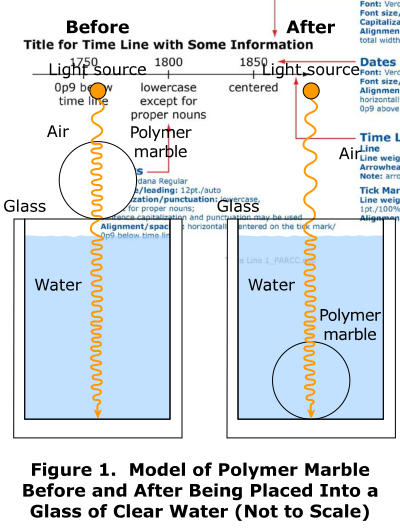
Table 1 shows light velocity data, in meters per second (m/s), for various substances.
Table 1. Velocity of Light through Different Substances
Air | Water | Polymer | Glass | |
Velocity (× 108 m/s) | 3.00 | 2.25 | 2.25 | 2.00 |
Which wavelength (λ) of the light results as it passes from water into the polymer ball?
A clear marble made of a type of absorbent polymer (a type of plastic) is easily visible when held, but seems to disappear when placed in a glass of water.
Light with a frequency of 5.60 × 10¹⁴ Hz (Hertz) is used to test the behavior of light through the different substances. The velocity of light (v) is measured as the product of frequency (f) and wavelength (λ):
v = fλ
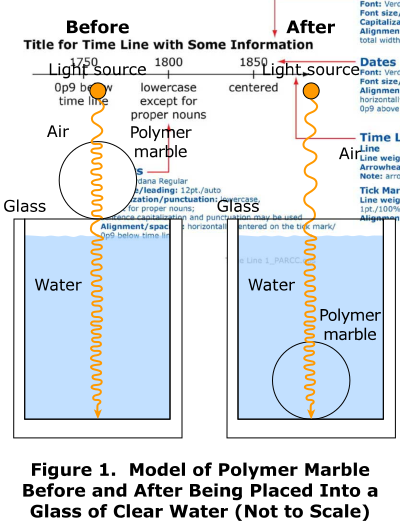
Figure 1 shows a polymer marble before and after it is dropped into a glass of distilled water. As indicated, the light changes velocity when it passes through each substance.
Table 1 shows light velocity data, in meters per second (m/s), for various substances.
Table 1. Velocity of Light through Different Substances
Air | Water | Polymer | Glass | |
Velocity (× 108 m/s) | 3.00 | 2.25 | 2.25 | 2.00 |
A clear marble made of a type of absorbent polymer (a type of plastic) is easily visible when held, but seems to disappear when placed in a glass of water.
Light with a frequency of 5.60 × 10¹⁴ Hz (Hertz) is used to test the behavior of light through the different substances. The velocity of light (v) is measured as the product of frequency (f) and wavelength (λ):
v = fλ
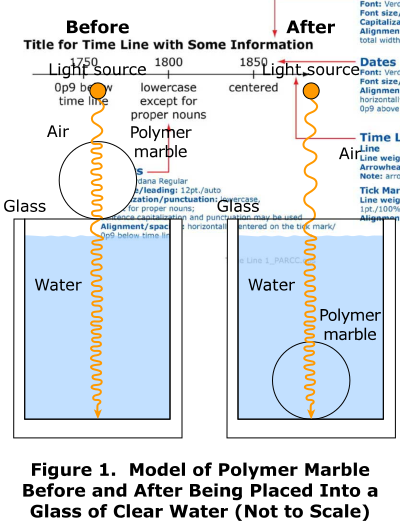
Figure 1 shows a polymer marble before and after it is dropped into a glass of distilled water. As indicated, the light changes velocity when it passes through each substance.
Table 1 shows light velocity data, in meters per second (m/s), for various substances.
Table 1. Velocity of Light through Different Substances
Air | Water | Polymer | Glass | |
Velocity (× 108 m/s) | 3.00 | 2.25 | 2.25 | 2.00 |
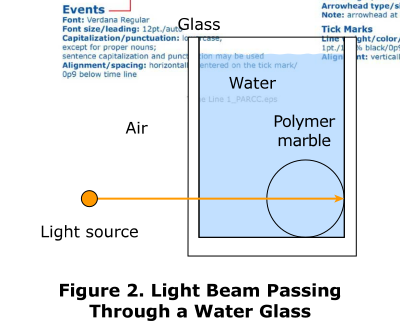
Which observations are consistent with the given information and diagrams, and could help explain why the polymer ball is visible in air but invisible in water?
While planes fly in refueling formation as shown in the figure, the pilot of the tanker aircraft never adjusts the throttle, but the pilot of the receiver aircraft must constantly increase the throttle to keep up with the tanker aircraft.
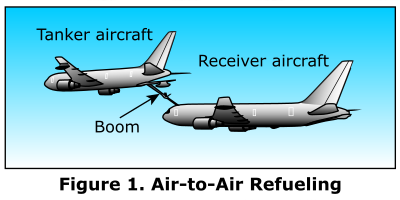
Air-to-air refueling is used to increase the distance an aircraft can fly. Fuel flows from a tanker aircraft to a receiver aircraft through a device called a boom, as shown in the figure.
According to Newton’s second law (F = ma), which statement best explains why the pilot of the receiver aircraft must increase the throttle to keep up with the tanker aircraft?
While planes fly in refueling formation as shown in the figure, the pilot of the tanker aircraft never adjusts the throttle, but the pilot of the receiver aircraft must constantly increase the throttle to keep up with the tanker aircraft.
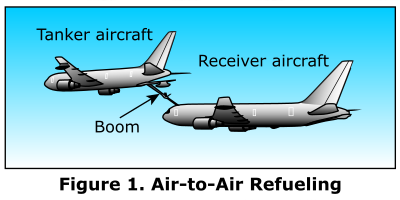
Air-to-air refueling is used to increase the distance an aircraft can fly. Fuel flows from a tanker aircraft to a receiver aircraft through a device called a boom, as shown in the figure.
While planes fly in refueling formation as shown in the figure, the pilot of the tanker aircraft never adjusts the throttle, but the pilot of the receiver aircraft must constantly increase the throttle to keep up with the tanker aircraft.
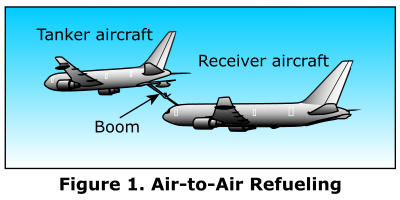
Air-to-air refueling is used to increase the distance an aircraft can fly. Fuel flows from a tanker aircraft to a receiver aircraft through a device called a boom, as shown in the figure.
While planes fly in refueling formation as shown in the figure, the pilot of the tanker aircraft never adjusts the throttle, but the pilot of the receiver aircraft must constantly increase the throttle to keep up with the tanker aircraft.
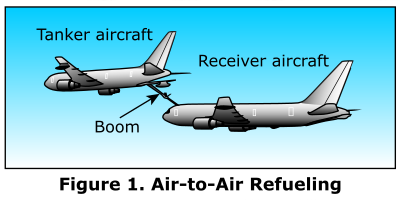
Air-to-air refueling is used to increase the distance an aircraft can fly. Fuel flows from a tanker aircraft to a receiver aircraft through a device called a boom, as shown in the figure.
The tanker aircraft has a mass of 180,000 kg and has an acceleration of 2.8 m/s2 prior to refueling the receiver aircraft. The tanker transfers 40,000 kg of fuel to the receiver aircraft. According to Newton’s second law (F = ma), which statement best describes the change in acceleration for the tanker?
While planes fly in refueling formation as shown in the figure, the pilot of the tanker aircraft never adjusts the throttle, but the pilot of the receiver aircraft must constantly increase the throttle to keep up with the tanker aircraft.
Air-to-air refueling is used to increase the distance an aircraft can fly. Fuel flows from a tanker aircraft to a receiver aircraft through a device called a boom, as shown in the figure.