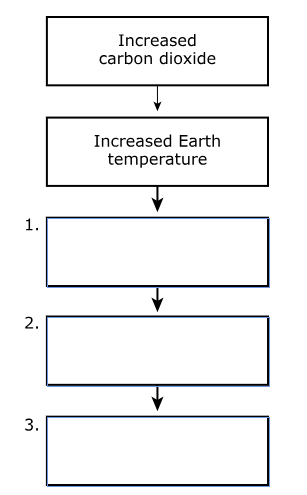
Changes in the concentration of carbon dioxide in the atmosphere impacts global sea level.
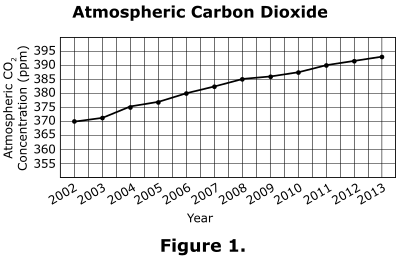
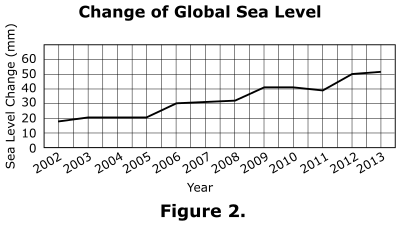
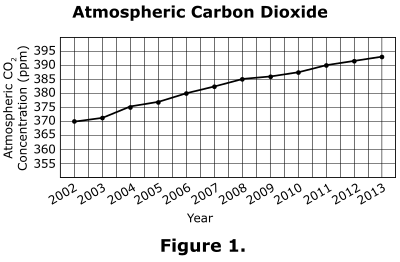
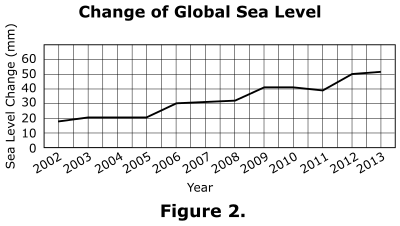
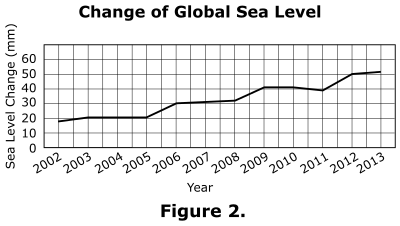
Rising carbon dioxide (CO2) levels are correlated with rising atmospheric temperatures. Researchers collected data, shown in Figures 1 and 2, on atmospheric carbon dioxide and global sea level.
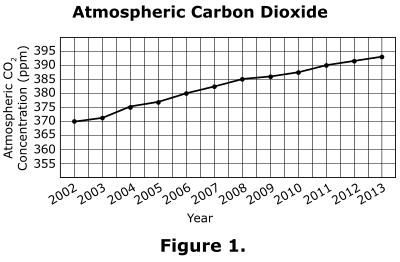
Which question is best addressed by analyzing the data?
Changes in the concentration of carbon dioxide in the atmosphere impacts global sea level.
Rising carbon dioxide (CO2) levels are correlated with rising atmospheric temperatures. Researchers collected data, shown in Figures 1 and 2, on atmospheric carbon dioxide and global sea level.
Changes in the concentration of carbon dioxide in the atmosphere impacts global sea level.
Rising carbon dioxide (CO2) levels are correlated with rising atmospheric temperatures. Researchers collected data, shown in Figures 1 and 2, on atmospheric carbon dioxide and global sea level.

There are over one million more solar power installations than fossil fuel plants in America. However, fossil fuels generate the most electricity, and solar power contributes the least.
Construction and use of electrical power plants produce carbon dioxide, which is a greenhouse gas (GHG). Building new power plants that maximize power production but minimize GHG emission is a current engineering challenge. One approach used in the United States is to construct power plants that use renewable energy.
Characteristics of electrical plants that use certain renewable or nonrenewable sources of energy are listed in Table 1.
Table 1. Energy Sources and Characteristics
Energy Sources | Renewable | Nonrenewable | |||
Solar Power | Wind Power | Hydropower | Nuclear | Fossil Fuels | |
GHG Emissions Intensity | 97 | 30 | 27 | 30 | 506 |
Cost | 6 | 6 | 2 | 9.5 | ≤7.5 |
Number of Facilities | 1.5 million | 52,343 | 1,440 | 62 | 3,288 |
Electricity Generated in 2016 | 0.9% | 5.6% | 6.5% | 20% | 65% |
Which statement correctly answers the question of whether electrical plants that use wind power instead of fossil fuels would maximize power production and minimize GHG emissions?
There are over one million more solar power installations than fossil fuel plants in America. However, fossil fuels generate the most electricity, and solar power contributes the least.
Construction and use of electrical power plants produce carbon dioxide, which is a greenhouse gas (GHG). Building new power plants that maximize power production but minimize GHG emission is a current engineering challenge. One approach used in the United States is to construct power plants that use renewable energy.
Characteristics of electrical plants that use certain renewable or nonrenewable sources of energy are listed in Table 1.
Table 1. Energy Sources and Characteristics
Energy Sources | Renewable | Nonrenewable | |||
Solar Power | Wind Power | Hydropower | Nuclear | Fossil Fuels | |
GHG Emissions Intensity | 97 | 30 | 27 | 30 | 506 |
Cost | 6 | 6 | 2 | 9.5 | ≤7.5 |
Number of Facilities | 1.5 million | 52,343 | 1,440 | 62 | 3,288 |
Electricity Generated in 2016 | 0.9% | 5.6% | 6.5% | 20% | 65% |
Energy facilities produce different amounts of electricity per facility depending on the type of energy source involved.
Drag the energy sources to arrange them in correct order from greatest (top) to the least (bottom) amount of electricity produced per facility.
Wind power
Nuclear energy
Hydropower
Fossil fuels
Solar power
Tectonic plates interact in different ways, but most interactions result in some type of mountain formation.
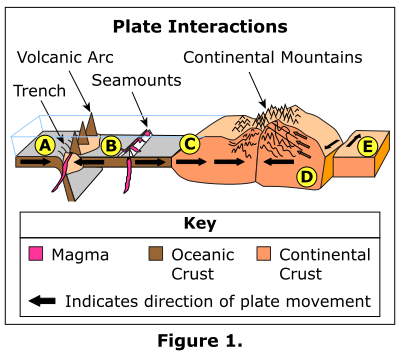
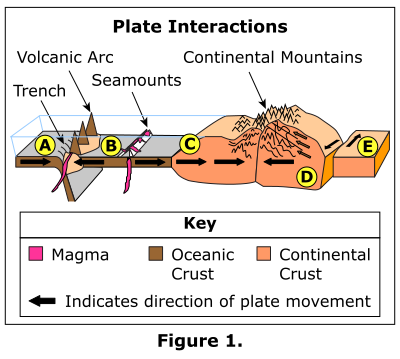
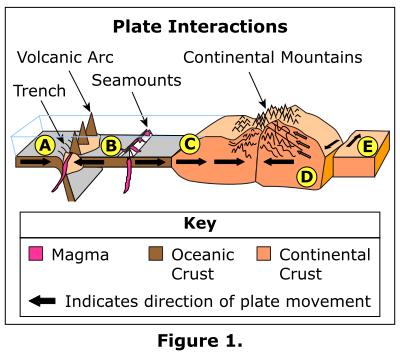
Figure 1 models conditions at plate boundaries that create various types of surface features. Each separate plate is marked with a letter, with arrows showing the plates’ directions of movement: moving toward or away from each other, or sliding past each other.
Table 1 describes types of plate boundaries and the interactions between them.
Table 1. Plate Boundaries
Boundary Type | Tectonic Process | Resulting Surface Feature |
Convergent with no subduction | Compression and uplift | Mountain |
Convergent with subduction | Volcanism, compression, and uplift | Mountain and/or volcano |
Divergent | Volcanism, rifting, and sea floor spreading | Seamount |
Transform | Side-to-side motion | None |
Tectonic plates interact in different ways, but most interactions result in some type of mountain formation.
Figure 1 models conditions at plate boundaries that create various types of surface features. Each separate plate is marked with a letter, with arrows showing the plates’ directions of movement: moving toward or away from each other, or sliding past each other.
Table 1 describes types of plate boundaries and the interactions between them.
Table 1. Plate Boundaries
Boundary Type | Tectonic Process | Resulting Surface Feature |
Convergent with no subduction | Compression and uplift | Mountain |
Convergent with subduction | Volcanism, compression, and uplift | Mountain and/or volcano |
Divergent | Volcanism, rifting, and sea floor spreading | Seamount |
Transform | Side-to-side motion | None |
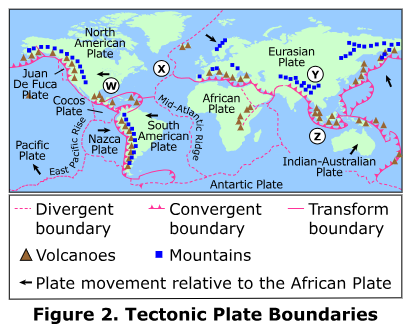
Figure 2 shows tectonic plate boundaries on Earth, with areas labeled W, X, Y, and Z. Identify the location in Figure 2 that best represents the boundary between plates C and D in Figure 1.
Select the correct location from the four options.

Tectonic plates interact in different ways, but most interactions result in some type of mountain formation.
Figure 1 models conditions at plate boundaries that create various types of surface features. Each separate plate is marked with a letter, with arrows showing the plates’ directions of movement: moving toward or away from each other, or sliding past each other.
Table 1 describes types of plate boundaries and the interactions between them.
Table 1. Plate Boundaries
Boundary Type | Tectonic Process | Resulting Surface Feature |
Convergent with no subduction | Compression and uplift | Mountain |
Convergent with subduction | Volcanism, compression, and uplift | Mountain and/or volcano |
Divergent | Volcanism, rifting, and sea floor spreading | Seamount |
Transform | Side-to-side motion | None |
Traditional mining techniques used to extract materials such as copper are being abandoned in some cases in favor of other techniques that also produce these materials.
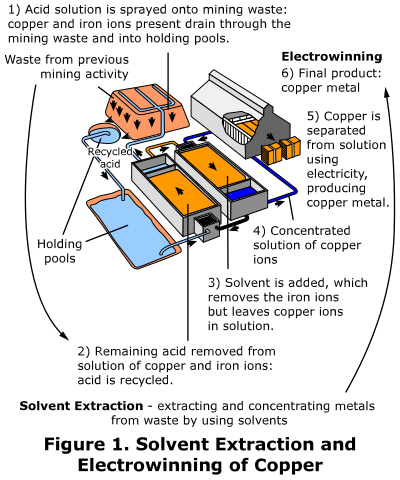
Removal of copper from Earth’s crust through mining has reduced this nonrenewable resource over time. Increased use of improved technologies, such as solvent extraction and electrowinning shown in Figure 1, has reduced the reliance on standard raw copper ore. These technologies are used in a process to extract copper from waste materials previously produced from traditional mining. The amount of waste available from previous mining makes the use of these technologies efficient for many years.
Traditional mining techniques used to extract materials such as copper are being abandoned in some cases in favor of other techniques that also produce these materials.
Removal of copper from Earth’s crust through mining has reduced this nonrenewable resource over time. Increased use of improved technologies, such as solvent extraction and electrowinning shown in Figure 1, has reduced the reliance on standard raw copper ore. These technologies are used in a process to extract copper from waste materials previously produced from traditional mining. The amount of waste available from previous mining makes the use of these technologies efficient for many years.
Traditional mining techniques used to extract materials such as copper are being abandoned in some cases in favor of other techniques that also produce these materials.
Removal of copper from Earth’s crust through mining has reduced this nonrenewable resource over time. Increased use of improved technologies, such as solvent extraction and electrowinning shown in Figure 1, has reduced the reliance on standard raw copper ore. These technologies are used in a process to extract copper from waste materials previously produced from traditional mining. The amount of waste available from previous mining makes the use of these technologies efficient for many years.
The guppies studied are native to the Caribbean and South America but have been introduced widely for the control of mosquito larvae. These guppies and their parasites are now found almost worldwide, competing with and threatening native minnows.
Based on Figure 1, predict the impacts if short-term noise is introduced to an ecosystem that previously had no noise.
Select all the correct answers.
Increase | Decrease | |
|---|---|---|
Minnow Population | ||
Competition pressure on the minnows from guppies | ||
Mosquitoes eaten by guppies | ||
Parasite count in guppies |
Based on Figure 1, which environmental trends were generally experienced throughout the span of the Yuan Dynasty?
Select two (2) of the five statements.
Research on a particular species of locust of the Yangtze Delta area of Southern China has revealed trends in their population as it changed over centuries, from 950 to 1900 CE.
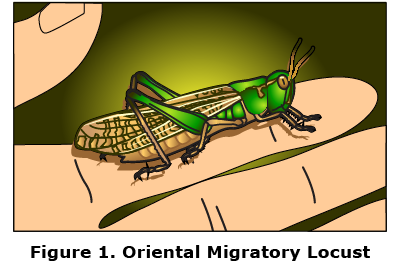
The Oriental migratory locust (Locusta migratoria manilensis) is shown in Figure 1. This species becomes a major agricultural pest when its population reaches a high density.

Research on a particular species of locust of the Yangtze Delta area of Southern China has revealed trends in their population as it changed over centuries, from 950 to 1900 CE.
The Oriental migratory locust (Locusta migratoria manilensis) is shown in Figure 1. This species becomes a major agricultural pest when its population reaches a high density.

Based on Figure 3, which time period has both the highest and lowest historical temperatures?
Research on a particular species of locust of the Yangtze Delta area of Southern China has revealed trends in their population as it changed over centuries, from 950 to 1900 CE.
The Oriental migratory locust (Locusta migratoria manilensis) is shown in Figure 1. This species becomes a major agricultural pest when its population reaches a high density.

Peppered moths, Biston betularia, exhibit light- and dark-color variations. Over the years 1950–2000, changes to the trees inhabited by a population of peppered moths were observed.
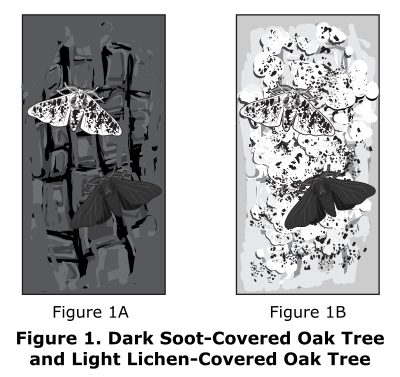
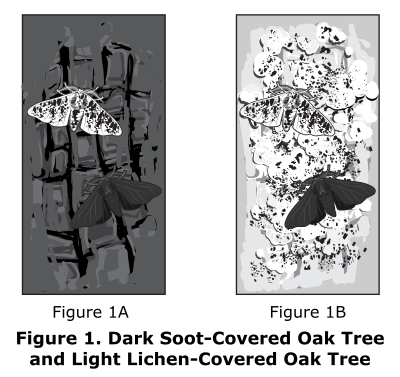
In 1950, trees were primarily dark and covered in soot, as shown in Figure 1A. In 2000, trees in the same areas were primarily light and covered in lichen, as shown in 1B. Light- and dark-colored moths are shown on each tree.
Table 1 shows percentages of dark and light moths in the population from 1950 to 2000.
Table 1. Dark and Light Moths in the Population
Year | Dark (%) | Light (%) |
|---|---|---|
1950 | 98.5 | 1.5 |
1960 | 95.9 | 3.1 |
1970 | 78.1 | 21.9 |
1980 | 64.7 | 35.3 |
1990 | 42.3 | 57.7 |
2000 | 19.0 | 81.0 |
Peppered moths, Biston betularia, exhibit light- and dark-color variations. Over the years 1950–2000, changes to the trees inhabited by a population of peppered moths were observed.
In 1950, trees were primarily dark and covered in soot, as shown in Figure 1A. In 2000, trees in the same areas were primarily light and covered in lichen, as shown in 1B. Light- and dark-colored moths are shown on each tree.
Table 1 shows percentages of dark and light moths in the population from 1950 to 2000.
Table 1. Dark and Light Moths in the Population
Year | Dark (%) | Light (%) |
|---|---|---|
1950 | 98.5 | 1.5 |
1960 | 95.9 | 3.1 |
1970 | 78.1 | 21.9 |
1980 | 64.7 | 35.3 |
1990 | 42.3 | 57.7 |
2000 | 19.0 | 81.0 |
Which statements are best supported by the data?
Select two of the six statements.
The ice sheets reflect energy from sunlight back into space and allow the Earth to stay cooler. If the ice sheets melt, the amount of energy reflected will change, and thus the temperature of the Earth can change.
Based on the data, complete the model to show how a change in the ice sheets leads to changes in other Earth systems.
Drag and drop the answers in the correct boxes. Not all answers will be used.
Based on Figure 1, which questions, if answered, would best help scientists determine the long-term economic and environmental impacts of using this process for extracting copper?
Select two of the six questions.
The solvent extraction-electrowinning technology has improved over time. Approximately 2.2 million tons of high-quality copper were produced using this technology in the year 2000. Table 1 shows the advancement of this technology, which includes how the solvent that extracts the copper has changed.
Table 1. Changes in Solvent Technology over Time
Property | 1965 | 1970 | 1980 | 2000 |
|---|---|---|---|---|
Ability of solvent to remove copper ions from acid | Poor | Poor | Good | Excellent |
Separation of copper ions from iron ions | Poor | Good | Good | Excellent |
Speed of copper ion removal | Slow | Medium | Fast | Fast |
Stability against decomposition | Excellent | Excellent | Good | Poor |
Generation of impurities | Medium | Low | Medium | Low |
Ability to chemically modify solvent to extract different metal ions | Poor | Fair | Good | Excellent |
Which property of the solvent may be a limitation of the advancement of this technology in the future?
Along with using new technology to extract copper, conserving copper through recycling also has long-lasting benefits.
Table 2. Economic Benefits of Recycling Copper
| Extraction | Recycling |
|---|---|---|
Energy Required | 100 | 10 |
Cost | $16,200 | $14,600 |
Air Pollution | 400,000 | 56,000 |
Indicate which claims about the potential benefits of recycling copper are supported by Table 2 and which are not supported by Table 2.
Select all of the correct answers.
Supported | Not Supported | |
|---|---|---|
Extracted copper produces more energy. | ||
Recycled copper is worth 10% more than raw copper ore. | ||
Recycling requires only 10% of the energy needed for extraction. | ||
It is cheaper to recycle old copper than to mine and extract new copper. | ||
Recycled copper produces the same amount of air pollution as raw copper ore. |
The populations of guppies and parasitic worms vary when humans are in their environment.
Scientists studied the Trinidadian guppy, Poecilia reticulata, and one of its parasites, the fish skin worm, Gyrodactylus turnbulli, when exposed to human-induced noise. In identical laboratory aquariums, populations of female guppies were exposed to long-term (several weeks) noise, short-term (1 day) noise, or no noise (control).
Next, each guppy was initially exposed to two worms, and then the guppies and their worms were observed for several weeks.
Figure 1 shows the number of worms parasitizing the noise-exposed and control guppies. Higher parasite counts usually indicate that the host’s immune systems and responses have been compromised.
Based on Figure 1, which claims about peak worm counts and guppy survival are best supported?
Select three (3) of the six claims.
On average, guppies exposed to
Table 1 shows the results of an experiment scientists performed using guppies.
Table 1. Guppy Investigation Results
Male Type | Male Color | Female Time Spent Near Male | Female Response to Male Mating Display |
|---|---|---|---|
Infected with worms | Dull orange | Less | Lower |
Uninfected | Bright orange | More | Higher |
Based on Table 1, which question were the scientists most likely investigating?
Climate Conflict China
Some societal changes in the Yuan Dynasty of China may correlate with environmental changes from AD 1276–1367. Figure 1 shows changes in mean temperature and frequency of environmental factors during the Yuan Dynasty, spanning AD 1276–1367.
Figure 1
Which claim about possible associations between societal and environmental factors is best supported by the data?
Make a valid claim about the correlation between the price of rice and the frequency of external conflicts in the Yuan Dynasty. Support your claim using evidence from Figure 1 and Figure 2.
Based on Figure 2, which time periods show the least variation in locust abundance from normal?
Select two of the five time periods.
Which correlation between the peppered moth population and its environment is best supported by the data provided?