Mmuae Afoforo a Wobɛpaw:
65 mm
39 mm
fixed
close
less
vibrate
move
apart
Weak
moving
soluble
insoluble
condenses
Filter
Distil
specific
range
lower
most
higher
above
liquid
simple distillation
cools
fractional distillation
travel
solvent
level
Rf value
insoluble
one
65 mm
39 mm
Rf = Sample height / solvent height
Rf =
Rf =
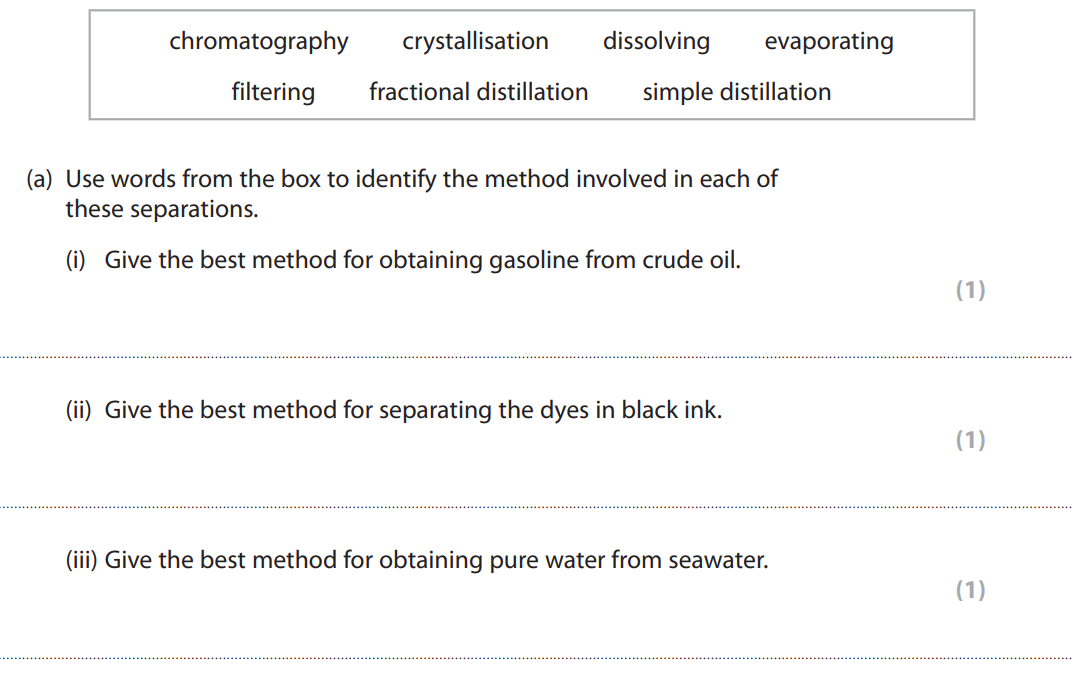
Chromatography
Fractional distillation
Simple distillation
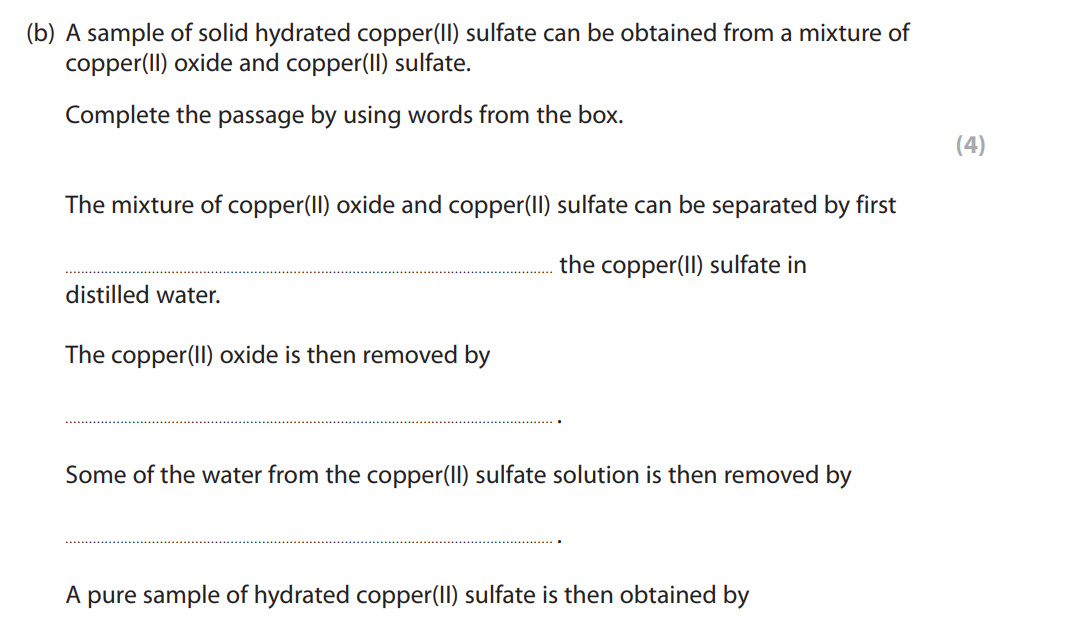
Evaporating
Dissolving
Crystalisation
Filtering
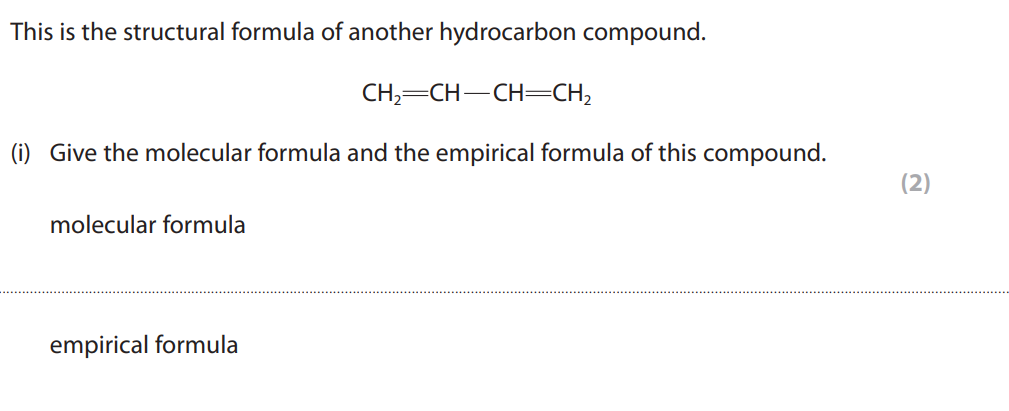
C2H3
CH2
C4H6


 (a) i Particles together.
(ii) Particles in a solid are in positions
Particles in a solid
Particles in a liquid can (past each other) as forces between particles in a liquid are than in a solid
 Particles are quickly (in all directions)
Particles are far
Particles spread out
forces between the particles

 to remove the sand (as) sand is in water / sodium chloride is
the filtered mixture (Solid) sodium chloride stays in flask and pure water evaporates then

She is not correct
sample 4 has range higher than 110oC and B cannot have melting point 110oC
Pure samples do not melt over a (of temperatures)
Pure samples have a melting point
Impurities the melting point
Sample 1 is likely to be pure as it has the narrowest range of melting point

(ii)
(iii) C
(note we would not normally write a 1)
 (i)
(i)
(ii) M1 the condenser the ethanol vapour
M2 so it condenses
OR forms (ethanol)
 They will not diffuse into the (at the bottom of beaker)
so that the dyes can up the paper
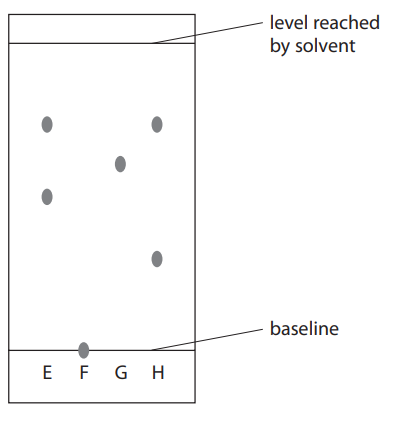
 (ii) Explain which two felt tip pens contain the same dye.
E and
as the both have a spot at the same
Or both have a dot with the same

(iii) The student thought that both F and G contained only one dye. Explain why the student can only be certain about one of these dyes. (2)
M1 The student can only be certain about G containing one dye as only spot
As F is so you cannot tell how many dyes it has

