Monarch Butterflies on the Shortgrass Prairie- Assessment

Last updated 3 months ago
5 questions
Understanding the data
Required
0

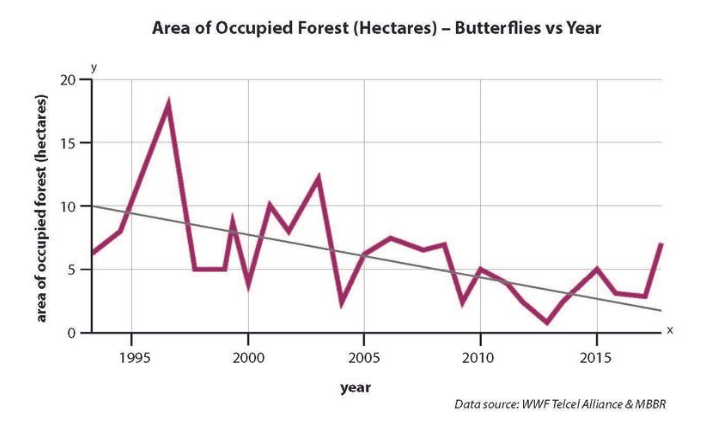
The monarch butterfly population changes every year, and scientists are concerned about what might happen to the population over time. The graph below is the data collected between 2009 and 2012 for the populations of monarch butterflies. The area of occupied forests is a method scientists use to estimate the number of butterflies.
In the graph below, the greater the area of occupied forest, the more butterflies.

1. Identify the trends in the butterfly population.
Circle the sections of the graph that show a decreasing population over time in RED.
Circle the sections of the graph that show an increasing population over time in BLUE.

Required
0

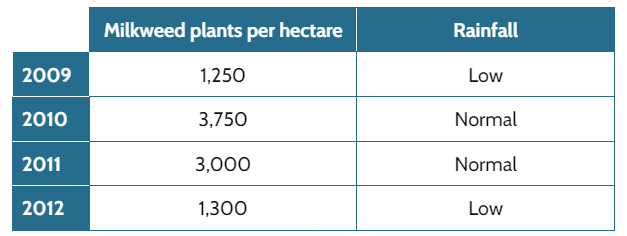
Milkweed is important to the survival of the butterflies. In years with lower-than-normal rainfall, there can be fewer milkweed plants. The table shows the number of milkweed plants per hectare from 2009 to 2012.
lower-than-normal
Annotate the butterfly population graph to show what is happening with the resource (milkweed) each year.
Required
4

Explain how this change in the number of milkweed plants affects the population of monarch butterflies between 2009 and 2012.

*THIS IS A C.E.R.*
  • include the dates
  • include why

Explaining the data
Required
1

The graph shows the eastern monarch butterfly population from 1993 to 2018. The gray line is a trend line which shows the overall pattern of change in the amount of land occupied by butterflies over time. Remember, the area of occupied forest is a method scientists use to estimate the number of butterflies. In the graph below, the greater the area of occupied forest, the more butterflies.


Is this graph showing a normal fluctuation or an unusual trend in population size?

Required
4

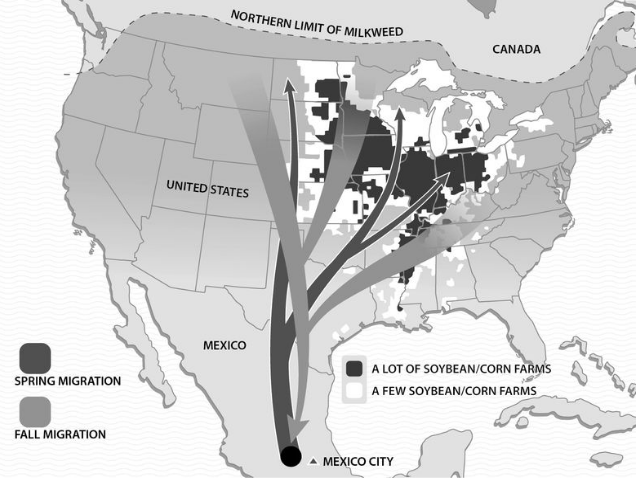
This map shows the eastern monarch butterfly migration route. The black-shaded area shows where the prairies in the Midwestern United States used to be but are now mostly soybean and corn farms.


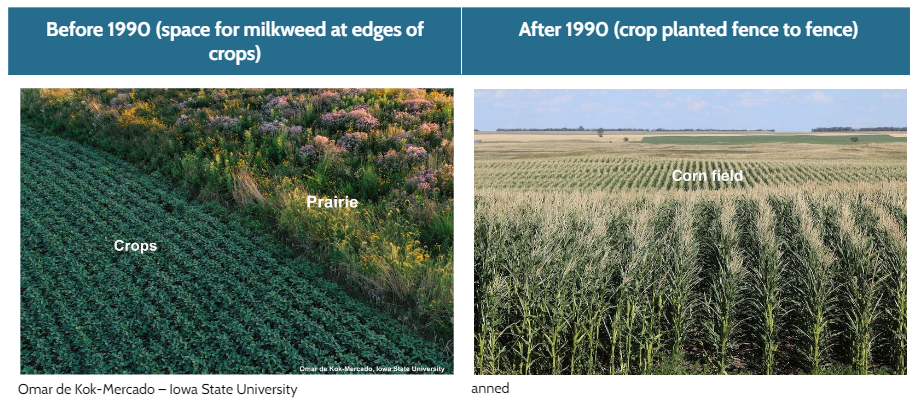
In the 1990s, farmers of corn and soybean changed their farming practices.
  • Before 1990, there was space between plants for milkweed to grow.
  • Now, farmers can grow corn and soybean from fence to fence leaving no space for milkweed.
Scientists estimate that there is only 1-2% of milkweed left in this area now compared to what was there before it was farmed.

How did the change in farming practices after 1990 affect the monarch butterfly population?

**This is a CER**