This is the teacher presentation to download if you wish to use for revision or study purposes.
Teacher Notes
GCE Digital Tech AS
Use of smart devices in domestic settings, the built environment and manufacturing
Lesson 1.1.1c (overview and introduction)
Learning Objectives
•Identify and explain the contexts in which smart devices are typically used
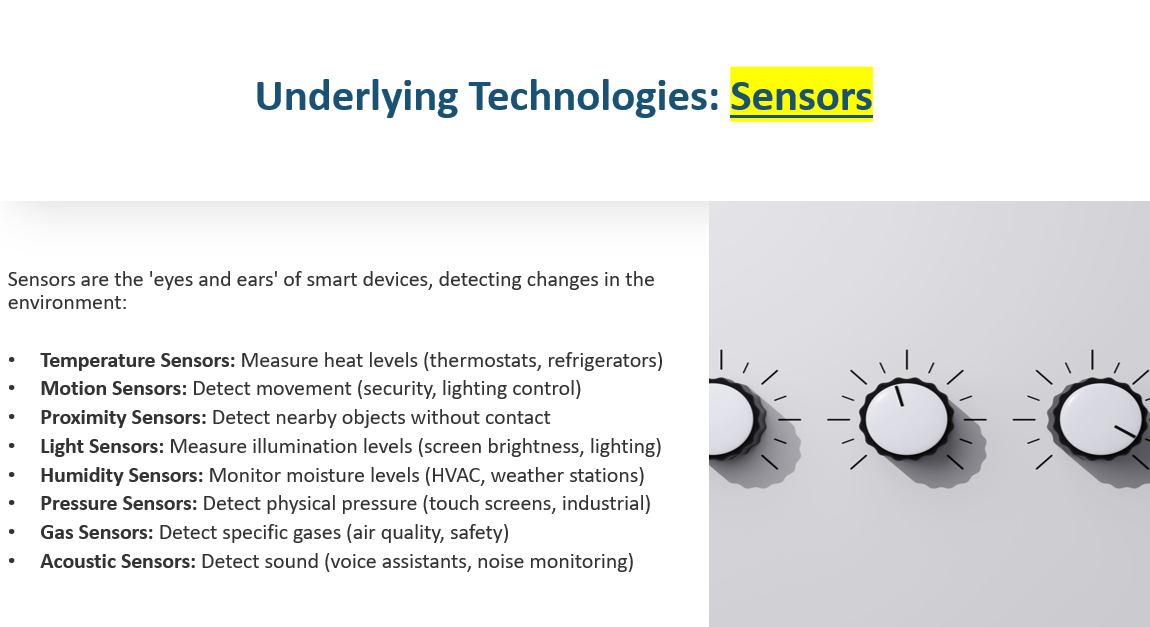
•Describe the underlying technologies that power smart devices
•Explain how smart devices control required processes
•Evaluate the positive and negative impacts of smart device technologies
•Analyse the social, legal, ethical, and professional impacts of smart devices
•Assess the environmental impacts of smart device proliferation
Learners should understand:
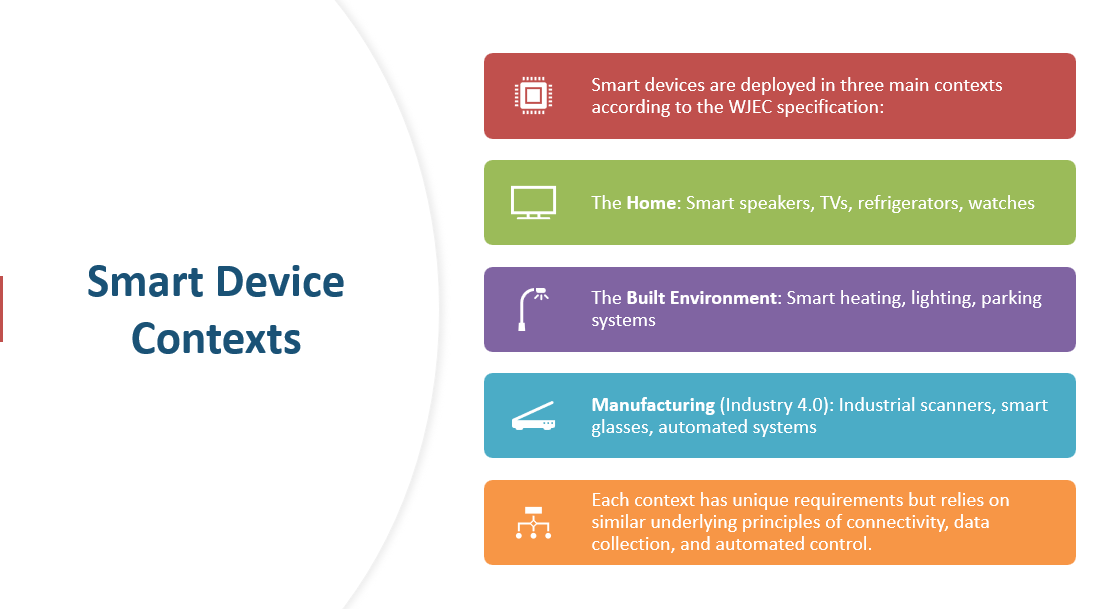
• the contexts smart devices are typically used within:
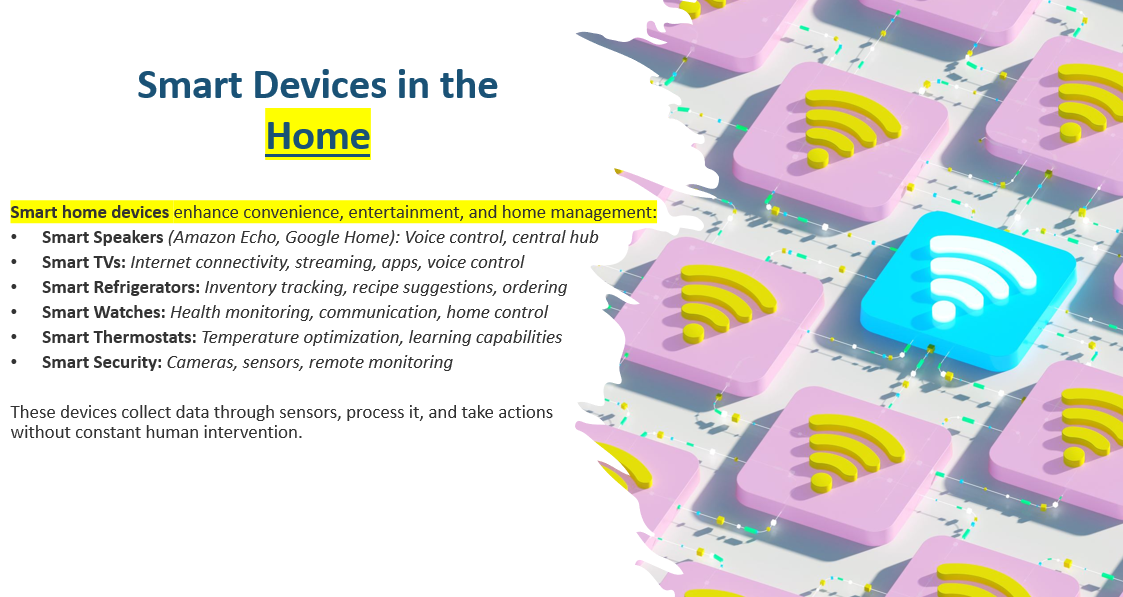
• the home (e.g. smart speakers, TVs, fridges, watches)
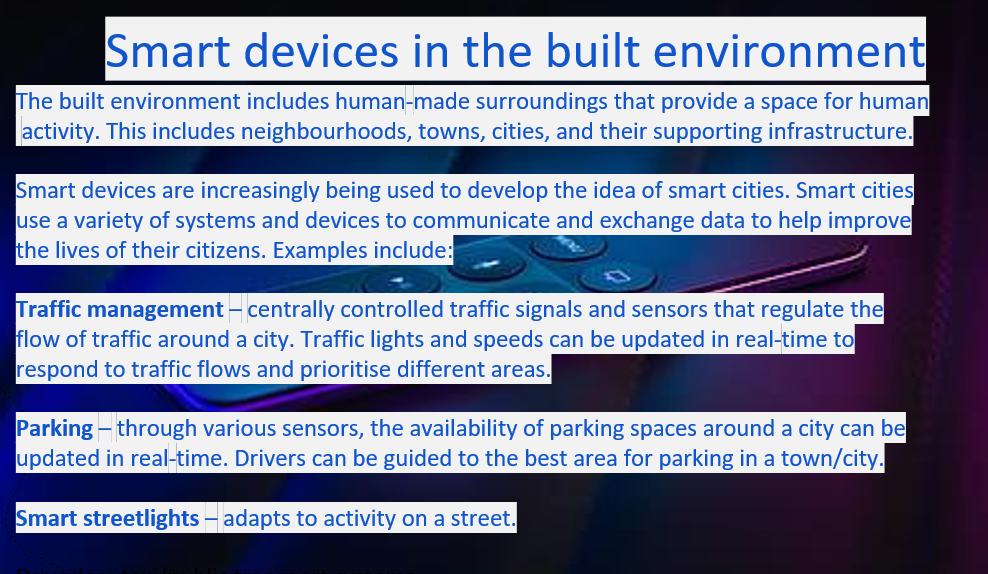
• the built environment (e.g. heating, lighting, parking)
• manufacturing (e.g. Industry 4.0, scanners, smart glasses)
the underlying technologies, including:
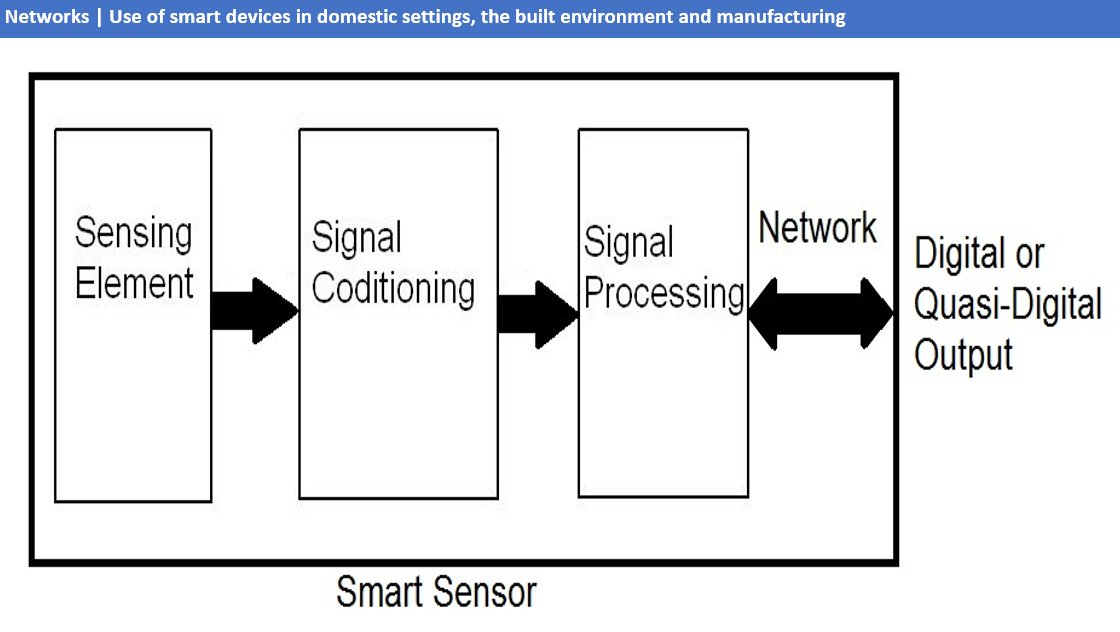
• sensors
• software and communication technologies
• how the device(s) controls the required process(es)
• the positive and negative impacts of the underlying technologies
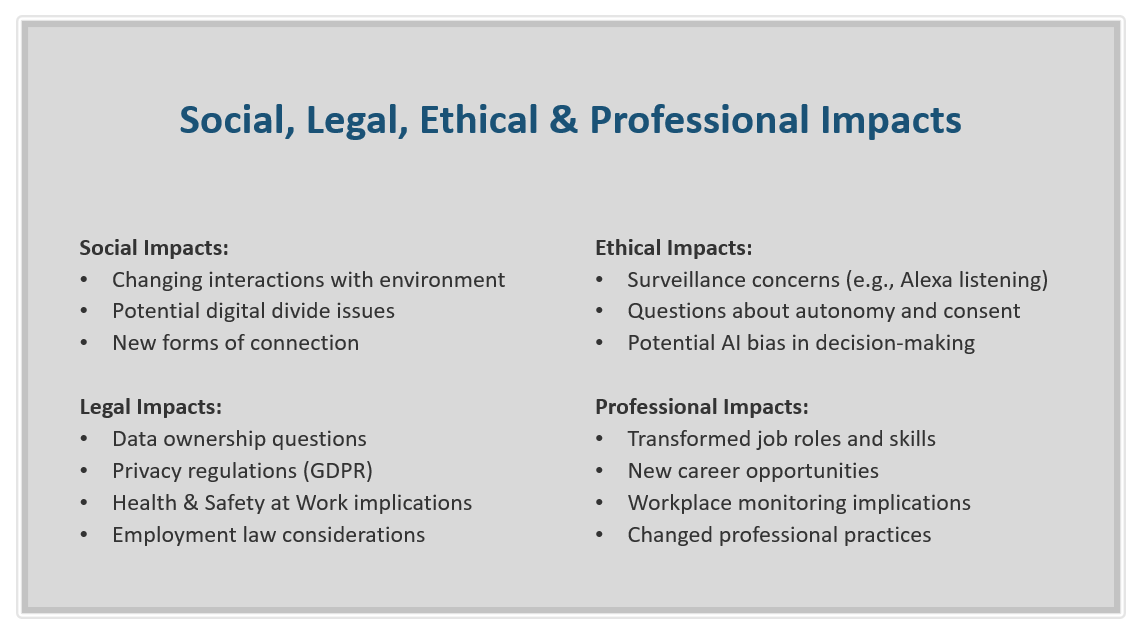
• the social, legal, ethical and professional impact of the use of smart devices in the home and workplace
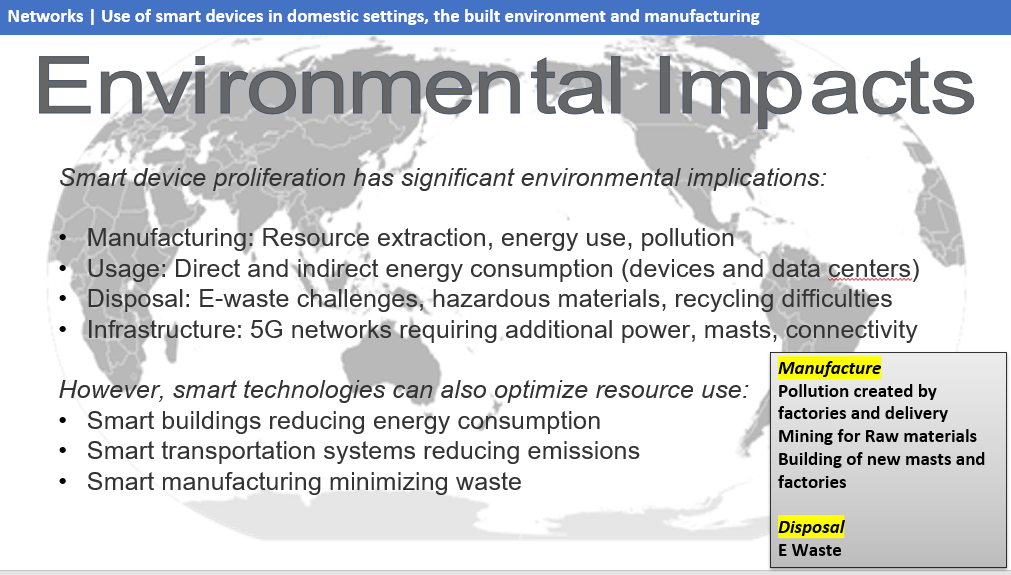
• the environmental impacts of the proliferation of devices in terms of their manufacture, use and disposal, as well as the consumption of finite resources such as electricity.
Below are the teacher summarised notes for this lesson as an alternative learning resource.
Learners should understand the uses of a broad range of smart devices in each of the applicable contexts. This should include their associated advantages and disadvantages as well as any legal implications e.g. a data privacy issue surrounding the fact that Alexa devices listen all the time. They process and store the last 30 seconds of audio locally and machine-learn from the rest by storing it as a data set such that it can recognise individuals as well as individual phrases and words. Other legal issues would relate to Health and Safety at Work, and issues surrounding employment law.
Learners should understand:
the underlying technologies, including:
• sensors
• software and communication technologies
• how the device(s) controls the required process(es)
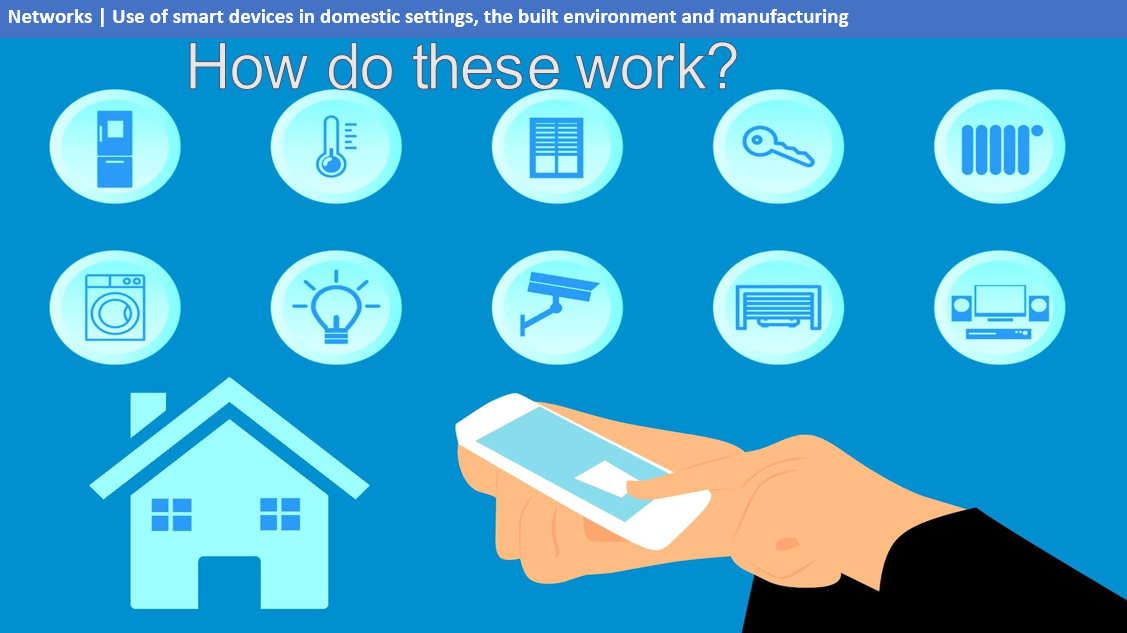
Learners should understand how a range of smart devices work e.g., a smart speaker would
comprise of a microphone and a speaker alongside a means of connecting to the Internet. In the case of the Alexa devices, it continually sends sound to a central system that pattern matches the sound waves looking for the key word “Alexa” which indicates that a command is coming which then gets pattern matched and processed using various AI techniques. It could be argued that the device itself is therefore not “smart” but a conduit to an AI service (Alexa).
Learners should understand:
• the positive and negative impacts of the underlying technologies
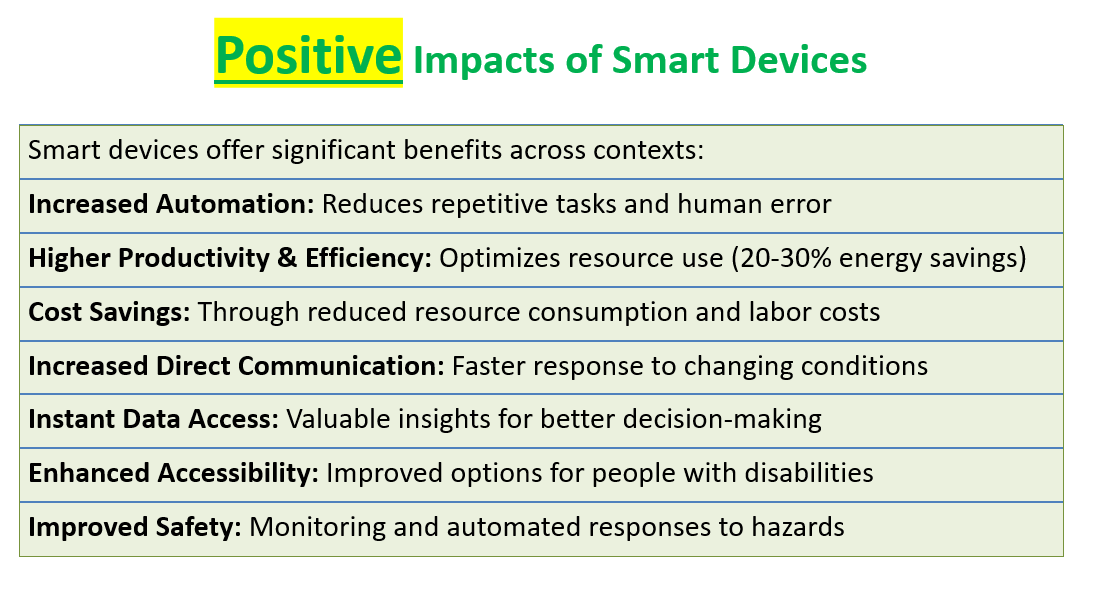
Positive: Increased Automation, High Productivity & Efficiency, More Cost-Savings, Increased Direct Communication, Instant Data Access
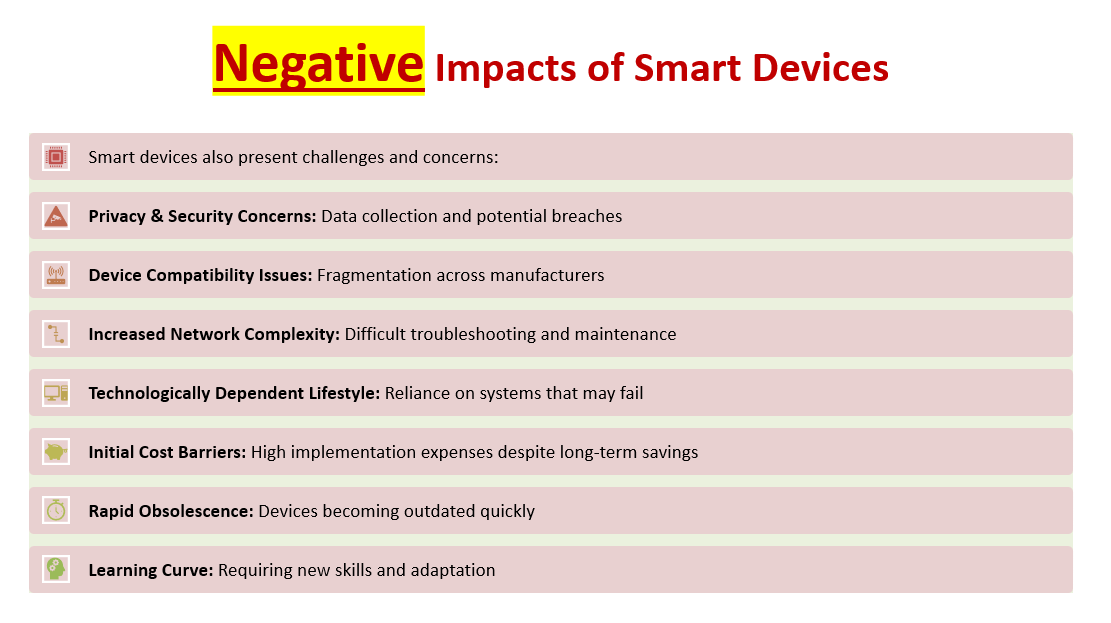
Negative: Less Privacy and Security, Device Compatibility Issues, Increase in Network Complexity, Technologically Dependent Life.
Learners should understand:
• the social, legal, ethical and professional impact of the use of smart devices in the home and
workplace
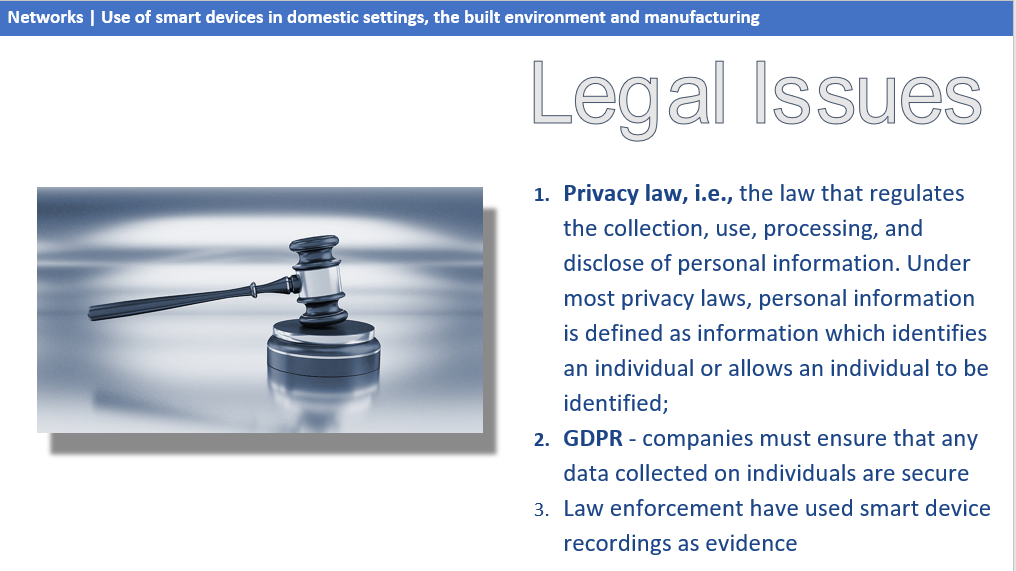
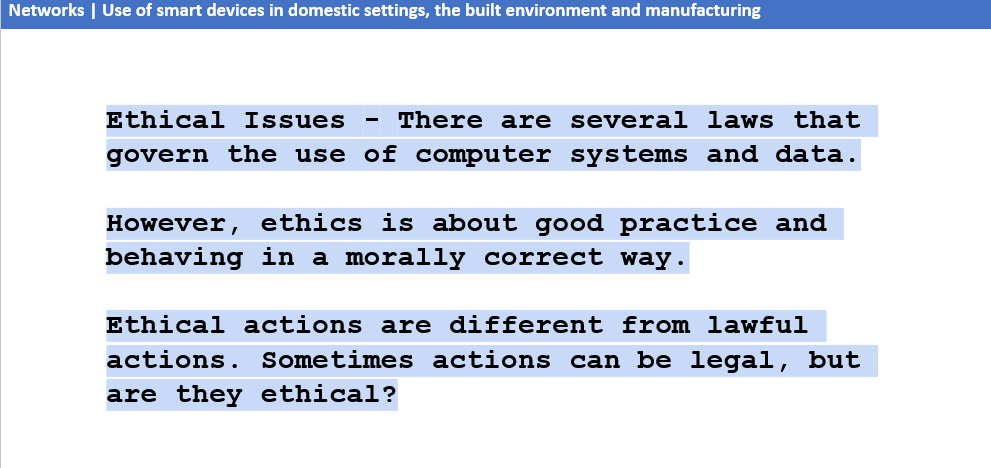
Learners should understand the legal framework and implications of the use of smart devices in the context of their use. The ethics of using such smart devices and their professional impact should also be considered e.g. will the proliferation of smart devices lead to a culture where people are either consumers or delivery drivers? Will the reliance on potentially inaccurate or biased AI data sets lead to potentially perilous outcomes? e.g. there is a data privacy issue surrounding the fact that Alexa devices “listen” all the time, processes and stores the last 30 seconds of audio locally and machine learns from the rest by storing it as a data set such that it can recognise individuals. Law enforcement agencies in the US have used these recordings as evidence.
Learners should understand:
• the environmental impacts of the proliferation of devices in terms of their manufacture, use and disposal, as well as the consumption of finite resources such as electricity.
This would include the wider picture of the infrastructure that supports these devices such as 5G which requires additional power, masts and connectivity which would include an environmental impact.
Traffic lights
TV
Fridge
Industry 4.0
Watch
Light Poles
Smart Speakers
Multi Purpose Parking
Smart Glasses
Scanners
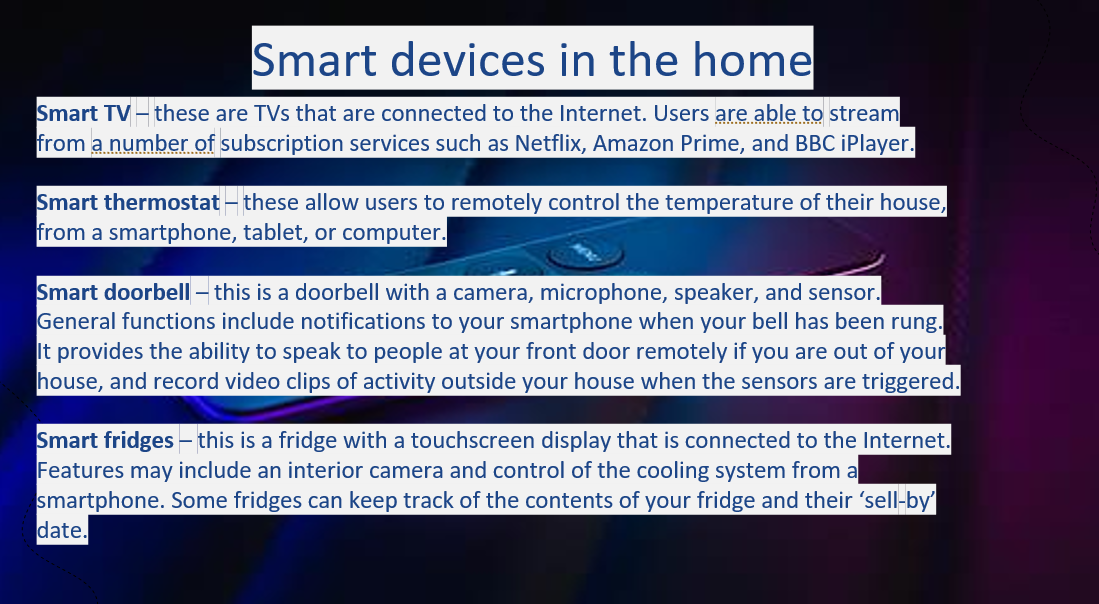
Smart Devices in the home
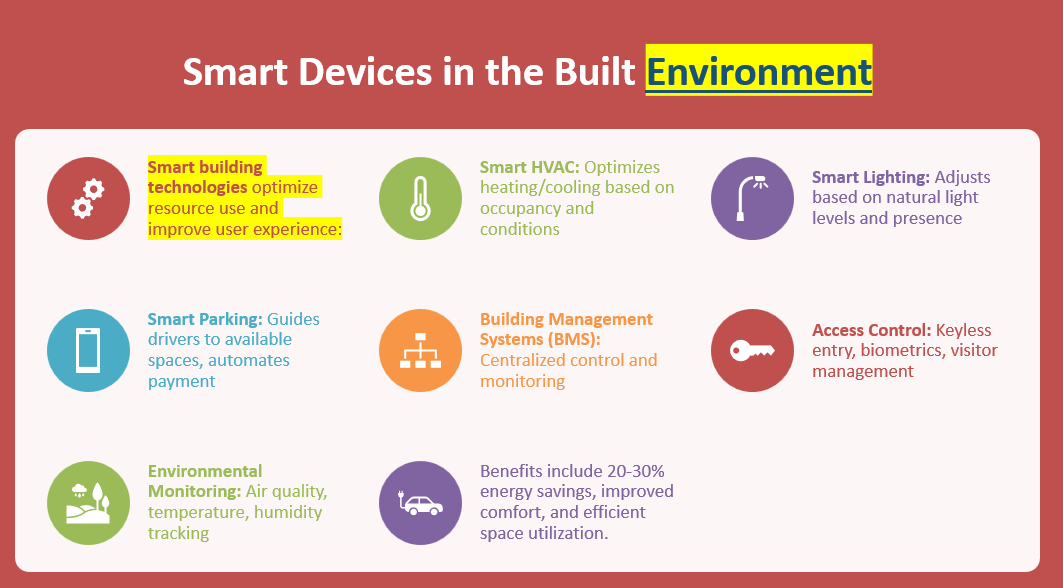
Smart Devices in the built environment
Smart Devices in manufacturing
Try this interactive activity and screenshot your final score below:
For Smart HVAC System Purpose, identity the correct purpose to that device.
| Draggable item | arrow_right_alt | Corresponding Item |
|---|---|---|
Smart Watch | arrow_right_alt | Controls other smart devices through voice commands, answers questions, plays music, and provides information |
Smart Speaker/Voice Assistant | arrow_right_alt | Monitors and controls home temperature, learns occupancy patterns, and optimizes heating/cooling for comfort and energy efficiency |
Smart TV | arrow_right_alt | Monitors contents, tracks expiration dates, suggests recipes, and can order groceries automatically |
Smart Lighting | arrow_right_alt | Connects to internet services, streams content, integrates with other smart home devices, and responds to voice commands |
Smart Security System | arrow_right_alt | Tracks health metrics, provides notifications, controls other smart devices, and enables communication |
Smart Thermostat | arrow_right_alt | Allows remote control of lights, automated scheduling, and adjustment based on occupancy or time of day |
Smart Refrigerator | arrow_right_alt | Monitors home for intrusions, provides remote viewing of cameras, and sends alerts when unusual activity is detected |
For Smart Built Environment, identity the correct purpose to that device.
| Draggable item | arrow_right_alt | Corresponding Item |
|---|---|---|
Smart Parking System | arrow_right_alt | Optimizes heating, ventilation, and air conditioning based on occupancy, weather, and usage patterns |
Smart Access Control | arrow_right_alt | Adjusts lighting based on occupancy, natural light levels, and time of day to improve comfort and energy efficiency |
Smart Lighting System | arrow_right_alt | Monitors parking space availability, guides drivers to open spaces, and enables automated payment |
Environmental Monitoring System | arrow_right_alt | Centrally controls and monitors building systems including HVAC, lighting, security, and fire safety |
Smart HVAC System | arrow_right_alt | Detect presence of people in spaces to optimize lighting, heating, and ventilation |
Building Management System | arrow_right_alt | Manages entry to buildings using keycards, biometrics, or smartphone credentials |
Occupancy Sensors | arrow_right_alt | Tracks air quality, temperature, humidity, and other factors to ensure healthy indoor environments |
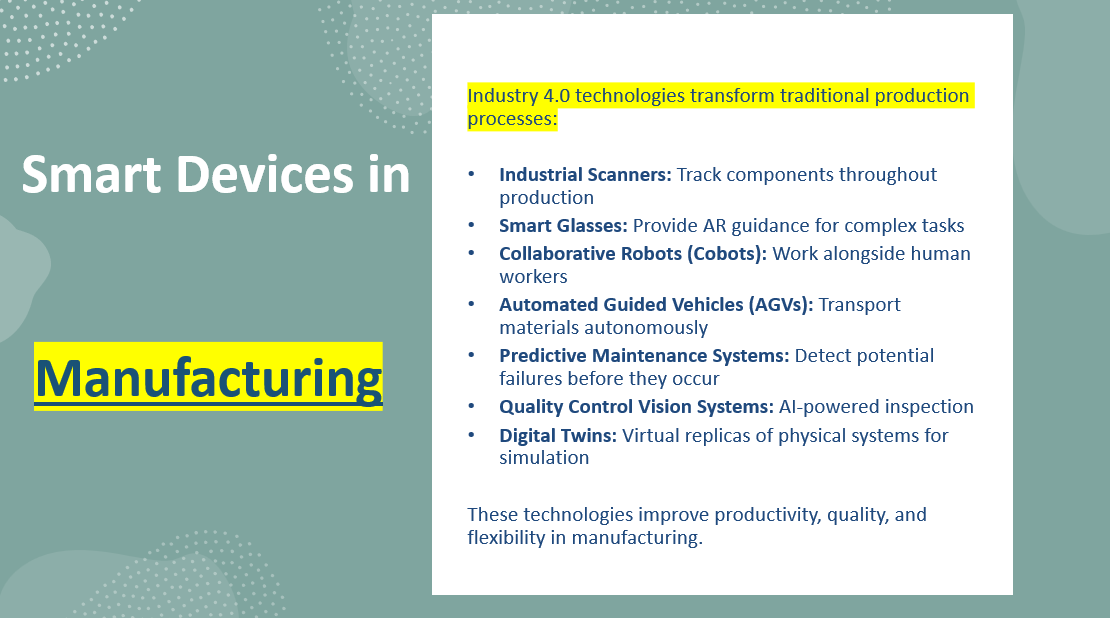
For Smart Manufacturing System, identity the correct purpose to that device.
| Draggable item | arrow_right_alt | Corresponding Item |
|---|---|---|
Digital Twins | arrow_right_alt | Track inventory, components, and products throughout the manufacturing process |
Quality Control Vision Systems | arrow_right_alt | Provide workers with real-time information, instructions, and remote assistance while keeping hands free |
Predictive Maintenance Sensors | arrow_right_alt | Work alongside human workers to perform repetitive or dangerous tasks safely |
Smart Glasses/AR Headsets | arrow_right_alt | Transport materials autonomously throughout the factory floor |
Automated Guided Vehicles (AGVs) | arrow_right_alt | Monitor equipment conditions to predict failures before they occur and schedule maintenance proactively |
Industrial Scanners | arrow_right_alt | Use cameras and AI to inspect products for defects with greater accuracy than human inspection |
Collaborative Robots (Cobots) | arrow_right_alt | Create virtual replicas of physical systems to simulate, optimize, and troubleshoot production processes |
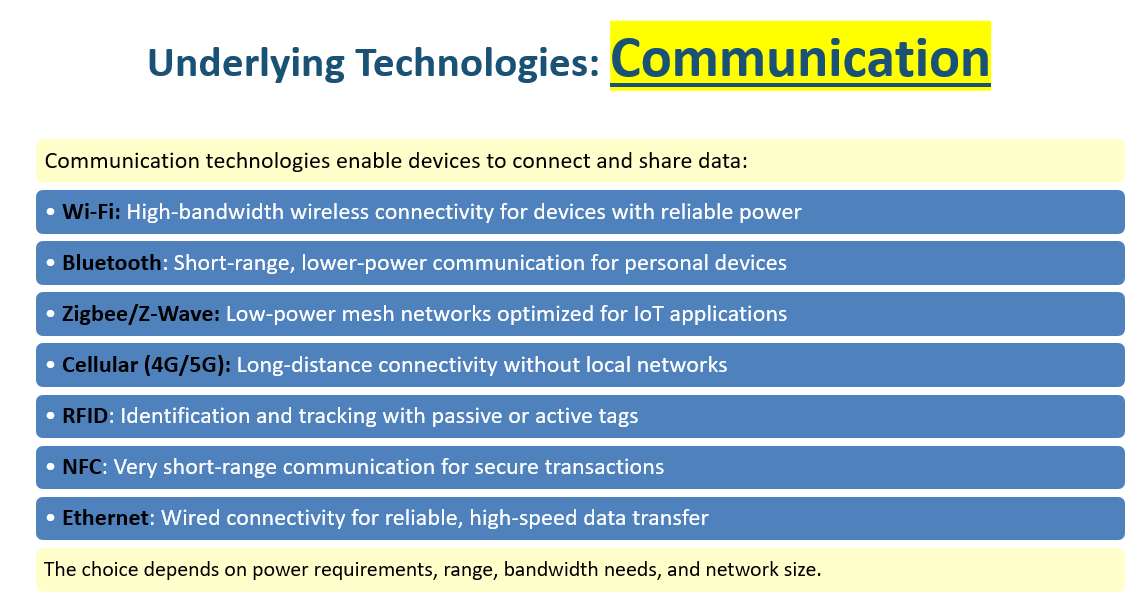
Match the technology to its correct description
| Draggable item | arrow_right_alt | Corresponding Item |
|---|---|---|
Bluetooth | arrow_right_alt | Measures heat levels in the environment |
Zigbee | arrow_right_alt | High-bandwidth wireless networking protocol |
Temperature Sensor | arrow_right_alt | Low-power mesh networking protocol for IoT devices |
Microcontroller | arrow_right_alt | Detects movement in a specific area |
Motion Sensor | arrow_right_alt | Enables short-range wireless communication between devices |
Wi-Fi | arrow_right_alt | Small computer that processes sensor data and controls actuators |
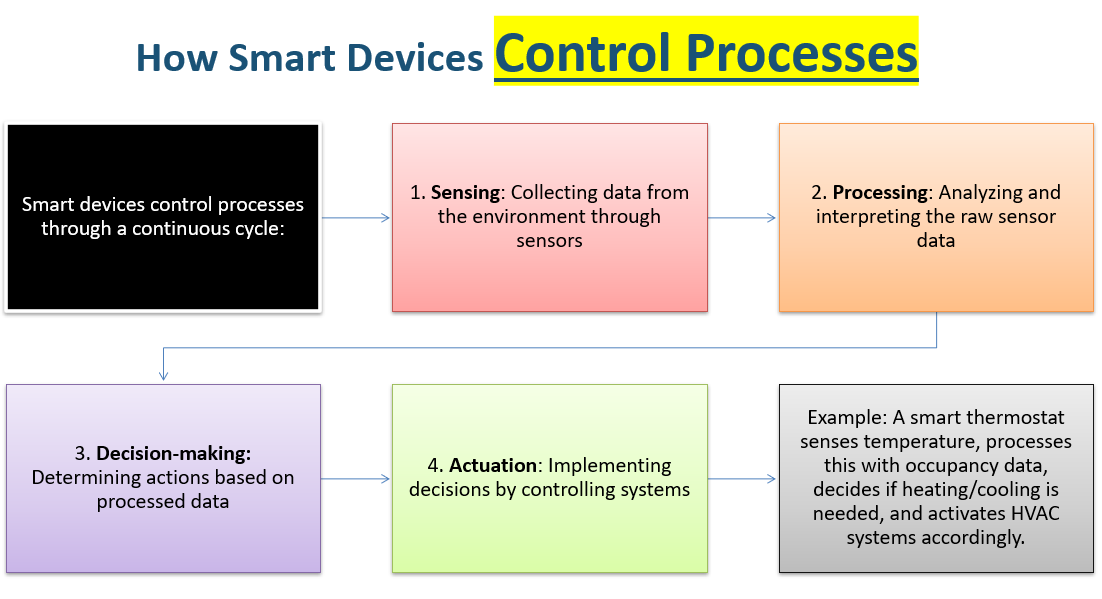
The diagram below shows how a smart thermostat controls home heating.
 Label each stage of the process (A-D) with the correct term from the list: ,
A = []
B = []
C = []
D = [] feedback to [A]
Decision-making
Actuation
Processing
Sensing
Identify the stages of the control process system
| Draggable item | arrow_right_alt | Corresponding Item |
|---|---|---|
Processing | arrow_right_alt | Temperature sensors detect the current room temperature and occupancy sensors detect if people are present in the home. |
Decision-making | arrow_right_alt | The thermostat’s microprocessor analyzes the temperature data, compares it to the set point, and considers occupancy information. |
Actuation | arrow_right_alt | Based on the processed data, the system decides whether heating or cooling is needed and to what degree. |
Sensing | arrow_right_alt | The thermostat sends signals to the heating/cooling system to turn on/off or adjust intensity as needed. |
Positive | Negative | |
|---|---|---|
Reduces energy consumption through optimized heating, cooling, and lighting | ||
Raises privacy concerns through occupancy tracking and monitoring | ||
Improves occupant comfort through responsive environmental controls | ||
Creates cybersecurity vulnerabilities in critical building systems | ||
Requires significant initial investment and ongoing maintenance | ||
May lead to job displacement for traditional building management roles | ||
Enhances building security and safety through integrated monitoring | ||
Provides data for better space utilisation and facility management |
For each of the Smart Building Management System
 Identify one positive impact and one negative impact.
Positive | Negative | |
|---|---|---|
Reduces energy consumption through optimized heating, cooling, and lighting | ||
Improves occupant comfort through responsive environmental controls | ||
Raises privacy concerns through occupancy tracking and monitoring | ||
Enhances building security and safety through integrated monitoring | ||
Provides data for better space utilization and facility management | ||
Creates cybersecurity vulnerabilities in critical building systems | ||
Requires significant initial investment and ongoing maintenance | ||
May lead to job displacement for traditional building management roles |
For each of the Industrial IoT in Manufacturing
 Identify one positive impact and one negative impact.
Positive | Negative | |
|---|---|---|
May lead to job displacement or significant changes in workforce requirements | ||
Increases production efficiency and reduces waste | ||
Creates cybersecurity vulnerabilities in critical production systems | ||
Requires substantial investment in technology and worker retraining | ||
Increases dependency on technology vendors and specialized expertise | ||
Improves product quality through consistent processes and better quality control | ||
Enhances worker safety by automating dangerous tasks | ||
Enables predictive maintenance to reduce downtime and extend equipment life |
Read the following case study and answer the questions below.
Smart City Implementation
A medium-sized city has implemented various smart technologies to improve urban living. These include smart streetlights that adjust brightness based on pedestrian and vehicle presence, smart waste bins that notify collection services when they’re full, and environmental sensors that monitor air quality throughout the city. The data from these systems is collected in a central dashboard accessible to city officials.
The implementation has reduced energy consumption by 30% and optimized waste collection routes, saving fuel and reducing emissions. However, some residents have expressed concerns about the surveillance aspects of the system and questioned who has access to the data being collected.
Identify the underlying technologies being used in this smart city implementation.
Explain one social impact and one environmental impact of this implementation
What legal or ethical concerns might arise from this implementation? Suggest one way these concerns could be addressed.
Which of the following is NOT typically considered a smart home device?
In the context of smart buildings, which technology is primarily used to optimize energy usage?
Which of the following best describes Industry 4.0?
Which type of sensor would be most appropriate for a smart device that needs to detect when someone enters a room?
Which communication protocol is specifically designed for low-power, short-range communication between IoT devices?
How do smart devices typically control processes?
Which of the following is a positive impact of smart device technologies?
Which legal framework is particularly relevant to the data collected by smart devices in Europe?
Which of the following is an environmental concern related to smart device proliferation?
Which interaction type describes communication between smart devices without human intervention?
Explain two ways in which smart speakers (e.g., Amazon Echo, Google Home) use underlying technologies to function.
Describe how a smart building might use sensors and software to control heating and lighting systems.
Identify and explain two potential privacy concerns associated with smart devices in the home.
Explain why IPv6 is important for the implementation of IoT and smart devices.
Describe one social and one ethical impact of using smart devices in manufacturing environments.
Choose ONE of the following questions and write a detailed response.
1. “The benefits of smart device proliferation outweigh the potential risks and challenges.” Discuss this statement, considering technological, social, ethical, and environmental factors.
2. Evaluate the environmental impact of smart devices throughout their lifecycle, from manufacture to disposal. Include specific examples and suggest ways to mitigate negative impacts.

STARTER
Categorise the type of technologies you would find in these scenarios
When entering the KB Home prototype smart house, what happens automatically?
The smart home walls can physically move to change the layout of rooms.
What special feature does the fold-out wall in the home office contain?
Sort the following features into the correct category:
Keikar robot projector/guard dog
Delos air quality sensors
Smart shower and toilet
Whirlpool connected kitchen
Smart Appliances
Wellness & Environment Systems
Robotics
Approximately how many connected devices are inside the prototype house?
Match the smart feature to its benefit:
| Draggable item | arrow_right_alt | Corresponding Item |
|---|---|---|
Delos wellness system | arrow_right_alt | Mimics natural day/night cycle |
Keikar robot | arrow_right_alt | Cleans air instantly when needed |
Circadian rhythm lighting | arrow_right_alt | Acts as security patrol and projector |
The smart home’s water spilled when the fold-out bed wall moved.
The automated garbage system in Barcelona reduces noise pollution by eliminating the need for garbage trucks.
Match each smart system in Barcelona to its benefit:
| Draggable item | arrow_right_alt | Corresponding Item |
|---|---|---|
Garbage vacuum network | arrow_right_alt | Brighten/dim based on motion, saving energy |
Smart street lights | arrow_right_alt | Help drivers locate free spots via app |
Parking sensors | arrow_right_alt | Reduces noise, odor, and cost |
Which of the following services can be accessed through Dubai’s “Dubai Now” app?
Sort the following smart initiatives into the correct city:
Garbage vacuum system
Dubai Now app
Parking sensors
Smart street lights
Virtual Singapore platform
Singapore
Dubai
Barcelona
Which of the following city services were mentioned as part of smart city integration?
By 2021, how much did Juniper Research estimate smart cities could save?
Singapore’s Smart Nation program can monitor littering, smoking, and vehicle movement.
For each of the Smart Home Assistant (e.g., Amazon Echo, Google Home).
 Identify one positive impact and one negative impact.