Log in
Sign up for FREE
arrow_back
Library
Maps: Histology Assignment
By Mark Bate
star
star
star
star
star
Share
share
Last updated 5 months ago
47 questions
Add this activity
zoom_in
1
4.1.a
1
4.1.a
zoom_in
1
1
4.1.a
zoom_in
1
Question 5
5.
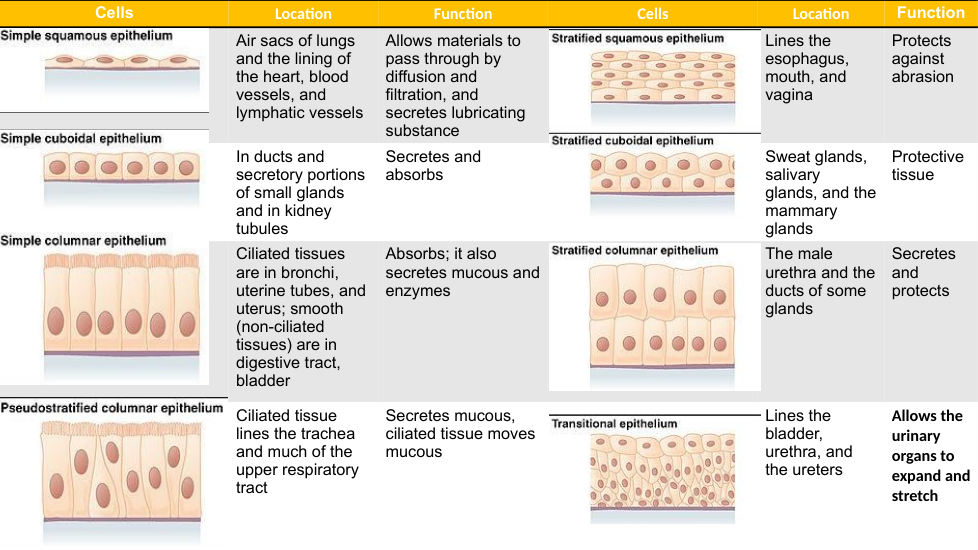
What describes simple cuboidal epithelium?
Layered rectangular cells
Single layer of cube-shaped cells
Single layer of flat cells
Multiple layers of flat cells
1
zoom_in
1
Question 7
7.
What is the primary function of simple squamous epithelium?
Allows material to pass through by diffusion
Provides protection against abrasion
Secretes mucus and enzymes
Absorbs nutrients and minerals
1
zoom_in
1
4.1.b
1
4.1.b
zoom_in
1
4.1.b
1
4.1.b
zoom_in
1
Question 13
13.
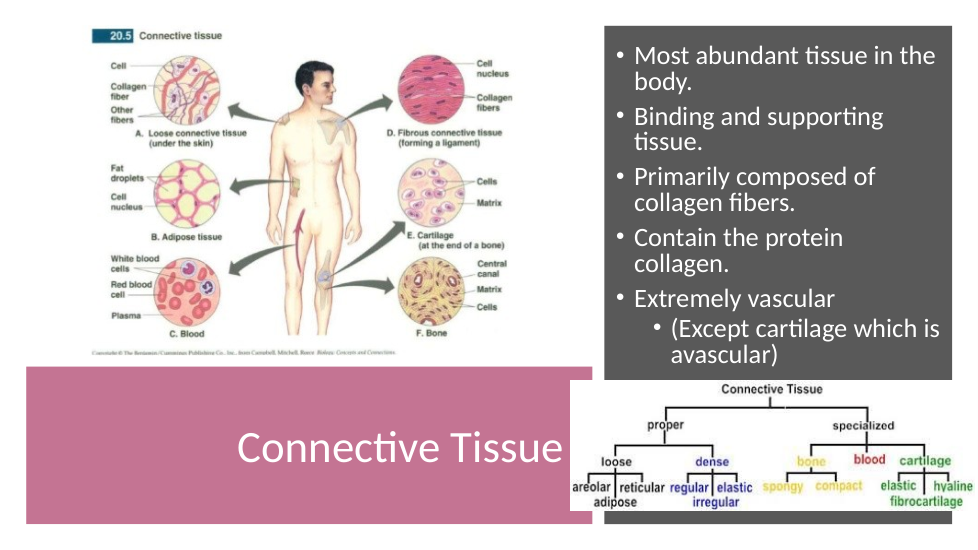
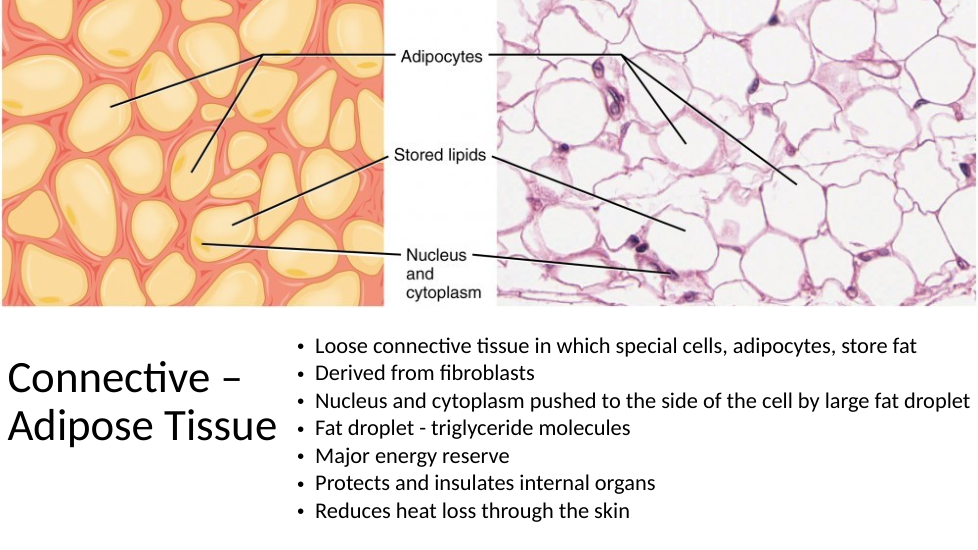
What is the main characteristic of dense regular collagenous tissue?
Fibers aligned in parallel for tension.
Fibers are primarily elastic, not collagenous.
Fibers arranged randomly for flexibility.
Fibers can stretch in multiple directions.
4.1.b
zoom_in
1
4.1.b
1
4.1.b
zoom_in
1
4.1.b
1
4.1.b
zoom_in
1
4.1.b
1
4.1.b
zoom_in
1
4.1.b
1
4.1.b
zoom_in
1
4.1.b
1
4.1.b
zoom_in
1
4.1.b
1
4.1.b
zoom_in
1
4.1.b
1
4.1.b
zoom_in
zoom_in
1
Question 28
28.
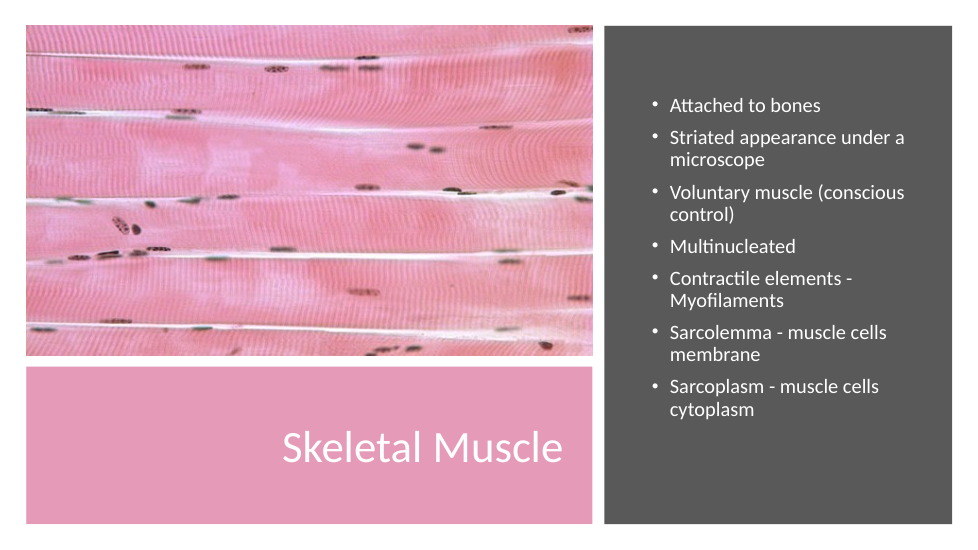
What is a key characteristic of skeletal muscle tissue?
It is involuntary and unconscious
It has a striated appearance under a microscope.
It has a smooth appearance under a microscope
It is found only in the heart
1
zoom_in
1
4.1.c
1
4.1.c
zoom_in
1
4.1.c
1
4.1.c
zoom_in
zoom_in
1
4.1.d
1
4.1.d
zoom_in
1
4.2.a
4.2.b
1
4.2.a
4.2.b
zoom_in
1
4.3.a
4.3.b
…
+2
1
4.3.a
4.3.b
…
+2
1
4.3.a
4.3.b
…
+2
1
4.3.a
4.3.b
…
+2
zoom_in
1
4.3.a
1
4.3.a
zoom_in
1
4.3.b
1
4.3.b
zoom_in
1
4.3.c
1
4.3.c
Question 1
1.
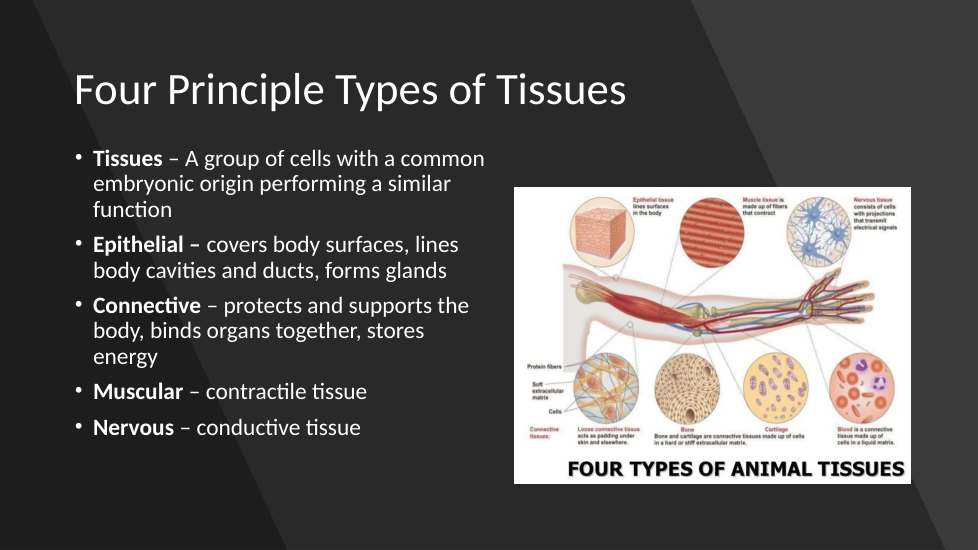
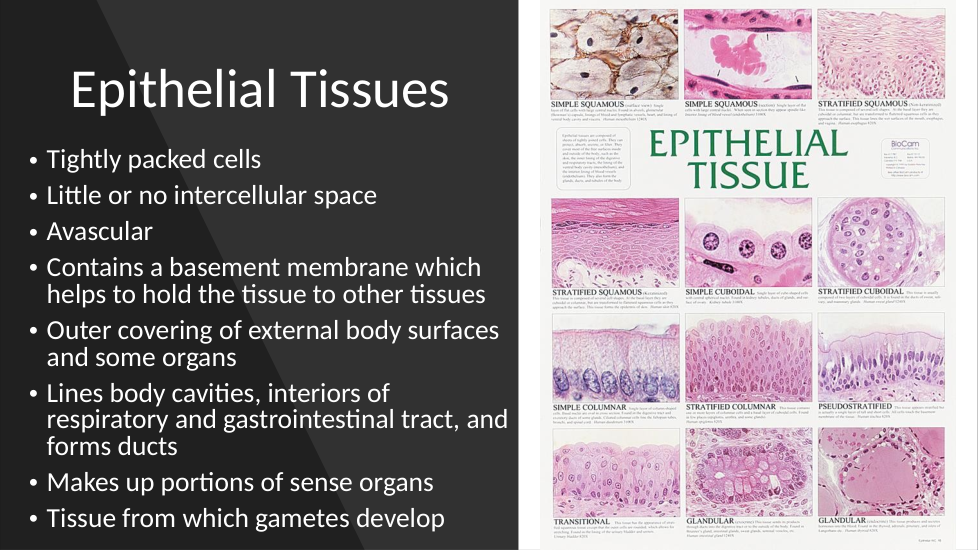
What is epithelial tissue primarily responsible for?
Conducting electrical signals
Connecting bones and muscles
Covering body surfaces and cavities
Storing energy as fat
Question 2
2.
Muscular tissue is primarily known for its ability to?
Protect body organs
Contract and produce movement
Store energy for later use
Transport nutrients and gases
Question 3
3.
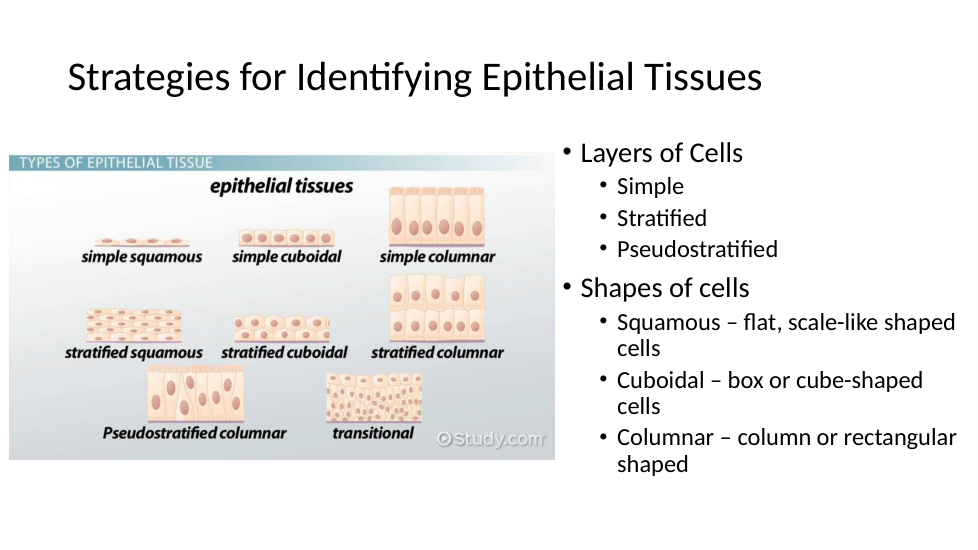
What is a key characteristic of epithelial tissues?
They are loosely arranged cells.
They have lots of blood vessels.
They are always thick and dense.
They are tightly packed cells.
Question 4
4.
Where do epithelial tissues form in the body?
They fill muscle spaces.
They form all organ structures.
They produce hormones only.
They line cavities and cover surfaces.
Question 6
6.
Which type has scale-like shaped cells?
Stratified columnar
Cuboidal
Simple squamous epithelium
Transitional
Question 8
8.
Where is transitional epithelium primarily located?
Lines the bladder, urethra, and the ureters
In ducts of small glands and kidney tubules
In sacs of lungs and blood vessels
Ciliated tissue in the upper respiratory tract
Question 9
9.
What is the primary protein found in connective tissue?
Keratin
Collagen
Actin
Elastin
Question 10
10.
Which type of connective tissue is avascular?
Adipose
Blood
Cartilage
Loose connective
Question 11
11.
What primary role do adipocytes serve in adipose tissue?
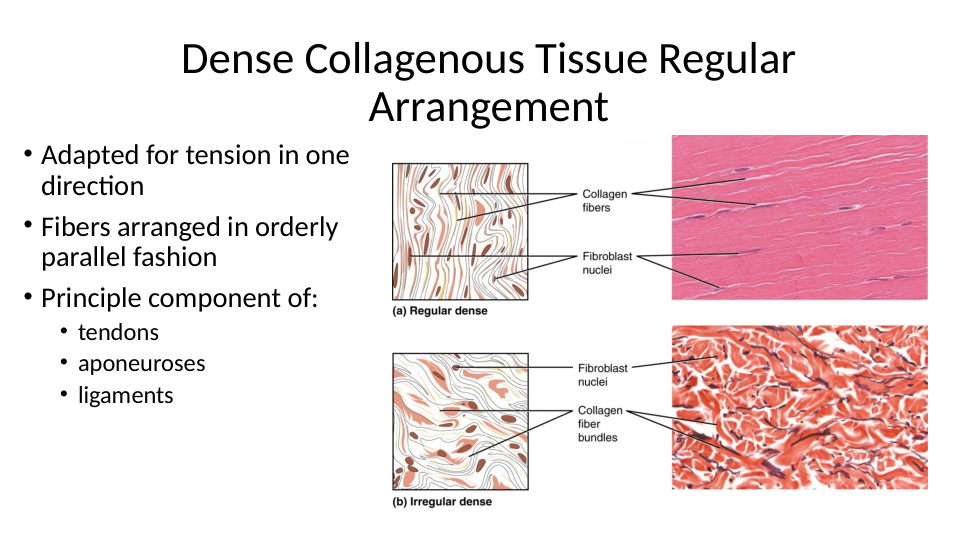
Energy storage and insulation of organs
Supporting blood cell formation
Generating heat through metabolism
Producing hormones exclusively
Question 12
12.
What is pushed to the side in adipocyte cells?
Stored lipids
Fibroblasts
Nucleus and cytoplasm
Fat droplets
Question 14
14.
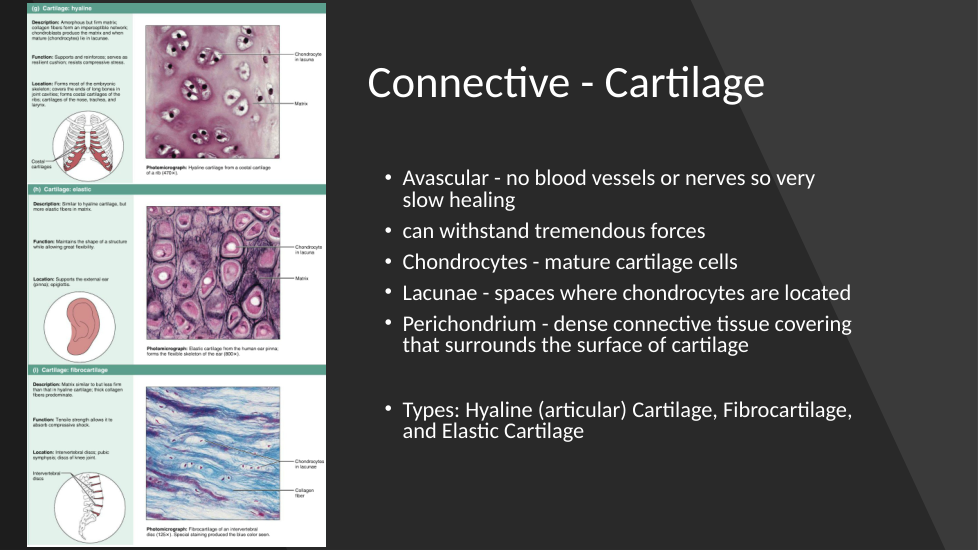
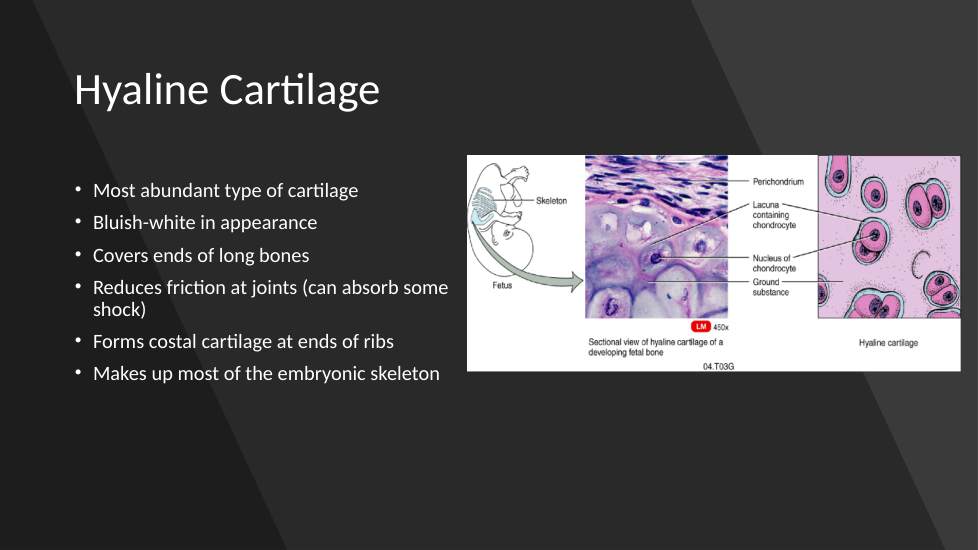
What is a key feature of cartilage's healing process?
It can regenerate like skin tissue.
It has no nerves for pain sensation.
It heals very slowly due to lack of blood vessels.
It heals quickly due to high blood supply.
Question 15
15.
What are chondrocytes primarily responsible for?
They are mature cells found in cartilage.
They provide nerve sensations in joints.
They are involved in muscle contraction.
They form blood vessels in tissues.
Question 16
16.
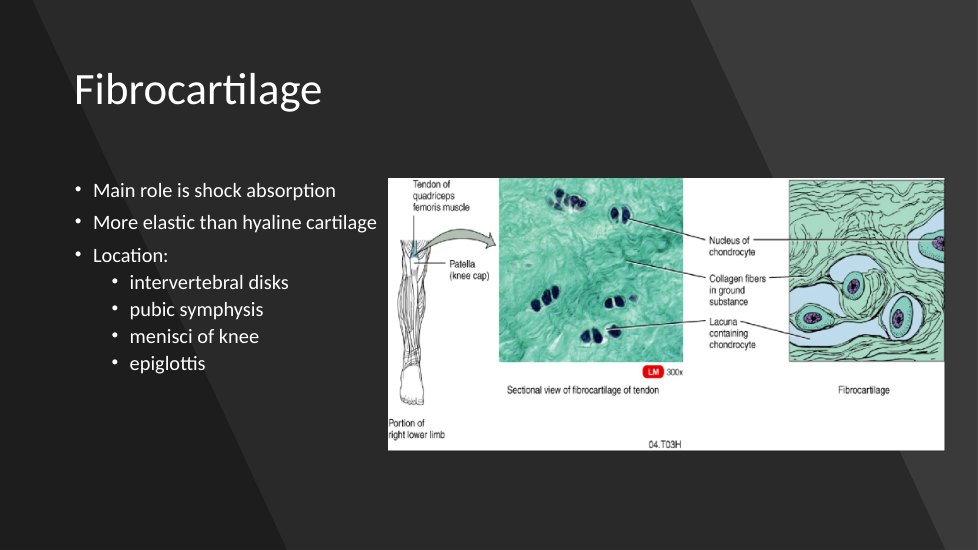
What is a primary function of hyaline cartilage?
Connects muscles to bones.
Reduces friction at joints and absorbs shock.
Produces red blood cells.
Supports the circulatory system.
Question 17
17.
Where is hyaline cartilage commonly found in the body?
Around the heart and lungs.
At the ends of long bones and ribs.
In the brain and spinal cord.
Only in the fetal skeleton.
Question 18
18.
What is the primary function of fibrocartilage?
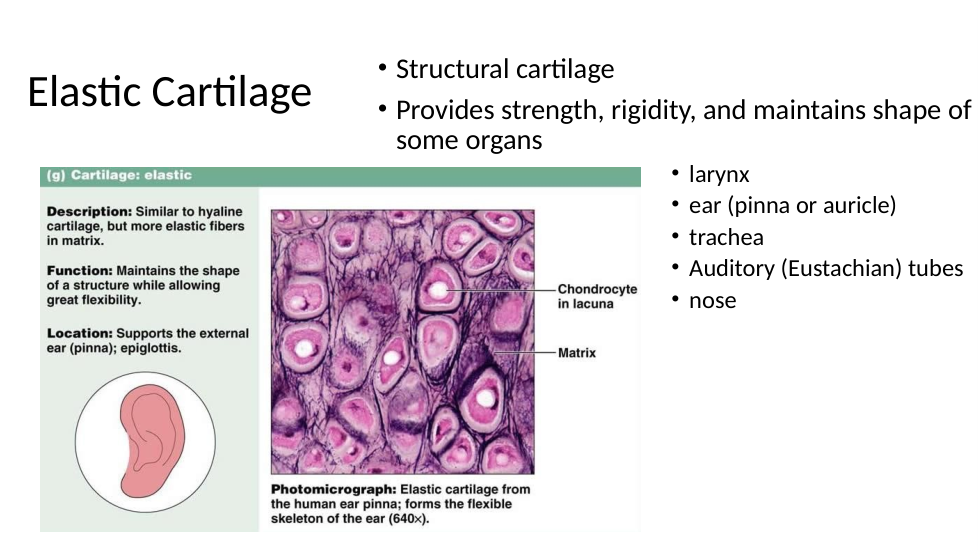
Shock absorption in joints and structures.
Allows for smooth movement in joints.
Provides structural support to bones.
Helps in blood cell production.
Question 19
19.
Where is fibrocartilage commonly found?
In intervertebral disks and knee menisci.
In finger joints and skin.
In the outer ear and trachea.
In the lungs and heart.
Question 20
20.
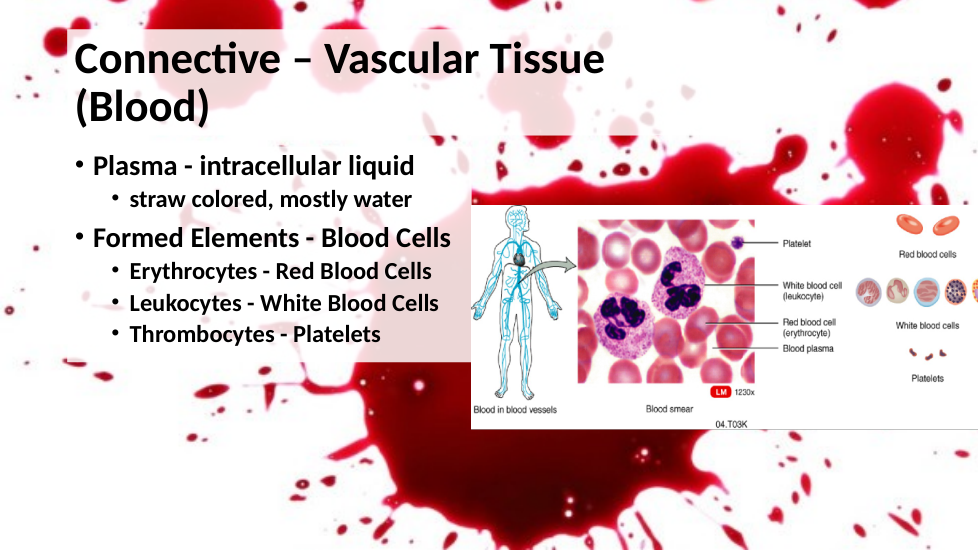
What is the primary function of elastic cartilage?
Transports oxygen in blood
Maintains shape while allowing flexibility.
Supports muscle contraction
Provides limited flexibility
Question 21
21.
Where is elastic cartilage commonly found in the body?
In the nose
In knee joints
In the ear and Eustachian tubes.
In the ribcage
Question 22
22.
Which component of blood helps in transporting oxygen?
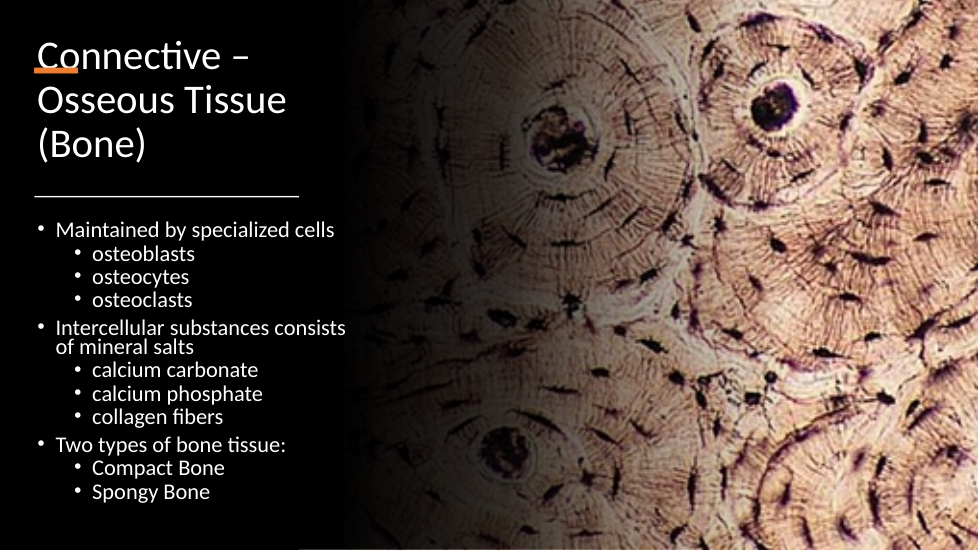
Erythrocytes (red blood cells)
Plasma
Thrombocytes (platelets)
Leukocytes (white blood cells)
Question 23
23.
What is plasma primarily made of?
Gases like oxygen and carbon dioxide
Mostly water and some proteins
Only cells and no liquid
Solid proteins only
Question 24
24.
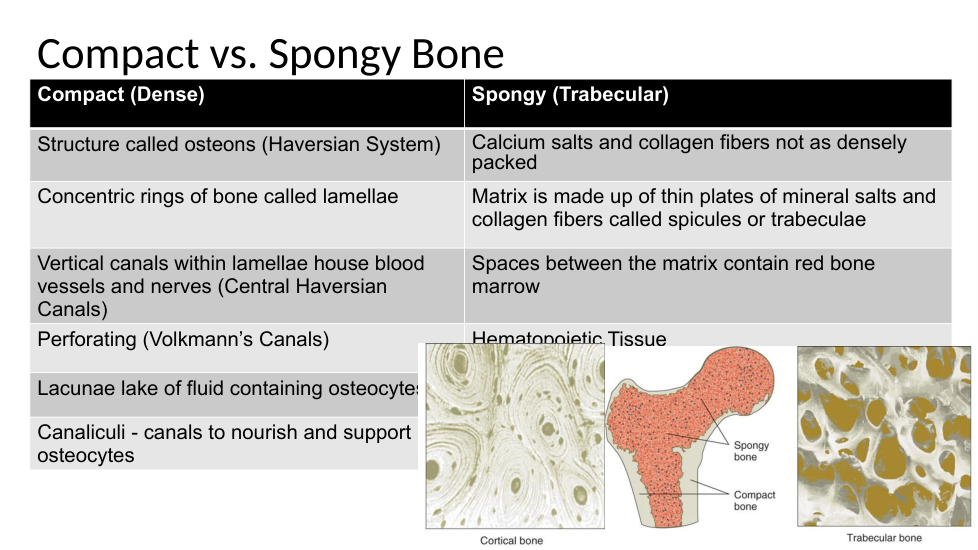
What cells are involved in bone maintenance?
Erythrocytes and leukocytes
Adipocytes and myocytes
Chondrocytes and fibroblasts
Osteoblasts, osteocytes, and osteoclasts
Question 25
25.
Which is NOT a component of osseous tissue?
Calcium phosphate
Collagen fibers
Calcium carbonate
Adipose tissue
Question 26
26.
What is a key feature of compact bone?
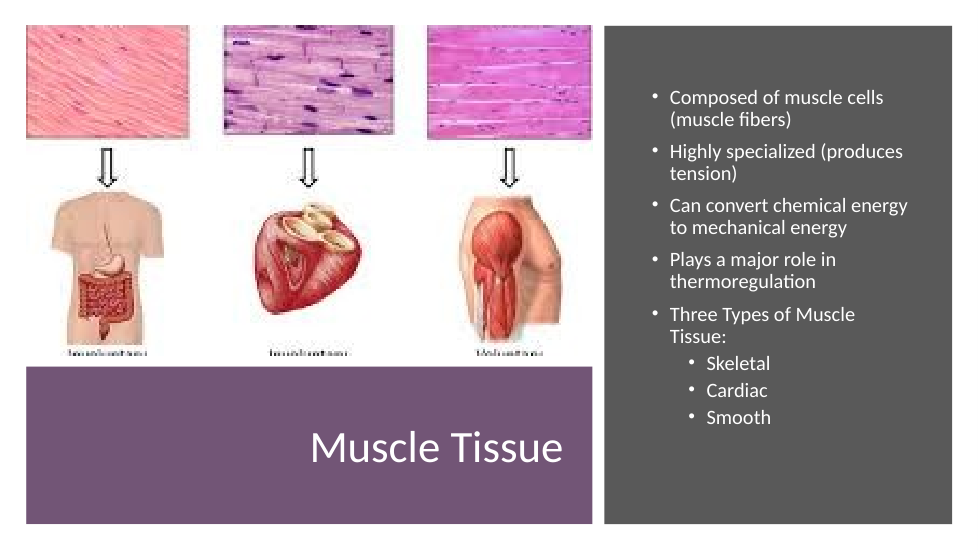
Osteons and Central Haversian Canals
Red bone marrow fills the space
Calcium salts are less dense
Calcified spicules are predominant
Question 27
27.
What primarily characterizes spongy bone?
Contains Haversian systems
Spaces filled with red bone marrow
Dense structure with osteons
Concentric layers called lamellae
Question 29
29.
What type of control is skeletal muscle under?
Skeletal muscle operates independently of the brain
Skeletal muscle is under involuntary control
Skeletal muscle is not controlled at all
Skeletal muscle is under voluntary control.
Question 30
30.
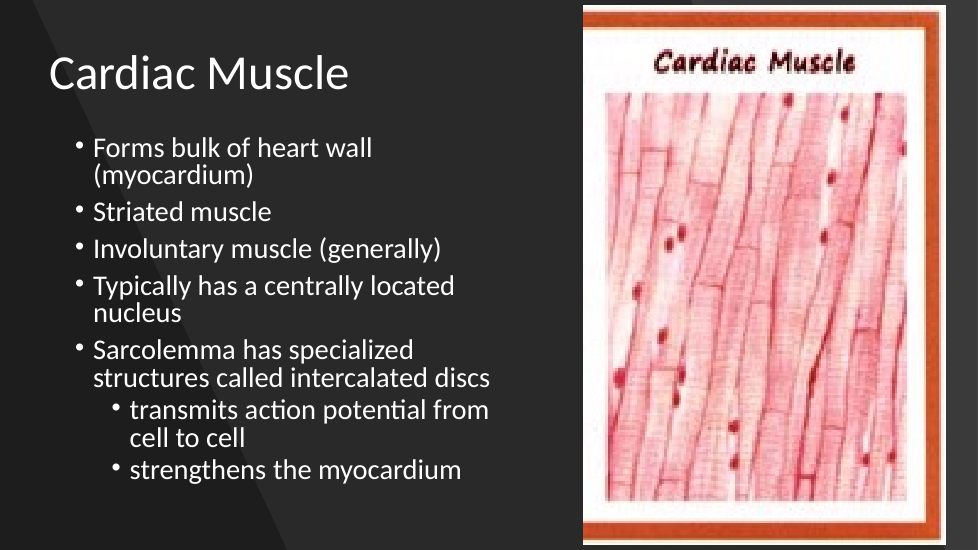
What is a key characteristic of cardiac muscle?
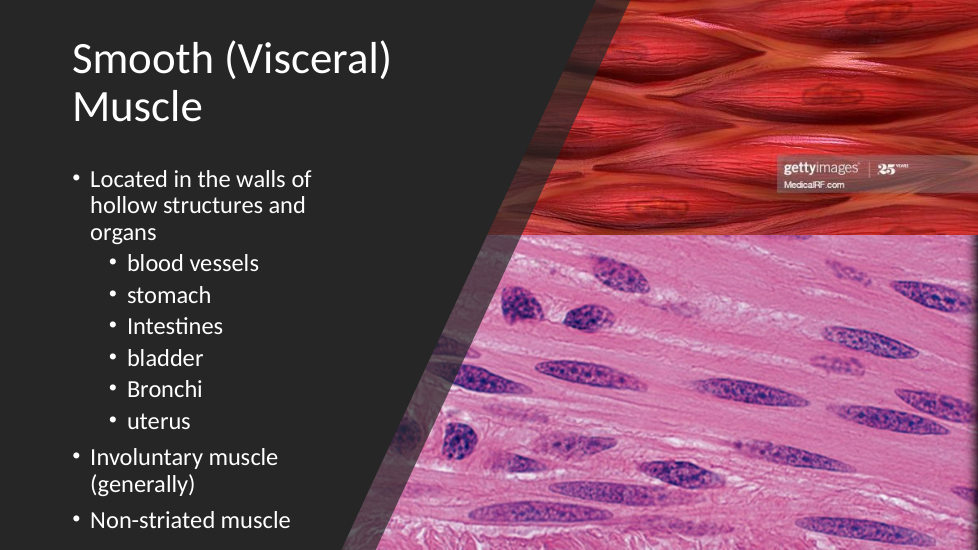
It is involuntary and striated.
It is primarily voluntary muscle.
It has no intercalated discs.
It has multiple nuclei per cell.
Question 31
31.
What do intercalated discs do in cardiac muscle?
Transmit action potential from cell to cell.
Provide energy to muscle cells.
Strengthen voluntary muscles effectively.
Connect muscle to bone efficiently.
Question 32
32.
What type of muscle is primarily found in blood vessels?
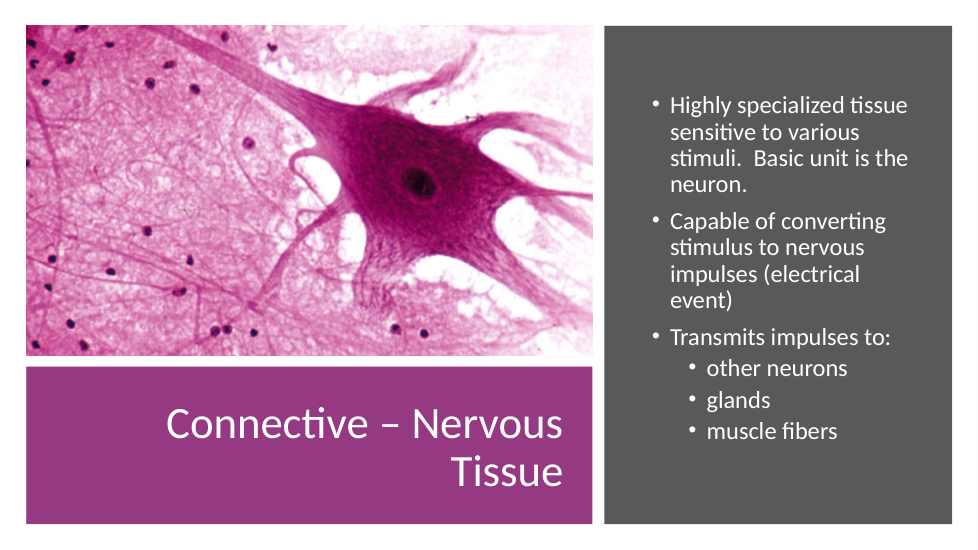
Smooth muscle
Skeletal muscle
Cardiac muscle
Striated muscle
Question 33
33.
Which statement about smooth muscle is true?
It is only found in the heart.
It is striated and voluntary.
It enables conscious movement.
It is non-striated and involuntary.
Question 34
34.
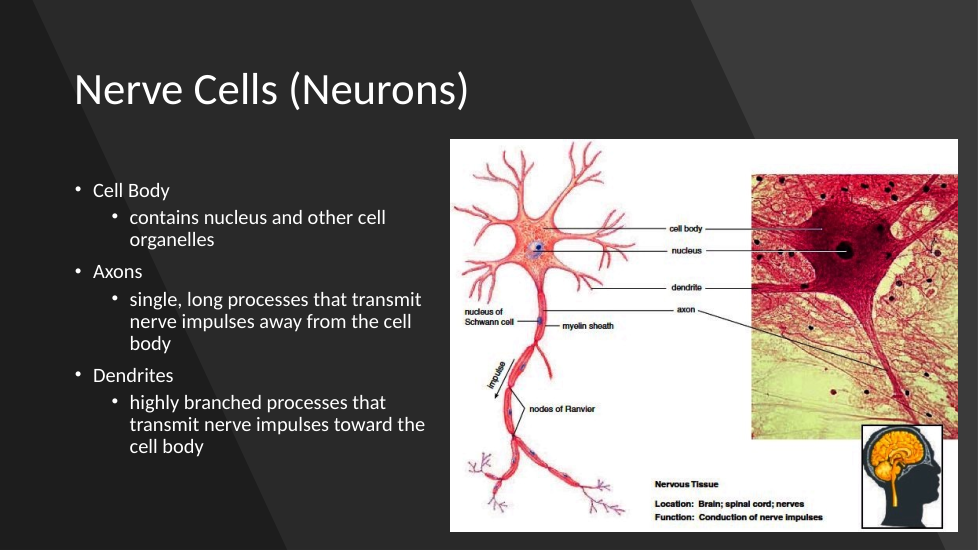
What is the primary function of axons in neurons?
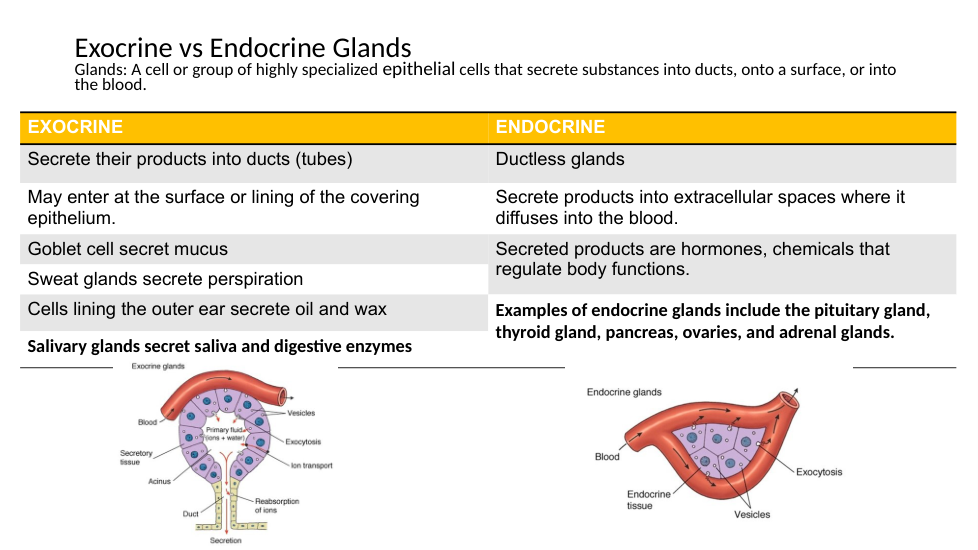
Store neurotransmitters for later use.
Transmit impulses away from the cell body.
Transmit impulses toward the cell body.
Connect neurons to blood vessels.
Question 35
35.
What do dendrites primarily do in a neuron?
Receive signals from other neurons.
Produce neurotransmitters before transmission.
Insulate the axon for faster transmission.
Conduct impulses to the peripheral nervous system.
Question 36
36.
What is the main function of exocrine glands?
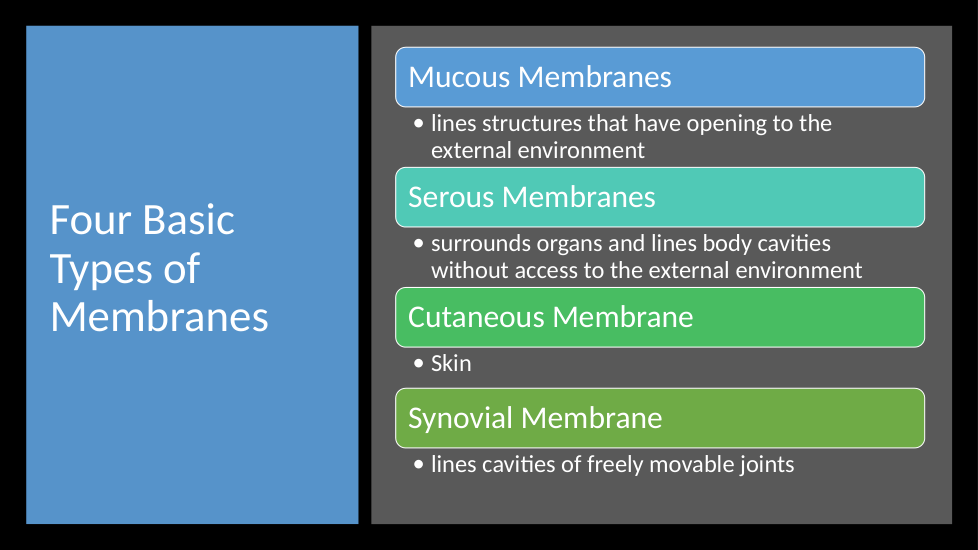
Absorb substances from the bloodstream.
Secrete hormones directly into the blood.
Regulate body functions through nutrients.
Secrete products into ducts or surfaces.
Question 37
37.
How do endocrine glands release their products?
Into extracellular spaces for passive diffusion.
Into ducts that lead to external surfaces.
Through surfaces of epithelial tissues.
Directly into the bloodstream without ducts.
Question 38
38.
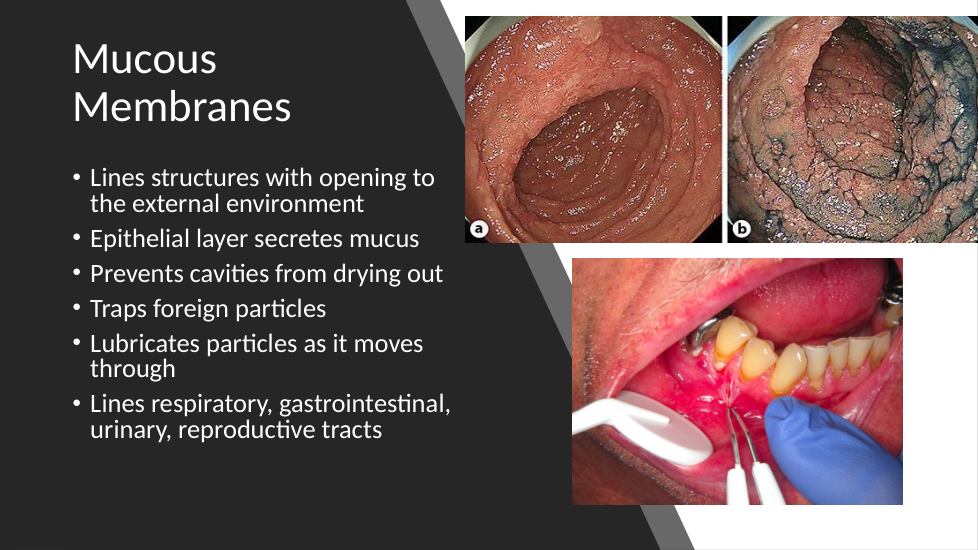
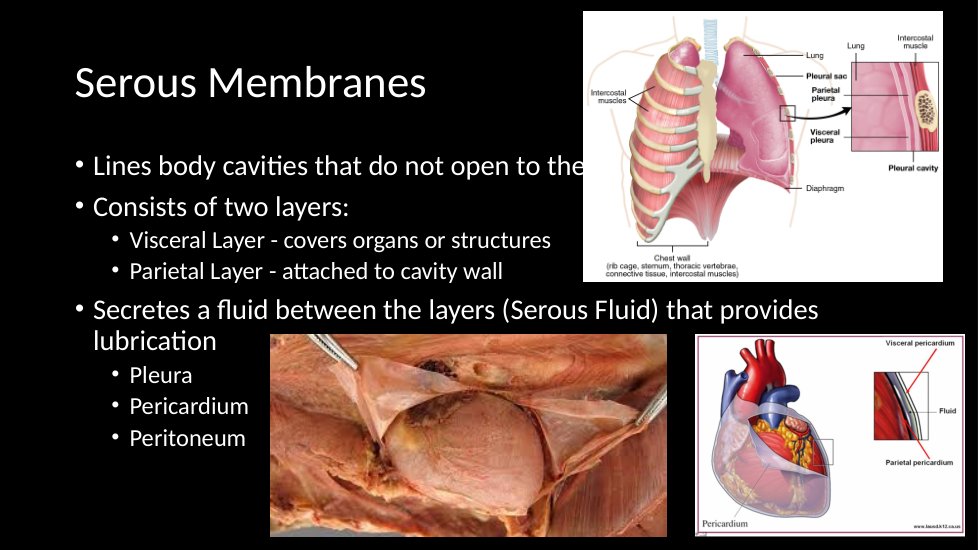
What type of membrane lines structures with openings to the external environment?
Serous membrane
Synovial membrane
Cutaneous membrane
Mucous membrane
Question 39
39.
Which membrane type surrounds organs without exposure to the outside?
Synovial membrane
Serous membrane
Mucous membrane
Cutaneous membrane
Question 40
40.
What type of membrane primarily consists of skin?
Mucous membrane
Cutaneous membrane
Synovial membrane
Serous membrane
Question 41
41.
Which membrane lines cavities in freely movable joints?
Cutaneous membrane
Serous membrane
Synovial membrane
Mucous membrane
Question 42
42.
What is the main function of mucous membranes?
Regulates blood flow through tissues.
Lines bones for structural support.
Secretes mucus to protect and lubricate surfaces.
Absorbs nutrients in the intestines.
Question 43
43.
Which type of tract do mucous membranes NOT line?
Urinary tract.
They don't line skeletal muscle tissues.
Gastrointestinal tract.
Respiratory tract.
Question 44
44.
What are the two layers of serous membranes called?
Visceral and Parietal Layers
Mucosal and Dermal Layers
Outer and Inner Layers
Superficial and Deep Layers
Question 45
45.
Which fluid do serous membranes secrete for lubrication?
Plasma Fluid
Synovial Fluid
Interstitial Fluid
Serous Fluid
Question 46
46.
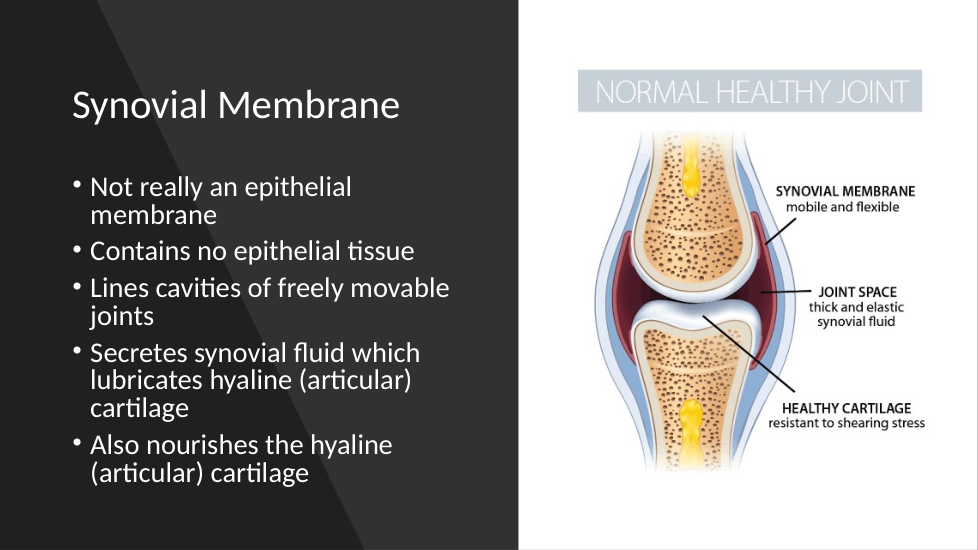
What is the main function of synovial fluid?
Acts as a cushion only
Lubricates joints and nourishes cartilage
Forms cartilage tissue
Replaces blood in the joint
Question 47
47.
Which statement about synovial membrane is correct?
It contains no epithelial tissue
It is an epithelial structure
It is found in all joints
It secretes bone marrow fluid