1
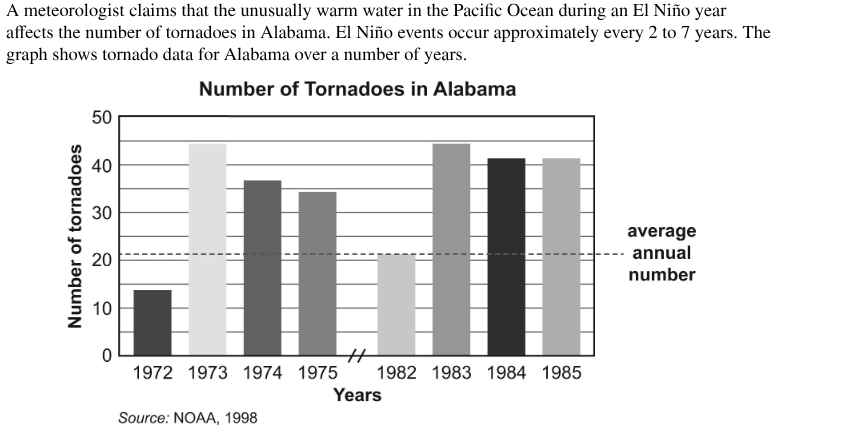
Which statement could the meteorologist use to support the claim?
Which statement could the meteorologist use to support the claim?
Does Earth represent an open environmental system or a closed environmental system?
A scientist is studying the impact of increased emissions on nitrogen levels in the hydrosphere. How could the scientist best go about this study?
Which sentence best describes the Earth system?
How do modern Earth scientists approach the study of Earth in order to explain natural events?
Which of these is an example of different scales in system interactions?
Which statement describes a benefit of using a graph instead of a table when interpreting data?
Why is it important to take measurements on the ground in addition to remote sensing when making a map?
Which statement could the meteorologist use to support the claim?
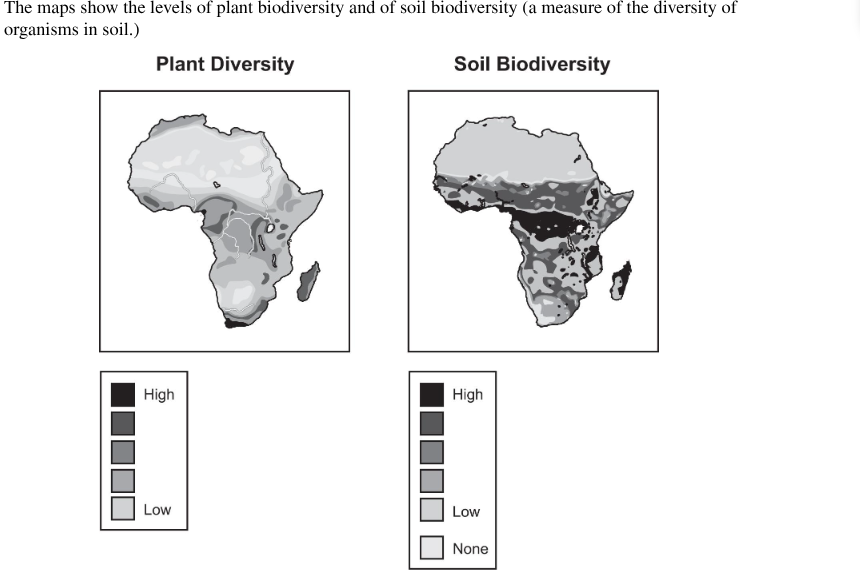
What inference can be made based on the maps provided?
Scientists study systems that have different scales of size. Number the studies from 1 to 3 to show the scales of the systems from smallest to largest.
study of exoplanets to examine the origins of the solar system
study of air and water conditions to find the causes of hurricanes
study of sun and moon movements to predict tides
The sun and Earth form a system in space in which different factors interact to drive processes. Write the letter of each factor in the box next to the process that best matches it.
| Draggable item | arrow_right_alt | Corresponding Item |
|---|---|---|
formation of clouds, rain, and rivers | arrow_right_alt | A. gravity |
motion of Earth in its orbit | arrow_right_alt | B. heat |
Distinguish between the properties of open and closed systems. Write the letter of each choice in the box under one of the two column headings. Some letters may be used more than once.
A. Matter can enter or leave.
B. Energy can enter or leave.
C. Energy can leave but matter cannot.
D. Both matter and energy can enter or leave.
E. Energy can enter but matter cannot.
Open system
Closed system
Scientists would like to make predictions about the future temperature of the seas. In order to do this, they need to follow a certain process. Number the steps from 1 to 4 to show the process a scientist would use to make future predictions.
collect and analyze data
compare data over time
look for patterns of change
make predictions about the future
Choose the correct boxes to identify which spheres can include the components described by each statement. Statements can belong to more than one sphere.
Atmosphere | Geosphere | Hydrosphere | Cryosphere | Biosphere | |
|---|---|---|---|---|---|
A. includes all plants and animals on Earth | |||||
B. includes all solid and liquid rock on Earth | |||||
C. includes water vapor and ice crystals in the air |
Which arguments best state the reasons that maps are typically designed to serve one purpose instead of multiple purposes? Circle the letters of all the correct statements.
Directions: Read the passage, then answer the questions that follow.
Hurricanes in the Northern Hemisphere
A tropical storm forms near the equator over warm waters in the Atlantic Ocean. The moisture evaporates from the water’s surface and rises. As the warm air rises, an area of lower air pressure is formed beneath the warm air. The water in the air forms clouds, which spin and grow, feeding off the warm ocean waters. An eye forms in the center as the clouds begin to spin. As winds in the rotation reach more than 74 mph, the storm is officially a hurricane. When hurricanes reach land, they can cause great chaos and destruction. Hurricanes will typically weaken as they reach land, as they are no longer growing from the warm ocean waters. They often leave a path of destruction in their wake.
The system of a hurricane is described in the passage. What is the best definition of a system? Choose the best answer(s).
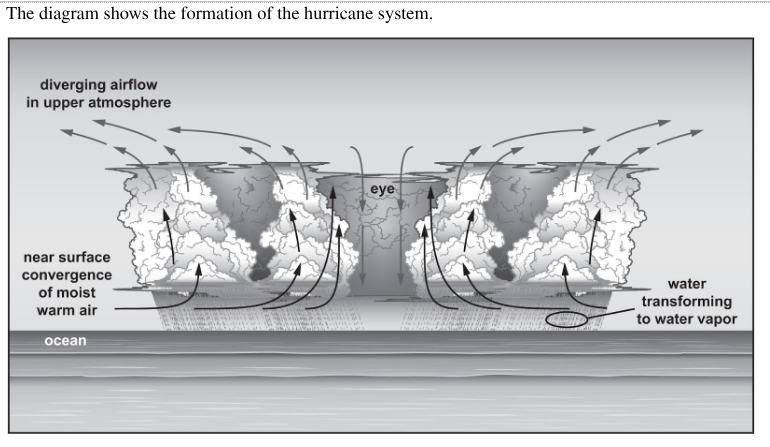
Identify what matter exchange is indicated by the arrows.
Explain the energy interacting in the model.
Every system contains specific components of matter and energy and exhibits processes by which these components interact. A group of scientists are studying Earth systems to predict the severity of the next El Niño conditions.
Identify two components of Earth systems in this study.
For one of the components you identify, describe one way it interacts with components of other systems in an El Niño event.
Hurricanes are tropical cyclones that form in the Atlantic Ocean or in the eastern side of the North Pacific Ocean. Write your answer on the lines.
Explain how Earth's spheres are part of a hurricane.
Identify the parts of the hurricane system in the passage.
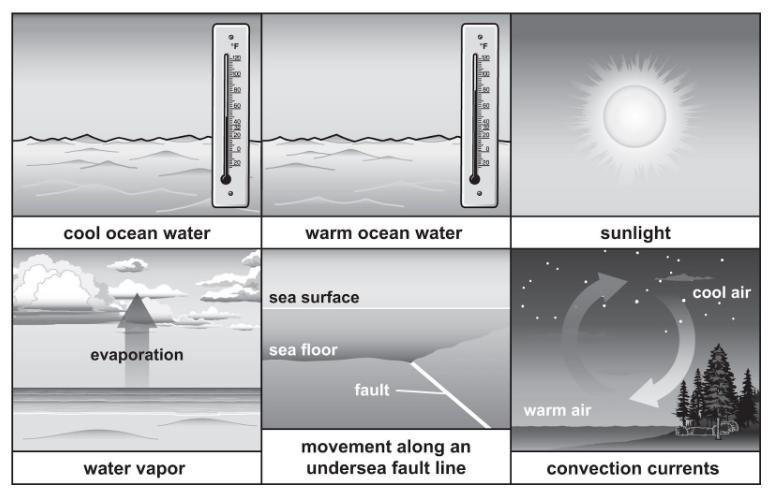
Choose from the pictures above that contain a component of the formation of the hurricane system.
When a hurricane is formed within Earth’s subsystems, it can impact all of the subsystems. Earth’s system consists of all types of matter, all nonliving and living things, and forms of energy on Earth.
Choose the letters of the four main subsystems of Earth that aid or are impacted by hurricanes.