Twa kɔ nsɛm atitiriw so
Log in
Sign up for FREE
arrow_back
Laabri

Course: Chemistry (NJSLA released problems)

star
star
star
star
star
Last updated 5 months ago
29 Nsɛmmisa

A single hard disk drive can contain all the information from many libraries. When putting the information onto the disk, the disk does not change in size or composition.

Hard disk drives were first introduced in 1954 and remained a dominant technology for over 50 years.

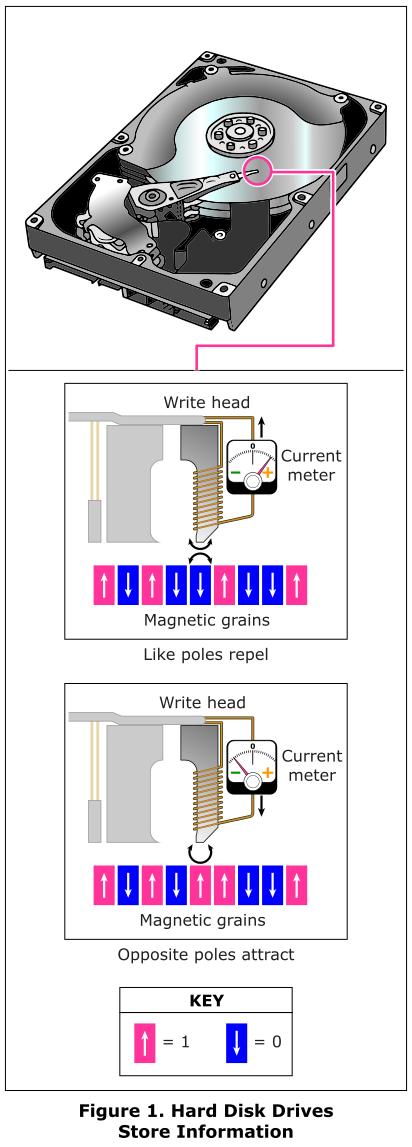
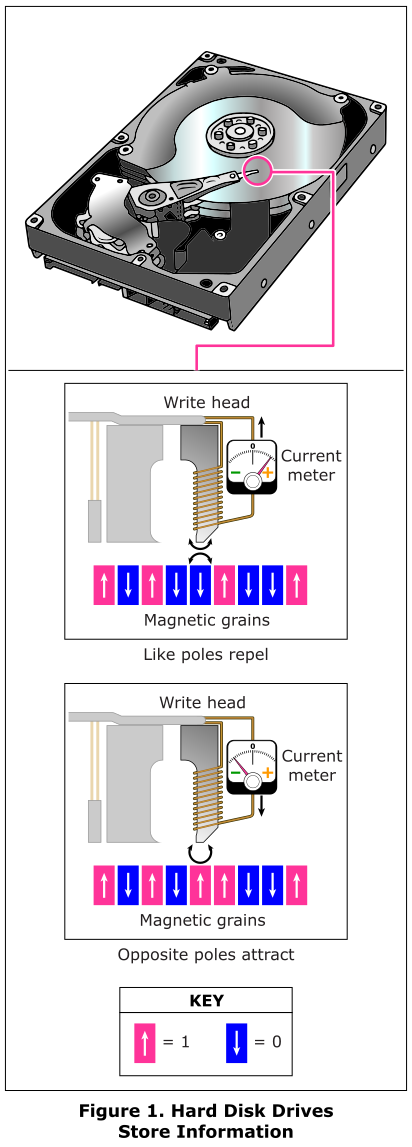
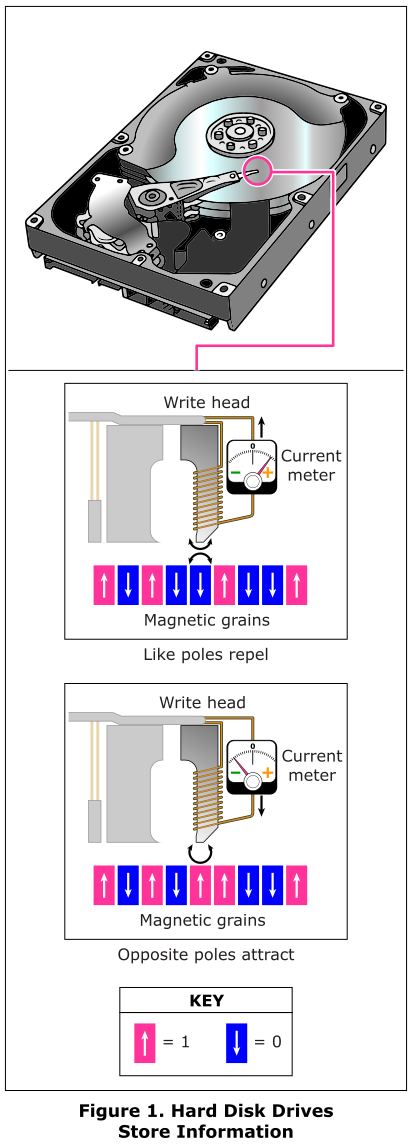
An electromagnetic wave is generated when the direction of current is repeatedly reversed. This wave creates an alternating magnetic field. Hard disk drives use a part called a write head to store information as bits. When current goes through the write head, it becomes magnetic, which magnetizes the grains. This magnetic interaction allows information to be stored in the magnetized grains of the disk as either a “0” or a “1,” with each 0 or 1 being considered a single bit. This system of using zeros and ones to store information is known as binary code. Bits are shown as downward- or upward-pointing arrows in Figure 1.
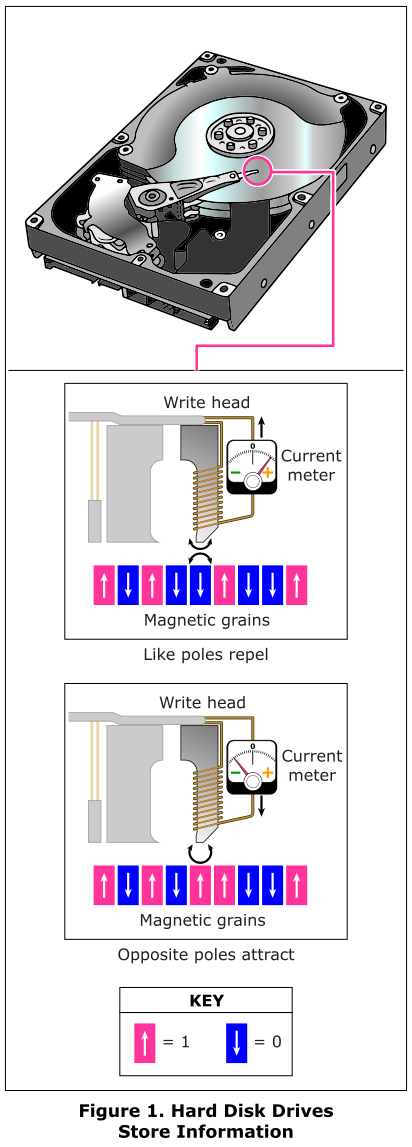
This diagram is titled Figure 1: Hard Disk Drives Store Information. A computer hard disk drive is shown. Two diagrams show enlargements of the hard drive write head.  The Key shows a pink block with an upward arrow represents '1'. A blue block with a downward arrow represents '0.' The first diagram is titled Like Poles Repel, and shows a metal arm labeled Write Head. The write head is above a row of mixed pink and blue blocks labeled magnetic grains. A current meter is attached to a wire that wraps around the write head. The current meter shows a positive charge. The magnetic grain directly below the write head is blue with a downward facing arrow. Between the write head and the magnetic grain are two curved arrows indicating repulsive charges.  The second diagram is titled Opposite Poles Attract, and shows the same write head and a similar row of magnetic grains. This time, the current meter shows a negative charge. The magnetic grain directly below the write head is pink with an upward facing arrow. Between the write head and the grain is a curved arrow indicating attractive charges.

Information is stored in larger groups of bits, as shown in Table 1.

 Table 1. The Number of Bits in Larger Units

Unit

Value

1 bit

one “0” OR one “1”

1 byte

8 bits

1 kB

1,000 bytes

1 MB

1,000,000 bytes

1 GB

1,000,000,000 bytes

1
DCI.PS4.A.9-12.6
DCI.PS4.A.9-12.7
…

A single hard disk drive can contain all the information from many libraries. When putting the information onto the disk, the disk does not change in size or composition.

Hard disk drives were first introduced in 1954 and remained a dominant technology for over 50 years.

An electromagnetic wave is generated when the direction of current is repeatedly reversed. This wave creates an alternating magnetic field. Hard disk drives use a part called a write head to store information as bits. When current goes through the write head, it becomes magnetic, which magnetizes the grains. This magnetic interaction allows information to be stored in the magnetized grains of the disk as either a “0” or a “1,” with each 0 or 1 being considered a single bit. This system of using zeros and ones to store information is known as binary code. Bits are shown as downward- or upward-pointing arrows in Figure 1.

This diagram is titled Figure 1: Hard Disk Drives Store Information. A computer hard disk drive is shown. Two diagrams show enlargements of the hard drive write head.  The Key shows a pink block with an upward arrow represents '1'. A blue block with a downward arrow represents '0.' The first diagram is titled Like Poles Repel, and shows a metal arm labeled Write Head. The write head is above a row of mixed pink and blue blocks labeled magnetic grains. A current meter is attached to a wire that wraps around the write head. The current meter shows a positive charge. The magnetic grain directly below the write head is blue with a downward facing arrow. Between the write head and the magnetic grain are two curved arrows indicating repulsive charges.  The second diagram is titled Opposite Poles Attract, and shows the same write head and a similar row of magnetic grains. This time, the current meter shows a negative charge. The magnetic grain directly below the write head is pink with an upward facing arrow. Between the write head and the grain is a curved arrow indicating attractive charges.

Information is stored in larger groups of bits, as shown in Table 1.

 Table 1. The Number of Bits in Larger Units

Unit

Value

1 bit

one “0” OR one “1”

1 byte

8 bits

1 kB

1,000 bytes

1 MB

1,000,000 bytes

1 GB

1,000,000,000 bytes

1
Asemmisa {{asɛmmisaAhyɛnsode}}
2.

DCI.PS4.A.9-12.6
DCI.PS4.A.9-12.7
…
1
Asemmisa {{asɛmmisaAhyɛnsode}}
3.

Use an English letter from Table 3 to construct an explanation about how the sequence of the magnetic interactions between the write head and the magnetic grains are used to store information.

Enter your answer in the box. Support your answer with evidence from the information in Figure 1.

DCI.PS4.A.9-12.6
DCI.PS4.A.9-12.7
…
4
HS-PS4-5

A single hard disk drive can contain all the information from many libraries. When putting the information onto the disk, the disk does not change in size or composition.

Hard disk drives were first introduced in 1954 and remained a dominant technology for over 50 years.

An electromagnetic wave is generated when the direction of current is repeatedly reversed. This wave creates an alternating magnetic field. Hard disk drives use a part called a write head to store information as bits. When current goes through the write head, it becomes magnetic, which magnetizes the grains. This magnetic interaction allows information to be stored in the magnetized grains of the disk as either a “0” or a “1,” with each 0 or 1 being considered a single bit. This system of using zeros and ones to store information is known as binary code. Bits are shown as downward- or upward-pointing arrows in Figure 1.

This diagram is titled Figure 1: Hard Disk Drives Store Information. A computer hard disk drive is shown. Two diagrams show enlargements of the hard drive write head.  The Key shows a pink block with an upward arrow represents '1'. A blue block with a downward arrow represents '0.' The first diagram is titled Like Poles Repel, and shows a metal arm labeled Write Head. The write head is above a row of mixed pink and blue blocks labeled magnetic grains. A current meter is attached to a wire that wraps around the write head. The current meter shows a positive charge. The magnetic grain directly below the write head is blue with a downward facing arrow. Between the write head and the magnetic grain are two curved arrows indicating repulsive charges.  The second diagram is titled Opposite Poles Attract, and shows the same write head and a similar row of magnetic grains. This time, the current meter shows a negative charge. The magnetic grain directly below the write head is pink with an upward facing arrow. Between the write head and the grain is a curved arrow indicating attractive charges.

Information is stored in larger groups of bits, as shown in Table 1.

 Table 1. The Number of Bits in Larger Units

Unit

Value

1 bit

one “0” OR one “1”

1 byte

8 bits

1 kB

1,000 bytes

1 MB

1,000,000 bytes

1 GB

1,000,000,000 bytes

1
DCI.PS4.C.9-12.4
HS-PS4-5

A single hard disk drive can contain all the information from many libraries. When putting the information onto the disk, the disk does not change in size or composition.

Hard disk drives were first introduced in 1954 and remained a dominant technology for over 50 years.

An electromagnetic wave is generated when the direction of current is repeatedly reversed. This wave creates an alternating magnetic field. Hard disk drives use a part called a write head to store information as bits. When current goes through the write head, it becomes magnetic, which magnetizes the grains. This magnetic interaction allows information to be stored in the magnetized grains of the disk as either a “0” or a “1,” with each 0 or 1 being considered a single bit. This system of using zeros and ones to store information is known as binary code. Bits are shown as downward- or upward-pointing arrows in Figure 1.

This diagram is titled Figure 1: Hard Disk Drives Store Information. A computer hard disk drive is shown. Two diagrams show enlargements of the hard drive write head.  The Key shows a pink block with an upward arrow represents '1'. A blue block with a downward arrow represents '0.' The first diagram is titled Like Poles Repel, and shows a metal arm labeled Write Head. The write head is above a row of mixed pink and blue blocks labeled magnetic grains. A current meter is attached to a wire that wraps around the write head. The current meter shows a positive charge. The magnetic grain directly below the write head is blue with a downward facing arrow. Between the write head and the magnetic grain are two curved arrows indicating repulsive charges.  The second diagram is titled Opposite Poles Attract, and shows the same write head and a similar row of magnetic grains. This time, the current meter shows a negative charge. The magnetic grain directly below the write head is pink with an upward facing arrow. Between the write head and the grain is a curved arrow indicating attractive charges.

Information is stored in larger groups of bits, as shown in Table 1.

Table 1. The Number of Bits in Larger Units

Unit

Value

1 bit

one “0” OR one “1”

1 byte

8 bits

1 kB

1,000 bytes

1 MB

1,000,000 bytes

1 GB

1,000,000,000 bytes

1
Asemmisa {{asɛmmisaAhyɛnsode}}
6.
DCI.PS4.C.9-12.4

A single hard disk drive can contain all the information from many libraries. When putting the information onto the disk, the disk does not change in size or composition.

Hard disk drives were first introduced in 1954 and remained a dominant technology for over 50 years.

An electromagnetic wave is generated when the direction of current is repeatedly reversed. This wave creates an alternating magnetic field. Hard disk drives use a part called a write head to store information as bits. When current goes through the write head, it becomes magnetic, which magnetizes the grains. This magnetic interaction allows information to be stored in the magnetized grains of the disk as either a “0” or a “1,” with each 0 or 1 being considered a single bit. This system of using zeros and ones to store information is known as binary code. Bits are shown as downward- or upward-pointing arrows in Figure 1.

This diagram is titled Figure 1: Hard Disk Drives Store Information. A computer hard disk drive is shown. Two diagrams show enlargements of the hard drive write head.  The Key shows a pink block with an upward arrow represents '1'. A blue block with a downward arrow represents '0.' The first diagram is titled Like Poles Repel, and shows a metal arm labeled Write Head. The write head is above a row of mixed pink and blue blocks labeled magnetic grains. A current meter is attached to a wire that wraps around the write head. The current meter shows a positive charge. The magnetic grain directly below the write head is blue with a downward facing arrow. Between the write head and the magnetic grain are two curved arrows indicating repulsive charges.  The second diagram is titled Opposite Poles Attract, and shows the same write head and a similar row of magnetic grains. This time, the current meter shows a negative charge. The magnetic grain directly below the write head is pink with an upward facing arrow. Between the write head and the grain is a curved arrow indicating attractive charges.

Information is stored in larger groups of bits, as shown in Table 1.

Table 1. The Number of Bits in Larger Units

Unit

Value

1 bit

one “0” OR one “1”

1 byte

8 bits

1 kB

1,000 bytes

1 MB

1,000,000 bytes

1 GB

1,000,000,000 bytes

1
Asemmisa {{asɛmmisaAhyɛnsode}}
7.

How many bits are required to store an image of 1 MB?

DCI.PS4.C.9-12.4
HS-PS4-5

A single hard disk drive can contain all the information from many libraries. When putting the information onto the disk, the disk does not change in size or composition.

Hard disk drives were first introduced in 1954 and remained a dominant technology for over 50 years.

An electromagnetic wave is generated when the direction of current is repeatedly reversed. This wave creates an alternating magnetic field. Hard disk drives use a part called a write head to store information as bits. When current goes through the write head, it becomes magnetic, which magnetizes the grains. This magnetic interaction allows information to be stored in the magnetized grains of the disk as either a “0” or a “1,” with each 0 or 1 being considered a single bit. This system of using zeros and ones to store information is known as binary code. Bits are shown as downward- or upward-pointing arrows in Figure 1.

This diagram is titled Figure 1: Hard Disk Drives Store Information. A computer hard disk drive is shown. Two diagrams show enlargements of the hard drive write head.  The Key shows a pink block with an upward arrow represents '1'. A blue block with a downward arrow represents '0.' The first diagram is titled Like Poles Repel, and shows a metal arm labeled Write Head. The write head is above a row of mixed pink and blue blocks labeled magnetic grains. A current meter is attached to a wire that wraps around the write head. The current meter shows a positive charge. The magnetic grain directly below the write head is blue with a downward facing arrow. Between the write head and the magnetic grain are two curved arrows indicating repulsive charges.  The second diagram is titled Opposite Poles Attract, and shows the same write head and a similar row of magnetic grains. This time, the current meter shows a negative charge. The magnetic grain directly below the write head is pink with an upward facing arrow. Between the write head and the grain is a curved arrow indicating attractive charges.

Information is stored in larger groups of bits, as shown in Table 1.

Table 1. The Number of Bits in Larger Units

Unit

Value

1 bit

one “0” OR one “1”

1 byte

8 bits

1 kB

1,000 bytes

1 MB

1,000,000 bytes

1 GB

1,000,000,000 bytes

1
Asemmisa {{asɛmmisaAhyɛnsode}}
8.
DCI.PS4.C.9-12.4
HS-PS4-5

Information about Earth’s early history may be contained in materials from Mars, the Moon, and meteorites.

Various theories have been presented to explain the formation of the Moon during the early history of Earth:

Fission Theory: The Moon formed when a small, outer portion of the spinning Earth separated from the larger body and moved into space.

Capture Theory: The Moon formed elsewhere in the solar system, but in a similar manner to Earth. It then moved toward Earth and was captured by Earth’s gravity.

Condensation Theory: The Moon formed separately from Earth, but in a similar manner and in the same vicinity.  

Impact Theory: The Moon formed following a violent impact between Earth and a Mars-sized object. The impact caused the outer portion of molten Earth to be ejected. Gravity caused the debris to attract and eventually combine to form the Moon.

1
Asemmisa {{asɛmmisaAhyɛnsode}}
9.
DCI.ESS1.C.9-12.5
DCI.ESS1.C.9-12.6
…

Information about Earth’s early history may be contained in materials from Mars, the Moon, and meteorites.

Various theories have been presented to explain the formation of the Moon during the early history of Earth:

Fission Theory: The Moon formed when a small, outer portion of the spinning Earth separated from the larger body and moved into space.

Capture Theory: The Moon formed elsewhere in the solar system, but in a similar manner to Earth. It then moved toward Earth and was captured by Earth’s gravity.

Condensation Theory: The Moon formed separately from Earth, but in a similar manner and in the same vicinity.  

Impact Theory: The Moon formed following a violent impact between Earth and a Mars-sized object. The impact caused the outer portion of molten Earth to be ejected. Gravity caused the debris to attract and eventually combine to form the Moon.

1
Asemmisa {{asɛmmisaAhyɛnsode}}
10.
DCI.ESS1.C.9-12.5
DCI.ESS1.C.9-12.6
…

Information about Earth’s early history may be contained in materials from Mars, the Moon, and meteorites.

Various theories have been presented to explain the formation of the Moon during the early history of Earth:

Fission Theory: The Moon formed when a small, outer portion of the spinning Earth separated from the larger body and moved into space.

Capture Theory: The Moon formed elsewhere in the solar system, but in a similar manner to Earth. It then moved toward Earth and was captured by Earth’s gravity.

Condensation Theory: The Moon formed separately from Earth, but in a similar manner and in the same vicinity.  

Impact Theory: The Moon formed following a violent impact between Earth and a Mars-sized object. The impact caused the outer portion of molten Earth to be ejected. Gravity caused the debris to attract and eventually combine to form the Moon.

1
Asemmisa {{asɛmmisaAhyɛnsode}}
11.

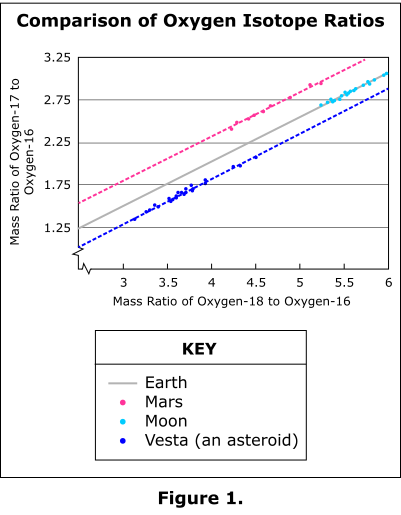
Every planetary body in the solar system has a specific composition and density. Based on the data, indicate which statement would support each formation theory.

Select all of the correct answers.

Fission

Capture

Condensation

Impact

Earth and the Moon have similar compositions.

Earth and the Moon have different compositions.

DCI.ESS1.C.9-12.5
DCI.ESS1.C.9-12.6
…

Rubidium and bromine, elements located on opposite sides of the periodic table, readily form a product when combined, as shown in the equation. 

2Rb + Br2 → 2RbBr

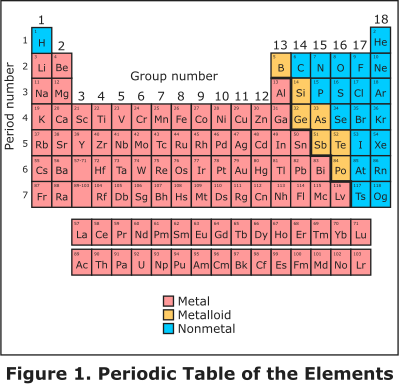
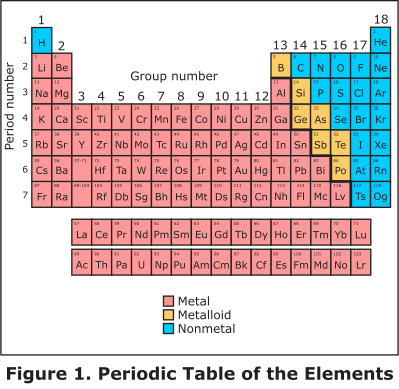
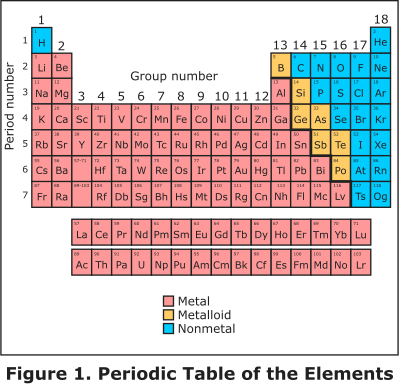
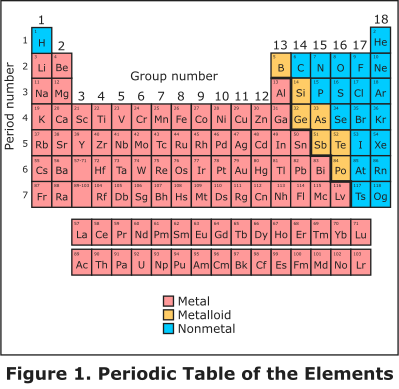
Atomic properties of an element can be related to the position of the element on the periodic table as shown in Figure 1. 

Figure 1 is titled Figure 1: Periodic Table of the Elements and shows the modern periodic table.  The columns are labeled Group number and are numbered 1 to 18; the rows are labeled Period number and are numbered 1 to 7. Elements are categorized as metal, metalloid or nonmetal.   Rubidium is a metal found in Group 1, Period 5. Strontium is a metal found in Group 2, Period 5.  Chlorine is a nonmetal found in Group 17, Period 3. Bromine is a nonmetal found in Group 17, Period 4.

1
Asemmisa {{asɛmmisaAhyɛnsode}}
12.

Which piece of information found in Figure 1 is most useful in determining the number of outer electrons present in an atom?

HS-PS1-1
HS-PS1-2
…

Rubidium and bromine, elements located on opposite sides of the periodic table, readily form a product when combined, as shown in the equation. 

2Rb + Br2 → 2RbBr

Atomic properties of an element can be related to the position of the element on the periodic table as shown in Figure 1. 

Figure 1 is titled Figure 1: Periodic Table of the Elements and shows the modern periodic table.  The columns are labeled Group number and are numbered 1 to 18; the rows are labeled Period number and are numbered 1 to 7. Elements are categorized as metal, metalloid or nonmetal.   Rubidium is a metal found in Group 1, Period 5. Strontium is a metal found in Group 2, Period 5.  Chlorine is a nonmetal found in Group 17, Period 3. Bromine is a nonmetal found in Group 17, Period 4.

1
Asemmisa {{asɛmmisaAhyɛnsode}}
13.

Which is the correct formula for strontium chloride, based on the placement of each element in the periodic table?

HS-PS1-1
HS-PS1-2
…

Rubidium and bromine, elements located on opposite sides of the periodic table, readily form a product when combined, as shown in the equation. 

2Rb + Br2 → 2RbBr

Atomic properties of an element can be related to the position of the element on the periodic table as shown in Figure 1. 

Figure 1 is titled Figure 1: Periodic Table of the Elements and shows the modern periodic table.  The columns are labeled Group number and are numbered 1 to 18; the rows are labeled Period number and are numbered 1 to 7. Elements are categorized as metal, metalloid or nonmetal.   Rubidium is a metal found in Group 1, Period 5. Strontium is a metal found in Group 2, Period 5.  Chlorine is a nonmetal found in Group 17, Period 3. Bromine is a nonmetal found in Group 17, Period 4.

1
Asemmisa {{asɛmmisaAhyɛnsode}}
14.
HS-PS1-1
HS-PS1-2
…

Rubidium and bromine, elements located on opposite sides of the periodic table, readily form a product when combined, as shown in the equation. 

2Rb + Br2 → 2RbBr

Atomic properties of an element can be related to the position of the element on the periodic table as shown in Figure 1. 

Figure 1 is titled Figure 1: Periodic Table of the Elements and shows the modern periodic table.  The columns are labeled Group number and are numbered 1 to 18; the rows are labeled Period number and are numbered 1 to 7. Elements are categorized as metal, metalloid or nonmetal.   Rubidium is a metal found in Group 1, Period 5. Strontium is a metal found in Group 2, Period 5.  Chlorine is a nonmetal found in Group 17, Period 3. Bromine is a nonmetal found in Group 17, Period 4.

1
Asemmisa {{asɛmmisaAhyɛnsode}}
15.
HS-PS1-1
HS-PS1-2
…

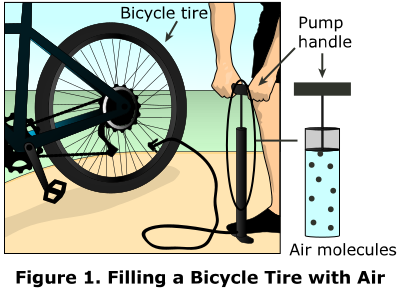
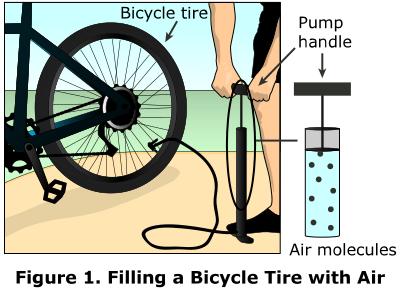
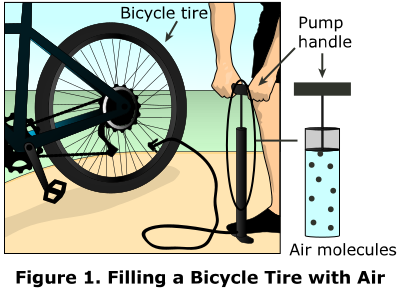
A bicycle tire is filled with air. As the tire approaches its maximum volume, it begins to feel noticeably warmer and the pump handle becomes harder to push down as more air is added.

The figure illustrates a bicycle tire being inflated with air. The bicycle pump adds more gas molecules from the air to the tire each time the handle is pushed down. 

This, figure is titled Figure 1: Filling a Bicycle Tire with Air and it shows a person inflating a bicycle tire with a bicycle pump.  There is a diagram of the hand pump that has a pump handle on top that the person is holding in order to fill the tire and a chamber on the bottom filled with air molecules.

1
Asemmisa {{asɛmmisaAhyɛnsode}}
16.

Which question, if answered, would best support an explanation of why the tire gets warmer as air is added?

DCI.PS3.A.9-12.1
DCI.PS3.A.9-12.2
…

A bicycle tire is filled with air. As the tire approaches its maximum volume, it begins to feel noticeably warmer and the pump handle becomes harder to push down as more air is added.

The figure illustrates a bicycle tire being inflated with air. The bicycle pump adds more gas molecules from the air to the tire each time the handle is pushed down. 

This, figure is titled Figure 1: Filling a Bicycle Tire with Air and it shows a person inflating a bicycle tire with a bicycle pump.  There is a diagram of the hand pump that has a pump handle on top that the person is holding in order to fill the tire and a chamber on the bottom filled with air molecules.

1
Asemmisa {{asɛmmisaAhyɛnsode}}
17.

Identify the variables that should be measured to determine the relative change in energy within a bicycle tire if air molecules continue to be added once the pump handle becomes harder to push down.

Select two of the five variables. 

DCI.PS3.A.9-12.1
DCI.PS3.A.9-12.2
…

A bicycle tire is filled with air. As the tire approaches its maximum volume, it begins to feel noticeably warmer and the pump handle becomes harder to push down as more air is added.

The figure illustrates a bicycle tire being inflated with air. The bicycle pump adds more gas molecules from the air to the tire each time the handle is pushed down. 

This, figure is titled Figure 1: Filling a Bicycle Tire with Air and it shows a person inflating a bicycle tire with a bicycle pump.  There is a diagram of the hand pump that has a pump handle on top that the person is holding in order to fill the tire and a chamber on the bottom filled with air molecules.

1
Asemmisa {{asɛmmisaAhyɛnsode}}
18.
DCI.PS3.A.9-12.1
DCI.PS3.A.9-12.2
…

Hot Coffee

Despite being in a cold room, coffee stays hot in a container for a long time.

The transfer of heat energy from an object can be calculated using the heat transfer equation:

Where:

thermal energy, in joules (J)

mass of the substance, in kilograms,

specific heat of the substance, the energy required to increase 1 kg of the substance by
, in
and

change in temperature, in

The amount of heat lost through conduction is calculated using the conduction equation:

Where:

heat transfer, in watts (W),

heat conductivity of the substance into which heat is transferred, in
and

area of the radiating surface, in

1
Asemmisa {{asɛmmisaAhyɛnsode}}
19.

A cup containing 0.2 kg of coffee sat for several hours at room temperature,

.

Based on the heat transfer equation, and assuming that the specific heat of coffee is approximately

how much thermal energy, in joules (J), would be required to warm the coffee up to

Hot Coffee

Despite being in a cold room, coffee stays hot in a container for a long time.

The transfer of heat energy from an object can be calculated using the heat transfer equation:

Where:

thermal energy, in joules (J)

mass of the substance, in kilograms,

specific heat of the substance, the energy required to increase 1 kg of the substance by
, in
and

change in temperature, in

The amount of heat lost through conduction is calculated using the conduction equation:

Where:

heat transfer, in watts (W),

heat conductivity of the substance into which heat is transferred, in
and

area of the radiating surface, in

1
Asemmisa {{asɛmmisaAhyɛnsode}}
20.

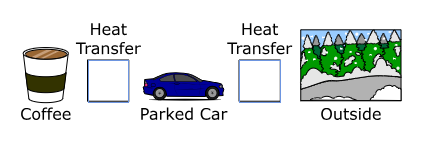
A cup of coffee at

is placed in a closed car with an air temperature of
. The air temperature outside the car is
Based on the data, and assuming no other heat energy is introduced into the system, complete the model that shows how energy would transfer within the system.

Drag the answers to the correct boxes. Answers may be used more than once. Not all answers will be used.

Mmuae Afoforo a Wobɛpaw:

1
Asemmisa {{asɛmmisaAhyɛnsode}}
21.
1
1
Asemmisa {{asɛmmisaAhyɛnsode}}
23.

Based on the data, what was an immediate effect of recombination?

1
1
1
Asemmisa {{asɛmmisaAhyɛnsode}}
26.
1
Asemmisa {{asɛmmisaAhyɛnsode}}
27.

1
1
Asemmisa {{asɛmmisaAhyɛnsode}}
1.

The letter “Z” is written as “01011010” in binary code. Identify the correct combination of signs on the current meter to write the letter “Z.”

Select all of the correct answers.

Current Meter = Positive

Current Meter = Negative

Bit 1

Bit 2

Bit 3

Bit 4

Bit 5

Bit 6

Bit 7

Bit 8

Each capital English letter is stored by a sequence of magnetic interactions between the write head and the magnetic grains, as shown in the table. A bit string is obtained by writing bits 1–8 from left to right.

Table 3. 8-Bit Strings Representing Two English Capital Letters

Bit Number

Magnetic Interaction Sequence

Letter “O”

Letter “R”

1

repulsive

repulsive

2

attractive

attractive

3

repulsive

repulsive

4

repulsive

attractive

5

attractive

repulsive

6

attractive

repulsive

7

attractive

attractive

8

attractive

repulsive


Construct an explanation about how wave interactions store information on a hard disk drive.

Enter your answer in the box. Support your answer with evidence from the information in Figure 1.

Asemmisa {{asɛmmisaAhyɛnsode}}
4.

Make a claim about:

  • the type of magnetic interaction that is produced when a current is applied to the write head;

  • why this magnetic interaction is produced, and

  • the bit that results from this interaction.

Enter your answer in the box. Support your claim with evidence from the information in Figure 1.

Asemmisa {{asɛmmisaAhyɛnsode}}
5.

What is most important to the process of storing information on a hard disk drive?

Select two of the five statements.

Asemmisa {{asɛmmisaAhyɛnsode}}
22.

The law of conservation of energy is represented by the equation:

A student wants to cool a cup of coffee by adding ice at a temperature of

to 0.2 kg of coffee at a temperature of
. The specific hear of coffee is
and ice is

Using the conservation of energy equation and the heat transfer equation, and assuming the system is closed and heat transfer to or from the surroundings and the cup are minimal, how much ice is needed to reduce the temperature of the coffee to

?

CMB and Recombination

There is faint microwave light coming from every direction in the sky.

The cosmic microwave background (CMB) is the oldest light that currently exists in the universe. Scientists use the existence of the CMB to provide evidence for the big bang theory, a theory that states the universe expanded from a single point and then existed in a state of plasma that was so hot, atoms could not form. The CMB was produced 370,000 years after the big bang, following an event called recombination, during which protons and electrons could come together to form neutral hydrogen. The evolution of the universe, starting with the big bang, is shown in Figure 1.

Asemmisa {{asɛmmisaAhyɛnsode}}
24.

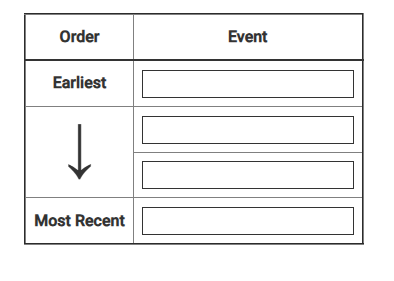
Based on Figure 1, put the following events in chronological order.

Drag the events to arrange them in correct order from earliest (top) to most recent (bottom).

Mmuae Afoforo a Wobɛpaw:
First stars formed
Universe made up of plasma
Recombination
Big bang
Asemmisa {{asɛmmisaAhyɛnsode}}
25.

Based on the data, what is the best hypothesis for how recombination led to the CMB?

Magnetic Resonance Imaging

A magnetic field and radiofrequency pulse applied to the body produces a highly detailed image of body tissues.

Figure 1 shows how magnetic resonance imaging (MRI) produces detailed, multi-dimensional images that are used to detect, diagnose, and monitor diseases in body tissues.

After the RF pulse, the protons in an MRI's MF give off small amounts of energy and then return to their original alignment, a process called relaxation. Different types of tissues look different in the image because they relax at different rates:

Fat-containing tissue has a short relaxation time.

Water-containing tissue has a long relaxation time.

Diseased tissue has an intermediate-length relaxation time.

Based on the data, which proton data most likely represent MRI samples of primarily diseased tissue?

A.

B.

C.

D.

Asemmisa {{asɛmmisaAhyɛnsode}}
28.

Based on the data, how could the magnetic field be changed to create a clearer MRI image?

Asemmisa {{asɛmmisaAhyɛnsode}}
29.

Table 1 describes the color and/or brightness of the images produced by the three most commonly used MRI scanning techniques.

Different MRI techniques can change proton relaxation times, thus changing the appearance and contrast of tissues. A researcher plans to do additional MRI studies, and needs to choose a technique and tissue type that shows the most contrast between healthy tissue and diseased tissue.

Based on the Table 1, which combination of MRI technique and tissue type would achieve this goal?