Cycle 2- Grade 5 Pre-Assessment
star
star
star
star
star
Last updated 3 months ago
6 Nsɛmmisa
1
RI.5.2
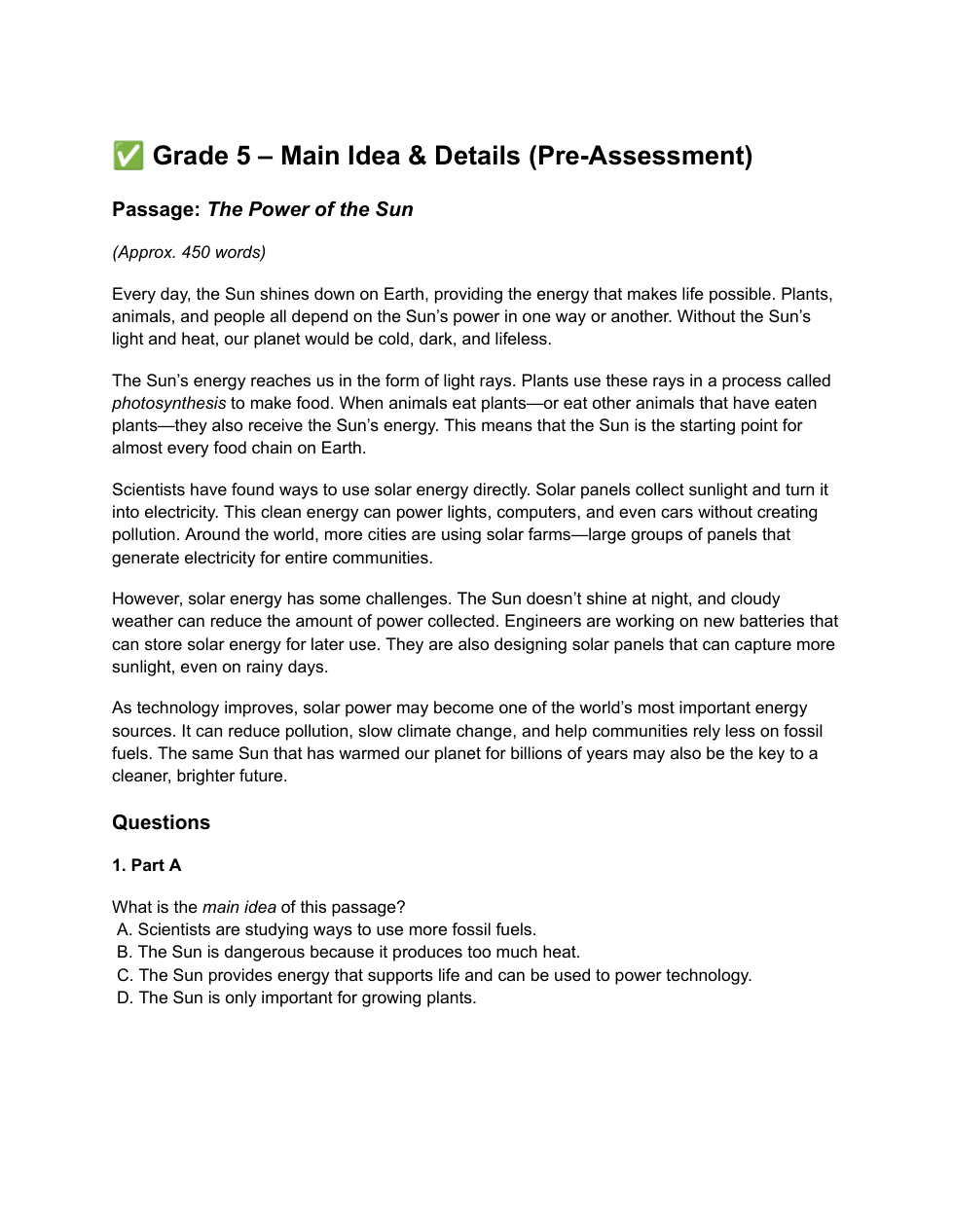
(Approx. 450 words)
Every day, the Sun shines down on Earth, providing the energy that makes life possible. Plants, animals, and people all depend on the Sun’s power in one way or another. Without the Sun’s light and heat, our planet would be cold, dark, and lifeless.
The Sun’s energy reaches us in the form of light rays. Plants use these rays in a process called photosynthesis to make food. When animals eat plants—or eat other animals that have eaten plants—they also receive the Sun’s energy. This means that the Sun is the starting point for almost every food chain on Earth.
Scientists have found ways to use solar energy directly. Solar panels collect sunlight and turn it into electricity. This clean energy can power lights, computers, and even cars without creating pollution. Around the world, more cities are using solar farms—large groups of panels that generate electricity for entire communities.
However, solar energy has some challenges. The Sun doesn’t shine at night, and cloudy weather can reduce the amount of power collected. Engineers are working on new batteries that can store solar energy for later use. They are also designing solar panels that can capture more sunlight, even on rainy days.
As technology improves, solar power may become one of the world’s most important energy sources. It can reduce pollution, slow climate change, and help communities rely less on fossil fuels. The same Sun that has warmed our planet for billions of years may also be the key to a cleaner, brighter future.
Part A: What is the main idea of this passage?
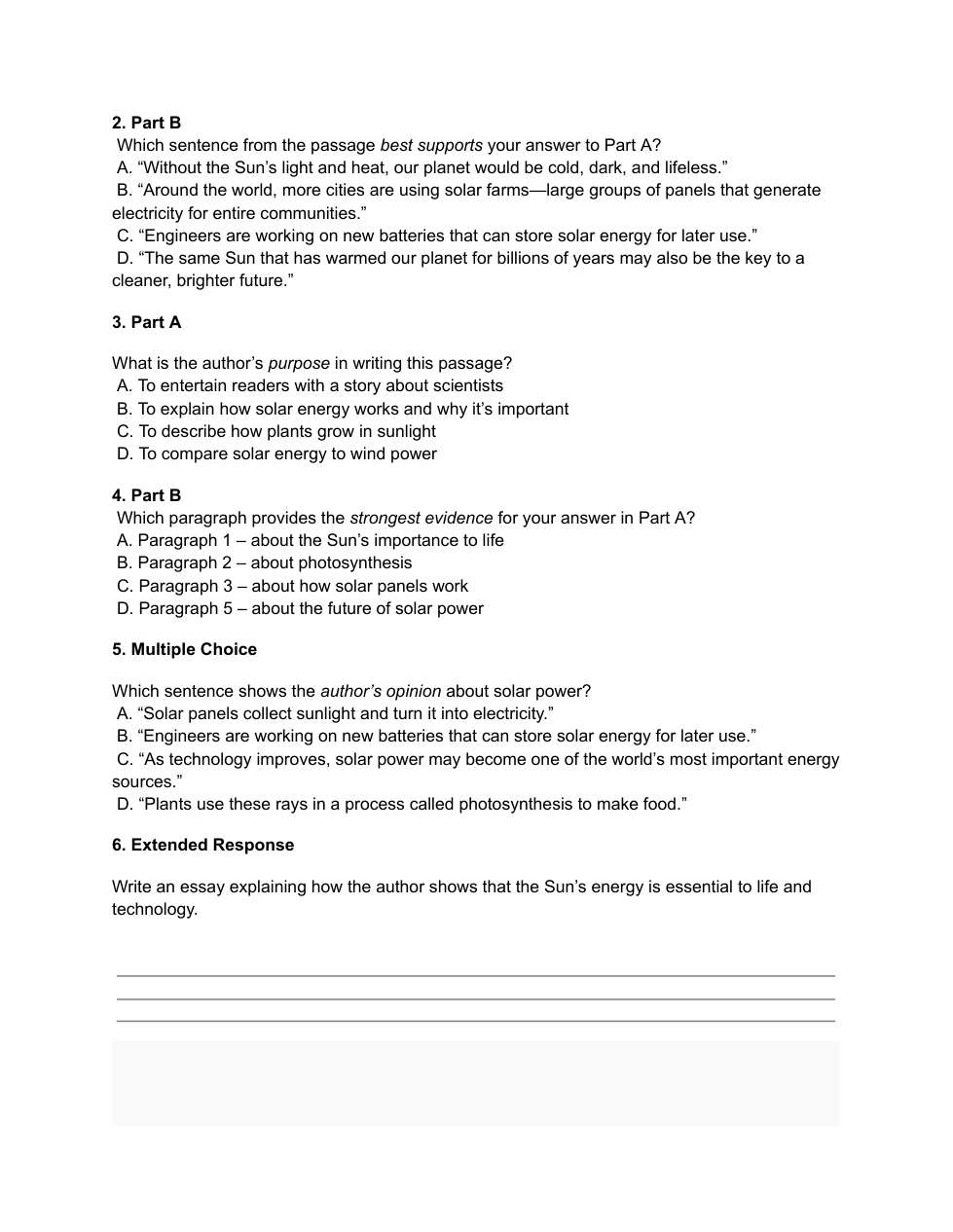
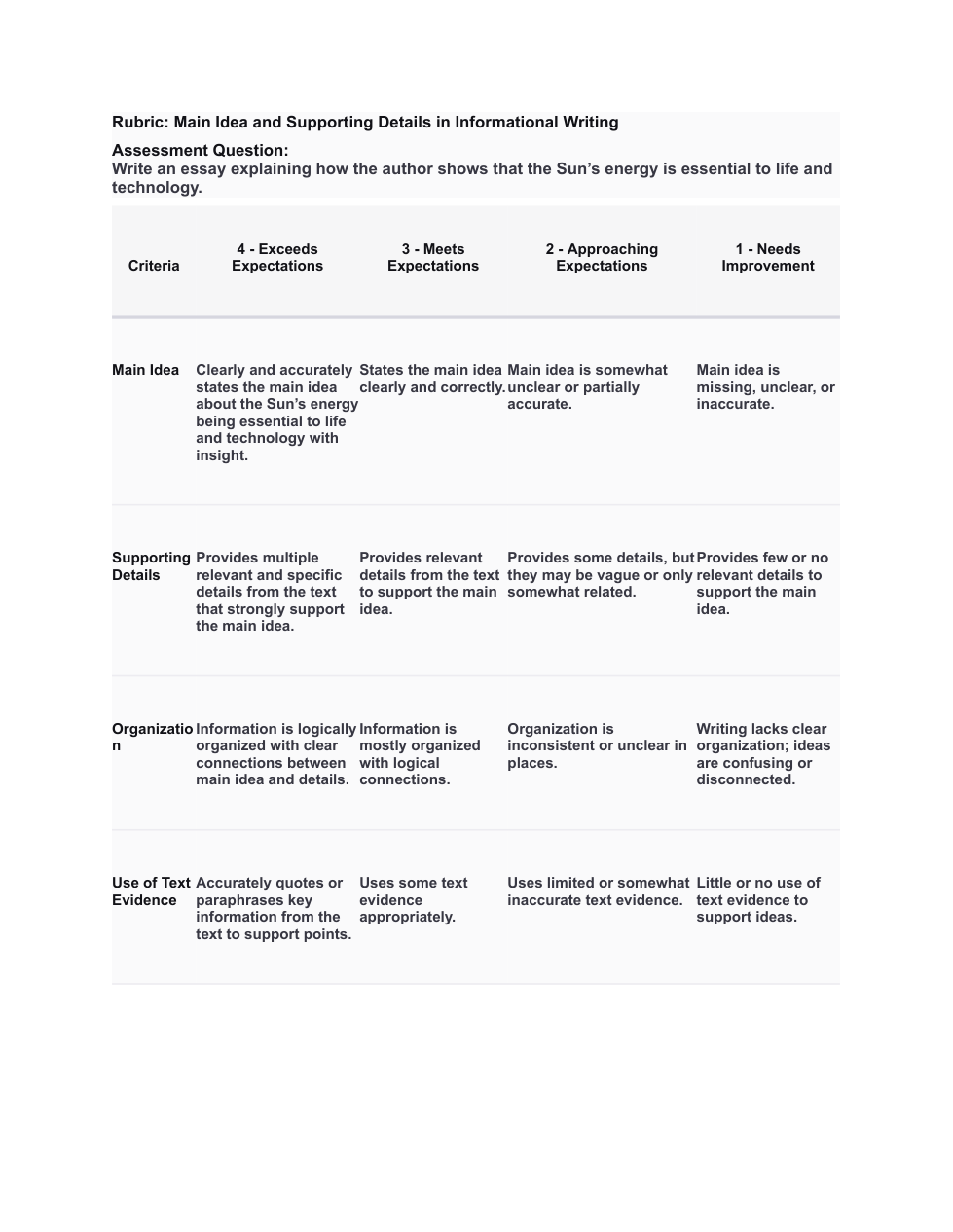
Extended Response: Write an essay explaining how the author shows that the Sun's energy is essential to life and technology.

Part B: Which sentence from the passage best supports your answer to Part A?
Part A: What is the author's purpose in writing this passage?
Part B: Which paragraph provides the strongest evidence for your answer in Part A?
Which sentence shows the author's opinion about solar power?