(Module 1) Identify the type of map shown in the image.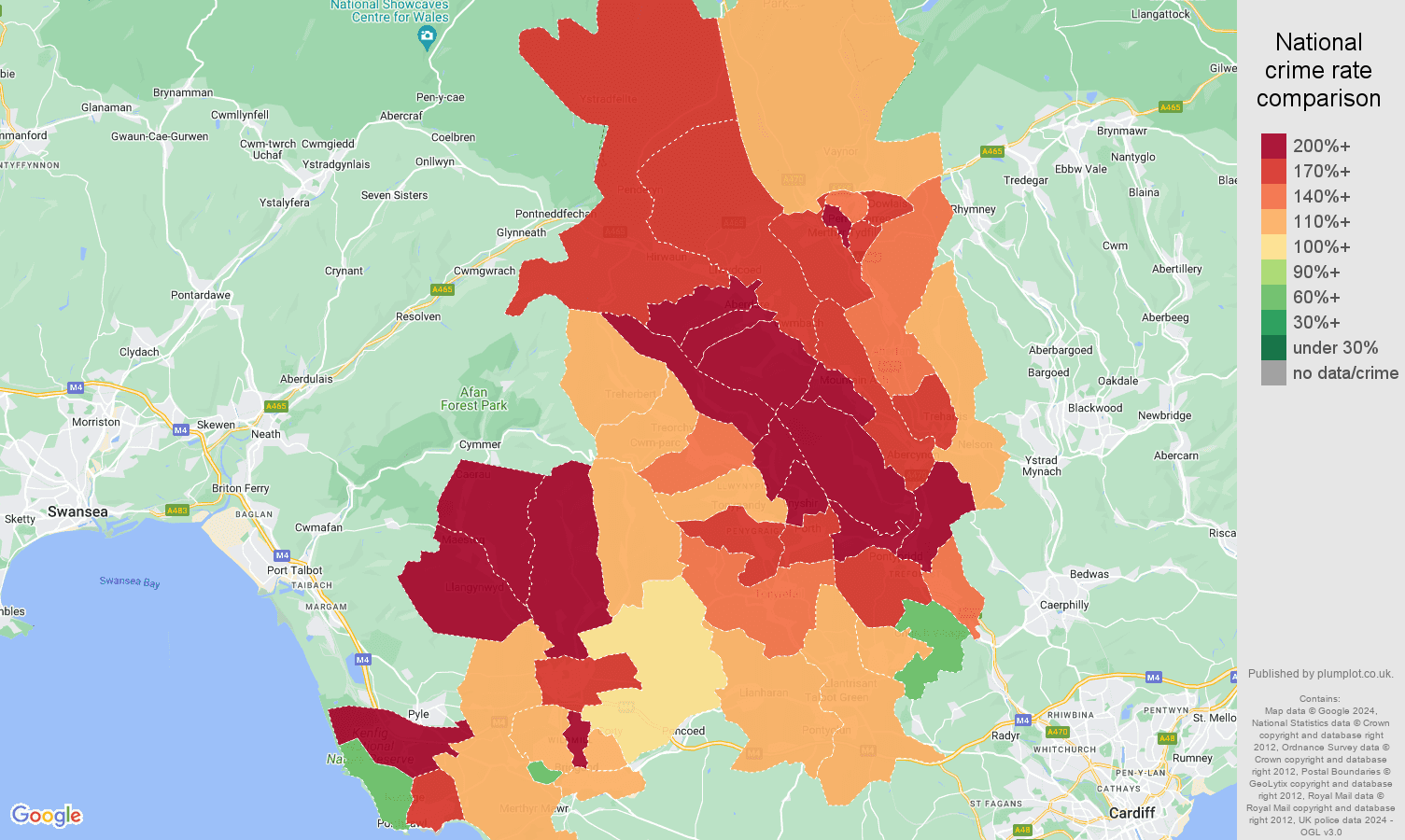
(Module 1) Identify the type of map shown in the image.
(Module 1) Identify the type of map shown in the image.
(Module 1) Identify the type of map shown in the image.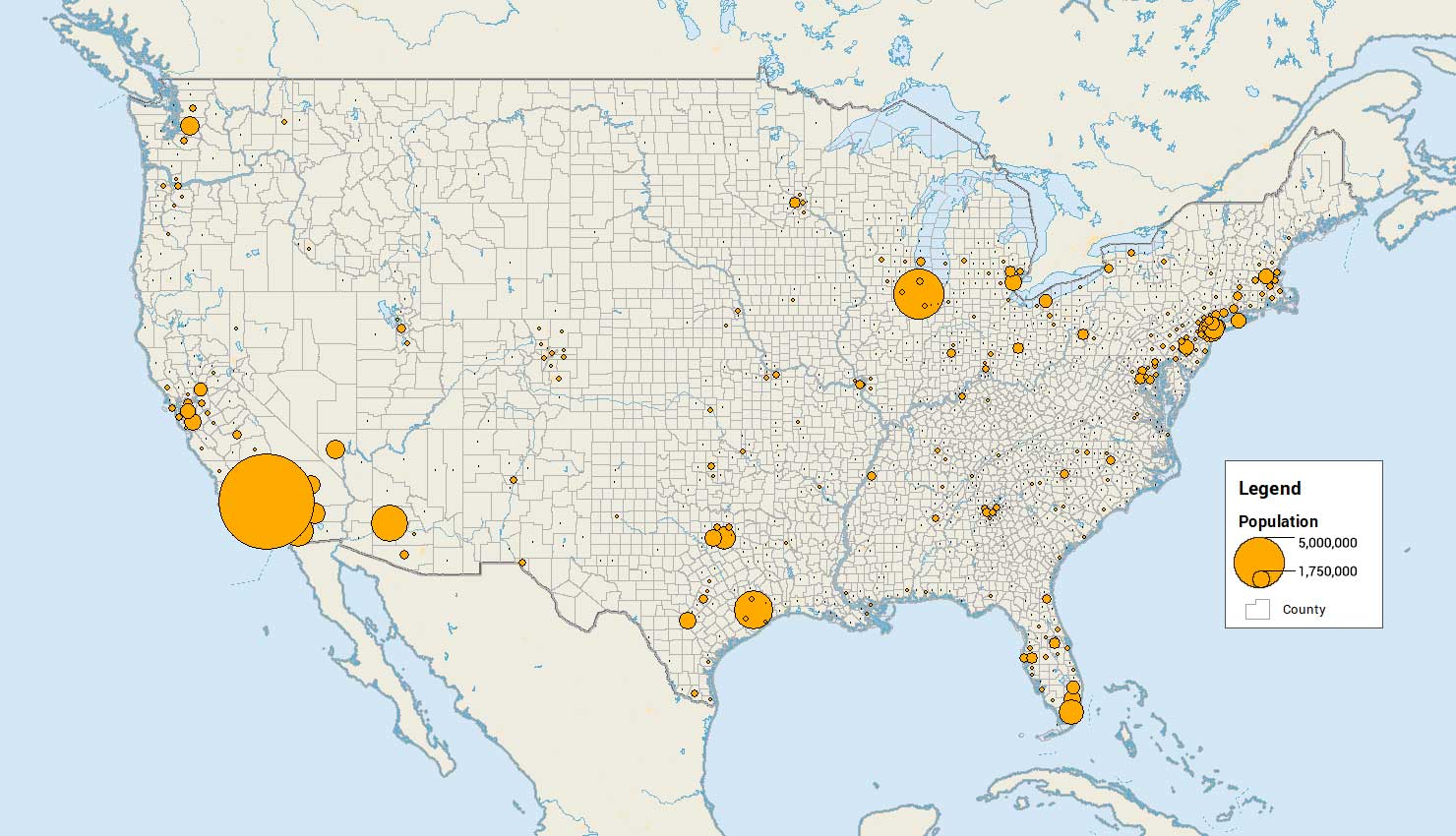
(Module 1) Identify the type of map shown in the image.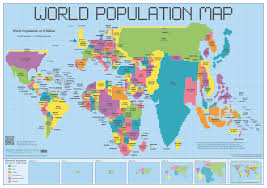
(Module 2) Which of the following geospatial technologies is typically used to analyze the data layers such as those shown in the following maps?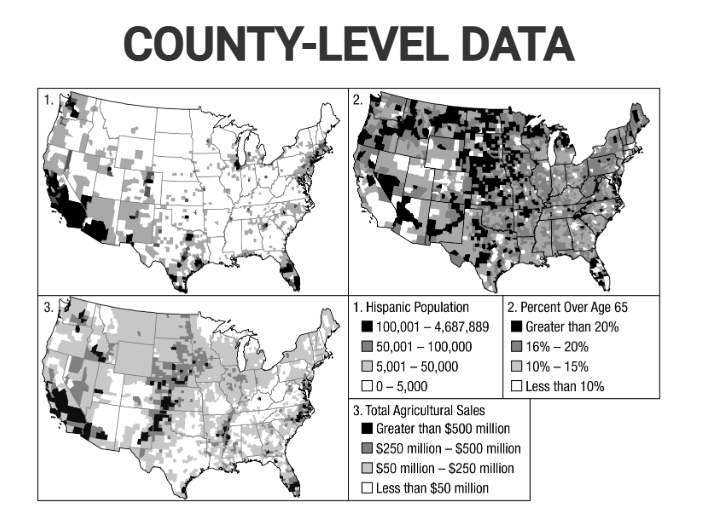
(Module 3) Match each term to the correct EXAMPLE of the term.
| Draggable item | arrow_right_alt | Corresponding Item |
|---|---|---|
Time-space compression | arrow_right_alt | "The park is across the street from the school and next to the library." |
Relative location | arrow_right_alt | "The address of the park is 123 Sunshine Boulevard." |
Friction of distance (distance decay) | arrow_right_alt | "I ordered something from California and it made it to me in Illinois the next day!" |
Absolute location | arrow_right_alt | "Even though I love it, I rarely go to Oakbrook Mall because it is far from my house." |
(Module 4) Match each geographic location with the MOST LIKELY natural disaster to impact the location.
| Draggable item | arrow_right_alt | Corresponding Item |
|---|---|---|
Oklahoma | arrow_right_alt | Tsunami |
Bangladesh | arrow_right_alt | Hurricane |
California | arrow_right_alt | Flood |
Japan | arrow_right_alt | Drought/forest fire |
Jamaica | arrow_right_alt | Tornado |
(Module 4) Which of the following describes the perspective of environmental determinism?
(Module 4) Which of the following is best explained by the theory of possibilism?
(Module 4) Which of the following global trends best exemplifies the concept of sustainability?
(Module 5) Geographic scale is the geographic extent of the area(s) under investigation. The area may be relatively small (such as a neighborhood or a city) or it may be relatively large (a country, a region, or the entire world). Match each example to the correct SCALE OF ANALYSIS.
| Draggable item | arrow_right_alt | Corresponding Item |
|---|---|---|
In Civics class, you are studying voter turnout in all 50 states in the United States and including this data on a map | arrow_right_alt | Local |
The World Bank released data comparing the average wealth of countries in Europe, comparing those in western Europe to eastern Europe | arrow_right_alt | National |
The World Health Organization is studying the rate of measles vaccinations across the world | arrow_right_alt | Regional |
The Chicago Tribune published an article comparing the academic offerings at different high schools in the Chicagoland area | arrow_right_alt | Global |
(Module 7) A region is a geographical unit based on one or more unifying characteristics, functions, or patterns of activity that are taking place. Regions are at the core of much geographic analysis. Match each region description with the correct type of region.
| Draggable item | arrow_right_alt | Corresponding Item |
|---|---|---|
A large city (like Chicago, New York, or Boston) and the suburbs connected to the city by mass transit systems | arrow_right_alt | Formal region |
The "Bible Belt" of the United states, which people from outside the "Bible Belt" see it as being occupied by people of strong religious faith | arrow_right_alt | Functional region |
A map showing official languages spoken in African countries | arrow_right_alt | Perceptual (vernacular) region |
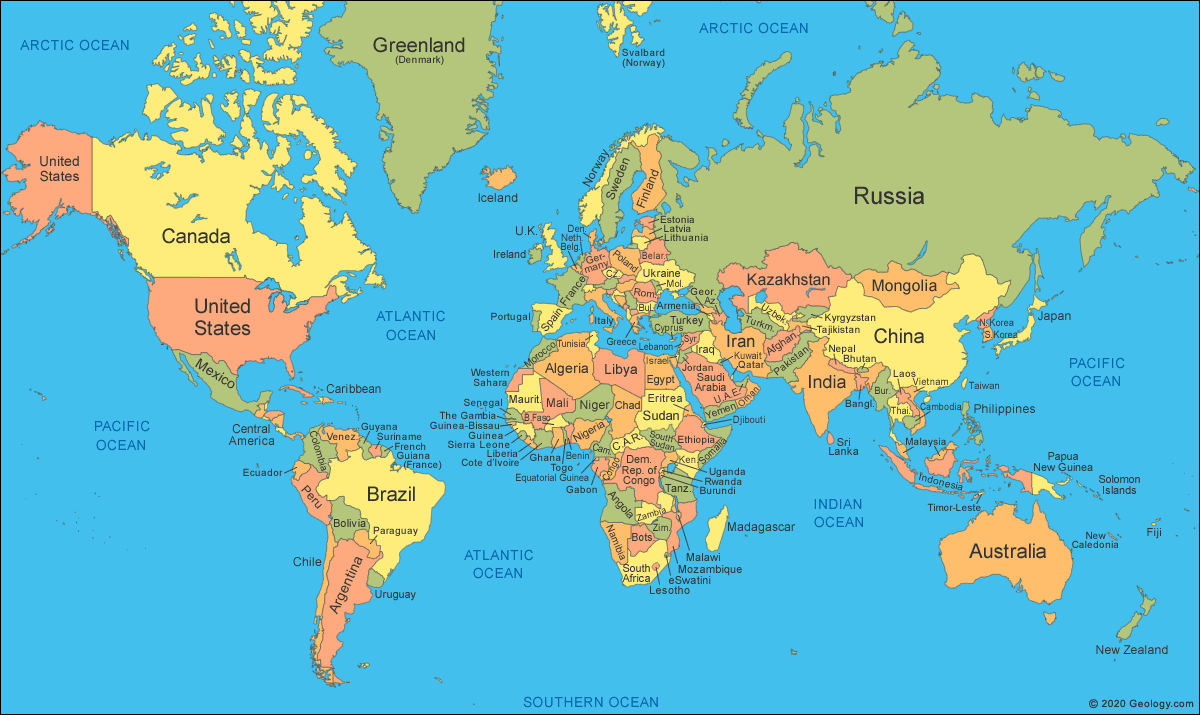
(Module 7) Click on the area of the world where the largest percentage of the world's population is distributed.
(Module 7) Match each type of population density to the correct definition.
| Draggable item | arrow_right_alt | Corresponding Item |
|---|---|---|
Agricultural density | arrow_right_alt | Average number of people per unit of land area |
Physiological density | arrow_right_alt | Number of farmers per unit of arable land |
Arithmetic density | arrow_right_alt | Number of people supported by unit of arable land |
(Module 7) Explain how climate influences population distribution.
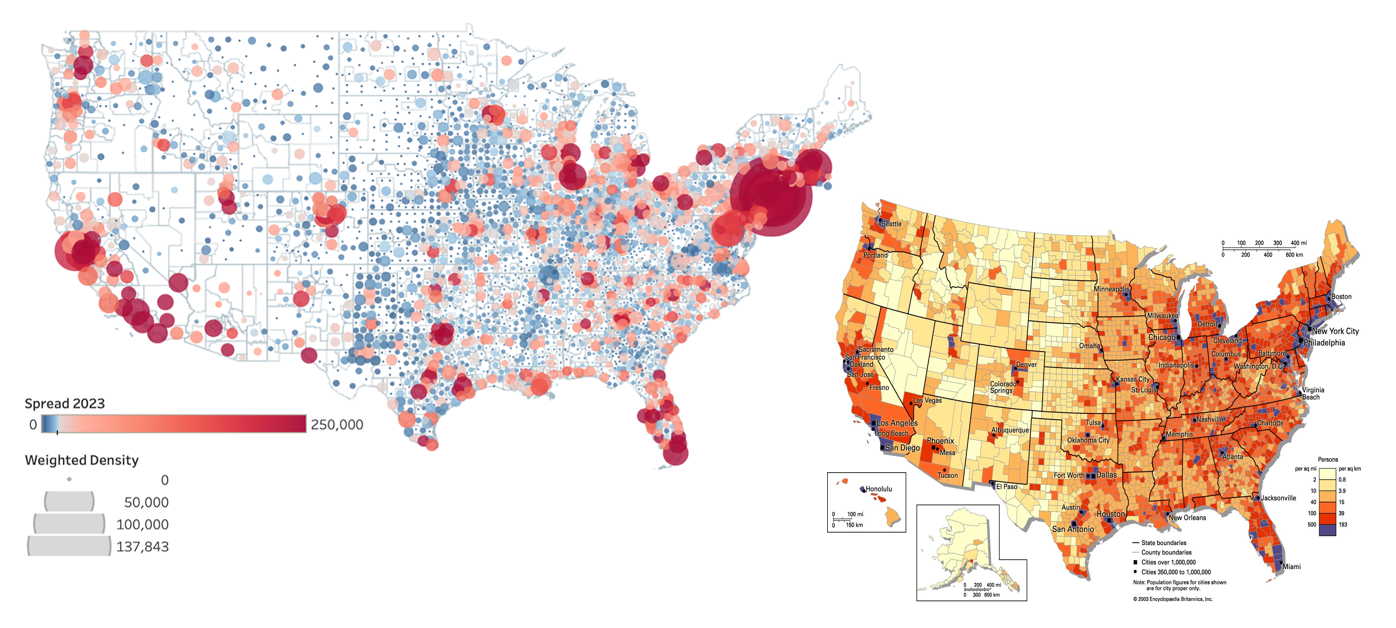
(Module 7) Explain the relationship between population density and the spread of Covid-19 in the time period shown.
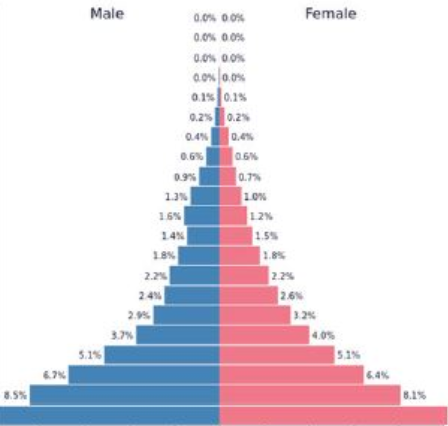
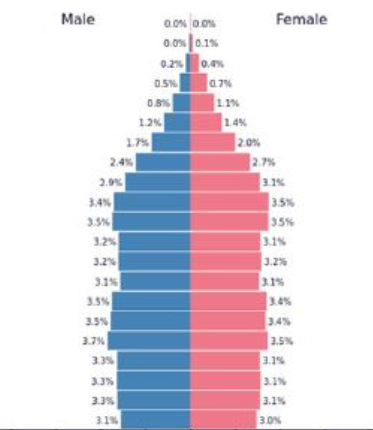
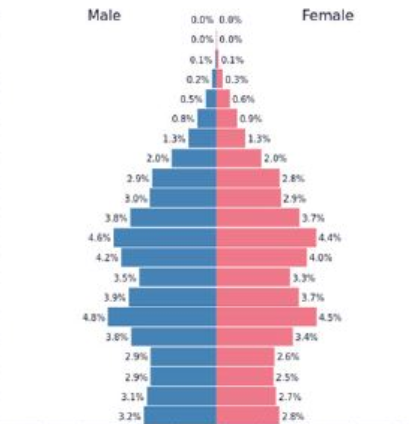
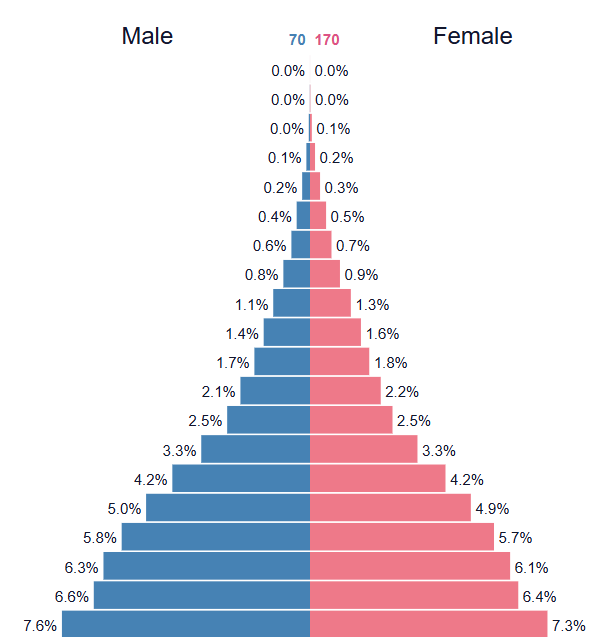
(Module 8) Match each population pyramid SHAPE with the correct description of the population trend associated with the age structure.
| Draggable item | arrow_right_alt | Corresponding Item |
|---|---|---|
| arrow_right_alt | Declining population |
| arrow_right_alt | Increasing population |
| arrow_right_alt | Stable population or zero population growth |
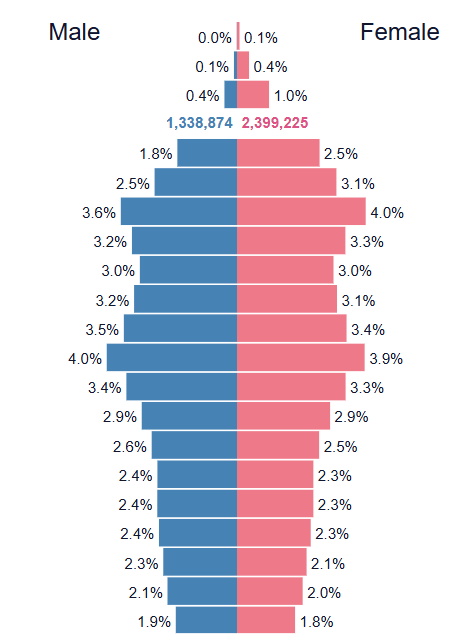
(Module 8) Match each population pyramid with the correct DEPENDENCY RATIO experienced by a country with this age structure.
| Draggable item | arrow_right_alt | Corresponding Item |
|---|---|---|
| arrow_right_alt | Youth dependency ratio |
| arrow_right_alt | Elderly dependency ratio |
| arrow_right_alt | Low overall dependency |
(Module 9) Since the 1970s, changes in societal roles, lifestyles, and employment patterns of women in Europe, Canada, and the United States have affected the overall population through which of the following?
(Module 9) Which of the following best explains the trend about infant mortality shown in the bar chart?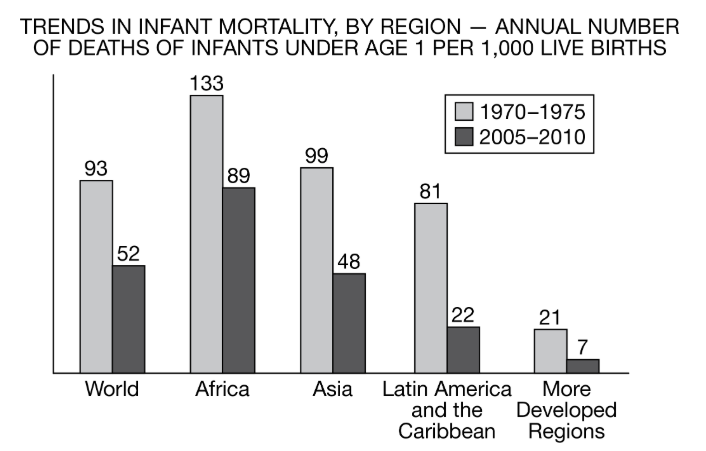
(Module 9) Which of the following characteristics applies to more developed countries?
(Module 10) Drag each characteristic across into the correct stage of the demographic transition model. Some answers are listed twice because they can fit into two stages.
MDC
MDC
Developing country
LDC
LDC
High birth and death rates
Low birth and death rates
Low birth and death rates
Negative population growth
High NIR
High NIR
Slowing population growth
Most common cause of death-delayed degenerative diseases
Beginning of industrialization
Most common cause of death-delayed degenerative diseases
Stage 1
Stage 2
Stage 3
Stage 4
Stage 5
(Module 11) Which of the following best explains why, in the late 18th and early 19th centuries, Thomas Malthus proposed his population theory?
(Module 12) Drag each Neo-Malthusian population policy into the correct category.
China's One-Child Policy
Egypt's "Two is Enough" policy, which discouraged families from having more than two children
Hope Genesis (Greece) providing care for mothers and babies
Russia increasing child-care benefits and length of maternity leave
Singapore increasing access to contraception and family planning clinics
Poland offering a monthly payment for each child a family has
Antinatalist policies
Pronatalist policies
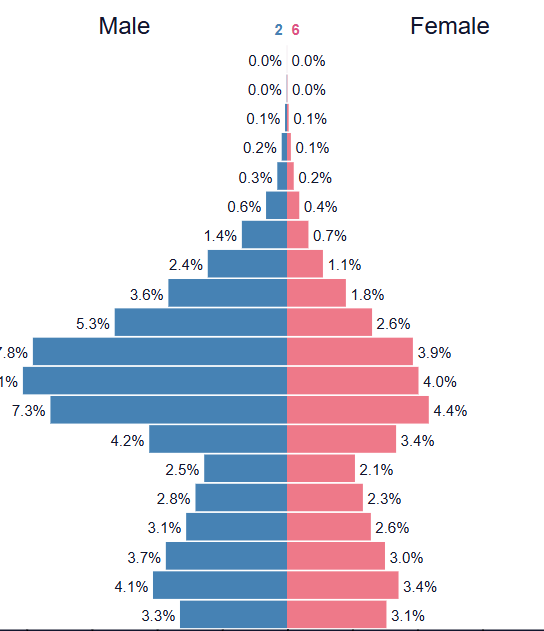
(Module 13) Which of the following patterns is indicated by the population pyramid?
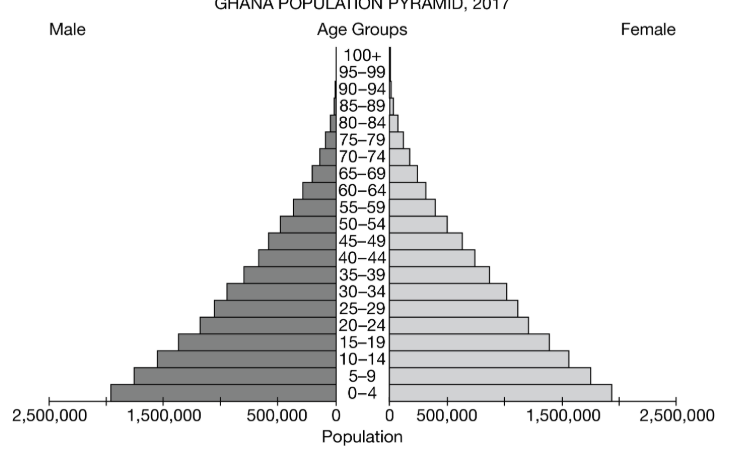
(Module 14) Which of the following are effects of an aging population and increased elderly dependency ratio? Click all that apply.
(Module 15) Choose the characteristics of migrants and migration according to Ravenstein's laws of migration.
(Module 15) Categorize the following causes of migration as push or pull factors.
Overpopulation
Increased competition for homes and jobs
Religious freedom
Opportunities for political rights
Religious persecution
Government censorship
Natural disasters
Increased educational opportunities
Desire for more comfortable climate
Avaiable jobs and housing
Push factors
Pull factors
(Module 16) Match each term to the correct definition.
| Draggable item | arrow_right_alt | Corresponding Item |
|---|---|---|
Remittance | arrow_right_alt | Person with temporary permission to work in another country; not permanent residents |
Chain migration | arrow_right_alt | Migration carried out in a series of stages; usually from nearboy to bigger and more distant places |
Return migration | arrow_right_alt | Process by which migration to a new place leads to the migration of family members and friends to the same place |
Guest worker | arrow_right_alt | Migrants going back, or returning, to their previous place of residence or origin |
Step migration | arrow_right_alt | The transfer of money or goods sent by a migrant back to their country of origin |
(Module 16) Match each type of forced migrant to the correct example description.
| Draggable item | arrow_right_alt | Corresponding Item |
|---|---|---|
Refugee | arrow_right_alt | Ethiopian people forced from their homes due to war and drought, but who remain in Ethiopia because they do not have the resources to leave |
IDP (Internally displaced person) | arrow_right_alt | A student activist fled her country in fear of government persecution, but is waiting on the decision concerning her application to be accepted into the United States |
Asylum seeker | arrow_right_alt | Venezuelans fled their country to escape famine and violence and have received protected status in the United States |
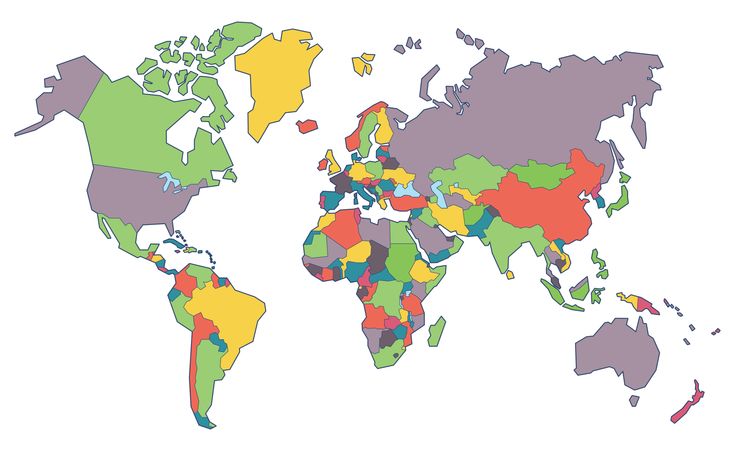
(Module 16) The countries listed below the map are countries that drive migration (ie countries with push factors). Drag each country name to the correct location on the map.
Ukraine
Mexico
India
China
Sudan
Venezuela
(Module 17) Below are effects of migration. Categorize each effect into the correct category.
Migration can bring more money into the receiving country
Immigration and migration are issues that can impact elections
Migration leads to the spread of culture and new ideas
Because migrants are more likely to be male, migration can change the sex ratio of a population
Migration can lead to the spread of disease
Migration can shift voting patterns
Migration can increase the labor supply
Migration changes the ethnic composition of a population
Demographic
Economic
Political
Social