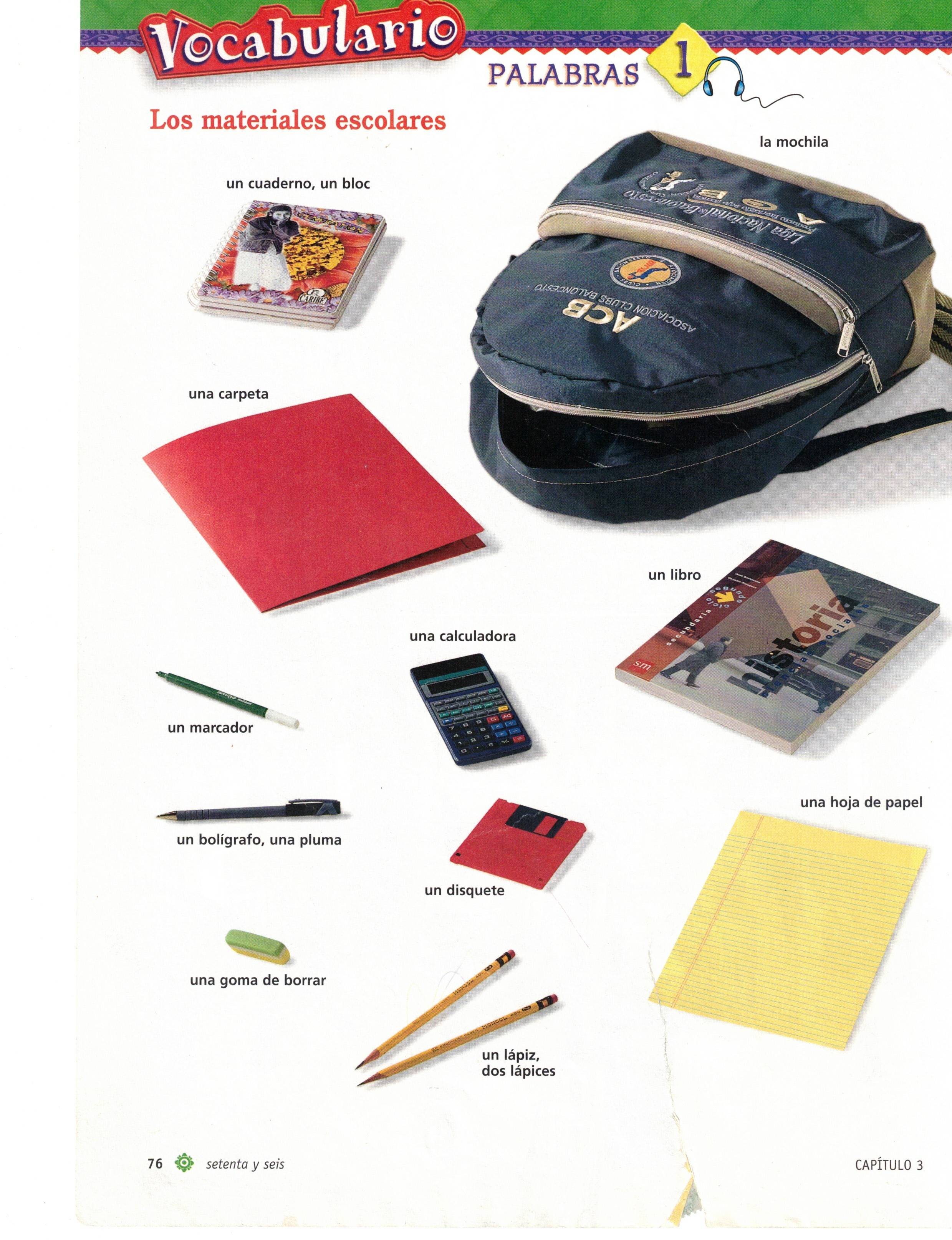
| Draggable item | arrow_right_alt | Corresponding Item |
|---|---|---|
Una goma de borrar | arrow_right_alt | The notebool |
Una calculadora | arrow_right_alt | A folder |
Una hoja de papel | arrow_right_alt | The backpack |
Un marcador | arrow_right_alt | A book |
un lápiz, dós lápices | arrow_right_alt | A calculator |
La mochila | arrow_right_alt | A marker |
El cuaderno | arrow_right_alt | A pen |
Un libro | arrow_right_alt | An eraser |
Un bolígrafo, una pluma | arrow_right_alt | A pencil, two pencils |
Una carpeta | arrow_right_alt | A sheet of paper |
Noun adjective agreement
In Spanish, adjectives must agree with the noun in both gender and number.
Examples:
la mochila roja - the red book bag
las mochilas rojas - the red bookbags
el cuaderno verde - the green notebook
los cuadernos verdes - the green notebooks
Choose the correct translation of "the white paper."
Choose the correct translation of "the blue book."
Choose the correct translation of "the purple notebooks."
Choose the correct translation of "the large backpacks."
Choose the correct form of the adjective: el lápiz ____________
Choose the correct form of the adjective: la pluma ____________
Choose the correct form of the adjective: los macadores ____________
Choose the correct form of the adjective: los libros ____________
Choose the correct form of the adjective: un libro ____________
Choose the correct form of the adjective: la carpeta ____________
Choose the correct form of the adjective: una calculadora ____________
Choose the correct form of the adjective: una goma de borrar ____________
Choose the correct form of the adjective: unos cuadernos ____________
How do you say: Stand up and come here?
How do you say sit down?
How do you say, find a pencil?
How do you say: Give the paper to me.
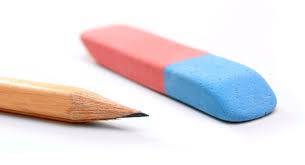
What is next to the pencil?
¿Está mirando un libro?

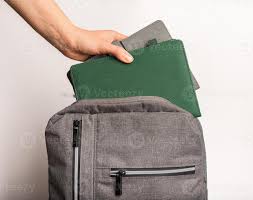
¿Qué hace? (What is he doing?)
Most Spanish adjectives will be placed after the noun they modify.