Twa kɔ nsɛm atitiriw so
Log in
Sign up for FREE
arrow_back
Laabri

Lorenzo Día de los muertos (Spanish 2- ACTFL 2.1, 3.1, 4.2)

star
star
star
star
star
Last updated 8 months ago
18 Nsɛmmisa
0
2.1
1
1
1
1
1
1
1
3.1
1
1
4.2

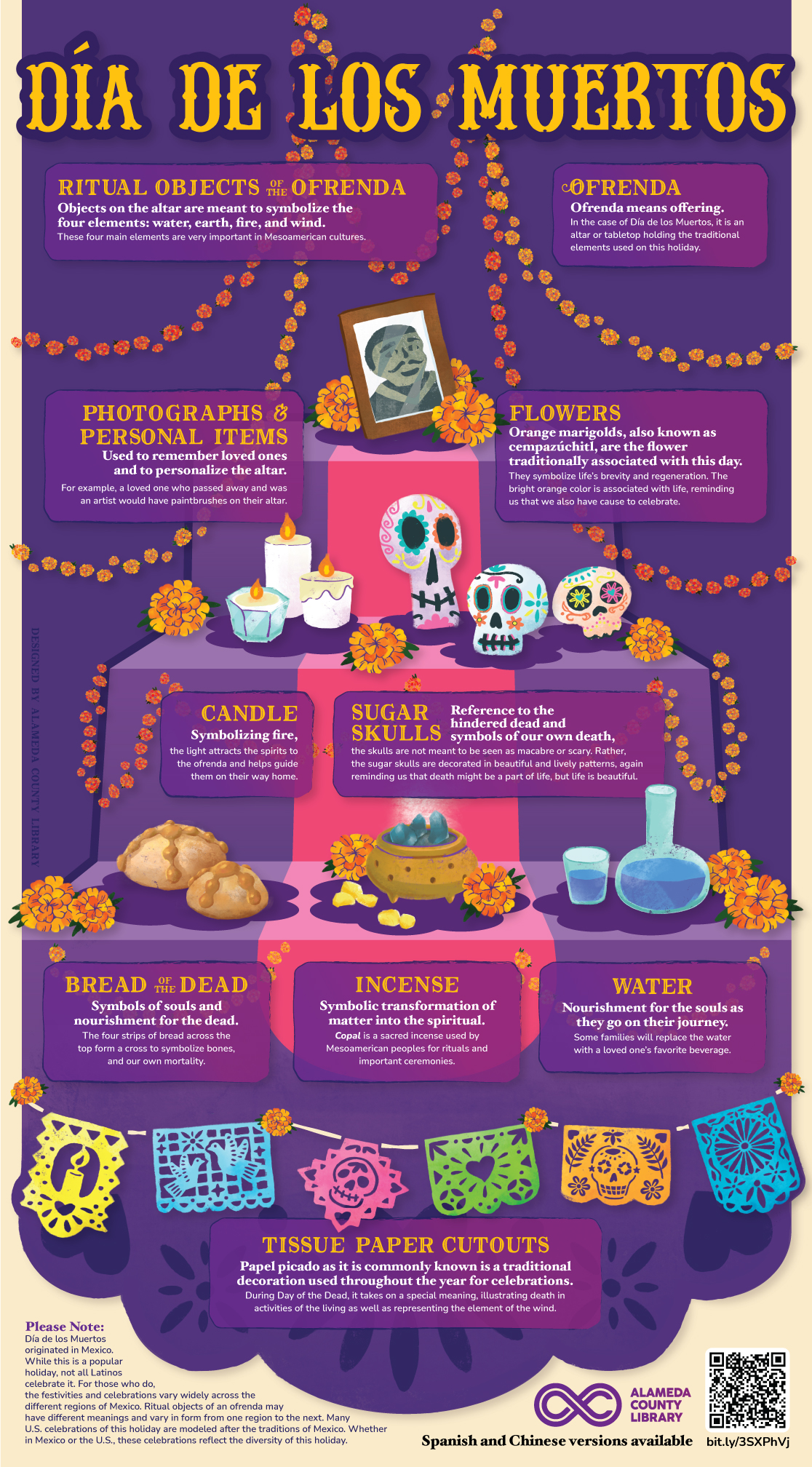
This Formative is a paced lesson containing a lesson on Day of the Dead. Let's first start by establishing what we already know about day of the dead. Did you learn about it last year? Do you know someone who celebrates it? Then for each question you will have to either read an article, watch a short video, or analyze an info graphic then respond to the questions. For your last task you will do a cultural comparison. Use what you have learned about day of the dead and compare it to a holiday you celebrate in your culture. You will have two attempts.

Asemmisa {{asɛmmisaAhyɛnsode}}
1.

What do you already know about Día de los muertos?

1
Asemmisa {{asɛmmisaAhyɛnsode}}
2.

When is Día de los Muertos celebrated?

1
1
1
Asemmisa {{asɛmmisaAhyɛnsode}}
6.

The Day of the Dead is celebrated only in Mexico.

Asemmisa {{asɛmmisaAhyɛnsode}}
7.

During the Day of the Dead, families honor and remember their deceased loved ones.

Asemmisa {{asɛmmisaAhyɛnsode}}
8.

Catrinas are a symbol associated with the Day of the Dead celebrations.

Asemmisa {{asɛmmisaAhyɛnsode}}
9.

The Day of the Dead has no connection to joy or happiness.

1
Asemmisa {{asɛmmisaAhyɛnsode}}
10.

Match the ritual object to its symbolism.

Draggable itemarrow_right_altCorresponding Item

Candle

arrow_right_alt

Nourishes souls on their journey.

Incense

arrow_right_alt

Attracts spirits to the ofrenda.

Water

arrow_right_alt

Transforms matter into the spiritual.

1
Asemmisa {{asɛmmisaAhyɛnsode}}
11.

Connect the traditional elements of the ofrenda to their meanings.

Draggable itemarrow_right_altCorresponding Item

Flowers

arrow_right_alt

Offers nourishment for the dead.

Sugar Skulls

arrow_right_alt

Symbolize life and regeneration.

Bread of the Dead

arrow_right_alt

Represent our own mortality.

1
1
Asemmisa {{asɛmmisaAhyɛnsode}}
14.

Who does the main character honor during the holiday?

Asemmisa {{asɛmmisaAhyɛnsode}}
15.

What holiday is the focus of the story?

Asemmisa {{asɛmmisaAhyɛnsode}}
16.

What does the main character learn at the end?

Asemmisa {{asɛmmisaAhyɛnsode}}
17.

Which items are typically placed around the gravestone?

Asemmisa {{asɛmmisaAhyɛnsode}}
18.

Cultural Comparison: Choose two holidays—one from Day of the Dead traditions and one from another cultural or American tradition—and compare the customs, symbols, and significance of each. How do the practices surrounding these holidays reflect the values and beliefs of the cultures that celebrate them?

https://kids.nationalgeographic.com/celebrations/article/day-of-the-dead

Animals

Explore Mor

two fake skeletons posed playing instruments

Two fake skeletons are posed playing instruments in a decorative display for the Day of the Dead, a beloved Mexican holiday.

Photograph by Rodolfo Vanegas, LatinContent / Getty Images

Day of the Dead

This lively Mexican celebration helps families honor their ancestors.

Skeletons are scary, right? Not if you're celebrating Día de los Muertos, or Day of the Dead.

REMEMBERING RELATIVES
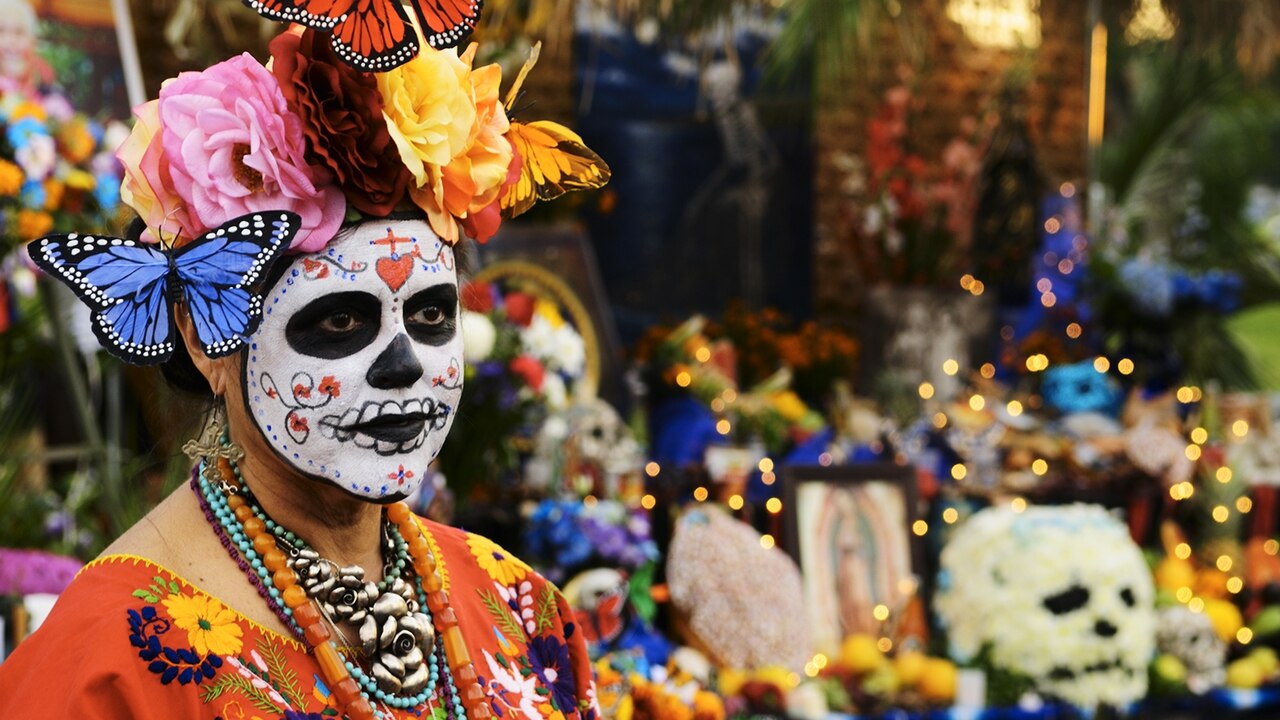
a woman celebrating Day of the Dead with festive face paint.

A woman celebrates with festive face paint.

Photograph by Zepherwind, Dreamstime

Day of the Dead combines the ancient Aztec custom of celebrating ancestors with All Souls' Day, a holiday that Spanish invaders brought to Mexico starting in the early 1500s.

The holiday, which is celebrated mostly in Mexico on November 1 and 2, is like a family reunion—except dead ancestors are the guests of honor. Day of the Dead is a joyful time that helps people remember the deceased and celebrate their memory.

TREATS FOR THE DECEASED
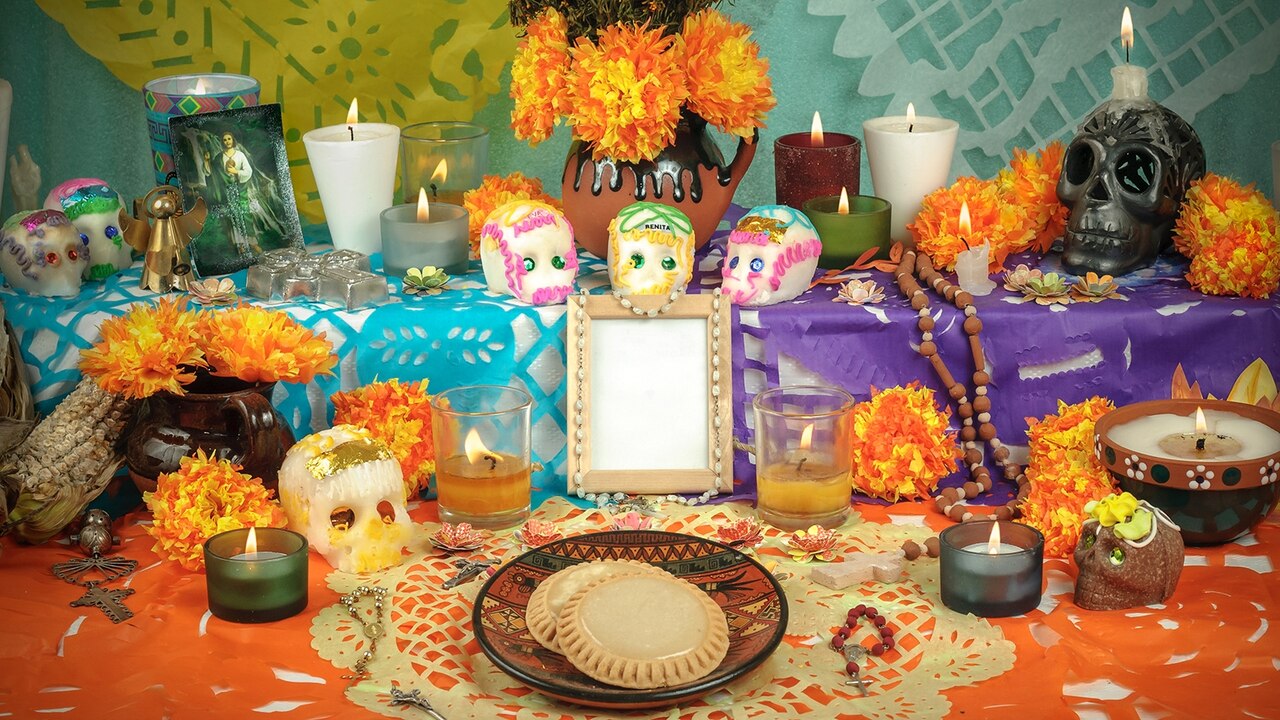
An altar shows some of a relative's favorite items.

Family members light candles along a loved one's grave.

1 / 2

An altar shows some of a relative's favorite items.

An altar shows some of a relative's favorite items.

Photograph by AGCuesta, Shutterstock

First, people set up a candlelit altar in their homes so spirits can find their way back to their relatives. The altar also offers some of the favorite foods of the deceased—just in case they get hungry. Items that were important to the ancestors when they were alive, such as a favorite book or musical instrument, are placed on the altar as well.

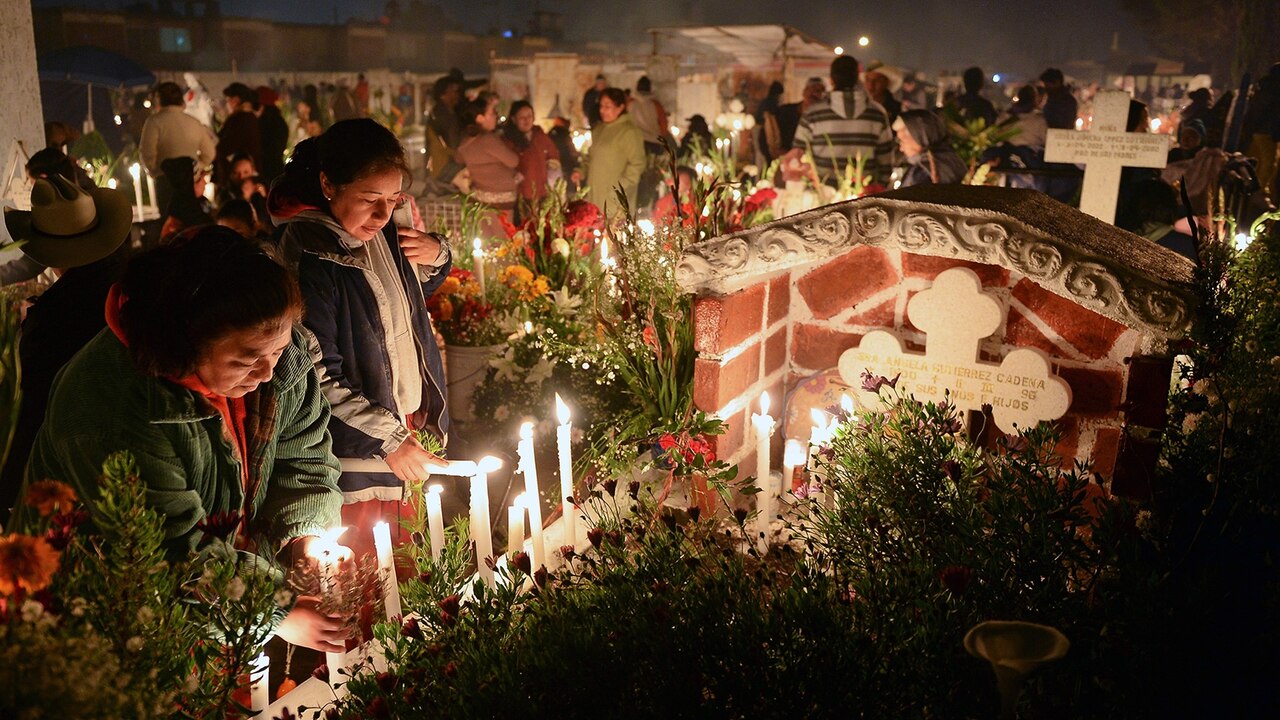
Then it's off to the graveyard for a big party. Families bring a huge feast to eat while they clean tombstones, sing songs, and talk to their ancestors. Parents might even introduce a baby to a grandparent who died before the baby was born.

FUNNY BONES
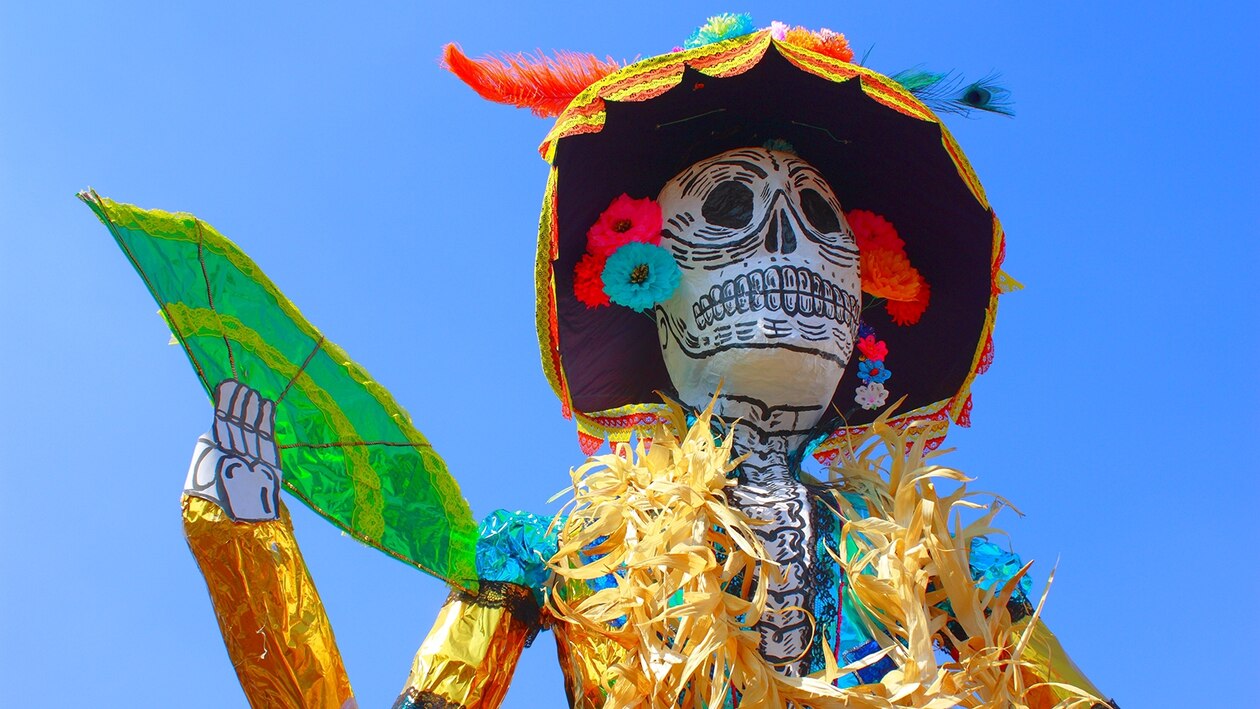
a colorful fake skeleton posed for Day of the Dead.

A colorful fake skeleton is posed for Day of the Dead.

Photograph by Jesús Eloy Ramos Lara, Dreamstime

And don't forget the skeletons. During Day of the Dead, life-size papier-mâché skeletons and miniature plastic or clay skeletons are everywhere. Why? Mexicans honor their ancestors on Day of the Dead, but they're also reminding themselves that death is just a part of life. Hanging out with skeletons reminds people that one day they will be skeletons—but not for a very long time!

The skeletons are posed doing all sorts of wacky things, such as playing guitar, taking a bath, or making tortillas. Apparently people aren't the only ones who get to have fun on Day of the Dead!
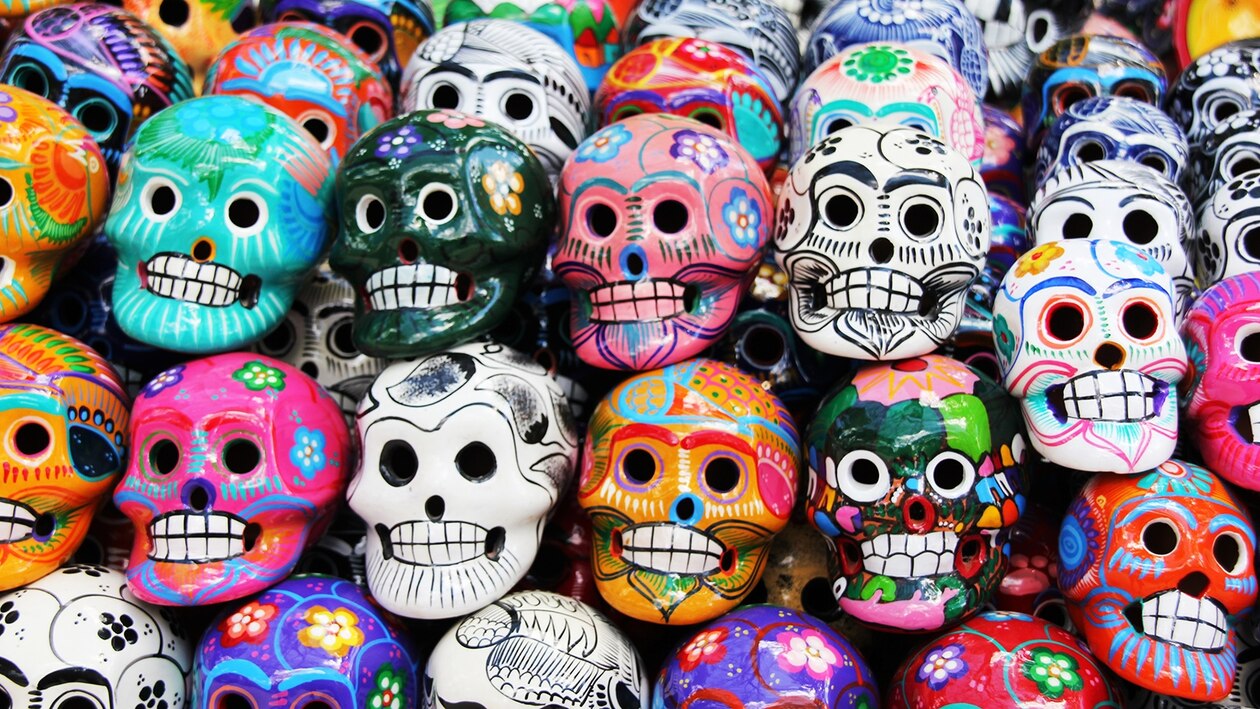
a stack of colorful plastic skeletons

A stack of colorful skulls

Photograph by sisqopote, Shutterstock

(Learn more about the celebration at National Geographic.)


more

Celebrations

Learn about holidays and festivals celebrated around the world.

Winter Celebrations

Wackiest Places Around The World

Countries

Legal

  • Terms of Use

  • Privacy Policy

  • Your US State Privacy Rights

  • Children's Online Privacy Policy

  • Interest-Based Ads

  • About Nielsen Measurement

  • Do Not Sell or Share My Personal Information

Our Sites

  • National Geographic

  • National Geographic Education

  • Shop Nat Geo

  • Customer Service

Join Us

  • Subscribe

  • Manage Your Subscription


National Geographic Logo - Home

Copyright copyright emoji 1996-2015 National Geographic SocietyCopyright copyright emoji 2015-2025 National Geographic Partners, LLC. All rights reserved
Asemmisa {{asɛmmisaAhyɛnsode}}
3.

What do families traditionally create for their ancestors?

Asemmisa {{asɛmmisaAhyɛnsode}}
4.

Why do people include skeletons during Día de los Muertos?

Asemmisa {{asɛmmisaAhyɛnsode}}
5.

What types of items are placed on the altar?

Asemmisa {{asɛmmisaAhyɛnsode}}
12.

Identify the purpose of personal items in the ofrenda.

Draggable itemarrow_right_altCorresponding Item

Paintbrushes

arrow_right_alt

Replace favorites of the deceased.

Photographs

arrow_right_alt

Personalize the altar for artists.

Beverages

arrow_right_alt

Remember loved ones who have passed.

Asemmisa {{asɛmmisaAhyɛnsode}}
13.

Link the elements on the altar with their cultural significance.

Draggable itemarrow_right_altCorresponding Item

Marigolds

arrow_right_alt

Traditional flower for Día de los Muertos.

Tissue Paper Cutouts

arrow_right_alt

Connect with brightness and vitality.

Cempasúchil

arrow_right_alt

Celebrate life and wind's element.