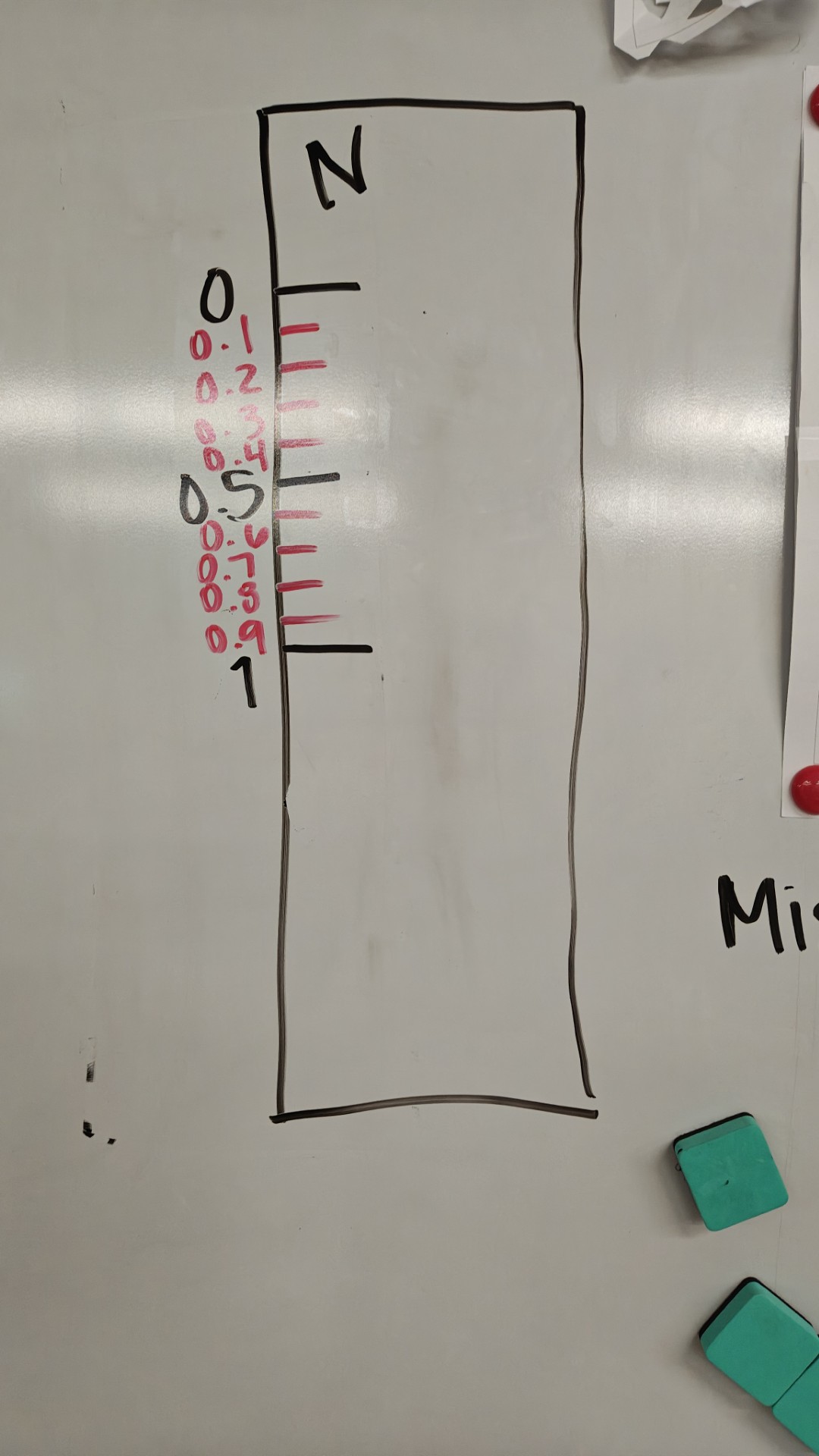
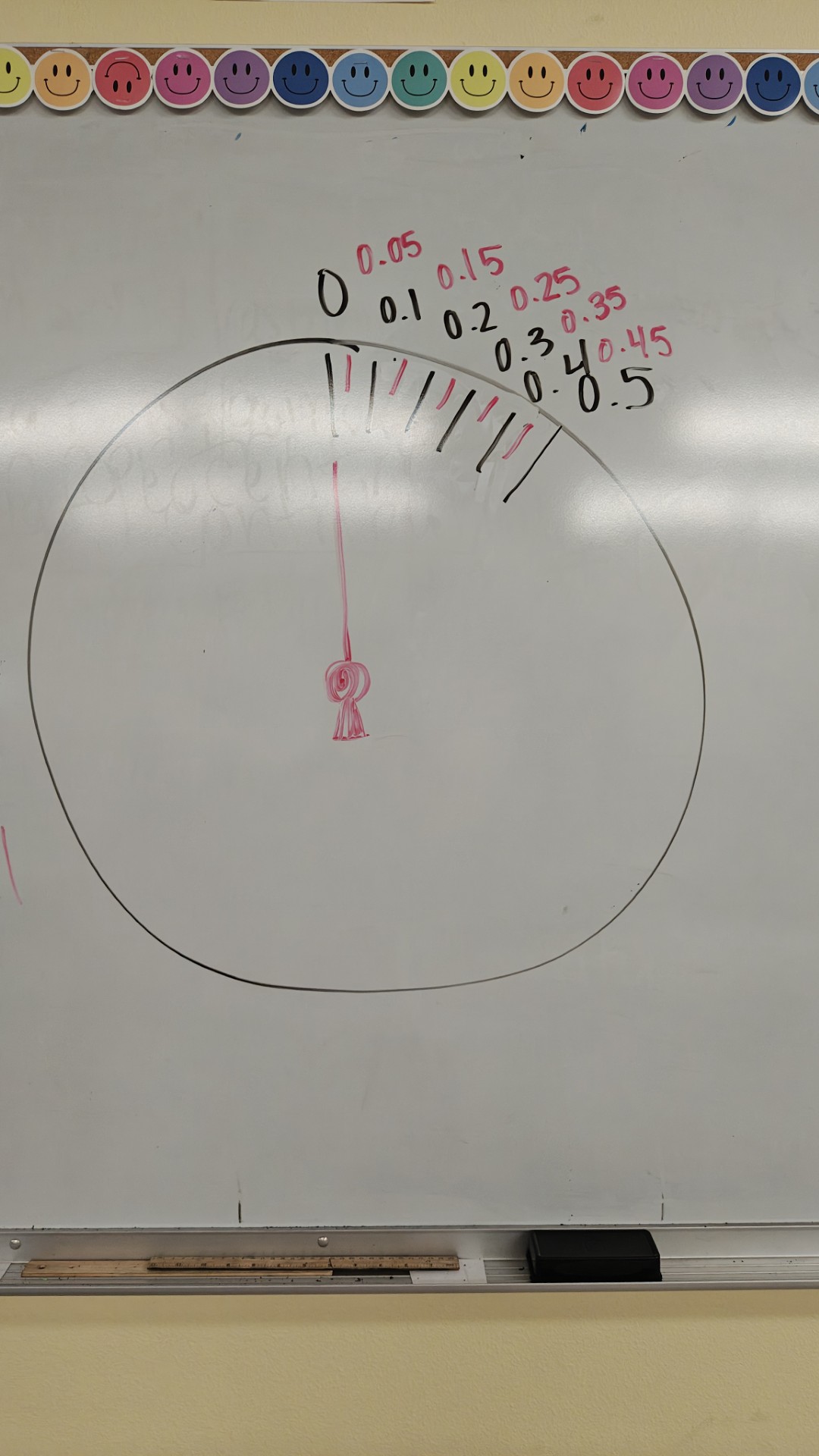
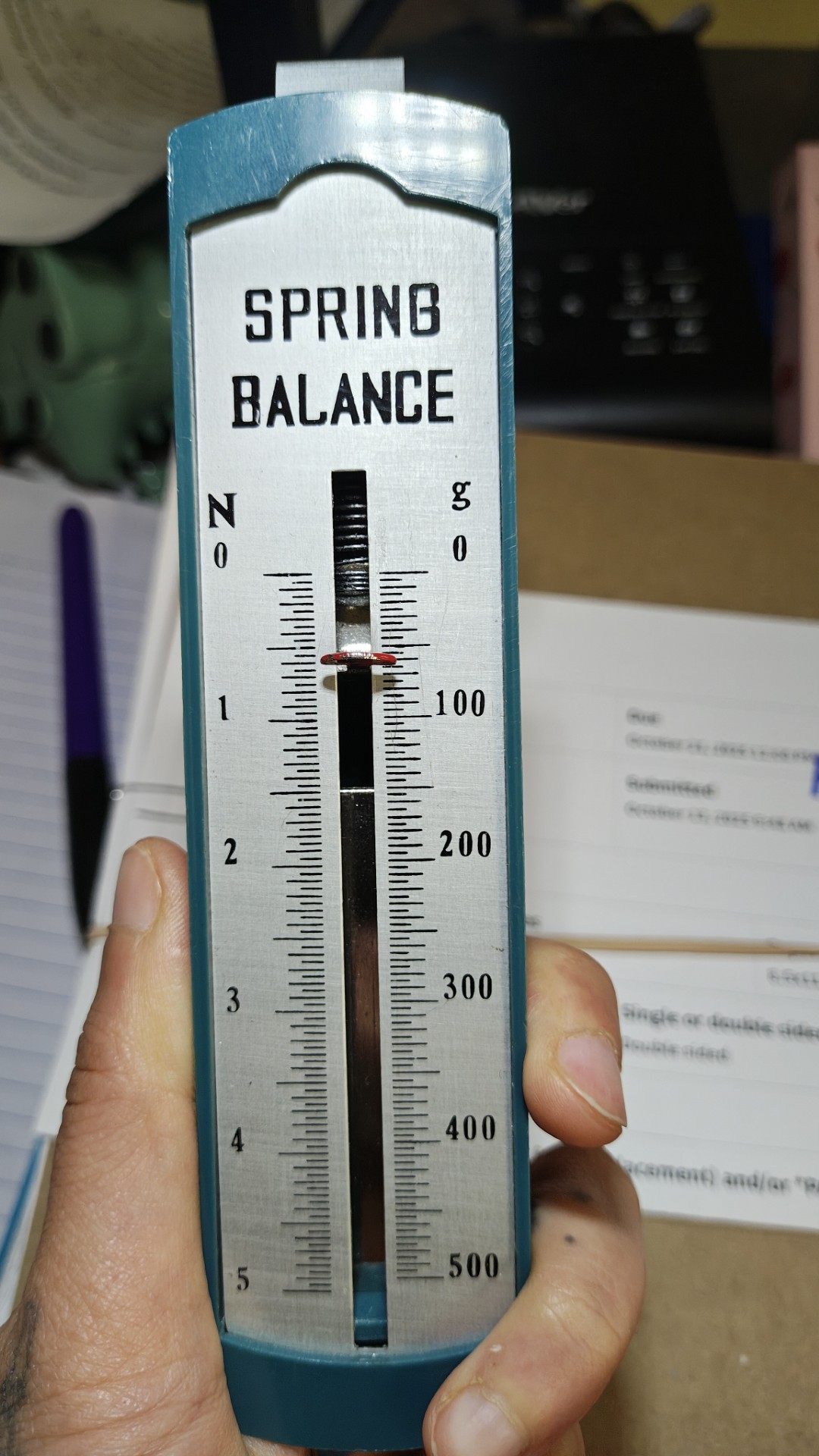
How to read a spring scale:
Bar spring scale
Circle Spring Scale
Friction Lab
Use hand sanitizer or wash your hands and collect the following materials.
Materials:
Friction board
Spring scale
mass
small container
Define force.
Define friction.
How does friction affect motion?
How to read a spring scale:
Bar spring scale
Circle Spring Scale
What is the reading on the spring scale below?
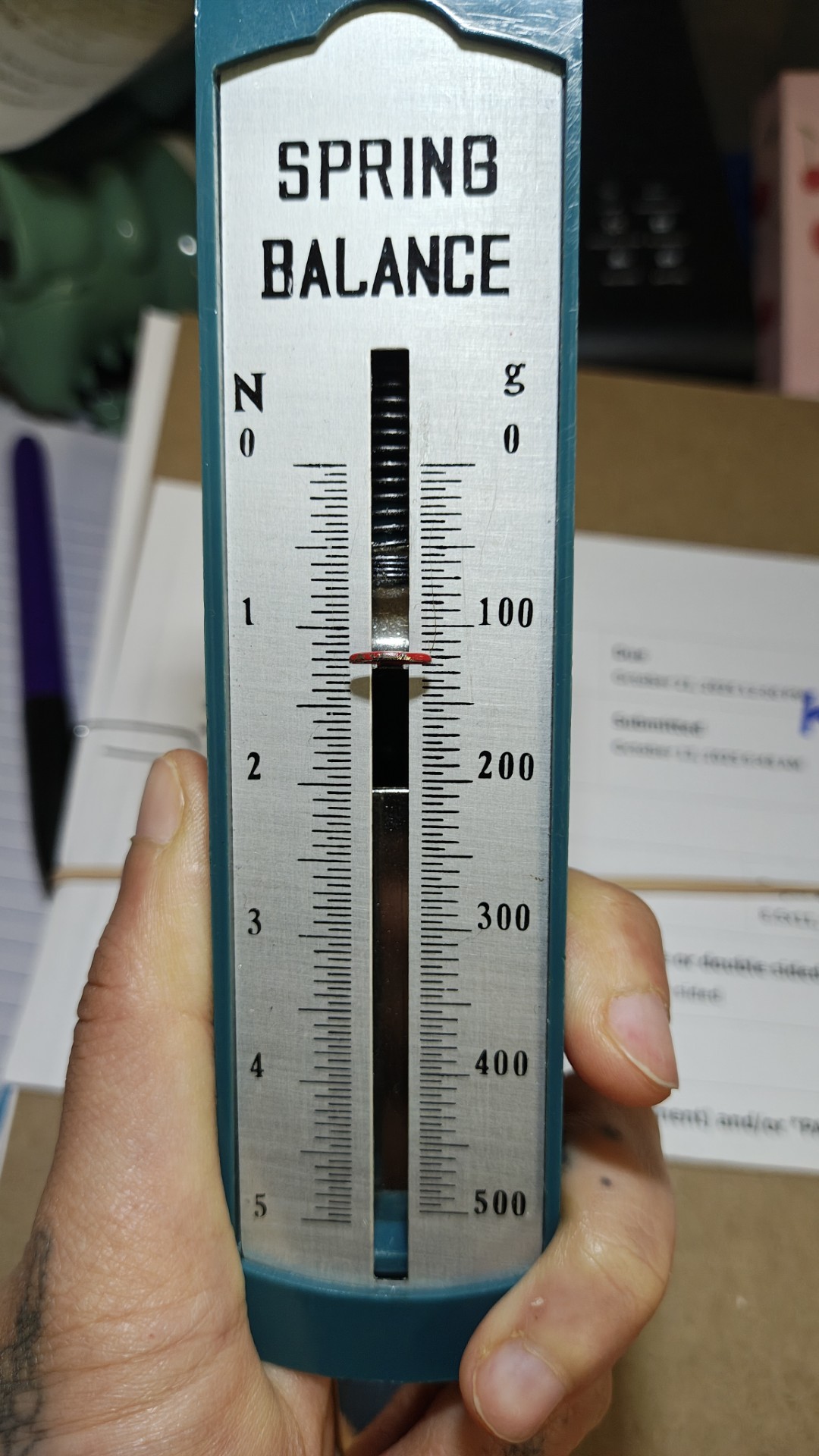
What is the reading on the spring scale below? DON'TFORGET YOUR UNITS.
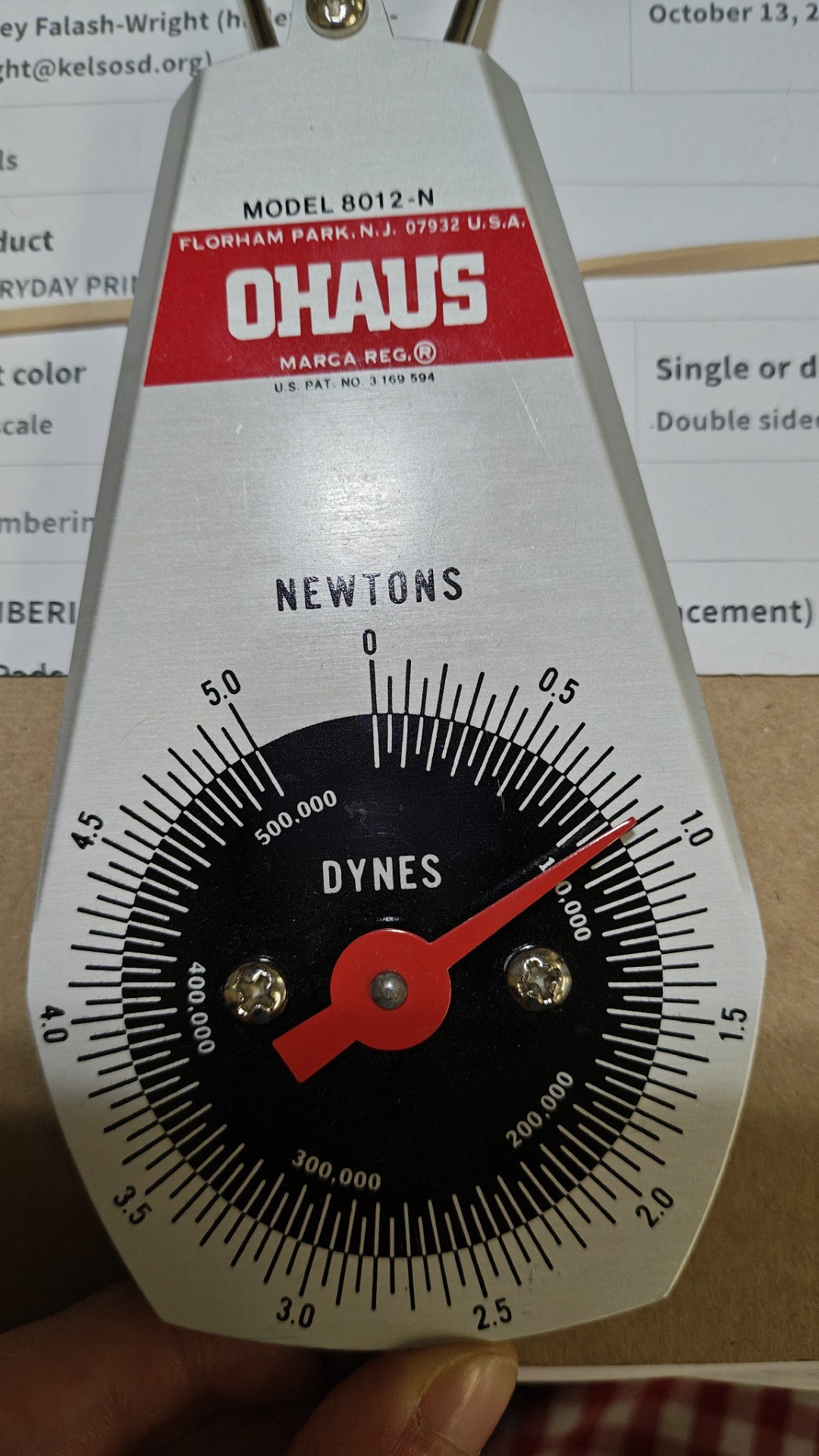
What is the reading on the spring scale below? DON'TFORGET YOUR UNITS.
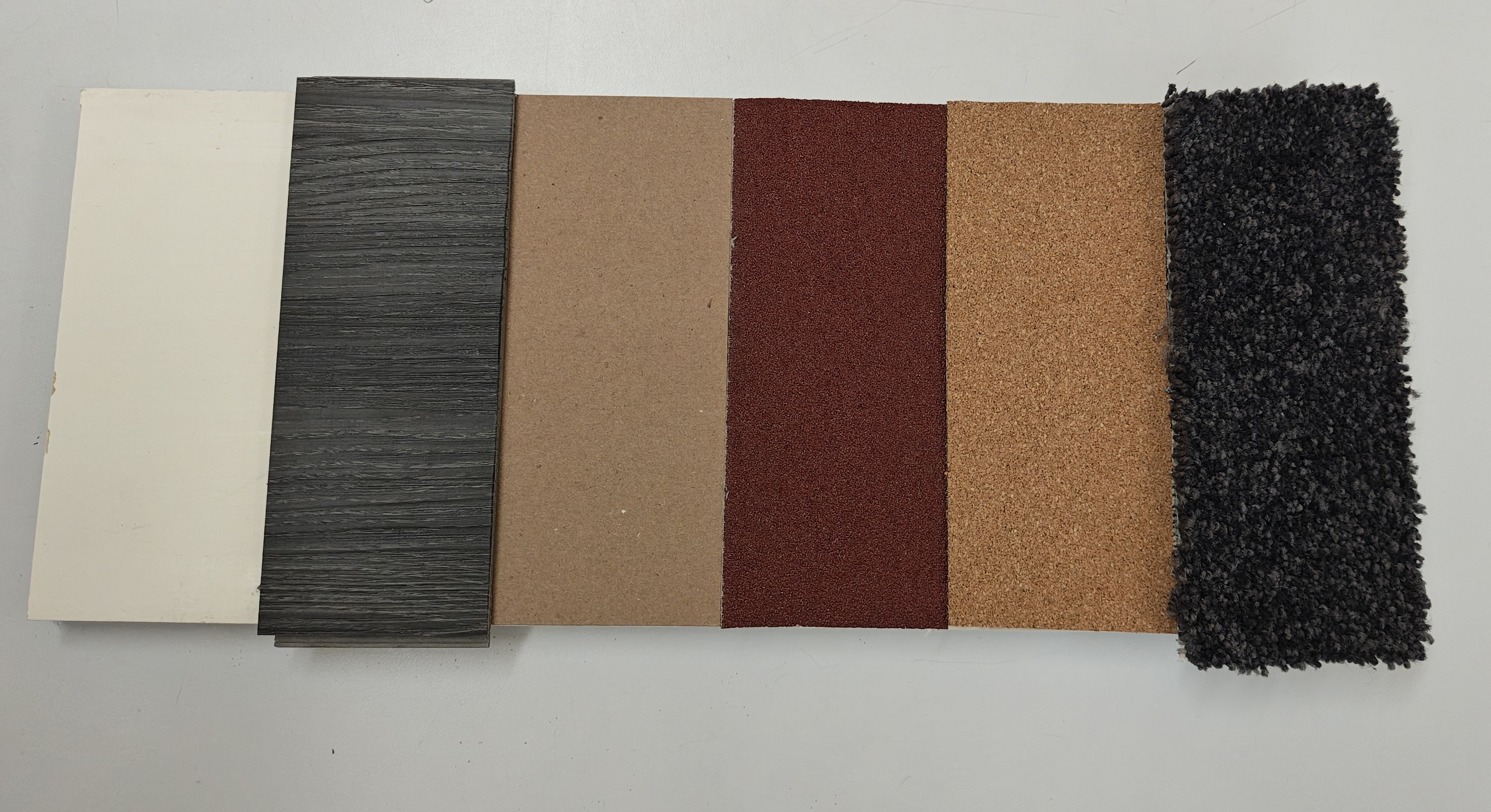
Examine and describe the six surfaces. Explain how each looks and feels.
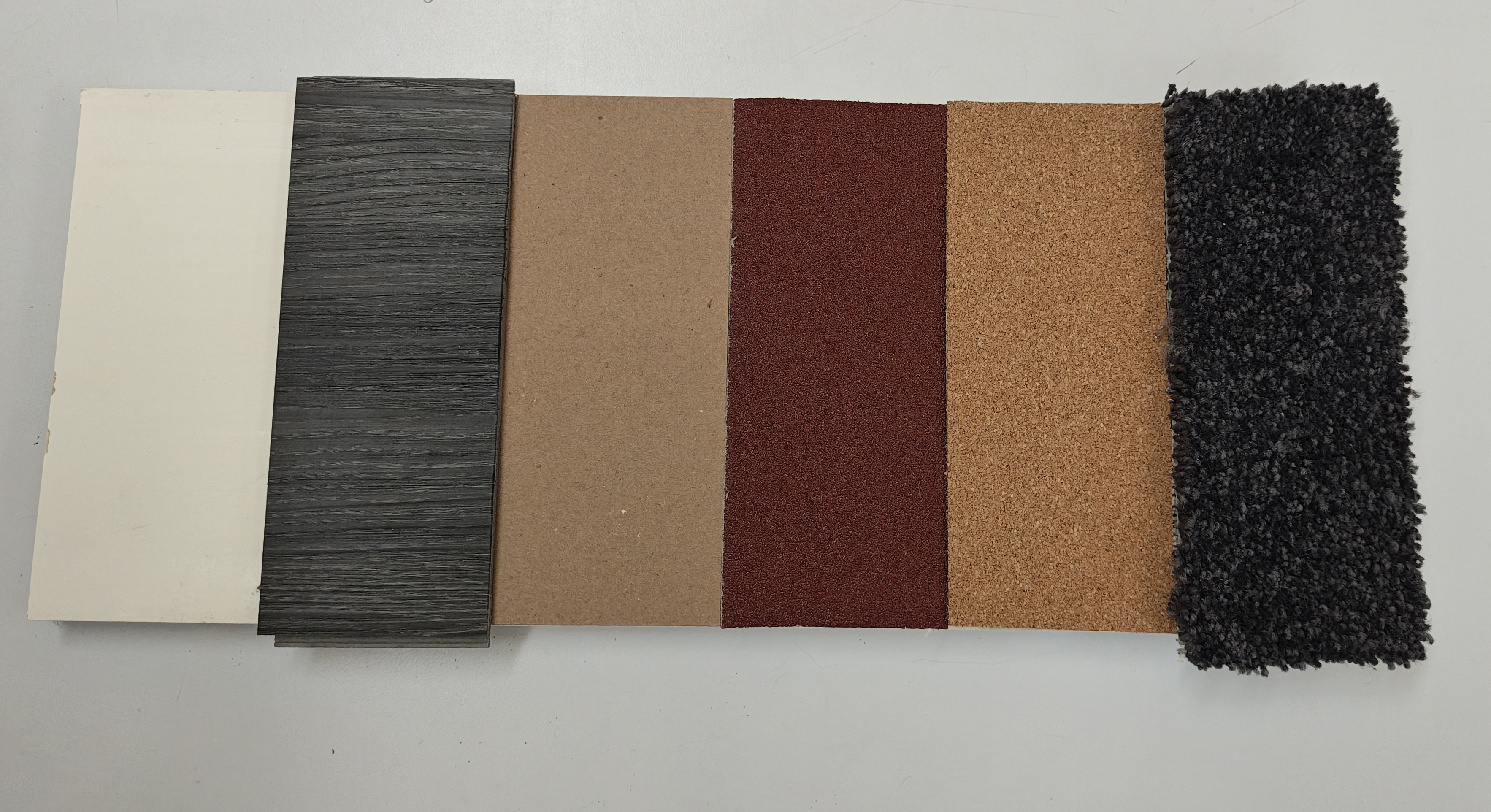
From left to right: white painted wood, grey flooring, pressed cardboard, sandpaper, cork, carpet
Which surface do you think has the least amount of friction?
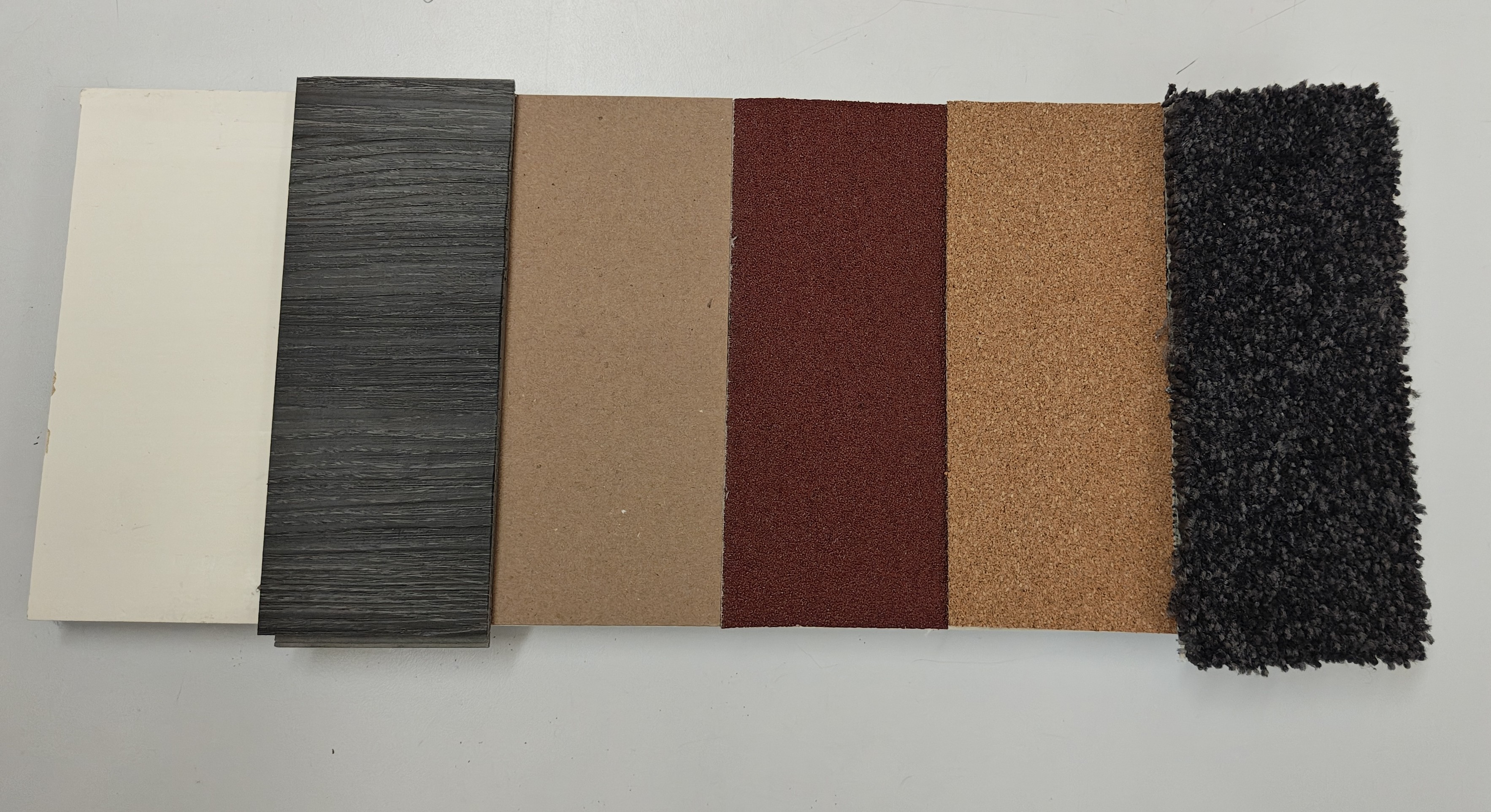
Which surface do you think has the most amount of friction?
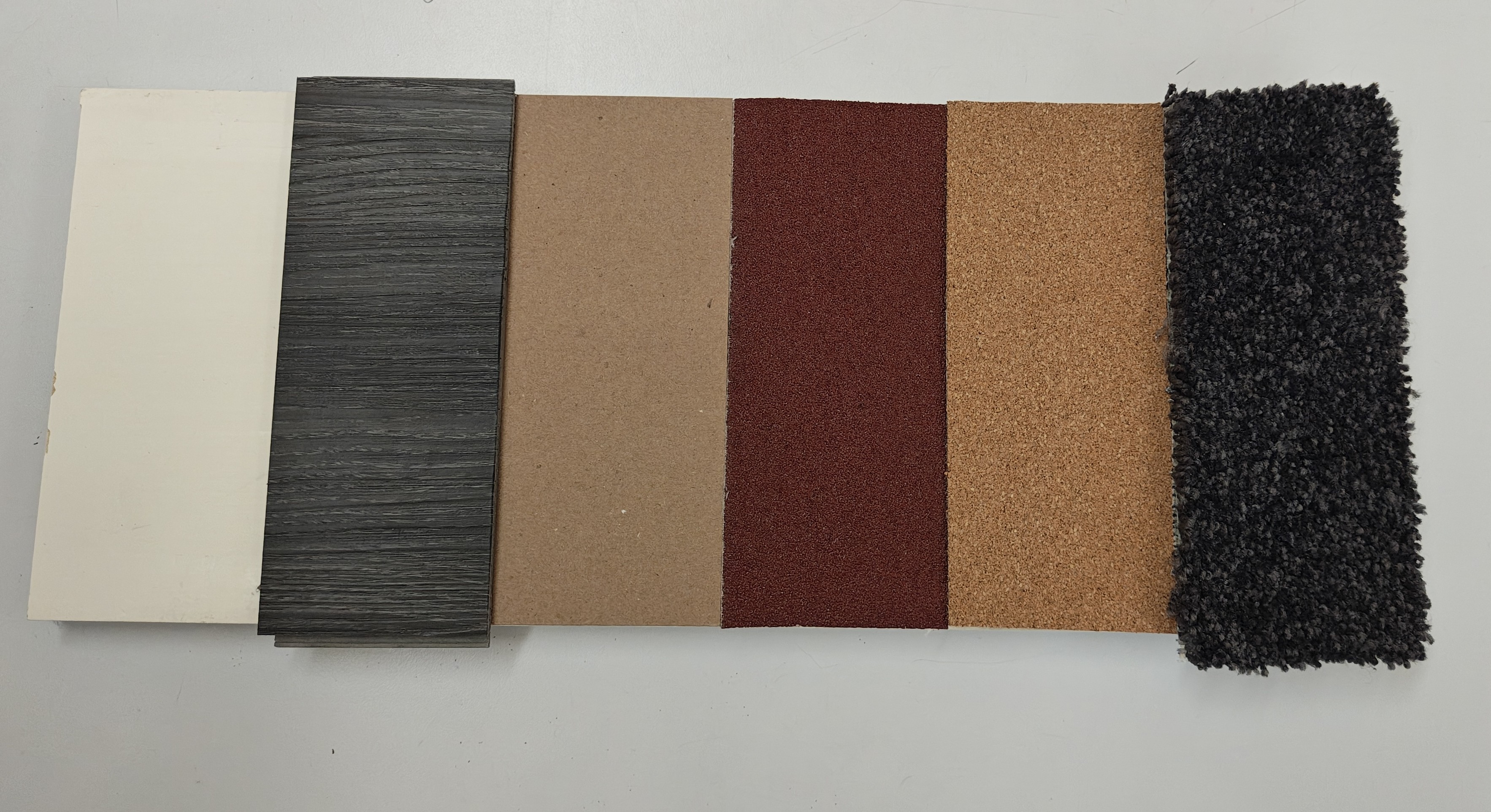
Place the surfaces into order from the surface that you think has the least friction to the most friction.
grey flooring
sandpaper
pressed cardboard
cork
carpet
white painted wood
Place the board in front of you with the six strips arranged left to right as seen in the picture below.
Place the supplied container on one strip (white painted wood) and the 200 g mass in the container. THE MASS IS WRITTEN ON THE WEIGHTS.
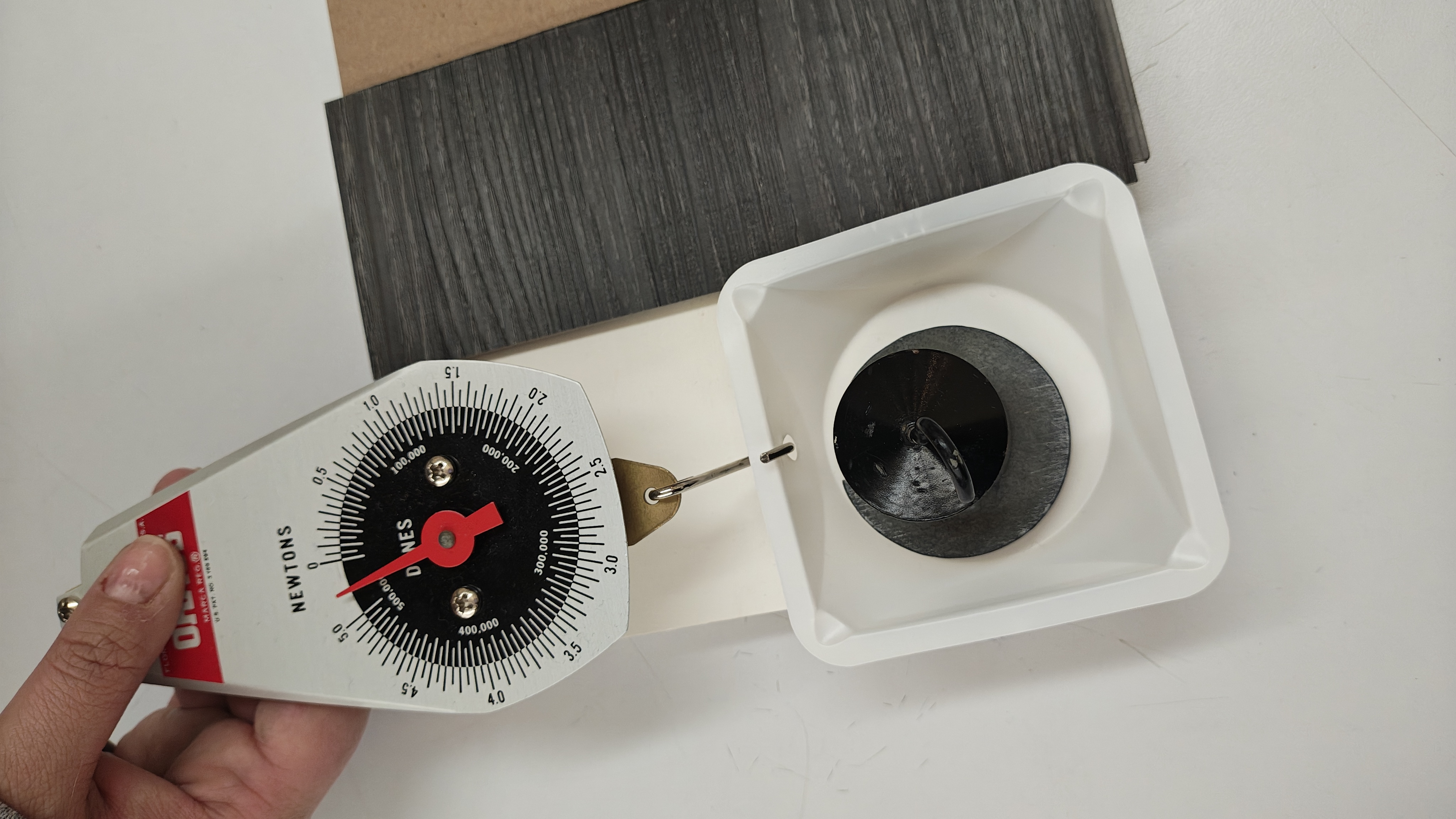
Now attach the spring scale through the hole in the plastic container.
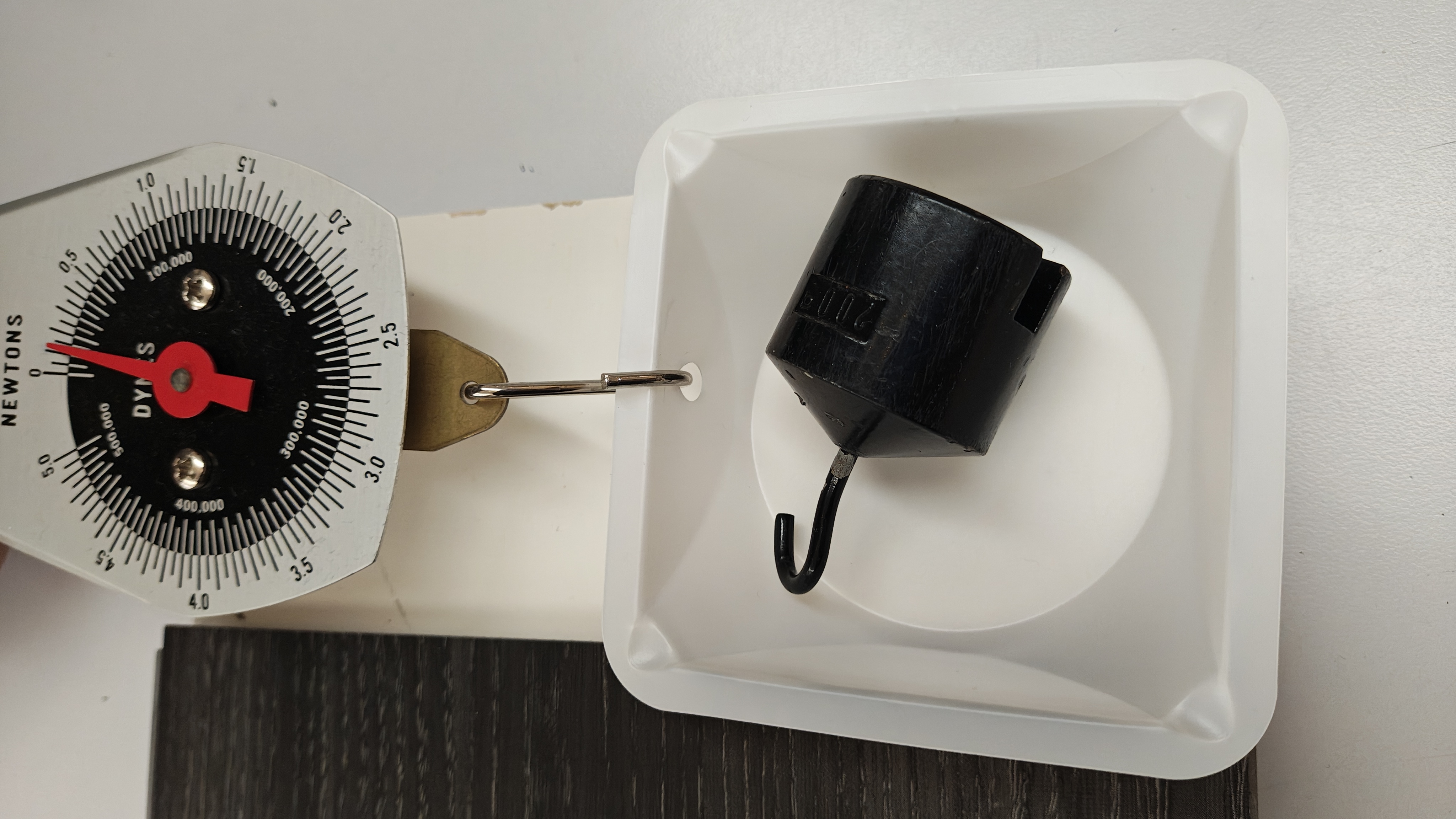
Watch the scale as you pull the 200 g mass and container up the board.
Record the Newtons required to start the mass moving across the first strip.
Now repeat with strip 2 (grey flooring). Record the Newtons required to start the 200 g mass moving.
Now repeat with strip 3 (pressed cardboard). Record the Newtons required to start the 200 g mass moving.
Now repeat with strip 4 (sandpaper). Record the Newtons required to start the 200 g mass moving.
Now repeat with strip 5 (cork). Record the Newtons required to start the 200 g mass moving.
Now repeat with strip 6 (carpet). Record the Newtons required to start the 200 g mass moving.
Reflecting on your description of the materials, why do you think you obtained the results shown above?
With your 200 g weight, pull the weight across the different surfaces at a slower speed. What happened to the magnitude of the force?
With your 200 g weight, pull the weight across the different surfaces at a faster speed. What happened to the magnitude of the force?
Add another 100 g (you should have 300 g in the plastic container). Pull the weight across the different surfaces at a constant speed. What happened to the magnitude of the force compared to your 200 g trials (questions 11-16)?
Remove your 200 g weight (you should have 100 g in your plastic container). Pull the weight across the different surfaces at a constant speed. What happened to the force compared to your 200 g trials (questions 11-16)?
What two variables influence force?
Which material required the most force?
Which material required the least force?
What type of friction is preventing the mass from moving at the beginning?
What type of friction is opposing the motion after the mass begins to move?
Using your data. As mass increased the force necessary to move the object
Draw a free body diagram of the mass/weight. Include the applied force and the frictional force. Make sure the length of the arrows indicate the magnitude of the force.