Preskoči na glavni sadržaj
Prijava
Sign up for FREE
arrow_back
Biblioteka

LR257.2.4: Density and Earth's Layers

star
star
star
star
star
Posljednje ažuriranje 8 months ago
29
Obavezno
1
Obavezno
1

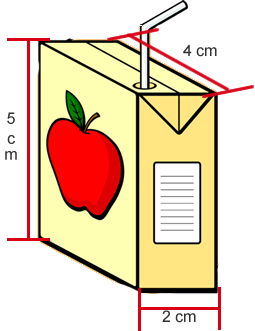
Volume = length x width x height

Obavezno
1
Obavezno
1
Obavezno
1
Obavezno
1
Obavezno
1
Obavezno
1
Obavezno
1
Obavezno
1
Obavezno
1
Obavezno
1
Obavezno
1
Obavezno
1
Obavezno
1
Obavezno
1

The Crust

Obavezno
1

The Mantle

Obavezno
1
Obavezno
1
Obavezno
1

The Core

Obavezno
1
Obavezno
1
Obavezno
1
Obavezno
1
Obavezno
1
Obavezno
1
Obavezno
1
Obavezno
1
Obavezno
1

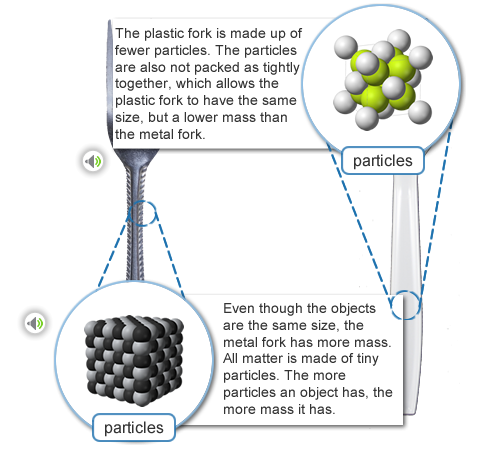
Mass is a measure of the amount of stuff in an object. These two forks are the same size, one is made of metal and one is made of plastic. Which fork has more mass?

Pitanje 1
1.

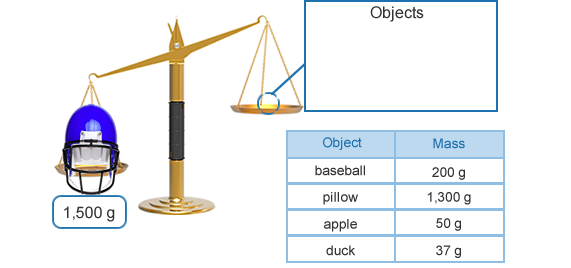
Use the chart below to balance the pans by choosing the objects that would be equal to the mass of the football helmet.

Drugi mogući odgovor:

Volume is the amount of space that matter takes up. The more space an object takes up, the more volume it has. For example, the cake takes up more space than the cupcake, so the cake has more volume than the cupcake.

Pitanje 2
2.

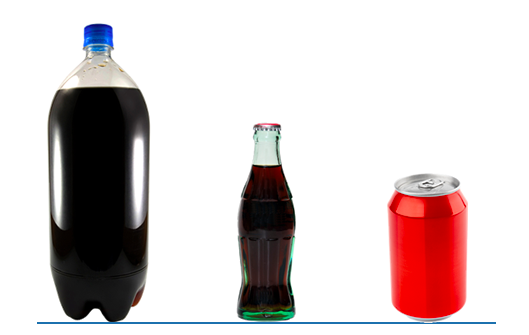
Which object has the least volume?

Pitanje 3
3.

What is the volume of this juice box?

Check for Understanding:

Liquids have a definite volume, but have no definite shape because they take the shape of the container they are in.

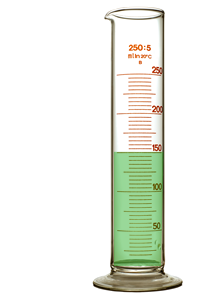
1. A graduated cylinder is used to determine the volume of a liquid.

2. The volume of the liquid in this graduated cylinder is 150 mL.

Pitanje 4
4.

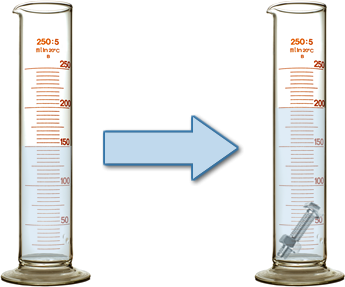
Kara placed a toy car in a graduated cylinder of water. The starting volume was 13mL. After putting the car in the graduated cylinder, the volume is 15mL. The difference between the starting volume and the ending volume is equal to what?

Pitanje 5
5.

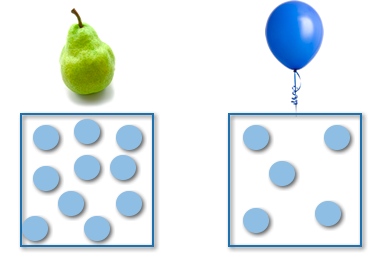
Density is a measure of how much matter there is in a certain amount of space.

For example, a balloon is much less dense than a pear:

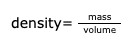
To find the density of an object, first find the mass and the volume of the object. Then, divide the mass of the object by the volume of the object.

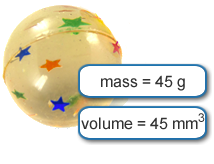
For example, a super ball has a mass of 45 g and a volume of 45 mm3. To find the density of the super ball, divide the mass by the volume:

density = 45 g ÷ 45 mm3

The density of the super ball is 1 g/mm3

Pitanje 6
6.

Charlie has a metal key. The key has a mass of 9 g and a volume of 3 cm3. What is the density of the key? (Remember: Density = mass ÷ volume)

Pitanje 7
7.
Drugi mogući odgovor:

8

4

512

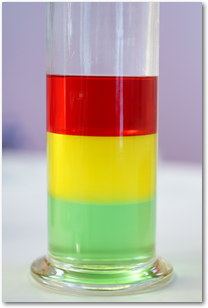
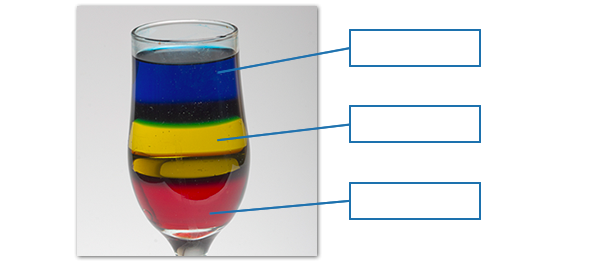
If you pour two liquids with different densities together, they will form layers. The liquid with the highest density will be on the bottom, and the liquid with the lowest density will be on the top. This is called a float test.

For example, in this picture

•The red liquid has the lowest density.

•The green liquid has the highest density.

•The yellow liquid's density is in between the red and green's.

When using a float test to determine density, a solid object placed in the layers of liquid will float above the liquids with a higher density and below the liquids with a lower density.

Pitanje 8
8.

Label the layers below from least dense to most dense.

Drugi mogući odgovor:

most dense

least dense

in between density

Pitanje 9
9.

The density of water is 1 g/cm3. The density of rubbing alcohol is 0.79 g/cm3. When vegetable oil, rubbing alcohol, and water are poured into the same container, they form three levels. Water forms the bottom layer, vegetable oil forms the middle layer and rubbing alcohol forms the top layer. Based on this information, what do we know about the density of vegetable oil?

Pitanje 10
10.
Pitanje 11
11.

Density is __________.

Pitanje 12
12.
Pitanje 13
13.

If two objects have the same mass but different volumes, __________.

Pitanje 14
14.

Select the object with the highest density.

Pitanje 15
15.

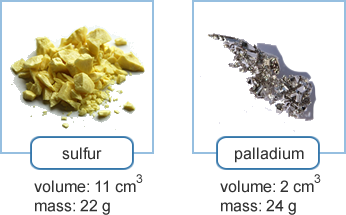
Palladium and sulfur are two elements found on Earth. Based on the information given, which has greater density?

Pitanje 16
16.

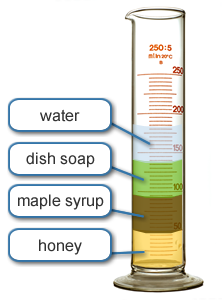
Which liquids have a lower density than maple syrup?

Check all that are true (choose 2).

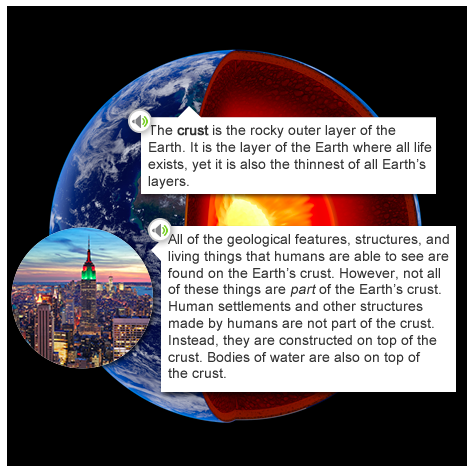
It is easy to see the landforms, oceans, and creatures on Earth's surface, but its internal structure is hidden below. The Earth is not all one consistent material inside. Instead, it is made up of layers. The Earth's layers are the crust, the mantle, the outer core, and the inner core. Each of the layers of the Earth is unique in terms of its composition, temperature, and thickness.

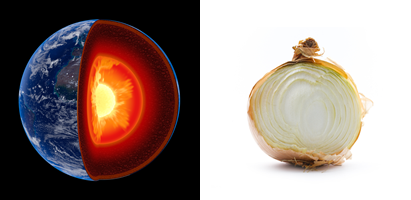
This cross-section of the planet reveals Earth's layers. The onion has an outer peel and inner layers. Similarly, the Earth has an outer surface and inner layers.

Pitanje 17
17.

In comparing the structure of the Earth to the structure of an apple, which part of the apple is most similar to the Earth's crust?

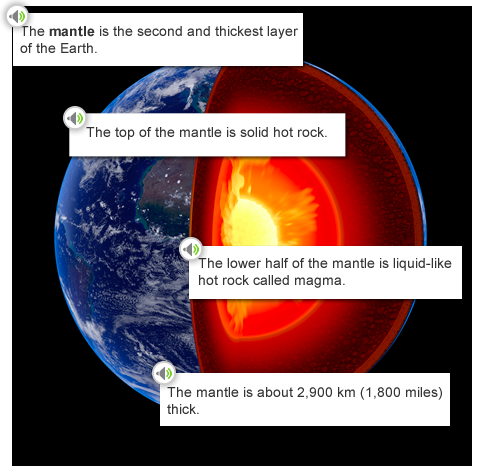
The mantle is very thick. As a result, the top of the mantle has different properties than the bottom of the mantle. The top of the mantle is solid, hot rock. Further down in the mantle, the high pressure and high temperatures mean that the rock can flow, which creates magma. The mantle ranges in temperature from 360°C to 2,500°C.

The lithosphere is the rigid outer section of the Earth that is made up of the crust and the upper mantle. The lithosphere is the hard and rigid outer layer of Earth, which is why the lower mantle is not included.

The material in the mantle does not stay still. Instead, convection currents in the mantle cause cooler rock to flow down and hotter rock to flow up. This movement continues constantly.
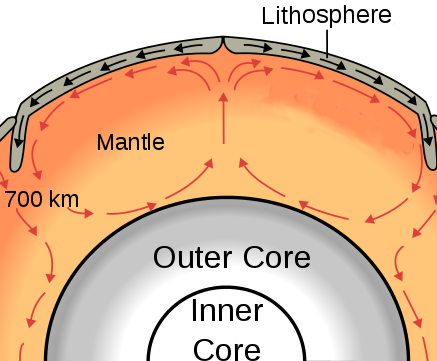
The mantle is always in motion thanks to convection currents. The hot, less dense liquid rock (or magma) rises, and the cool, more dense magma sinks.
Pitanje 18
18.
Pitanje 19
19.

Complete this cause and effect diagram by selecting the statement that should

come next.

Magma moves upward from the lower mantle to the upper mantle. →

Pitanje 20
20.
Pitanje 21
21.

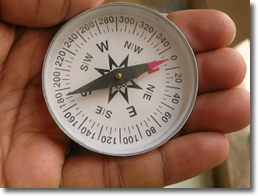
Many travelers use compasses to navigate. A compass's needle points north, which can help travelers figure out which way to go. Compasses work because of the Earth's magnetic field.

This compass's needle is pointing north.

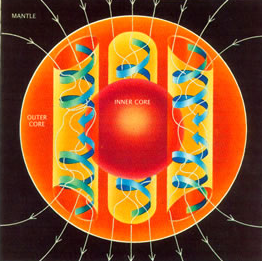
The Earth's magnetic field helps protect the planet from solar wind, or strong currents of particles that are released from the Sun's surface. Without the magnetic field, it would be difficult to live on Earth. Activity in the Earth's outer core helps to create the magnetic field. Like the mantle, the outer core has convection currents that move the matter that makes up the layer. These currents and the specific material that the outer core is made of cause the magnetic field.

This diagram shows how convection currents in the outer core produce the Earth's magnetic field.

Pitanje 22
22.

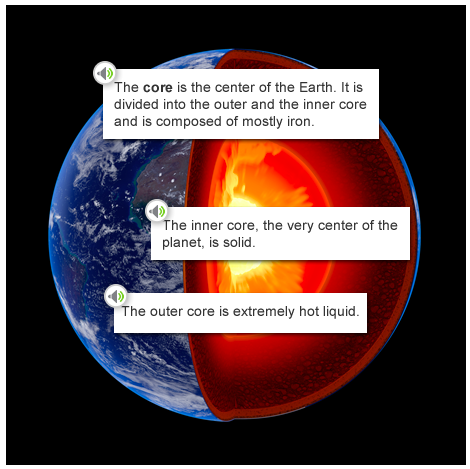
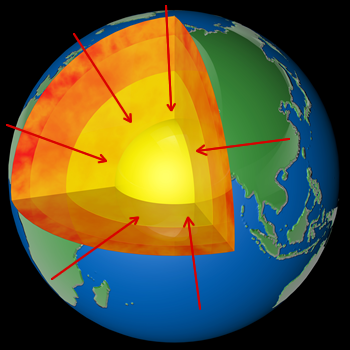
The Earth's outer core has temperatures of up to 5700°C, and the inner core has temperatures of up to 5400°C. With temperatures that high, one would expect both the outer and inner core to be hot liquid. However, gravity acts on all of the Earth's matter and creates so much pressure on the inner core that it remains in a solid state.

Gravitational force, represented by the red arrows, causes the inner core to remain solid.

Pitanje 23
23.

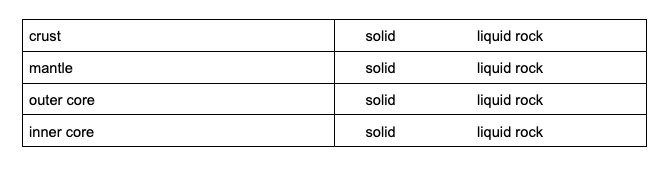
Pick the correct material for each layer.

Pitanje 24
24.

Put the layers of the Earth in order from the outermost layers to the innermost layers.

Drugi mogući odgovor:

outer core

mantle

inner core

crust

The inner layers of the Earth are too deep, too hot, and are under too much pressure for scientists to physically travel to them. However, researchers are still able to learn about the layers of the Earth in other ways.

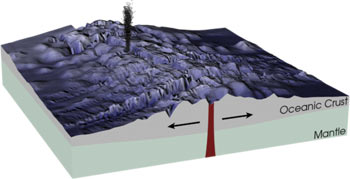
In some places on the ocean floor, there are cracks in the oceanic crust, and material from the mantle is pushed up onto the ocean floor. Once the mantle material spreads onto the surface of the sea floor, it cools, and scientists are able to study its composition and learn more about the mantle.

This image shows a crack in the oceanic crust that is allowing hot material from the mantle to spill out onto the ocean floor.

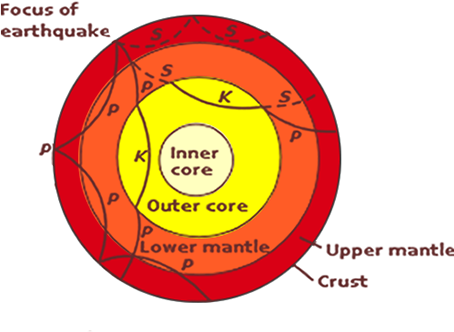
Scientists can also learn about the layers of the Earth by studying the vibrations, or seismic waves, produced by earthquakes. These waves travel through the layers of the Earth. Vibrations travel at different speeds through different substances.

This diagram shows how seismic waves travel at different speeds through the different layers of Earth. The waves travel out in many different directions from the focus of the earthquake, also known as its epicenter.

By studying how waves from vibrations move through the different layers and materials of the Earth, scientists can learn about those layers and materials. The waves are bent, sped up, or slowed down when they pass through the Earth's layers. The type of material affects the speed of the waves, and they can change direction when they reach a new layer. Scientists study the path and speed of these waves to identify where layers begin and end and what materials make them up. For example, scientists believe that the Earth's core is mostly iron. After they make these guesses, they can perform tests on those materials to see how they respond to extreme heat and pressure.

Pitanje 25
25.

Scientists study the layers of Earth by traveling between the layers.

Pitanje 26
26.

How can scientists study the inner layers of Earth? (choose 3)

Pitanje 27
27.

What are convection currents?

Pitanje 28
28.

Which layers of the Earth are solid?

Pitanje 29
29.

Which layers of Earth have convection currents?