Which letter shows a transverse plane?
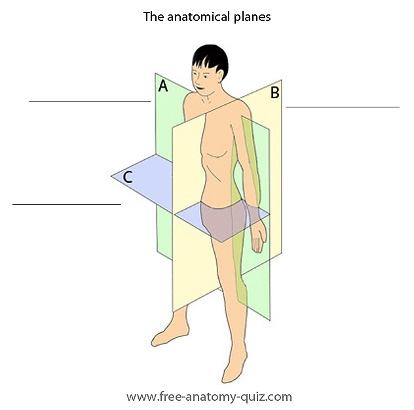
Which letter shows a transverse plane?
Which of the following describes anatomical position?
Which letter shows a transverse plane?
Which term means closer to the surface of the body?
The fingers are __________________ to the elbow.
The belly button is ______________ to the shoulder.
The heart is ____________________ to the diaphragm.
The thigh is ___________________ to the knee
Which organelle contains DNA and genetic instructions for life?
Which level of organization is made up of groups of cells working together?
Match the level of organization to it's example.
| Draggable item | arrow_right_alt | Corresponding Item |
|---|---|---|
Tissue | arrow_right_alt | Neuron |
Organ | arrow_right_alt | Connective |
Organ system | arrow_right_alt | Stomach |
Cell | arrow_right_alt | Circulatory |
What are the 4 different types of tissues found in the human body?
Hydroxyapatite is a chemical that contains a lot of the mineral calcium. Name an example of a structure in the human body that likely contains this calcium-rich mineral
What is the smallest piece of matter that maintains the chemical and physical properties of a given element.
Which division of the nervous system includes sensory and motor nerves that carry commands to and from your brain?
Match the nervous system structure to it's function.
| Draggable item | arrow_right_alt | Corresponding Item |
|---|---|---|
neuron | arrow_right_alt | controls vital life functions |
brainstem | arrow_right_alt | carries information from the environment to the central nervous system |
sensory nerve | arrow_right_alt | transmits electrical impulses |
Two neurons meet at the _______________
Describe an action potential. Use all of the following terms in your response: Neuron, calcium ions, threshold, action potential, sodium ions, calcium channel, neurotransmitter, sodium channel, vesicles
Which of the following best describes how muscles work?
Match the following with their function
| Draggable item | arrow_right_alt | Corresponding Item |
|---|---|---|
Cartilage | arrow_right_alt | Connects bone to bone |
Muscle Fibers | arrow_right_alt | Reduces friction between bones & cushions |
Tendons | arrow_right_alt | Shorten & contract to produce movement |
Ligament | arrow_right_alt | Connect muscle to bone |
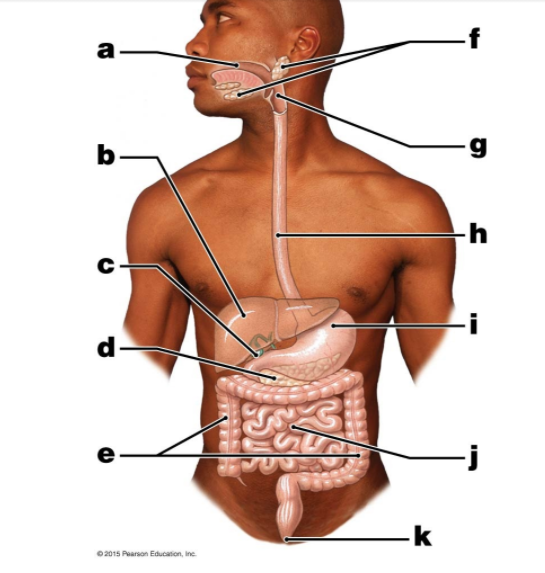
Which digestive organ does the majority of digestion & absorption of nutrients occur?
Which structure is the liver?
Which of the following statements about the circulatory system is true?
Which part of blood helps our bodies fight disease?
From a virus’s perspective, why is the host important?