The Case of...
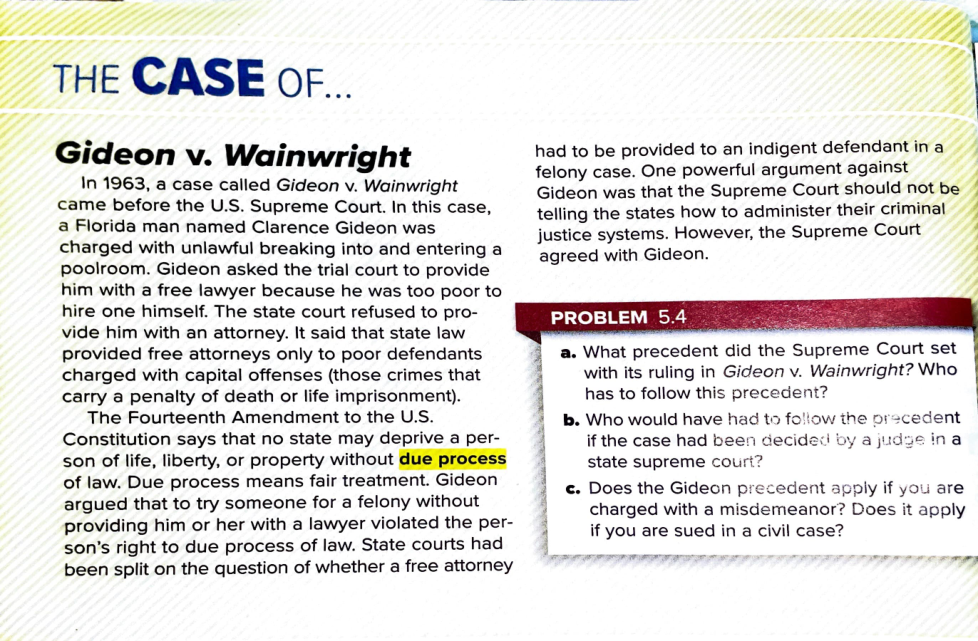
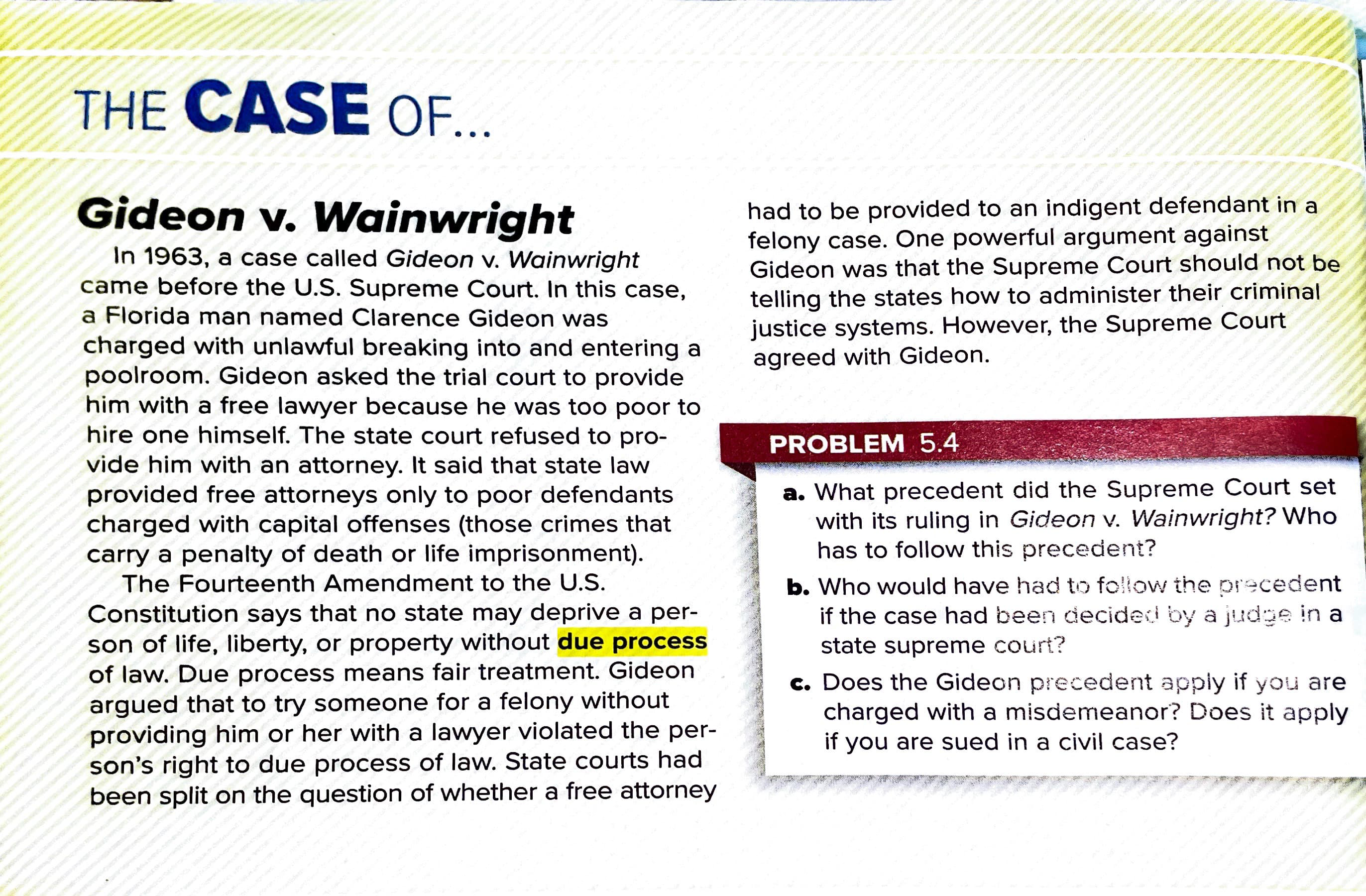
Gideon v. Wainwright
In 1963, a case called Gideon v. Wainwright came before the U.S. Supreme Court. In this case, a Florida man named Clarence Gideon was charged with unlawful breaking into and entering a poolroom. Gideon asked the trial court to provide him with a free lawyer because he was too poor to hire one himself. The state court refused to provide him with an attorney. It said that state law provided free attorneys only to poor defendants charged with capital offenses (those crimes that carry a penalty of death or life imprisonment).
The Fourteenth Amendment to the U.S. Constitution says that no state may deprive a person of life, liberty, or property without due process of law. Due process means fair treatment. Gideon argued that to try someone for a felony without providing him or her with a lawyer violated the person’s right to due process of law. State courts had been split on the question of whether a free attorney had to be provided to an indigent defendant in a felony case. One powerful argument against Gideon was that the Supreme Court should not be telling the states how to administer their criminal justice systems. However, the Supreme Court agreed with Gideon.