Europe Summative Skills
star
star
star
star
star
Last updated 6 months ago
13 Nsɛmmisa
Untitled Section 1
1
1
Ancient Civilizations
Background: Edward Baines was a newspaper journalist and editor for the Leeds Mercury Newspaper. In the 1830s, he was elected to Parliament, and served there as a political liberal. Although Baines supported the end of slavery and various political reforms, he opposed legislation regulating factories and extending voting rights to the English working class. These are excerpts from his book History of the Cotton Manufacture in Great Britain.
Source: Baines, E. (1835). History of the Cotton Manufacture in Great Britain.
Above all, it is alleged that the children who labor in mills are often cruelly beaten by overlookers, that their feeble limbs become distorted by continual standing and stooping, that in many mills they are forced to work thirteen, fourteen, or fifteen hours per day, and that they have not time either for play or for education.
Factory Inspectors who have visited nearly every mill in the country have proved that views mentioned above of labor in factory mills contain a very small portion of truth. It is definitely true that there have been instances of abuse and cruelty in some factories. But abuse is the exception, not the rule. Factory labor is far less injurious than many of the most common jobs of civilized life.
I am not saying that factories are the most agreeable and healthy places, or that there have not been abuses in them, which required exposure and correction. It must be admitted that the hours of labor in cotton mills are long, being twelve hours a day on five days a week, and nine hours on Saturday. But the work is light, and requires very little muscular exertion. On visiting mills, I have noticed the coolness and calmness of the work-people, even of the children, whose attitudes are positive and not anxious or gloomy.
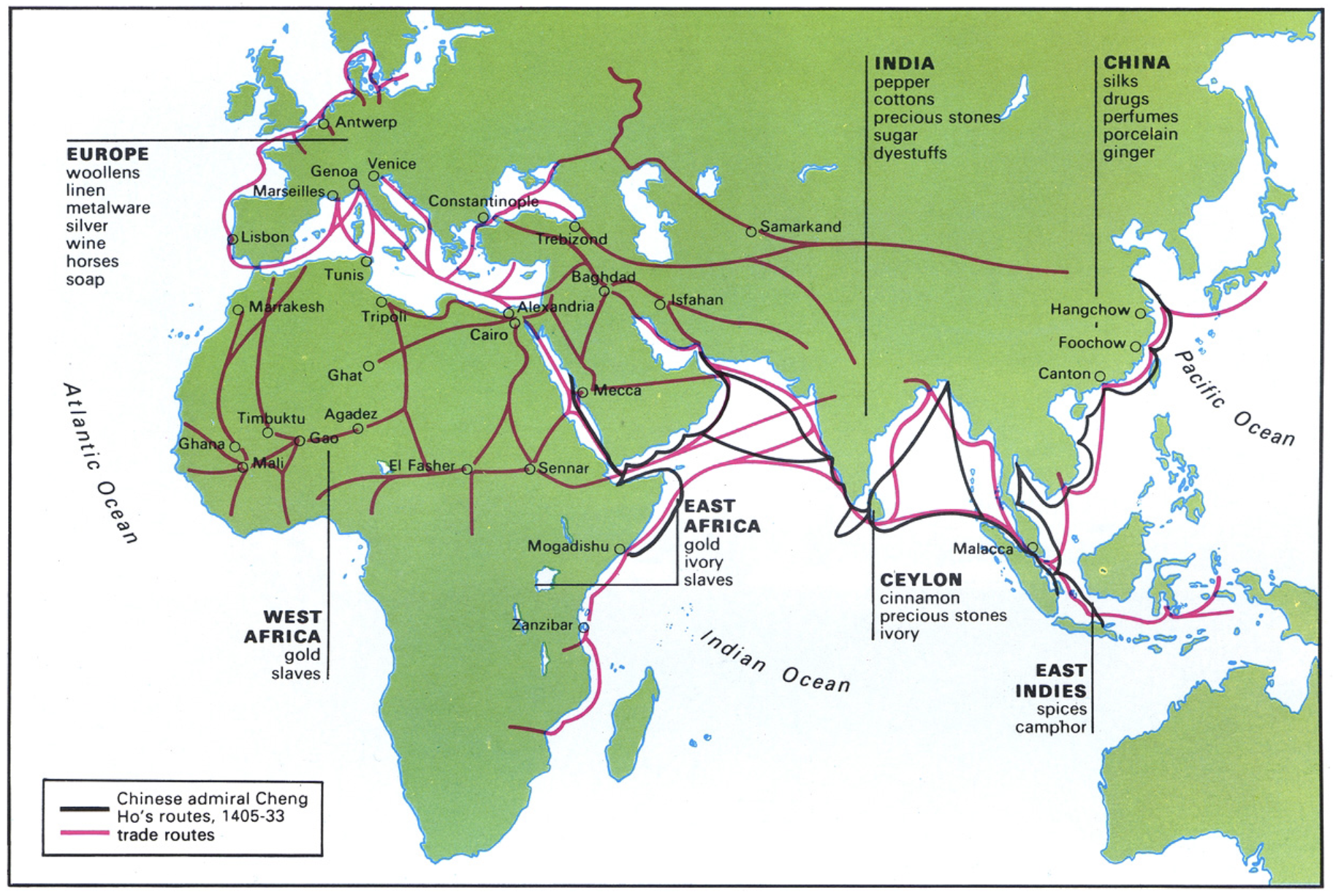
What physical feature allowed Europe access to trade with other parts of the world?
A person traveling from Antwerp to Constantinople would be traveling in which direction?
Adapted Source: Extracts from a report sent to the Home Office by the Medical Secretary for Visiting District Committees of the local Board of Health for St Margaret and St John the Evangelist, Westminster, 6 December 1831
In many areas, there are no proper drains or sewers, which leads to big piles of garbage and waste everywhere. This includes things like food scraps and other refuse that rot and smell bad. Private toilets and sewage systems often overflow into open drains, which then leak into basements or are manually removed by people carrying buckets. Sometimes, this waste just spills into the streets, creating a horrible mess.
Reports also mention that trash collectors, known as dustmen, sometimes demand extra money before they will take away trash. In some neighborhoods, particularly in less busy streets, the street cleaners, called scavengers, haven't come in years, leading to dirty and unhealthy conditions. In one area of St. John’s Parish, the streets are neglected, with piles of trash and rotting food left lying around for a long time. Chickens and geese are allowed to roam freely, adding to the filth.
In poorer neighborhoods, residents often can’t afford to have waste removed properly. Instead, they dump their sewage into the street gutters at night. This leads to terrible smells and can be very unhealthy, as the waste can emit disgusting and dangerous odors.
This passage best supports which of the following claims?
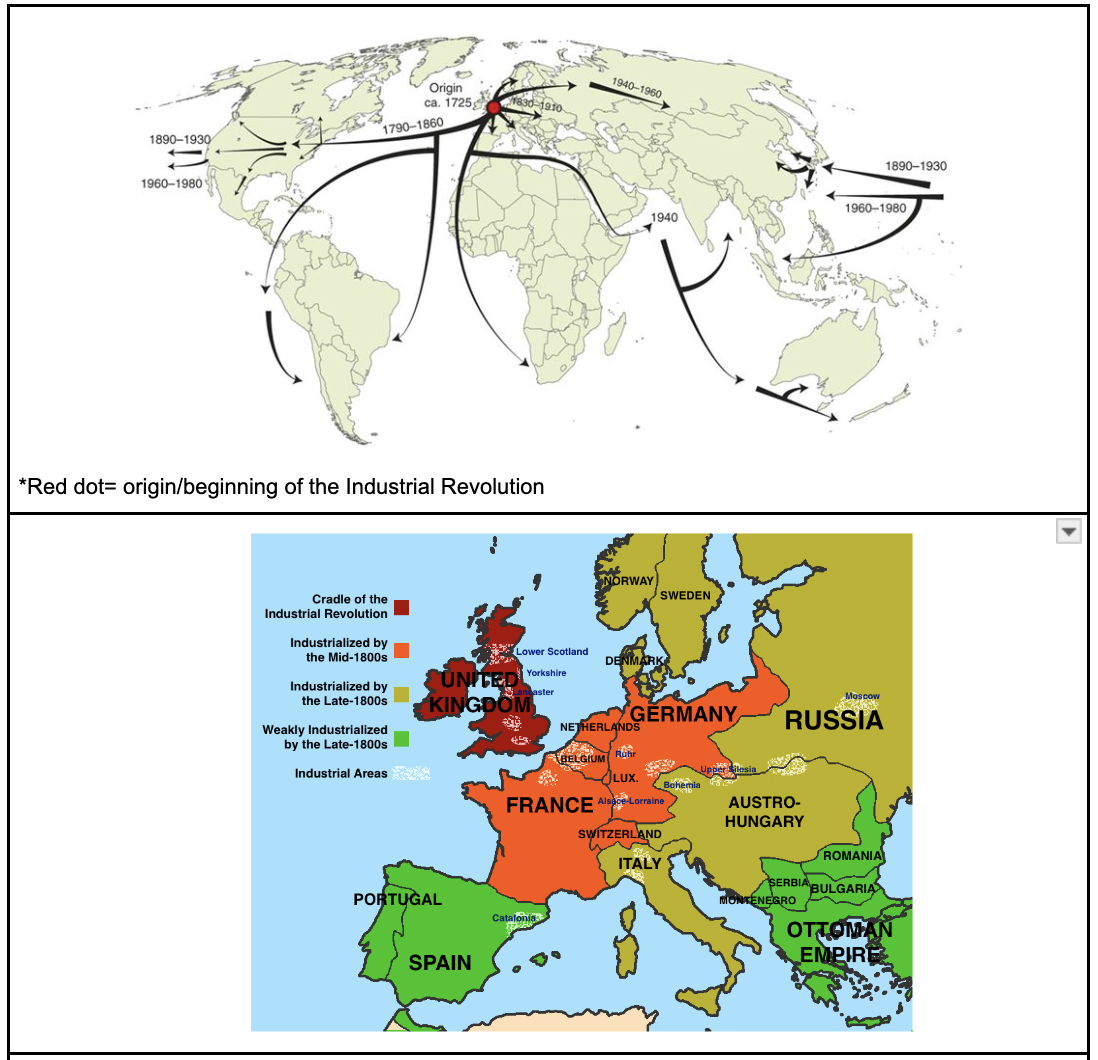
Which of the following statements would be the best title for BOTH maps?
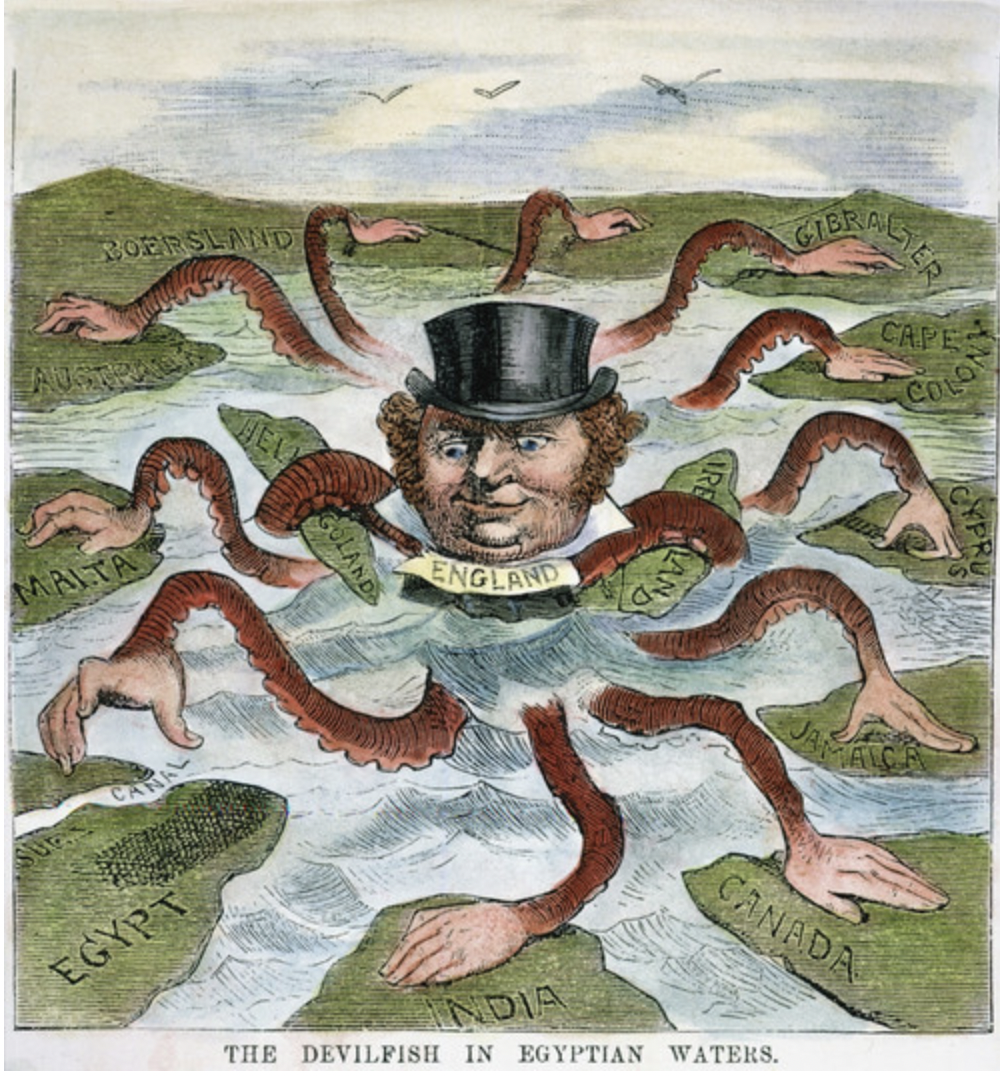
Which historical period is best represented by the political cartoon above?
What is the meaning of the word dateless as it is used in passage 2?
Which of the statements best summarizes the main idea of Passage 2?
On which of the following points would the authors of both passages agree?
Which of the following quotations from the passages above best supports your answer from the previous question?
Which of the following statements would be the best inference made from the passages?
Which of the following is the most appropriate inference based on the passage?
All of the following claims about the two maps are correct EXCEPT:
Which area on the map was the first to become technologically advanced?