After looking at the chart below and remembering what we learned in class, which of the following are true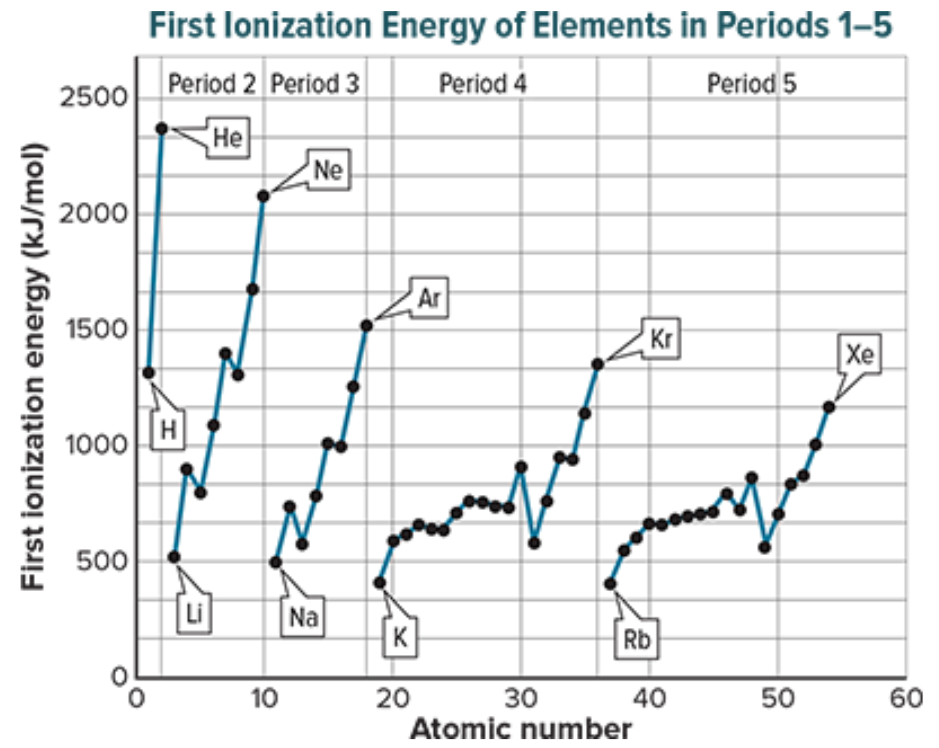
After looking at the chart below and remembering what we learned in class, which of the following are true
Order the elements below in order of atomic radius, from smaller to larger
Helium
Argon
Xenon
Krypton
Neon
Radon
Order the elements below in order of atomic radius, from smaller to larger
Boron
Beryllium
Carbon
Nitrogen
Oxygen
Flourine
Neon
Lithium
Match the following with the charge of ion they take
| Draggable item | arrow_right_alt | Corresponding Item |
|---|---|---|
Post-Transition Metals with 2 electrons in outer S orbitals and 3 electrons in outer p orbitals. | arrow_right_alt | +1 |
Alkali Metals | arrow_right_alt | +2 |
Halogens | arrow_right_alt | +3 |
Noble Gases | arrow_right_alt | +2 or +4 |
Post-Transition metals with 3 valence electrons | arrow_right_alt | +3 or +5 |
Alkaline Earth Metals | arrow_right_alt | -2 |
Post-Transition Metals with 2 electrons in outer S orbitals and 2 electrons in outer p orbitals. | arrow_right_alt | -1 |
Nonmetals with six valence electrons | arrow_right_alt | Do not form ions |
Match the following with the charge of ion they take
| Draggable item | arrow_right_alt | Corresponding Item |
|---|---|---|
Lead | arrow_right_alt | +1 |
Aluminum | arrow_right_alt | +2 |
Sulfur | arrow_right_alt | +3 |
Argon | arrow_right_alt | +2 or +4 |
Calcium | arrow_right_alt | +3 or +5 |
Bromine | arrow_right_alt | -2 |
Potassium | arrow_right_alt | -1 |
Bismuth | arrow_right_alt | Does not form ions |
After looking at the chart below and remembering what we learned in class, which of the following are true