Chapter 4 - Ancient Africa ELA Performance Task
You've checked your knowledge.
It's time to demonstrate your reading and writing ability.
Can you take what you've learned about Egypt and the Nile River and write about it?
Your class just studied Ancient Egypt and now the teacher is assigning you to create an advertisement to hang outside the classroom.
Your task is to write an advertisement encouraging new settlers to move near the Nile River.
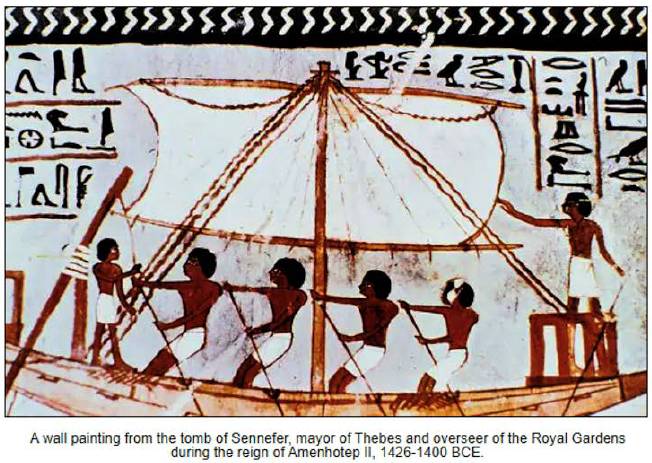
Use facts and details from the three sources to show why living by the Nile would be a good choice.
Directions for Writing
Write a few paragraphs to advertise life along the Nile River in ancient Egypt.
Begin with a clear introduction that attracts attention and explains your main idea.
Describe the Nile’s benefits for farming, trade, and daily life using information from the sources.
Include appealing but factual details that would persuade settlers to live by the river.
Connect your ideas with transitions so your writing flows smoothly.
Conclude with a statement that reinforces why the Nile is the best place to live.
Your class just studied Ancient Egypt and now the teacher is assigning you to create an advertisement to hang outside the classroom.
Your task is to write an advertisement encouraging new settlers to move near the Nile River.
Use facts and details from the three sources to show why living by the Nile would be a good choice.
Directions for Writing
Write a few paragraphs to advertise life along the Nile River in ancient Egypt.
Begin with a clear introduction that attracts attention and explains your main idea.
Describe the Nile’s benefits for farming, trade, and daily life using information from the sources.
Include appealing but factual details that would persuade settlers to live by the river.
Connect your ideas with transitions so your writing flows smoothly.
Conclude with a statement that reinforces why the Nile is the best place to live.