Base your answers to questions 1 through 5 on the information below and on your knowledge of physics.
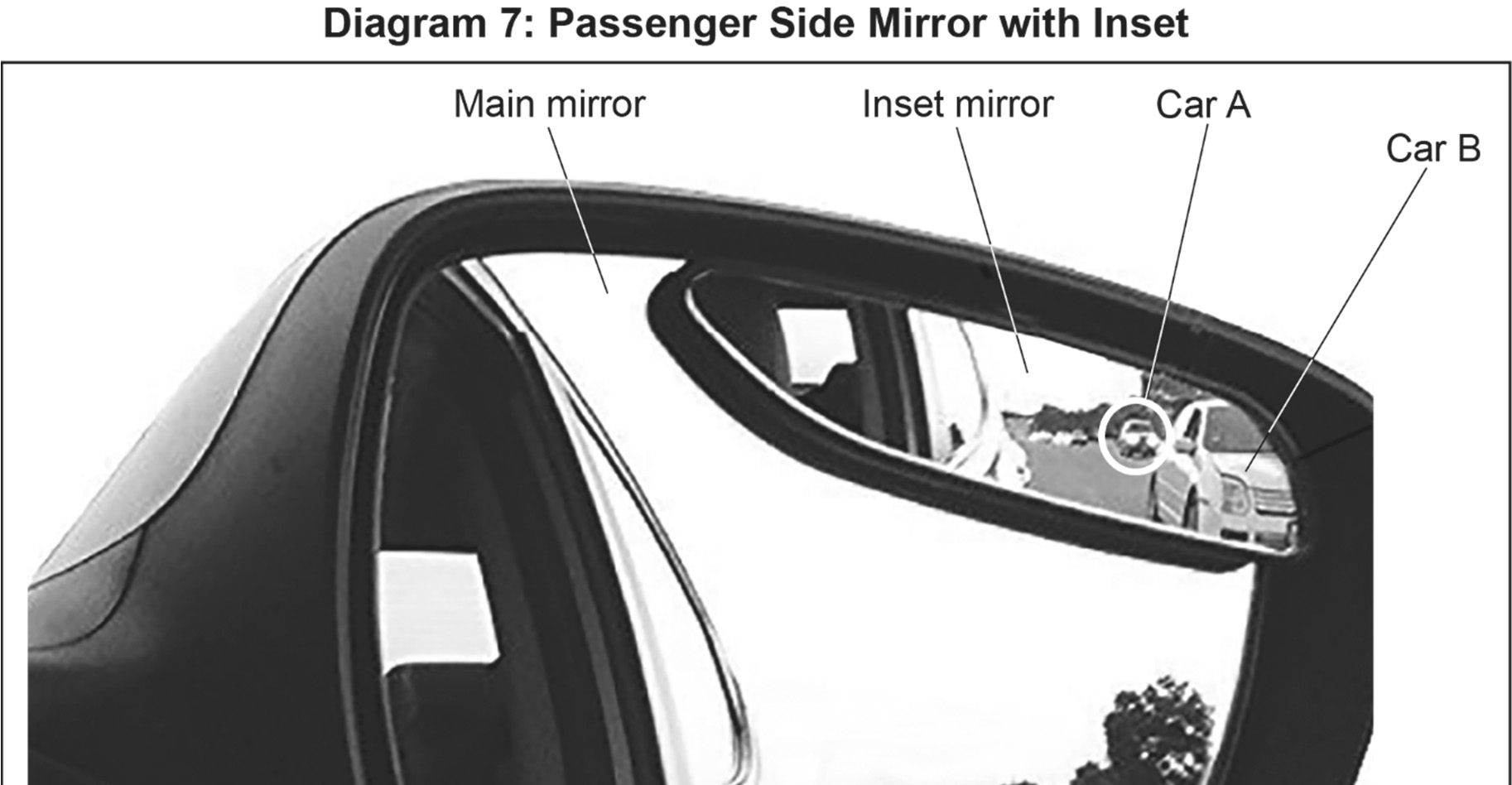
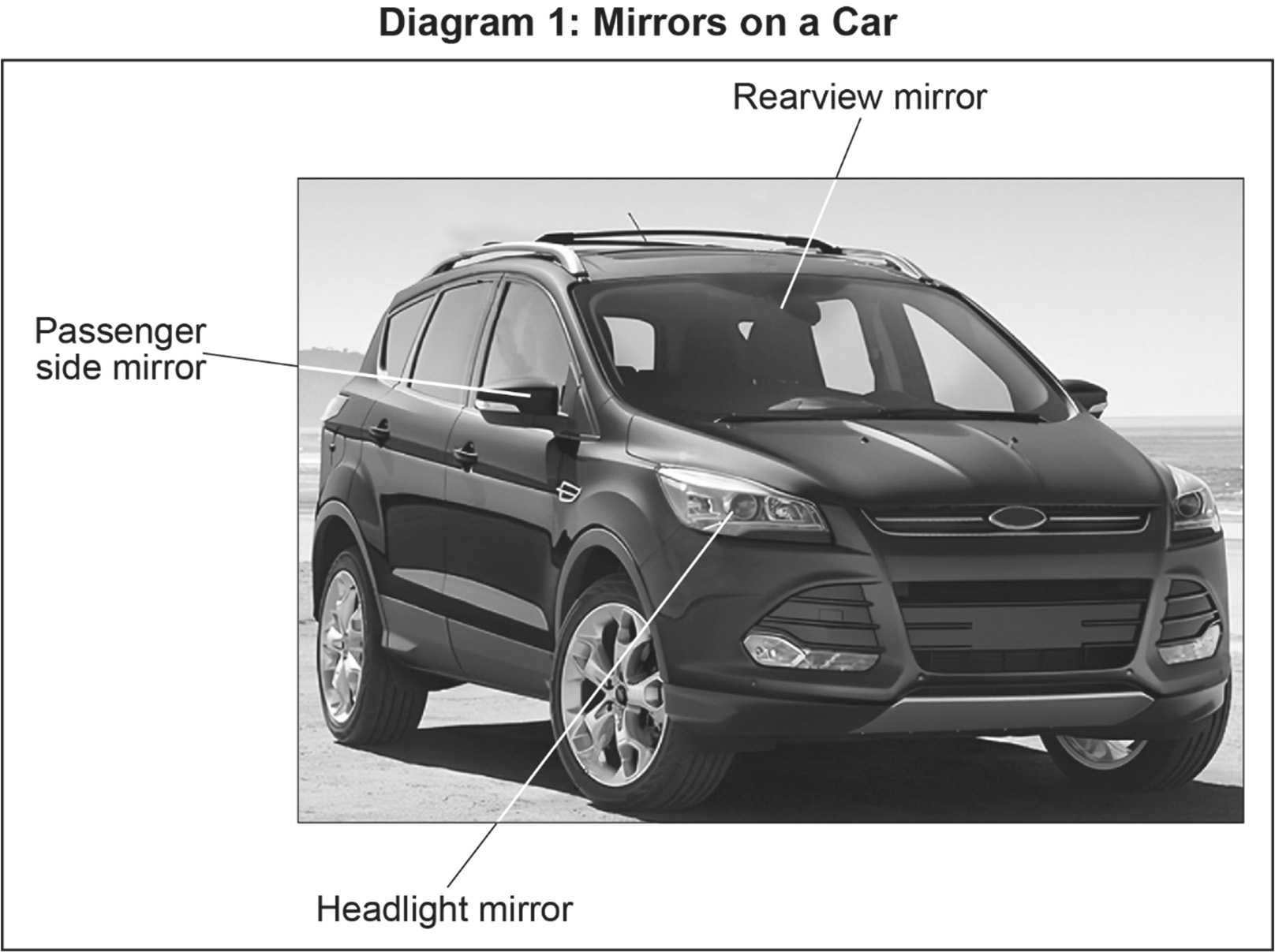
A group of students investigated the various mirrors on a car. They performed investigations to determine how the shapes of these mirrors affected the reflection of light. The students used mirrors found in three different locations on a car, as shown in Diagram 1.
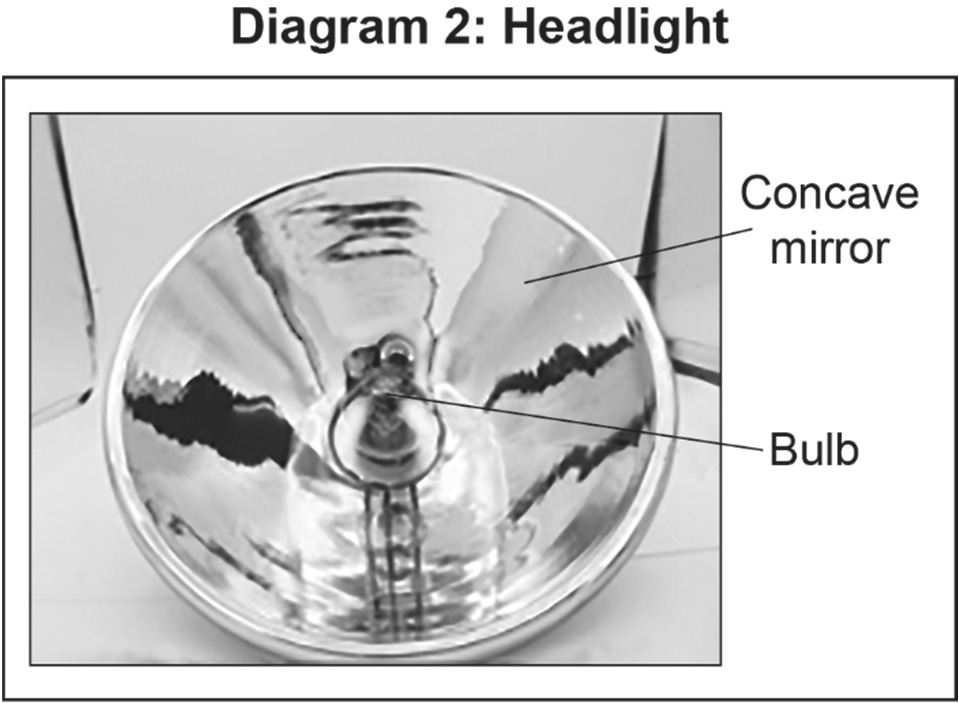
The students discovered that a concave mirror is present in the headlight of the car, as shown in Diagram 2.
The students examined the functioning of the mirror and the bulb in Diagram 2 and created the model in Diagram 3. The focal point of the mirror is labeled
Four claims were developed when evaluating the operation of the headlight in Diagram 3. Which claim correctly identifies the purpose of the bulb and the mirror?
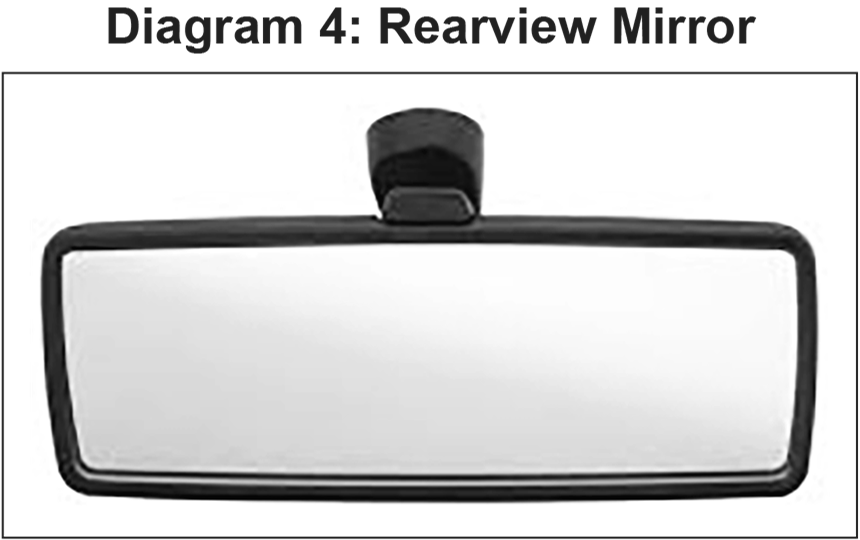
The students observed that the rearview mirror in Diagram 4 appears flat and functions as a plane mirror. To see an object, the mirror is angled so light is reflected into the driver’s eye.

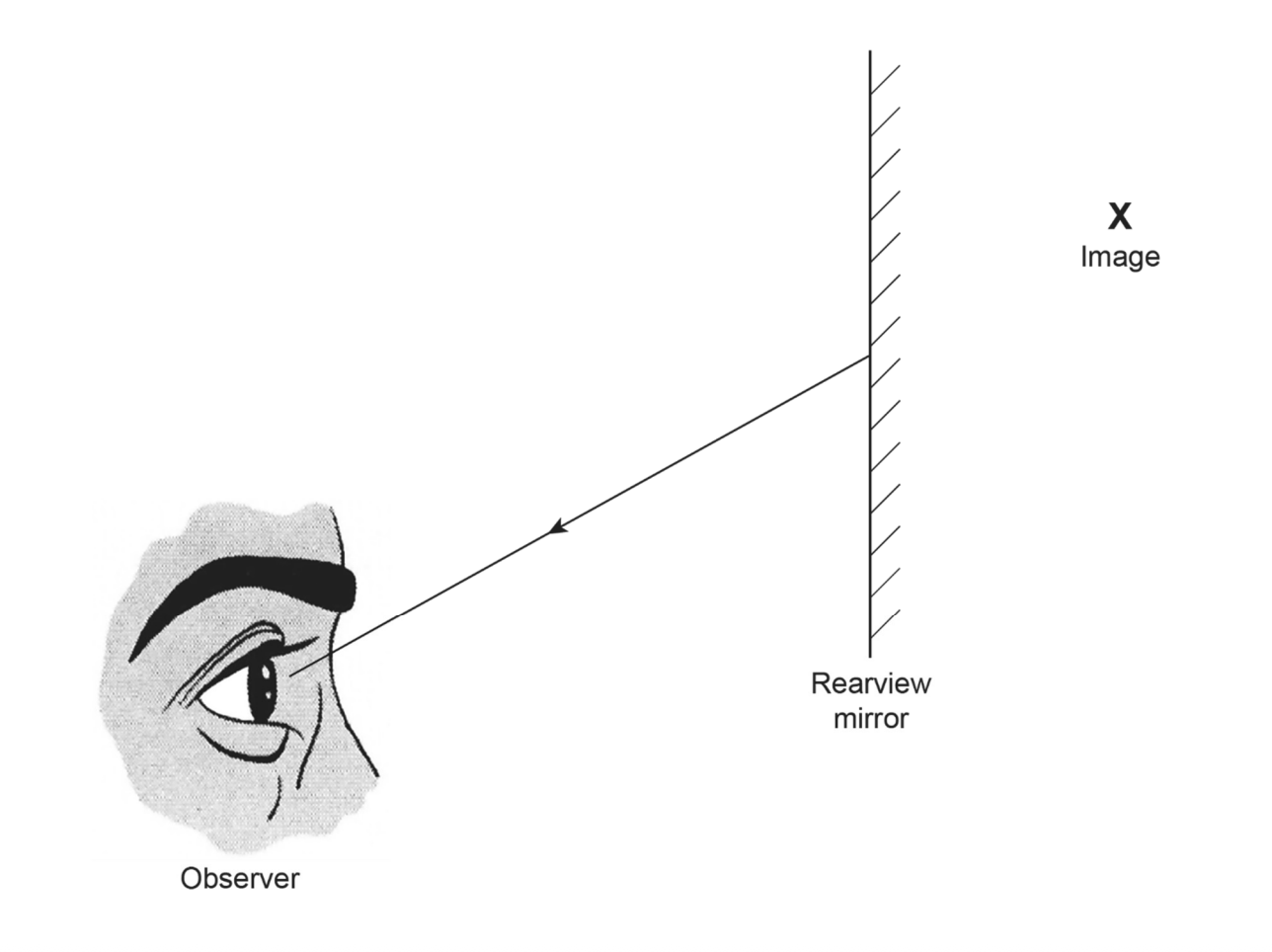
The diagram below represents the location of an image seen in a rearview mirror. On the diagram, use a protractor and straightedge to construct the path of the incident light ray that produces the reflected ray shown and identify the location of the object with an X. [1]

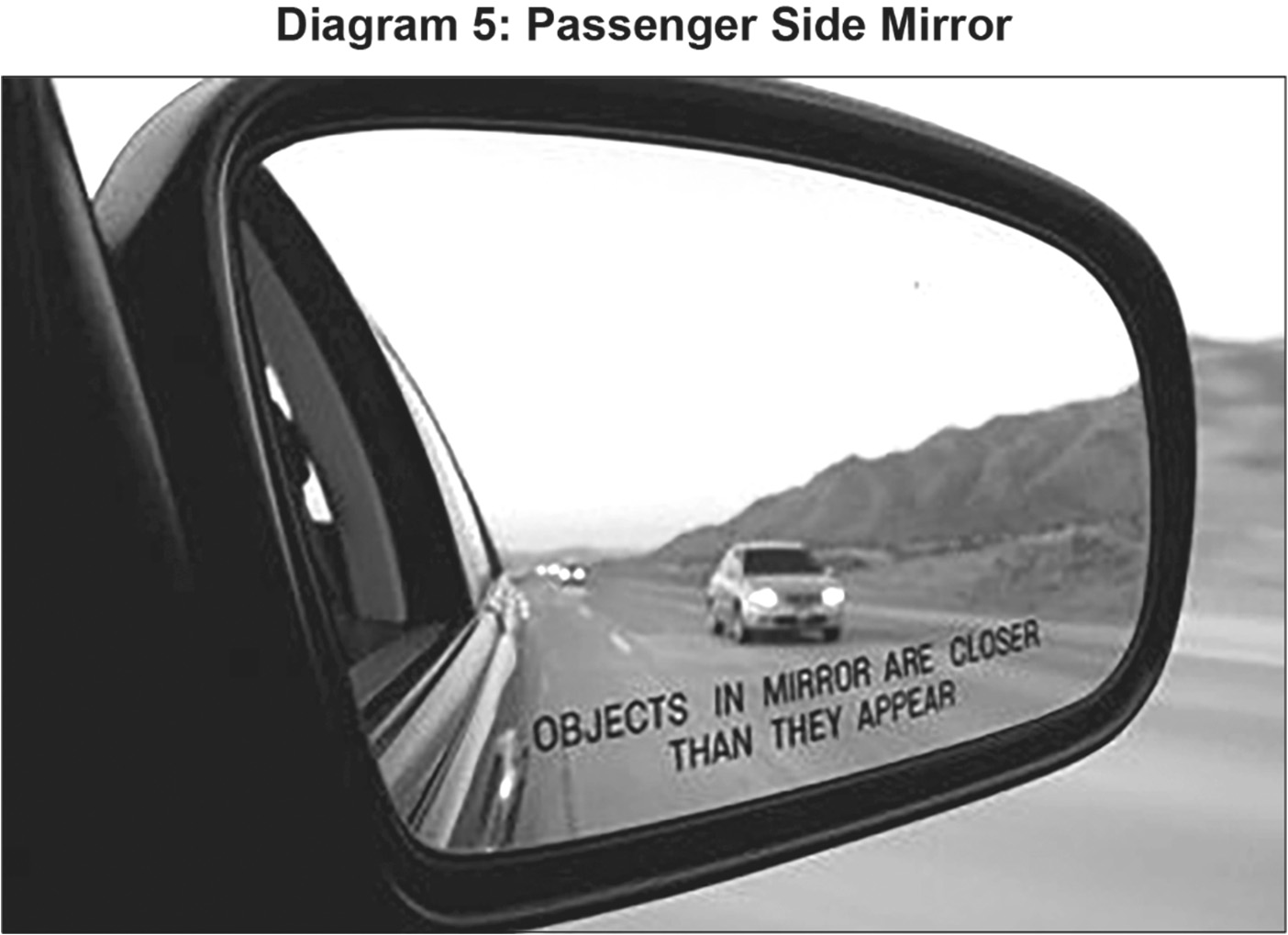
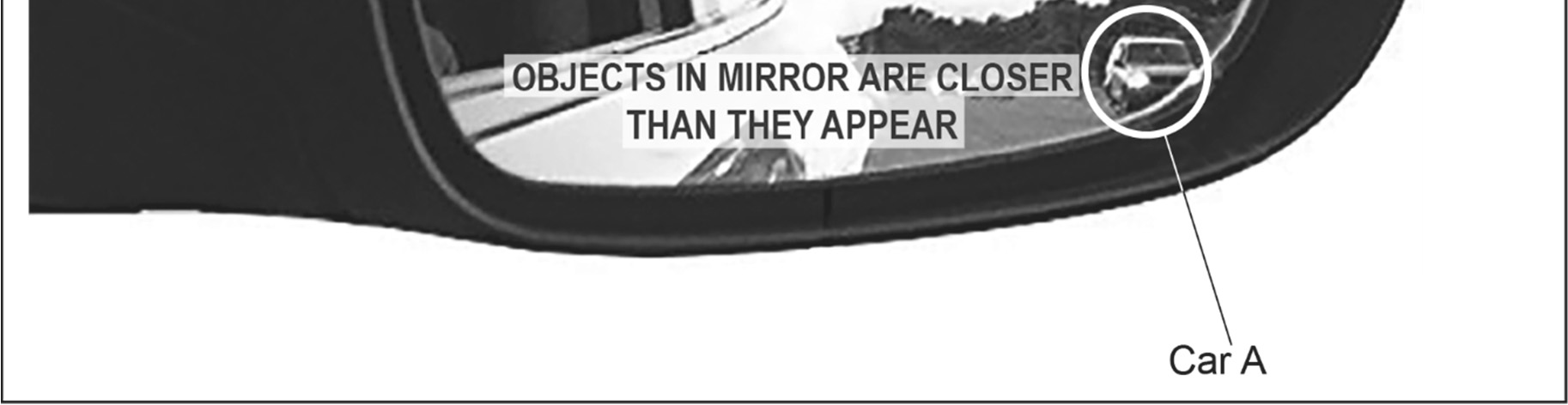
The group observed that the passenger side mirror contains the statement “OBJECTS IN MIRROR ARE CLOSER THAN THEY APPEAR,” as shown in Diagram 5.
This mirror produces an image that is upright and smaller than the object. The distance from the image to the mirror is less than the distance from the object to the mirror.
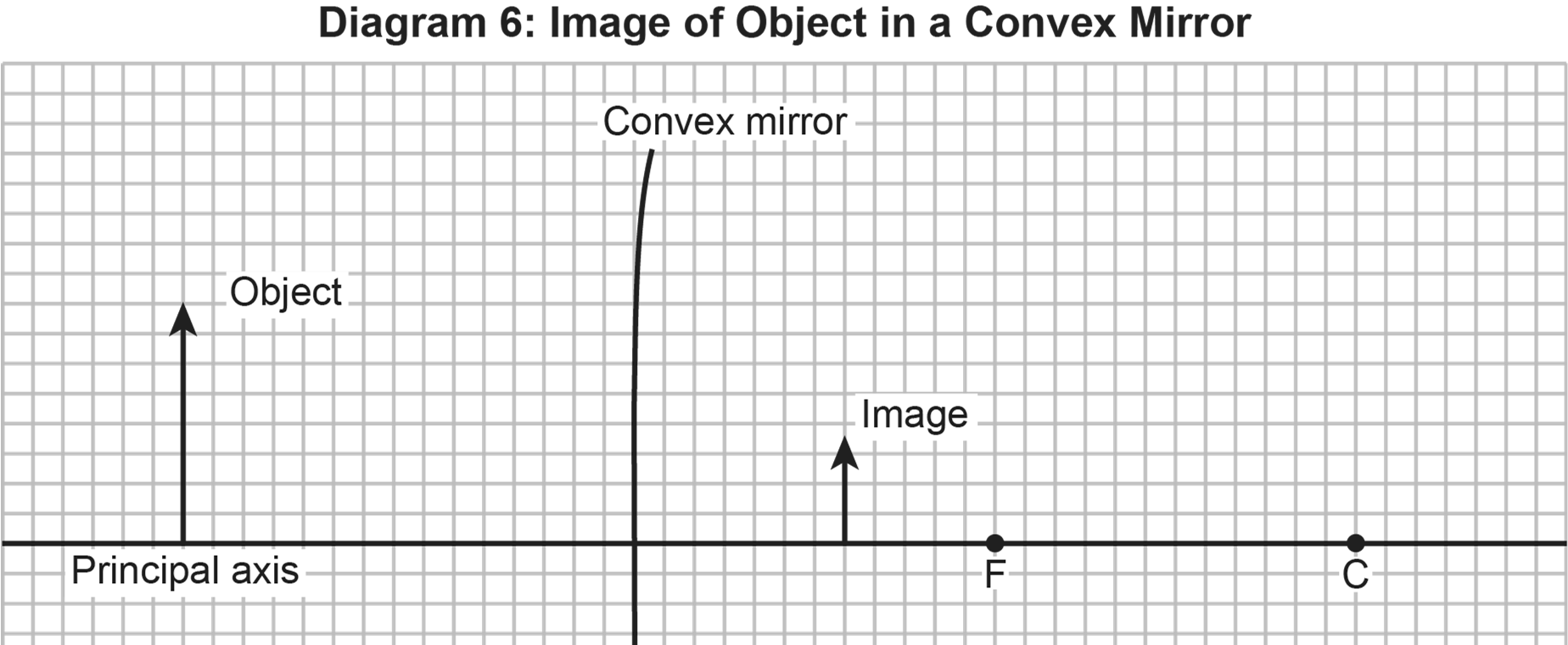
Based on their observations, the group determined that the mirror is convex. Diagram 6, below, represents the size, location, and orientation of an object and its image formed by the convex mirror in Diagram 5. The locations of the focal point, F, and the center of the curvature, C, are indicated on the principal axis.

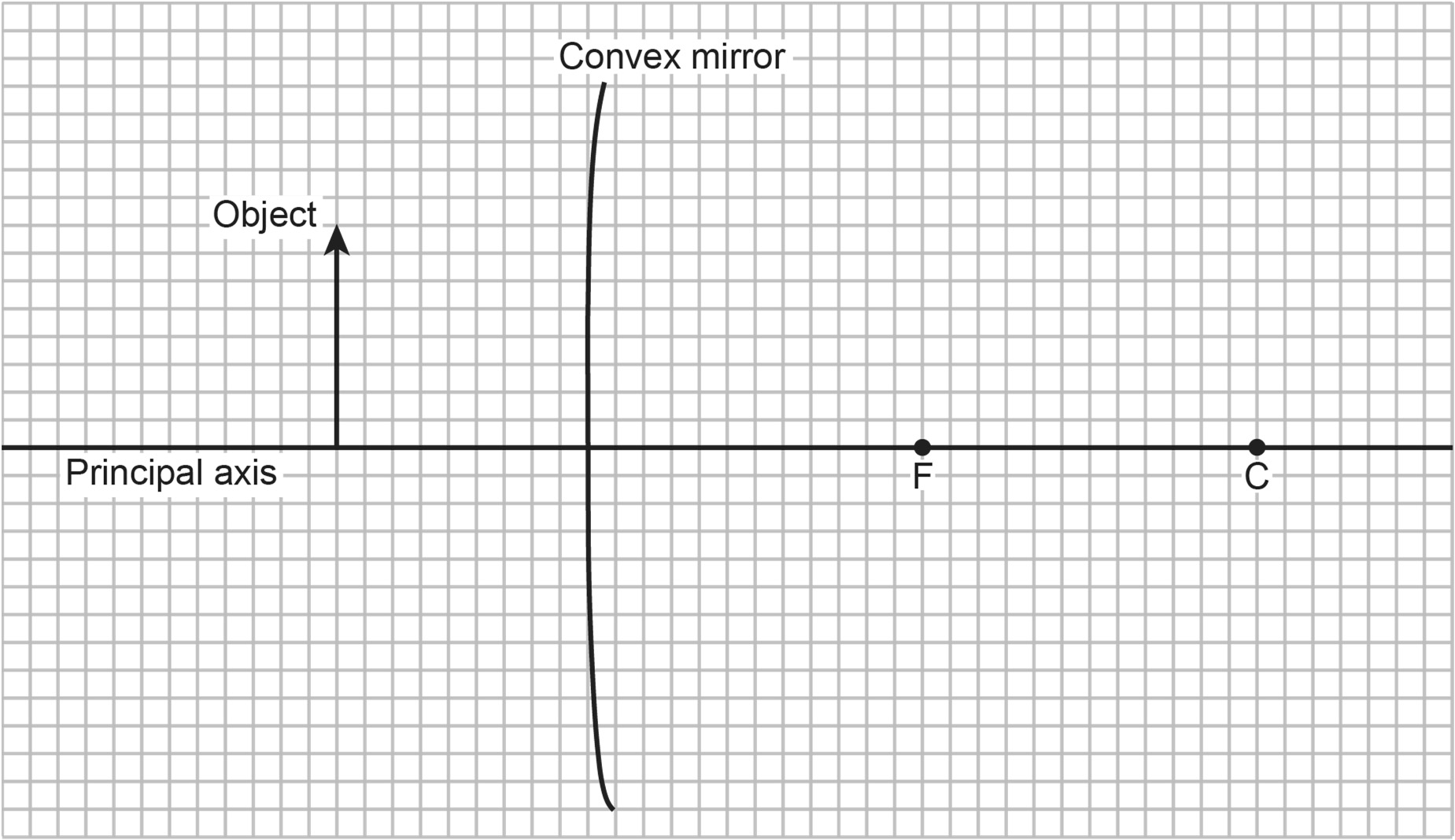
The students claimed that the same object, when closer to the mirror, will form an image that is larger and closer to the mirror than the original image. On the diagram below, use a straightedge to: draw a ray diagram to support the group’s claims about the new image. Draw an arrow to identify the position, size, and orientation of the new image. [1] 
The students investigated the images formed by the convex mirror in Diagram 5. They measured the height of the image and calculated the image distance. Their results are shown in Table 1.
Trial | Object Height | Object Distance | Image Height | Image Distance |
|---|---|---|---|---|
1 | ||||
2 |
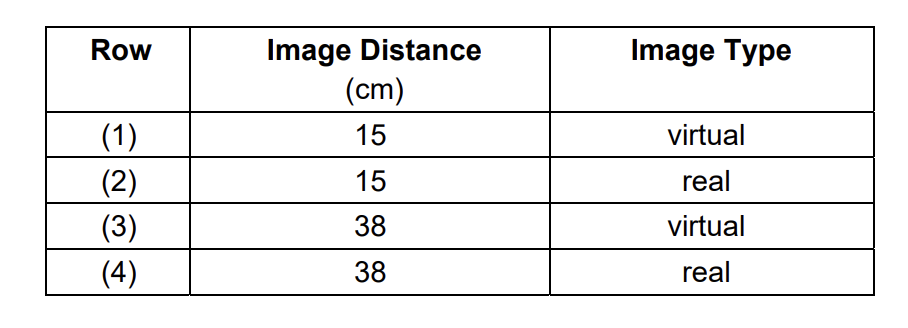
Which row in the table below correctly shows the absolute value of the image distance and type of image for trial 1?

On a different car, students noticed there was a small corner mirror inset in the passenger side mirror, as shown in Diagram 7. Manufacturers included the inset mirror to help reduce traffic accidents without changing the size of the mirror. The image of car A is circled in both mirrors. While there are benefits to including an inset mirror, there are also disadvantages.
Diagram 7: Passenger Side Mirror with Inset

Which statement best describes the trade-offs for including the inset mirror?