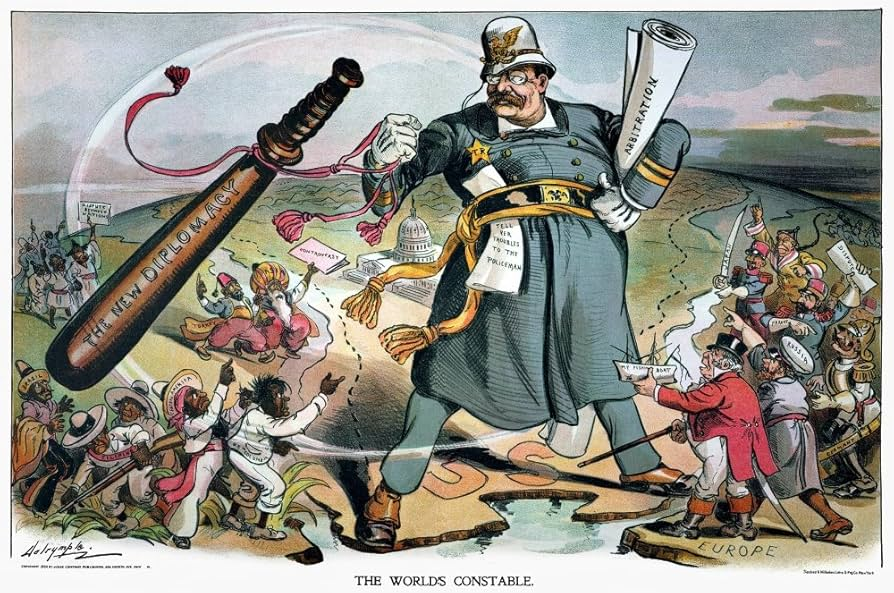
What is the definition of imperialism?
THE END OF A MONARCHY
Hawaii’s King Kalakaua had been strong-armed by white business leaders. They forced him to amend Hawaii’s constitution, effectively limiting voting rights to only wealthy landowners. But when Kalakaua died in 1891, his sister Queen Liliuokalani came to power with a “Hawaii for Hawaiians” agenda. She proposed removing the property-owning qualifications for voting. To prevent this from happening, business groups—encouraged by Ambassador John L. Stevens—organized a revolution. With the help of marines, they overthrew the queen and set up a government headed by Sanford B. Dole.
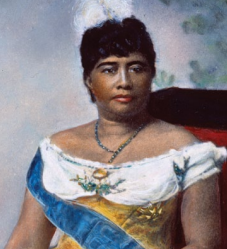
President Cleveland directed that the queen be restored to her throne. When Dole refused to surrender power, Cleveland formally recognized the Republic of Hawaii. But he refused to consider annexation unless a majority of Hawaiians favored it.
In 1897 William McKinley, who favored annexation, succeeded Cleveland as president. On August 12, 1898, Congress proclaimed Hawaii an American territory, although Hawaiians had never had the chance to vote. In 1959 Hawaii became the 50th state of the United States.
According to this paragraph, business groups overthrew Queen Liliuokalani for which of the following reasons?
THE END OF A MONARCHY
Hawaii’s King Kalakaua had been strong-armed by white business leaders. They forced him to amend Hawaii’s constitution, effectively limiting voting rights to only wealthy landowners. But when Kalakaua died in 1891, his sister Queen Liliuokalani came to power with a “Hawaii for Hawaiians” agenda. She proposed removing the property-owning qualifications for voting. To prevent this from happening, business groups—encouraged by Ambassador John L. Stevens—organized a revolution. With the help of marines, they overthrew the queen and set up a government headed by Sanford B. Dole.

President Cleveland directed that the queen be restored to her throne. When Dole refused to surrender power, Cleveland formally recognized the Republic of Hawaii. But he refused to consider annexation unless a majority of Hawaiians favored it.
In 1897 William McKinley, who favored annexation, succeeded Cleveland as president. On August 12, 1898, Congress proclaimed Hawaii an American territory, although Hawaiians had never had the chance to vote. In 1959 Hawaii became the 50th state of the United States.
According to this paragraph, what ultimately happened to Hawaii?
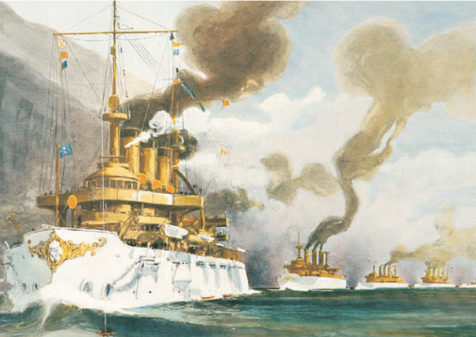
Note. Between 1883 and 1890, the United States built nine steel hulled battleships
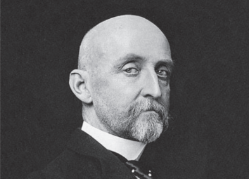
Alfred T. Mahan (1840 - 1914)
Alfred T. Mahan joined the U.S. Navy in the late 1850s and served for nearly 40 years. In 1886 he became president of the newly established Naval War College in Newport, Rhode Island.
Throughout his lifetime, Mahan was one of the most outspoken advocates of American military expansion. In his book The Influence of Sea Power upon History, 1660-1783 (published in 1890), Mahan called for the United States to develop a modern fleet capable of protecting American business and shipping interests around the world.
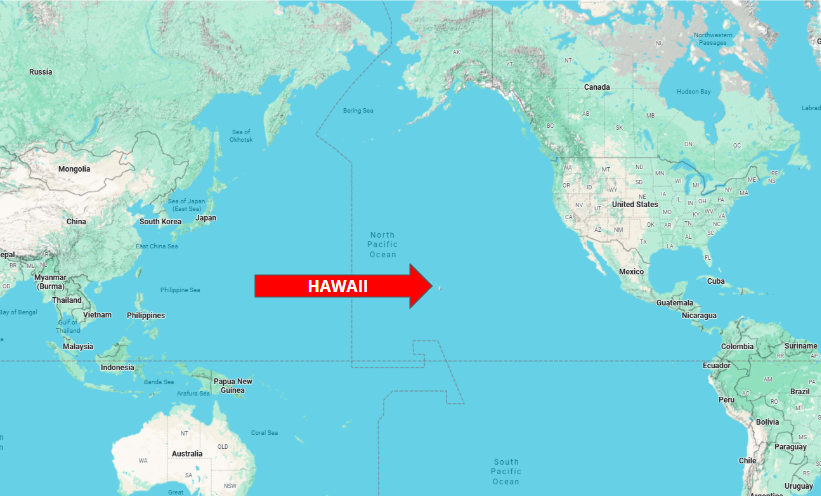
He also urged the United States to establish naval bases in the Caribbean, to construct a canal across the Isthmus of Panama, and to acquire Hawaii and other Pacific islands.
Based on the information above, which of the following statements best explains the United States’ motivation for military build up?

Given its geographic location, why was Hawaii of value to the United States?
THE SECOND WAR FOR INDEPENDENCE
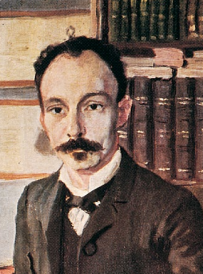
Anti-Spanish sentiment in Cuba soon erupted into a second war for independence. José Martí, a Cuban poet and journalist in exile in New York, launched a revolution in 1895. Martí organized Cuban resistance against Spain, using an active guerrilla campaign and deliberately destroying property, especially American-owned sugar mills and plantations. Martí counted on provoking U.S. intervention to help the rebels achieve ¡Cuba Libre!—a free Cuba.
Public opinion in the United States was split. Many business people wanted the government to support Spain in order to protect their investments. Other Americans, however, were enthusiastic about the rebel cause. The cry “¡Cuba Libre!” was, after all, similar in sentiment to Patrick Henry’s “Give me liberty or give me death!” spoken during America's own war for independence. Despite economic concerns and public opinion, President Grover Cleveland remained true to the Monroe Doctrine, which promised that the United States would not intervene in the affairs of existing European colonies in the Western Hemisphere. Soon, though, the promises of the Monroe Doctrine would be put to the test.
Based on the information above, some Americans supported Jose Marti because…
THE SECOND WAR FOR INDEPENDENCE
Anti-Spanish sentiment in Cuba soon erupted into a second war for independence. José Martí, a Cuban poet and journalist in exile in New York, launched a revolution in 1895. Martí organized Cuban resistance against Spain, using an active guerrilla campaign and deliberately destroying property, especially American-owned sugar mills and plantations. Martí counted on provoking U.S. intervention to help the rebels achieve ¡Cuba Libre!—a free Cuba.
Public opinion in the United States was split. Many business people wanted the government to support Spain in order to protect their investments. Other Americans, however, were enthusiastic about the rebel cause. The cry “¡Cuba Libre!” was, after all, similar in sentiment to Patrick Henry’s “Give me liberty or give me death!” spoken during America's own war for independence. Despite economic concerns and public opinion, President Grover Cleveland remained true to the Monroe Doctrine, which promised that the United States would not intervene in the affairs of existing European colonies in the Western Hemisphere. Soon, though, the promises of the Monroe Doctrine would be put to the test.
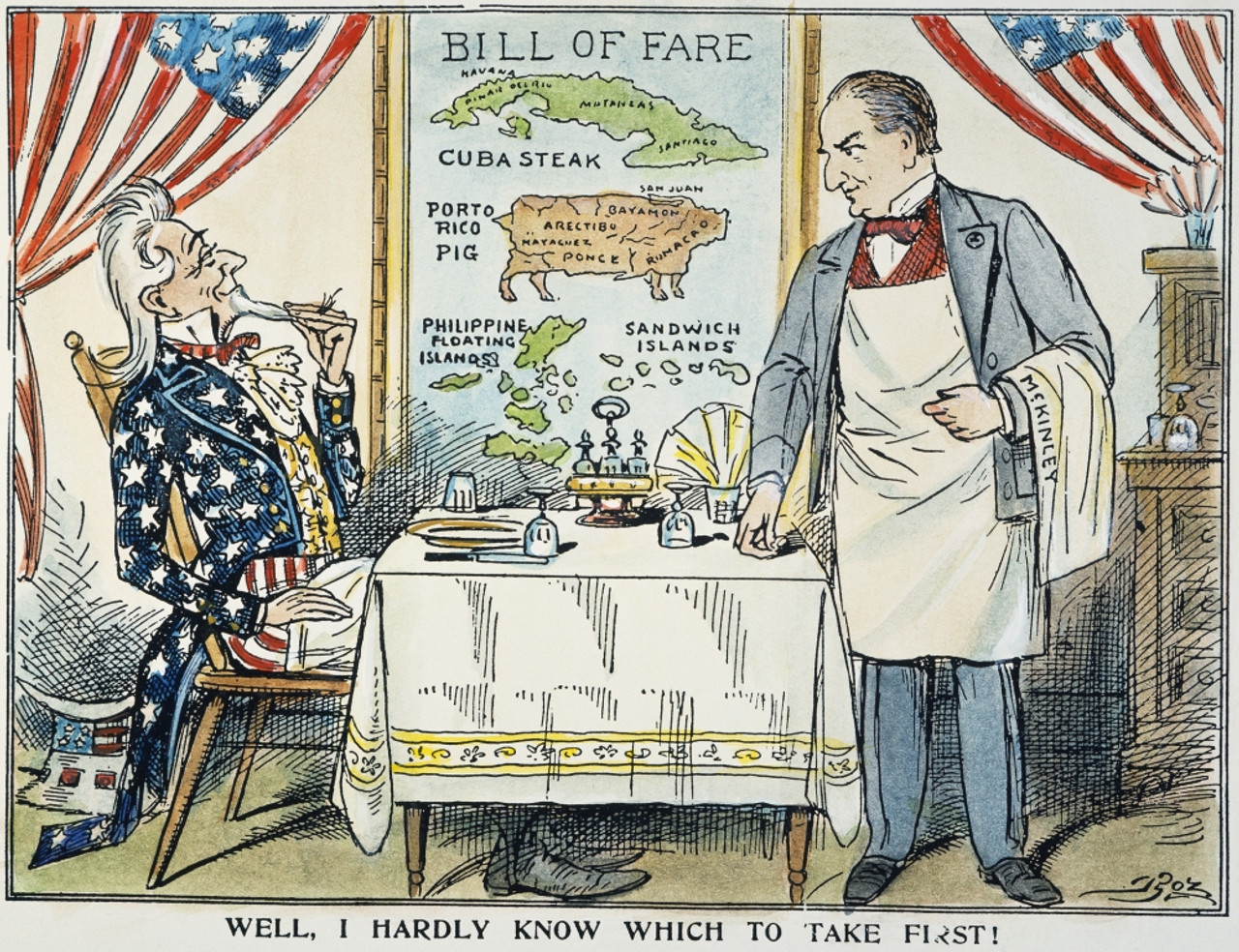
Based on the information above, American imperialism was demonstrated by…


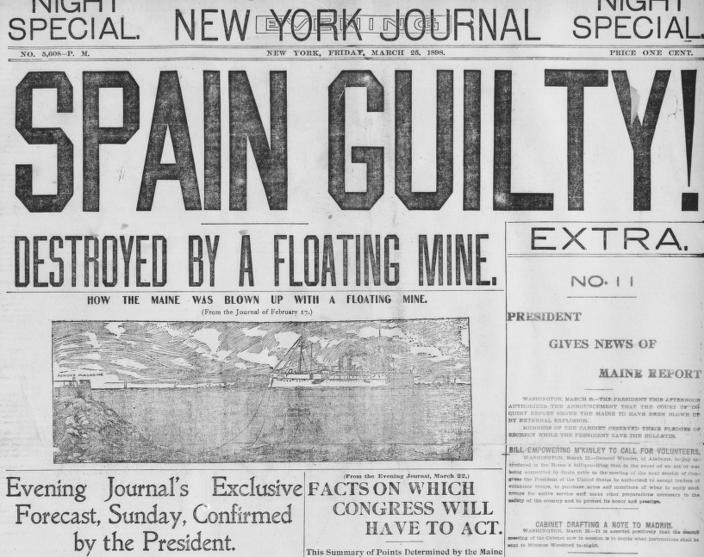
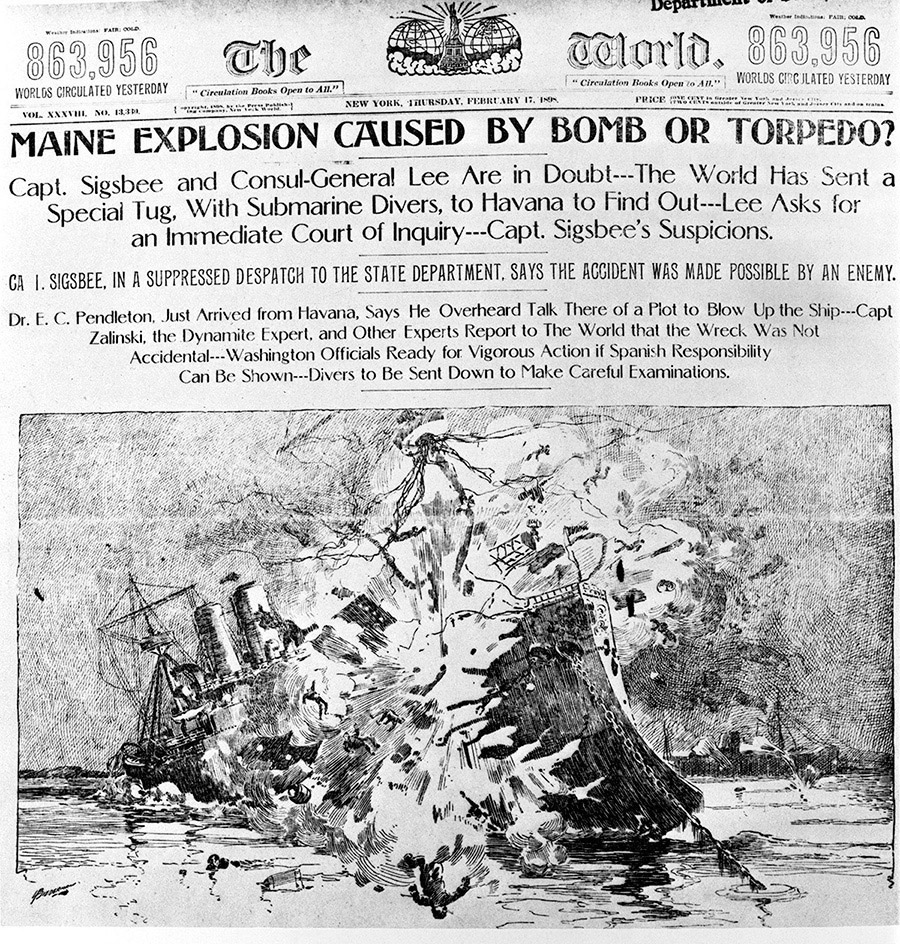
The images above are examples of…


We know that the images above were effective due to which of the following events?

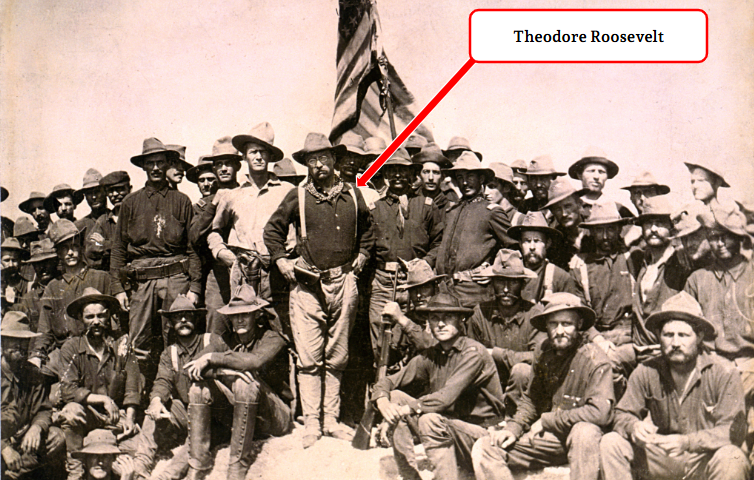
Which of the following statements demonstrates that future president Theodore Roosevelt was an imperialist?
Quote #1
“The Opposition tells us that we ought not to govern a people without their consent. . . . Would not the people of the Philippines prefer the just, humane, civilizing government of this Republic to the savage, bloody rule of pillage and extortion from which we have rescued them? Do not the blazing fires of joy and the ringing bells of gladness in Porto Rico prove the welcome of our flag? . . . do we owe no duty to the world? . . . Shall we abandon them, with Germany, England, Japan, hungering for them?”
– Albert Beveridge
Quote #2
“...there was nothing left for us to do but to take them all [the Philippine Islands], and to educate the Filipinos, and uplift and Christianize them.”
– William McKinley
Quote #3
“You, citizens of a free fatherland, with its own laws, its own institutions, and its own flag, can appreciate the unhappiness of the small and solitary people that must await its laws from your authority. . . . when you acquire the certainty that you can found in Puerto Rico a republic like that founded in Cuba and Panama . . . give us our independence and you will stand before humanity as . . . a great creator of new nationalities and a great liberator of oppressed peoples.”
– Luis Munoz Rivera
Quote #4
“We are here to insist that a war begun in the cause of humanity shall not be turned into a war for empire, that an attempt to win for Cubans the right to govern themselves shall not be made an excuse for extending our sway over alien peoples without their consent. The Fundamental principles of our government are at stake.”
– Moorfield Storey
PICK TWO (2) ANSWERS: Which of the following people, based on their quotes above, could be considered imperialists?

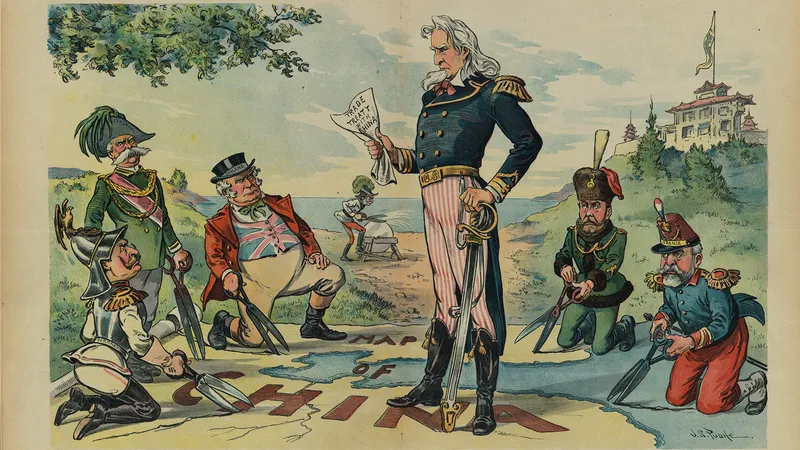
How does the cartoon above criticize the United States’ attitude toward imperialism?

The cartoon above demonstrates that China…
Quote #1
“¡Cuba Libre!”
– Jose Marti, leader of Cuban revolution
Quote #2
“Give us the chance; treat us exactly as you demanded to be treated at the hands of England, when you rebelled against her autocratic methods… You declared war with Spain for the sake of Humanity… “Lay down your arms,” you say. Did you lay down your arms when you, too, were rebels, and the English under good King George demanded your submission? How in the name of all that is serious do you demand that we shall do what you, being rebels, refused to do?”
– An anonymous Filipino speaking on behalf of Emilio Aguinaldo, leader of the Filipino rebellion
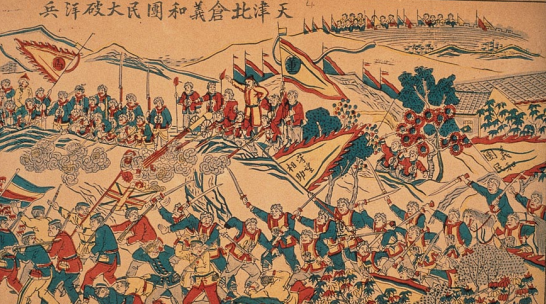
Note. During the Boxer Rebellion, shown here in this Chinese print, Chinese patriots demanded that all foreigners be expelled from the country.
What do the rebellions in Cuba, the Philippines, and China all have in Common?
PROVISIONS OF THE PLATT AMENDMENT
Cuba could not make treaties that might limit its independence or permit a foreign power to control any part of its territory,
the United States reserved the right to intervene in Cuba,
Cuba was not to go into debt that its government could not repay, and
the United States could buy or lease land on the island for naval stations and refueling stations.
As defined above, which of the following statements most accurately describes how the Platt Amendment is an example of U.S. imperialism?

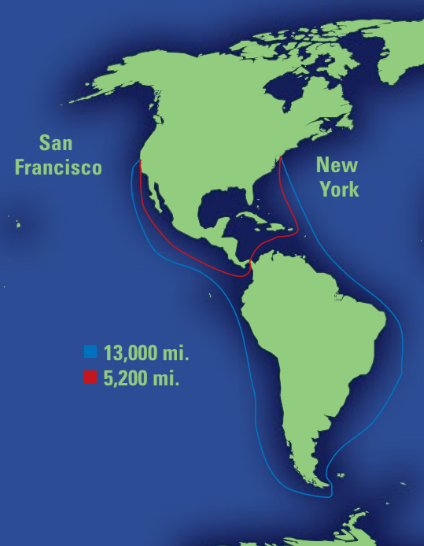
Based on the map above, why was the construction of the Panama Canal crucial to the goals of U.S. imperialists?

The cartoon above demonstrates Theodore Roosevelt’s “big stick diplomacy,” which stated that…

Roosevelt’s “big stick diplomacy” was also known as the Roosevelt Corollary to the Monroe Doctrine. The Monroe Doctrine states that…
Quote #1
“As long as I have anything to do with the affairs in Mexico there will be no further friction between my country and my friends of the north . . . To President Wilson, the greatest American, I stand pledged to do what I can to keep the faith he has in my people, and if there is anything he may wish I will gladly do it, for I know it will be for the good of my country.”
– Pancho Villa, quoted in the New York Times, January 11, 1915
Quote #2
“I think we have done a great wrong to these people; instead of cutting out the sores with a clean, strong knife of war . . . and occupation, . . . we have only put our fingers in each festering wound and inflamed it further.”
– Edith O’Shaughnessy, wife of an American diplomat
Based on the quotes above, Pancho Villa…
Quote #1
“As long as I have anything to do with the affairs in Mexico there will be no further friction between my country and my friends of the north . . . To President Wilson, the greatest American, I stand pledged to do what I can to keep the faith he has in my people, and if there is anything he may wish I will gladly do it, for I know it will be for the good of my country.”
– Pancho Villa, quoted in the New York Times, January 11, 1915
Quote #2
“I think we have done a great wrong to these people; instead of cutting out the sores with a clean, strong knife of war . . . and occupation, . . . we have only put our fingers in each festering wound and inflamed it further.”
– Edith O’Shaughnessy, wife of an American diplomat
Based on the quotes above, Edith O'Shaughnessy…