A city council is debating whether to support construction of a nuclear power plant to replace aging coal plants. Three council members present different arguments:
Council Member X: "Nuclear power is the perfect solution. It produces zero emissions, so we should build as many plants as possible immediately."
Council Member Y: "One nuclear accident could devastate our region for generations. We should reject nuclear power entirely and keep using coal until solar technology improves."
Council Member Z: "Nuclear power offers substantial emission reductions that solar and wind cannot yet match at this scale, but we must require comprehensive safety systems, secure long-term waste storage plans, and emergency response protocols before approving construction."
Which council member's argument best demonstrates the ability to construct an evidence-based argument about nuclear energy as an alternative energy source?
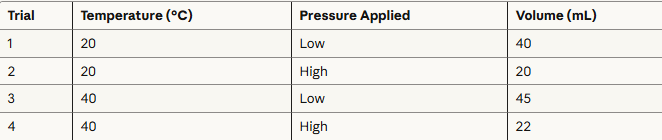 Which relationship between gas properties is best supported by comparing trials 1 and 2?
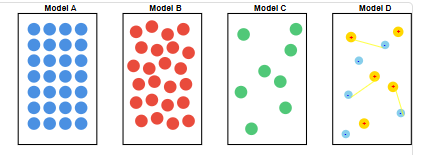 A science class is studying four particle models shown above. After observing all four models, a student asks: "Why do particles in Model D have electrical charges when particles in the other models do not?" Which answer best explains what this question reveals about the student's understanding?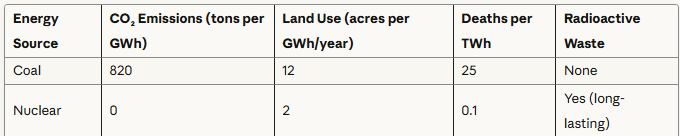
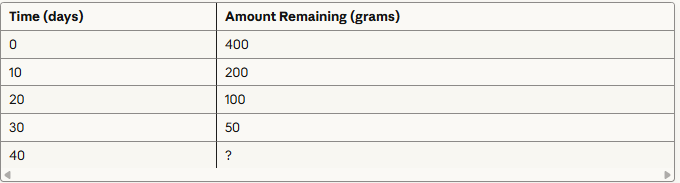 Using mathematical thinking, which amount should appear in the table at 40 days, and why does this pattern occur during radioactive decay?
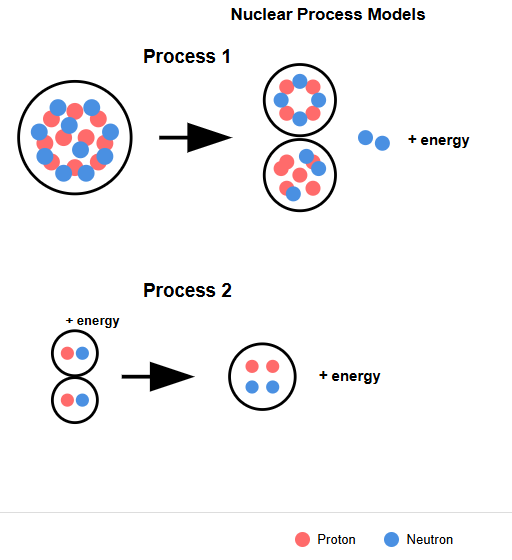 Which statement best describes what these models illustrate about nuclear changes?
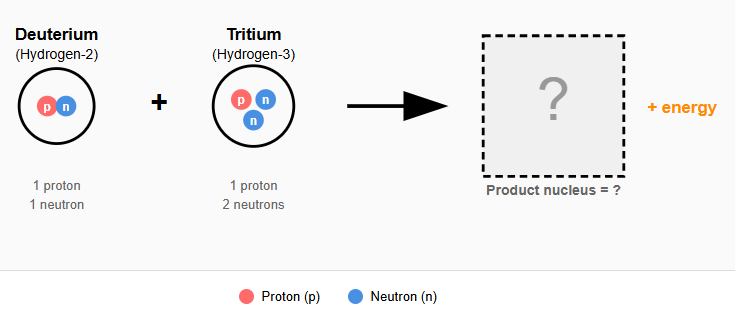 To accurately complete this fusion model, which nucleus should the student draw in the product box?
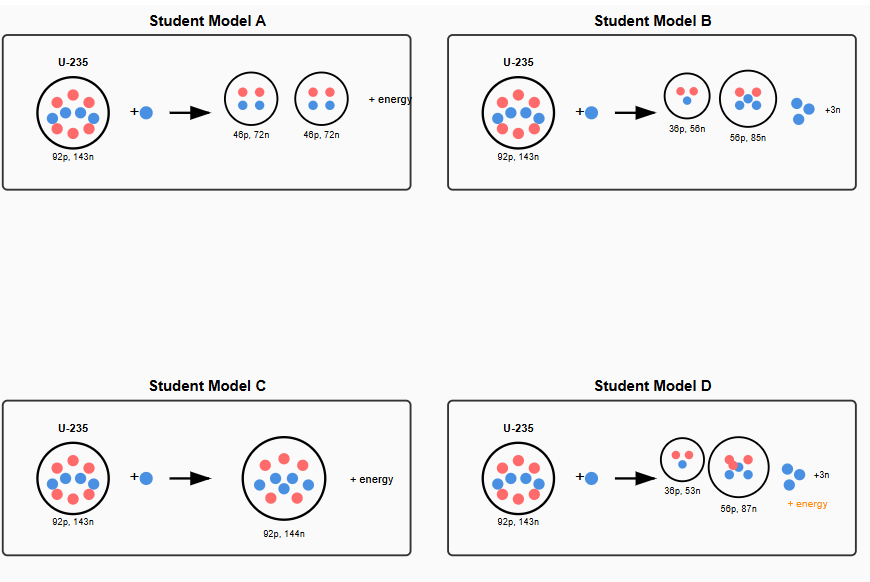 A teacher asks the students to evaluate which model best represents how the nucleus actually changes during fission. Which model is most accurate and why?