Week 14 SS - The Choctaw
star
star
star
star
star
Last updated 6 months ago
10 Nsɛmmisa
1 In 1650 the Choctaw were the largest Native American group in Mississippi. There were at least 15,000 Choctaw living in villages in central and southeastern parts of our state.
2 The Choctaw, like other Native Americans, used storytellers to keep their history alive. Joining a group of Choctaw children as a storyteller explains an important part of Choctaw life.
3 The old storyteller visits a family in a Choctaw village. One child asks him about the Green Corn Ceremony that begins the next day. “Why do we celebrate this festival every year?” she asks. He tells her that the festival is their way of celebrating and giving thanks for the corn harvest. The storyteller explains that farming, especially corn, is very important to the Choctaw. They grow it for food, but also have enough to trade. Choctaw traders in canoes travel to other villages to trade their corn for animal skins, shells, and other goods.
4 The next day the family travels with the storyteller to the sacred mound at Nanih Waiya. There they will celebrate the Choctaw Green Corn Ceremony. As they walk through the forest, the children hear drums in the distance. The drums are made from hollow logs or clay pots with deerskin stretched over them. Musicians also played flutes made from deer bones. They shake rattles made from bean-filled gourds.
5 The family watches as people gather around the sacred fire to dance and sing. This is a time for starting over and setting things right. People who are angry with each other agree to forget their problems. Household fires are put out and restarted with a new flame from the sacred village fire.
6 After the festival, the storyteller returns to his village to prepare for a council meeting. The council is a group of people who help the village leaders to decide on laws and other important matters. The storyteller is a member of the village council. Each Choctaw village has two leaders. One rules the village, and the other is a war leader.
7 Today, many Chickasaw and Choctaw live in Oklahoma. However, more than 8,000 Choctaw still live in Mississippi. Most live on a reservation, or land set aside by the United States government for Native Americans.
8 Did you know that the Native American game of stickball is called the “grandfather of American sports”? The legacy of stickball can be seen in some of today’s popular sports, such as lacrosse. Football, soccer, and basketball also have something in common with stickball.
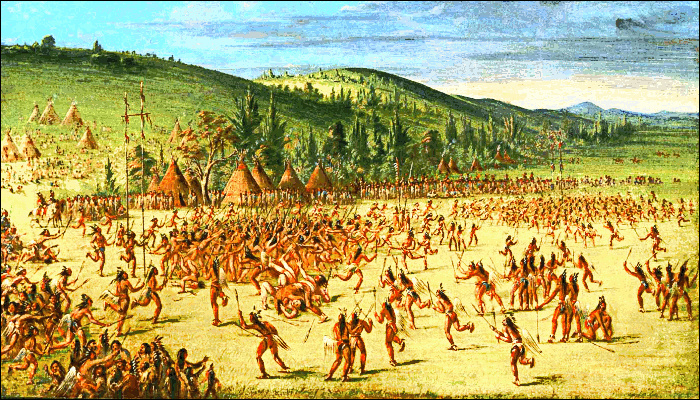
9 Hundreds of years ago stickball was a very important part of Native American cultures. When disputes arose between communities, stickball provided a peaceful way to settle the issue. These games were hard-fought contests that could involve as few as twenty or as many as 300 players. The game had a few definite rules. Sometimes the field was five times longer than a modern football field. Sometimes a game lasted for two days.
10 How is stickball played? Modern Choctaw players in MIssissippi form two teams with the same number of players. Each player uses two sticks called kabocca to catch and throw a woven leather ball, or towa. Each kabocca has a small pocket on one end.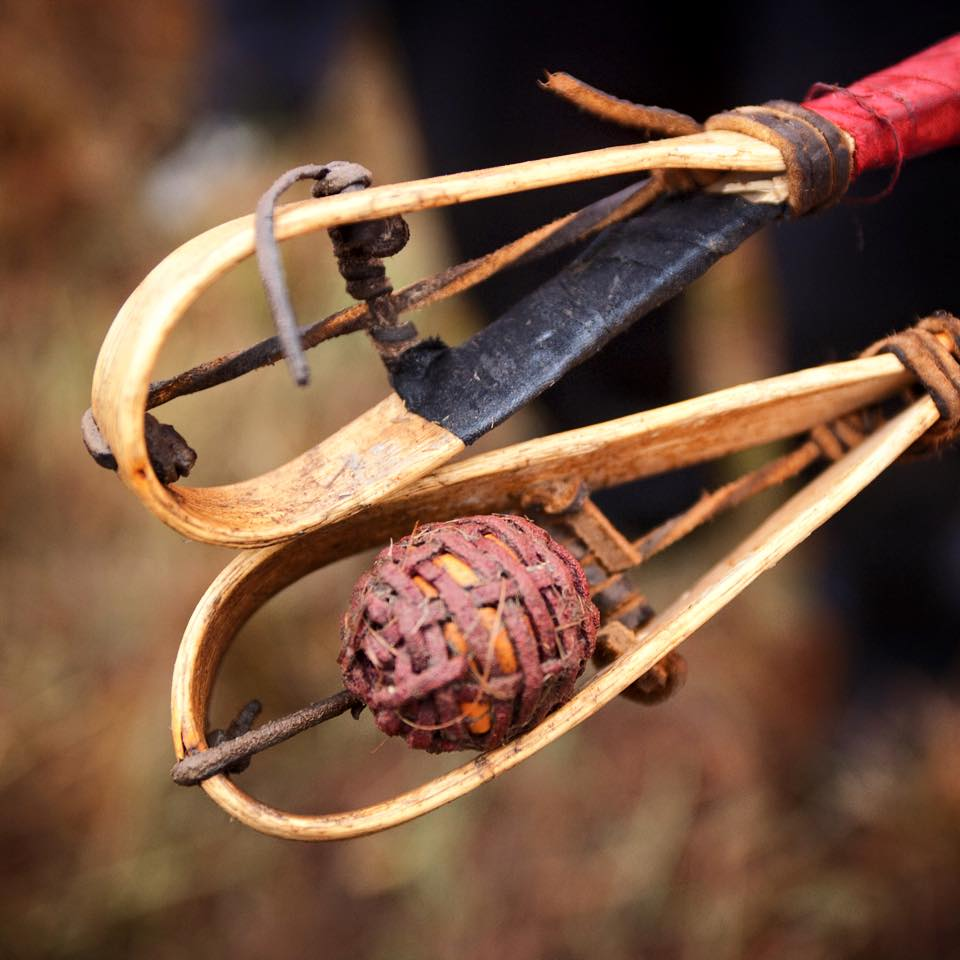
11 Players used the kabocca to move the ball across the playing field toward a goal post. Hands must not touch the ball! Plates score when their ball hits the post or when they have the ball in the pocket and they touch the post with their kabocca.

How many Choctaws were living in Mississippi in 1650?
What was the importance of the storyteller in Choctaw tradition?
What was the purpose of the Green Corn Ceremony?
What do families do to show they are starting over?
The _________ is a group of people who help the village leaders to decide on laws and other important matters.
Each Choctaw village has two leaders. One rules the _______, and the other is a ________.
Most of 8,000 Choctaw still living in Mississippi live _______.
What is considered “grandfather of American sports”?
What did Choctaw use to settle disagreements?
What is an important rule in stickball?