


| Draggable item | arrow_right_alt | Corresponding Item |
|---|---|---|
Specific Heat | arrow_right_alt | The transfer of thermal energy between objects due to a temperature difference between those objects. |
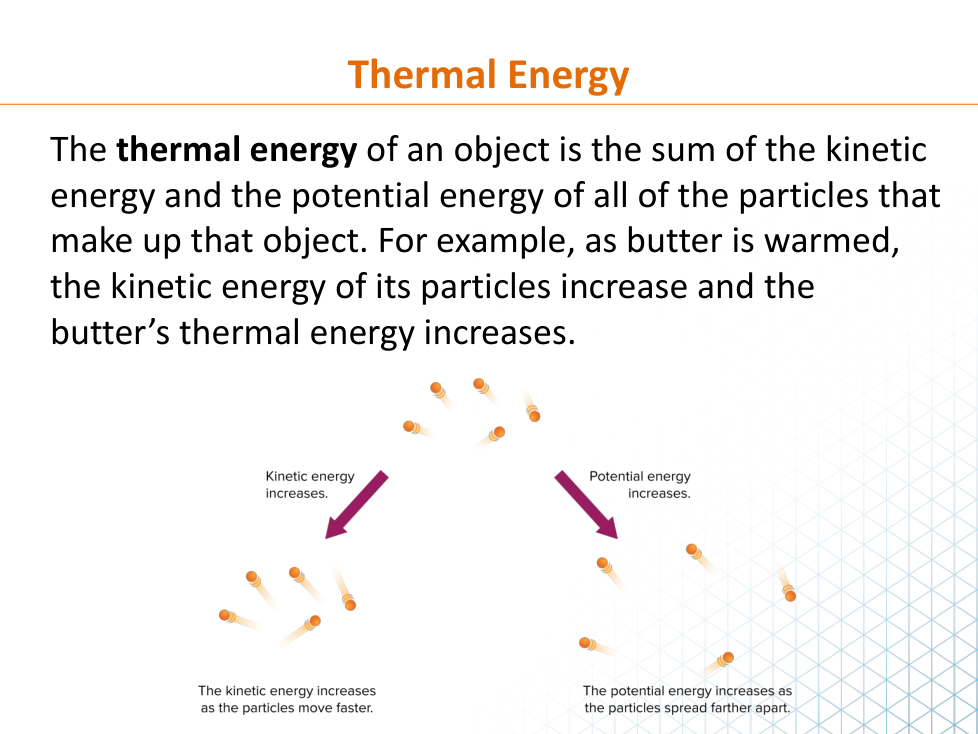
Thermal Energy | arrow_right_alt | The amount of heat needed to raise the temperature of 1 kg of a substance by 1 degree Celsius. |
Heat | arrow_right_alt | The average kinetic energy of all the particles in a substance |
Temperature | arrow_right_alt | The sum total of the kinetic and potential energy of all the particles in a substance |


If you touch an object and it feels cool, it is because there is in the object than there is in your hand. This causes .
If it is 27o F outside, I would most likely be wearing .
If it is 27o C, I would most likely be wearing
Which of the following are true about absolute zero.
Based on what we know about thermometers and thermal expansion, it can be deduced that the liquid in a thermometer would go down because
Mr. Maxwell has a mercury thermometer. The particles that make up the mercury have an average kinetic energy of 72. He places the bulb of the thermometer into a beaker of water. The particles that make up the water have an average kinetic energy of 63.
Based on this scenario, put the following events in sequential order.
The mercury begins rising up the thermometer.
Eventually, the average amount of kinetic energy in the mercury matches the average amount of kinetic energy in the water.
When the mercury particles move farther apart, it causes the mercury's volume to increase.
When the mercuries volume increases, it only has one direction it can go...
The particles that make up the mercury collide with the particles that make up the glass of the thermometer.
As the particles that make up the mercury gain kinetic energy, they begin moving faster and farther apart.
Net kinetic energy stops being transferred between the water and the mercury.
Overall, more energy is passed from the particles in the water to the particles that make up the glass.
The mercury stops rising.
Now, when the particles that make up the glass collide with particles that make up the mercury, they pass kinetic energy into the particles of the mercury.
The particles that make up the glass of the thermometer collide with the particles in the water.


What does this thermometer read in Fahrenheit

What does this thermometer read in Fahrenheit?

What does this thermometer read in Fahrenheit?
Two beakers of water are sitting on a table. Beaker A has 500 mL of water in it. Beaker B has 1000 mL of water in it. The temperature of the water in both beakers is 78 oF.
Based on the information provided, it can be concluded that has more thermal energy than because
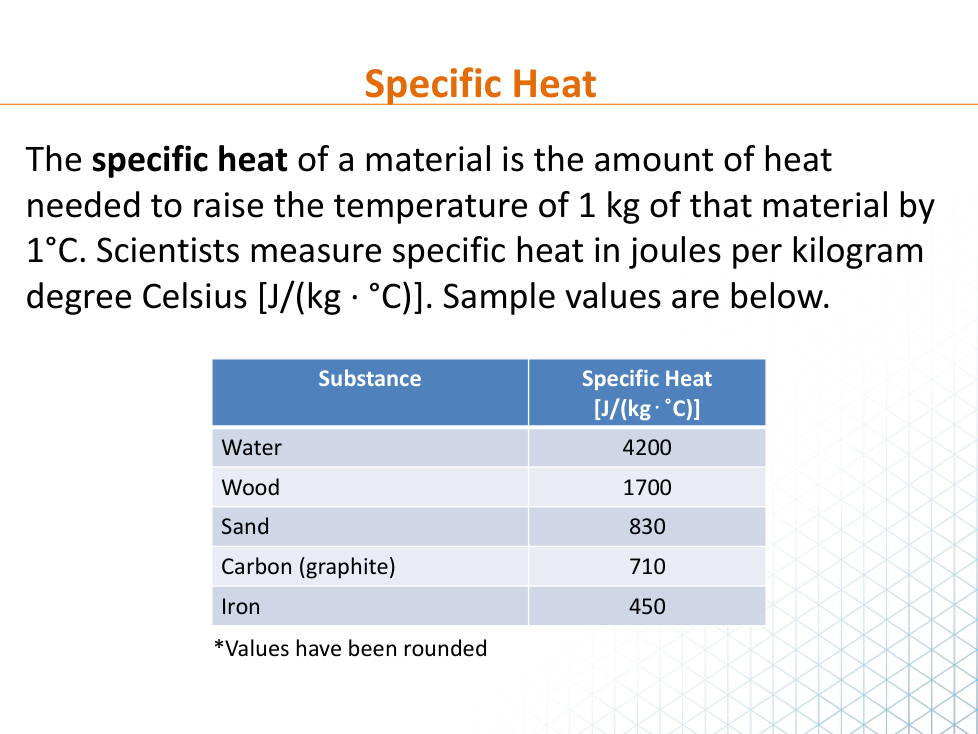
Which of the following substances requires the most energy input to heat it up by 1o
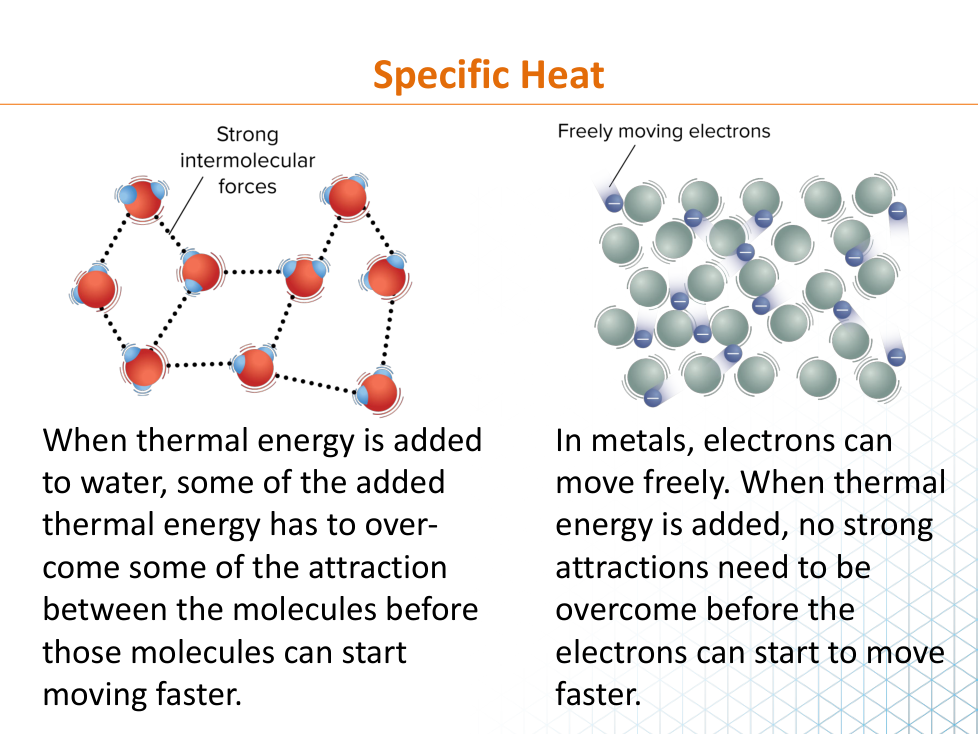
The strong intermolecular forces between water molecules are called . They form because the oxygen atom in the molecule has , and the hydrogen atoms in the molecule have . These are attracted to each other like magnets.
The strong intermolecular forces that occur between its molecules gives water special properties such as (choose all that apply)
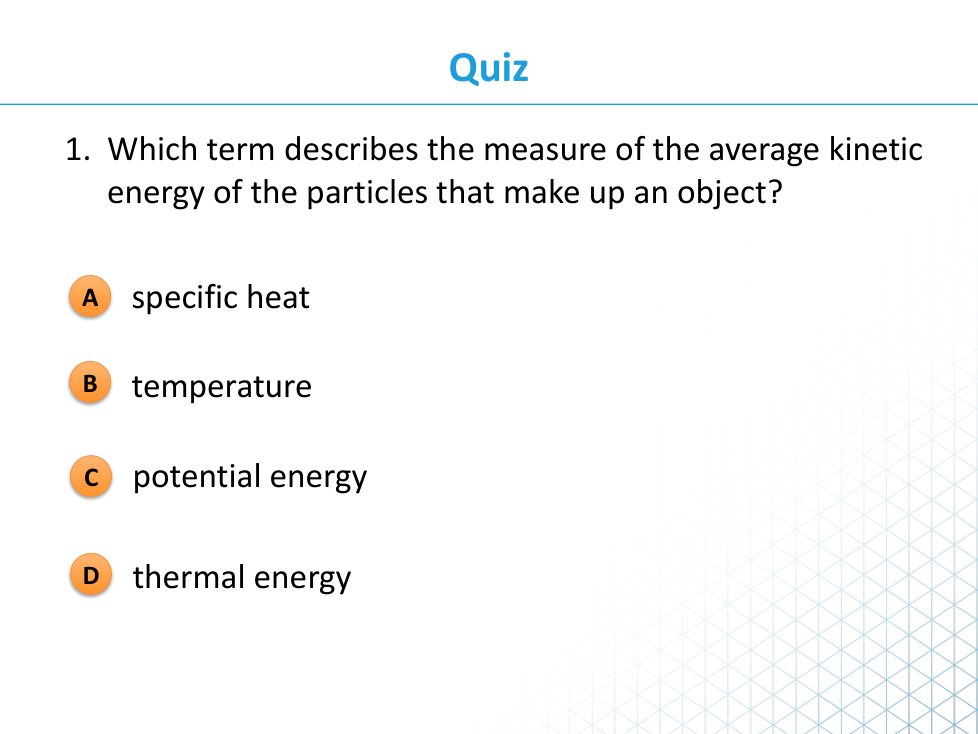
Which term describes the measure of the average kinetic energy of the particles that make up an object
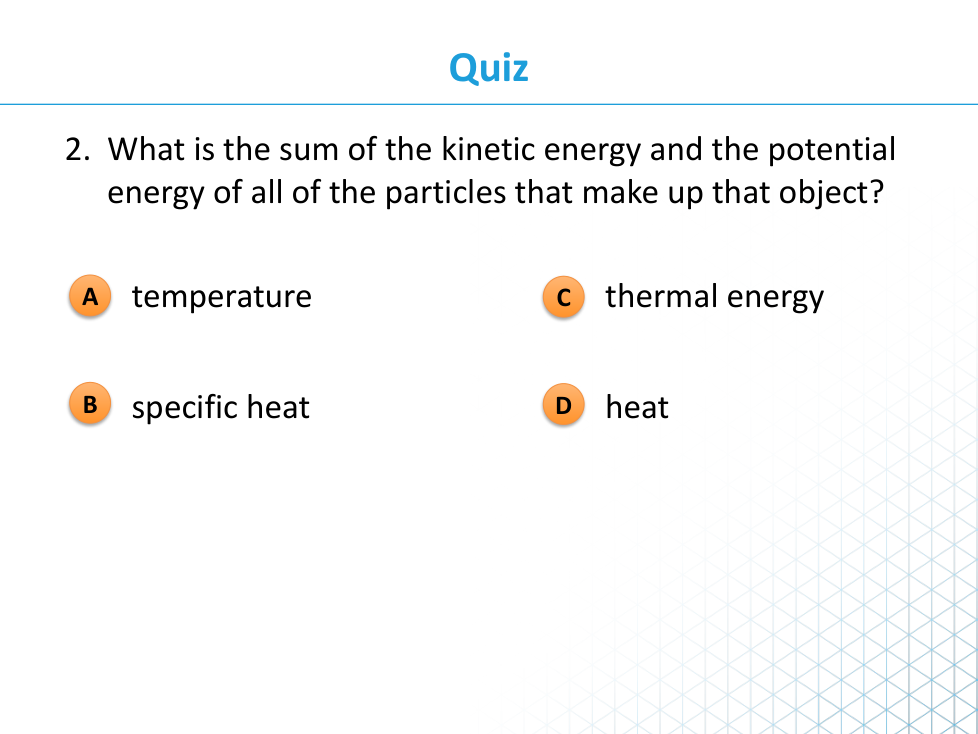
What is the sum of the kinetic energy and the potential energy of all the particles that make up that object?
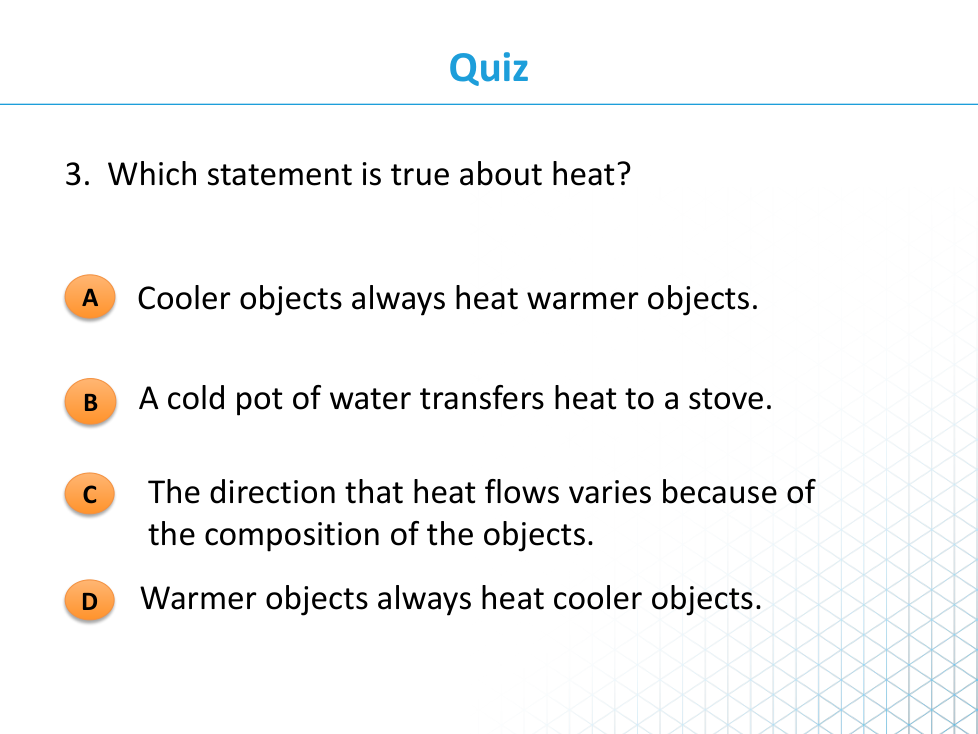
Which statement is true about heat?
Which substance is often used as a coolant?
What does this thermometer read in Celsius?
What does this thermometer read in Celsius?
What does this thermometer read in Celsius?