This formative checks understanding of key ideas from the introduction to the protein folding activity (structure → function, amino acid properties) and then guides students through reasoning questions during and after the hands-on 15-tack + mini-toober folding activity. Use these questions for a warm-up, group guide, or exit ticket.
Which statement best describes why a protein’s shape matters?
There are _________ different amino acids that make up protein structure.
Legos are to lego castle as _________________ are to protein
Based on the word parts, what does “hydrophobic” most nearly mean?
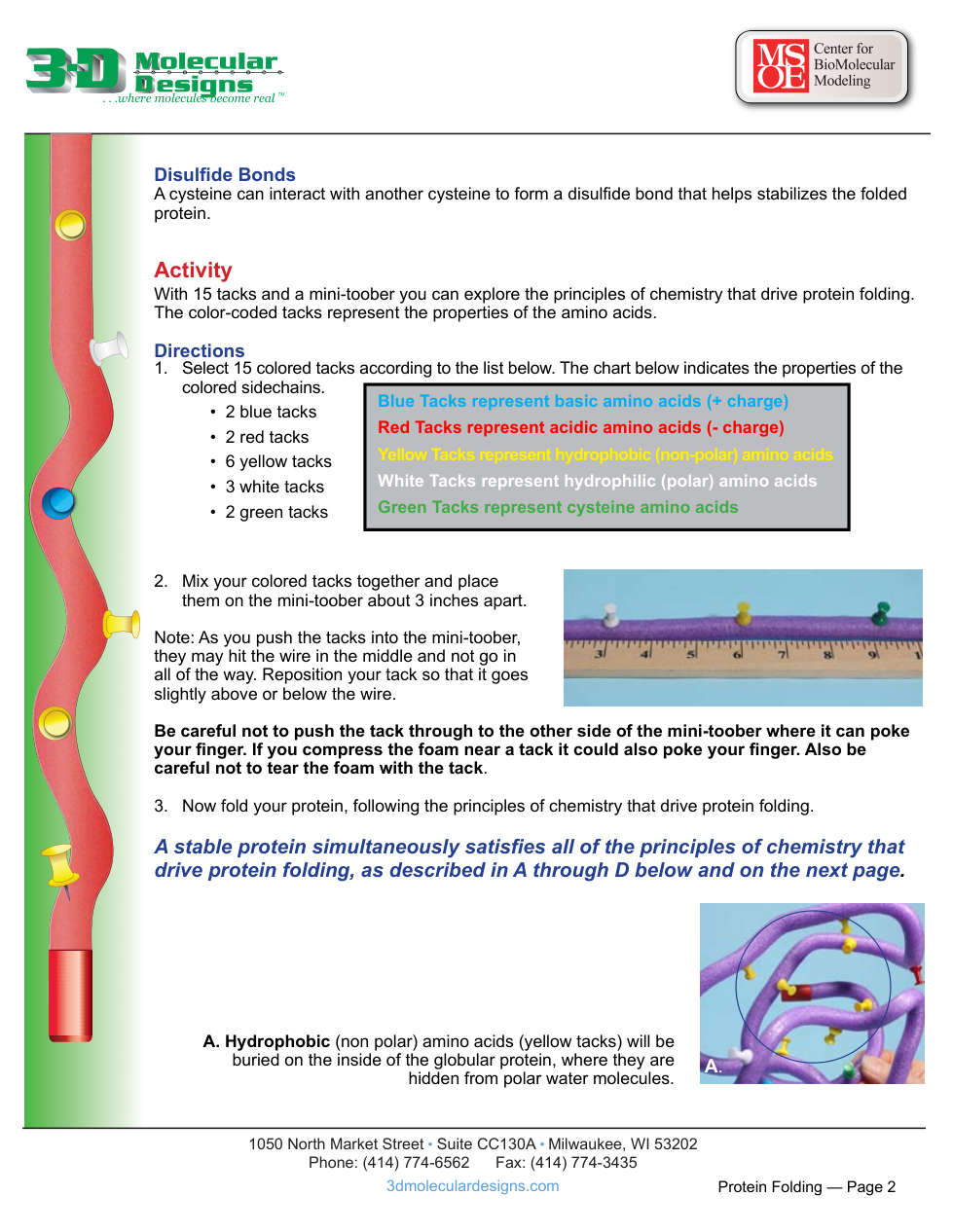
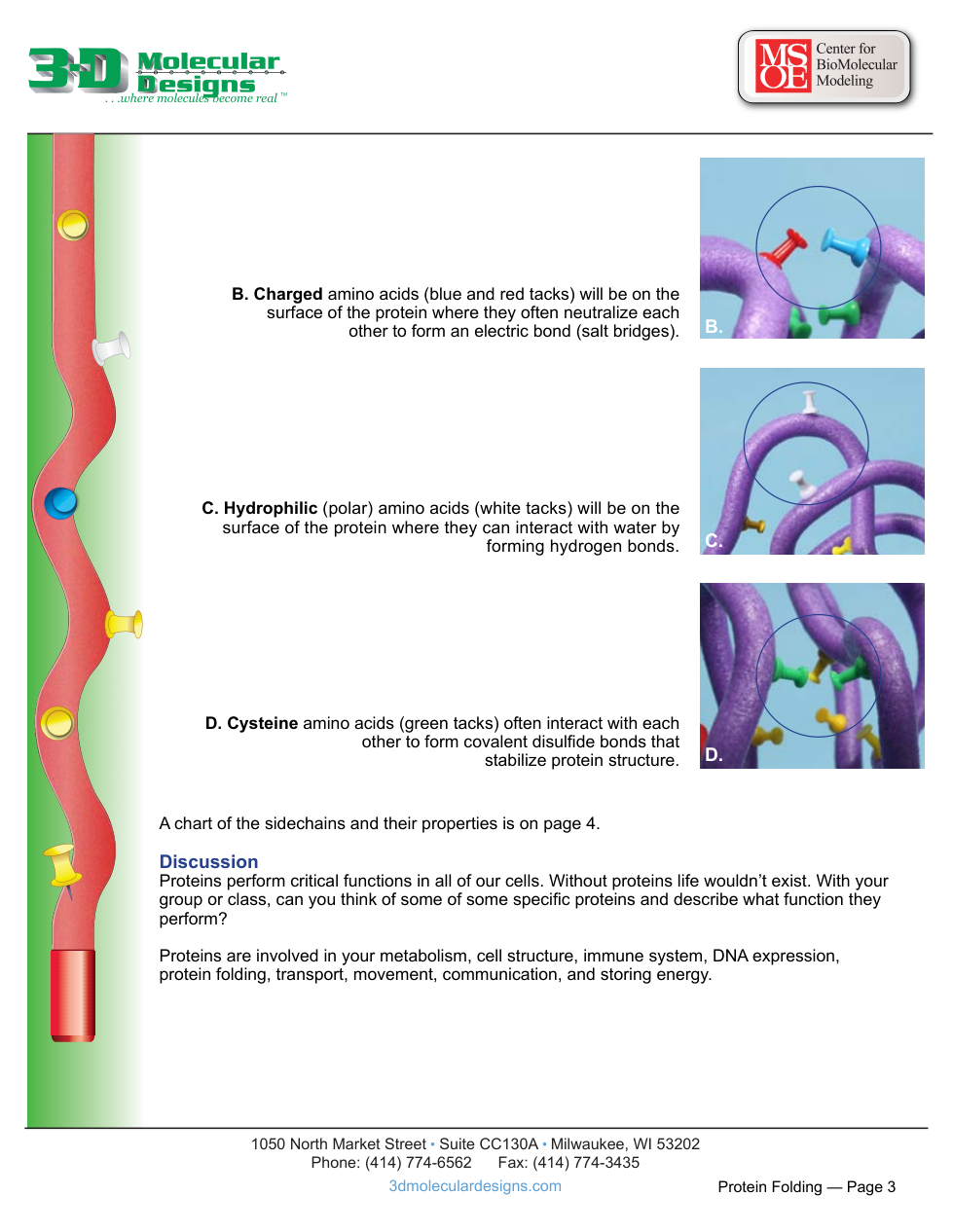
Which two properties are correctly matched to the tack colors used in the activity? (Choose two.)
Hydrophilic (polar) amino acids tend to be found on the surface of a folded protein where they can interact with water.
Match the amino acid property to where it is usually found in a folded globular protein.
| Draggable item | arrow_right_alt | Corresponding Item |
|---|---|---|
Cysteine | arrow_right_alt | Often buried inside, away from water |
Hydrophilic (polar) | arrow_right_alt | Often on the surface, forming salt bridges |
Charged (acidic or basic) | arrow_right_alt | Can form covalent disulfide bonds that stabilize structure |
Hydrophobic (non-polar) | arrow_right_alt | Located on the surface and forms hydrogen bonds with water |
While folding, you notice a blue tack and a red tack end up near each other on the protein surface. What interaction are they most likely forming?
If two green tacks (cysteines) line up close together, what bond might form to stabilize the fold?
Which interaction helps stabilize a folded protein structure?
What happens when a protein denatures?
Why do certain amino acids attract or repel each other?
What determines a protein's function in the cell?
You folded your mini-toober protein and the hydrophobic yellow tacks are exposed to the outside. Which actions could make the structure more stable? (Choose two.)
In one paragraph, explain how the sequence of amino-acid properties (as modeled by the tacks) leads to a protein’s folded shape and how that shape relates to the protein’s function.
Give one real-world example of a protein function mentioned in the reading and explain a few details of how it works.
Submit an IMAGE file of your folded protein.