Preskoči na glavni sadržaj
Prijava
Sign up for FREE
arrow_back
Biblioteka

DE_LE_Unit5_Benchmark_Master

star
star
star
star
star
Posljednje ažuriranje 7 months ago
6
1
HS-LS1-2
2
HS-LS3-2
1
HS-LS1-3
1
HS-LS1-6
1
HS-LS1-7
Pitanje 1
1.

Cystic Fibrosis

Cystic fibrosis is a serious disease that affects around 1 in 2,500 live births in Caucasian populations. It can affect many organs, including the lungs, pancreas, liver, kidneys, and intestine. The disease causes a buildup of thick mucus in these organs that can clog them, preventing them from functioning properly. One of the most serious effects of this disease is the mucus in the lungs, which prevents breathing and traps bacteria.

Cystic fibrosis is caused by mutations in the gene for the Cystic Fibrosis Transmembrane Conductance Regulator (CFTR). This protein is responsible for secreting fluids across cell membranes. When the CFTR protein does not function properly, the mucus will become much thicker, leading to symptoms of cystic fibrosis, such as respiratory infections in the lungs.

The disease is usually inherited in an autosomal recessive manner. Many patients develop symptoms starting when they are children.

Mutations in the CFTR gene can cause a disease that affects the entire organism. Arrange these levels of biological organization in order of increasing complexity to explain how a mutation in a molecule can result in dysfunction of the entire organism.

  1. cells

  2. molecules

  3. organs

  4. tissues

  5. organisms

Pitanje 2
2.

Although most cases of cystic fibrosis are inherited in an autosomal recessive manner, it is possible that cystic fibrosis can arise spontaneously in some patients. Determine whether each of the scenarios below is most consistent with inherited or spontaneous CFTR mutations.

  • Errors in CFTR were introduced in replication

  • Both parents carry the same mutation

  • Not every cell of the patient has the mutation

  • Cousins also have the same CFTR mutation

  • One parent has two normal copies of CFTR

  • Inherited mutation

  • Spontaneous mutation

Pitanje 3
3.

As its name suggests, CFTR is a protein found in cell membranes that is responsible for regulating electrical currents through the membrane. It does this by moving negatively charged ions across the cell membrane. As these ions travel across the membrane, water is also secreted from the cytoplasm inside the cell into the extracellular side outside the cell. This activity can be regulated by several different signals, including post-translational modifications, interactions between molecules, and changes in cell volume.

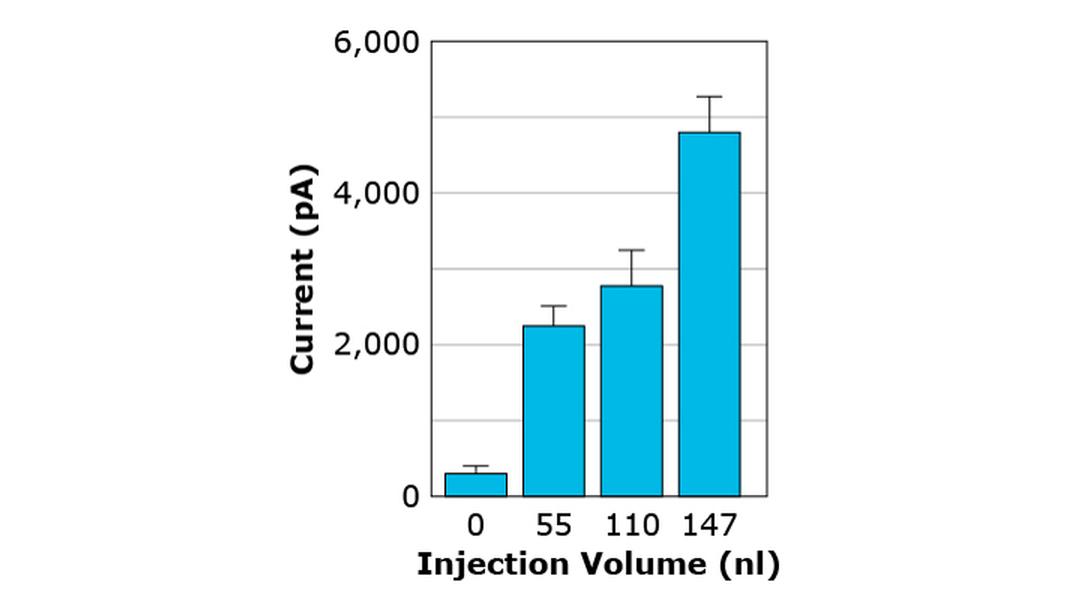
Some scientists hypothesized that CFTR is involved in negative feedback mechanisms to regulate cell volume. To study the role of cell volume in regulating CFTR, the scientists injected small volumes of buffer into a cell expressing normal CFTR. They then measured the amount of current conducted by the CFTR channels in these cells. The data they collected is shown below. Cell Volume
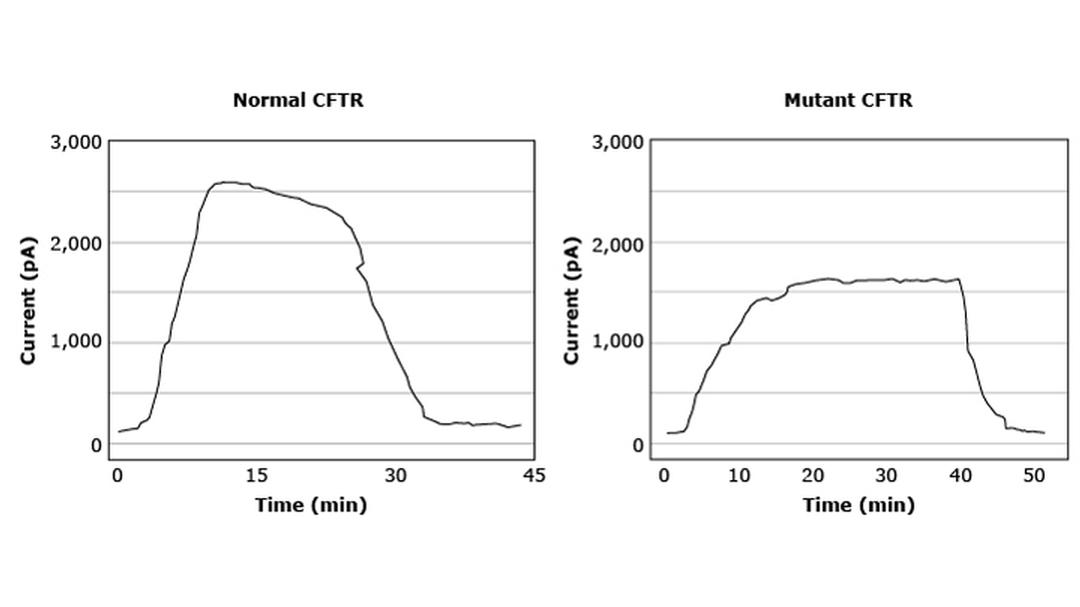
Mutant CFTR channels do not function as well as normal CFTR channels. This means less water is moved to the extracellular side. As a result, mucus in cystic fibrosis patients is less watery than normal.

Based on the data collected by the scientists, what would you expect to observe in cells of cystic fibrosis patients expressing mutated CFTR when buffer is injected into them?
Pitanje 4
4.
Pitanje 5
5.

CFTR belongs to a large family of proteins called the ATP-binding cassette transporters. These proteins bind to ATP and use the energy found in ATP to move ions across the membrane. Based on this observation, a scientist proposes that mutations in energy metabolism can cause similar currents as those caused by mutant CFTR proteins. Match each step of energy metabolism with an explanation that explains how it can affect CFTR function.

Stavka koja se može prevućiarrow_right_altOdgovarajuća stavka

If pyruvate is not oxidized, fewer electrons are available to pump protons in the mitochondria

arrow_right_alt

Glucose transport

If sugar does not enter the cell efficiently, less ATP is produced by the cell.

arrow_right_alt

Glycolysis

If ATP synthase does not function properly, fewer molecules of ADP would be phosphorylated

arrow_right_alt

Citric acid cycle

If glucose is not broken down efficiently, less pyruvate is available for the citric acid cycle.

arrow_right_alt

Oxidative phosphorylation

Fortunately for cystic fibrosis patients, scientists’ understanding of mutations that cause cystic fibrosis has increased tremendously over the past few decades. This has allowed scientists to develop new drugs that bind to some mutant CFTR channels and correct their function. For patients with the treatable mutations, this means that their lung functions are improved. They can also expect to live longer, healthier lives.

Great hope exists even for patients with mutations that are not yet correctable with these drugs. Because scientists now understand what causes cystic fibrosis, researchers around the world are continuing to work on new drugs. These would be efficacious for all cystic fibrosis patients. They are using new technologies, such as gene editing and RNAi to solve a great medical challenge.

6
Pitanje 6
6.

Suppose a company develops a new drug that can treat some cystic fibrosis patients who currently have no treatment options. What factors should the company consider when determining the price of the drug? Present two considerations that the company should analyze when developing the price. Explain why each of these considerations is important.

HS-ETS1-3