Preskoči na glavni sadržaj
Prijava
Sign up for FREE
arrow_back
Biblioteka

LE_Unit3_Benchmark_Master

star
star
star
star
star
Posljednje ažuriranje 7 months ago
6
2
HS-LS4-1
1
HS-LS4-2
6
Pitanje 6
6.

HS-LS4-3

The history of life is complex and fascinating, and it is strictly connected with the history of Earth. Scientists have been able to develop reliable theories and build intriguing diagrams to explain the evolution of living things, from the simplest primordial organisms to complex animals like ourselves. To develop their theories and explanations, experts have to investigate widely and analyze different kinds of evidence. One great contribution to the knowledge of the species and the planet has come from an unexpected source: the fossils of curious organisms such as forams (plural for foraminifera).

The majority of people probably do not know about these tiny protists, but they are one of the stars among stratigraphers and other scientists thanks to their abundance in the fossil record for the last 540 million years. Fossils of ForaminiferaFossils of Foraminifera
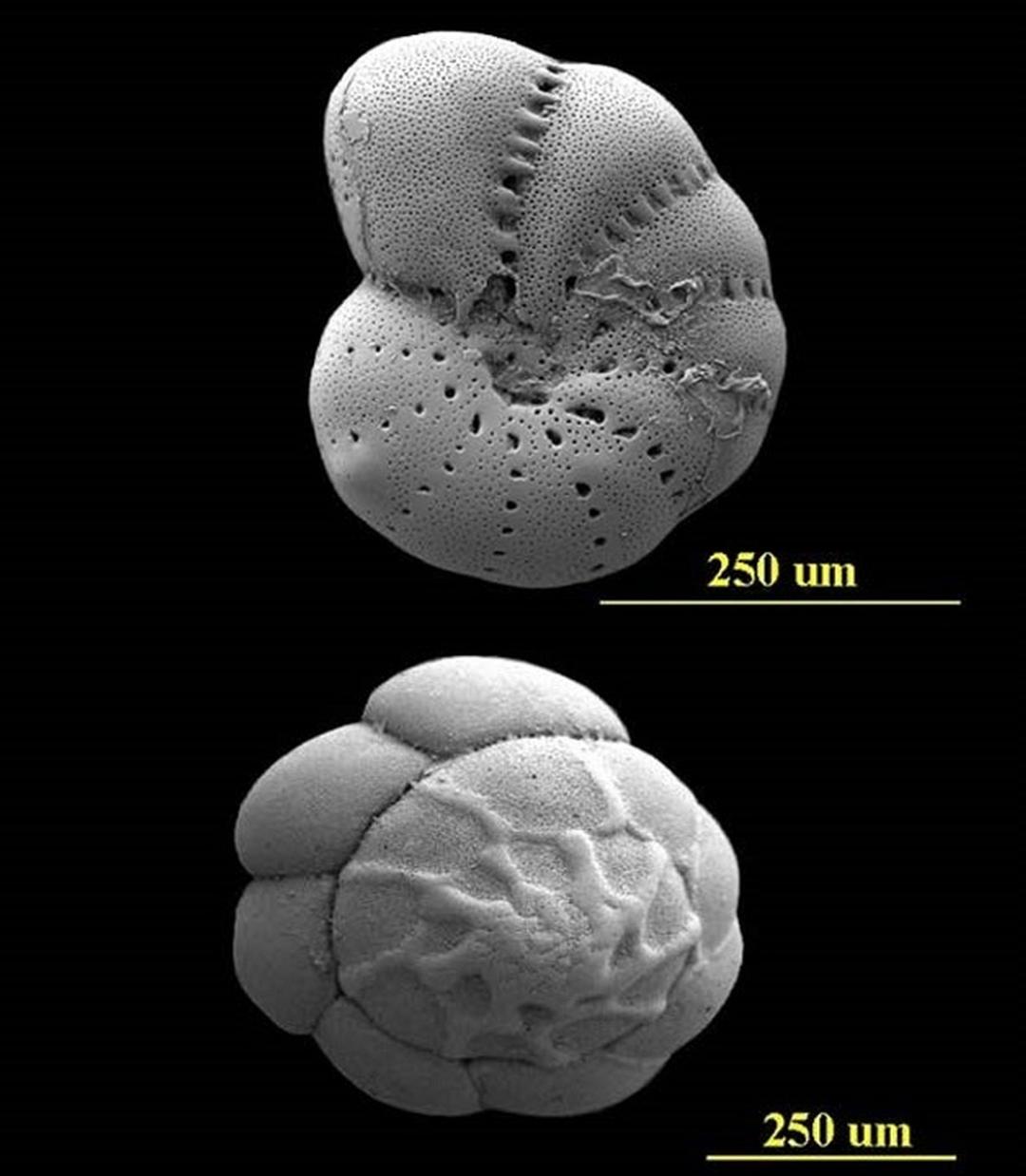
These are images of two different kinds of foraminifera, taken with an electron microscope.

Evolution and Fossils

A large amount of the evidence for evolution comes from fossils.

Don’t be misled by the huge number of fossils of foraminifera in rocks and sediments. They are not extinct like the dinosaurs. There are species of foraminifera living today. In fact, about 4,000 species are estimated to populate the ocean. They are one of the most abundant shelled organisms in marine environments.

Although they exist today, both their morphology and genetics have greatly changed from the Cambrian Period. According to their different adaptations, they have a wide variety of diets, behaviors, and habitats.
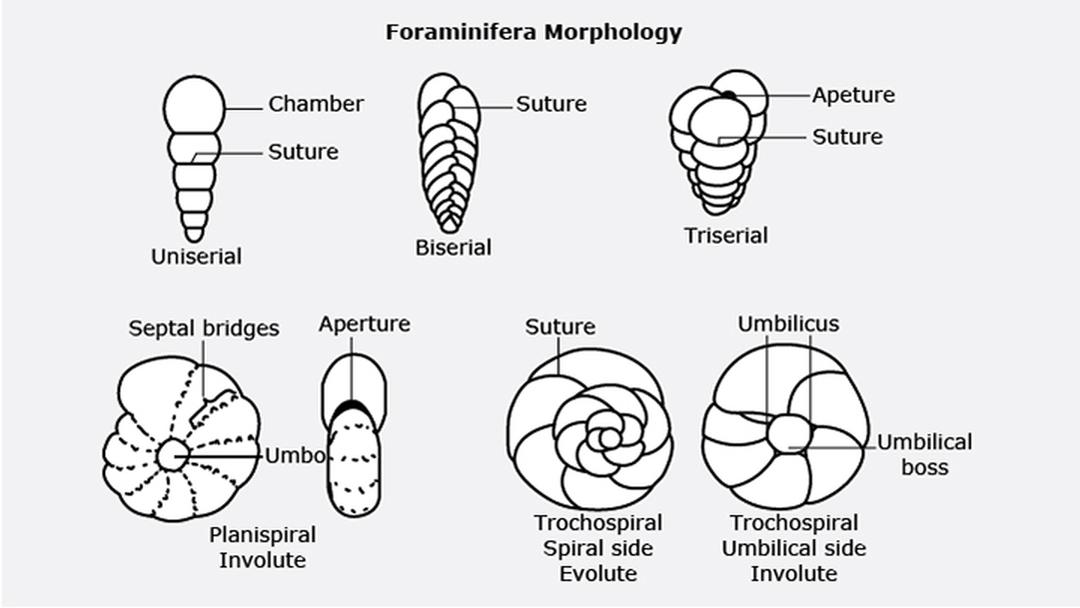
Foraminifera MorphologyForaminifera Morphology

The shells of forams are usually divided into chambers, which form during their growth, but those of simpler species are just open tubes or hollow spheres.
Pitanje 1
1.

Despite the variety among the current species of foraminifera, they all descend from a common ancestor.

Classify their anatomical structures as evidence of this common ancestry or the uniqueness of a single species as an evolutionary result.

  • a unique open tube

  • shell

  • shell's chambers

  • spiral chambers' rows

  • two chambers' rows

  • Evidence of a Common ancestor

  • Feature of a Single Species

Fossils of foraminifera are widely used in biostratigraphy. Biostratigraphy is the study of sedimentary rock formations by establishing their ages based on the fossils they contain. Its goal is to provide correlations between rock formations that are separated in space but formed at the same time.

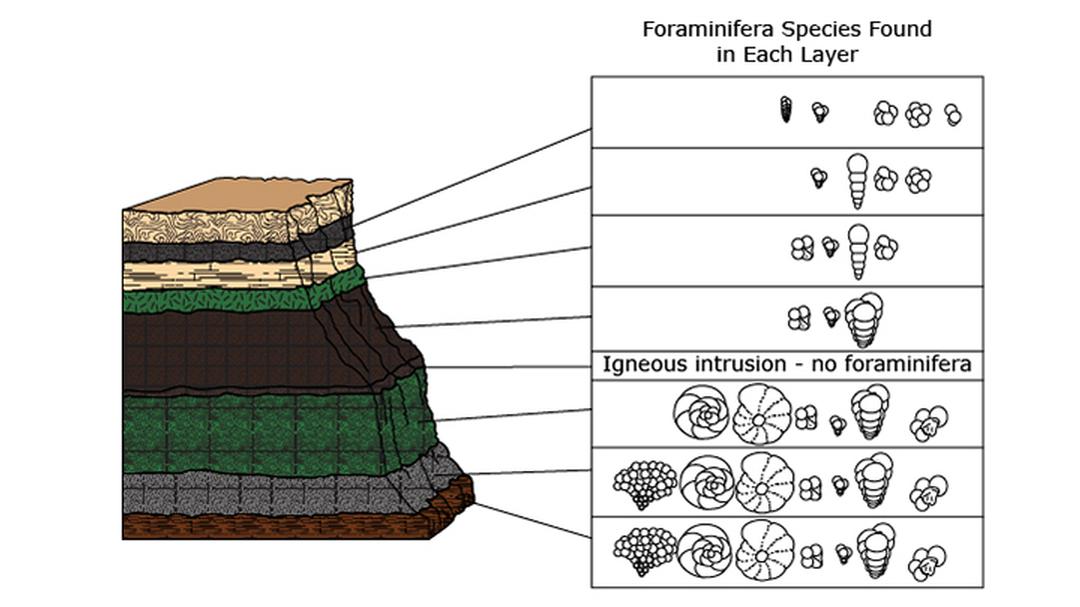
Rock layers are formed by sedimentary rock accumulating over time. Each stratum can be identified by characteristics that make it distinct from other strata. Fossils from the same time period are found in the same layer. Rock StrataRock Strata

Foram fossils are found in the different rock strata (layers). However, stratigraphy is more complicated than it looks. Not all layers are ordered in the Earth’s crust so to reflect their age and that of the surrounding layers. Hence, there are some other techniques that must be combined with stratigraphy to reveal the real sequence of the rocks and the history of the Earth. Foraminifera fossils can help with this, too.

6
Pitanje 2
2.

Write a paragraph answering the following questions about the study of the Earth’s history based on the rock layers.

  1. How can plate tectonics be used to explain the difference in ages among layers at a similar level but located in different parts of the ocean floor?

  2. Why can the igneous intrusion not be dated by comparing it with the other layers, even though absolute age can be determined?

  3. Because these geological processes have altered most of the early rock record of the Earth, which other evidences and analysis could be used to understand the Earth’s formation?

HS-ESS1-6
Pitanje 3
3.

Based on the stratigraphic sequence of forams’ fossils in the rock layers, select the description that correctly explains how the morphology of forams changed over time as a result of their evolution and adaptation.

Fossils clearly provide important evidence of evolutionary history. However, other forms of data, such as genetic data, can provide additional information and even novel insight into the evolutionary history of organisms.

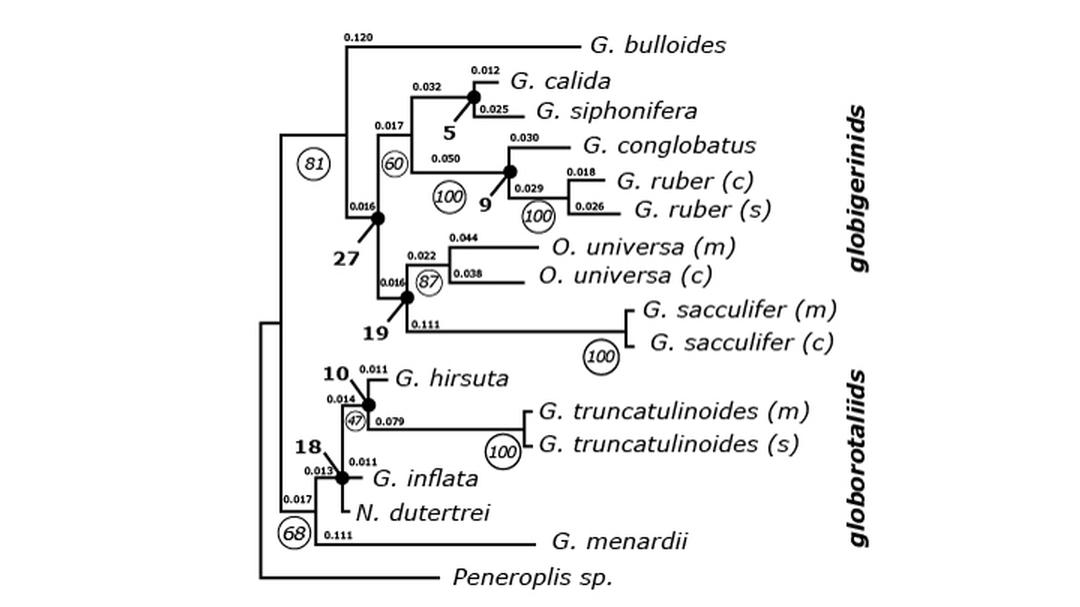
For example, using genetic evidence, two researchers, de Vargas and Pawlowski, analyzed the two major groups of forams: globorotaliids and globigerinids. The researchers first identified the number of nucleotide substitutions per site, which can be used to represent mutation rate. Then, they inferred the amount of time since organisms started diverging. Their analyses showed that the rate of evolution (based on mutation rate and divergence times) was much slower in globorotaliids compared with globigerinids, which contradicts the available fossil data for forams. Foram PhylogenyForam Phylogeny

This foram phylogeny depicts relationships between globorotaliids and globigerinids. Divergence times between lineages are given at the nodes of the tree in millions of years. The numbers on the branches show the number of DNA substitutions per site, which represents the DNA mutation rate.

1
Pitanje 4
4.
HS-LS3-3

The morphology of fossils data is useful not only for reconstructing the evolutionary patterns of species, but also for identifying relationships among genera and families. This is valid both for the simple, single-celled forams and for much more complex organisms like humans!

There are certainly obvious differences between forams and humans. However, our evolutionary histories and the resulting morphological adaptations have been driven by very similar factors. These factors include competition, natural selection, diet, availability of resources, and environmental changes.

The several species of contemporary forams descend all from a common ancestor. It probably was an organism with a much simpler shell that successively evolved in elaborated shapes. Similarly, humans and other hominids evolved from a common ancestor. One feature that makes humans unique is hand structure. To understand how traits of modern humans and their ancestors differ, watch this video.

In addition to the differences between the hands of humans and Australopithecines such as the fossil Lucy, there are also many differences among hominid skulls. Discovery of intermediate forms of skulls can help clarify the evolutionary patterns among genera and species.

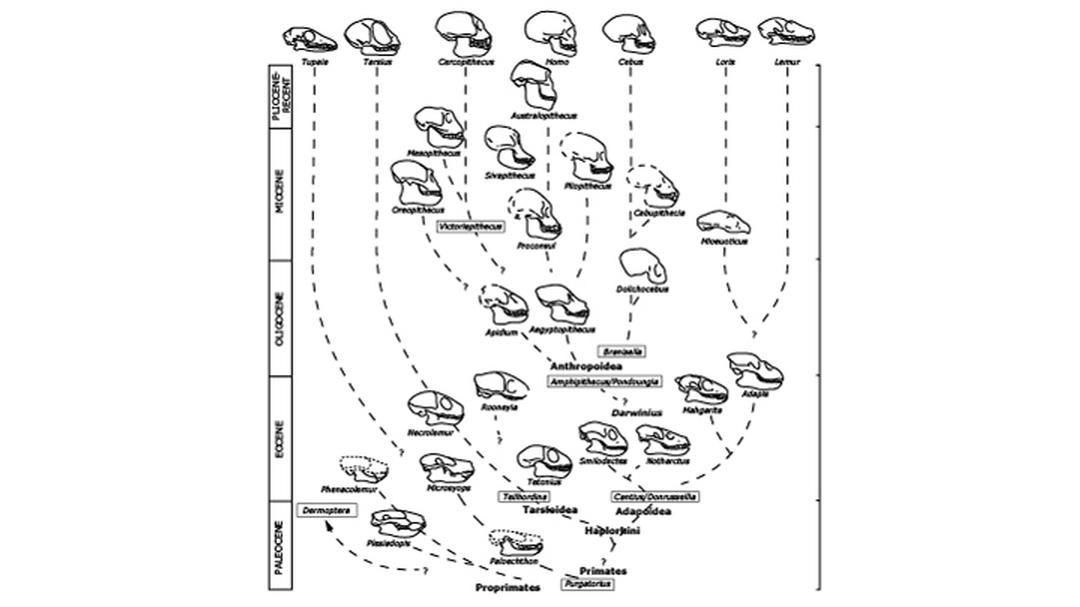
Skull morphology is closely associated with function. Several factors can alter skull shapes. For example, different sizes of teeth may reflect changing diet, possibly due to changing environmental conditions. Braincase size may reflect tool-making ability. Head position (forward versus upright) is related to bipedalism, which is another adaptation from forest to savanna life that also facilitated tool-making. Primate TreePrimate Tree

This phylogenetic tree depicts relationships and skull morphology among primates.

1
Pitanje 5
5.

The phylogenies of primates and humans can be used to make inferences about how modern humans evolved from our ancestors. Select the options that could correctly describe this evolution based on the morphological changes.

HS-LS4-5

Based on the skulls in the primate and Homo phylogenies, explain how environmental conditions could have driven changes in skull morphology, such as tooth size, braincase size, and head position. Then, hypothesize why members of the genus Homo may have replaced earlier hominid species based on the skull differences observed in the phylogenies.