Elements that alone are harmless and “stable” can generate dramatic and spectacular effects when reacting together. Let’s take the reaction between magnesium and oxygen as an example. As we all know, oxygen, O2, is the gas our survival depends on.
Presently, it forms about 21 percent of the atmosphere, but this was not always the case. Long ago, during the formation of Earth and evolution of life processes, oxygen levels fluctuated from as high as 35 percent to as low as 15 percent. The oxygen concentration of 21 percent in the present atmosphere is not used by all living things for survival, but also plays an important role in combustion and oxidation reactions.
Magnesium, whose chemical symbol is Mg, is a grayish metal and its alloys are used to make airplanes, rockets, cameras, and horseshoes. It is also an essential nutrient in our diet. However, when magnesium is burnt in the presence of air, and hence oxygen, a dramatic reaction occurs, so spectacular that magnesium is often used in fireworks.
Chemical properties strongly affect the behavior of all elements around us, including the way they react with each other. This is the case for magnesium and oxygen, and the way both elements react with each other.
You can understand more about their interaction based on their periodic properties and the type of reactions occurring between metals and nonmetals. The electron configuration of the elements contributes to determining the type of bond they form and how many atoms will constitute the resulting compound.
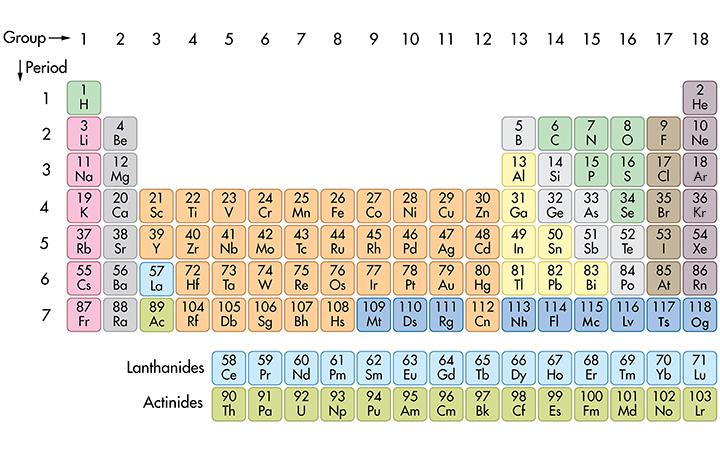
Based on the properties of the elements involved, particularly their valency, select the correct formula for the product of the reaction between oxygen and magnesium.
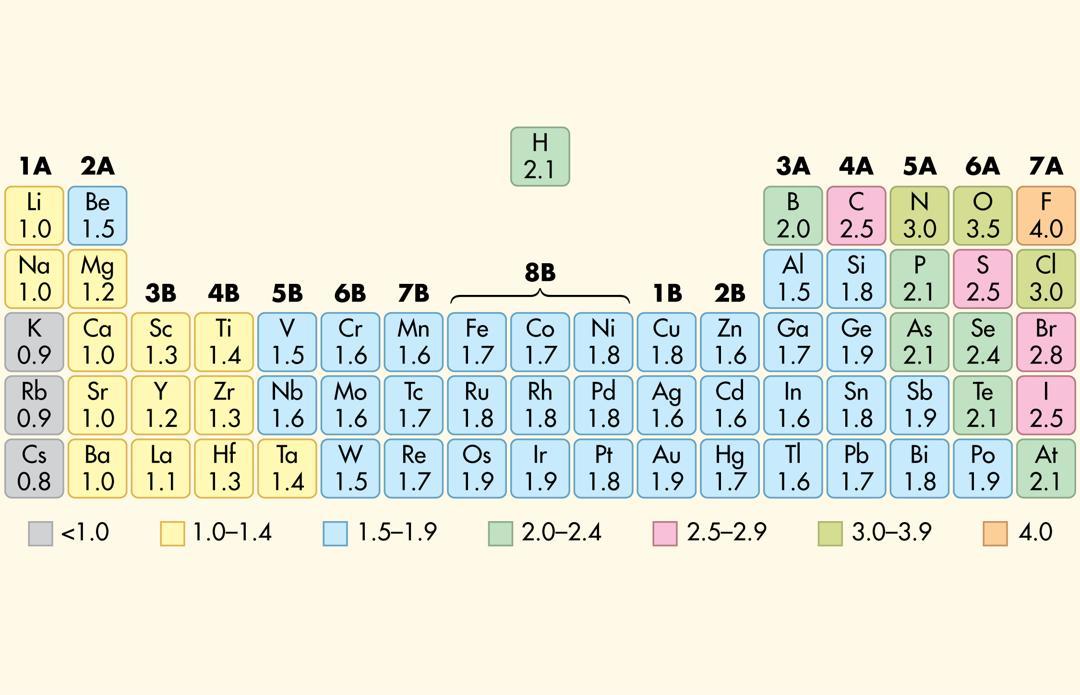
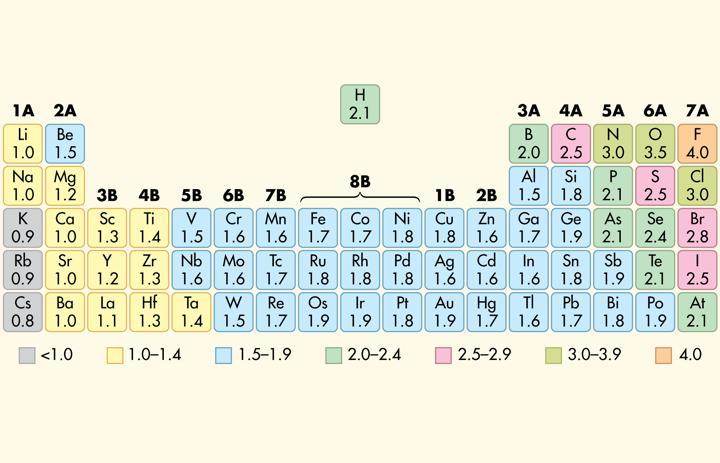
One of the different periodic properties that affects the behavior and interactions of elements is electronegativity. In particular, this property plays an important role in determining the nature of chemical bonds that are formed, such as covalent bonds and ionic bonds.
Look at the table below and calculate the electronegativity difference between magnesium and oxygen. Use this information to determine the type of bond they form and how the electron cloud is distributed in the resulting molecule. Which type of compounds could they form, separately, with the other elements?
The chemical bonding properties play an important role in the formation of MgO. Analyze the data about the electronegativities in each pair of elements below. Classify each pair according to whether its elements would react with each other to form a covalent or ionic bond.
Ba and Be
H and O
Br and Sr
Ca and Cl
F and Na
N and Se
N and H
Mg and O
Covalent
Ionic
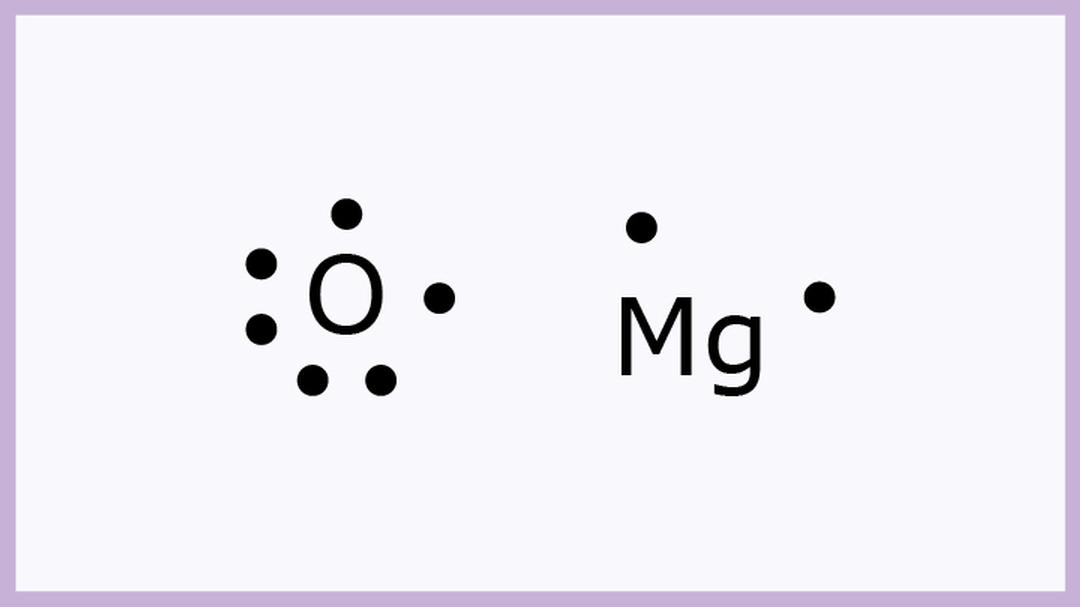
A simple and visual way to better understand the electron configuration and behavior of elements and molecules is to look at their Lewis (electron) dot structures. The Lewis structure of an atom, such as oxygen or magnesium, consists of its atomic symbol surrounded by dots.
The number of dots represents the number of valence electrons or outer shell electrons associated with the atom. By utilizing Lewis structures, we can determine how many electrons are available to form chemical bonds and apply the octet rule.
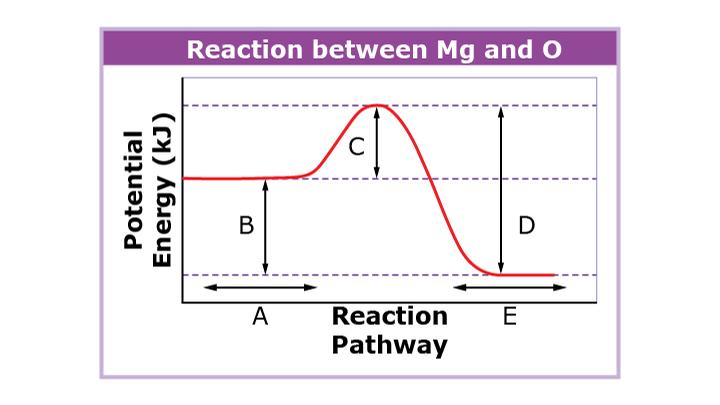
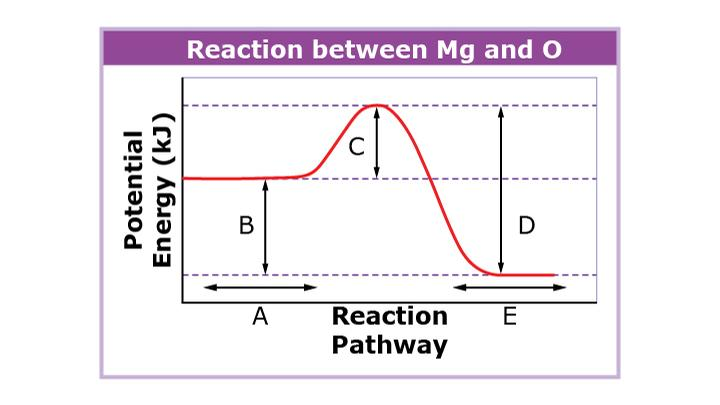
Because the reaction between magnesium and oxygen releases so much energy in the form of light and heat, scientists must use precautions to avoid looking directly at the intense flame generated as this chemical reaction occurs. This spectacular reaction is clear evidence of the energy released in this exothermic reaction. However, despite its nature, why do you think this reaction needs initial ignition to occur?
The graph below depicts the change in potential energy that occurs when magnesium is ignited and burned in oxygen. Connect the labels on the graph to identify the regions of reactants and products, the activation energy provided by the propane flame, and the energy released by this reaction.
Not all labels on the graph will be used.
Magnesium and Oxygen
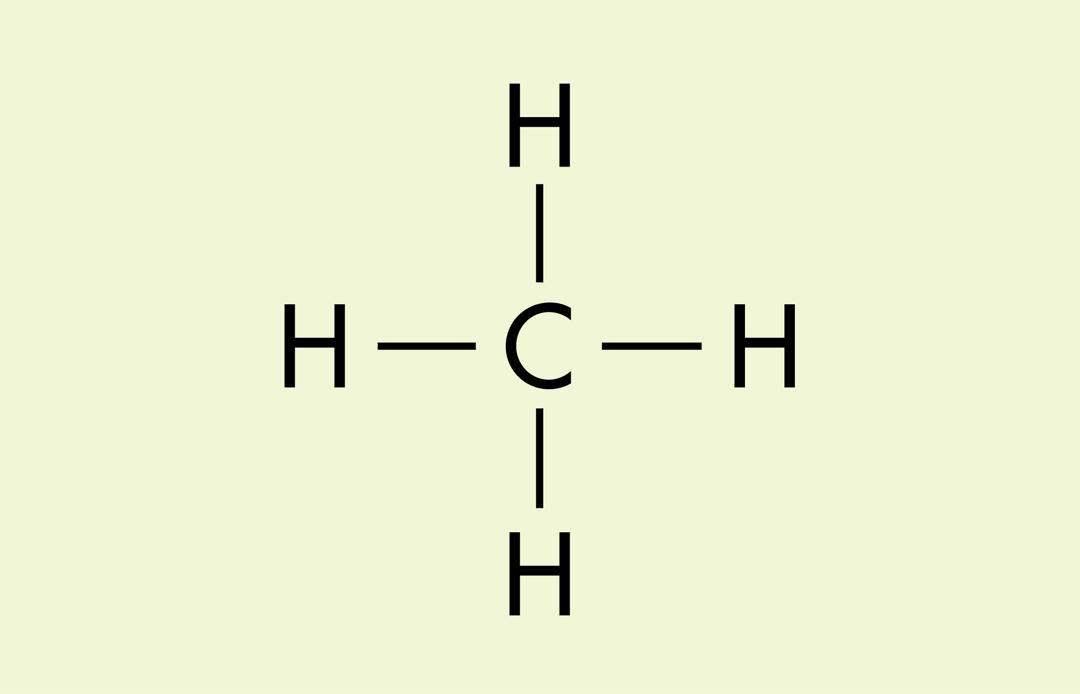
In the reaction between magnesium and oxygen, the hydrocarbon propane (C3H8) was used to provide the activation energy by ignition. Methane has similar chemical properties to propane. It is also used for similar purposes, such as a fuel source to power vehicles.
Methane burns readily in oxygen, producing carbon dioxide and water. Consider the table shown earlier about the electronegativity of all elements, and use this information to imagine how the electronegative difference among carbon and hydrogen affects the chemical and bulk properties of methane.
Methane is quite a simple molecule. However, thousands of more complex molecules are also found in nature. Some of them are known as polymers. These relatively huge and long molecules originate from simpler ones through polymerization reactions in which the simpler units join together to make long chains.
For example, starch is a polymer made by joining simple sugars together to form one giant molecule. In past centuries, humans have learned how to produce numerous types of artificial polymers for a variety of different uses. Many of these polymers make materials we call plastics. A famous example is represented by nylon.
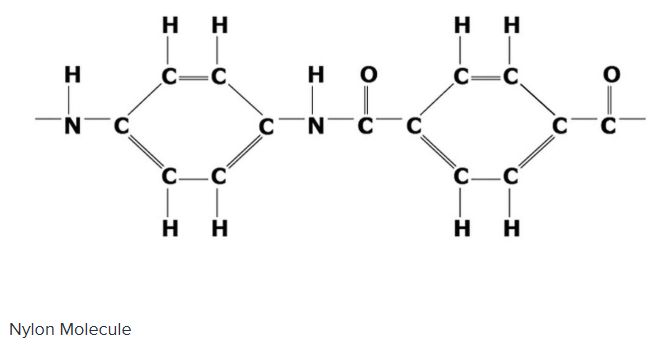
Nylon is a plastic fiber invented in 1935 as the first successful synthetic fabric. Its versatility in use is mainly due to its molecular structure and chemical properties. Since the beginning, nylon has been used for a wide range of applications, including parachutes and monofilament fishing line. Nylon also paved the road for the use of other synthetic fabrics such as polyester, which is commonly found in clothing.


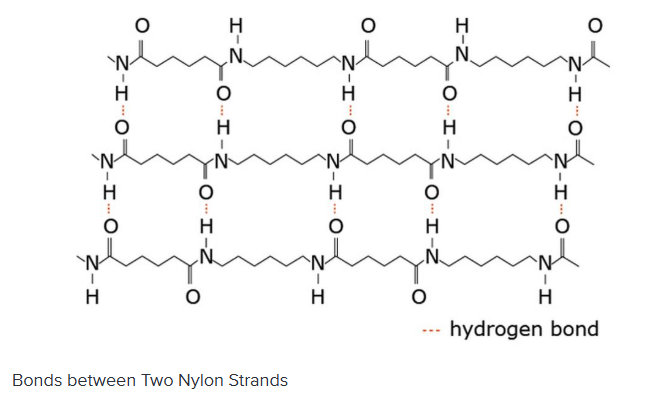
Explain why the molecular structure of nylon can fit the functioning design requirements of clothes and safety ropes. In particular, highlight the bulk properties, resulting from its molecular structure, that make nylon a good candidate for these applications.