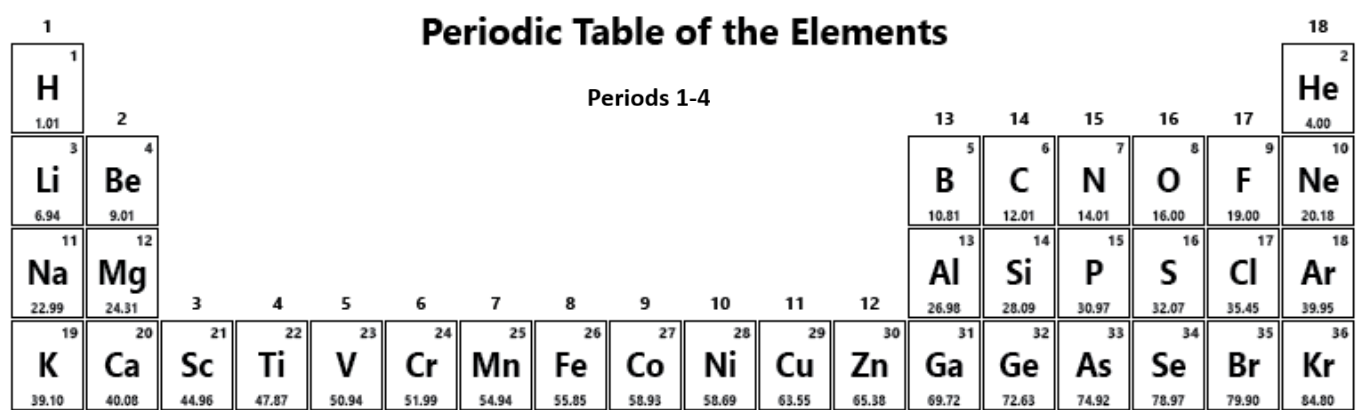
 Match the Following
Match the Following
Potassium
Flourine
Neon
Nickel
Magnesium
Oxygen
Lithium
Beryllium
Nitrogen
Helium
Alkali Metal
Alkali Earth Metal
Transition Metal
Halogen
Noble Gas
Other Nonmetal
Match the Following
Potassium
Flourine
Neon
Nickel
Magnesium
Oxygen
Lithium
Beryllium
Nitrogen
Helium
Alkali Metal
Alkali Earth Metal
Transition Metal
Halogen
Noble Gas
Other Nonmetal
Match the following from the Spectroscopy and Flame labs
| Draggable item | arrow_right_alt | Corresponding Item |
|---|---|---|
Absorbed most blue and purple light and reflected or transmitted red and green light | arrow_right_alt | Copper cations |
Emitted brilliant blue-green color in flame test | arrow_right_alt | Neon gas |
Poisonous gas that emitted purple color in gas-discharge lamp | arrow_right_alt | Yellow food coloring |
Emitted brilliant orange color in gas-discharge lamp | arrow_right_alt | Mercury gas |
Which of the following statements are true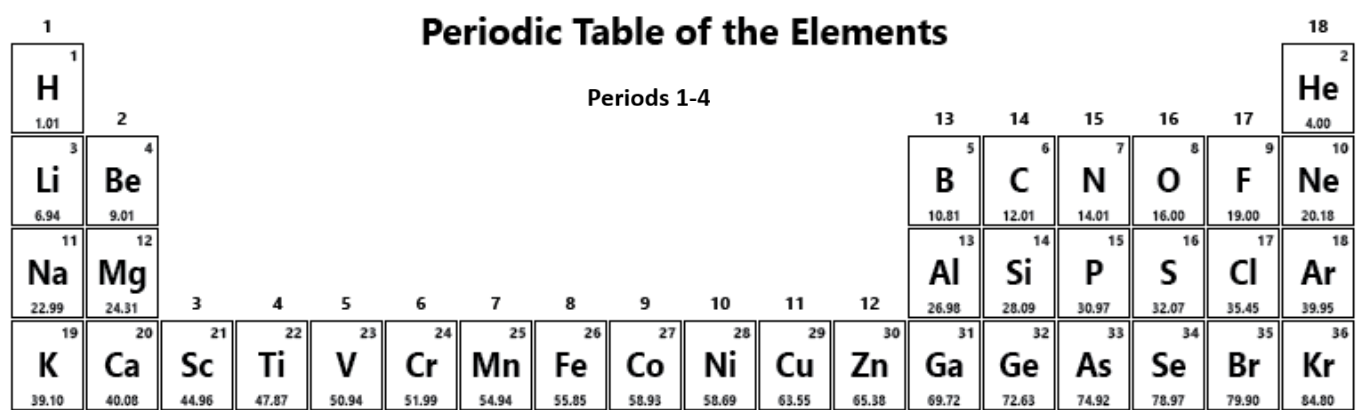
Which of the following statements are true
Order the elements below in order of atomic radius, from smaller to larger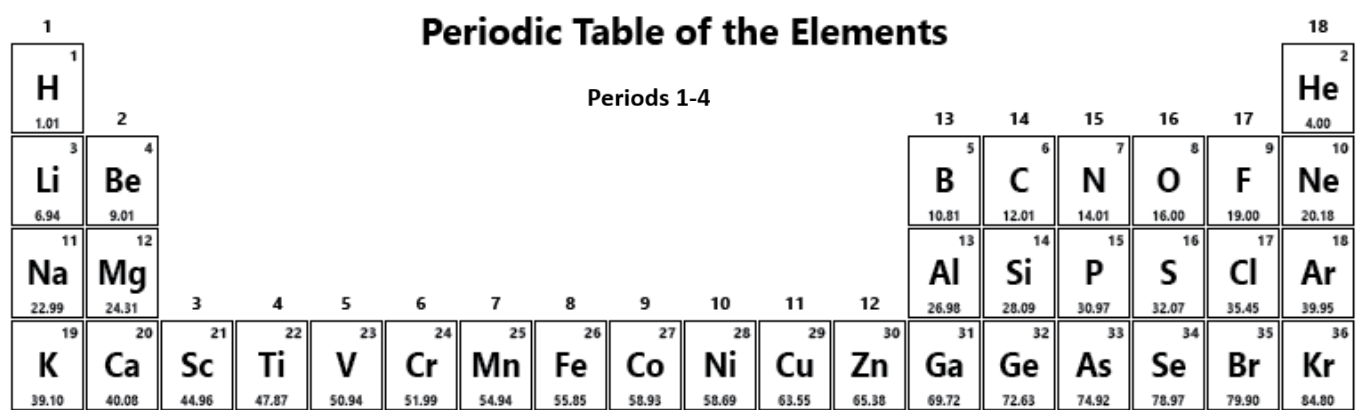
Potassium
Hydrogen
Sodium
Lithium
Order the elements below in order of atomic radius, from smaller to larger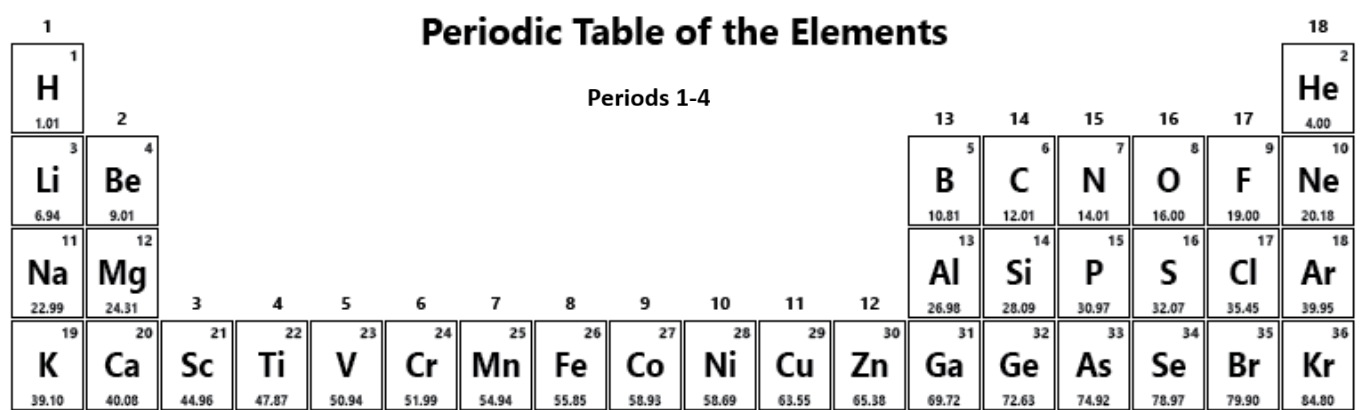
Sulfur
Chlorine
Phosphorus
Aluminum
Sodium
Magnesium
Silicon
Argon
Match the following with the charge of ion they take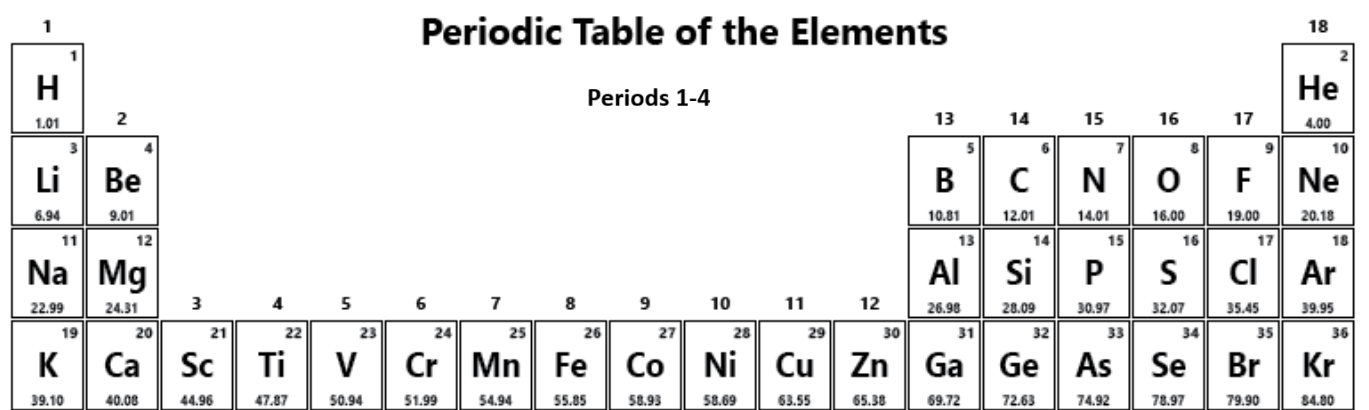
| Draggable item | arrow_right_alt | Corresponding Item |
|---|---|---|
Bromine | arrow_right_alt | +1 |
Neon | arrow_right_alt | +2 |
Oxygen | arrow_right_alt | +3 |
Magnesium | arrow_right_alt | -2 |
Aluminum | arrow_right_alt | -1 |
Lithium | arrow_right_alt | Does not form ions |
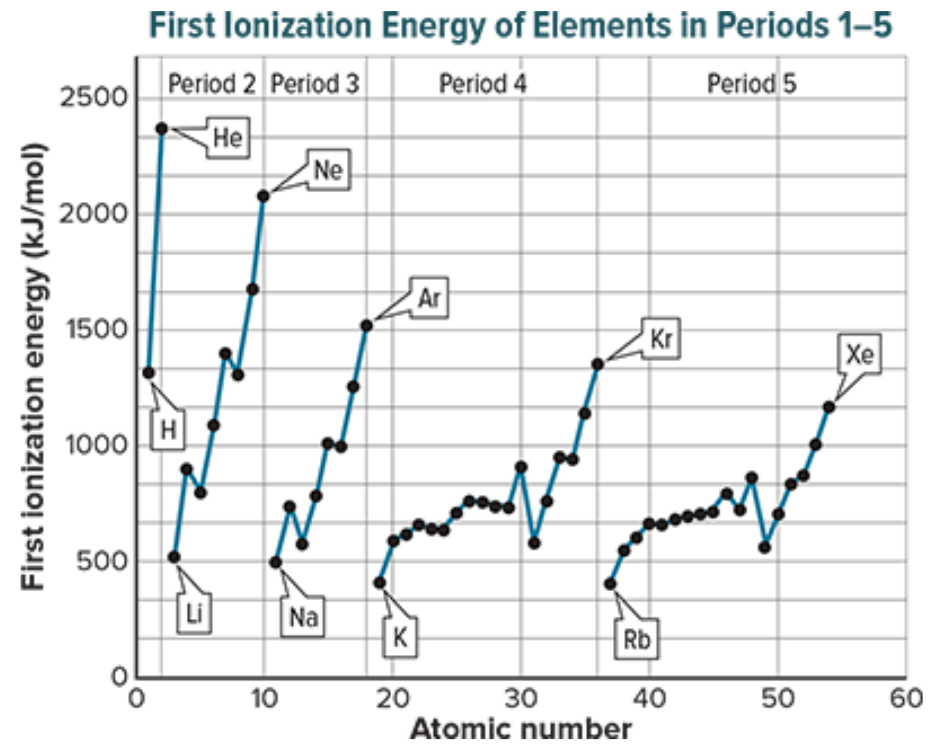
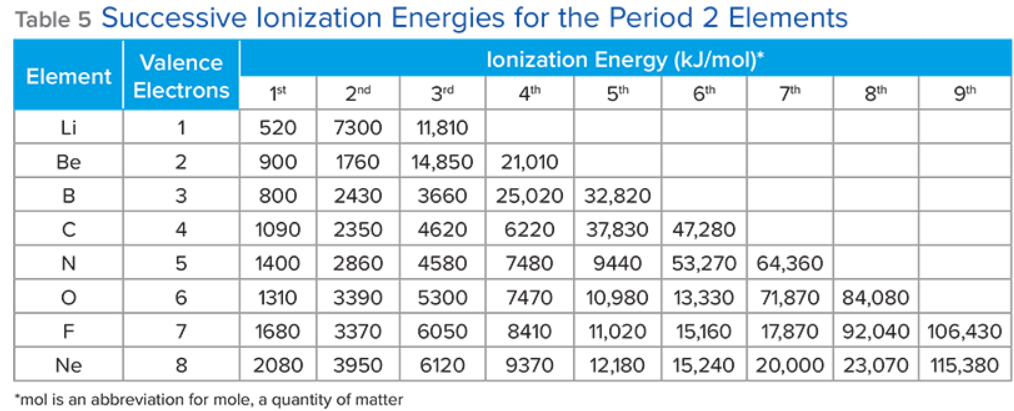
After looking at the chart and table below and remembering what we learned in class, which of the following are true
Using the partial Periodic Table below, match the ions In the Ionic Compounds CuCl, BeO, AlN, (NH4)2Se and Li2CO3 with their description.
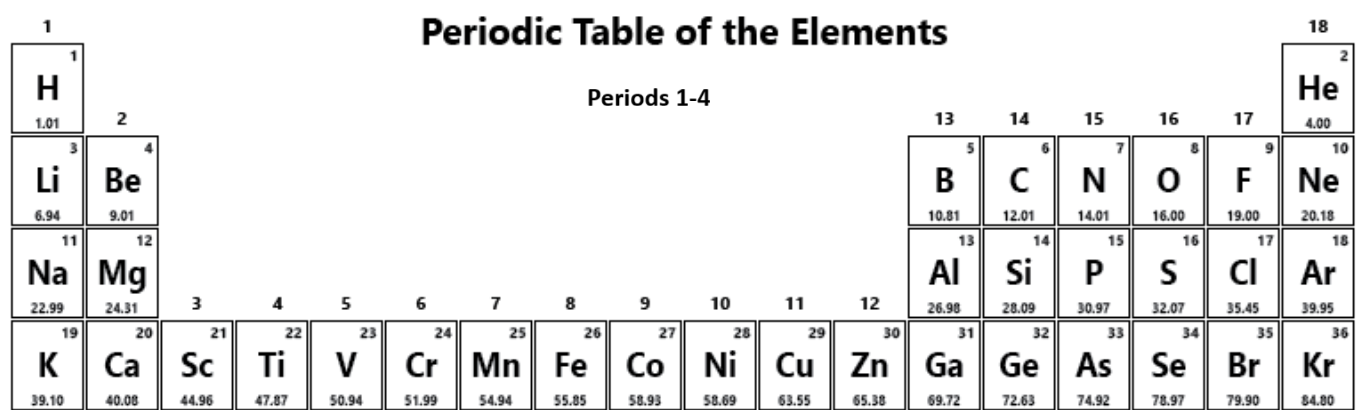
| Draggable item | arrow_right_alt | Corresponding Item |
|---|---|---|
Selenide | arrow_right_alt | a transition metal that in this ionic compound takes a charge of +1 |
Aluminum | arrow_right_alt | a nonmetal that has taken two electrons to fill its 4p orbitals and has taken a charge of -2 |
Ammonium | arrow_right_alt | A group 13 element with three valence electrons, two 3s and one 3p electron, which it gives away to form a charge of +3 |
Nitride | arrow_right_alt | A polyatomic cation which has a charge of +1 |
Oxide | arrow_right_alt | A polyatomic anion which has a charge of -2 |
Beryllium | arrow_right_alt | An Alkali Metal which takes a charge of +1 and is bound to a polyatomic anion |
Copper | arrow_right_alt | A nonmetallic Halogen which has taken one electron to fill its 3p orbitals and has taken a charge of -1 |
Chloride | arrow_right_alt | An Alkali Earth Metal which takes a charge of +2 and is bound to a reactive nonmetal in group 16. |
Lithium | arrow_right_alt | a nonmetal that has taken two electrons to fill its 2p orbitals and has taken a charge of -2, |
Carbonate | arrow_right_alt | a nonmetal that has taken three electrons to fill its 2p orbitals and has taken a charge of -3, which is bound to a group 13 element |
| Draggable item | arrow_right_alt | Corresponding Item |
|---|---|---|
Sterling SIlver | arrow_right_alt | An Interstitial Alloy of Fe and C that makes the Fe harder and less malleable than pure iron |
Brass | arrow_right_alt | A substitutional Alloy of Ag and Cu that is less likely to bend and be scratched than pure silverware |
Cast Iron | arrow_right_alt | An alloy of Cu and Sn whose discovery made it possible to make better tools, weapons, and kitchenware and defeat tribes still in the stone age |
Bronze | arrow_right_alt | An alloy of Cu and Zn whose properties make it ideal for many musical instruments |
Write a five sentence essay on one of the following three topics:
A. How does the Electron Sea model explain the physical properties of metals?
B. Compare and Contrast Ionic bonds with Metallic bonds.
C. Compare and Contrast Metals, Metalloids, and Nonmetals, and give examples of each.