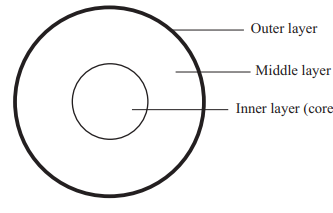
The diagram shows the three main layers of the Earth.
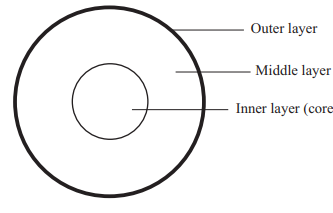
9.1 The middle layer is called the...
The diagram shows the three main layers of the Earth.
9.1 The middle layer is called the...
Who is your teacher?
The diagram shows the three main layers of the Earth.
9.1 The middle layer is called the...
The inner part of the inner layer (core) is...
The mean (average) density of the rocks in the Earth's crust is 2.8 grams per cm³. The overall density of the Earth is 5.5 grams per cm³. This suggests that:
You need to have a sketch of this in your notes.
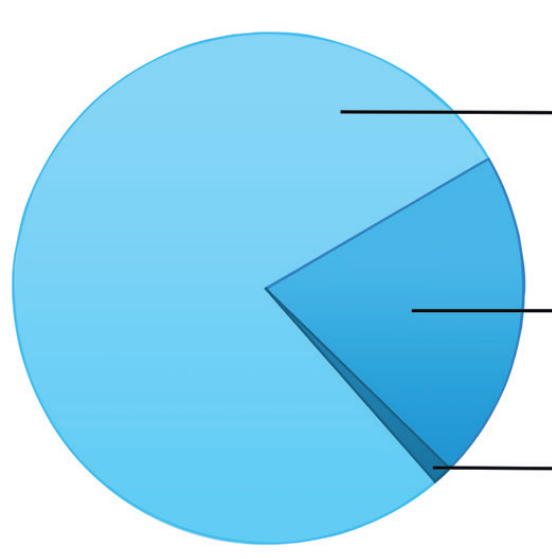
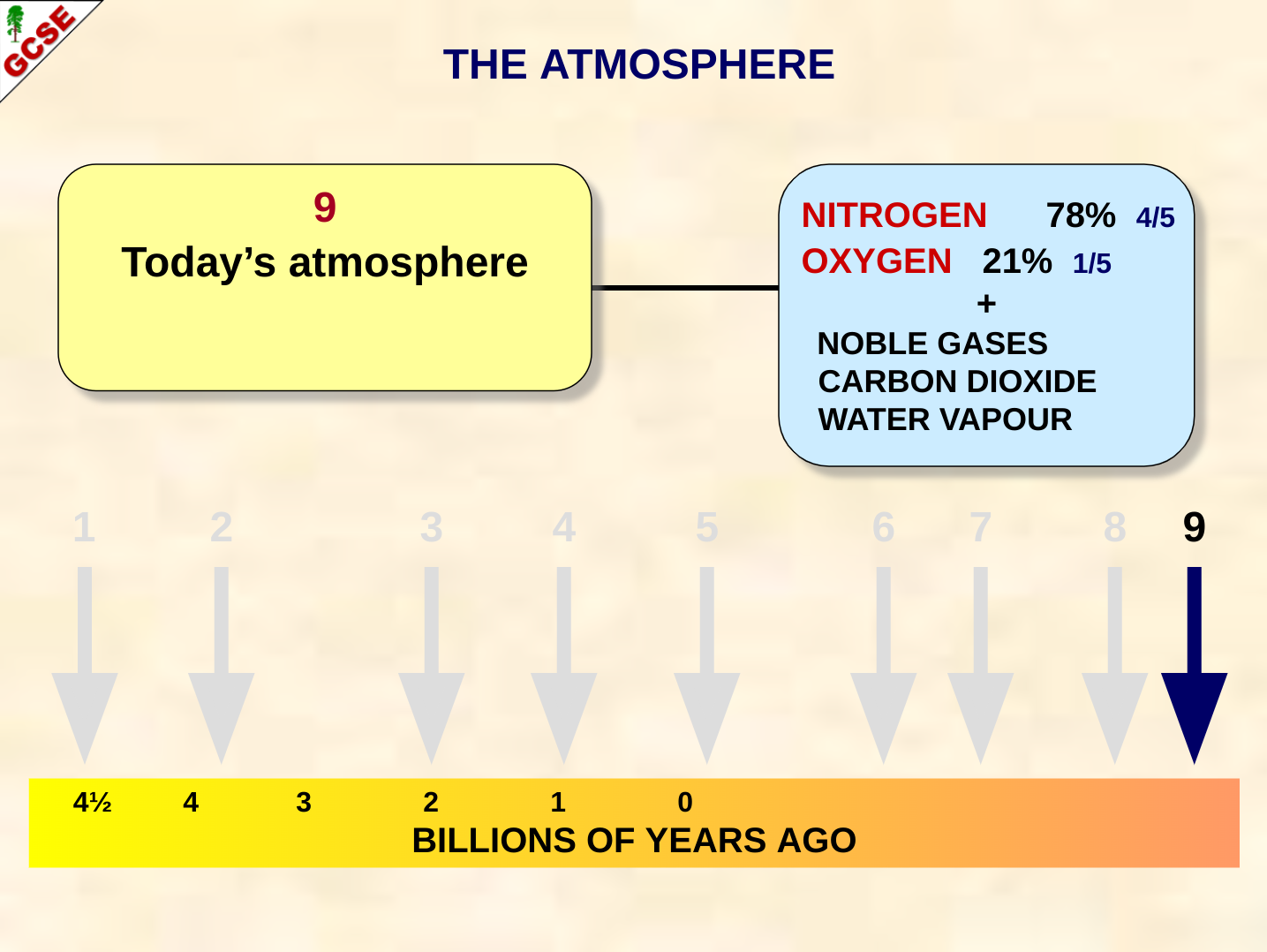
The present-day atmosphere is made up mainly of:
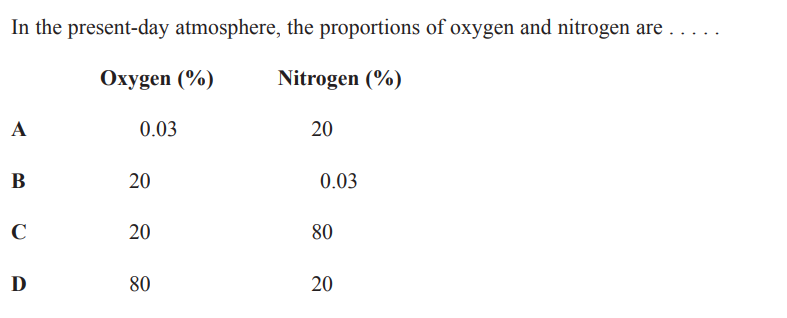
10.4 In the present-day atmosphere, the proportions of oxygen and nitrogen are:
Identify gas Z
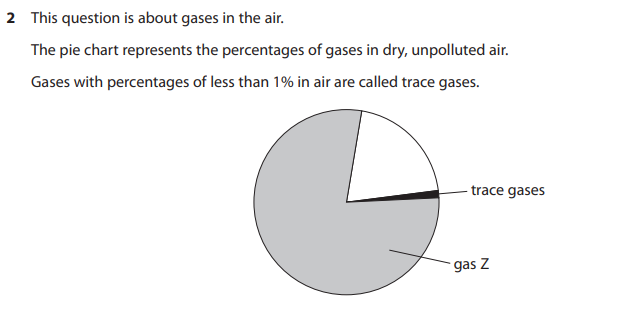
Match the gas to its approximate percentage in Earth's modern atmosphere.
| Draggable item | arrow_right_alt | Corresponding Item |
|---|---|---|
Nitrogen | arrow_right_alt | 21% |
Oxygen | arrow_right_alt | 0.93% |
Carbon dioxide | arrow_right_alt | 78% |
Argon | arrow_right_alt | 0.03 |
Planet
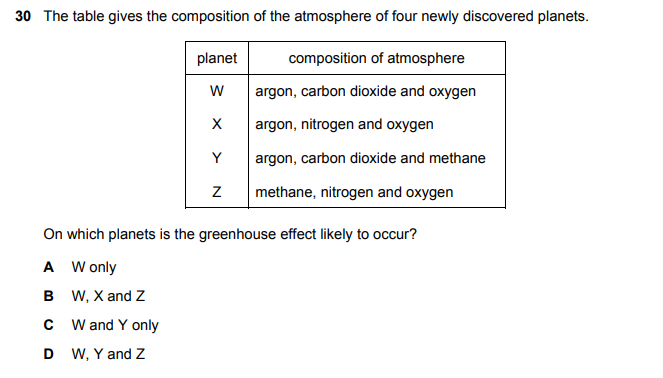
The Earth's early atmosphere was similar to the atmosphere of Venus today. The main gas forming this atmosphere was:
Most of the gas which formed this early atmosphere came from:
The other gases making up this early atmosphere were:
Match the letter to the number
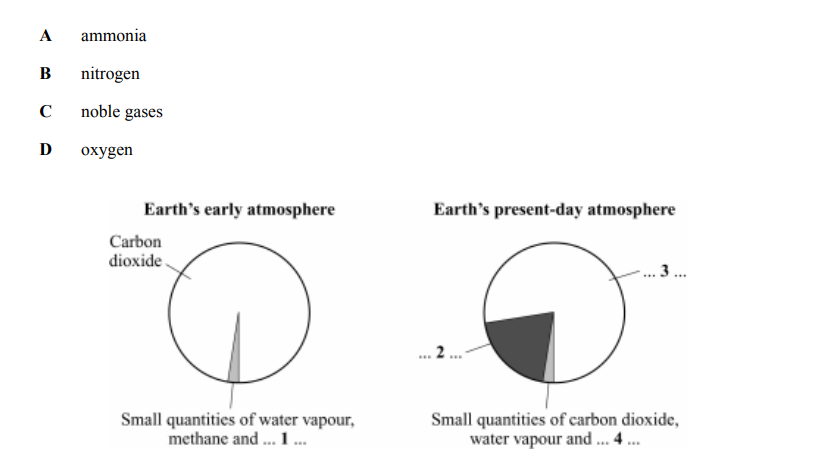
| Draggable item | arrow_right_alt | Corresponding Item |
|---|---|---|
B | arrow_right_alt | 1 |
A | arrow_right_alt | 4 |
D | arrow_right_alt | 3 |
C | arrow_right_alt | 2 |
Which gas makes up 21%
Volcanic activity
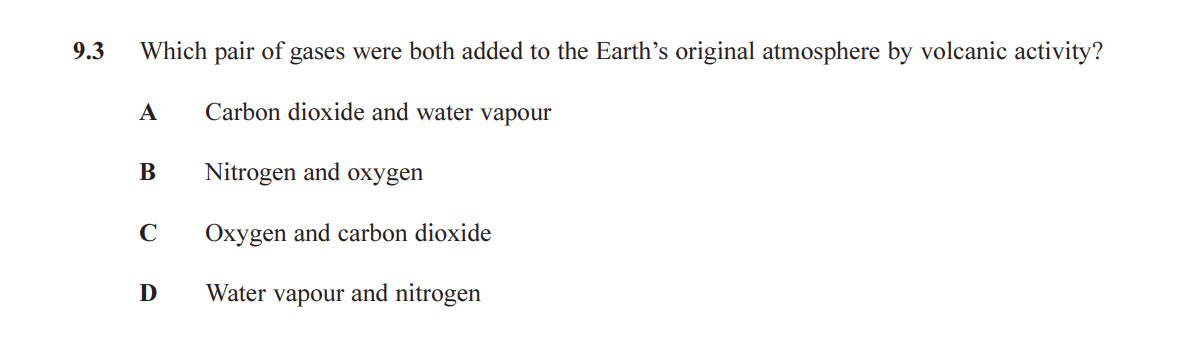
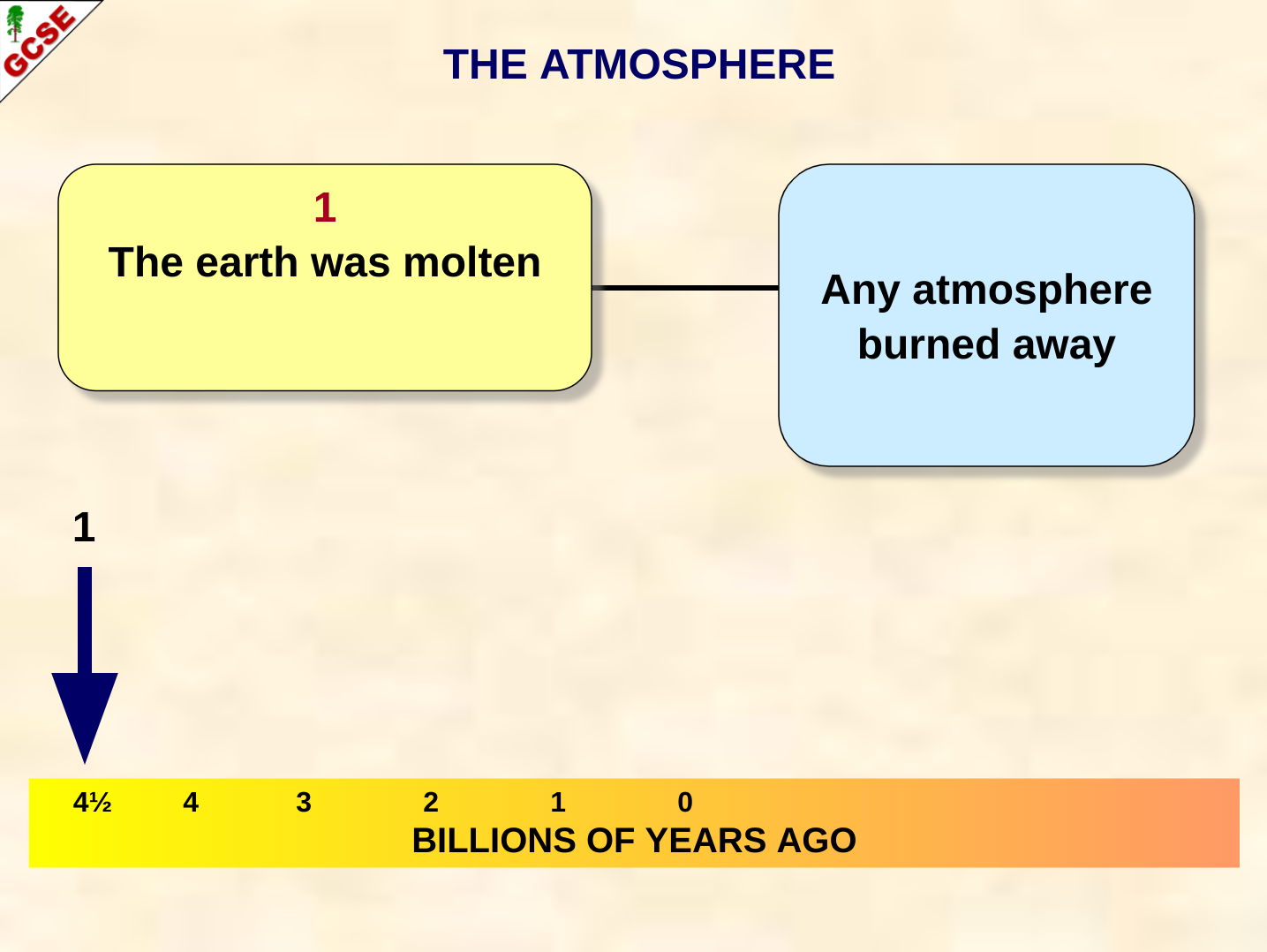
Create a time line for the evolution of the atmosphere giving the events and the changes in composition.
Atmosphere timeline
The pre-industrial modern atmosphere occurs then burning of fossil fuels increases carbon dioxide levels.
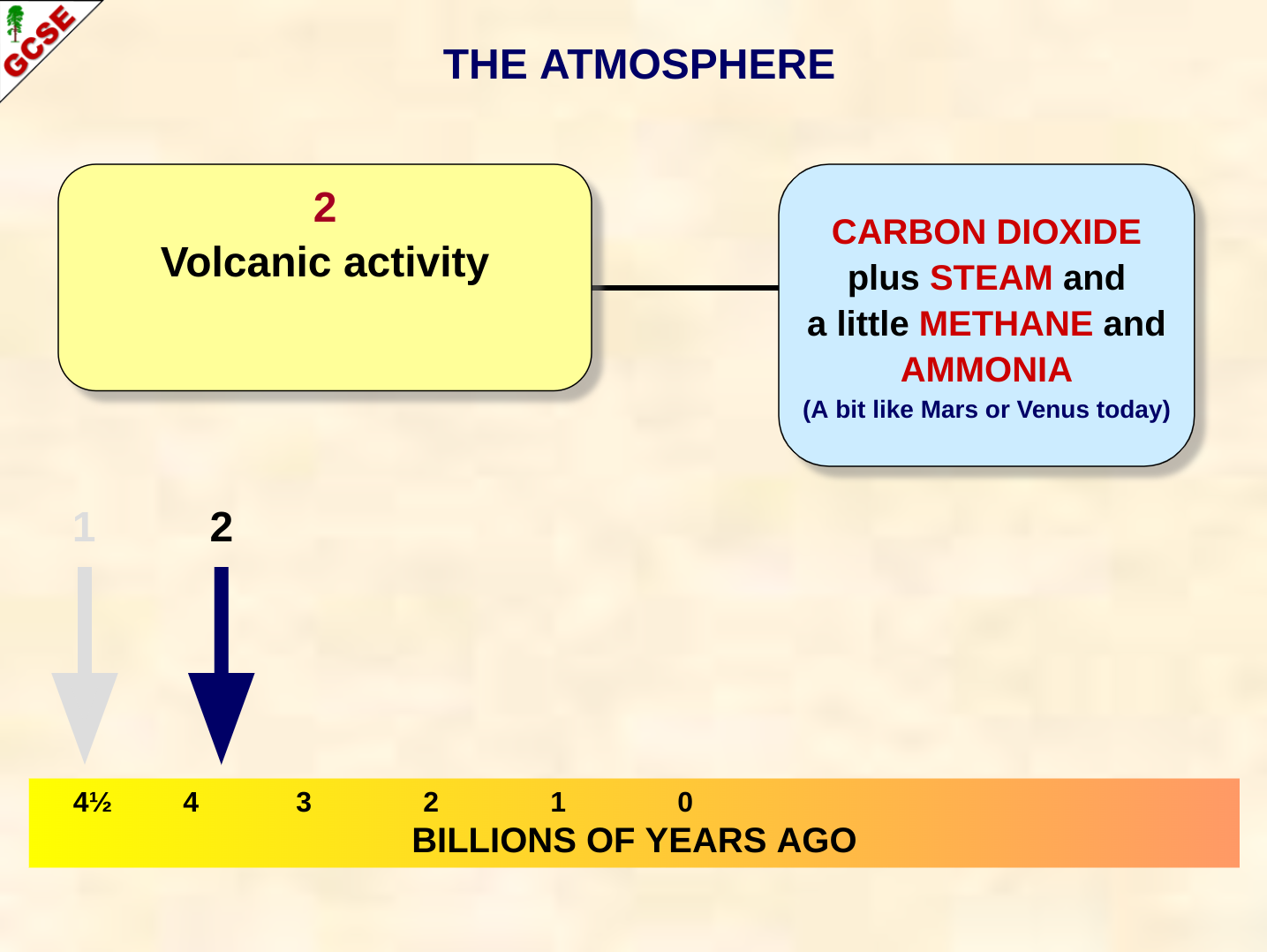
Volcanoes release CO2, water vapour and ammonia to form the early atmosphere.
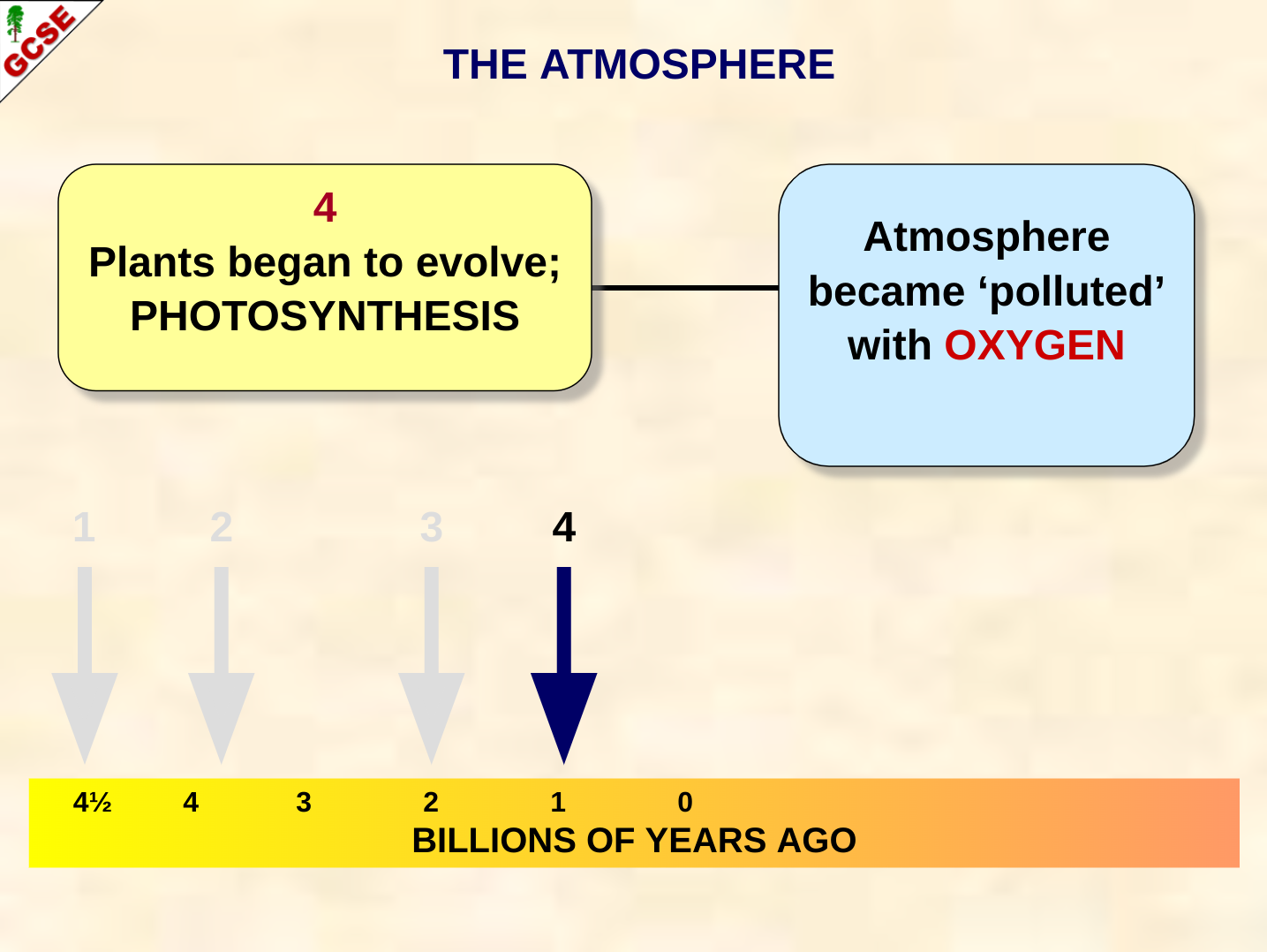
Green plants evolve and photosynthesise Carbon dioxide levels decrease and oxygen levels increase.
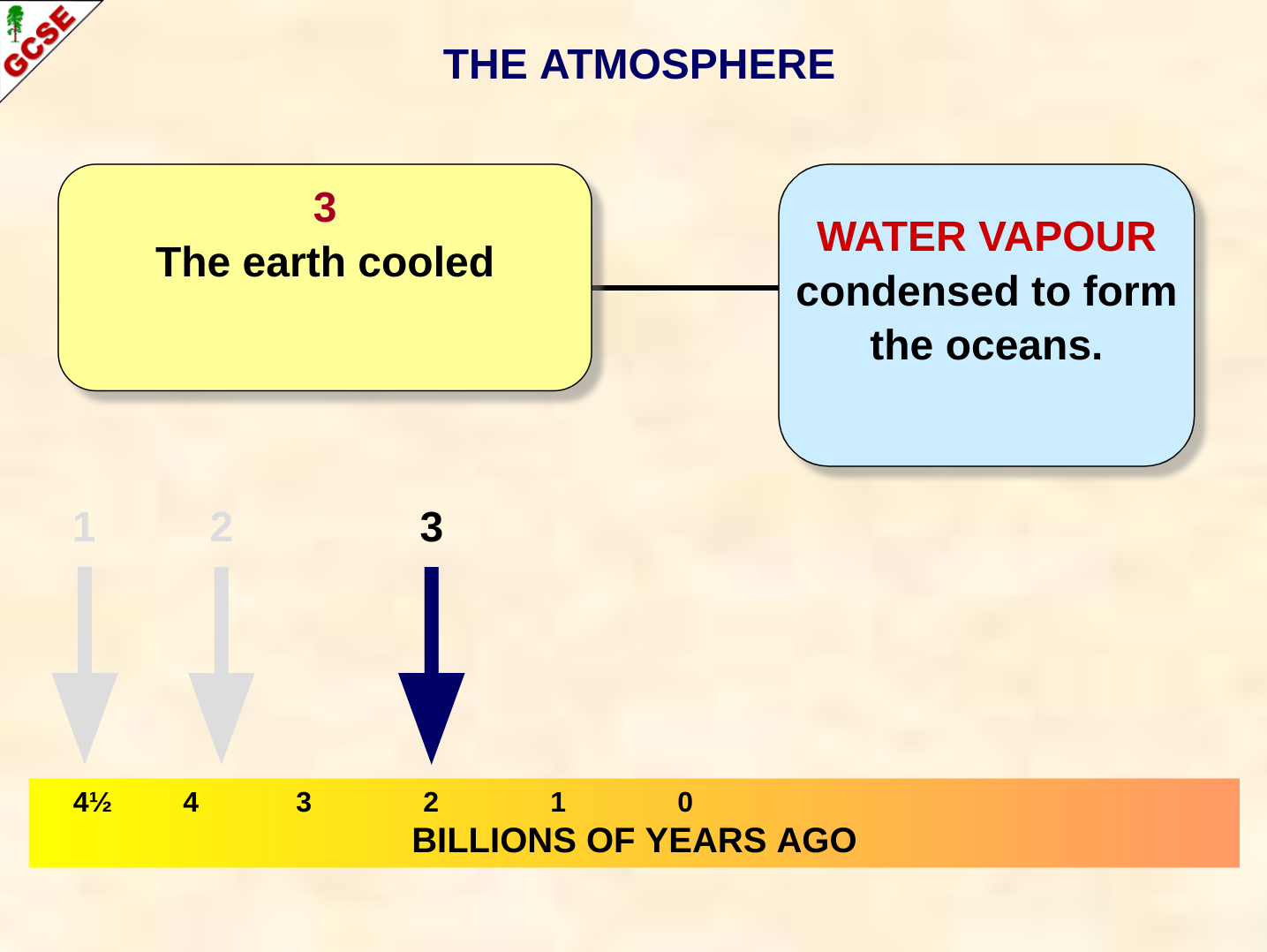
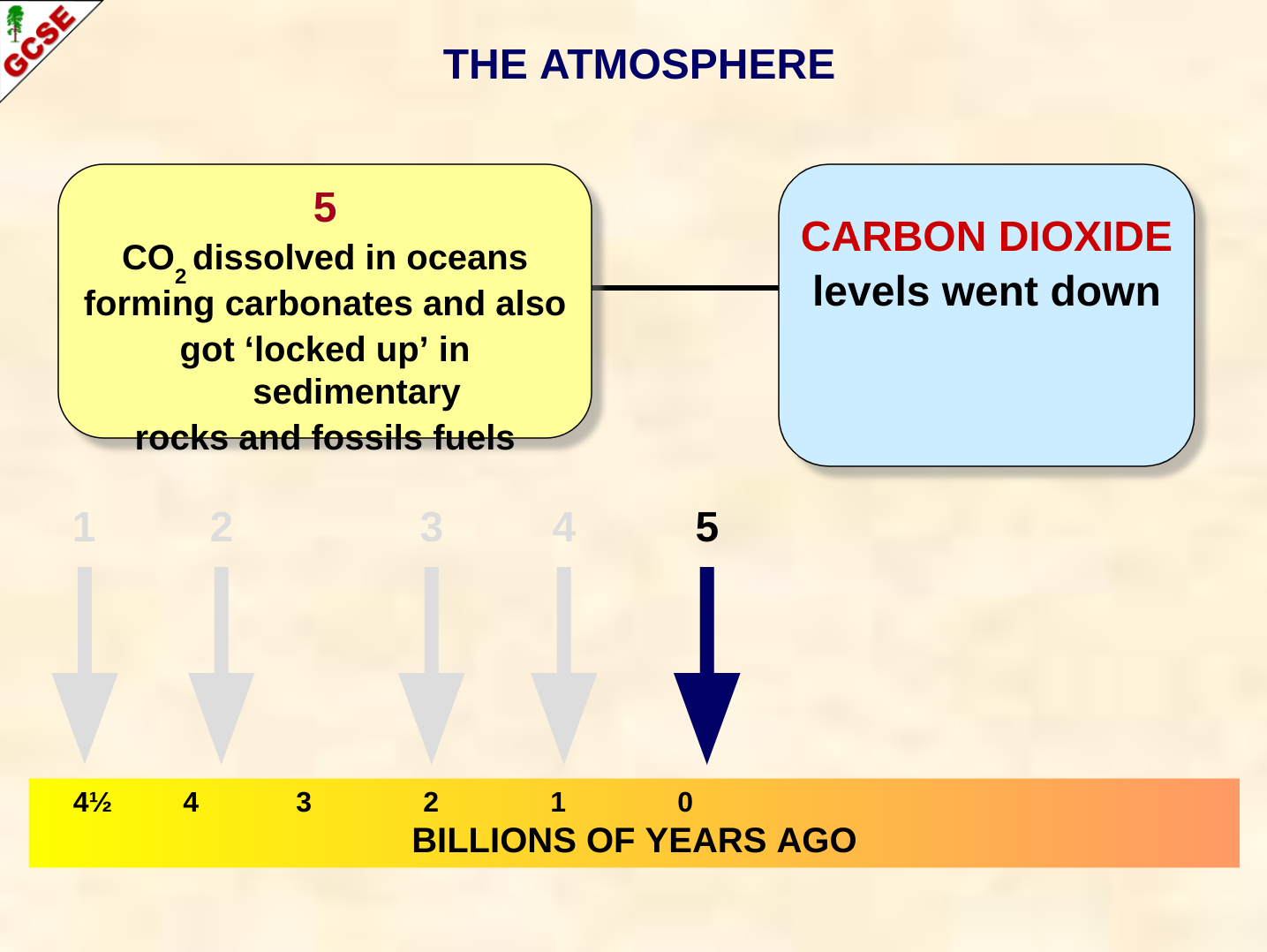
The earth cools and water condenses to form the oceans so CO2 dissolves in the oceans.
Years ago carbon dioxide got ‘locked up’ in rock which had formed
from the remains of shellfish.
The carbon dioxide also reacted with sea water to produce insoluble
carbonates which formed as well as soluble magnesium hydrogencarbonate and calcium hydrogencarbonate that in the oceans .
Carbon dioxide was taken in during in green pants ended up as the carbon in fuels.
limestone
sediment
fossil
photosynthesis
NOW
Animals and humans produce carbon dioxide through
Plants help in removing carbon dioxide through .
This process isn’t enough to balance the extra carbon dioxide produced by the
burning of fuels.
The extra carbon dioxide contributes to global as a gas.
respiration
greenhouse
fossil
warming
photosynthesis
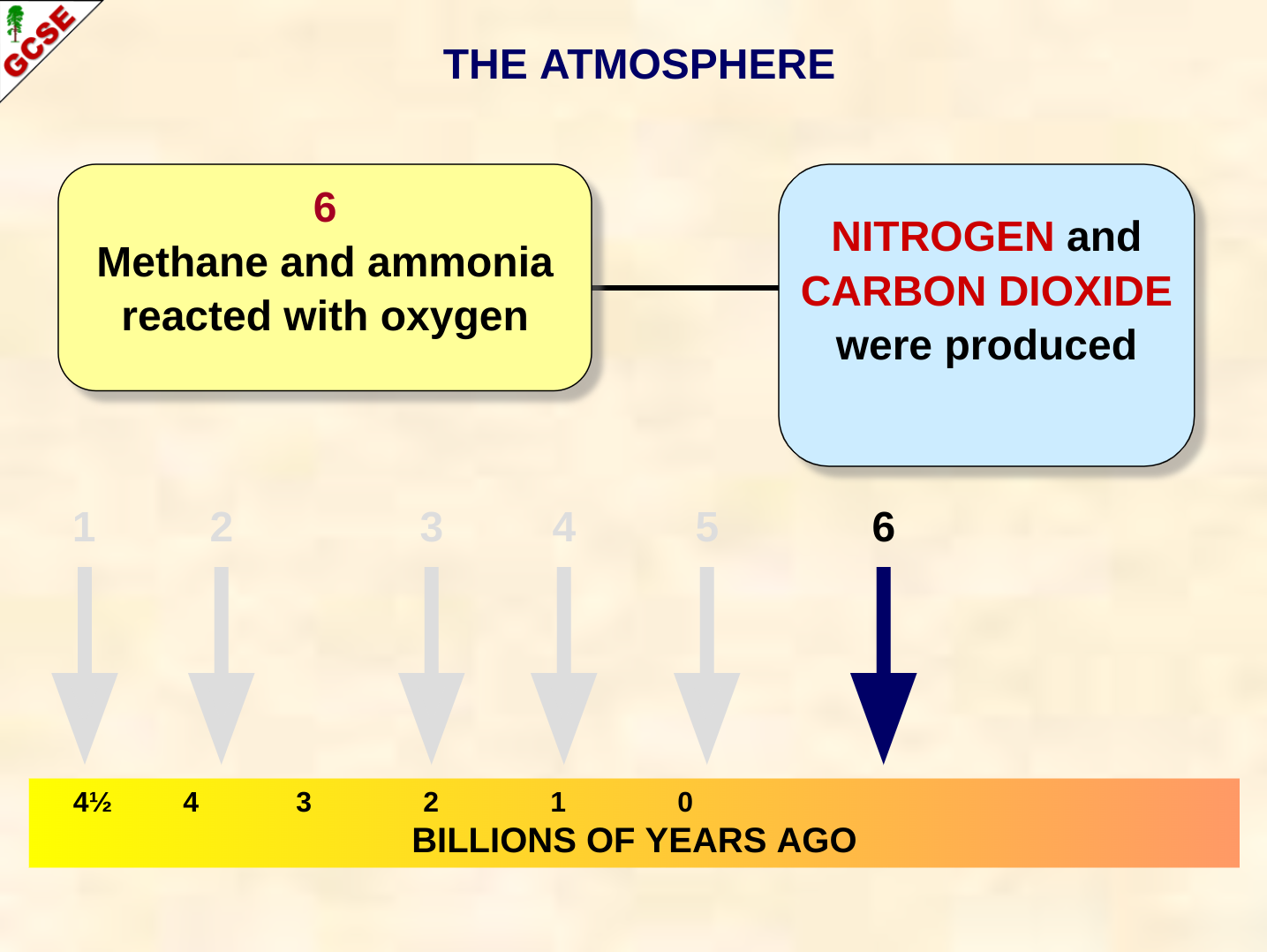
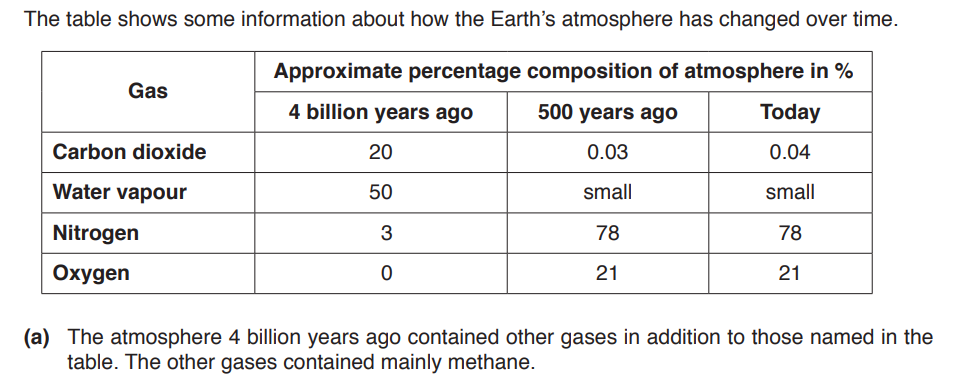
The early atmosphere was made up of mainly carbon dioxide, water vapour and small amounts of methane, ammonia and nitrogen, released by volcanic .
There was little or no oxygen around at this time. The early Earth was very hot, but as it cooled the water vapour in the atmosphere and formed the oceans.
As the oceans formed, carbon dioxide in the ocean.
The carbon dioxide formed carbonates and out (formed solids).
This process reduced the amount of carbon dioxide in the atmosphere.
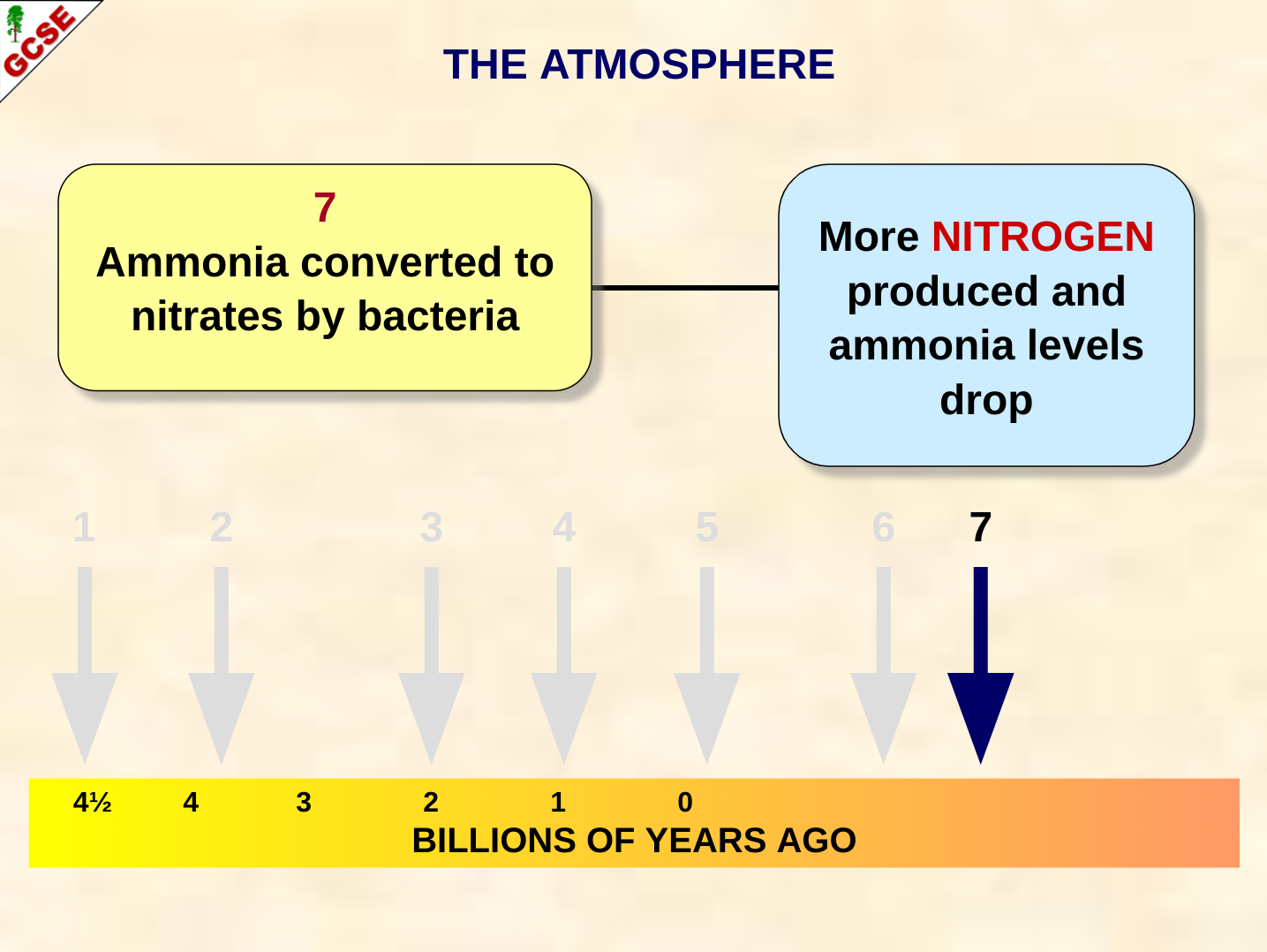
Approximately 2.7 billion years ago, plants and algae evolved. This decreased the amount of carbon dioxide in the atmosphere and increased the amount of oxygen in the atmosphere due to .
When sea animals evolved they used the carbon dioxide in the ocean to form their shells and bones (which are made of carbonates). When these sea creatures died their shells and bones became (calcium carbonate), which is a sedimentary rock.
Once enough oxygen was in the atmosphere, it could support animals, which carry out . These processes have caused the levels of gases in the atmosphere to be where they are today.
6 mark question to use to make a model answer.
Overall trend from 4 billion years ago to the present day
oxygen has overall
carbon dioxide has overall
water vapour has overall
(Note over the last 500 years carbon dioxide has slightly
6 mark question to use to make a model answer.
water vapour to form the oceans
Oxygen increased due to .
carbon dioxide decreased due to
carbon dioxide in the oceans
carbon dioxide formed sedimentary rocks ( )
carbon dioxide formed fuels
In the last 500 years carbon dioxide increased by human activity such as of fossil fuels and cutting down trees.
condensed
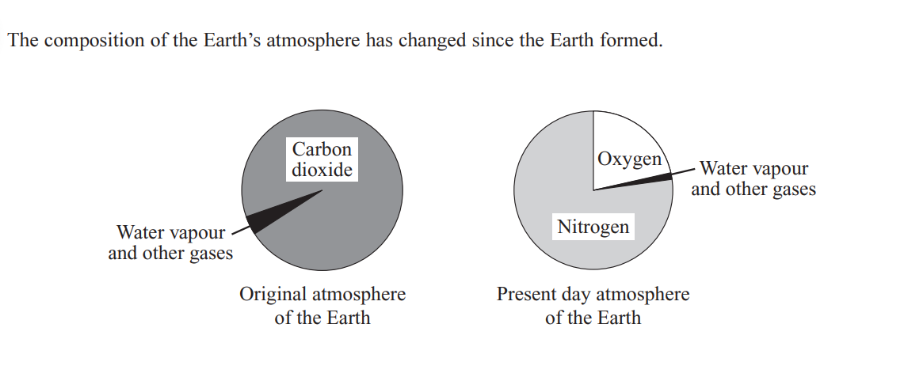
The composition of the Earth's atmosphere has changed since it was first formed. The most significant source of carbon dioxide in Earth's early atmosphere was:
The main reason for the increase in atmospheric oxygen was:
The amount of carbon dioxide was gradually reduced because of:
| Draggable item | arrow_right_alt | Corresponding Item |
|---|---|---|
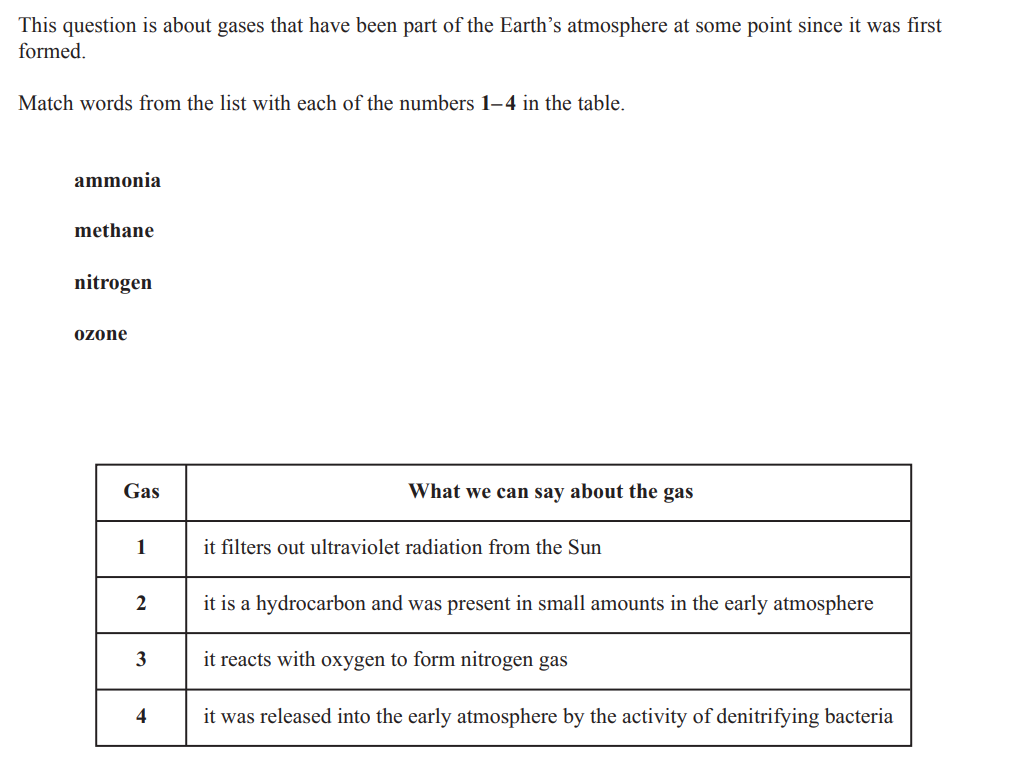
nitrogen | arrow_right_alt | 3 |
ammonia | arrow_right_alt | 2 |
ozone | arrow_right_alt | 4 |
methane | arrow_right_alt | 1 |
Fossil fuels and carbonate rocks
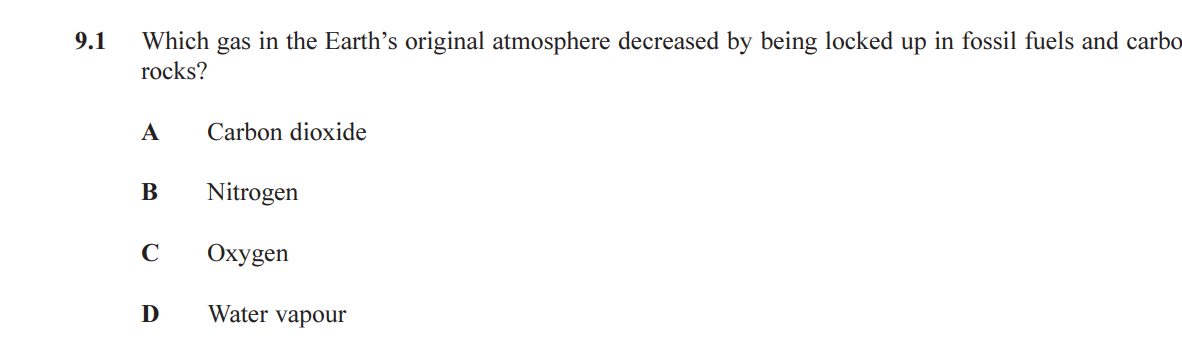
Actions of plants
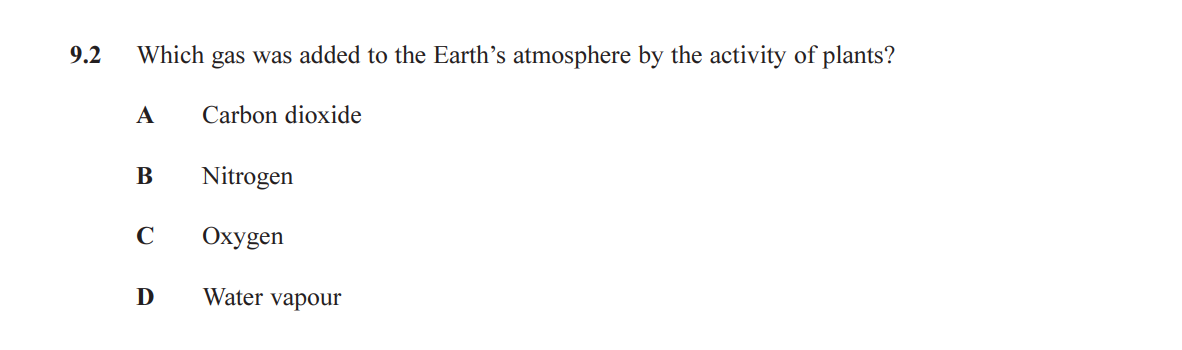
Which gas makes up most of the trace gasses
Which gas makes up most 0.03% of the air
The gases in the early atmosphere were caused by ___________________ eruptions
Which two planets the solar system have atmospheres that are similar to the early earth atmosphere?
The Earth’s early atmosphere was thought to contain
Which gas condensed to form the oceans as the crust cooled
Which of the following caused the concentration of carbon dioxide in the atmosphere to decrease
The growth of primitive plants used carbon dioxide and released oxygen by __________________ and consequently the amount of oxygen in the atmosphere gradually increased
As the amount of fossil fuels that have been used increased the percentage of CO₂ in the atmosphere has