Log in
Sign up for FREE
arrow_back
Library

Honors Unit # 6 Test on Cell Division

star
star
star
star
star
Last updated 1 day ago
45 questions
Required
1
Required
1
Required
1
Required
1
Required
1
Required
1
Required
1
Required
1
Required
1
Required
1
Required
1
Required
1
Required
1
Required
1
Required
1
Required
1
Required
1
Required
1
Required
1
Required
1
Required
1
Required
1
Required
1
Required
1
Required
1
Required
1
Required
1
Required
1
Required
1
Required
1
Required
1
Required
1
Required
1
Required
1
Required
1
Required
1
Required
1
Required
1
Required
1
Required
1
Required
1
Required
1
Required
1
Required
1
Required
2
Question 1
1.

People who have been exposed to excessive radiation often experience mutations. If these mutations only occur in somatic cells, these people may-

Question 2
2.

Chromosome A contains genes for an eye color of hazel. Chromosome B contains genes for hair color of brown, and chromosome C contains genes for an eye color of blue.

Question 3
3.

Cells grown in a petri dish tend to divide until they form a thin layer covering the bottom of the dish. If cells are removed from the middle of the dish, the cells bordering the open space will begin dividing until they have filled the empty space. What does this experiment show?

Question 4
4.

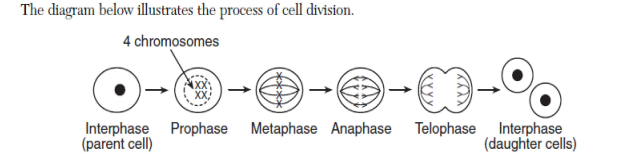
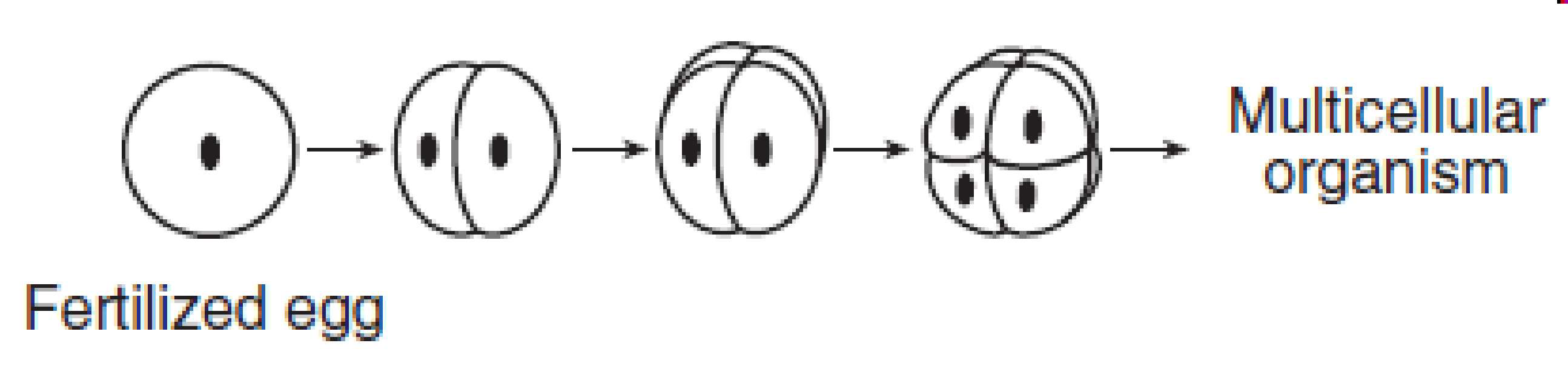
The diagram below represents division of a cell that produces two daughter cells.
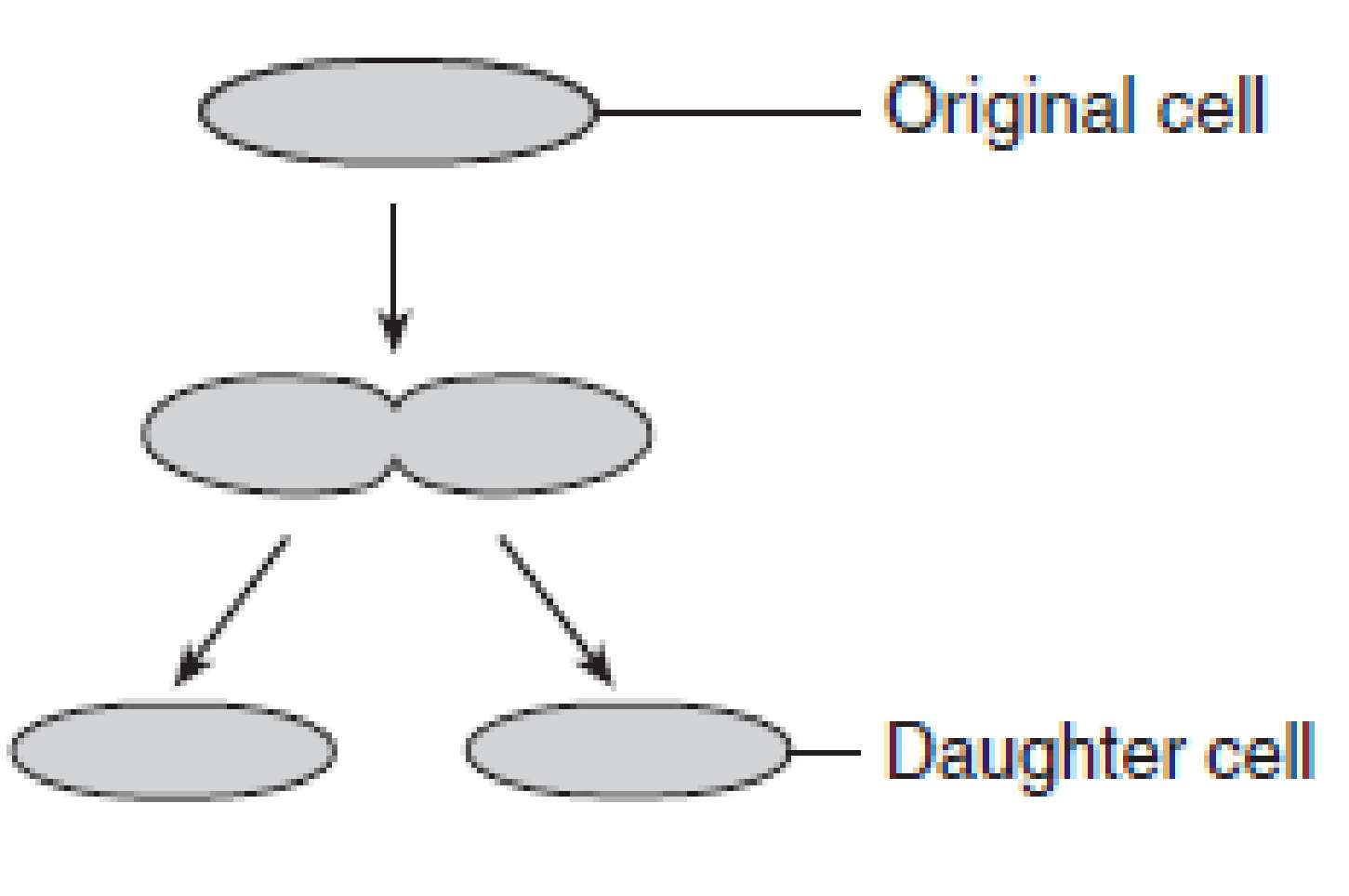

Which statement most likely describes the daughter cells produced?
Question 5
5.

In terms of the cell, cancer cells differ from normal cells in which of the following ways?

I. Cancer cells pass through the phases of the cell cycle in sequences different from that of normal cells.

II. Cancer cells do not stop dividing when they come in contact with other cells as normal cells do.

III. Cancer cells are able to divide an indefinite number of times, while normal cells divide a limited number of times.

Question 6
6.

Cells and the organisms they make up reproduce through cell division. Some organisms reproduce through mitosis, while others reproduce through meiosis and fertilization. What advantage does meiosis give to organisms that reproduce sexually?

Question 7
7.

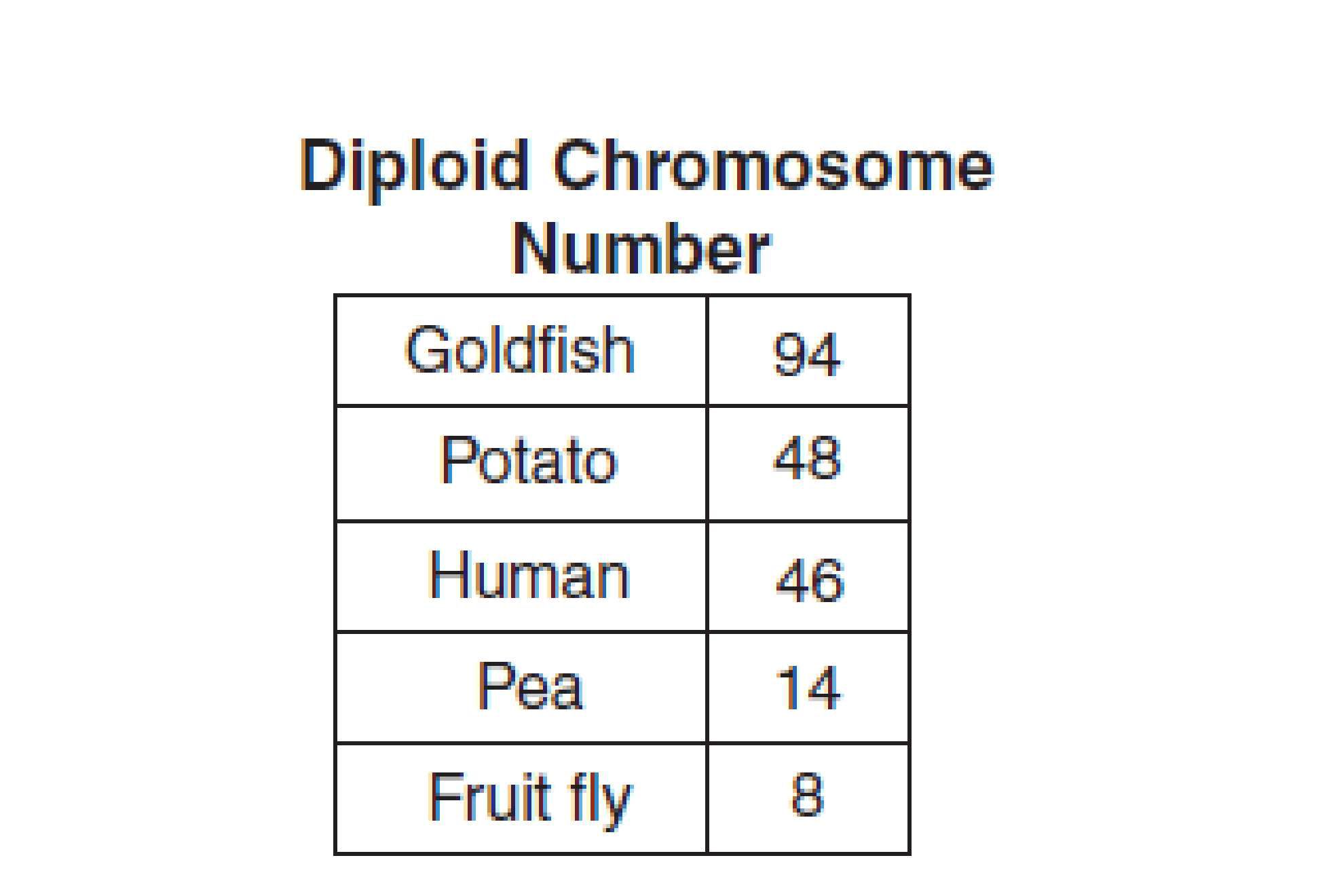
Which of the following is the best explanation for why the chromosome number is an even number in each of these organisms?

Question 8
8.

What is the significance of anaphase in this process?

Question 9
9.

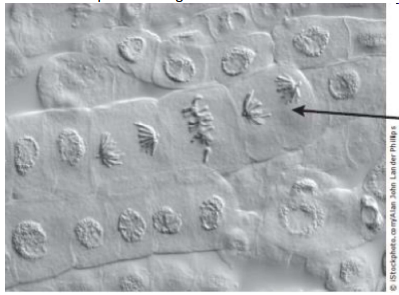
A photomicrograph of onion root tip cells during mitosis is shown below.
Which phase of mitosis is occurring in the cell indicated by the arrow?

Question 10
10.

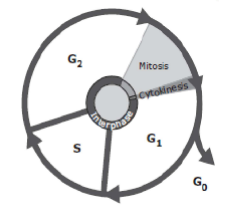
The diagram below represents the cell cycle.


When cells leave the cell cycle, they exit during G1 phase and then enter G0 phase, a resting period. Most normal cells can leave G0 phase and re-enter the cell cycle at G1 phase before entering S phase. Cancer cells are different because they cannot enter G0 phase and are likely to do with which of the following?

Question 11
11.

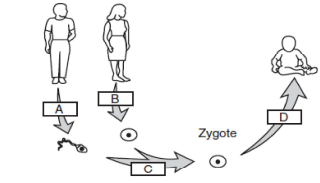
The diagram below represents processes involved in human reproduction.


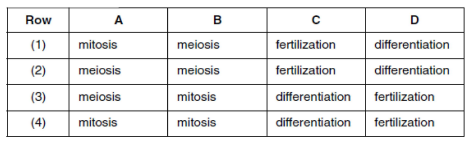
Which row in the chart below correctly identifies the processes represented by the letters in the diagram?

Question 12
12.

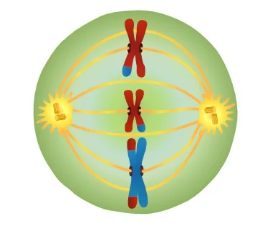
Using the picture below, identify the stage represented

Question 13
13.

Strawberries can reproduce by means of runners, which are stems that grow horizontally along the ground. At the region of the runner that touches the ground, a new plant develops. The new plant is genetically identical to the parent because:

Question 14
14.

As a result of mitosis, each of the two new cells produced from the parent cell during cytokinesis:

Question 15
15.

All cells in an embryo have the same DNA. However, the embryonic cells form organs, such as the brain and the kidneys, which have very different structures and functions. These differences are the result of:

Question 16
16.

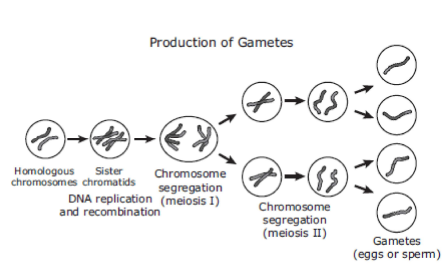
The diagram above shows the process of meiosis. The segregation that occurs during meiosis results in a:

Question 17
17.

A cell resulting from the fertilization of an egg begins to divide. Two cells are formed that normally remain attached and could develop into a new individual. If the two cells become separated, which statement describes what would most likely occur?

Question 18
18.

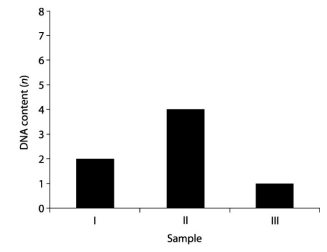
You have isolated DNA from three different cell types of an organism, determined the relative DNA content for each type, and plotted the results on the graph.


Which sample might represent an animal cell in G2 phase of the cell cycle?

Question 19
19.

You have isolated DNA from three different cell types of an organism, determined the relative DNA content for each type, and plotted the results on the graph.


Which sample might represent a cell at the end of Meiosis II?

Question 20
20.

Which of these must occur during the S phase of the cell cycle so that two daughter cells can be produced during M phase?

Question 21
21.

Which phrase best describes a process represented in the diagram?

Question 22
22.

The diagram below shows four stages of a cell undergoing the cell cycle.


Which of the following is the correct sequence of stages as they occur in the cell cycle?

Question 23
23.

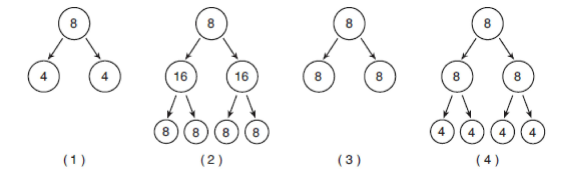
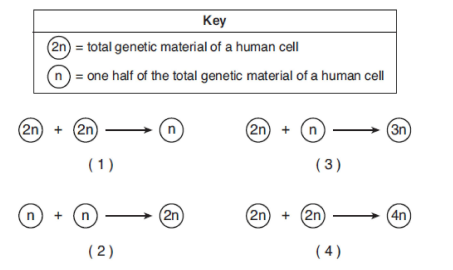
The number in each circle below represents the chromosome number of the cell. Which diagram represents the production of offspring by an asexually reproducing organism?

Question 24
24.

The number in each circle below represents the chromosome number of the cell. Which diagram represents the end of Meiosis I?

Question 25
25.

The sorting and recombining of genes during meiosis and fertilization usually leads to the production of

Question 26
26.

DNA changes form over the course of the cell cycle. What is the difference between the terms chromosome, chromatin, and chromatid?

Question 27
27.

Which statement is true of both mitosis and meiosis?

Question 28
28.

Crossing-over between non-sister chromatids during meiosis is significant in heredity. This process most likely leads to an increase in which of the following?

Question 29
29.

Which diagram correctly represents a step in the normal process of human reproduction?

Question 30
30.

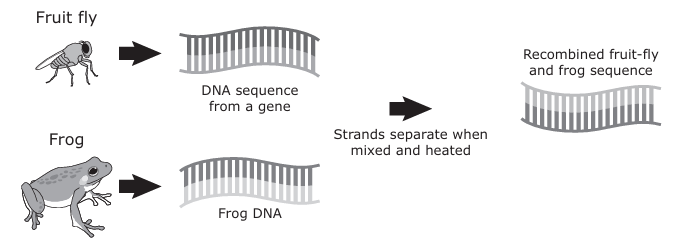
Researchers combined sequences of fruit-fly DNA from a gene for a particular trait with frog DNA. The mixture was heated to separate the DNA strands. Cooling allowed the single strands to form pairs. The researchers observed that some of the fruit-fly DNA paired with frog DNA.


The results provide evidence that —

Question 31
31.

People who have leukemia, a cancer that affects white blood cells, are often given Cytarabine. This drug inhibits the synthesis of DNA. Which phase of the cell cycle is most affected by Cytarabine?

Question 32
32.

Which of these is the direct result of an error in the transcription of a DNA nucleotide?

Question 33
33.

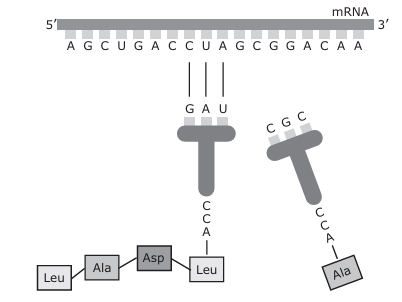
A model of a biological process is shown.


What is the purpose of this process?

Question 34
34.

What is the role of mRNA in expressing specialized structures?

Question 35
35.

A mutation in which types of cells would only affect the organism and not future generations?

Question 36
36.

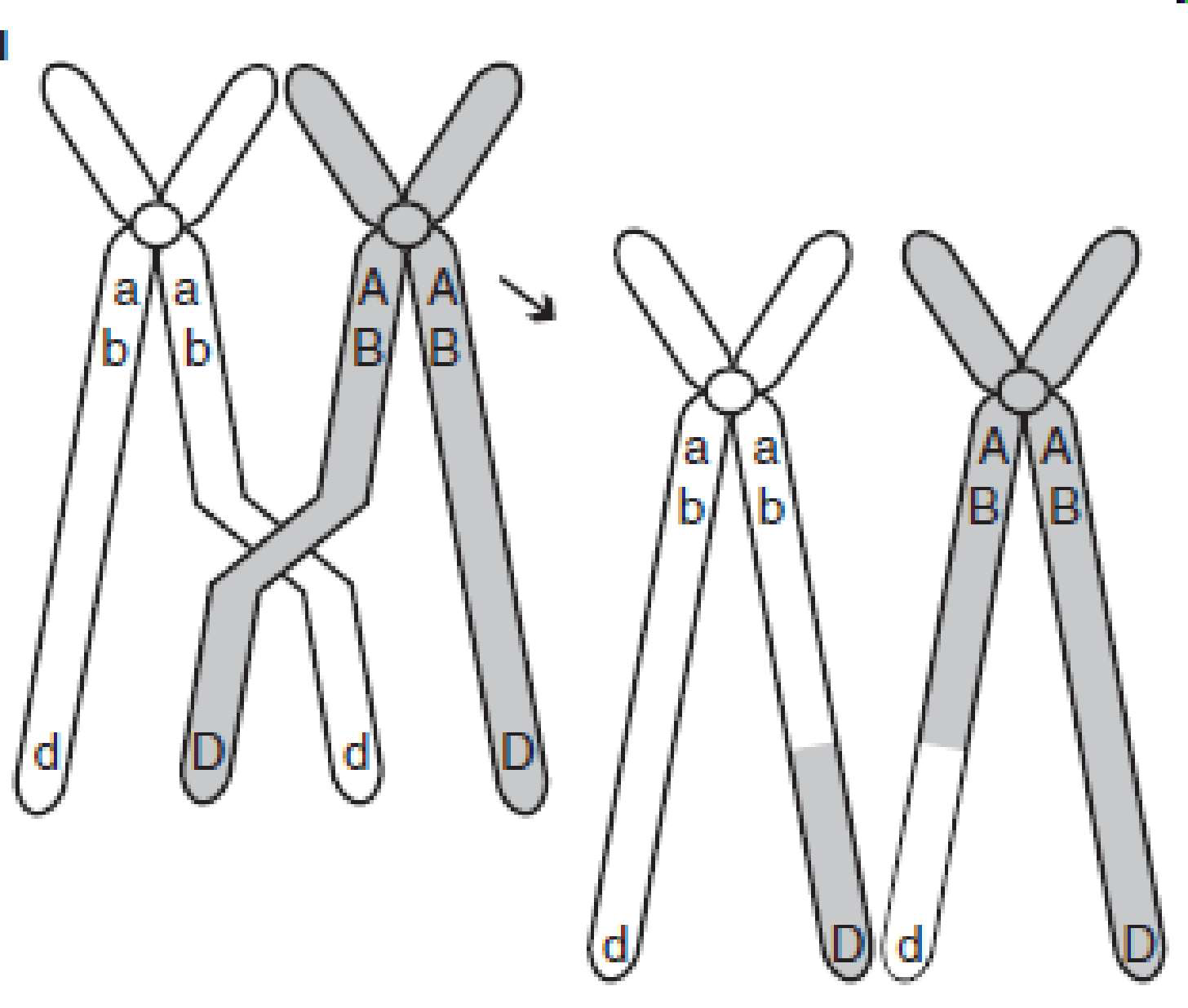
In the early 1900s, Thomas Hunt Morgan was among the first scientists to contribute to the chromosome theory of heredity. Morgan’s investigations into heredity in fruit flies led him to propose that the event represented in the diagram sometimes occurs.


Which statement about the event represented in the diagram is valid?

Question 37
37.

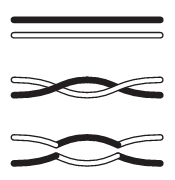
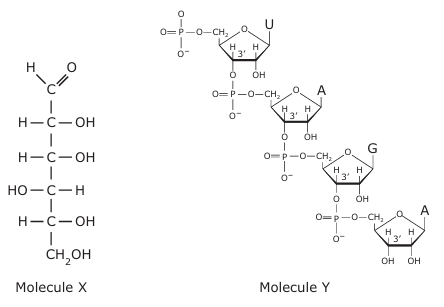
Two biomolecules are shown.


Which of the following best describes these biomolecules?

Question 38
38.

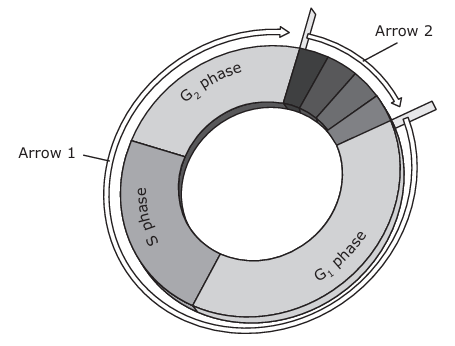
This model of the cell cycle includes two arrows that each represent a process in the cycle.


What do the two arrows represent?

Question 39
39.

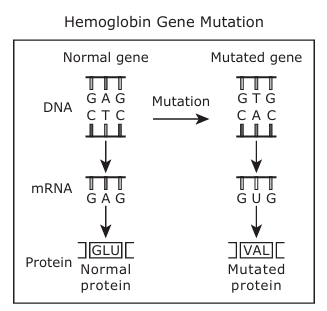
A certain mutation in the gene for hemoglobin results in the red blood cells becoming sticky, rigid, and irregularly shaped. These irregularly shaped red blood cells block the flow of blood throughout the body. A single base mutation is responsible for these irregularly shaped blood cells.


Which of these mutations most likely results in the mutated hemoglobin gene?

Question 40
40.

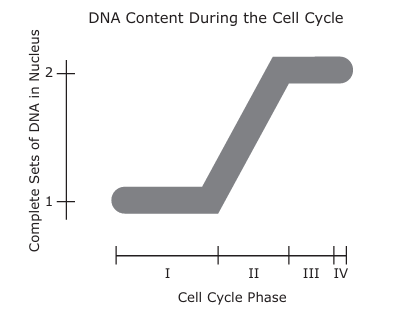
The model represents the change in the DNA content of a cell during the cell cycle.


Which part of the model represents the S phase?

Question 41
41.

Human body cells each have 46 chromosomes in their nuclei. Meiosis is necessary in order to ensure that each gamete produced in the human body has —

Question 42
42.

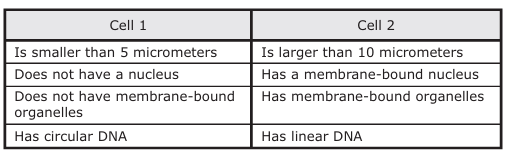
Some students used information they gathered from lab investigations to prepare a table. They entered the table in their lab notebooks.


Which of these correctly identifies the two cells described in the table?

Question 43
43.

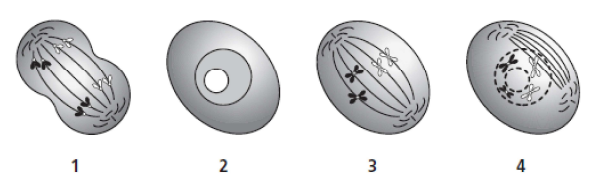
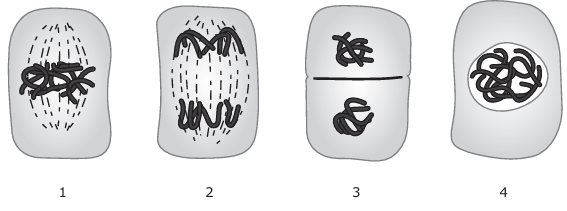
The diagram shows cells in different phases of mitosis. A student is trying to find a cell in a particular phase of mitosis. The student is looking for evidence that spindle fibers are separating the chromosomes to ensure that each new nucleus has one copy of each chromosome.


Which cell is in the phase of mitosis that the student is searching for?

Question 44
44.

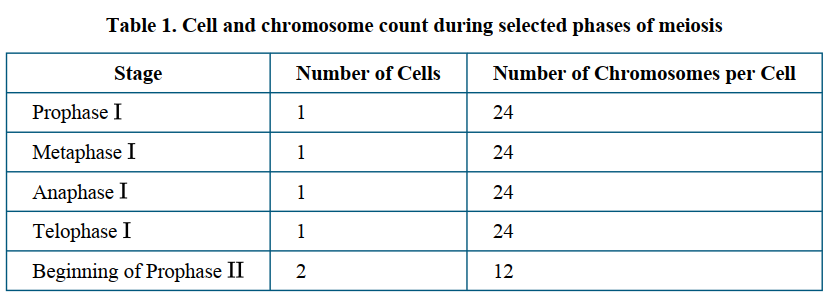
Table 1 shows the stage and number of cells and chromosomes per cell at the end of the stage in a 2n= 24 organism.


Which of the following statements correctly describes the chromosomes in each daughter cell at the end of meiosis I?

Question 45
45.

Discuss TWO differences between spermatogenesis in male humans and oogenesis in female humans. (2 marks)

The daughter cells will pass on only half of the genetic information they received from the original cell
The daughter cells will each produce offspring that will have the same genetic information as the original cell
I and II only
I and III only
Chromosomes double every time the cell divides, so after the first division, the number is always even.
Anaphase usually ensures that each daughter cell has twice as many chromosomes as the parent cell.
Prophase
Mutate during G1 phase
Die after completing mitosis
Fail to complete S phase
Row 2
Row 1
Metaphase II
group of genetically identical cells
II
Either I or II
II
a gamete dividing by mitosis
4, 3, 2, 1
choice 1
choice 3
The expression of dominant traits
2
the replication of genetic material can occur at any temperature
similar nucleotides are present in both fruit-fly and frog DNA
To synthesize amino acids used to unzip strands of DNA and copy the genetic code
Nerve cell and egg cell
Nerve cell and brain cell
Egg cell and liver cell
The event provides genetic diversity in eukaryotic cells.
The event produces genetically identical daughter cells.
Molecule X and Molecule Y are both nucleic acids.
Arrow 1 represents interphase, and Arrow 2 represents mitosis.
Substitution
II
Cell 1 is eukaryotic, and Cell 2 is prokaryotic.
Cell 3
Each daughter cell contains 12 chromosomes, each composed of two chromatids. Each chromosome is one of a pair of homologous chromosomes from the parent cell, with the other homologue found in the other daughter cell.
Each daughter cell contains 24 separate chromatids. Since every two chromatids were originally joined, forming one homologous chromosome, the number of chromatids is divided by two to determine the number of chromosomes.