The Seal Garden
star
star
star
star
star
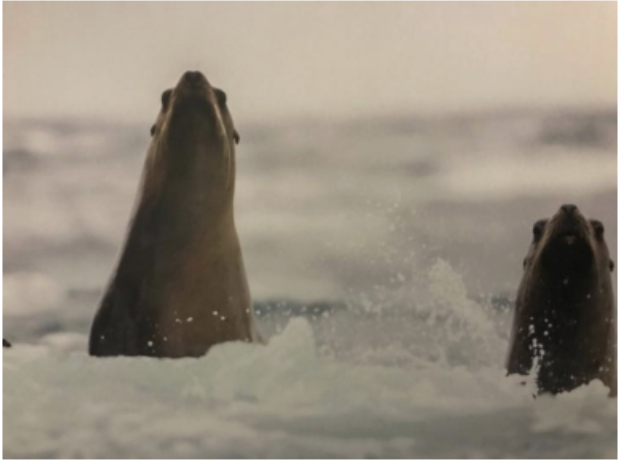
Last updated 26 days ago
10 Nsɛmmisa
The Great Bear Sea covers a large area from the northern tip of Vancouver Island to the Alaska border. It can be divided into four sub-regions: North Coast, Haida Gwaii, Central Coast, and North Vancouver Island, as described in the film. The Great Bear Sea is home to many species of living organisms and many different kinds of habitat. For example, 20% of the world's remaining Pacific salmon are in this area. It is home to two species of bears including a special type of black bear called the spirit bear that lives nowhere else on Earth. Many types of marine mammals such as sea otters, dolphins, humpbacks and killer whales call this area home or migrate through the waters. The area is part of the Pacific Flyway and each fall and spring, hundreds of thousands of shorebirds, ducks, geese and other birds fly between the breeding grounds in the Arctic and their wintering areas in Mexico and South America, stopping at the nutrient-rich waters and mud flats to refuel and regain body fat for the long journey. The Great Bear Sea contains important habitats for threatened and endangered species, and supports a rich, complex food web ranging from tiny sea creatures to the giant whales – this is one of the most diverse regions of the world.
How is the information in “The Seal Garden” different from the information in “The Great Bear Sea”? RI 4.6
1 The storm is a big one. The wind whips the ocean waves into peaks as tall as trees. When storms like this happen in the Great Bear Sea, animals take cover.
2 In the forest, bears, deer, and wolves duck under giant cedar trees that act like natural umbrellas. But out at sea, marine mammals seek a different kind of hiding place.
3 Seals, sea lions and otters take refuge from the worst of the storm in a magical place called a seal garden. Seal gardens are scattered throughout the Great Bear Sea and are arrangements of rocks that provide protection to many animals. It’s a sanctuary from the punch of the waves and teeth of predators.
4 Seals, fish, and smaller animals can get into the seal garden, but larger animals cannot.
5 Sometimes there are hundreds of marine mammals in a seal garden. They feed on the fish, bob like corks on the ocean’s surface and wrap themselves in long copper-colored seaweed called kelp for afternoon naps.
6 Harbor seals laze in the middle of the seal garden while the much-larger California and Steller sea lions lounge on the outside rocks just above the pounding waves. Sea otters take shelter in the thick kelp forests too.
7 Harbor seals are about the size of a large man and are as cute as they are chubby. They have a thick layer of blubber that keeps them warm in the cold Pacific waters, and they come in many different colors. Some are even spotted like leopards. They are the most common seal in the ocean, and there are thousands of them in the Great Bear Sea.
8 Meanwhile, a giant northern elephant seal hauls its huge body out of the water for a rest. These enormous creatures can dive thousands of feet into the heart of the ocean in search of food. They are the second-biggest seals in the ocean. Only their cousins in the southern Pacific are larger.
9 Harbor seals aren’t afraid of the storm because storms are so common in the Great Bear Sea. They know they just have to be patient while the storm blows itself out. Besides, the seal garden is the place to be in a storm because so many other seals are there too. It’s a seal party.
10 Eventually the clouds disappear, and the waves go flat. It’s a perfect time for the seals to make their way out of the garden and into the open sea.
11 But when they do venture out to sea, the seals catch sight of the big black dorsal fins of three large orcas.
12 Fortunately, orcas are much too big to get into the seal garden. So as long as the seals turn around and head back to the garden before the orcas spy them, they will be safe.
13 Orcas like to sneak up on their prey, so the fact that the seals saw them first is bad news for the whales. Even so, once they spot the seals, they chase them all the way to the seal garden. They can see all the seas, sea lions, sea otters, and river otters inside the garden, but they’re too big to enter it.
14 The animals in the garden know the orcas can see them, because the shafts of sunlight cutting through the water act like spotlights. But there’s nothing the orcas can do except hope that one of the animals inside the garden swims out of it into their hungry jaws. And that is unlikely.
15 Orcas are patient, and they patrol the garden like police. They hope to catch something, but even if they don’t, they know that there are more gardens up the coast where they may have better luck.
16 Inside the garden, all the animals are nervous. Seals watch the orcas with wide eyes. Sea lions bark. River otters hide in rocky tunnels, and sea otters huddle in kelp beds. Meanwhile, the black fins keep circling and circling.
17 After an hour the orcas decide to move on, hoping to surprise the residents of the next seal garden up the coast.
18 That means the seals are safe. They can leave the seal garden to swim and fish and haul themselves out on rocks. The Great Bear Sea is a wonderful place to live, but it can be dangerous too. All the animals in the seal garden need to be smart and alert at all times. They need to know when it’s safe to explore the Great Bear Sea when it’s wise to head back to welcome haven of the seal garden.
Part A: What is the meaning of the word sanctuary as used in paragraph 3? RI 4.4
Part B: Which of the following quotations from the text supports your answer in Part A? RI 4.1
When do animals seek safety in a seal garden? RI.4.1
Why do the orcas not enter the seal gardens? RI 4.3
Which paragraph tells the reader that the sea animals can get afraid when hiding in the seal garden? RI.4.1
Part A:
What is the main idea of the passage? RI.4.2
Part B:
Which of the following statements supports the main idea? RI.4.1
Which statement from the passage best represents the photograph? RI.4.7
How does the information in “The Great Bear Sea” add to the information from “The Seal Garden”? RI 4.9