What group do the large men at the back of the room represent?
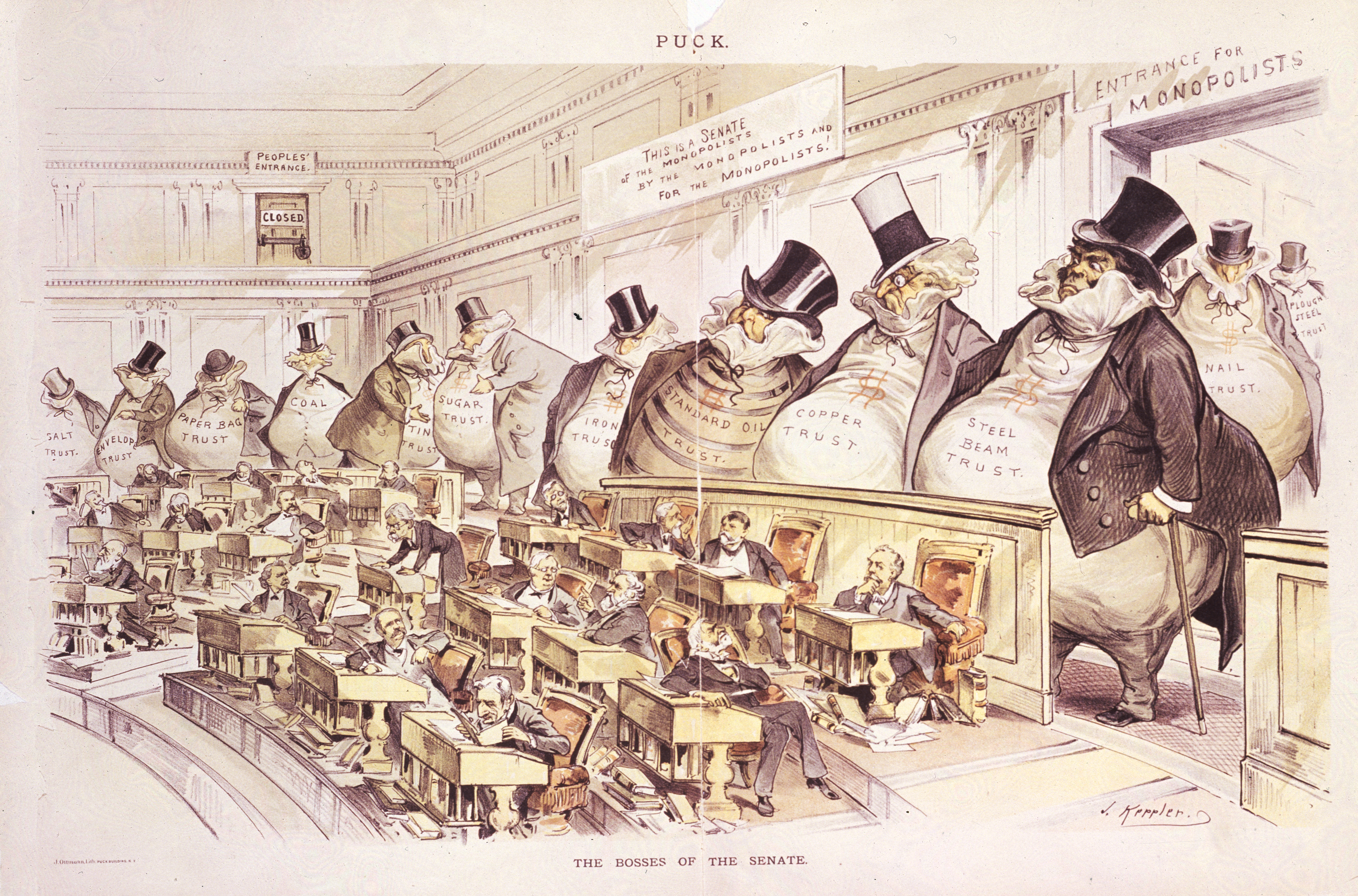
What group do the large men at the back of the room represent?
All of the following contributed to the industrial boom during the Gilded Age EXCEPT:
Vertical and Horizontal Integration, business strategies used by tycoons like Andrew Carnegie, led to which of the following?
Which of the following best describes why people like Andrew Carnegie, John D. Rockefeller, and Cornelius Vanderbilt were considered Robber Barons?
The Progressive movement of the early 1900s was primarily focused on which business-related issue?
What group do the large men at the back of the room represent?
What is the main idea of this cartoon?
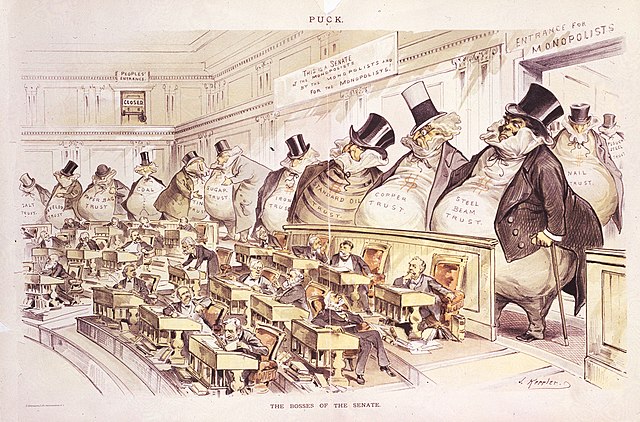
Why are the men in the back of the picture so large?
Which of the following best describes Americans’ nativist attitude towards immigrants in the late 1800s?
How did nativism influence the United States' policy on immigration?
In the early 1900s, problems with overcrowding, high crime rates, and poor sanitation in big cities were most directly a result of:
Initiatives such as the recall, referendum, and direct primary are three examples of Progressive Era policies. How did they meet the goals of the Progressive movement?
Upton Sinclair and Ida M. Tarbell were considered muckrakers because they:
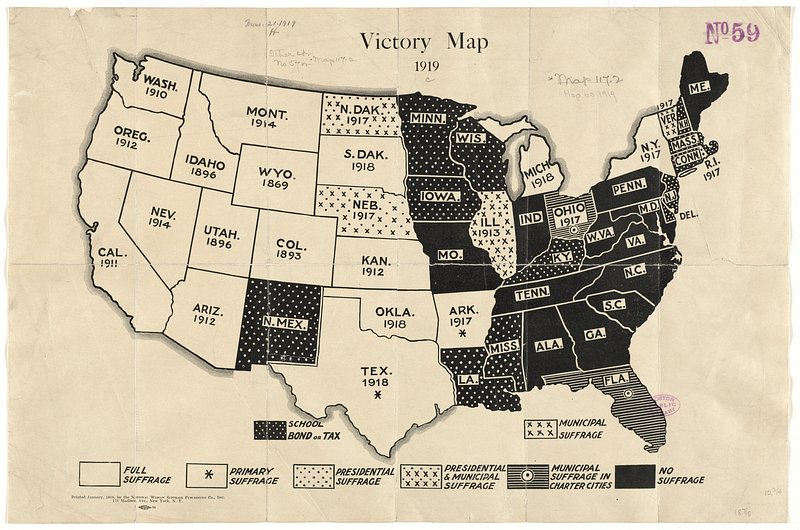
Based on this map of women's suffrage, you could infer that Kansas (KAN.) was _________________ than Missouri (MO.) in the early 1900s.
“No race can prosper till it learns that there is as much dignity in tilling a field as in writing a poem.” --Booker T. Washington
This quote supports which of the following statements?
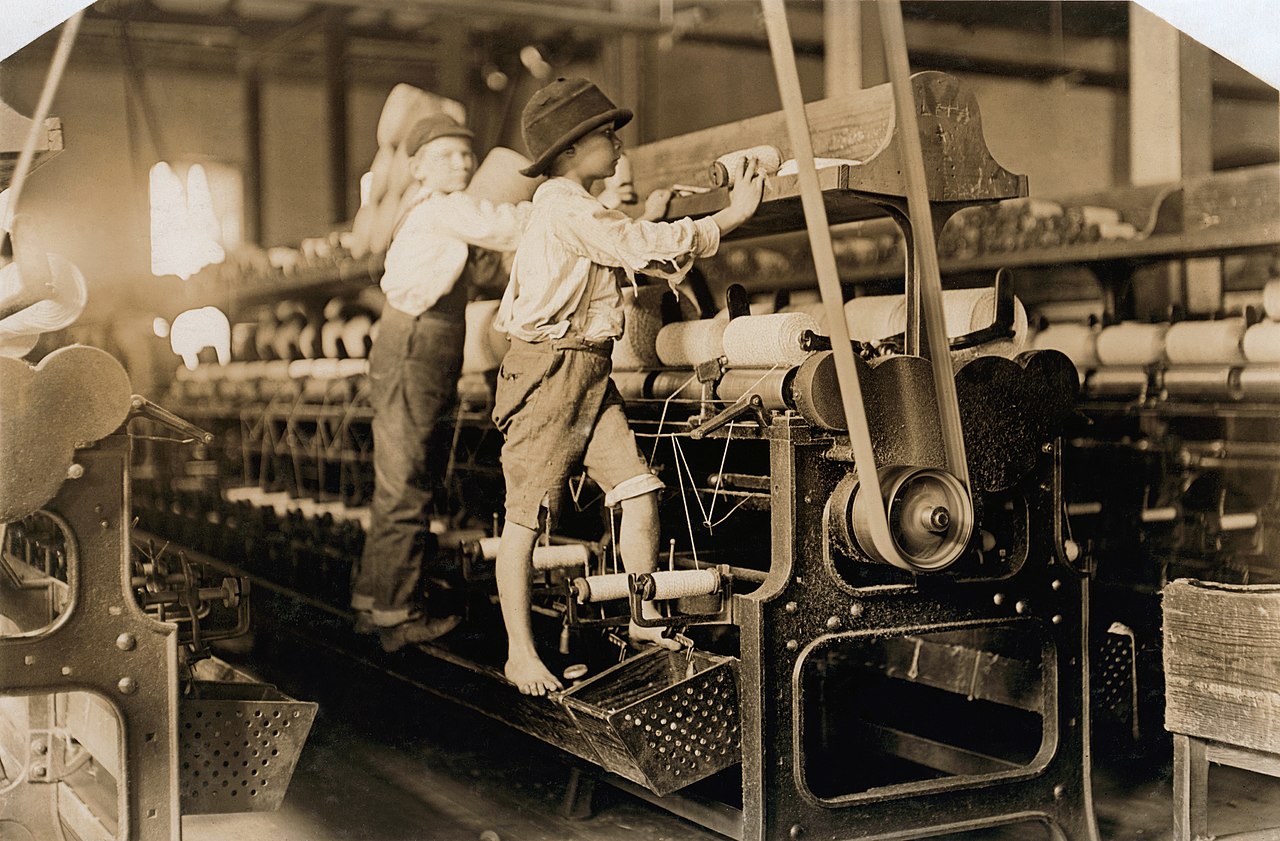
Why did muckrakers like Lewis Hine take these photos?
The purpose of Theodore Roosevelt’s Square Deal was to:
In the late 1800s, an increased demand for raw materials and a desire for new markets contributed to the United States adopting a policy of:
Which of the following best serves as evidence for the claim that Alfred T. Mahan was an imperialist?
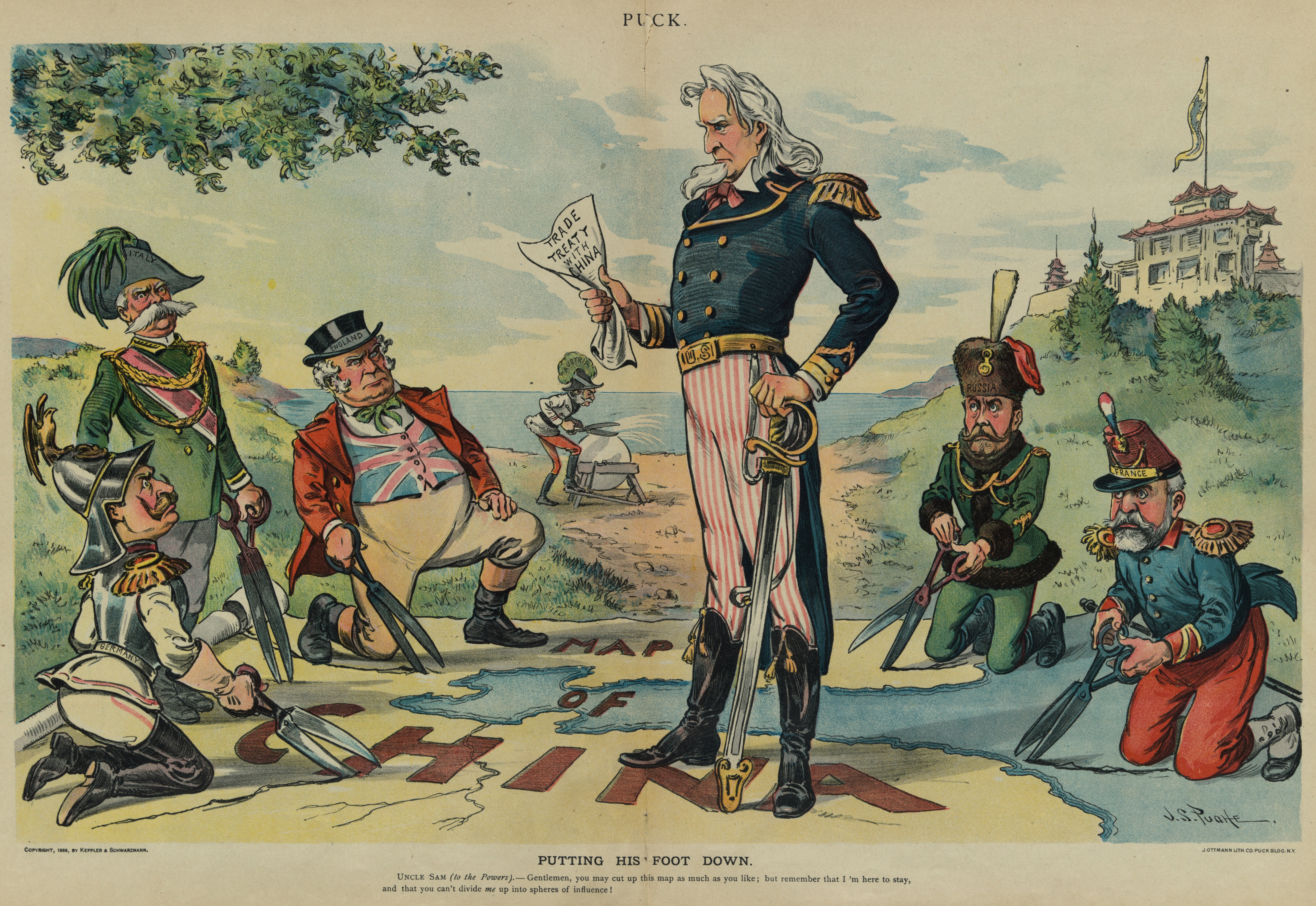
How does this cartoon about the Open Door Policy with China reflect the goals of American imperialists?
Why did American sugar planters in Hawaii call for the United States to annex the islands?
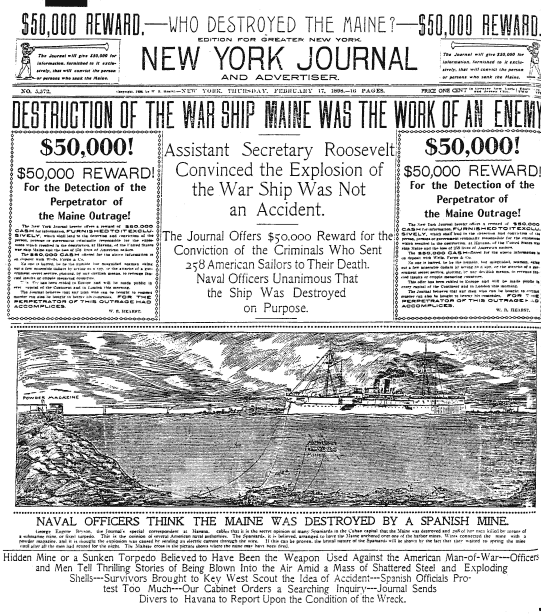
What was a major purpose of these 1898 newspaper headlines?
Which of the following best serves as evidence for the claim that Theodore Roosevelt was an imperialist?
The Treaty of Paris (1898) granted the formerly Spanish territories of the Philippines, Guam, and Puerto Rico to the United States. Which of the following best describes the criticisms of this treaty?
Which of the following maps correctly identifies Latin America, the area identified by the Roosevelt Corollary as being within the United States' sphere of influence?
On June 28th, 1914, this man was assassinated by Gavrilo Princip in Sarajevo. This event kicked off World War I.
During World War I, which countries comprised the Central Powers?
At the beginning of World War I, which countries made up the Allies?
Which allied country left World War I in 1917 after undergoing a revolution, reemerging as the communist Soviet Union?
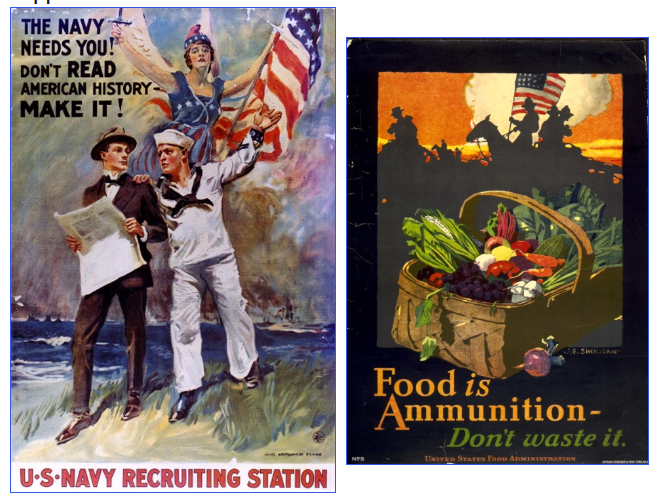
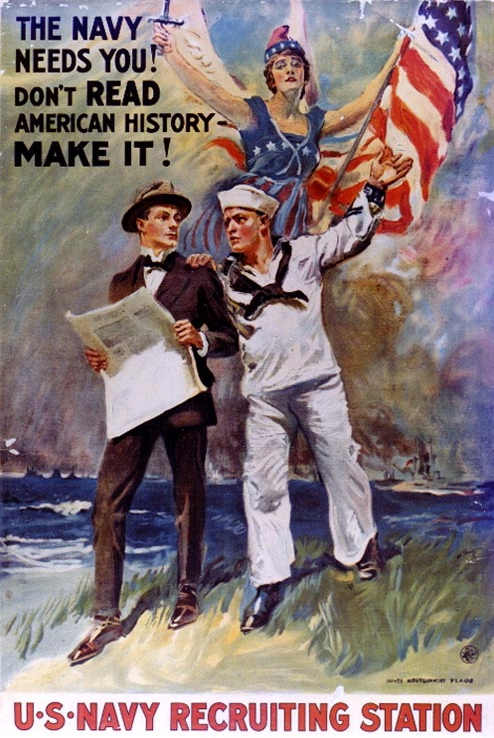
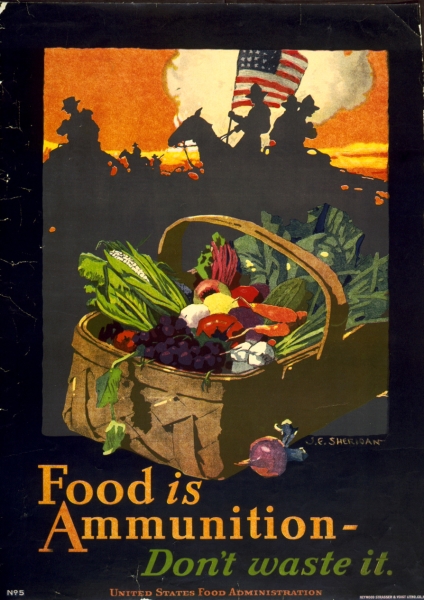
Why were propaganda posters like the ones above effective in creating support for the war?
The United States Joins the War
To meet the government’s need for more fighting power, Congress passed the Selective Service Act in May 1917. The act required men to register with the government in order to be randomly selected for military service. By the end of 1918, 24 million men had registered under the act. Of this number, almost 3 million were called up. About 2 million troops reached Europe before the truce was signed, and three-fourths of them saw actual combat. Most of the inductees had not attended high school, and about one in five was foreign-born.
The eight-month training period took place partly in the United States and partly in Europe. During this time, the men put in 17-hour days on target practice, bayonet drill, kitchen duty, and cleaning up the grounds. Since real weapons were in short supply, soldiers often drilled with fake weapons. They used rocks instead of hand grenades or wooden poles instead of rifles.
Which of the following best describes the level of preparation of the United States in joining the war?
The United States Joins the War
To meet the government’s need for more fighting power, Congress passed the Selective Service Act in May 1917. The act required men to register with the government in order to be randomly selected for military service. By the end of 1918, 24 million men had registered under the act. Of this number, almost 3 million were called up. About 2 million troops reached Europe before the truce was signed, and three-fourths of them saw actual combat. Most of the inductees had not attended high school, and about one in five was foreign-born.
The eight-month training period took place partly in the United States and partly in Europe. During this time, the men put in 17-hour days on target practice, bayonet drill, kitchen duty, and cleaning up the grounds. Since real weapons were in short supply, soldiers often drilled with fake weapons. They used rocks instead of hand grenades or wooden poles instead of rifles.
What was the United States’ primary concern in raising an army during WWI?
A New Kind of War
Not only did World War I see the use of trench warfare, but it saw the first large-scale use of weapons that would become standard in modern war. Although some of these weapons were new, others, like the machine gun, had been so refined that they changed the nature of warfare. The new guns could hit targets that were miles away. And capable of firing 600 rounds a minute, machine guns could inflict heavy casualties on the enemy. In fact, they were responsible for 90 percent of Allied casualties at the Battle of the Somme in 1916.
How did new technologies change the nature of warfare during WWI?
How do Wilson’s Fourteen Points address the causes of World War I?
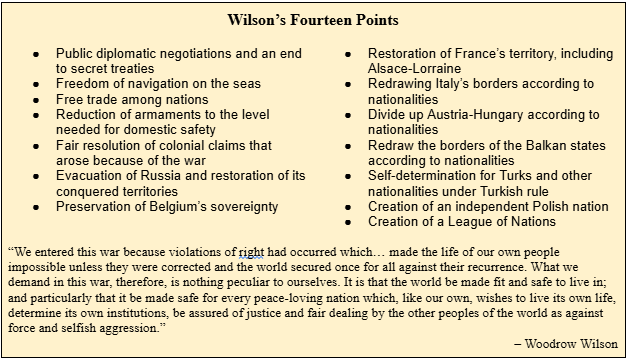
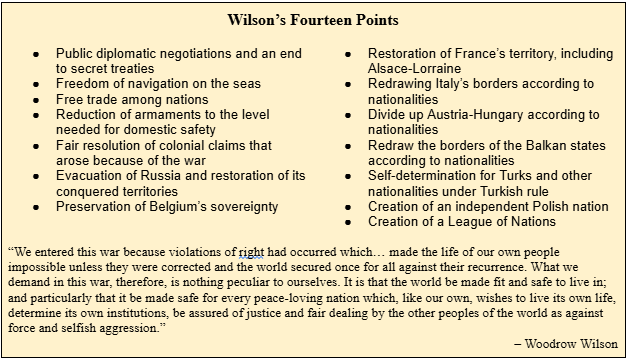
Based on his Fourteen Points and the quote above, which of the following best summarizes Woodrow Wilson’s desires for the post-war world?
Which country was made to sign a war-guilt clause as one of the provisions of the Treaty of Versailles, taking the entirety of the blame for WWI?
Postwar Fears
Many Americans responded to the stressful conditions by becoming fearful of outsiders. Such unreasoned fear of things or people seen as foreign or strange is called xenophobia. A wave of nativism, or prejudice against foreign-born people, swept the nation. World War I had caused a wave of anti-German sentiment, which continued after the war’s end.
For example, some schools stopped teaching German language classes and some Americans of German heritage changed their names to be more English-sounding. Anti-Semitism, or the hatred of Jews, also increased during the 1920s, as immigration from Jewish communities in Eastern Europe surged.
Also prevalent was a belief in isolationism, a policy of pulling away from involvement in world affairs. Isolationism was in contrast to internationalism, the engagement in global concerns that had begun to develop in the previous century.
After World War I, many Americans developed a sense of ___________, or an unreasoned fear of things or people seen as foreign or strange.
Postwar Fears
Many Americans responded to the stressful conditions by becoming fearful of outsiders. Such unreasoned fear of things or people seen as foreign or strange is called xenophobia. A wave of nativism, or prejudice against foreign-born people, swept the nation. World War I had caused a wave of anti-German sentiment, which continued after the war’s end.
For example, some schools stopped teaching German language classes and some Americans of German heritage changed their names to be more English-sounding. Anti-Semitism, or the hatred of Jews, also increased during the 1920s, as immigration from Jewish communities in Eastern Europe surged.
Also prevalent was a belief in isolationism, a policy of pulling away from involvement in world affairs. Isolationism was in contrast to internationalism, the engagement in global concerns that had begun to develop in the previous century.
According to the passage, against which people was much of this sense directed towards?
Postwar Fears
Many Americans responded to the stressful conditions by becoming fearful of outsiders. Such unreasoned fear of things or people seen as foreign or strange is called xenophobia. A wave of nativism, or prejudice against foreign-born people, swept the nation. World War I had caused a wave of anti-German sentiment, which continued after the war’s end.
For example, some schools stopped teaching German language classes and some Americans of German heritage changed their names to be more English-sounding. Anti-Semitism, or the hatred of Jews, also increased during the 1920s, as immigration from Jewish communities in Eastern Europe surged.
Also prevalent was a belief in isolationism, a policy of pulling away from involvement in world affairs. Isolationism was in contrast to internationalism, the engagement in global concerns that had begun to develop in the previous century.
Why was this sense directed against those people?
The Flapper
During the twenties, a new ideal emerged for some women: the flapper. This was a liberated young woman who embraced the new fashions and urban attitudes of the day. Close-fitting felt hats, bright waistless dresses an inch above the knees, skin-toned silk stockings, sleek pumps, and strings of beads replaced the dark and prim ankle-length dresses, whalebone corsets, and petticoats of Victorian days. Young women clipped their long hair into boyish bobs and dyed it jet black.
Many young women became more assertive. In their bid for equal status with men, some began smoking cigarettes, drinking in public, and talking openly about sex. These same actions would have ruined their reputations not many years before.
They danced the foxtrot, camel walk, tango, Charleston, and shimmy with abandon.
Attitudes toward marriage changed as well. Many middle-class men and women began to view marriage as more of an equal partnership, although both agreed that housework and child-rearing remained a woman's job.
Which of the following correctly describes the new views that many women had toward marriage?
The Flapper
During the twenties, a new ideal emerged for some women: the flapper. This was a liberated young woman who embraced the new fashions and urban attitudes of the day. Close-fitting felt hats, bright waistless dresses an inch above the knees, skin-toned silk stockings, sleek pumps, and strings of beads replaced the dark and prim ankle-length dresses, whalebone corsets, and petticoats of Victorian days. Young women clipped their long hair into boyish bobs and dyed it jet black.
Many young women became more assertive. In their bid for equal status with men, some began smoking cigarettes, drinking in public, and talking openly about sex. These same actions would have ruined their reputations not many years before.
They danced the foxtrot, camel walk, tango, Charleston, and shimmy with abandon.
Attitudes toward marriage changed as well. Many middle-class men and women began to view marriage as more of an equal partnership, although both agreed that housework and child-rearing remained a woman's job.
How did flappers rebel against the earlier styles and attitudes of the Victorian age?
Fear of Communism
One perceived threat to American life was the spread of communism, an
economic and political system based on a single-party government ruled
by a dictatorship. In order to equalize wealth and power, Communists
would put an end to private property, substituting government ownership
of factories, railroads, and other businesses.
The Red Scare
The panic in the United States began in 1919, after revolutionaries in Russia overthrew the czarist regime. Vladimir I. Lenin and his followers, or Bolsheviks (“the majority”), established a new Communist state. Waving their symbolic red flag, Communists, or “Reds,” cried out for a worldwide revolution that would abolish capitalism everywhere. A Communist Party formed in the United States. Some 70,000 radicals joined, including some from the Industrial Workers of the World (IWW). When several dozen bombs were mailed to government and business leaders, the public grew fearful that the Communists were taking over. A “Red Scare” gripped the country. U.S. Attorney General A. Mitchell Palmer took the lead in trying to eradicate what many Americans saw as a real threat.
The Red Scare of the 1920s was fueled by the fear that...?
The Harlem Renaissance was an African American cultural movement that resulted from what other significant event?
American Industries Flourish
“The new president, Calvin Coolidge, fit into the pro-business spirit of the 1920s very well. It was he who said, "the chief business of the American people is business.... The man who builds a factory builds a temple – the man who works there worships there." Both Coolidge and his Republican successor, Herbert Hoover, favored government policies that would keep taxes down and business profits up, and give businesses more available credit in order to expand. Their goal was to minimize government involvement in business and to allow private enterprise to flourish.”
According to this passage of text, which of the following best describes the government’s attitude towards business during the 1920s?
American Industries Flourish
“The new president, Calvin Coolidge, fit into the pro-business spirit of the 1920s very well. It was he who said, "the chief business of the American people is business.... The man who builds a factory builds a temple – the man who works there worships there." Both Coolidge and his Republican successor, Herbert Hoover, favored government policies that would keep taxes down and business profits up, and give businesses more available credit in order to expand. Their goal was to minimize government involvement in business and to allow private enterprise to flourish.”
How did the government pursue its goals for businesses?
What evidence from the images supports your answer to the previous question?