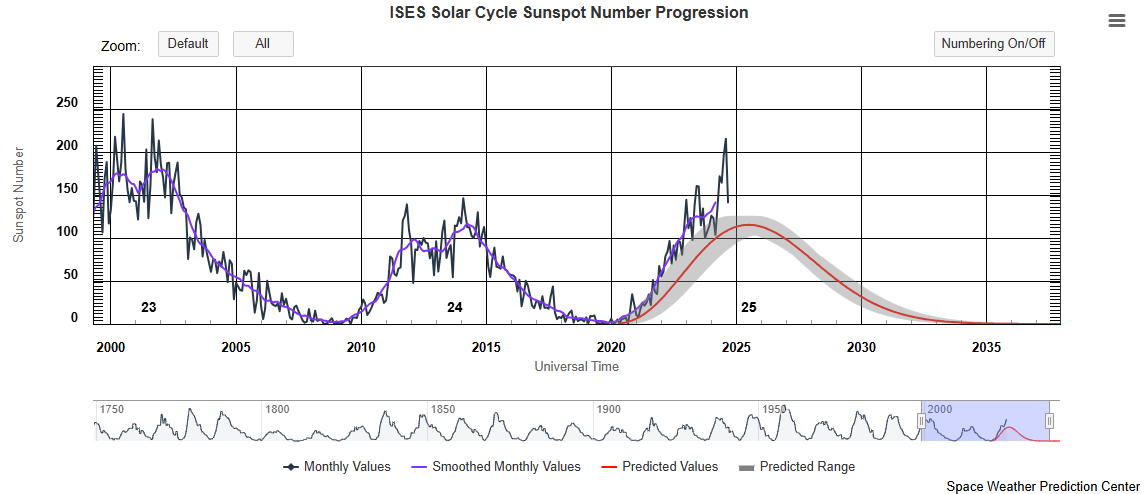
Which area of the graph represents the most recent
solar maximum?
Which area of the graph represents the most recent
solar maximum?
The Sun is composed of and in the form of .
Which stage of its life cycle is the Sun currently in?
Approximately how long is the Sun's solar cycle?
Which area of the graph represents the most recent
solar maximum?
Which area of the graph represents the previous solar maximum?
Which area of the graph represents the next solar minimum?
Which area of the graph represents the previous solar minimum?
What will the Sun become once it runs out of hydrogen to fuse into helium?
Where does nuclear fusion occur in the Sun?
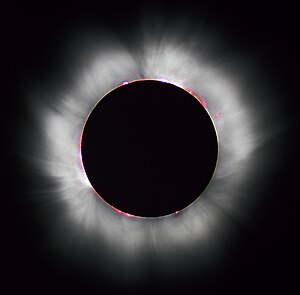
What part of the Sun is visible in this image?
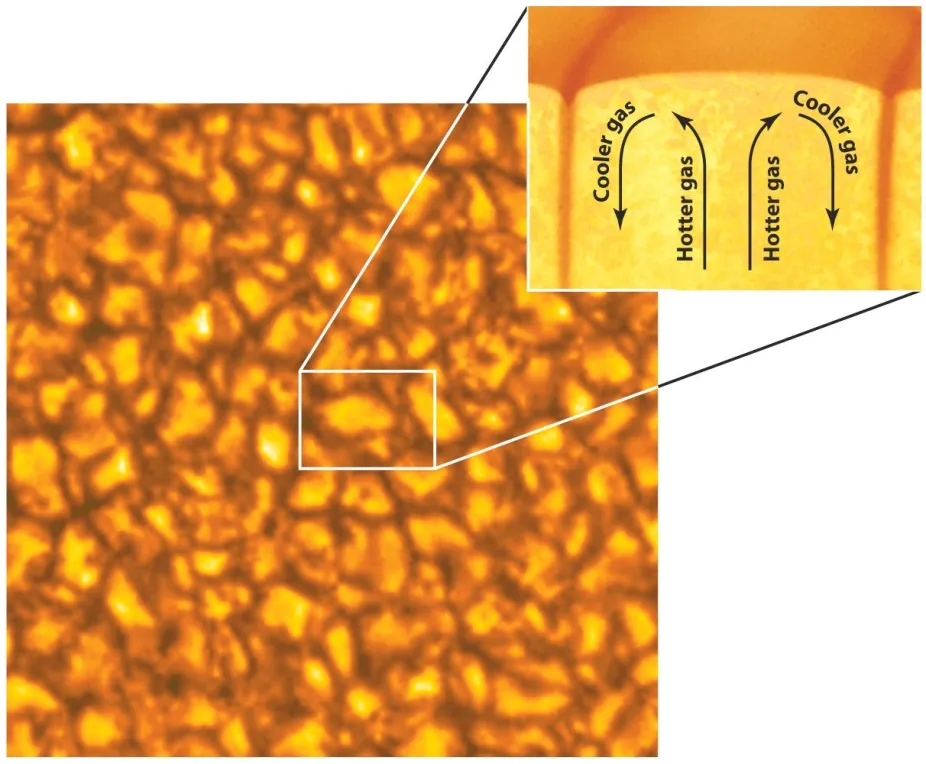
What type of energy transfer makes the Sun's surface appear "grainy"?
What can happen when magnetic field lines of the Sun interact with each other?
What do astronomers use to predict solar activity levels?
Which region of the Sun rotates fastest?
What is the visible surface of the Sun known as?
What is the result of the Sun's differential rotation?
Which of the following can affect telecommunications on Earth?
Sunspots are hotter than the surrounding areas.
What produces this phenomenon?
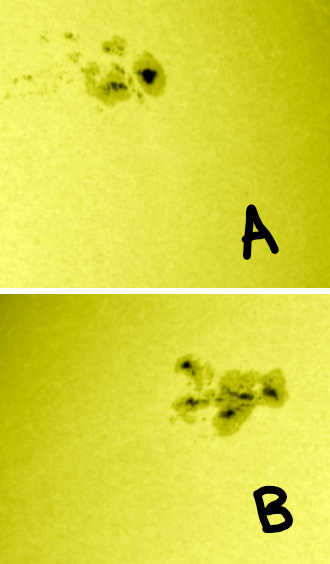
Which region of the Sun i s most likely to produce a solar flare?
Explain why you think either region A or B in the previous question will produce a solar flare.
Now that we have completed Unit 5, please rate yourself on the Unit 5 objectives from 1 (just starting) to 5 (mastered it!)
You may need to scroll horizontally to see all options
1 - getting started | 2 | 3 | 4 | 5 - mastered it | |
|---|---|---|---|---|---|
Identify the regions of the Sun | |||||
Discuss the structure and composition of the Sun. | |||||
Explain how the Sun produces energy | |||||
Examine solar activity, such as sunspots and solar flares. | |||||
Give examples how solar activity affects the Earth |
What parts of this unit did you enjoy?
Whats parts of this unit could be improved?