The length of the red line here is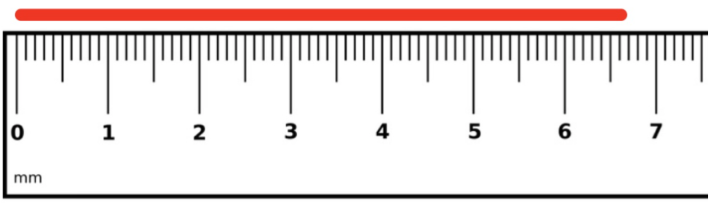
The length of the red line here is
This exam evaluates understanding of key Physics concepts covered during the semester with various question types.
The length of the red line here is
The length of the red line here is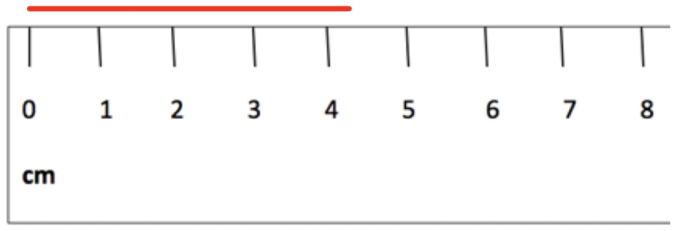
This graph describes the rote of a subway train.
During which interval is the train accelerating the fastest?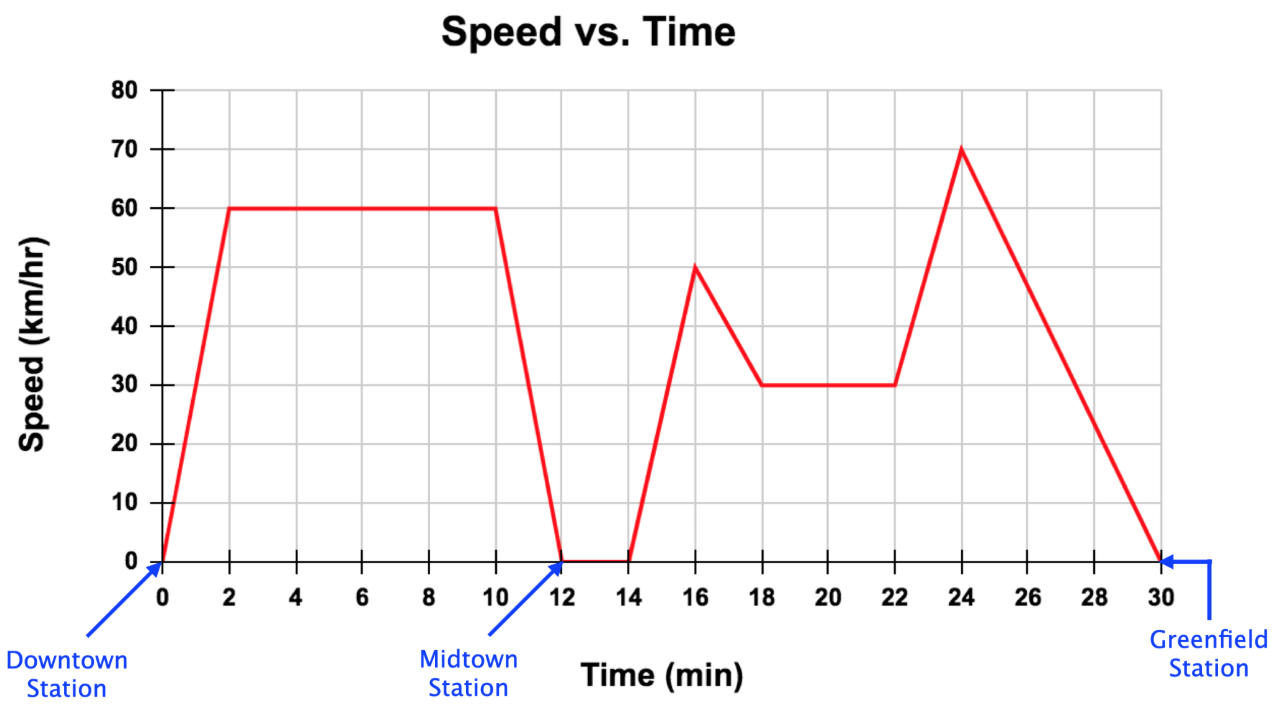
This graph describes the rote of a subway train.
Which statement best describes the train’s motion from 22 to 30 minutes?
Convert 603 km/h to meters per second. Show your work. [ 1 km = 1000 m and 1 hour = 3600 s ]
Convert the price of $1.23 per gallon to dollars per liter. Show your work. [3.79 liters = 1 gallon]
Gravity acts equally on all objects, regardless of mass.
The volume of the warehouse is ______ cubic meters. Show your work. [ 3 feet = yard and 1.09 yards = 1 meter]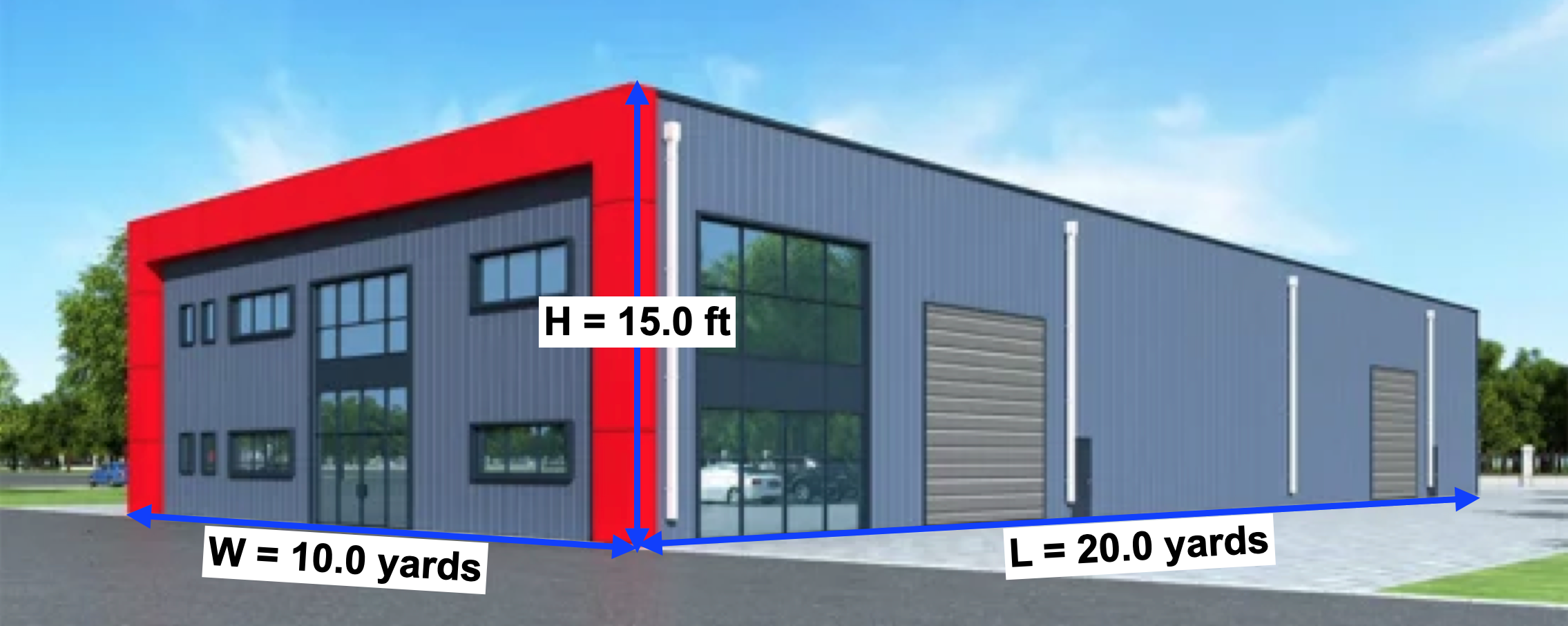
Calculate the time taken for a car to travel up a ramp if its final velocity is 25.0 m/s from an initial velocity of 10.0 m/s over a 200 m ramp.
Match the following terms with their descriptions:
| Draggable item | arrow_right_alt | Corresponding Item |
|---|---|---|
Metrology | arrow_right_alt | A degree of closeness to true value |
Accuracy | arrow_right_alt | Consistency of results in repeated measurements |
Precision | arrow_right_alt | The science of measurement |
Sort the attributes into the correct categories:
The slope corresponds to the speed of the object
The sign of the slope corresponds to motion direction
The area under the graph represents distance
Shows how far an object has moved over time
The slope corresponds to acceleration
Distance vs. Time Graphs
Speed vs. Time Graphs
Shared by Both
Which of Newton's Laws states that an object in motion stays in motion unless acted upon by an unbalanced force?
Which of the following statements are true about Newton’s First Law of Motion? (Select all that apply)
For every action, there is an equal and opposite reaction.
Match each force description to the correct force type:
| Draggable item | arrow_right_alt | Corresponding Item |
|---|---|---|
A force that opposes the motion of an object through the air. | arrow_right_alt | Normal Force |
A force that supports the weight of an object resting on a surface. | arrow_right_alt | Tension Force |
A pulling force directed along a rope, string, or cable. | arrow_right_alt | Air Resistance |
Classify the types of forces acting on a stationary object:
Tension Force
Normal Force
Gravitational Force
Contact Forces
Non-contact Forces
A 5 kg object is subjected to a force of 20 N. What is the acceleration of the object? Show your work.
Calculate the net force required to accelerate a 10 kg body at 3 m/s².
A 500 kg helicopter accelerates upward at 2.0 m/s². Its rotors provide 7000 N of lift. What is the magnitude of the air resistance force? (Assume g = 10 m/s²). Show your work.
An 800 kg car has an engine thrust of 2000 N east. Rolling friction opposes motion with 300 N west. What is the car's acceleration? Show your work.
A 1200 kg speedboat experiences 2500 N of thrust forward and 1300 N of water drag backward. Find its acceleration. Show your work.
A 550 kg elevator is pulled upward by a cable with 6050 N of tension. Calculate its acceleration. (Assume g = 10 m/s²). Show your work.
You push a 40 kg crate with 140 N. Sliding friction opposes with 60 N. What is the crate's acceleration? Show your work.