Preskoči na glavni sadržaj
Prijava
Sign up for FREE
arrow_back
Biblioteka

41 - Observe & Explain Electrostatic Charging

star
star
star
star
star
Posljednje ažuriranje 5 months ago
21
8
3
3
3
3
3
4
8
2
2
2
2
4
4
4
1
4
4
4
3
50
Pitanje 1
1.

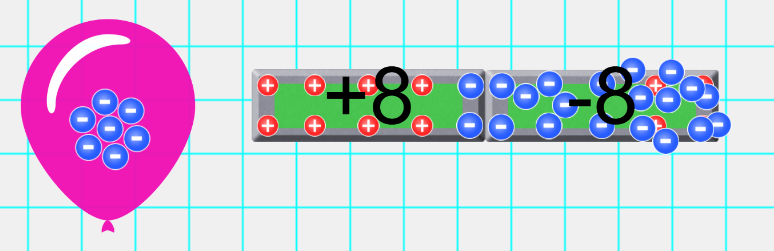
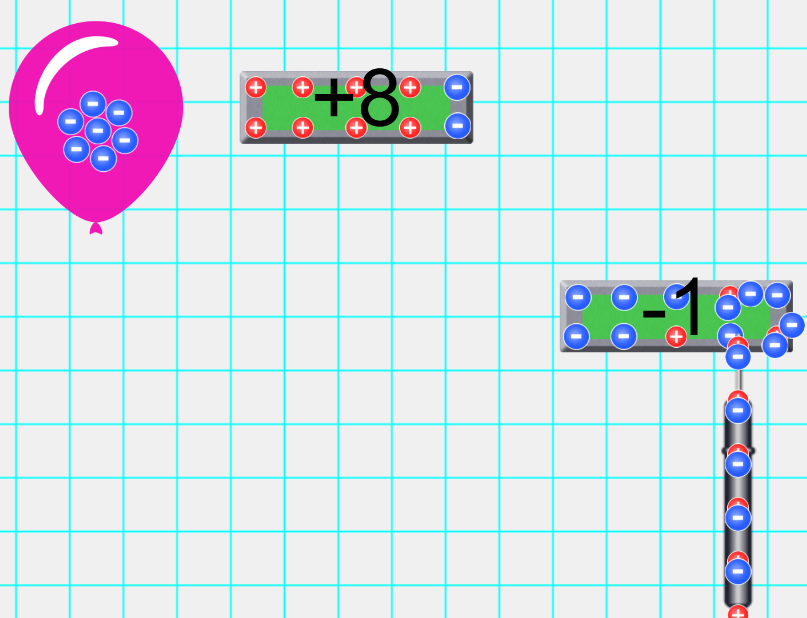
Observe the behavior of the balloons with each other, fur/hair, and other objects.

What do you notice?
What do wonder?

Pitanje 2
2.

I DO - Read and Annotate

When two balloons are rubbed with rabbit fur and released, they move even though nothing is touching them. The balloons push away from each other and respond to nearby objects such as the fur or a person. These effects are examples of static electricity. The word static means that electric charge is built up in one place, rather than flowing continuously. Static electricity allows objects to interact without physical contact.


People have noticed static electricity for thousands of years. Around 600 BCE, the Greek philosopher Thales of Miletus observed that amber could attract small objects after being rubbed with cloth or fur. The Greek word for amber, ēlektron, is where the words electron and electricity comes from. Although Thales could not explain the cause, his observations showed that rubbing materials together could change how objects interact.
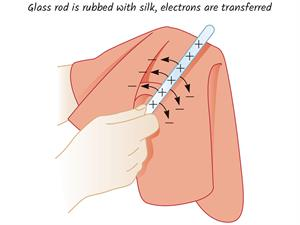

Modern science explains static electricity using the movement of electrons, which have a negative (–) charge. Protons, with a positive charge (+) remain fixed inside atomic nuclei. When a balloon is rubbed with rabbit fur, electrons are transferred from the fur to the balloon. The balloon gains extra electrons and becomes negatively charged, while the fur loses electrons and becomes positively charged. This process is called charging by friction. Friction does not create charge; it transfers electrons between materials.


WE DO - Group Practice

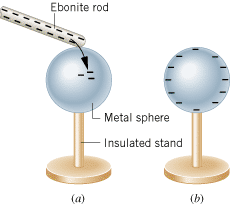
What actually moves when an object becomes electrically charged?
Pitanje 3
3.

I DO - Read and Annotate

Objects can also become charged through charging by conduction. In conduction, a charged object touches a neutral object, allowing electrons to move directly between them. After contact, the neutral object gains electrons or loses electrons and becomes charged with the same type of charge as the original charged object. Conduction requires direct contact and results in a permanent transfer of electrons.

WE DO - Group Practice

What would happen to the charge of a neutral object that is touched with a charged object?

Pitanje 4
4.

I DO - Read and Annotate

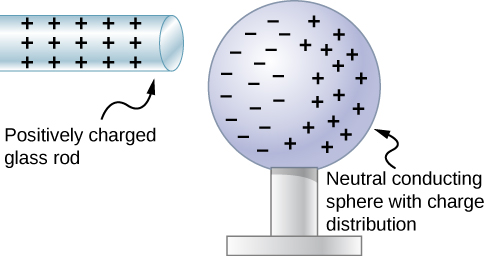
A charged object can attract a neutral object even when no electrons are transferred overall. This happens because charges inside the neutral object rearrange. Electrons shift slightly toward or away from the charged object, creating regions of slight positive and negative charge within the object. This rearrangement of charge is called polarization. Unlike conduction, the electron stays within the object, but moves within it. This makes polarization only last while a charged object is close. 

WE DO - Group Practice

Why was the balloon attracted to neutral objects that it doesn’t touch?

Pitanje 5
5.


I DO - Read and Annotate

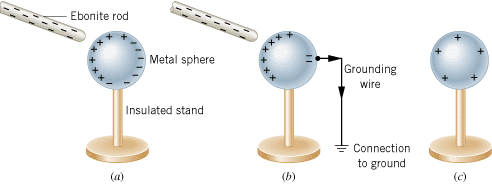
A neutral object can also become charged without being touched through charging by induction. In induction, a charged object is brought near a neutral object, causing charges inside the neutral object to redistribute. While the charged object is still nearby, the neutral object is briefly grounded, allowing electrons to enter or leave. After the ground is removed and then the charged object is taken away, the neutral object is left with a permanent charge opposite to the inducing object. Induction shows that contact is not required for an object to become charged.

WE DO - Group Practice

How can an object become charged without touching another charged object?

Pitanje 6
6.

WE DO - Group Practice

What is the relationship between polarization and induction?

YOU DO - Short Constructed Response

Answer on a response card; not your paper.

  • A - Answer: Directly answer the question in a complete sentence; use keywords from the prompt.

  • C - Cite: Provide specific evidence from the text, demonstrations, or data to support your answer. Just say it WHAT proves your answer, not HOW/WHY it proves it.

  • E - Explain: Explain HOW/WHY the cited evidence proves or supports your answer, connecting it back to your initial point. 

SCR1 - A charged balloon touches a neutral balloon, and afterward both balloons have the same type of charge. Explain which charging process occurred and how you know.

SCR2 - A charged balloon is attracted to a neutral metal spoon. The spoon is removed and placed on the ground. The charge is measured, but the spoon is still neutral. Why ISN'T the spoon charged by induction?

Pitanje 7
7.

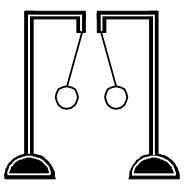
WE DO - Group PracticeThe diagram represents the interaction of charged spheres.
Which of the following statements describes the situation in the diagram?

Pitanje 8
8.

YOU DO - Independent Practice

You are given five electrically charged spheres and told that sphere 4 is positively charged. The following diagrams show what happens to these spheres when they are suspended in pairs close to each other.


What are the charges of the other spheres?

Positive (+)

Negative (-)

Sphere 1:

Sphere 2:

Sphere 3:

Sphere 5:

Pitanje 9
9.

YOU DO - Independent Practice

A student was given four electrically charged spheres. The following diagrams show what happened when these spheres were suspended in pairs close to each other.
Identify the following as True or False?


______ Spheres 1, 2, 3 and 4 have the same charge.

Pitanje 10
10.

YOU DO - Independent Practice

A student was given four electrically charged spheres. The following diagrams show what happened when these spheres were suspended in pairs close to each other.
Identify the following as True or False?

______ Spheres 1, 2 and 4 have the same charge.

Pitanje 11
11.

YOU DO - Independent Practice

A student was given four electrically charged spheres. The following diagrams show what happened when these spheres were suspended in pairs close to each other.
Identify the following as True or False?

______ Spheres 2, 3 and 4 have the same charge. 

Pitanje 12
12.

YOU DO - Independent Practice

A student was given four electrically charged spheres. The following diagrams show what happened when these spheres were suspended in pairs close to each other.
Identify the following as True or False?

______ Spheres 1 and 3 have the same charge.

Pitanje 13
13.

YOU DO - Practice Problems - Conduction, Polarization, and Induction


Procedure

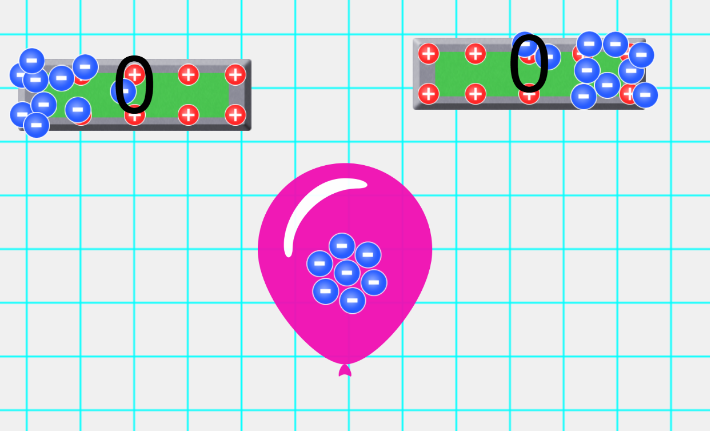
  1. Go to bit.ly/PCcharging


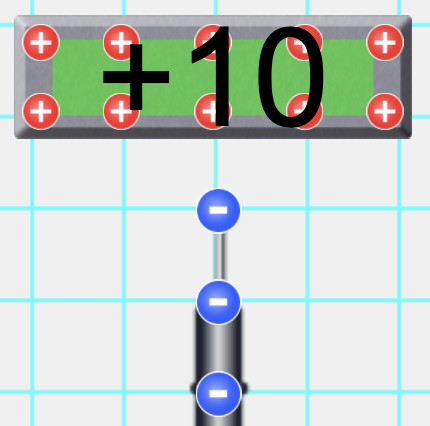
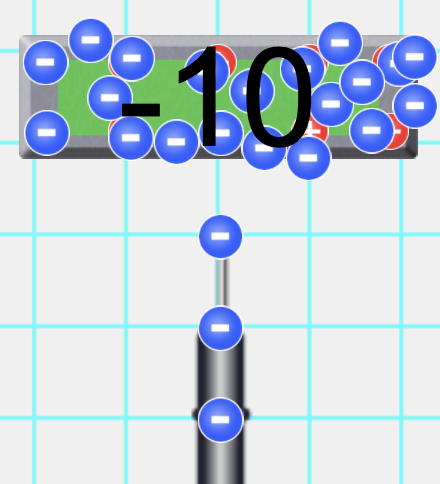
  1. Move the balloon close to the objects to polarize them.


  1. Touch the objects to allow charges to flow between them. 


  1. Move one of the objects to touch the ground wire. This will neutralize the charge on that object

    Check your work with your teacher. Did you earn 1 star?

Pitanje 14
14.

Did you earn 2 stars?

Pitanje 15
15.

Did you earn 3 stars?

Pitanje 16
16.
Pitanje 17
17.
Drugi mogući odgovor:
ground wire
protons
positive

neutral

electrons

negative

object
Pitanje 18
18.
Drugi mogući odgovor:
positive

negative

object

neutral

protons
ground wire
electrons
Pitanje 19
19.
Pitanje 20
20.

A balloon is rubbed on a wool sweater. Electrons move from the sweater to the balloon.
Which describes the charge transfer correctly?

Pitanje 21
21.

COMPLETE YOUR DOL:

Did you finish the DOL?