The carbon cycle is the movement of carbon through various reservoirs.
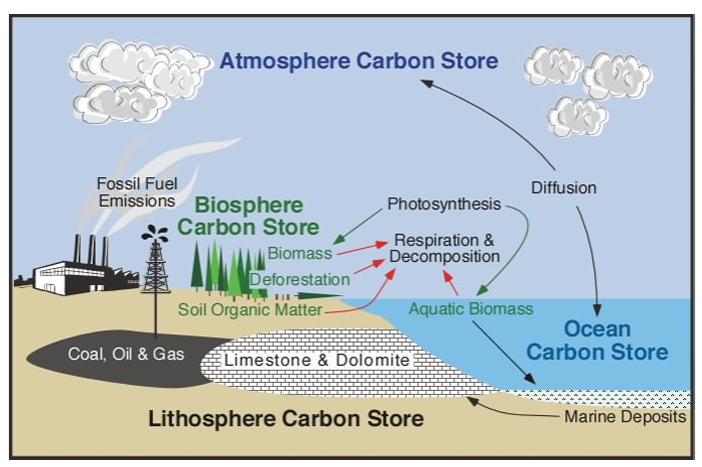
Carbon sources release carbon into the atmosphere.
Carbon sinks remove carbon from the atmosphere.
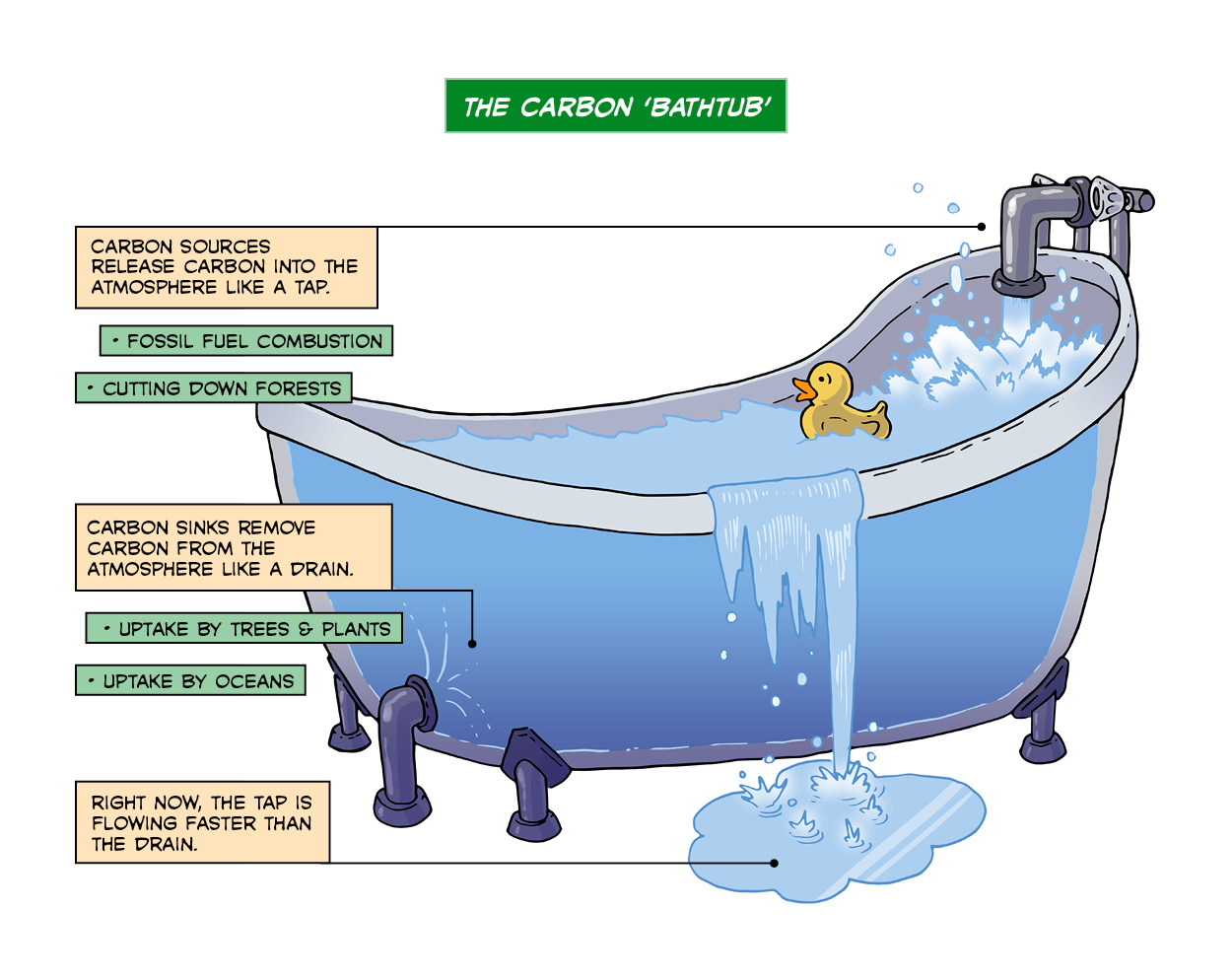
Consider the following items and identify them as a carbon sink or source.
If you need help, click here to watch the class recording.
Please note that the general version of this assignment is shown in the recording.
If you need help, click here to watch the class recording.
Please note that the general version of this assignment is shown in the recording.
The carbon cycle is the movement of carbon through various reservoirs.
Carbon sources release carbon into the atmosphere.
Carbon sinks remove carbon from the atmosphere.
Consider the following items and identify them as a carbon sink or source.
Plants:
Plants absorb carbon from the atmosphere through photosynthesis.
Animals:
Animals release carbon into the atmosphere through respiration
Ice sheets:
Ice sheets release carbon that was capture in the ice as bubbles.
Algae:
Algae take in carbon from the atmosphere through photosynthesis.
Forest fires:
Burning forests release carbon into the atmosphere
Cars:
Most cars burn fossil fuels which release carbon into the atmosphere.
Soil:
When plants die and decompose, much of their carbon is stored in the soil
Fossil fuels:
Fossil fuels store carbon that was removed from the atmosphere by plants.
Volcanoes:
Volcanic eruptions release carbon into the atmosphere.
Deforestation:
Cutting down trees reduces the amount of carbon that can be removed from the atmosphere.
Oceans:
Carbon dioxide dissolves easily into water
Sedimentary rocks:
Sedimentary rocks suh as limestone and dolomite contain calcium carbonate (a form of carbon).
For thousands of years, the balance between sources and sinks kept the Earth at a temperature that was ideal for living things.
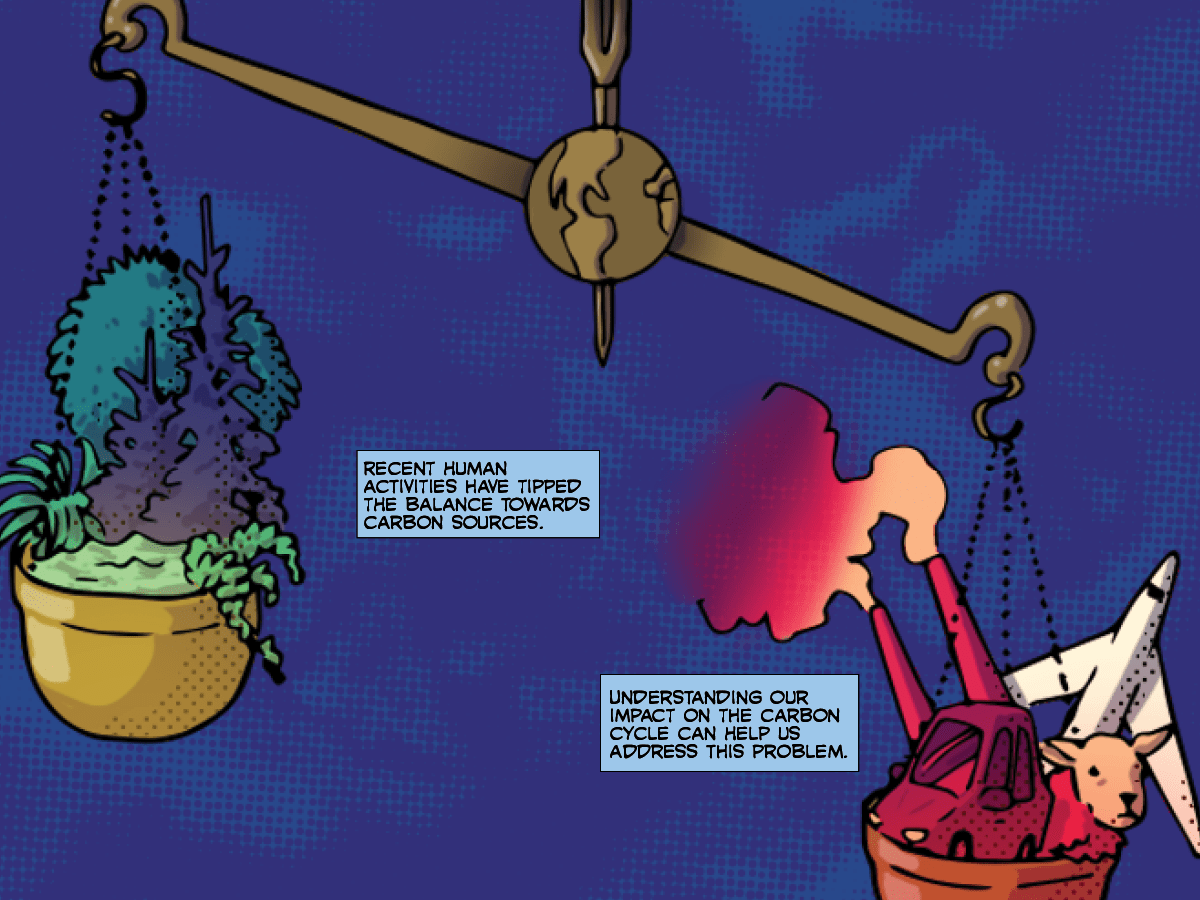
If there are more carbon sources than carbon sinks, there will be carbon in the atmosphere.
List 2 things humans could do to reduce the amount of carbon they produce.