Warm-up: What happens to a car that's been sitting out in the sun on a hot summer day? Why does this happen?
Question: How do greenhouse gases affect Earth’s climate?
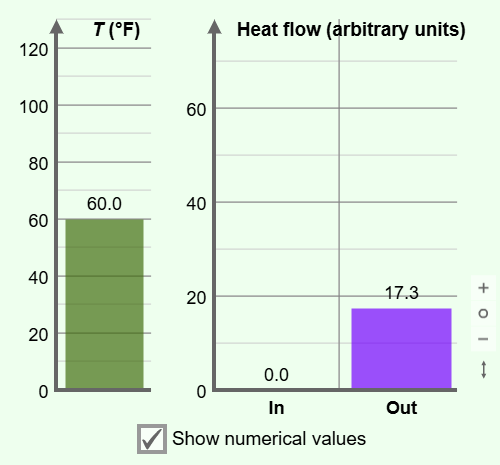
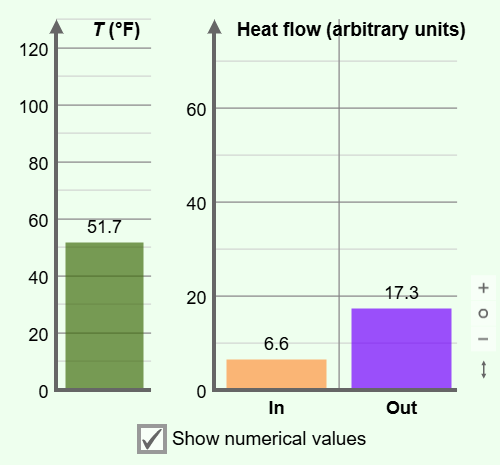
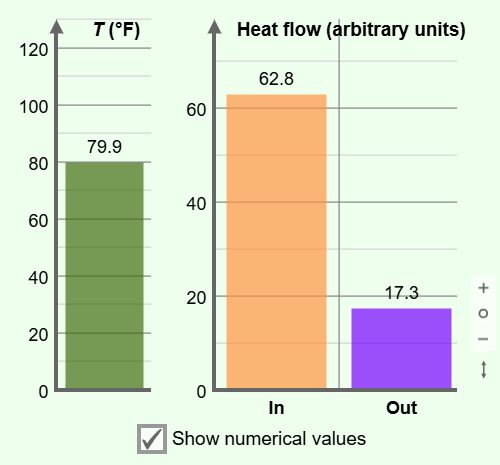
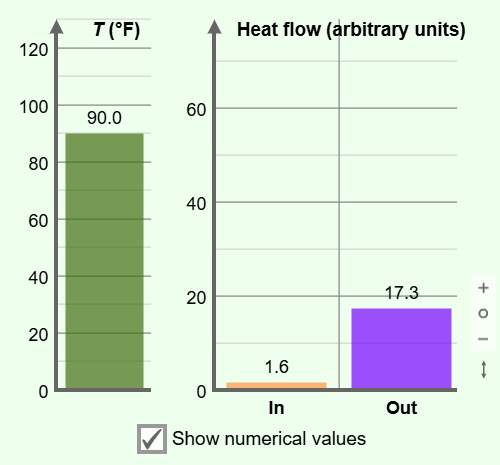
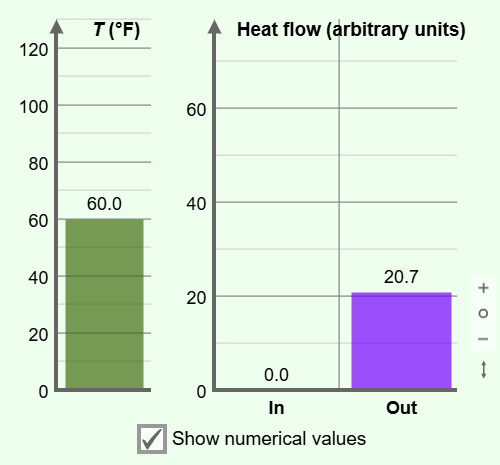
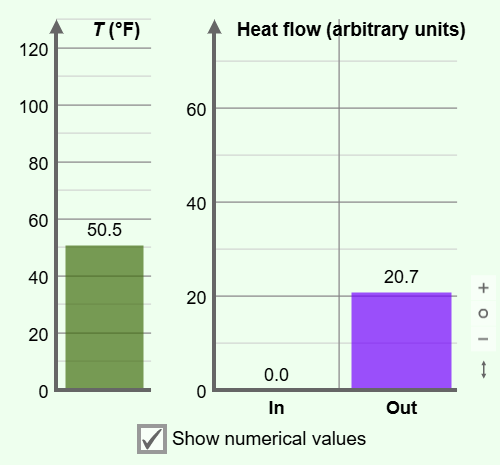
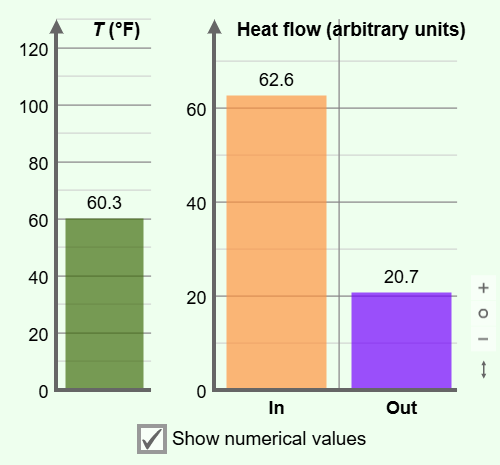
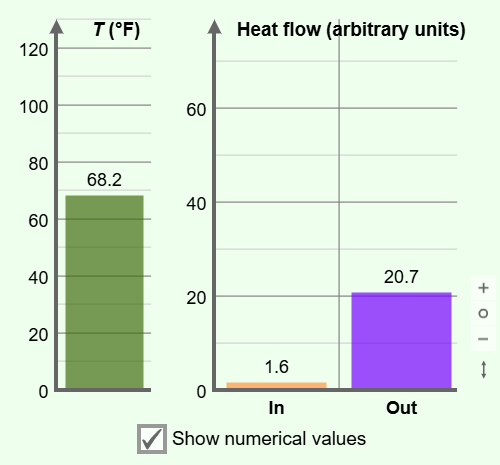
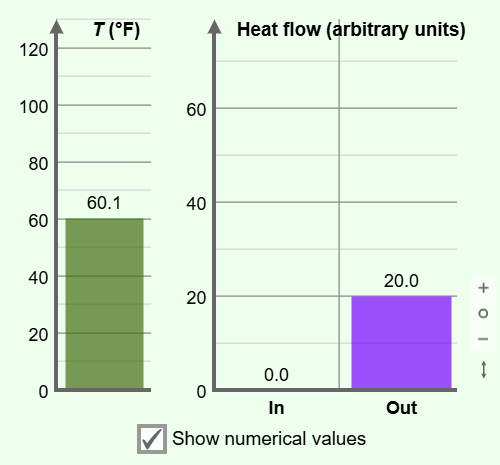
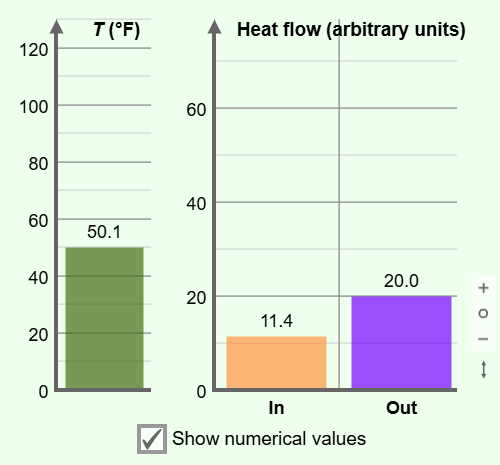
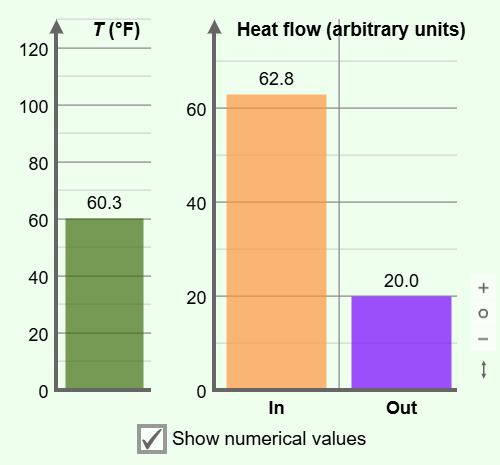
Examine the graphs below representing different times of the day with greenhouse gases set at 10%.
T (°F) represents changes in temperature measured in degrees Fahrenheit
Heat flow represents changes in heat going in and out of the atmosphere
Midnight
6 AM
Noon
6 PM
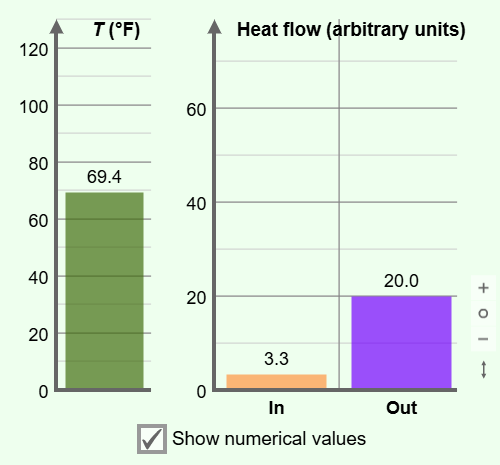
What do you notice about the heat flow into and out of Earth's atmosphere over the course of a day?
Heat into the atmosphere during the day and at night.
Heat out of the atmosphere from day to night.
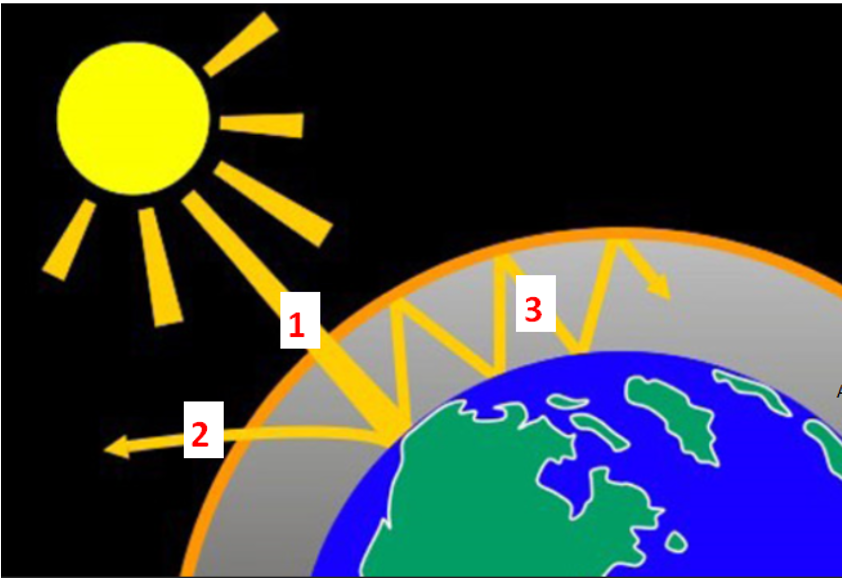
The diagram below represents the Earth's heat flow.
#1 Heat Flow In: heat coming from the sun
#2 Heat Flow Out: Heat being release back into space from the Earth
#3 Heat Flow Out being interrupted by greenhouse gases, causing heat to be trapped in the atmosphere.
Predict: When you change the amount of greenhouse gases in the atmosphere, which factor(s) do you expect to change?
Examine the graphs again.
Midnight
6 AM
Noon
6 PM
What is the highest temperature during the day?
What is the highest heat flow in during the day?
What is the heat flow out?
Examine these graphs where the greenhouse gases have increased to 50%.
Midnight
6 AM
Noon
6 PM
How have the variables changed with the increase in greenhouse gases?
Heat Flow In
Heat Flow Out
Temperature
Examine these graphs where the greenhouse gases have have been eliminated (0%).
Midnight
6 AM
Noon
6 PM
How have the variables changed with the decrease in greenhouse gases?
Heat Flow In
Heat Flow Out
Temperature
The influence of greenhouse gases on temperature is called the greenhouse effect.
Based on what you have seen, how does having a higher concentration of greenhouse gases effect the earth's ability to release heat back out to space?
Use this website to learn about the major greenhouse gases (GHG). Make sure to click on the "cards" to see both sides.
Match the greenhouse gas to the correct description for the first 3 gasses.
| Draggable item | arrow_right_alt | Corresponding Item |
|---|---|---|
Methane CH4 | arrow_right_alt | Blocks heat from escaping the atmosphere. Warmer air holds more of it and as Earth heats up, it traps more heat. |
Water vapor H2O | arrow_right_alt | Released when burning fossil fuels |
Carbon dioxide CO2 | arrow_right_alt | Second most important contributor to global warming |
Use this website to learn about the major greenhouse gases (GHG). Make sure to click on the "cards" to see both sides.
Match the greenhouse gas to the correct description for the last 3 gasses.
| Draggable item | arrow_right_alt | Corresponding Item |
|---|---|---|
Nitrous oxide N2O | arrow_right_alt | In the atmosphere, protects us from UV rays but acts as a GHG on the ground |
Chlorofluorocarbons (CFCs) | arrow_right_alt | Released by factors, power plants, and fertilizers and damages the ozone layer |
Ozone O3 | arrow_right_alt | Man-made gases that damage the ozone layer |
In your own words, explain how the greenhouse effect works.
Please evaluate your performance on the learning targets
I need help | I am getting there | I got this | |
|---|---|---|---|
Learning Target 1: I can Describe how greenhouse gases warm the atmosphere | |||
Learning Target 2: I can Identify and Describe one factor that impacts the greenhouse effect. | |||
Learning Target 3: I can Explain the cycle of heating and cooling in the Earth's past. |