Log in
Sign up for FREE
arrow_back
Library

x3.06 Unit 3 Test MOD 25-26

star
star
star
star
star
Last updated about 2 hours ago
20 questions
Required
3
Required
3
Required
3
Required
3
Required
3
Required
3
Required
3
Required
3
Required
3
Required
3
Required
3
Required
3
Required
3
Required
3
Required
3
Required
2
Required
2
Required
3
Required
2
Required
6
Question 1
1.

Question 2
2.

Question 3
3.

Question 4
4.

Draggable itemarrow_right_altCorresponding Item
arrow_right_alt
arrow_right_alt
arrow_right_alt
Question 5
5.

Draggable itemarrow_right_altCorresponding Item
arrow_right_alt
arrow_right_alt
arrow_right_alt
Question 6
6.

Question 7
7.

Question 8
8.

Question 9
9.

Question 10
10.

Question 11
11.

Question 12
12.

Question 13
13.

Question 14
14.

Question 15
15.

Question 16
16.

Question 17
17.

Question 18
18.

Question 19
19.
As a result of climate change, the number of extreme weather events is __________
Question 20
20.

Climate resilience is the ability to anticipate, prepare for, and respond to the impacts of climate change.

This is achieved through mitigation (action to reduce emissions that cause climate change) and adaptation (action to manage the risks of climate change impacts).

Pick the climate resilience strategy you think would be most effective, describe it, and explain why you chose it.

If we reduced the rate that we add carbon dioxide to the atmosphere from 10.6 to 9 gigatons of carbon per year, how would Earth's global temperature change?
Remain the same
Continue to increase
Begin to decrease
The diagram below represents the Earth's heat flow.

#1 Heat Flow In: heat coming from the sun

#2 Heat Flow Out: Heat being release back into space from the Earth

#3 Heat Flow Out being interrupted by greenhouse gases, causing heat to be trapped in the atmosphere.
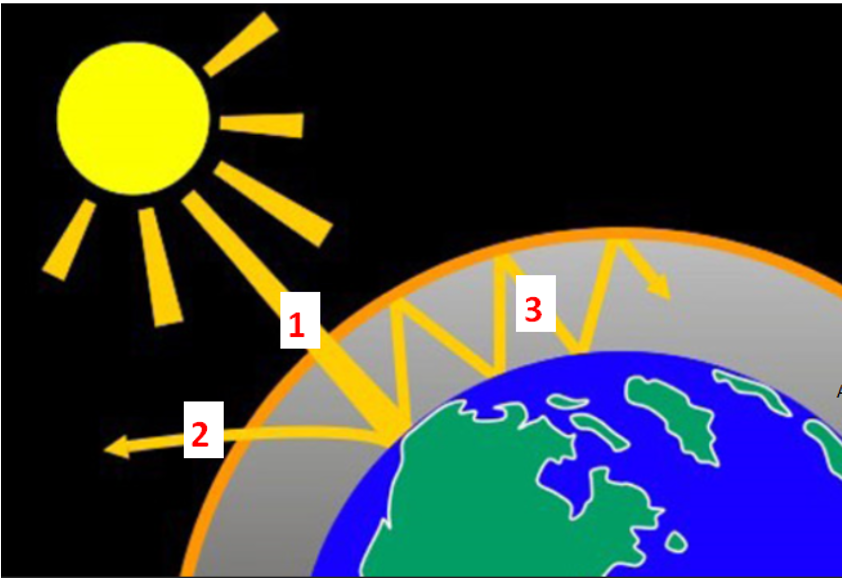

If the amount of greenhouse gases increase in the atmosphere, which variable would NOT change?
Heat coming in from the sun
Heat trapped in the atmosphere
Heat released to space
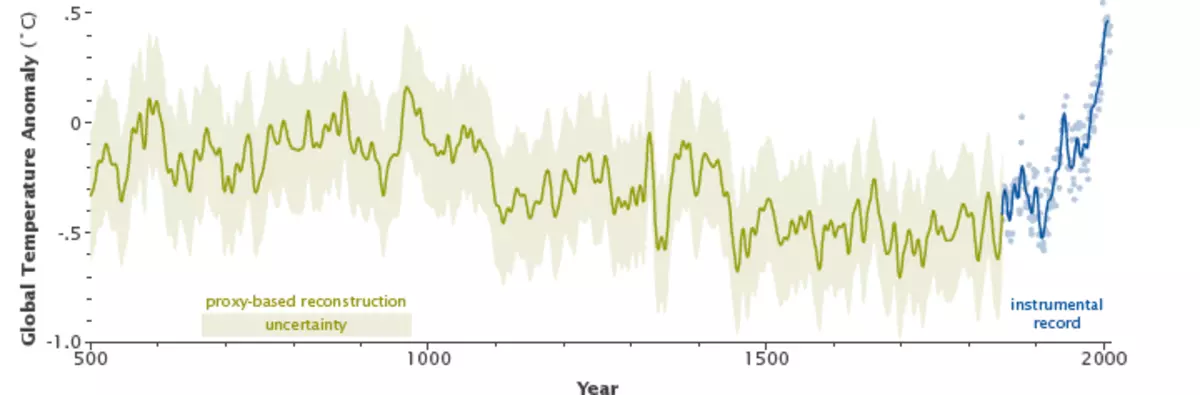
The average temperature of the Earth's surface has increased by about 2 degrees Fahrenheit (1 degree Celsius) since the late 1800s.

What is the primary cause for this change?
Carbon dioxide emissions by humans
Increasing sea ice and forest cover
Natural variation in Earth's temperature
Match the greenhouse gas to the correct description
Carbon dioxide CO2
Blocks heat from escaping the atmosphere. Warmer air holds more of it and as Earth heats up, it traps more heat.
Methane CH4
Released when burning fossil fuels
Water vapor H2O
Second most important contributor to global warming
Match the greenhouse gas to the correct description
Chlorofluorocarbons (CFCs)
In the atmosphere, protects us from UV rays but acts as a GHG on the ground
Ozone O3
Released by factors, power plants, and fertilizers and damages the ozone layer
Nitrous oxide N2O
Man-made gases that damage the ozone layer
Without the greenhouse effect, what would Earth's temperature be like?
No change
Very hot
Very cold
Which communities often face the worst effects of climate change?
Wealthy urban communities
Low-income and minority communities
Communities located near the equator
Why is the community you selected in the previous question more affected by climate change than others?
They produce more greenhouse gases than others
They lack resources and financial support
They are located along the coasts
What produces the majority of Washington's greenhouse gases?
Electricity
Buildings
Transportation
What is a major consequence of the decreasing amounts of sea ice at the North Pole?
Increased habitat for polar bears and seals
Rising global sea levels due to melting ice
More ice formation in the Antarctic region
Which organism that is essential to the culture of the Swinomish and other Washington tribes is being threated by climate change?
Salmon
Bear
Buffalo
What is the primary source of greenhouse gases?
Evaporation from the ocean
Volcanic eruptions
Combustion of fossil fuels
What is a major source of methane emissions?
Livestock and agriculture
Mining coal, oil, and natural gas
Combustion of fossil fuels
Earth's global temperatures have risen and fallen in the past.


How does the rate of today's global temperatures compare to the past?
There is no change in the rate of climate warming compared to the past.
Past changes in the climate have been faster than the changes we're seeing today.
Today, the Earth's climate is changing much faster than it has changed in the past.
Modern instruments have only been around for a little over 100 years.

So how do we know what greenhouse gas concentrations (and temperature) were in Earth's past?
Air bubbles trapped in ice cores
Marine sediments
Tree rings
In some parts of the world, rainstorms have become more intense over the past several decades. Is that a change in weather or climate?
Weather
Climate
When you hear it’s unusually hot today, is that about the climate or weather?
Weather
Climate
What consequence of climate change is threatening Washington's salmon populations?
More snowpack
Warmer streams
Increased storms