Log in
Sign up for FREE
arrow_back
Library

x4.03 Energy Challenge 25-26

star
star
star
star
star
Last updated about 2 hours ago
23 questions
Note from the author:
Required
0
Required
14.5
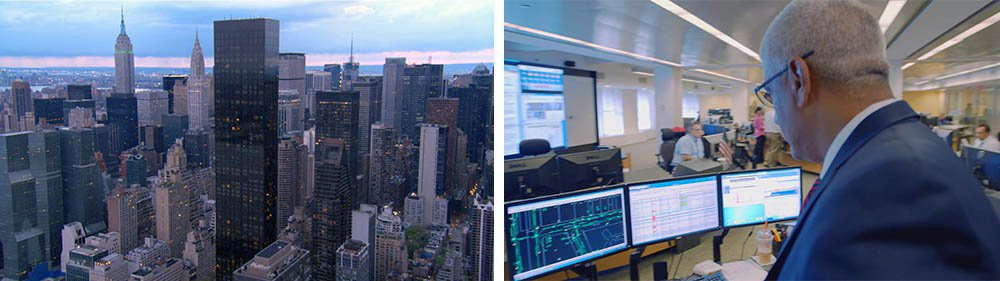
Congratulations, you are the new director of the Greenville Light & Power Department!

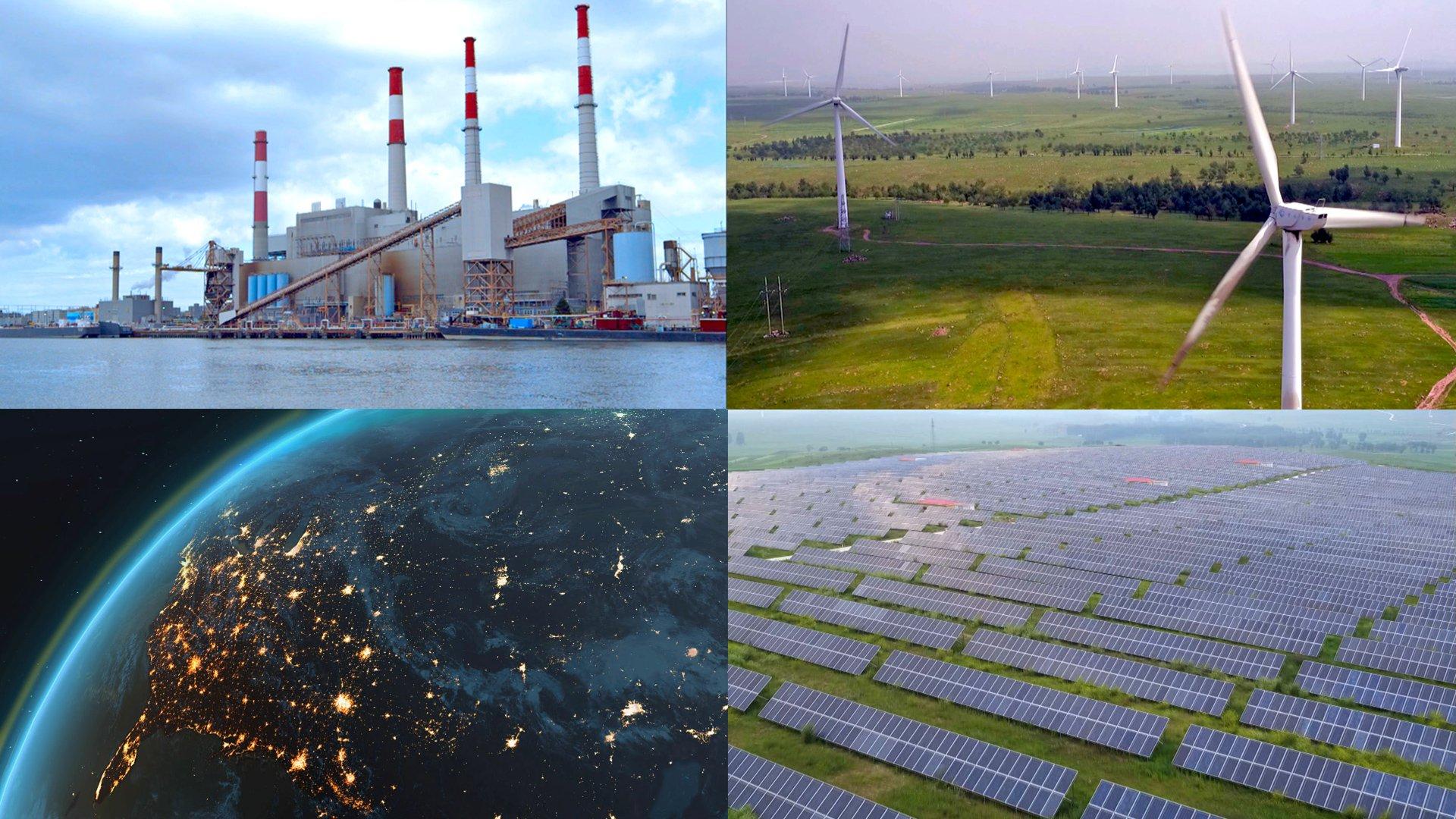
You are in charge of the city's power grid. This is a system of power lines and other tools that deliver electricity from suppliers to customers. As Greenville grows, more people will need electricity in the next 20 to 30 years. Because of this, you need to think about where the electricity comes from.

It is important to think about the growing need for electricity, but there is another big concern. Making electricity is one of the main reasons for greenhouse gas emissions, like carbon dioxide (CO2), in the United States. Greenhouse gases are connected to global climate change, which can harm our planet.
Question 1
01:03
keyboard_arrow_down
Required
0
Question 1
1.

As the video suggests, planning your city’s energy future presents you with both an opportunity and a challenge.

While the city’s power plant currently burns coal to generate electricity, there are other options.

What would you need to know about other energy sources to decide if they should be used instead?

Required
0.5
Required
0.5

After asking several energy consultants which type of energy they would recommend to power Greenville’s grid, you receive three proposals. Your job is to review them and choose the best option.
  • Proposal 1: 100% natural gas
  • Proposal 2: 100% renewable energy sources
  • Proposal 3: 50% natural gas, 50% renewable energy sources
You’ll need to evaluate the proposals based on three criteria: the availability, cost, and reliability of the energy sources. You should also consider the overarching goal of producing electricity that has less impact on the planet.

Availability: Fossil Fuels

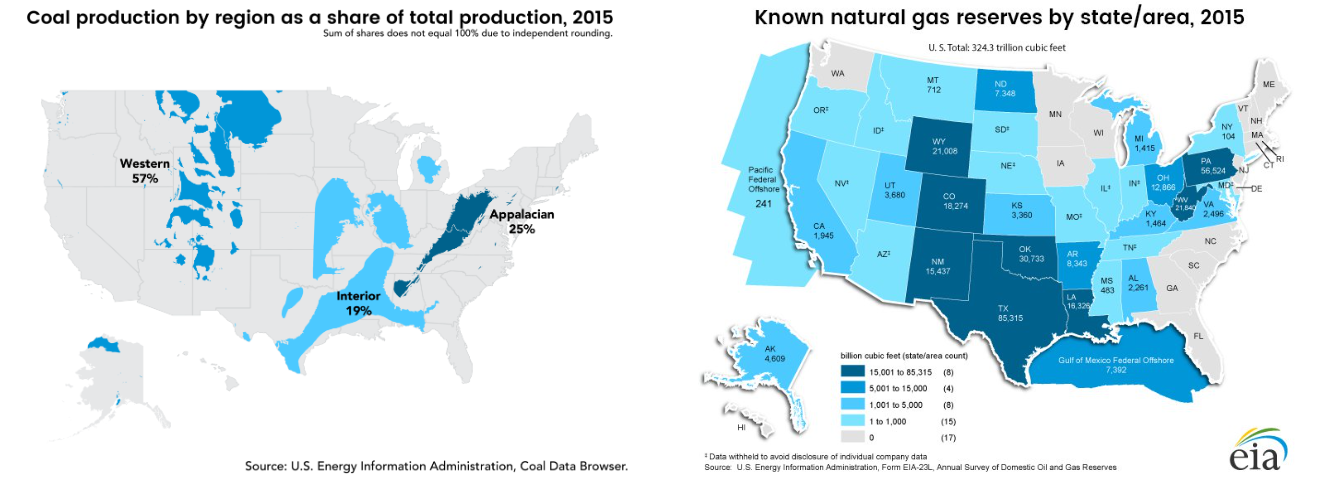
These two maps show where coal (on the left) and natural gas (on the right) come from. These are the natural resources we use most to make electricity in the United States today. The U.S. has a lot of coal, which is found in many states. In fact, the coal here makes up one-quarter of all the coal in the world. The amount of known natural gas has been growing almost every year since 2000.


For an energy source to be used in a city’s power grid, there needs to be a lot of it available. Fossil fuels, which include rock (coal), liquid (crude oil), and gas (natural gas), are taken from the ground to provide energy. This energy has helped build many of the big economies in the world today.

In the past, coal was the main source of electricity in the United States. But in April 2015, natural gas became more popular than coal for the first time. We are using natural gas more and more because new methods, including one called fracking, make it easier to get natural gas from the ground. Natural gas is also better for the air than coal because it puts about half as much CO2 into the atmosphere.
Required
0.5
Required
0.5
Question 6
01:20
keyboard_arrow_down
Required
0.5
Question 7
02:17
keyboard_arrow_down
Required
0.5
Required
0.5
Required
0.5
Required
0.5
Required
0.5
Question 12
00:15
keyboard_arrow_down
Required
0.5
Question 13
00:56
keyboard_arrow_down
Required
0.5

Cost: Fossil Fuels

Understanding the cost of power plants involves more than just fuel prices; it also includes construction, maintenance, and operational costs, such as machinery and electrical distribution systems. Fossil fuel power plants typically utilize boilers that convert fuel into steam to generate electricity, with coal and natural gas currently supplying about one-third of the country’s electricity. The cost of these natural resources can fluctuate based on availability and global events, making natural gas currently cheaper due to its abundance. Consequently, power plant managers often opt to modify existing boilers to use the least expensive fuel available, as this is generally more cost-effective than building new plants.

Fossil fuels are not just about their prices; they also have hidden costs that hurt the environment. When we mine, drill, and move these fuels, it can hurt plants, damage the land, and make the air and water dirty. Working in the ocean can also harm sea life. Accidents can happen, and cleaning them up can be very expensive and can cause long-lasting problems for nature and people's health.

Some people worry about wind and solar power because they might not look nice or could affect local plants and animals while being built. However, once they are up and running, they have a much smaller impact on the environment.
Required
0.5
Question 15
00:49
keyboard_arrow_down
Required
0.5

Cost: Renewables

Wind and solar power come from natural energy that is free. You might think that this would make the electricity they produce cheap. However, right now, wind and solar power are often more expensive to create and use than energy from fossil fuels. This happens for a couple of reasons. First, starting new technologies can be very costly at first. Second, the best places for making large amounts of wind and solar power are usually far away from cities. This means it costs a lot to connect these energy sources to the places that need electricity. One way to lower the cost is to make renewable energy production work better.
Required
0.5
Question 17
01:18
keyboard_arrow_down
Required
0.5

Reliability: Fossil Fuels


More cities are using information from watching how energy is used. This helps them decide how to share energy better. A system that uses this information is called a “smart grid.”

Electricity is very important for our daily activities. We need a good source of energy to keep everything working. If we don't have enough energy, we can have outages, or blackouts. This happens more often when everyone is using a lot of electricity, like during busy times.

Fossil fuels, like coal and natural gas, are mainly used to power big cities during these busy times. They are reliable because we can transport them easily using trucks and trains. We can burn fossil fuels anytime to make electricity. Also, we can store fossil fuels for later, which helps us have a steady supply of energy.
Required
0.5

Reliability: Renewables

Engineers are working hard to make solar and wind power more reliable. This is important because more people are using these types of energy, and the costs are getting lower, especially in cities. One big area they are studying is how to create better batteries. This helps solve a main problem with renewable energy: it relies on weather.

When the sun is shining, special panels called photovoltaic cells make electricity. Wind turbines generate power when the wind is strong. But when the weather is bad, there might not be enough energy produced.
Required
0.5
Question 20
00:29
keyboard_arrow_down
Required
0.5
Question 21
02:20
keyboard_arrow_down
Required
1
Question 22
22.
Applying what you’ve learned, evaluate the type of energy used to generate electricity according to each of the three criteria: availability, cost, and reliability. Rate each on a scale of 1 (poor) to 5 (excellent)

Then decide which of the proposals you’ll choose to meet Greenville’s electricity needs. Remember that your choice would take into consideration the city’s expected growth over the next 20 to 30 years and the environmental impact of the energy source(s).

Proposal 1: 100% natural gas
Availability: __________
Cost: __________
Reliability: __________

Proposal 2: 100% renewable energy sources
Availability: __________
Cost: __________
Reliability: __________

Proposal 3: 50% natural gas, 50% renewable energy sources
Availability: __________
Cost: __________
Reliability: __________

Which proposal would you choose? __________
Question 23
23.

  1. Make a claim: Which proposal was the best?
  2. Support your claim: Use evidence from this assignment to justify your choice that relates to availability, cost, and reliability.

Question 2
2.

Question 3
3.

Question 4
4.

Question 5
5.

Question 6
6.

Question 7
7.

Availability: Renewables

According to the U.S. Energy Information Administration, there is enough coal to last about 250 years and natural gas to last about 90 years, based on how much we use now. This means we might need to find new ways to get energy that don’t run out so quickly. Two ways to get energy from the Sun are leading the way
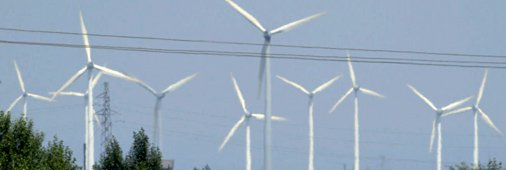

Wind Power
Wind is made when the Sun heats the Earth's surface unevenly. As long as the Sun is shining, the wind will keep blowing. Wind turbines have big blades that spin on a tall tower. Inside the turbine, a generator changes the energy from the moving air into electricity. This electricity travels through power cables to homes and buildings.

Sometimes, many wind turbines are put together in places called "wind farms." These farms work like power plants to create a lot of electricity. In 2015, wind turbines made 5 percent of all the electricity used in the U.S. Experts believe that wind could make 10 times more electricity than what people in the U.S. use now.
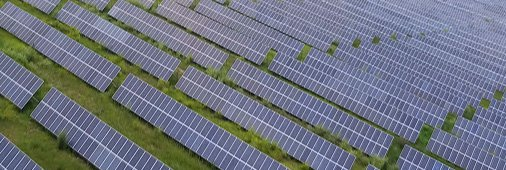

Solar Power
Solar energy can be changed into electricity and sent to a power grid, or it can be used right where it is made, like in a house, an apartment, a store, or a factory. This works through special devices called photovoltaic ("foh-toh-vol-tey-ick") cells. Many of these cells can be connected together to make solar panels.

Photovoltaic (PV) cells take in sunlight and turn the energy of moving electrons into electricity. In 2015, solar power made less than 1 percent of all the electricity in the U.S., but it can make even more energy than wind power in the future.
Question 8
8.

Question 9
9.

Question 10
10.

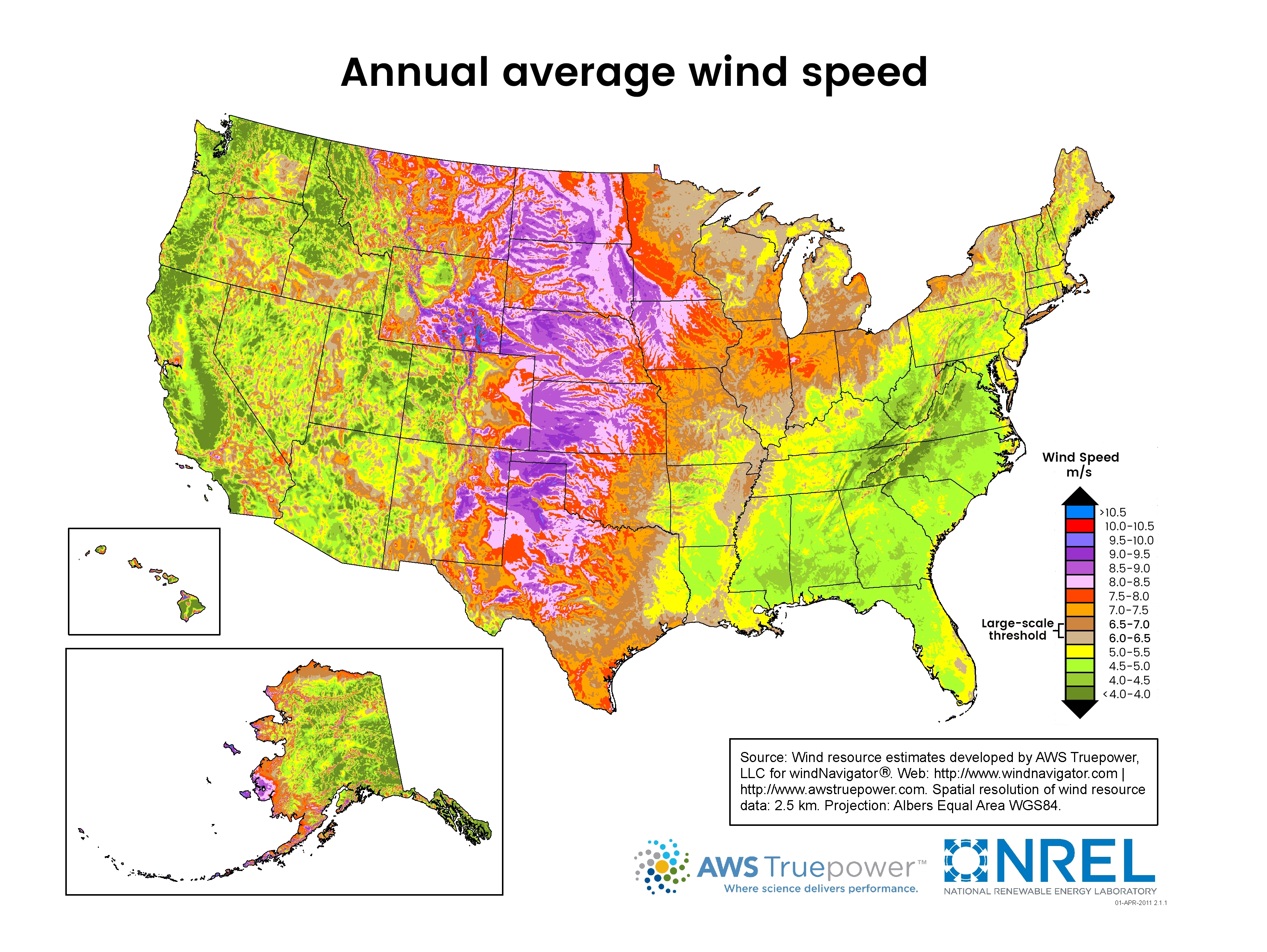
Based on the map of annual average wind speed, which area has the greatest potential for wind power?

Question 11
11.

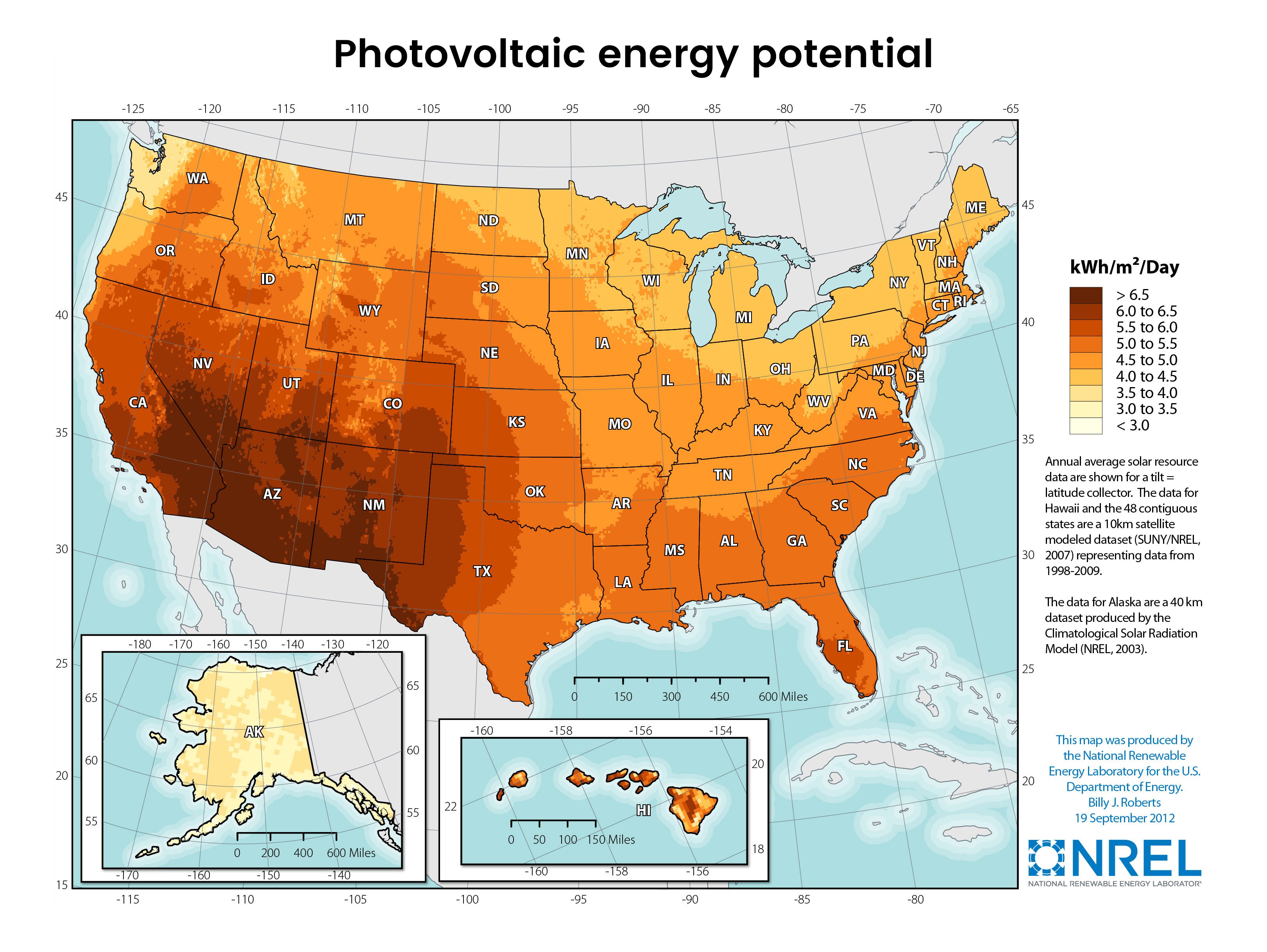
Based on the map of photovoltaic (sun) energy potential, which area has the greatest potential for solar power?

Question 12
12.

Question 13
13.

Question 14
14.

Question 15
15.

Question 16
16.

Question 17
17.

Question 18
18.

Question 19
19.

Question 20
20.

Question 21
21.

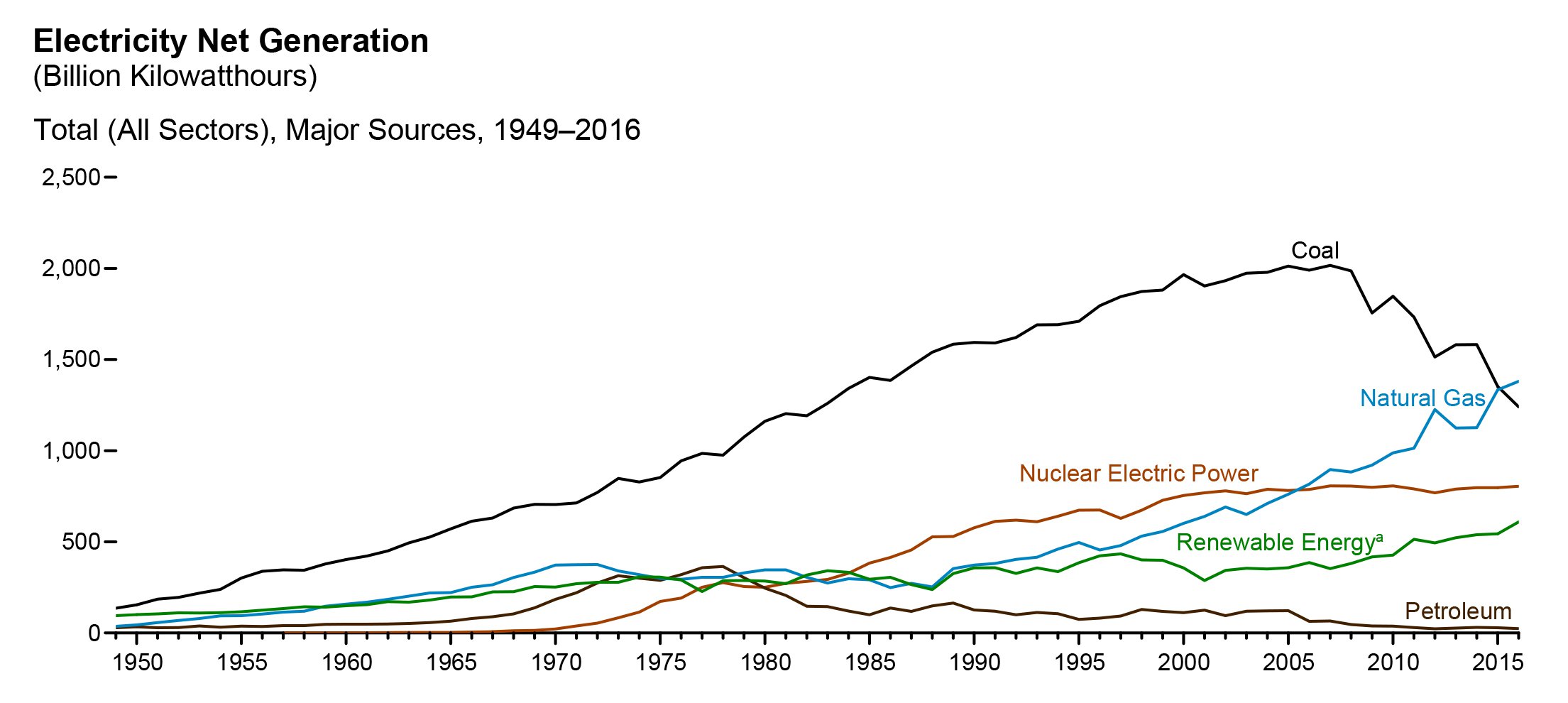
This graph shows how different sources of energy have been used in the United States to produce electricity since 1949.

Which sources have decreased since 2005?
Coal
Natural gas
Renewable energy
Petroleum
Which sources have increased since 2005?
Coal
Natural gas
Renewable energy
Petroleum
What is a benefit of using natural gas instead of coal?
It releases half the amount of CO2
There is an unlimited supply
It is cheaper than coal
Which energy source has been the main source of electricity since 2015?
oil
coal
natural gas
Which 2 factors are needed to turn organic matter into coal?
Time and pressure
Sunlight and water
Heat and swampy water
Why does the structure of hydrocarbons make them effective for producing energy?
Their bonds contain lots of concentrated electrons. When those bonds are broken, the transfer of electrons releases energy.
When hydrocarbon chains are exposed to heat, the carbon atoms divide and release an enormous amount of energy
Hydrogen and carbon are both reactive elements. When combined, their electrons spontaneously trade places and release energy.
What powers both wind and solar power?
water
the Sun
heat inside the Earth
What is a potential drawback of wind and solar power?
There is no technology that can produce energy from the Sun or wind
They generate energy 24/7
They don't generate energy without the Sun or wind
What is used to turn the turbine to produce most electricity?
Water
Wind
Steam
Which energy source is cheaper and "cleaner"?
coal
oil
natural gas
What are the "hidden costs" of fossil fuels?
Impact on the environment
Things hidden in the fossil fuels
Extra money that must be paid
What could be threatened by rising temperature and increased floods and droughts?
Food supply
Fossil fuels
Air quality
Why is electricity from wind and solar power often more expensive than fossil fuels?
Because new technology is expensive to start and power lines are costly
Because fossil fuels are easier to transport
Because wind and solar power are hard to find
Why is it important to make wind and solar power cheaper and more efficient?
It will increase reliance on fossil fuels
It will reduce the need for any energy conservation
There is a limited supply of fossil fuels
Why are fossil fuels considered reliable sources of energy?
They can be easily transported and stored
They are free to use
They never run out
What is renewable power dependent on?
Nuclear reactions
Fossil fuels
Weather
What is a major concern with renewable energy?
It is difficult to store and not always available
It has too much energy stored in chemical bonds
It produces energy all the time
What is a potential solution to the issue with renewable energy?
Batteries
Chargers
Generators