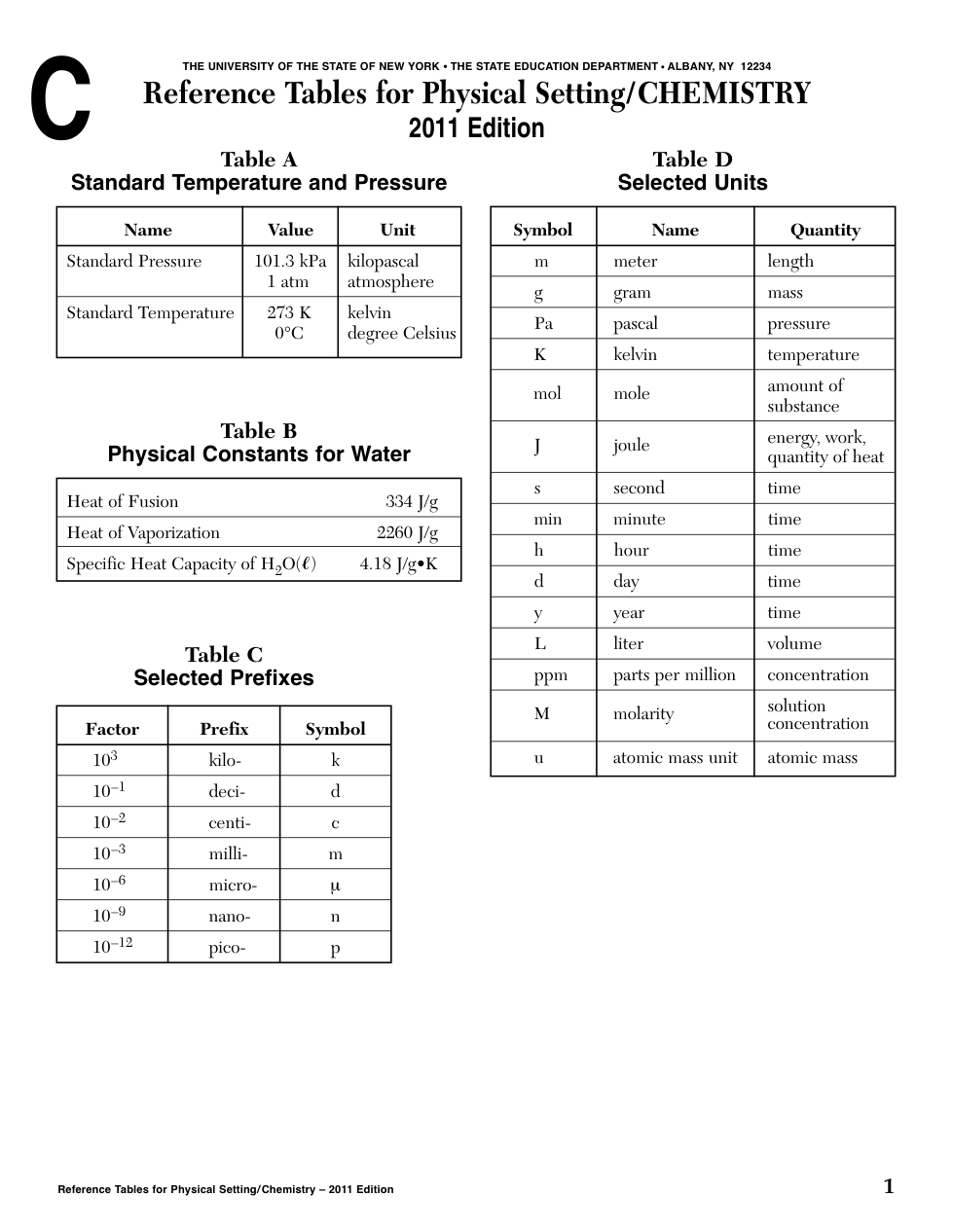
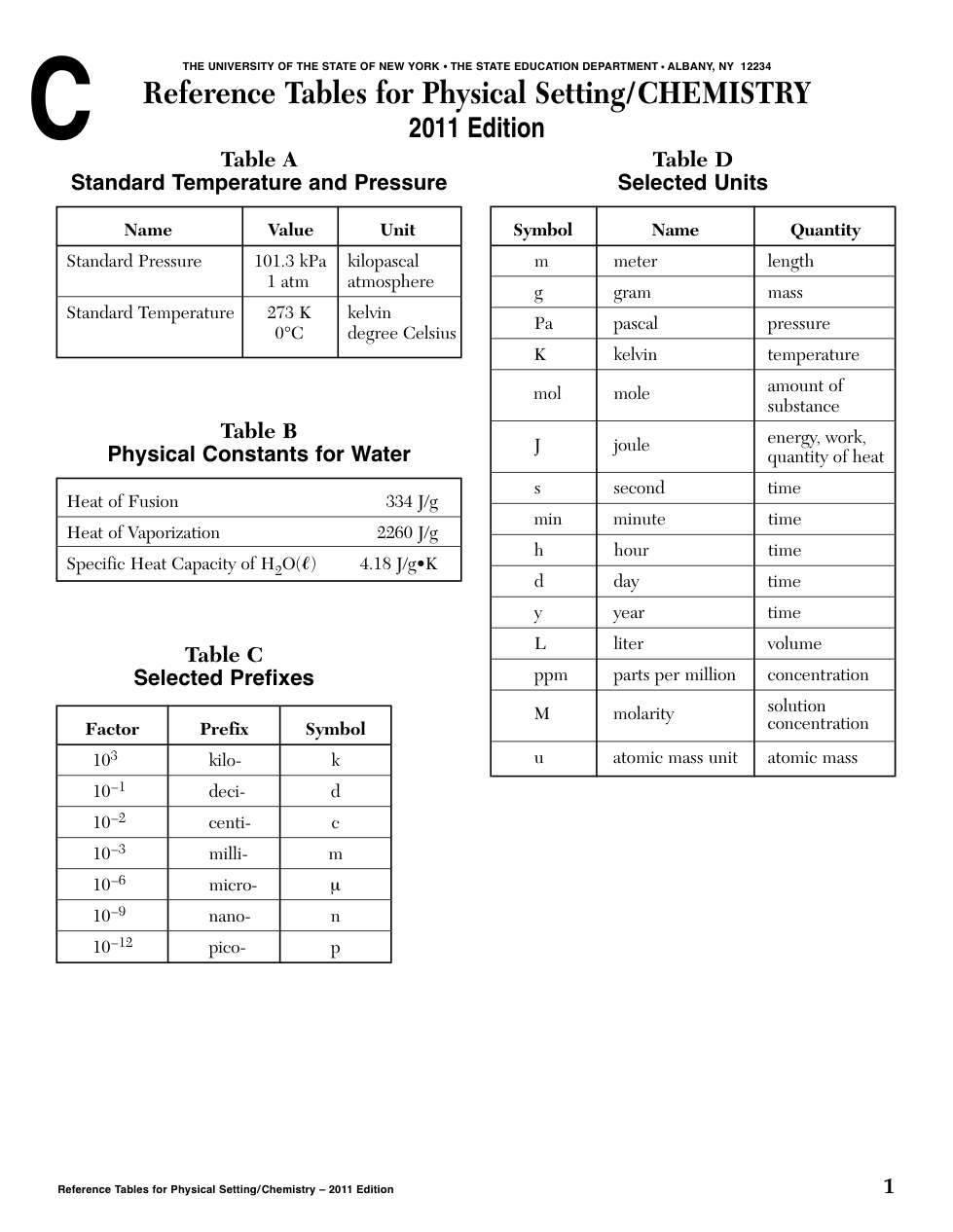
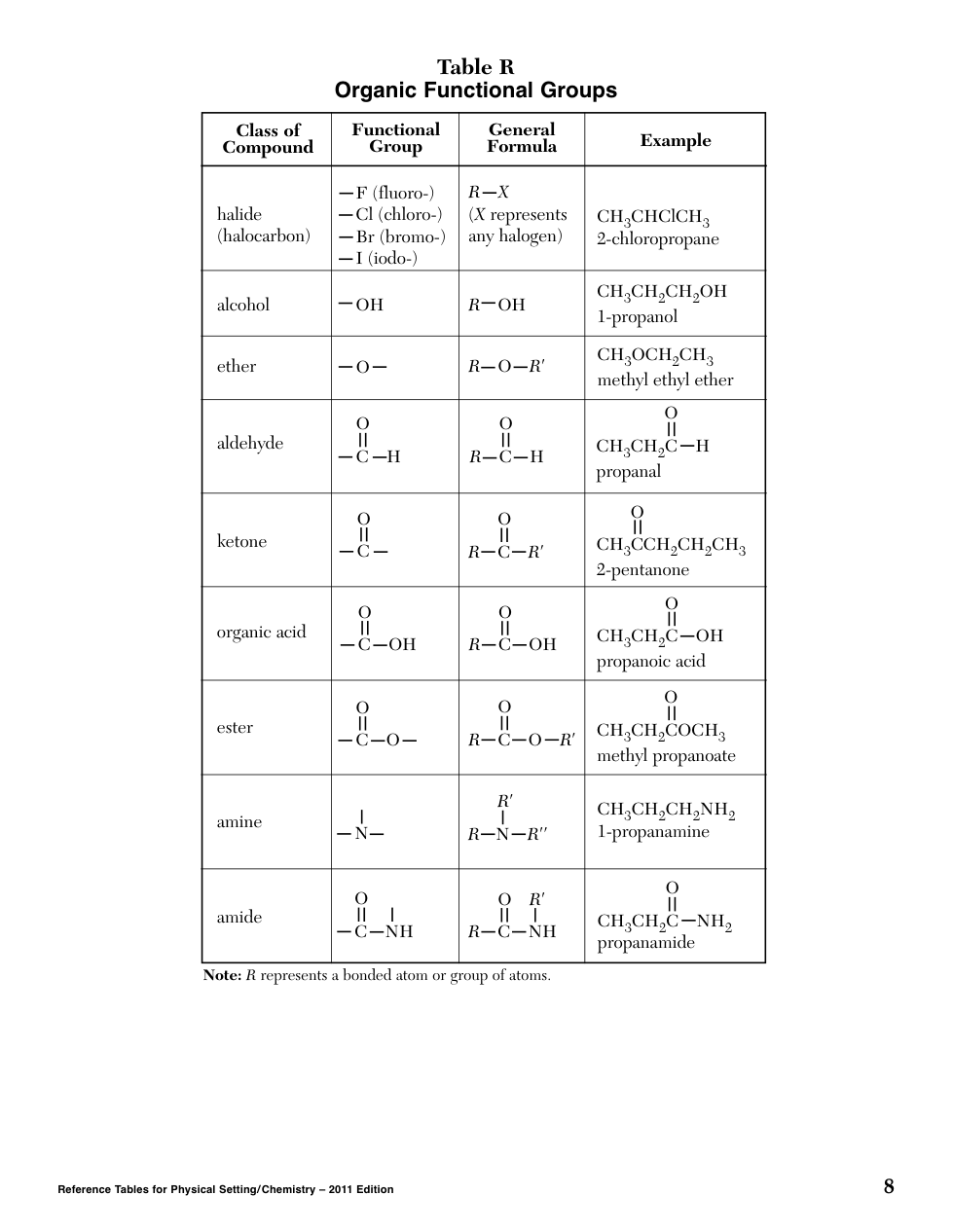
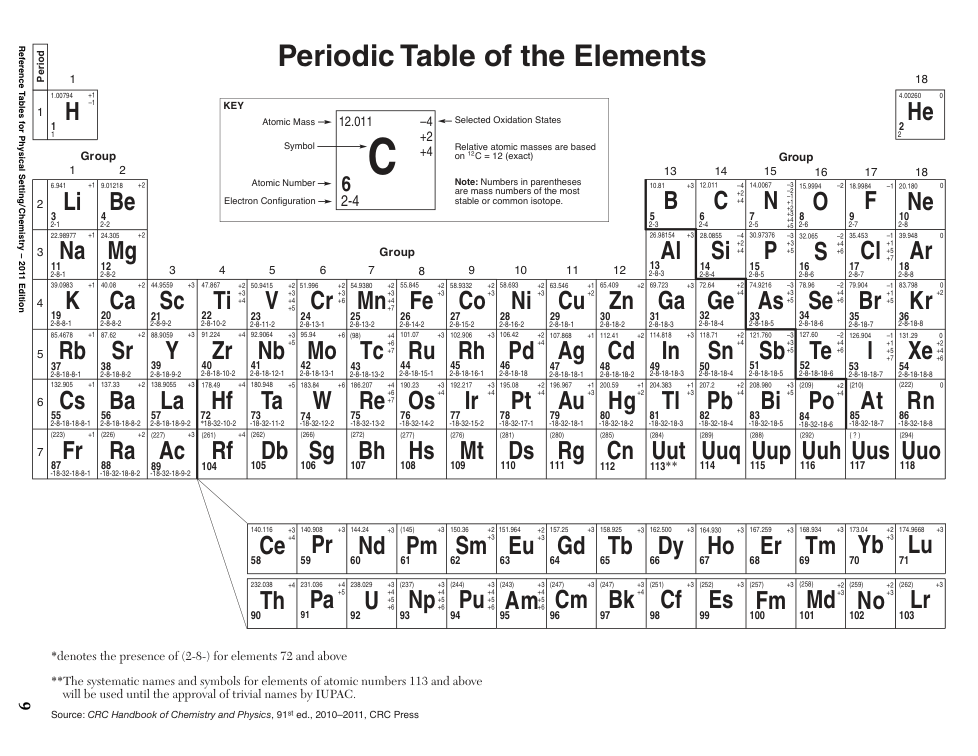
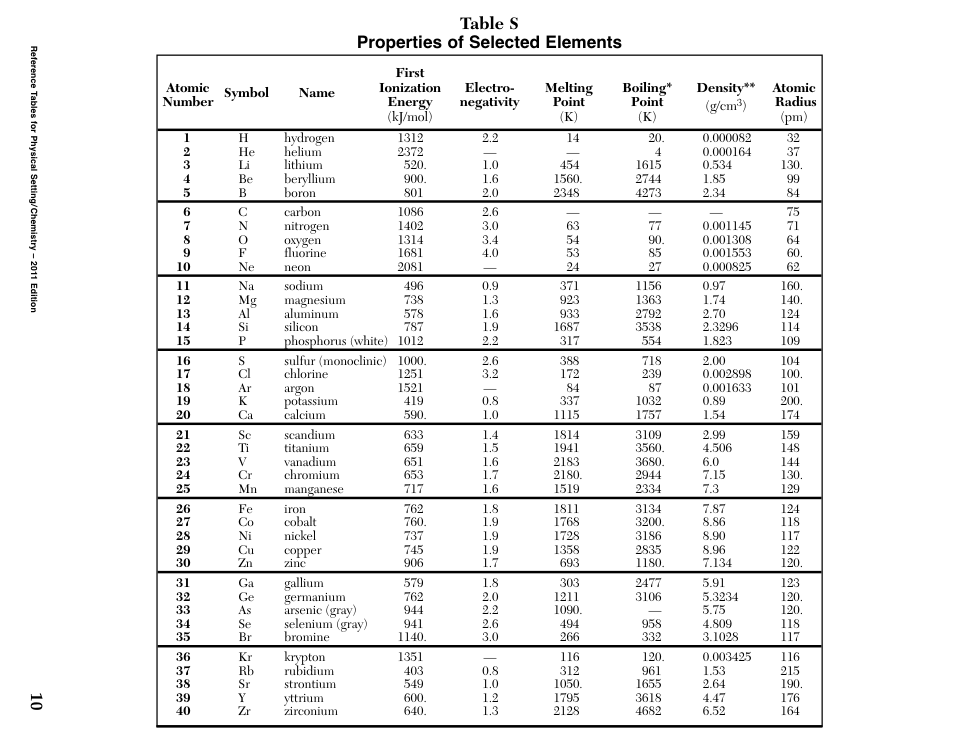
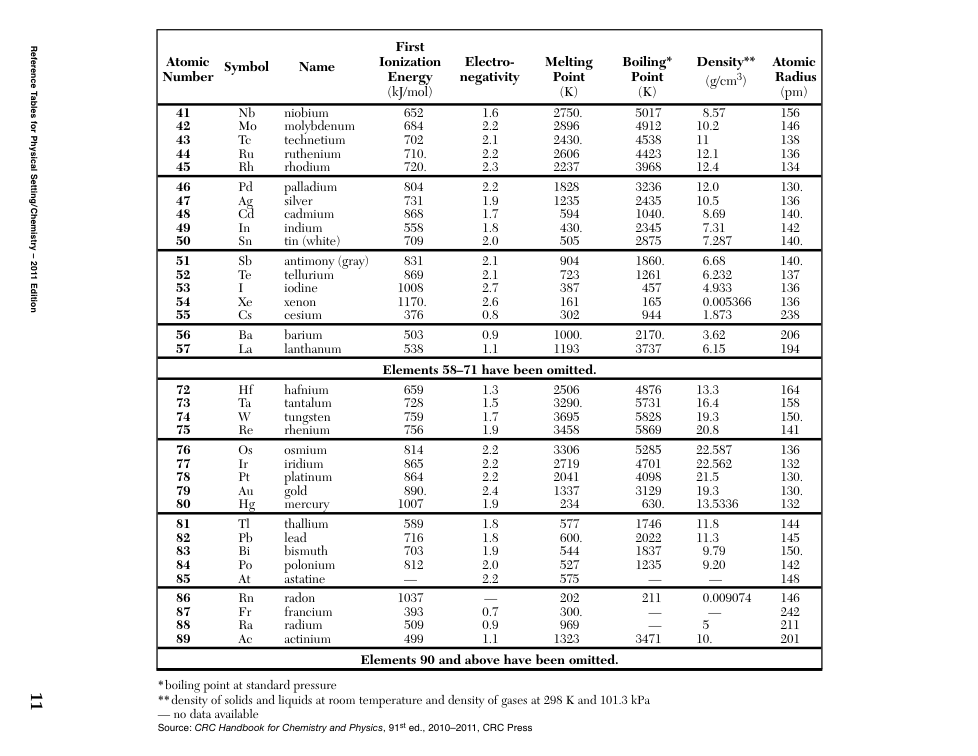
Directions (1-30): For each statement or question, choose the word or expression that, of those given, best completes the statement or answers the question. Some questions may require the use of the 2011 Edition Reference Tables for Physical Setting/Chemistry.
1 point
1
Question 1
1.
Which two particles each have a mass approximately equal to one atomic mass unit?
1 point
1
Question 2
2.
As the electron in a hydrogen atom gains energy and moves from the first shell to the third shell, the hydrogen atom becomes an
1 point
1
Question 3
3.
Which phrase describes the protons and neutrons in atoms of two different isotopes of the same element?
1 point
1
Question 4
4.
Which phrase compares the properties and molecular structure of oxygen,
1 point
1
Question 5
5.
Which phrase describes the composition of a compound?
1 point
1
Question 6
6.
Which quantity is conserved during all chemical reactions?
1 point
1
Question 7
7.
At STP, a 5.0-gram sample of which substance contains metallic bonds?
1 point
1
Question 8
8.
When a cesium atom becomes a positive ion, there is a change in electron configuration and radius. Which statement describes this change?
1 point
1
Question 9
9.
Given the equation representing a reaction:
F + F → F2
Which statement describes the changes that occur during this reaction?
1 point
1
Question 10
10.
Which atom, in the ground state, has a stable valence electron configuration?
1 point
1
Question 11
11.
Which term represents the strength of attraction that an atom has for the electrons in a chemical bond?
1 point
1
Question 12
12.
Which phrase describes a sample of NaCl(s)?
1 point
1
Question 13
13.
Which substance contains only atoms with the same atomic number?
1 point
1
Question 14
14.
Differences in which property allow the separation of a mixture of 2-propanol and water by distillation at 1.0 atm?
1 point
1
Question 15
15.
At standard pressure, how do the freezing point and the boiling point of
compare to the freezing point and the boiling point of 1.0 M KCl(aq)?
1 point
1
Question 16
16.
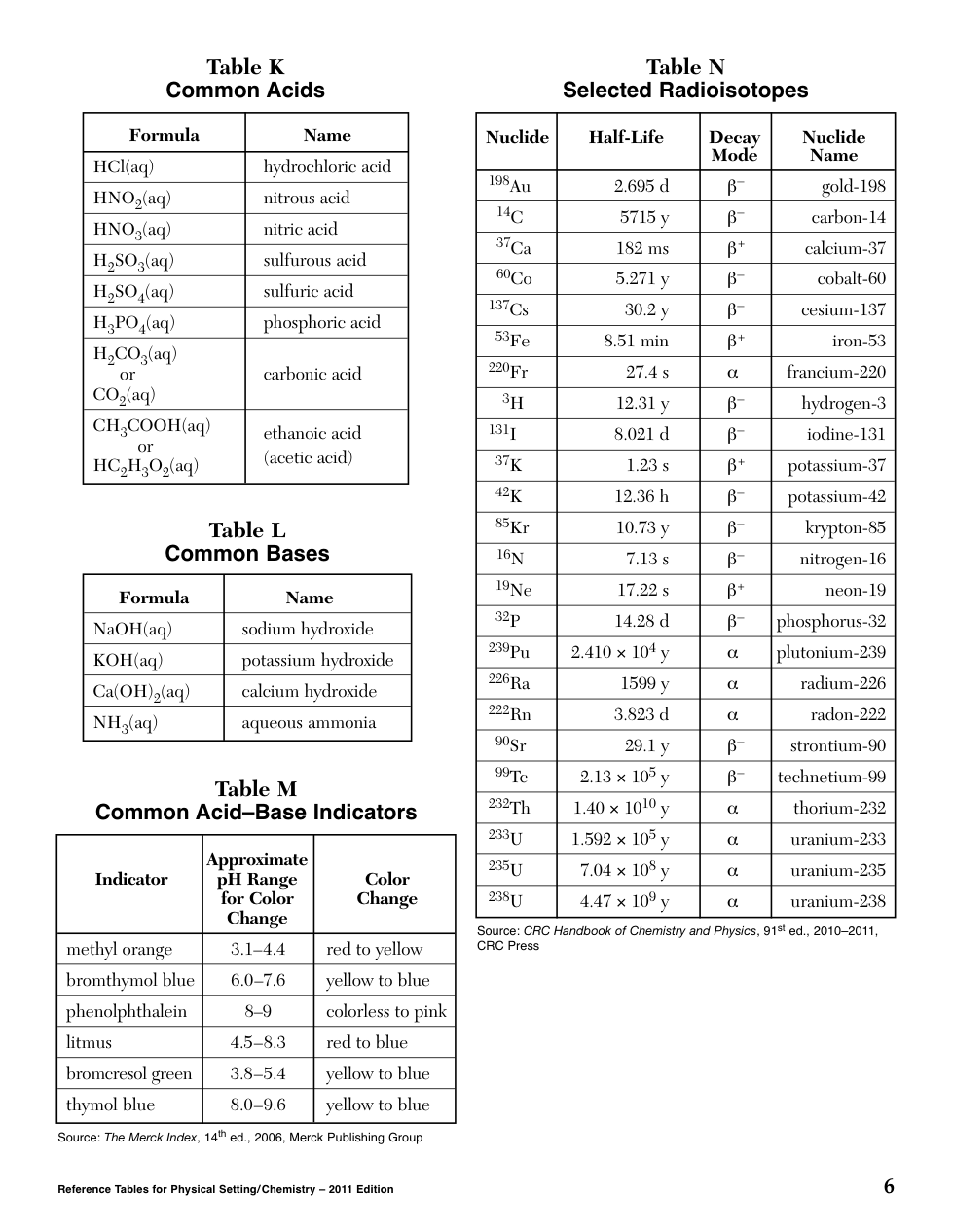
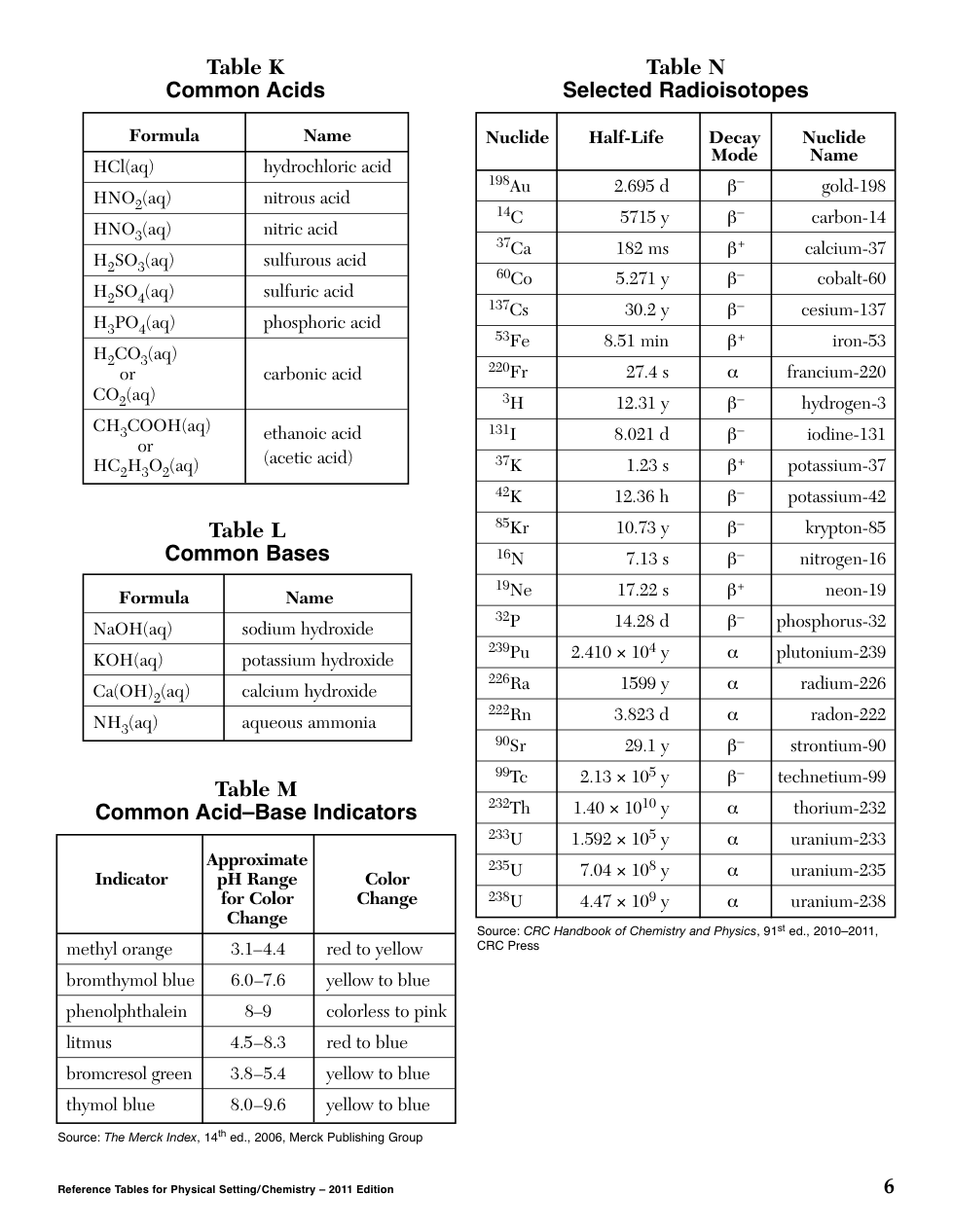
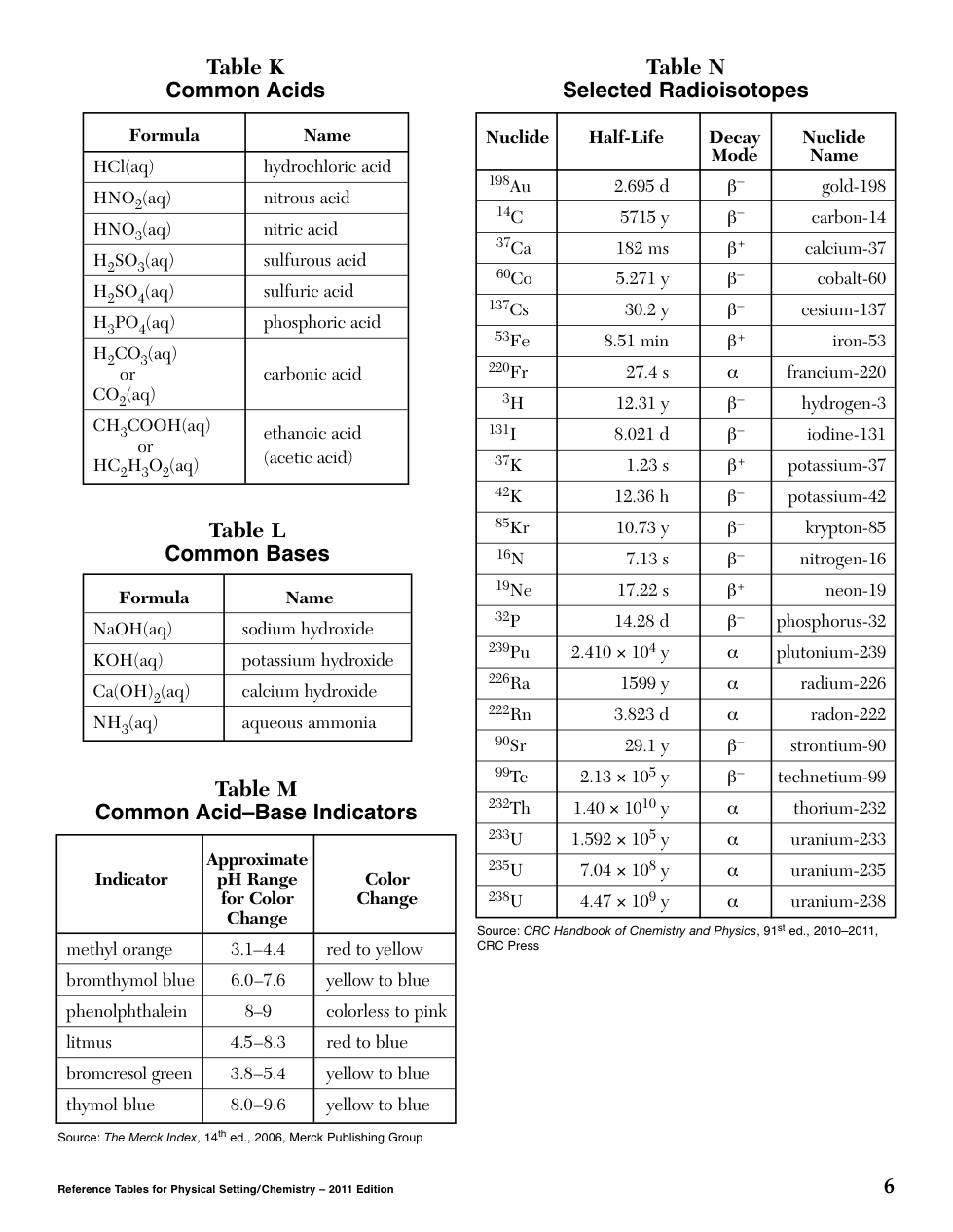
Which term represents a form of energy?
1 point
1
Question 17
17.
Which sample of zinc has atoms with the highest average kinetic energy?
1 point
1
Question 18
18.
Under which conditions will a real gas behave more like an ideal gas?
1 point
1
Question 19
19.
According to the kinetic molecular theory, the particles of an ideal gas
1 point
1
Question 20
20.
A reaction between two different gases is most likely to occur when the colliding molecules have the proper orientation and sufficient
1 point
1
Question 21
21.
Which statement describes a chemical reaction that has reached equilibrium?
1 point
1
Question 22
22.
An enzyme acts as a catalyst to speed up a reaction by providing an alternate reaction pathway that has a
1 point
1
Question 23
23.
Which element has atoms that can bond together to form chains, rings, or networks?
1 point
1
Question 24
24.
A molecule of which compound contains an atom of nitrogen?
1 point
1
Question 25
25.
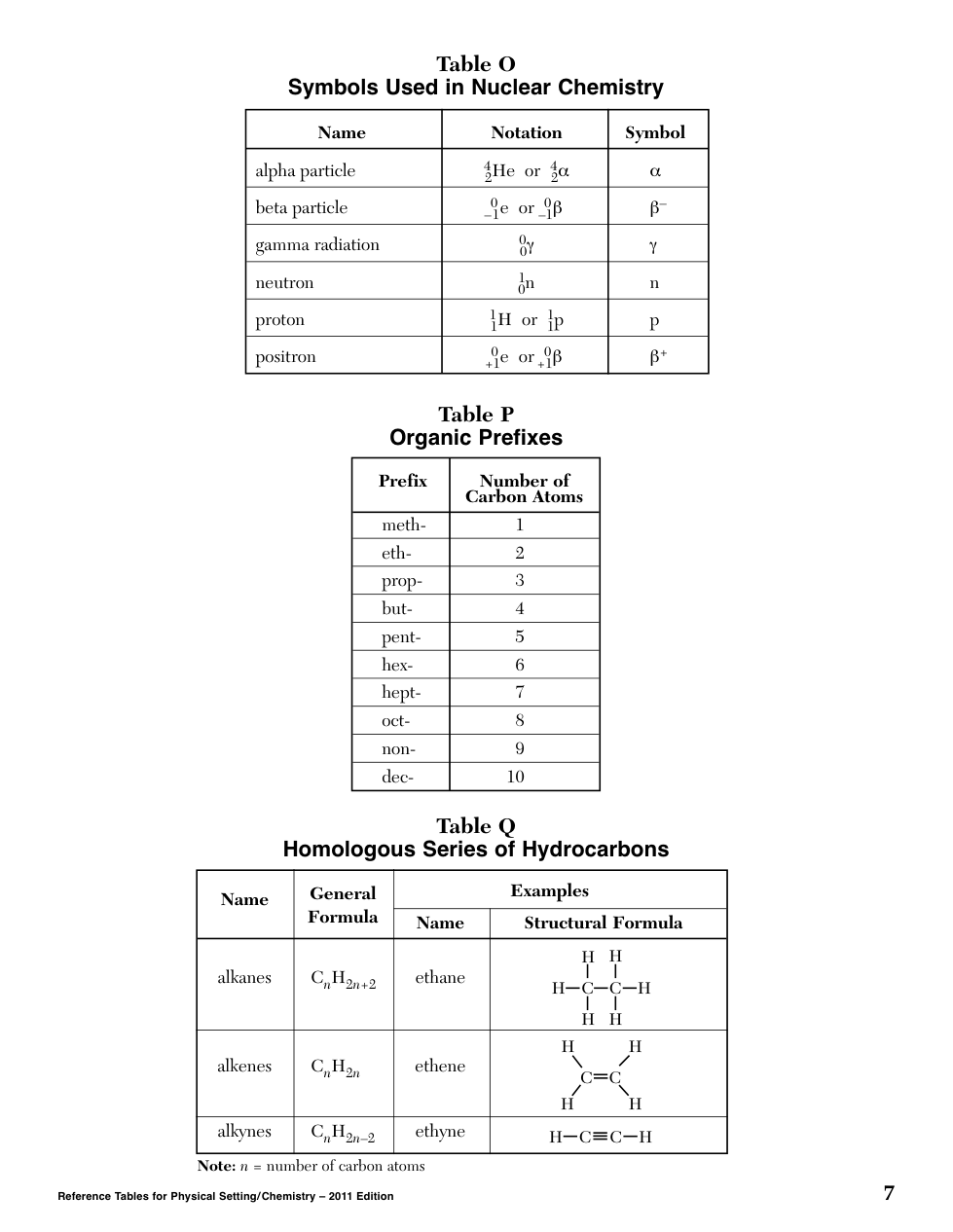
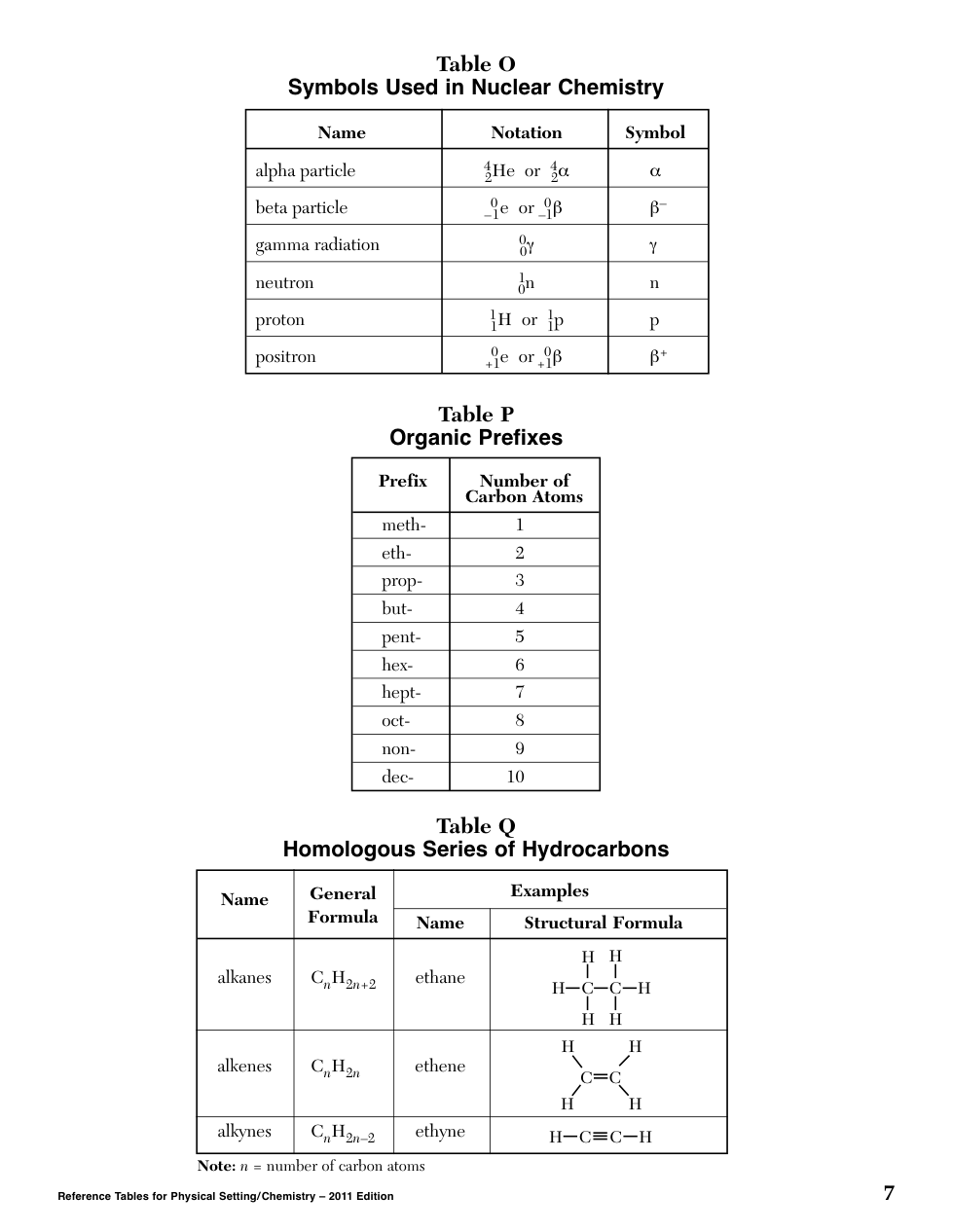
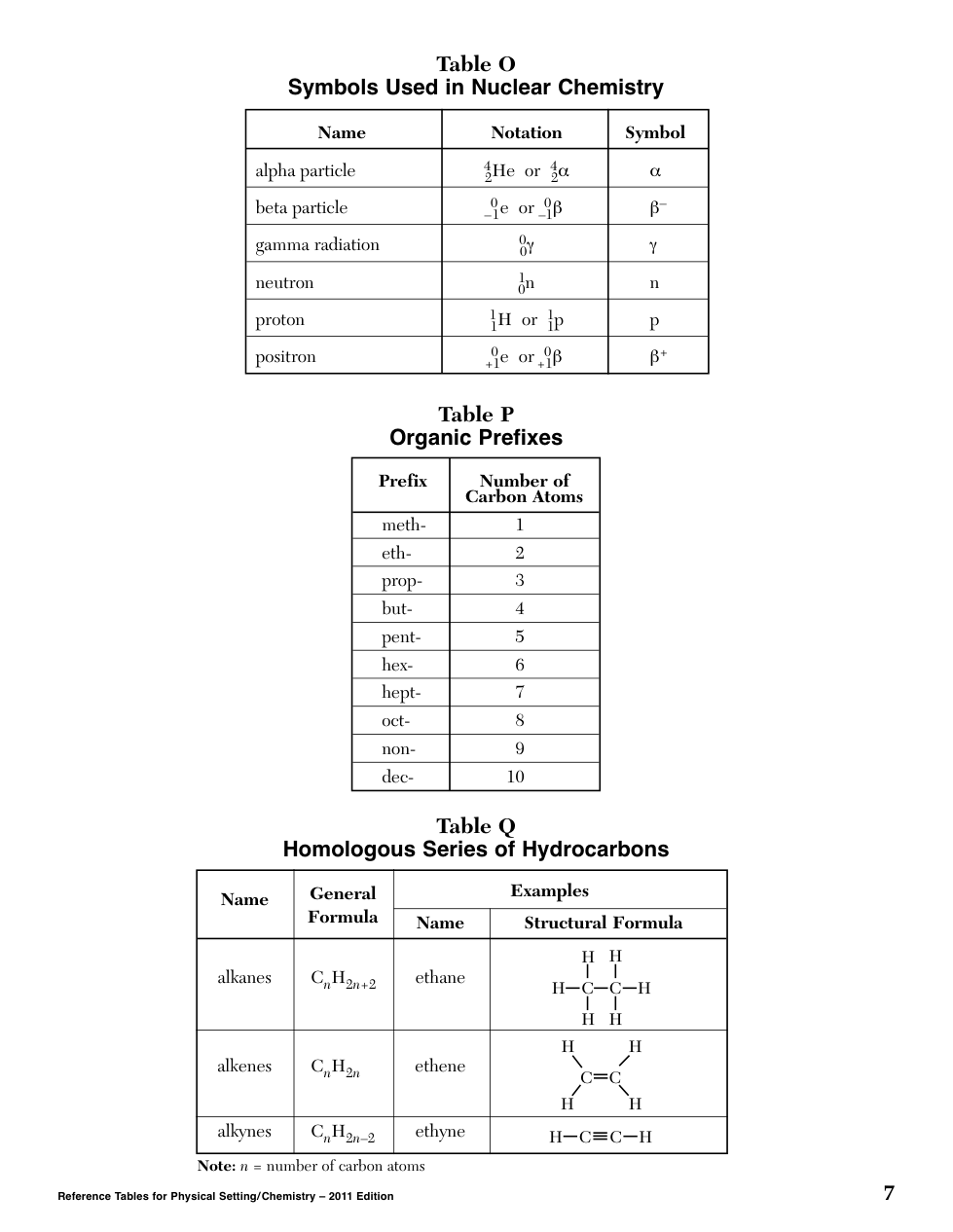
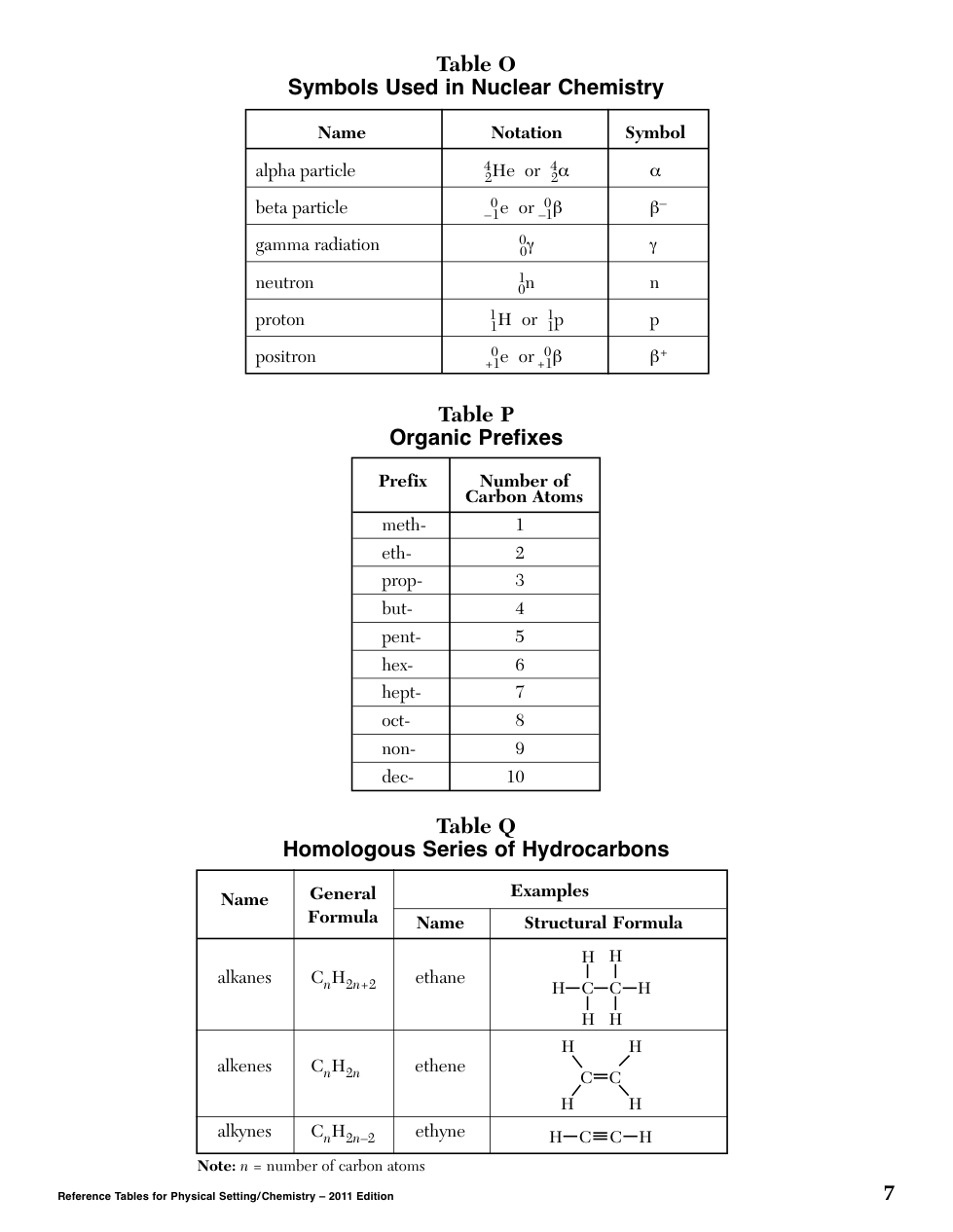
How many electrons are shared between the carbon atoms in a molecule of ethyne?
1 point
1
Question 26
26.
Which change takes place in the process of reduction?
1 point
1
Question 27
27.
The indicator methyl orange is red in an aqueous solution that has a pH value of
1 point
1
Question 28
28.
Which radioactive emissions are listed in order from greatest penetrating power to least penetrating power?
1 point
1
Question 29
29.
What is one benefit of a nuclear fission reaction?
1 point
1
Question 30
30.
Which statement compares the relative amounts of energy released during a chemical reaction and a nuclear reaction when both reactions consume 1.0 mole of reactant?
Part B-1
Directions (31-50): For each statement or question, choose the word or expression that, of those given, best completes the statement or answers the question. Some questions may require the use of the 2011 Edition Reference Tables for Physical Setting/Chemistry.
1 point
1
Question 31
31.
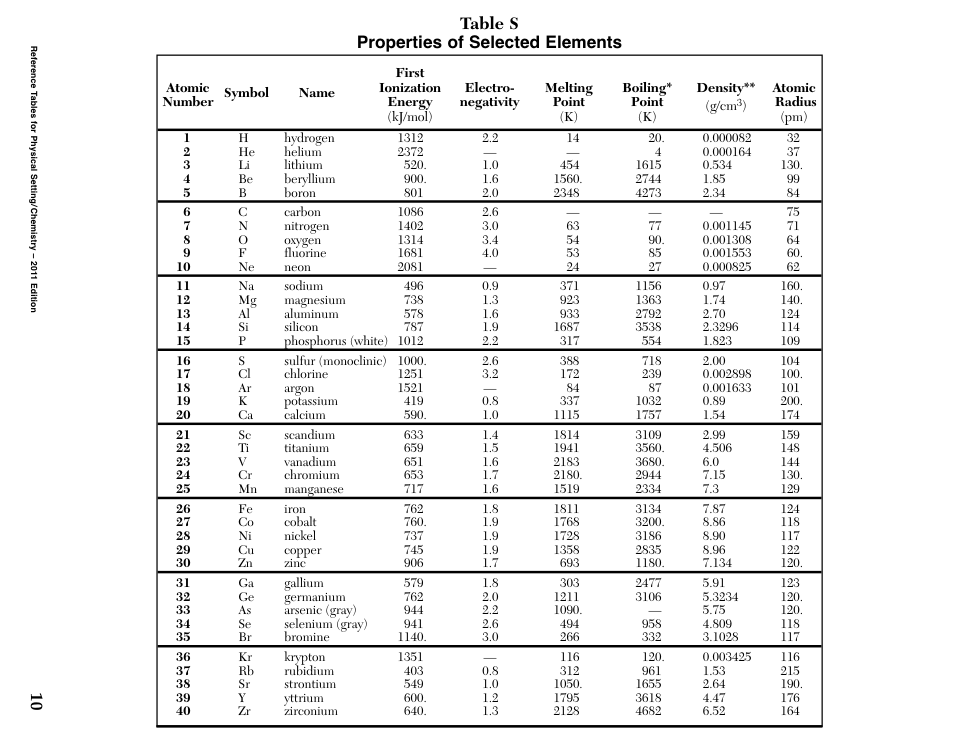
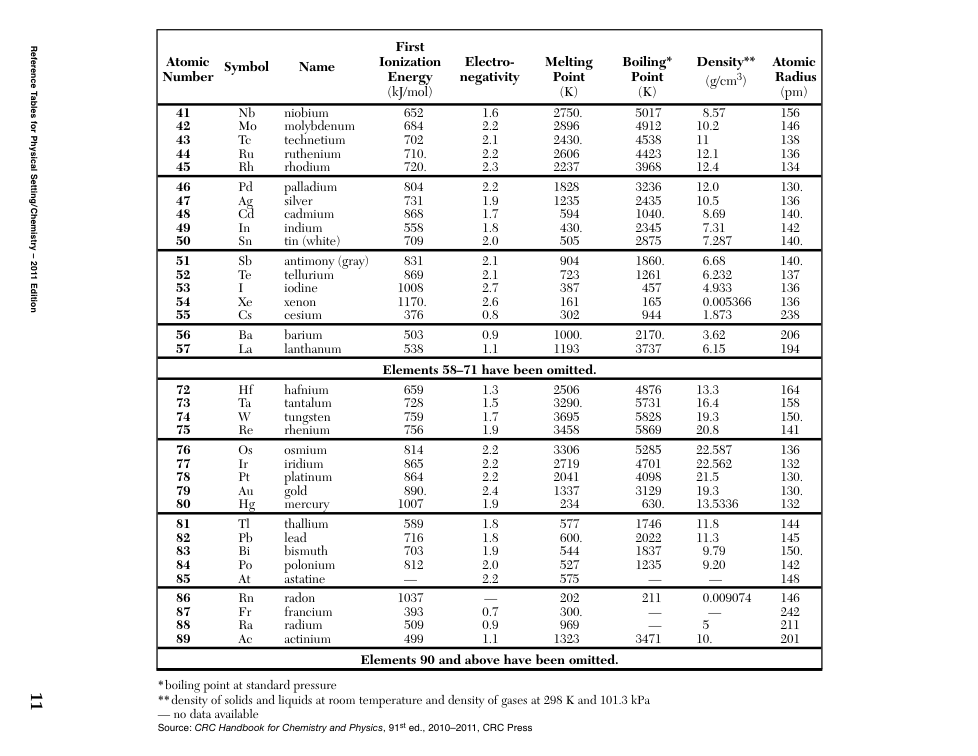
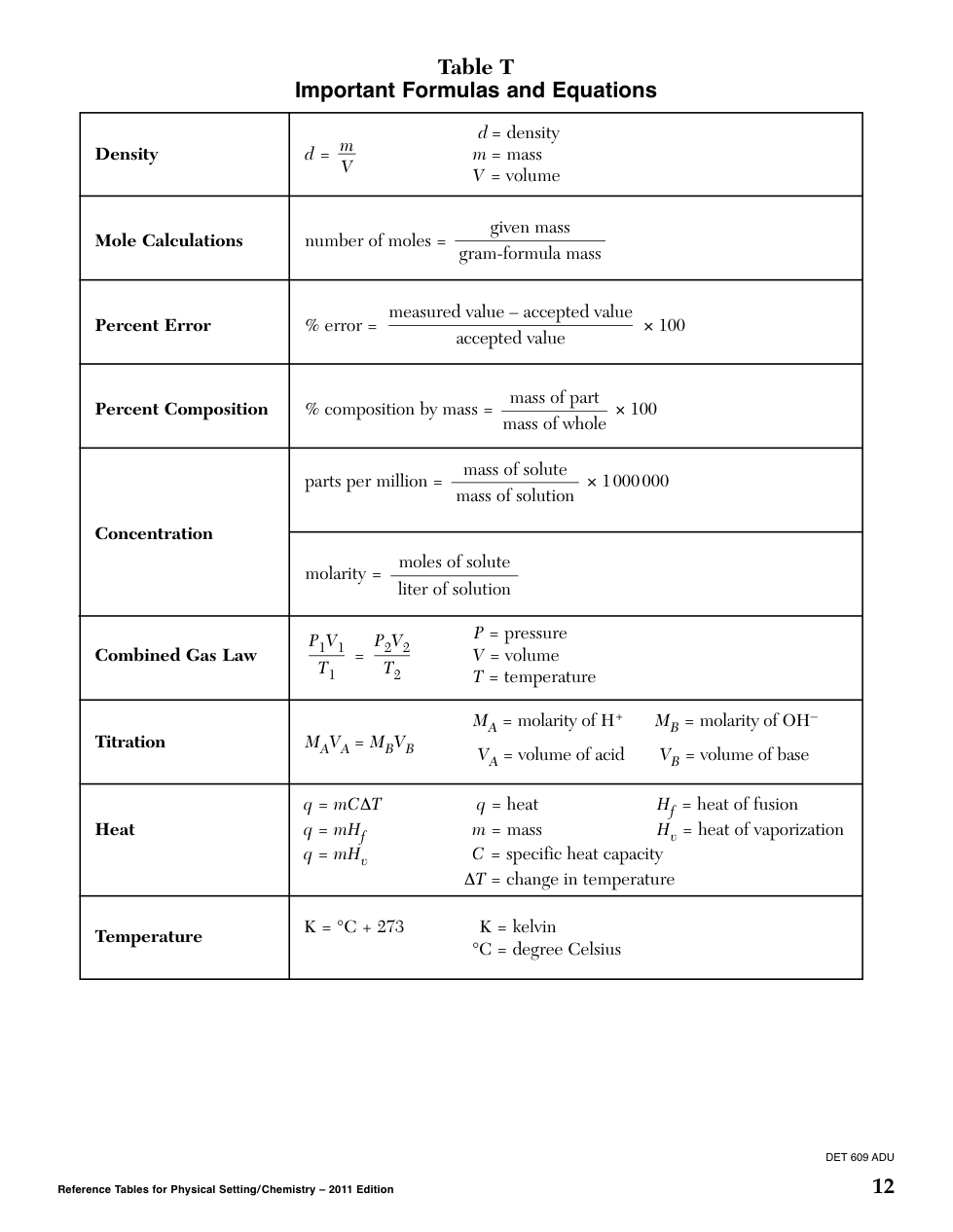
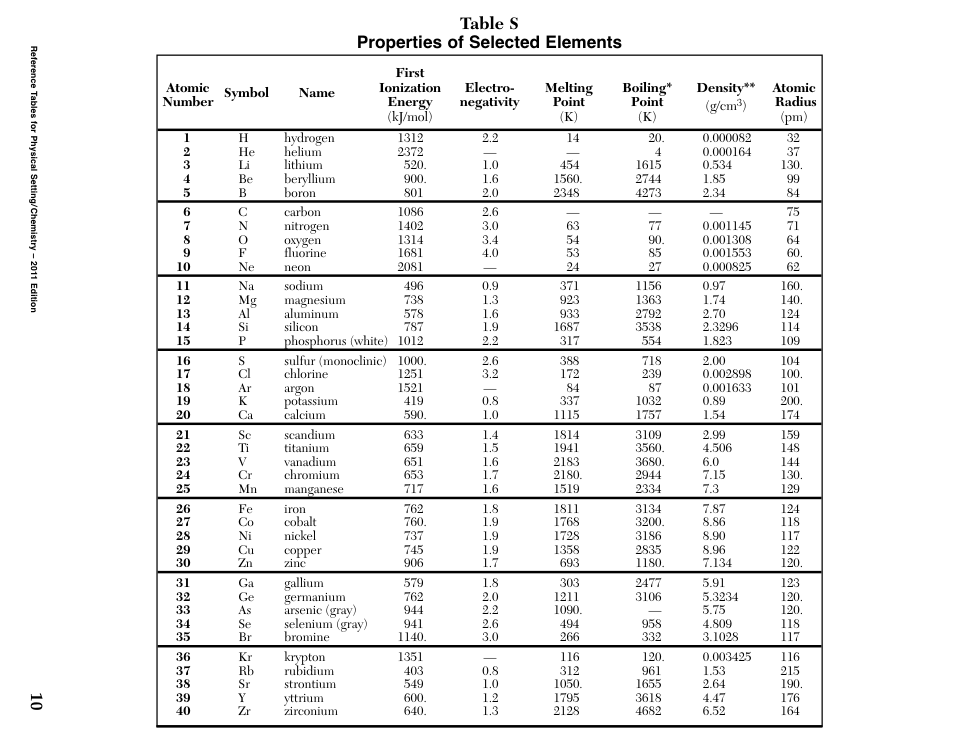
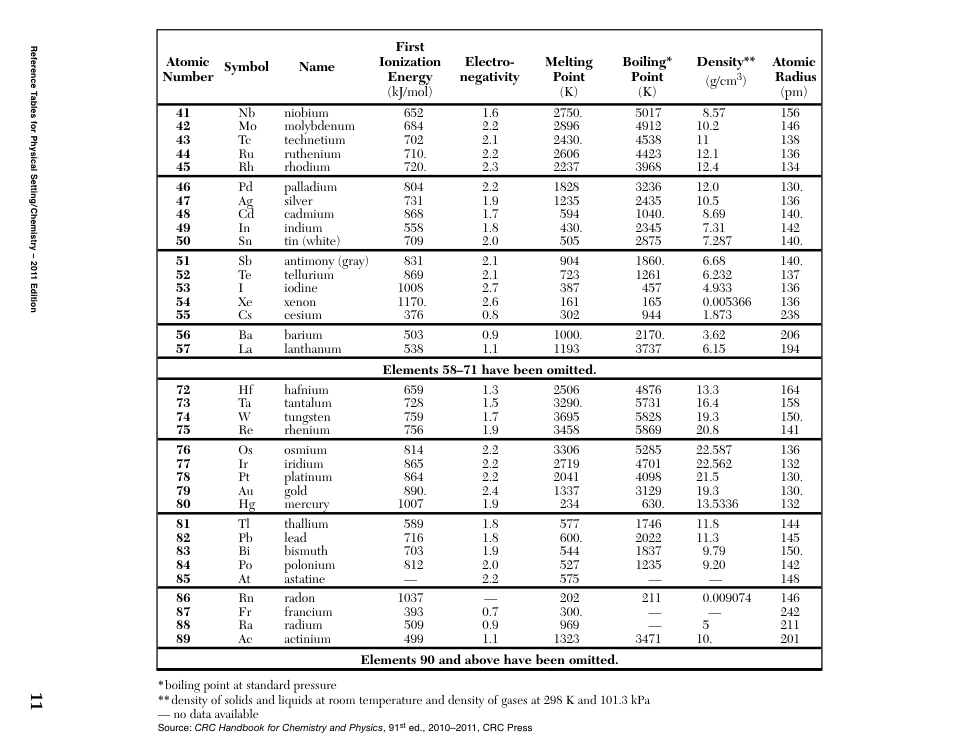
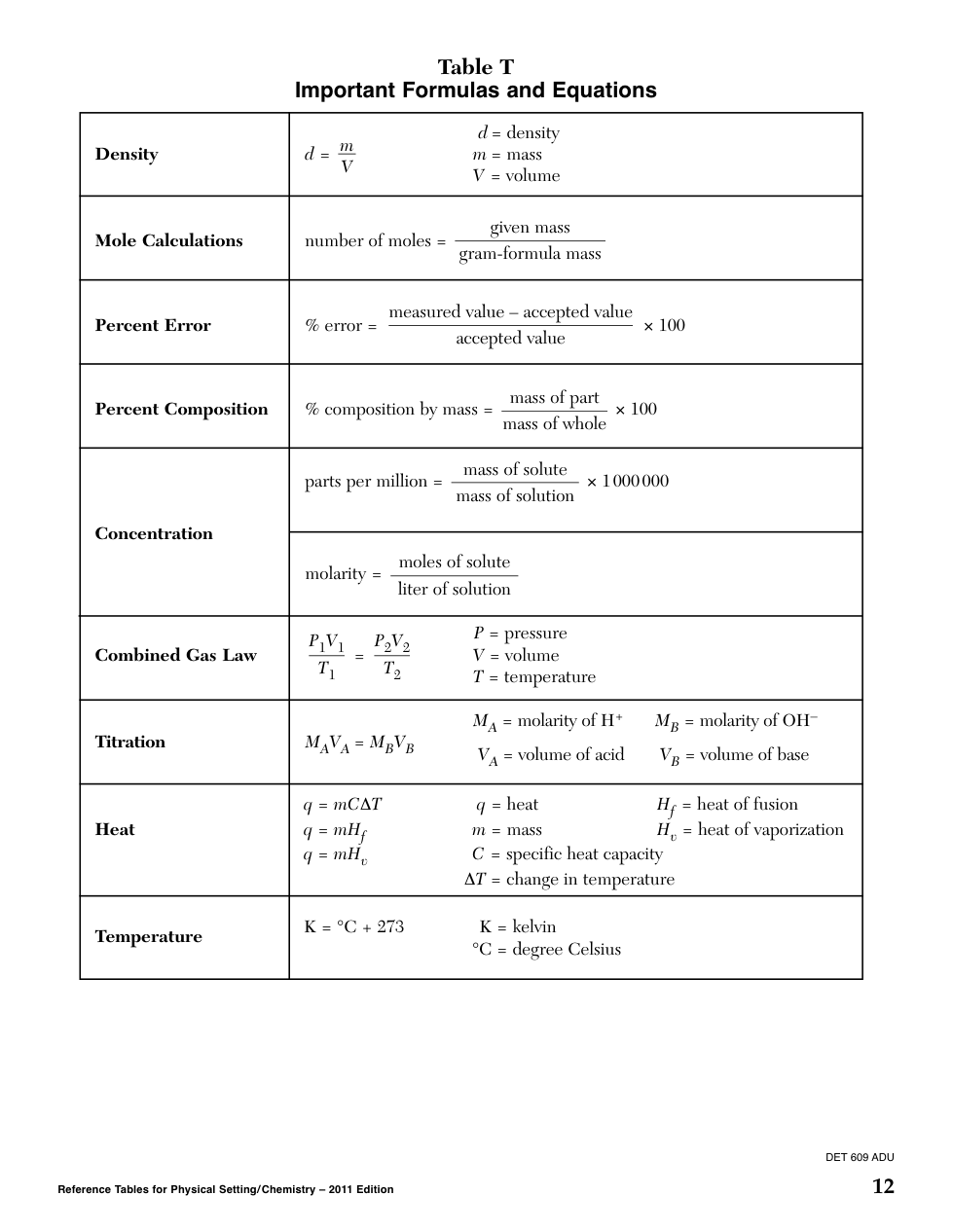
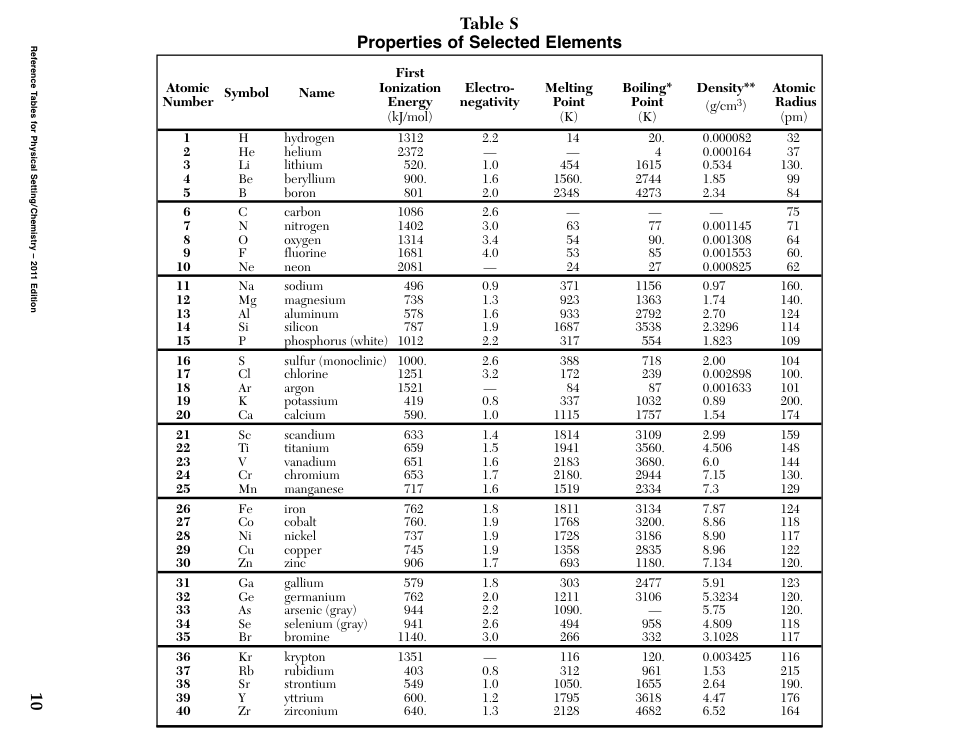
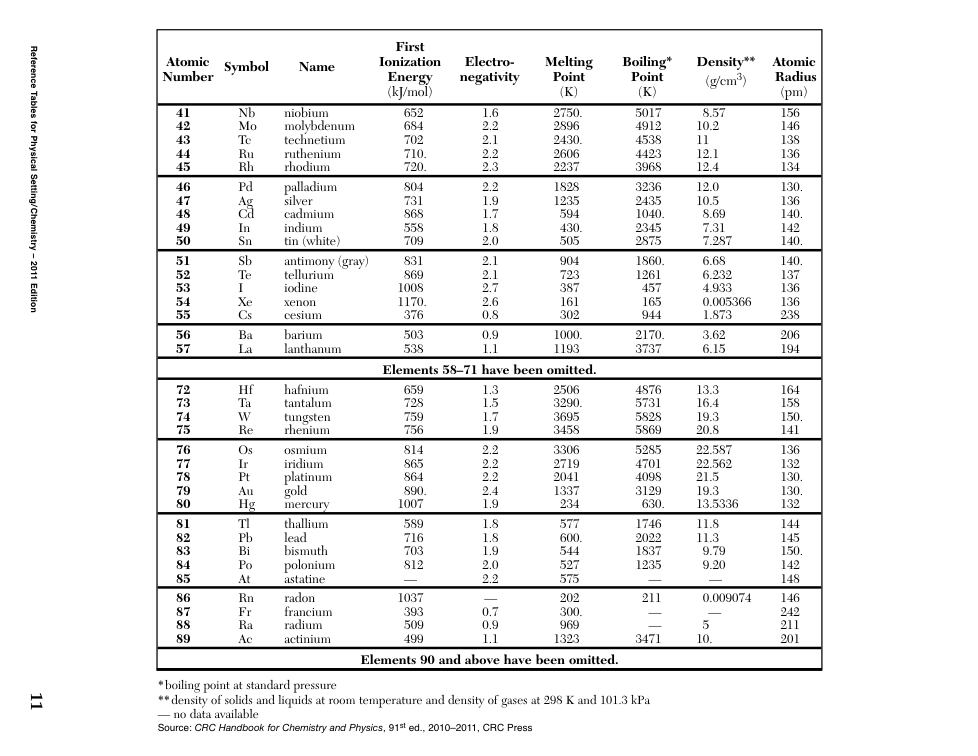
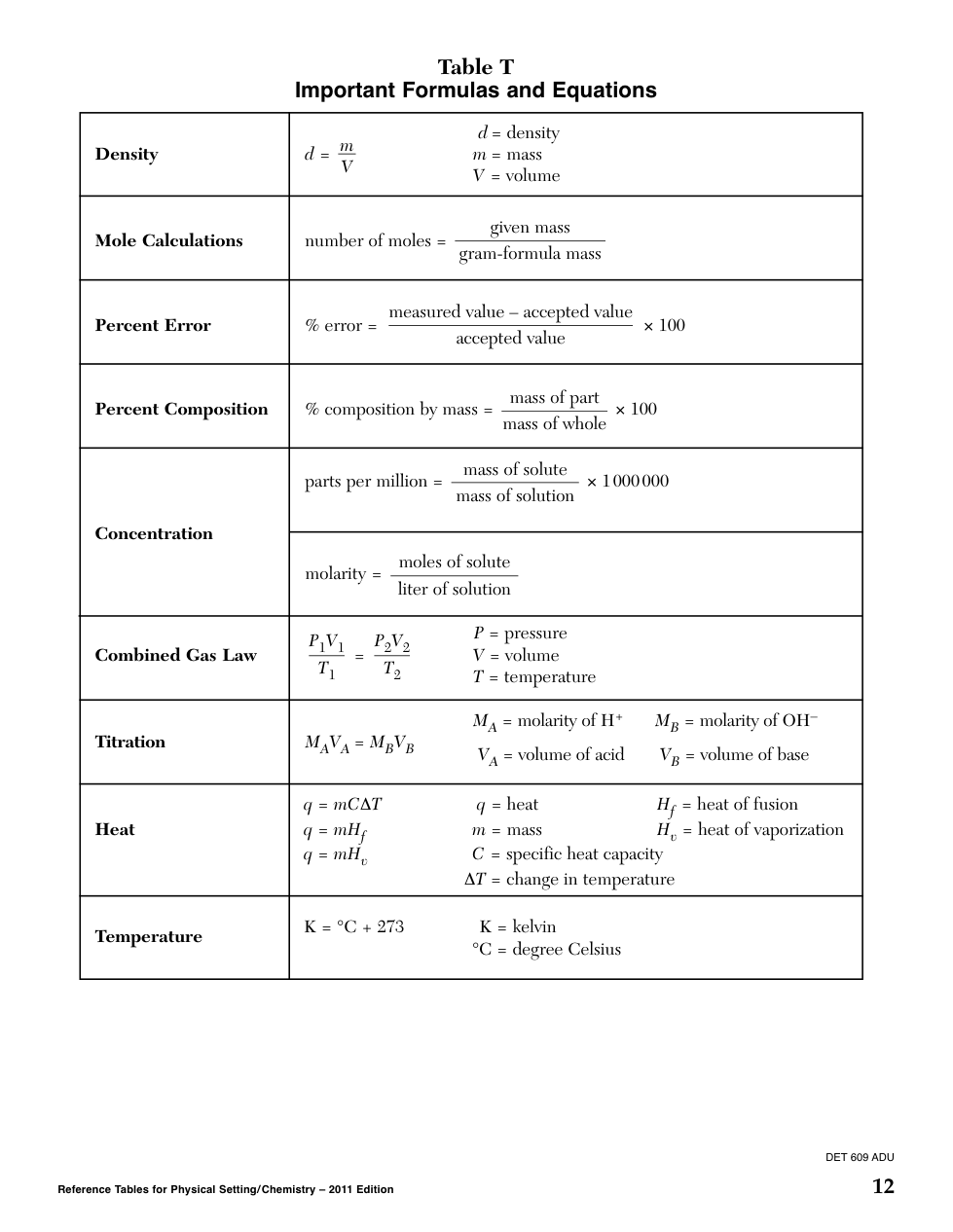
A student calculates the density of a sample of Fe to be 7.57 grams per cubic centimeter. Based on Table S, what is the percent error for the student’s calculated density of Fe?
1 point
1
Question 32
32.
Based on Table S, which general trend is observed as the elements in Group 17 are considered in order of increasing atomic number from fluorine to iodine?
1 point
1
Question 33
33.
Given the equation representing a reaction:
Which type of chemical reaction is represented by this equation?
1 point
1
Question 34
34.
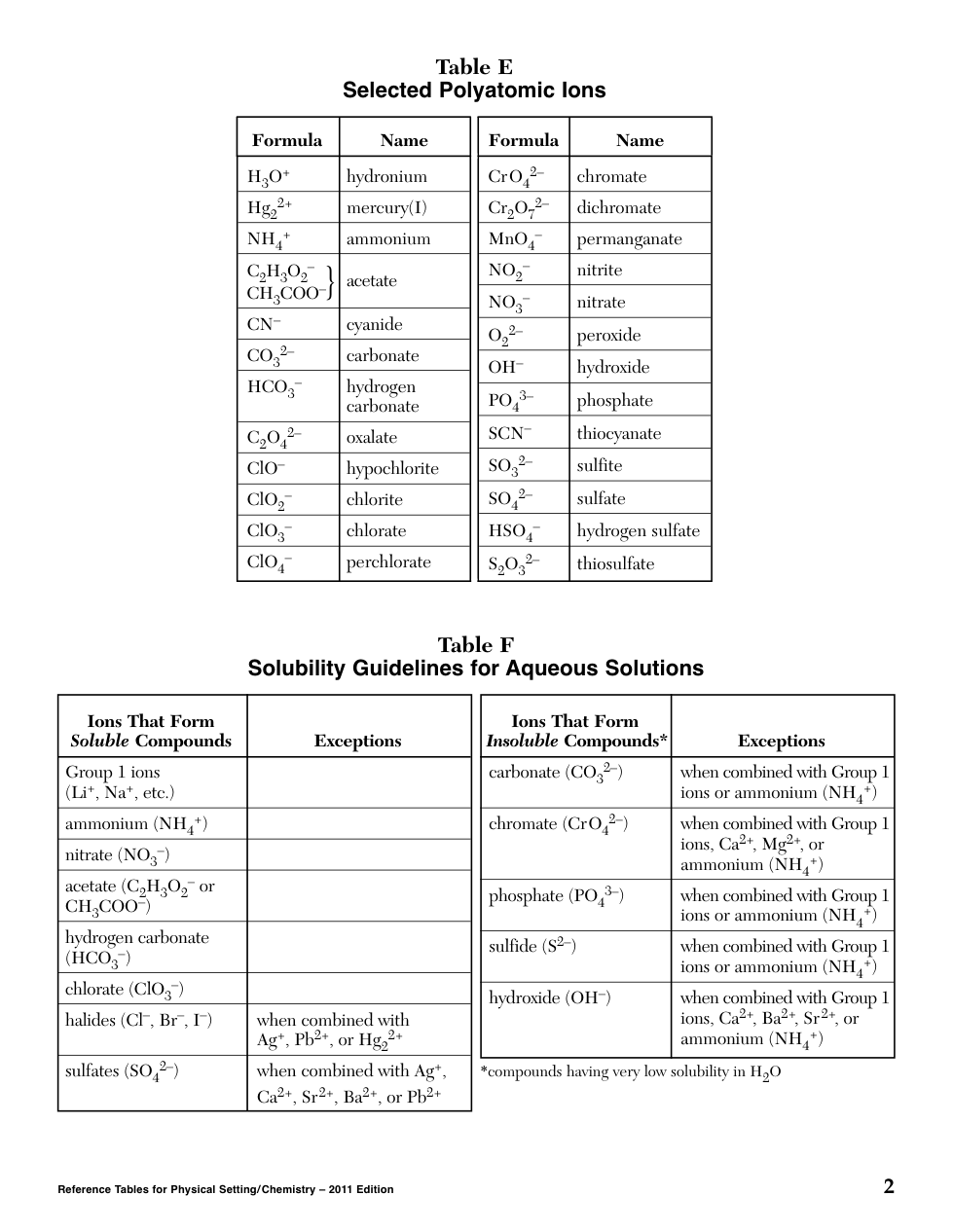
At STP, which property can be used to differentiate a 2.0-gram sample of NaCl(s) from a 2.0-gram sample of AgCl(s)?
1 point
1
Question 35
35.
Which particle model diagram represents a sample of neon at 35 K and 1.0 atmosphere?
1 point
1
Question 36
36.
Which formula represents a molecule with the most polar bond?
1 point
1
Question 37
37.
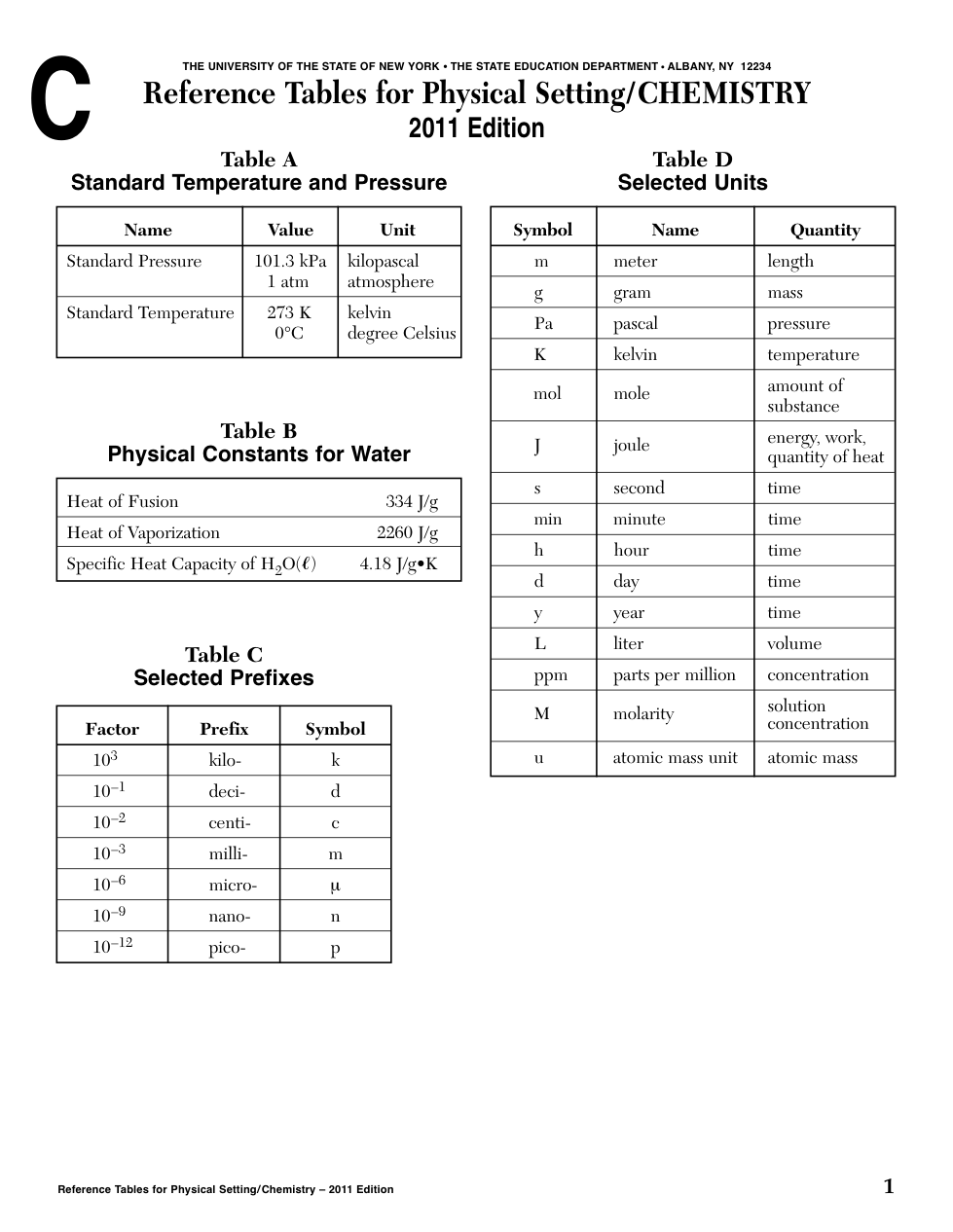
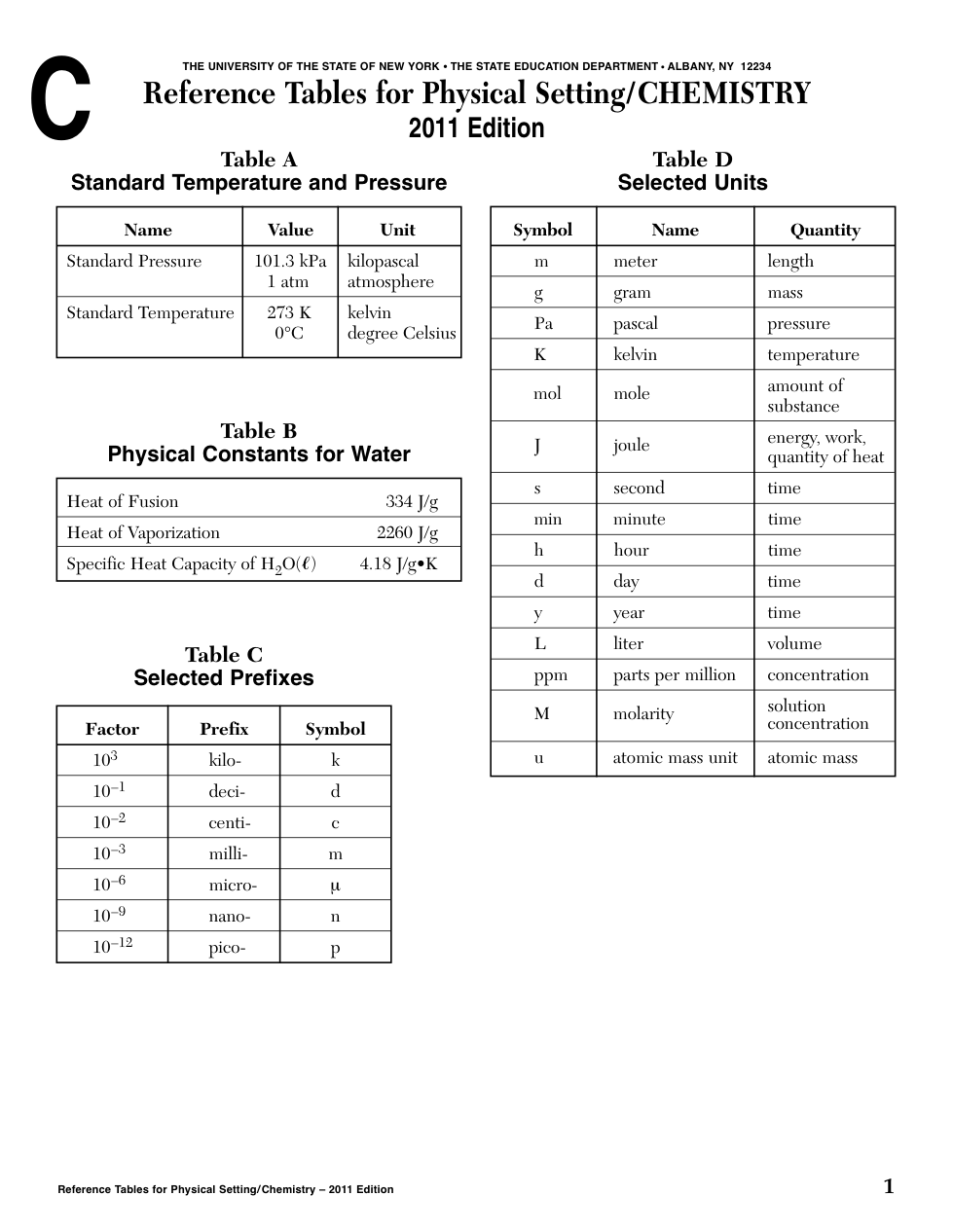
What is the amount of heat that must be absorbed to increase the temperature of a 130.-gram sample of water from 20.0°C to 50.0°C?
1 point
1
Question 38
38.
A sealed, rigid cylinder contains 50. milliliters of argon gas, Ar(g), at 1.0 atmosphere and 273 K. A second sealed, rigid cylinder contains helium gas, He(g). Which conditions of volume, pressure, and temperature in the second cylinder would result in the number of helium atoms being equal to the number of argon atoms in the first cylinder?
1 point
1
Question 39
39.
Which equation represents a physical equilibrium?
1 point
1
Question 40
40.
Given an equation representing a system at equilibrium:
Which change occurs when the temperature is increased?
1 point
1
Question 41
41.
Which phase change results in an increase in disorder?
1 point
1
Question 42
42.
Which formula represents an unsaturated hydrocarbon?
1 point
1
Question 43
43.
Given the incomplete equation for a fermentation reaction:
Which formula represents the missing reactant, X, in this equation?
1 point
1
Question 44
44.
Which equation represents a combustion reaction?
1 point
1
Question 45
45.
Given the equation representing a reaction:
What is the number of moles of electrons gained by
when 2.0 moles of electrons are lost by
1 point
1
Question 46
46.
Which statement describes a 0.1 M NaOH(aq) solution?
1 point
1
Question 47
47.
A sample of LiOH(aq) has a concentration of 0.020 M. How many significant figures are used to express the concentration of this solution?
1 point
1
Question 48
48.
Given the balanced equation representing a reaction:
The mole ratio of oxygen molecules to carbon dioxide molecules is
1 point
1
Question 49
49.
The diagram below represents an operating cell that is used to plate silver onto a nickel key.
Which statement describes the reaction that occurs inside the beaker?
1 point
1
Question 50
50.
Given the equation representing an equilibrium:
Which two formulas represent the H+ acceptors in this equilibrium?
Part B-2
Directions (51-65): Record your answers in the spaces provided. Some questions may require the use of the 2011 Edition Reference Tables for Physical Setting/Chemistry.
1 point
1
Question 51
51.
Draw a Lewis electron-dot diagram for a molecule of ammonia.
Base your answers to questions 52 and 53 in the information below and on your knowledge of chemistry.
1 point
1
Question 52
52.
Compare the energy of an electron in the first shell of a copper atom in the ground state to the energy of an electron in the second shell of the same atom in the ground state.
1 point
1
Question 53
53.
Show a numerical setup for calculating the atomic mass of copper.
Base your answers to questions 54 through 56 on the information below and on your knowledge of chemistry.
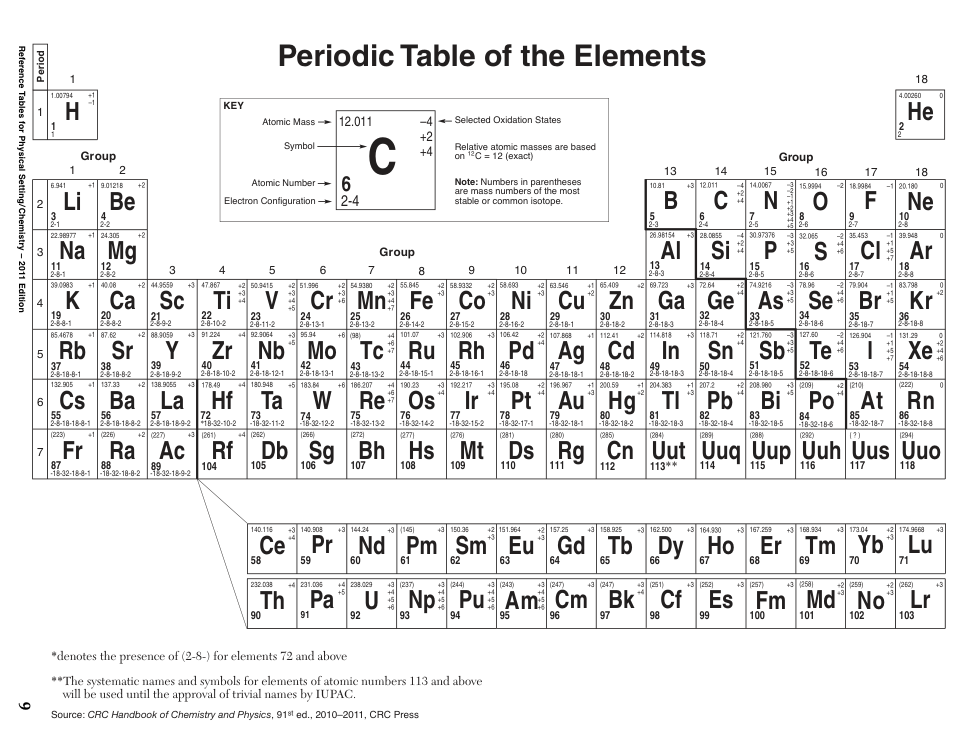
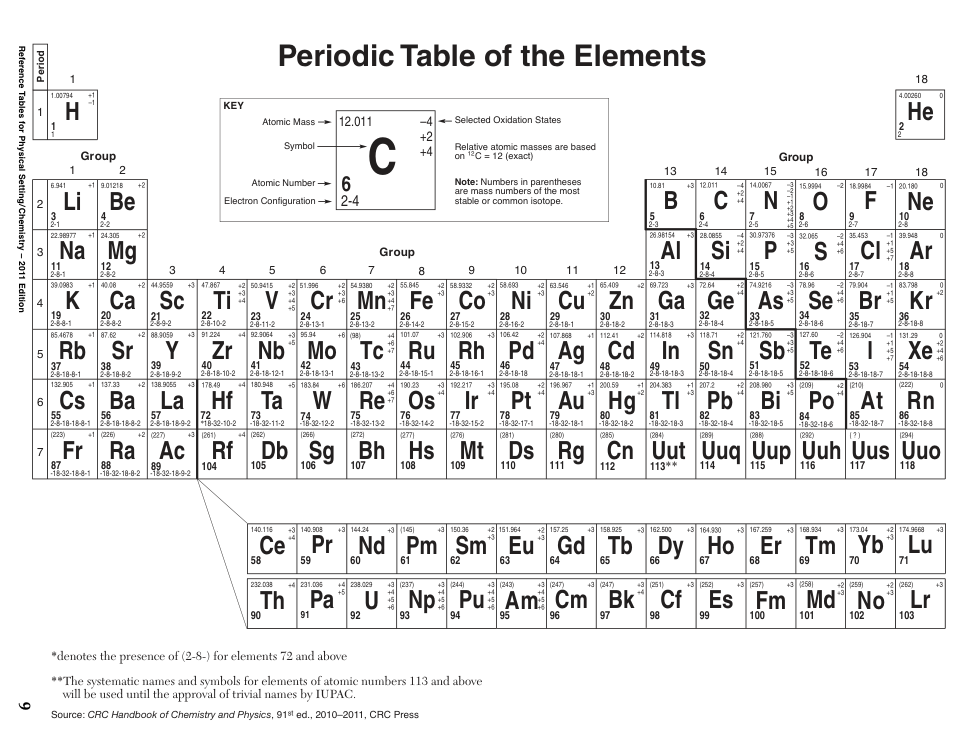
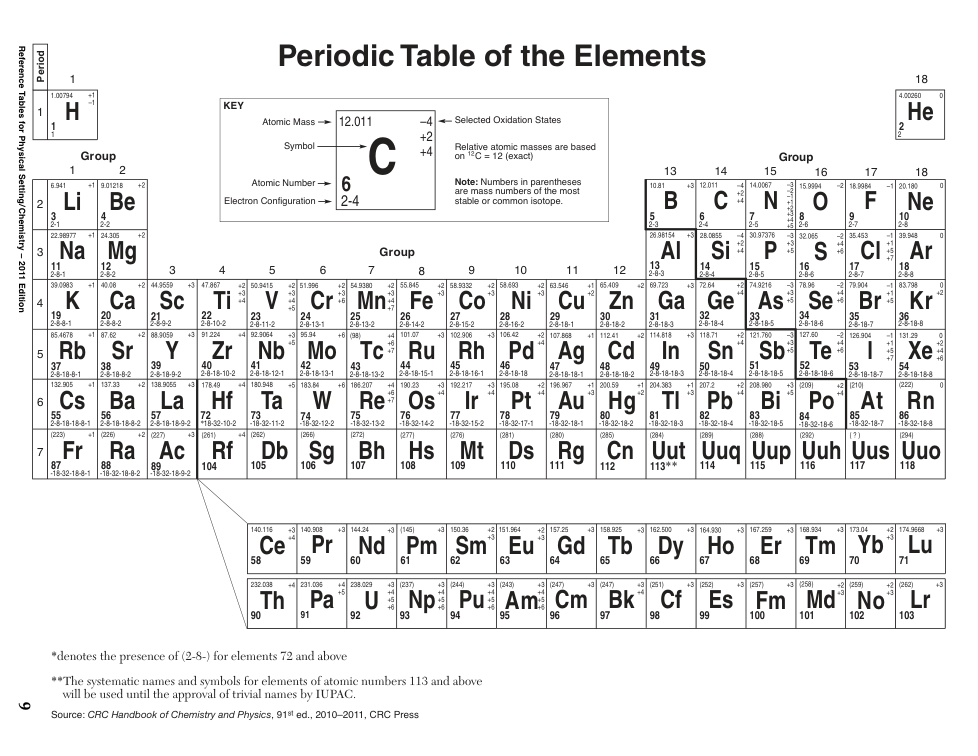
The elements on the Periodic Table vary in their properties. The placement or locations of elements in Period 2 give an indication of the physical and chemical properties of these elements.
1 point
1
Question 54
54.
Identify the element in Period 2 that is classified as a metalloid.
1 point
1
Question 55
55.
Identify the element in Period 2 that requires the least amount of energy to remove the most loosely held electrons from a mole of gaseous atoms of the element in the ground state.
1 point
1
Question 56
56.
State the general trend in atomic radius as the elements in Period 2 are considered in order of increasing atomic number.
Base your answers to questions 57 through 59 on the information below and on your knowledge of chemistry.
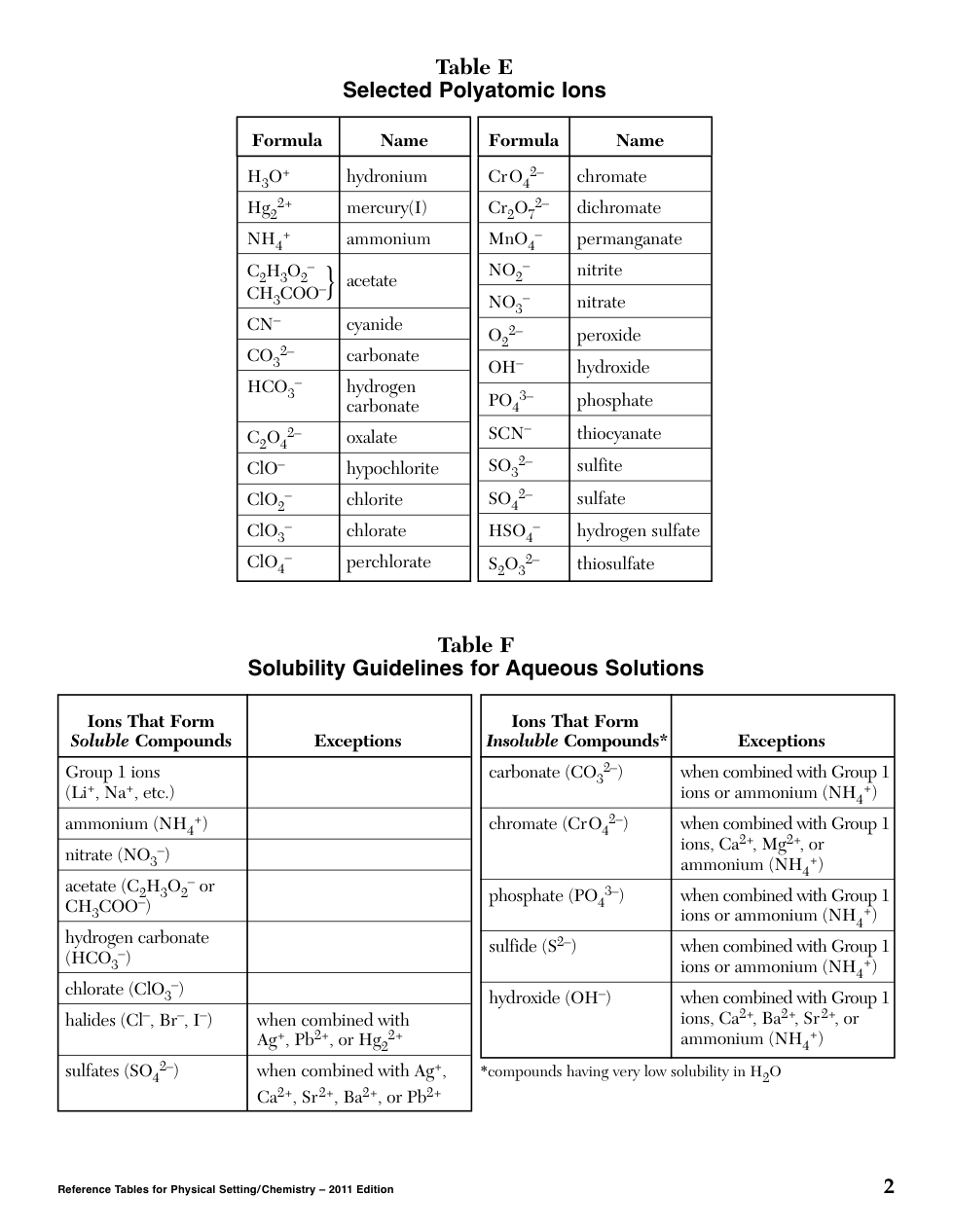
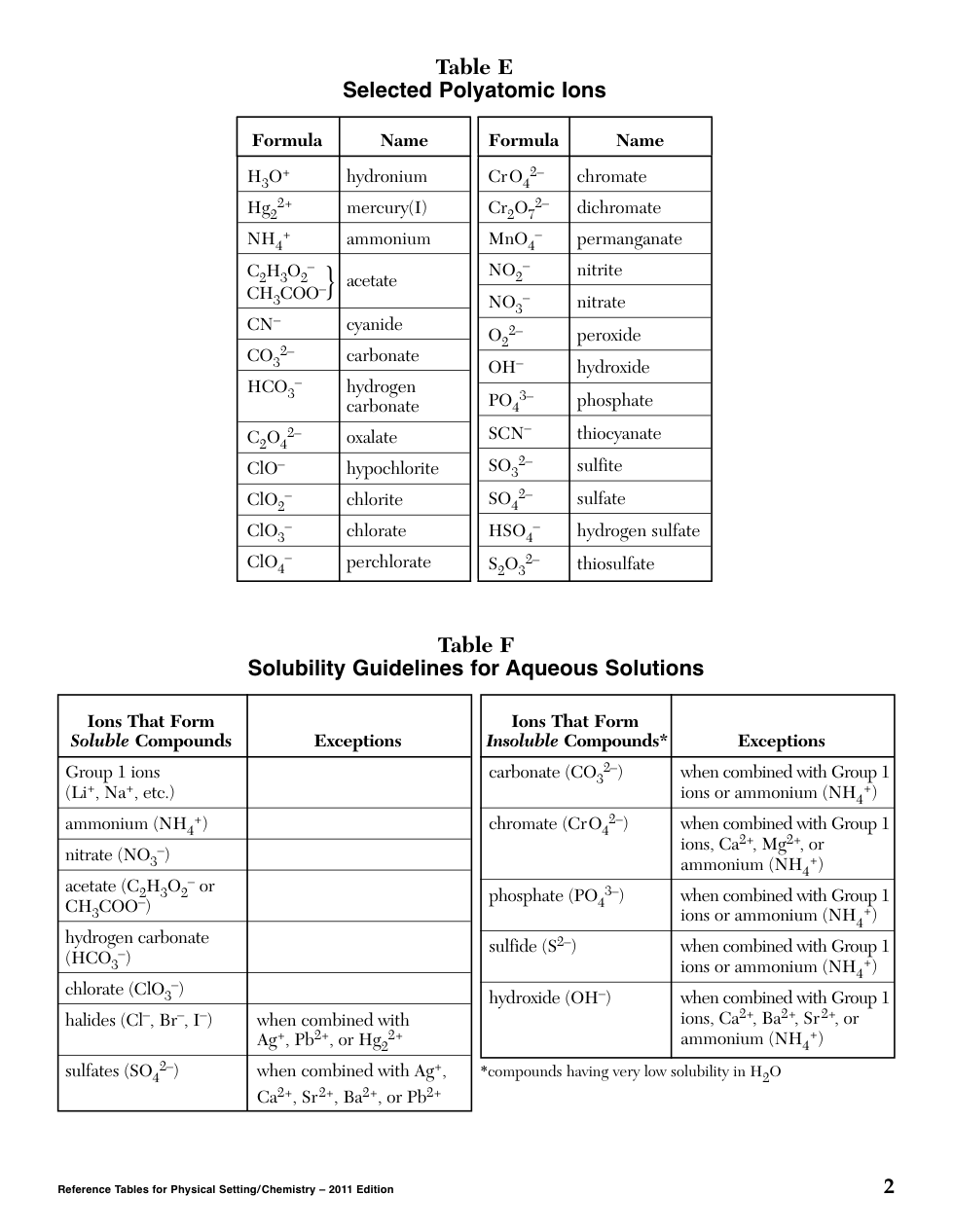
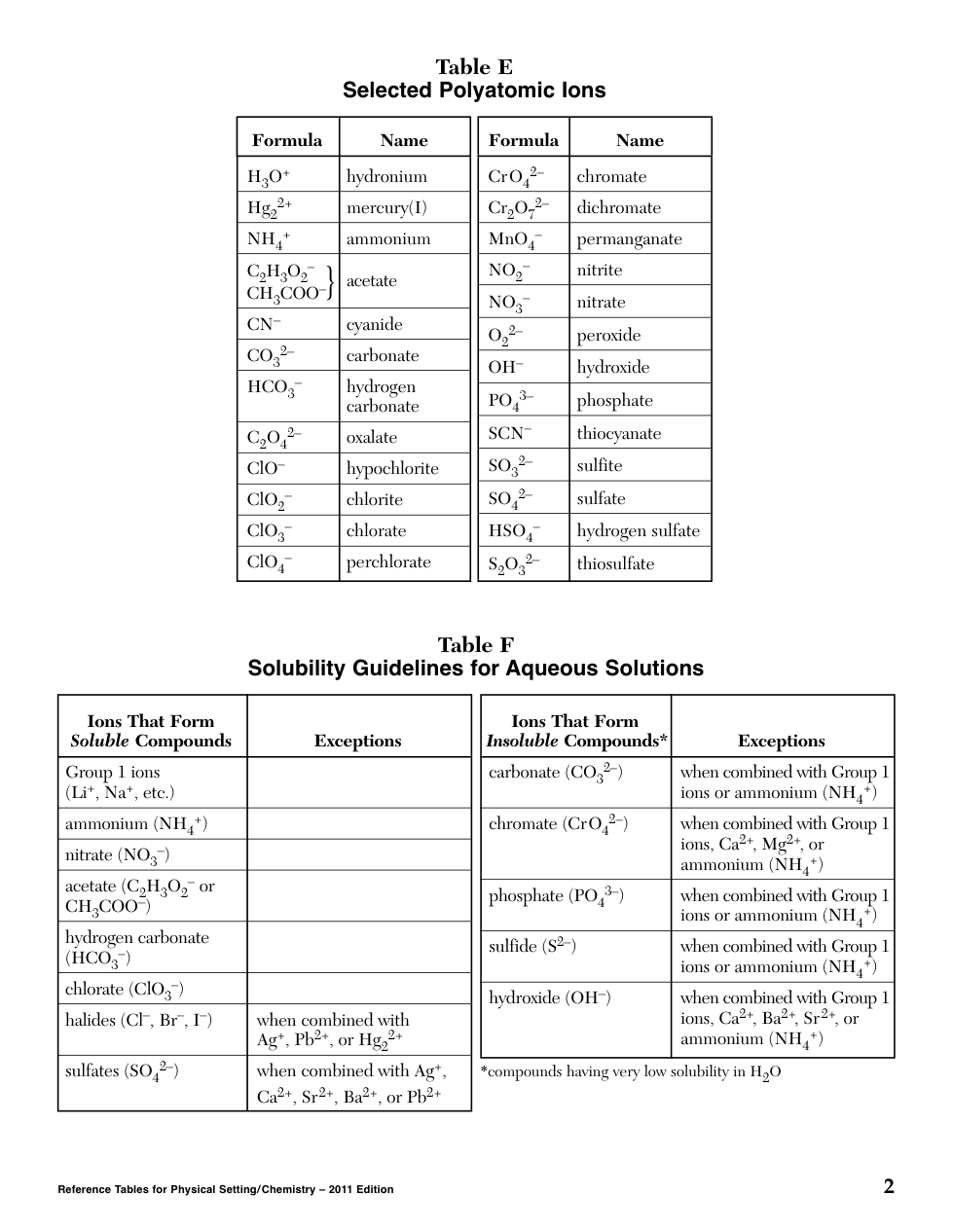
An aqueous solution of lead(II) nitrate reacts with an aqueous solution of potassium iodide in a test tube. The reaction produces a yellow solid that settles to the bottom of the test tube. The unbalanced equation for this reaction is shown below.
Balance the equation for this reaction, using the smallest whole-number coefficients.
1 point
1
Question 58
58.
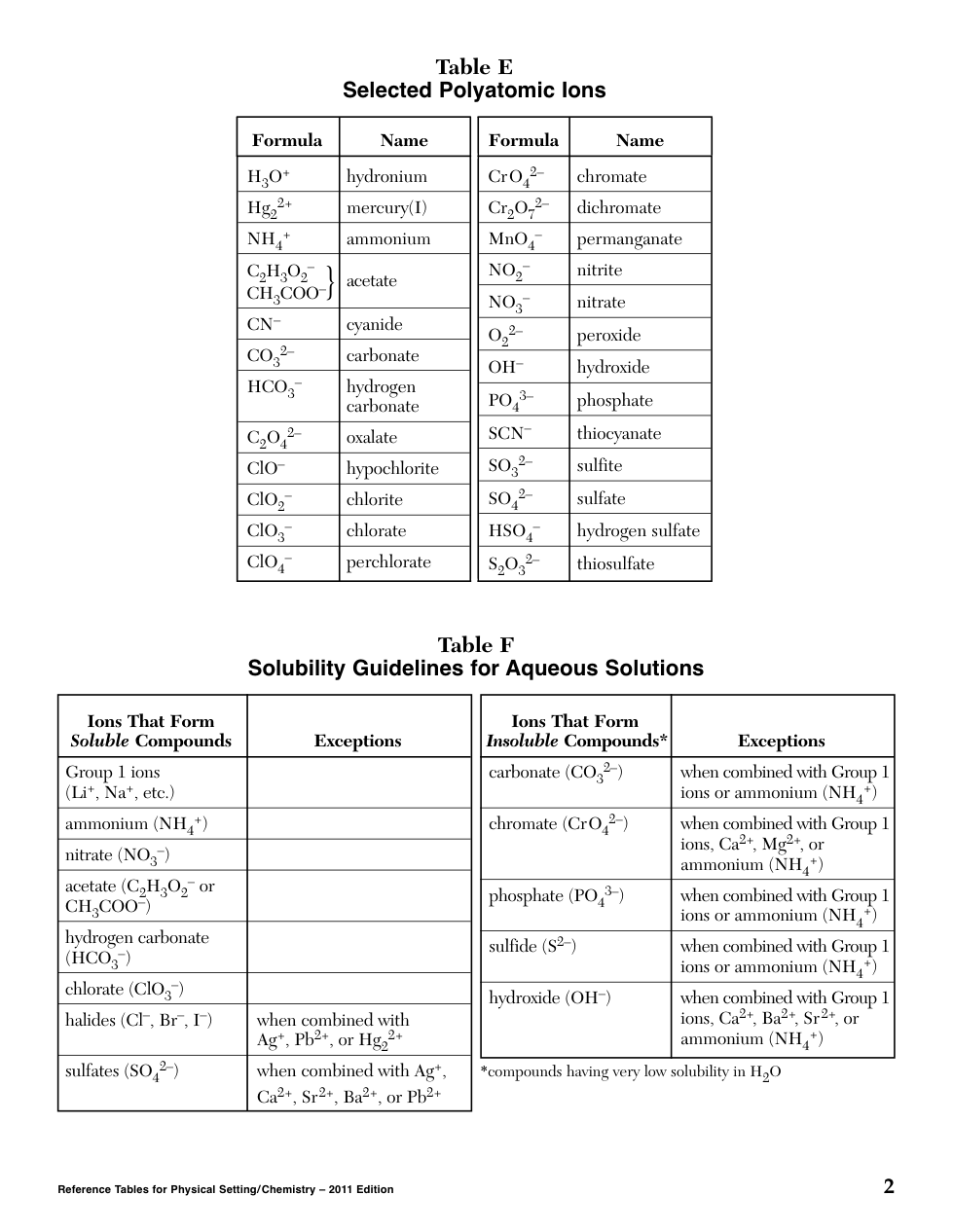
Write a chemical name for the aqueous product.
1 point
1
Question 59
59.
Determine the gram-formula mass of the yellow solid compound produced by the reaction.
Base your answers to questions 60 through 62 on the information below and on your knowledge of chemistry.
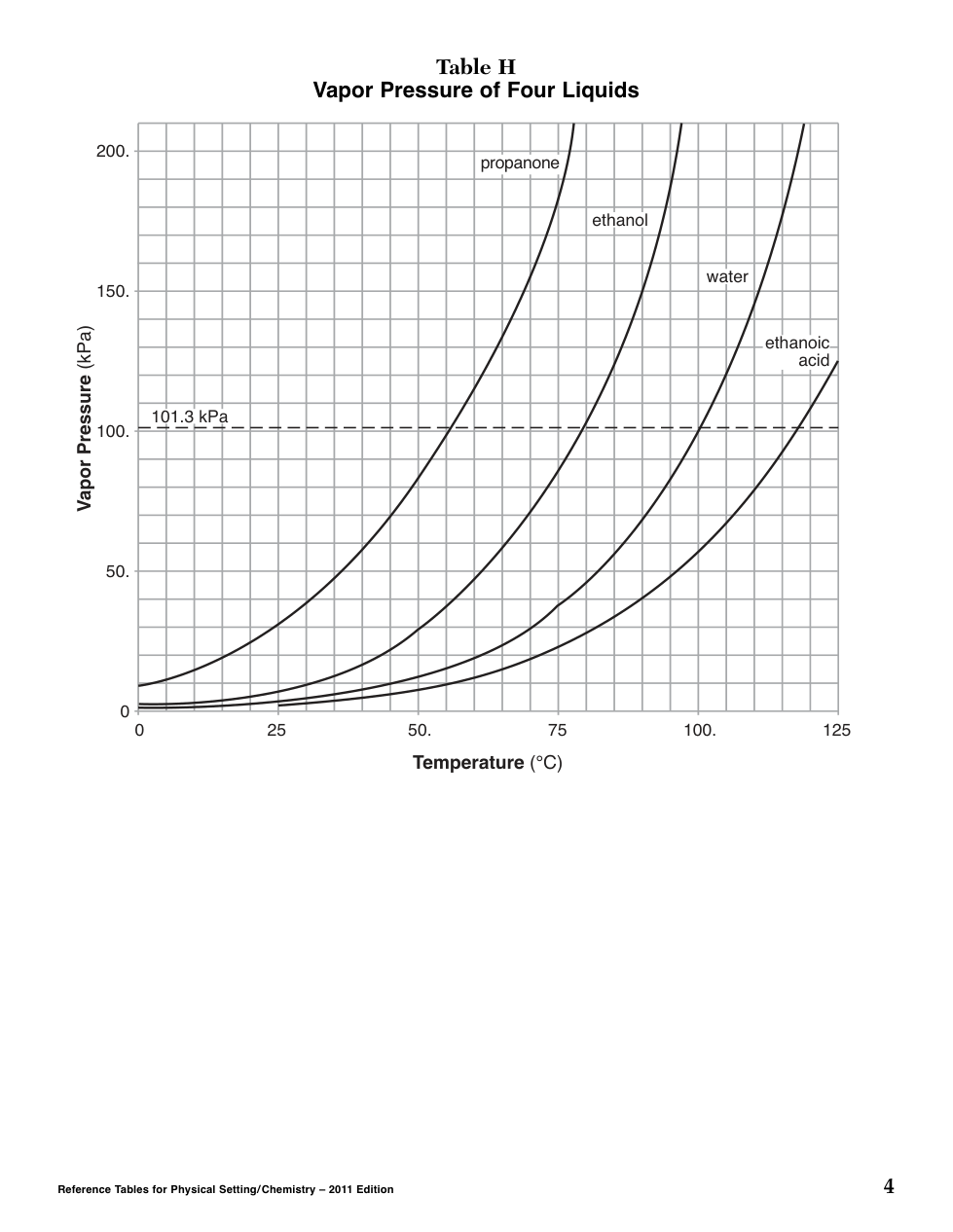
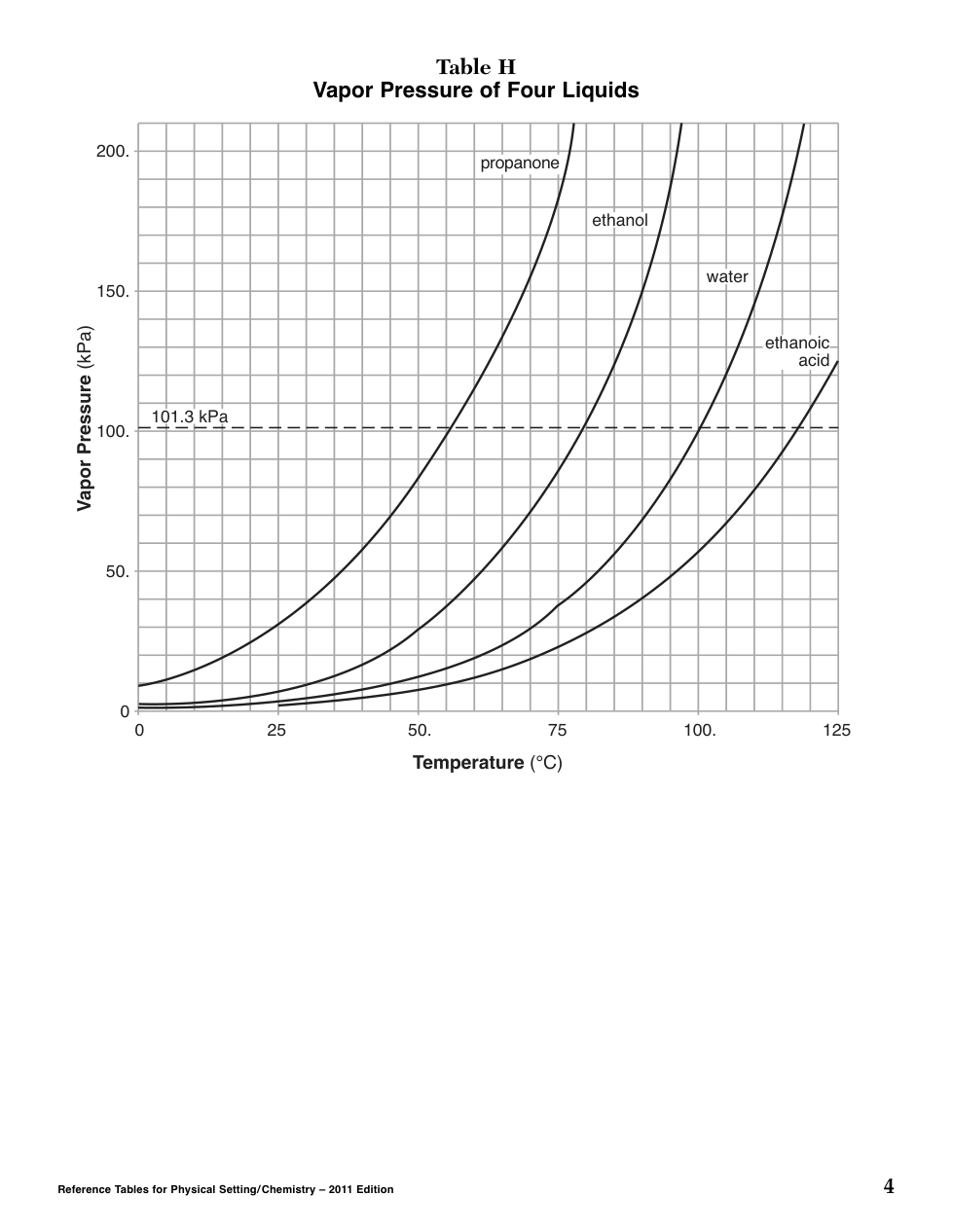
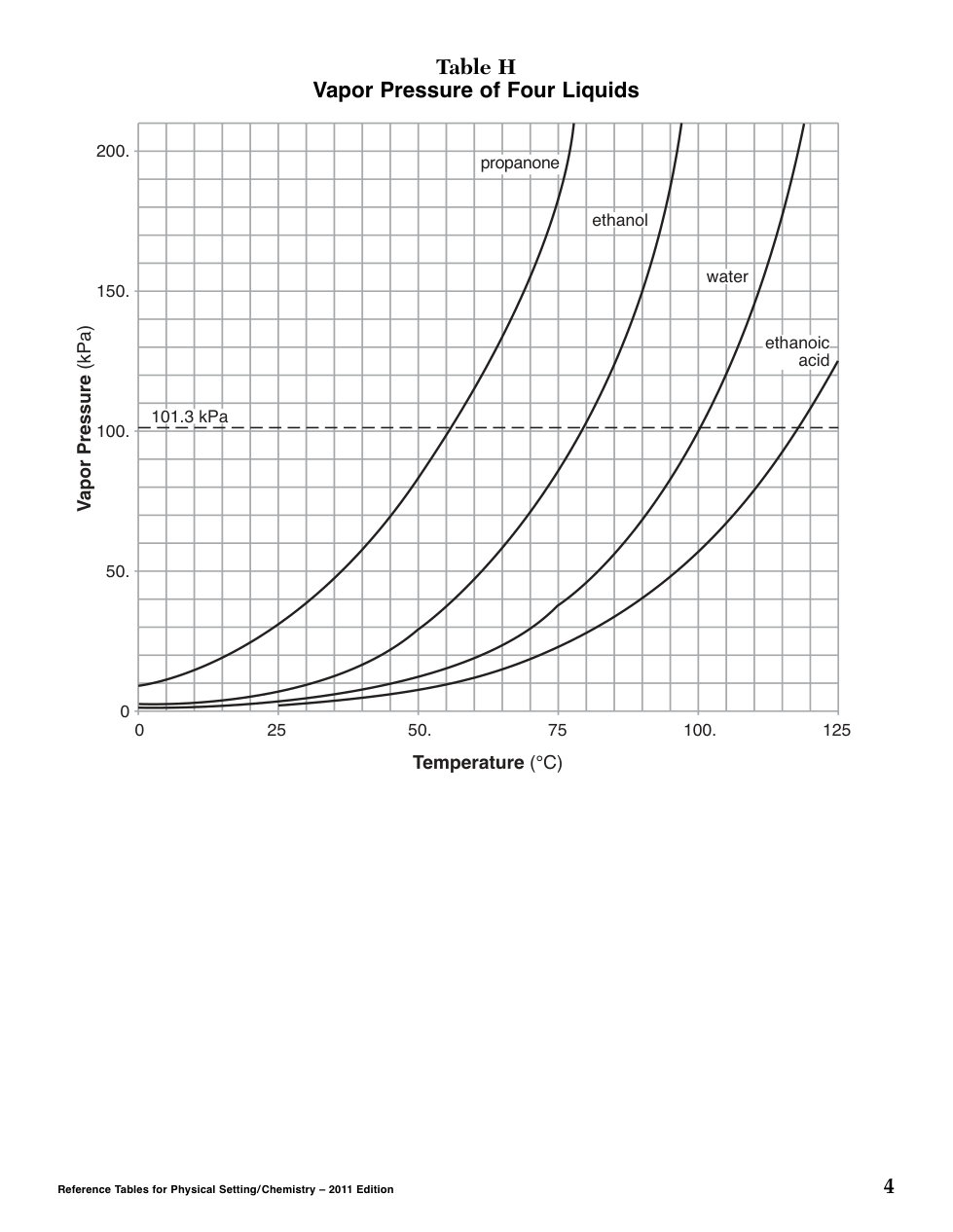
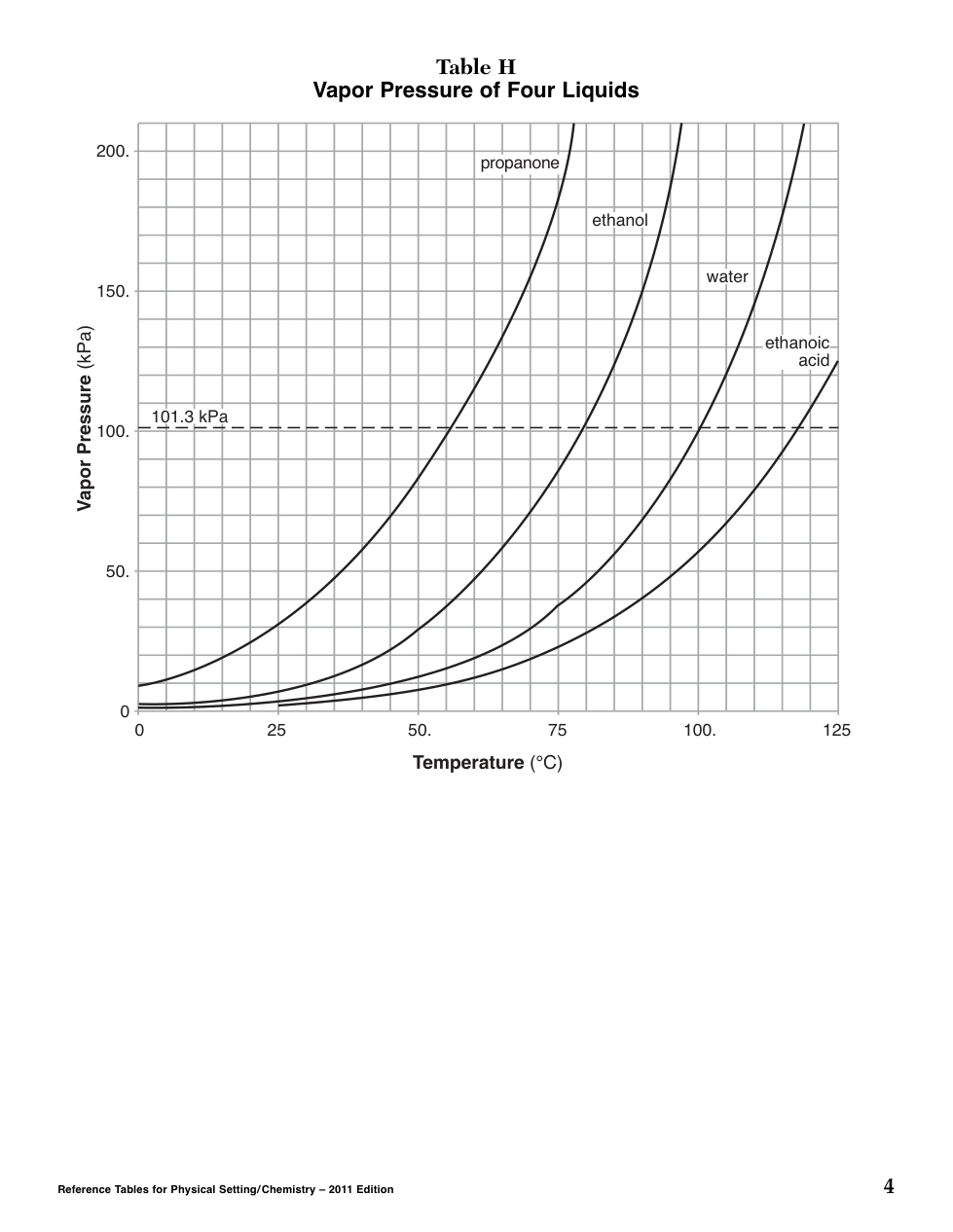
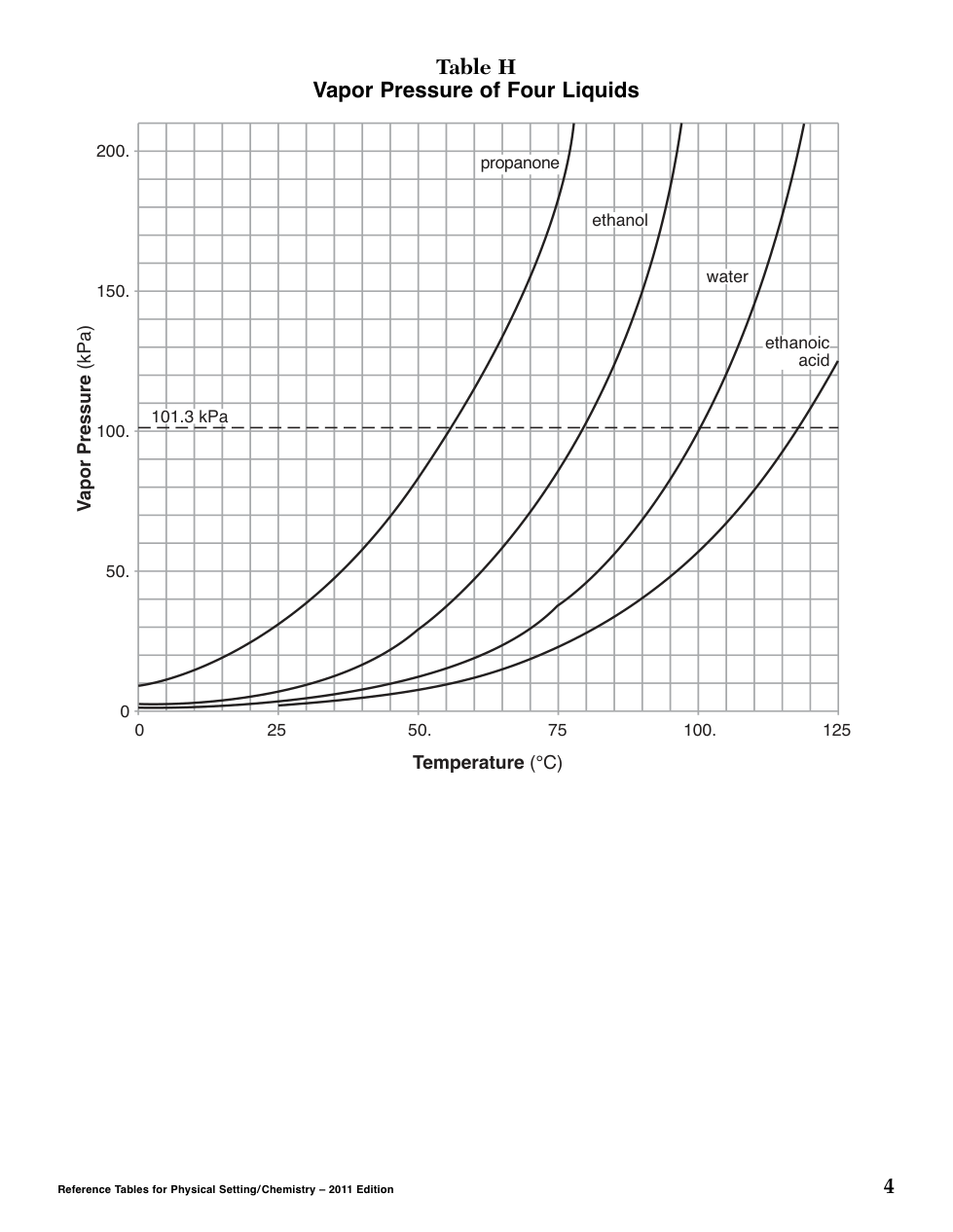
The vapor pressures of four liquids at various temperatures are given in Table H.
1 point
1
Question 60
60.
Identify the substance on Table H with the weakest intermolecular forces at 40°C.
1 point
1
Question 61
61.
Determine the vapor pressure of ethanoic acid at standard pressure and 50°C.
1 point
1
Question 62
62.
Explain, in terms of charge distribution, why water is a polar molecule.
Base your answers to questions 63 through 65 on the information below and on your knowledge of chemistry.
1 point
1
Question 63
63.
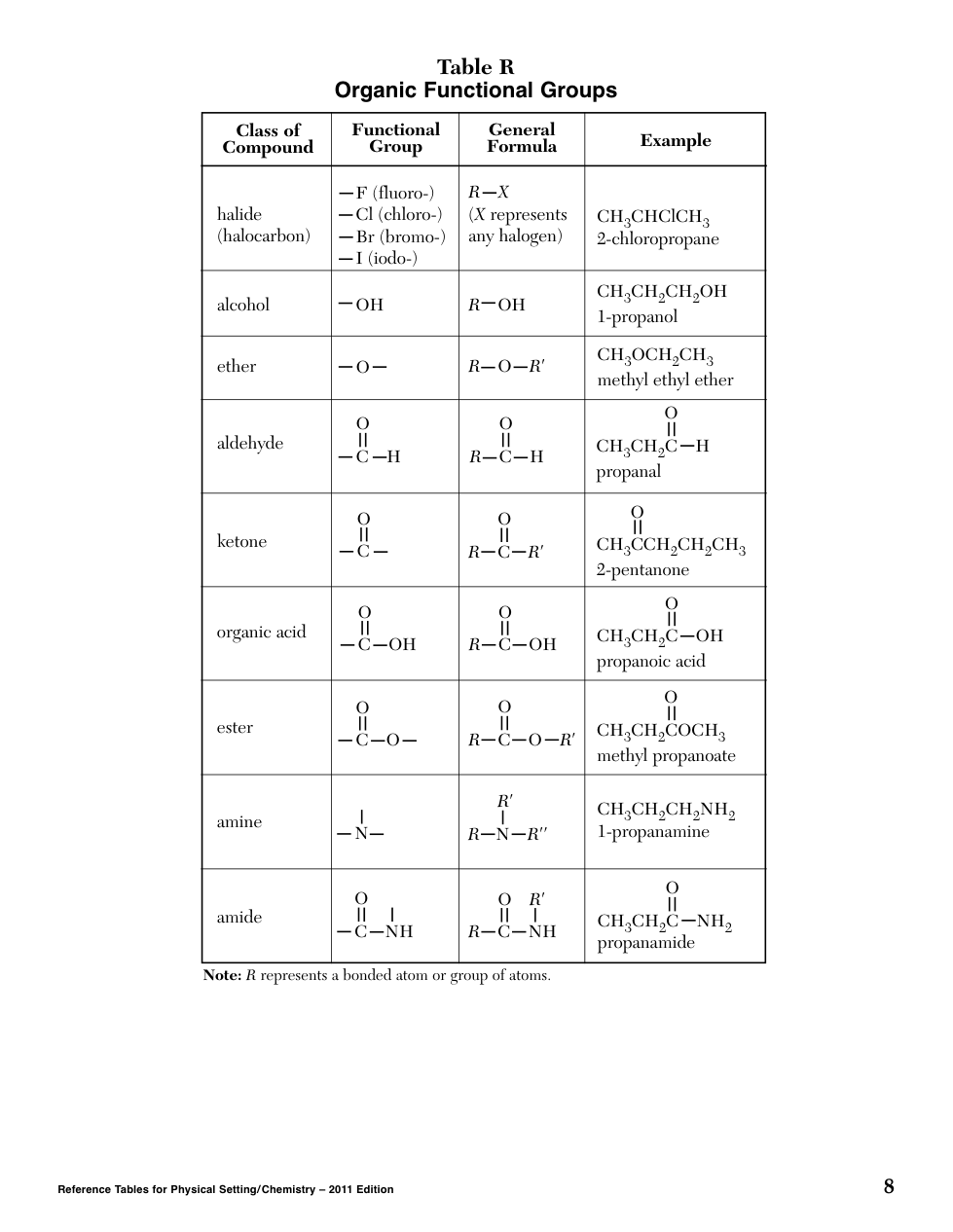
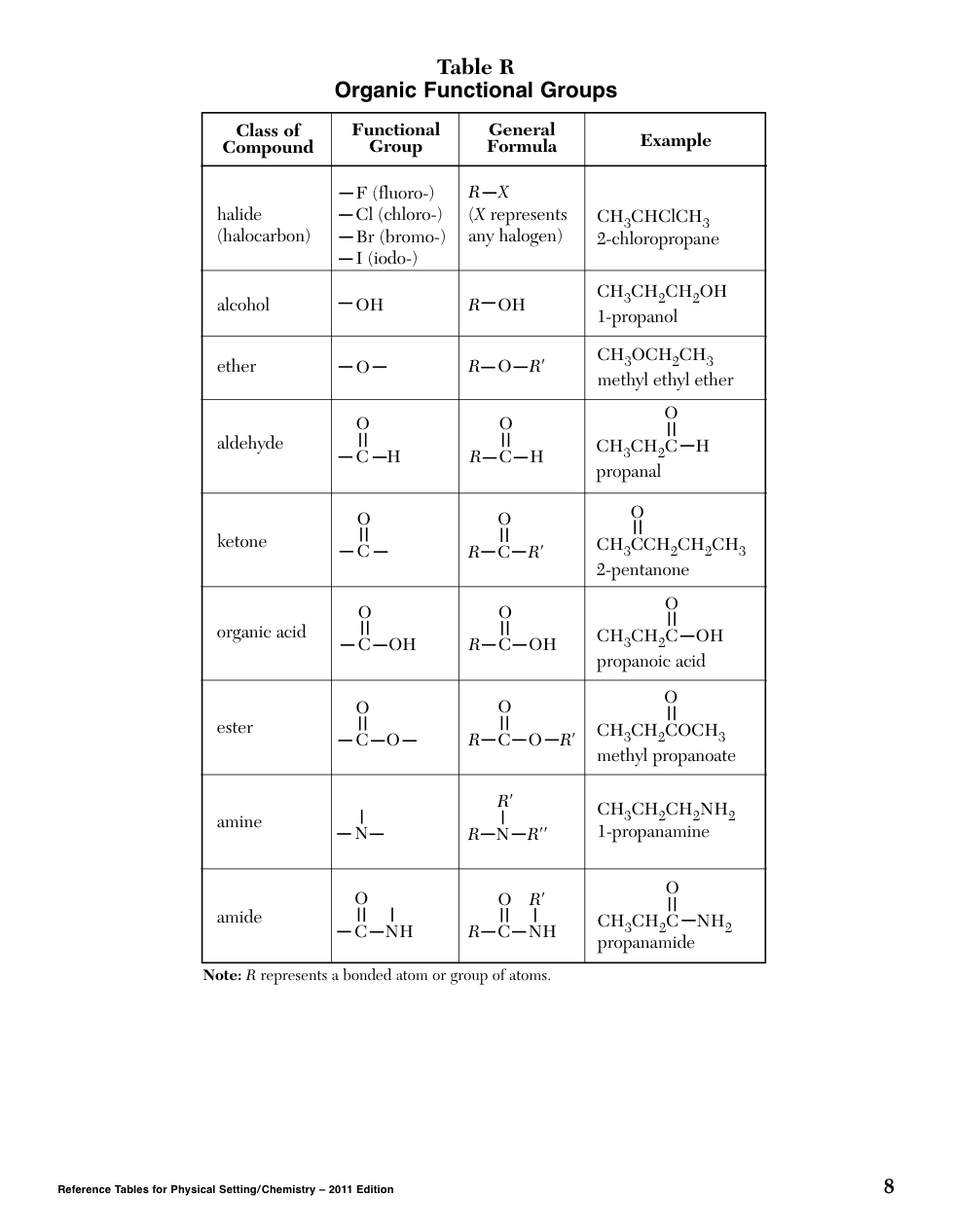
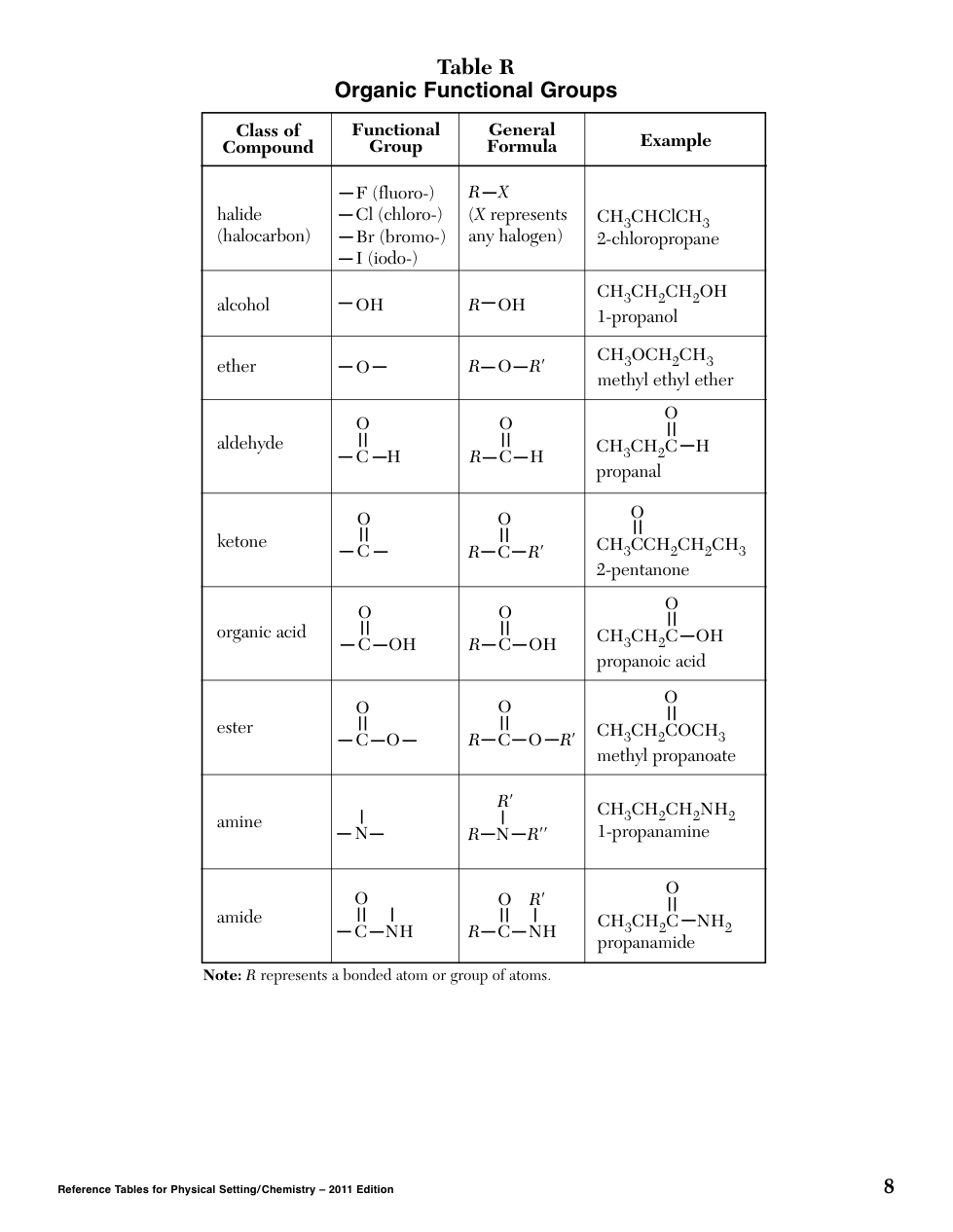
Identify the class of organic compound to which molecule A belongs.
1 point
1
Question 64
64.
Draw a structural formula for dimethyl ether, the isomer of molecule A.
1 point
1
Question 65
65.
Write a chemical name for the compound represented by molecule B.
Part C
Directions (66-85): Record your answers in the spaces provided. Some questions may require the use of the 2011 Edition Reference Tables for Physical Setting/Chemistry.
Base your answers to questions 66 through 69 on the information below and on your knowledge of chemistry.
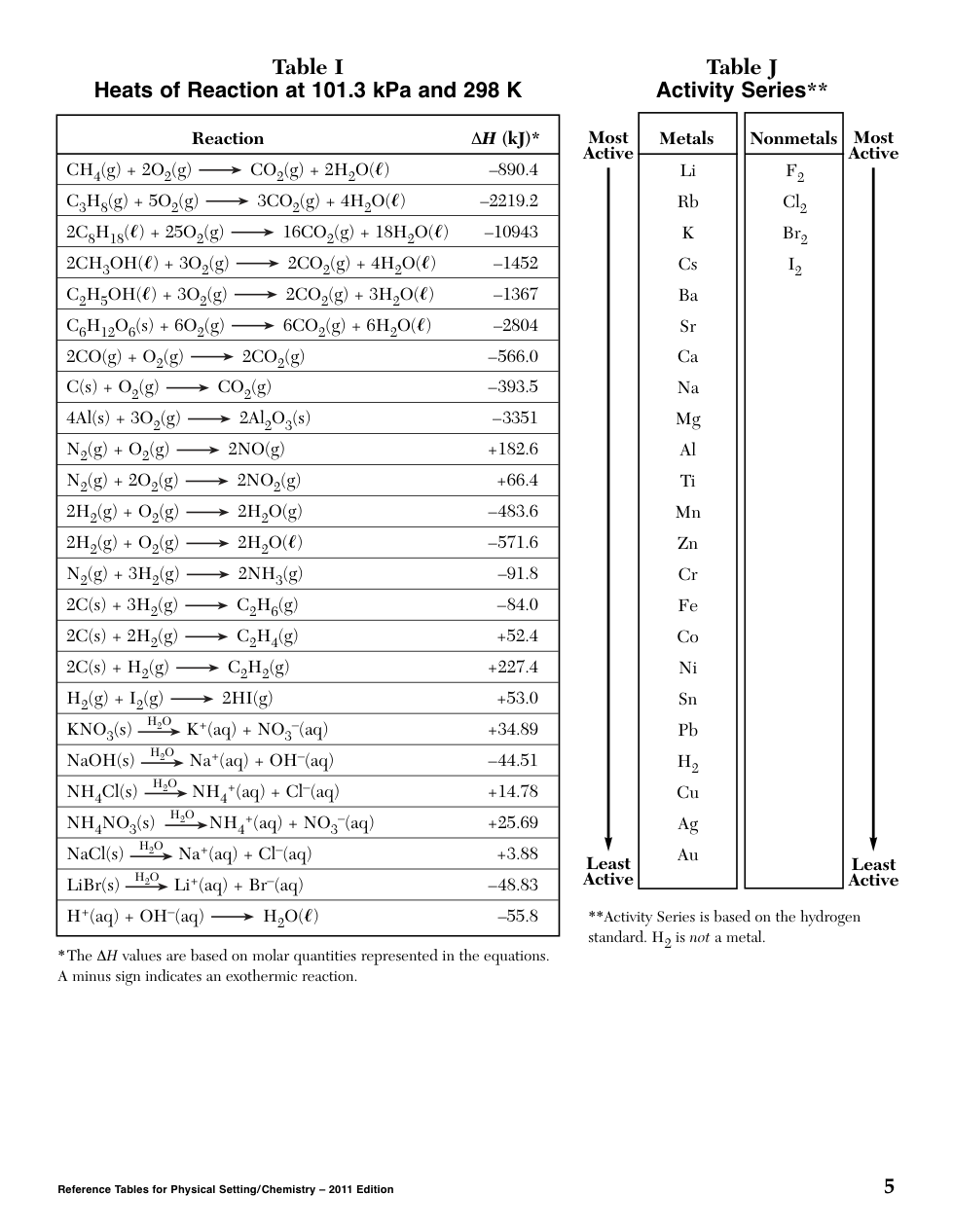
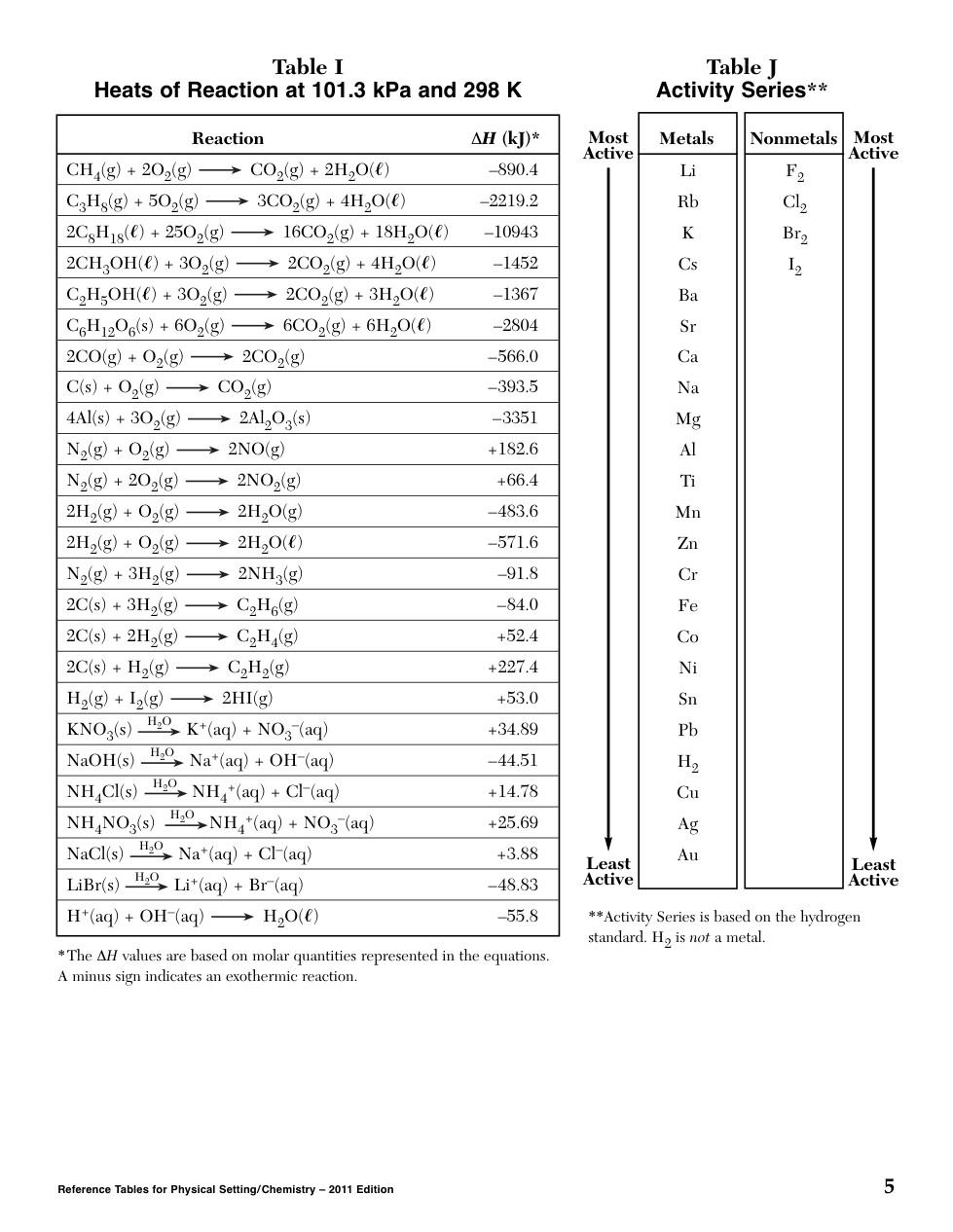
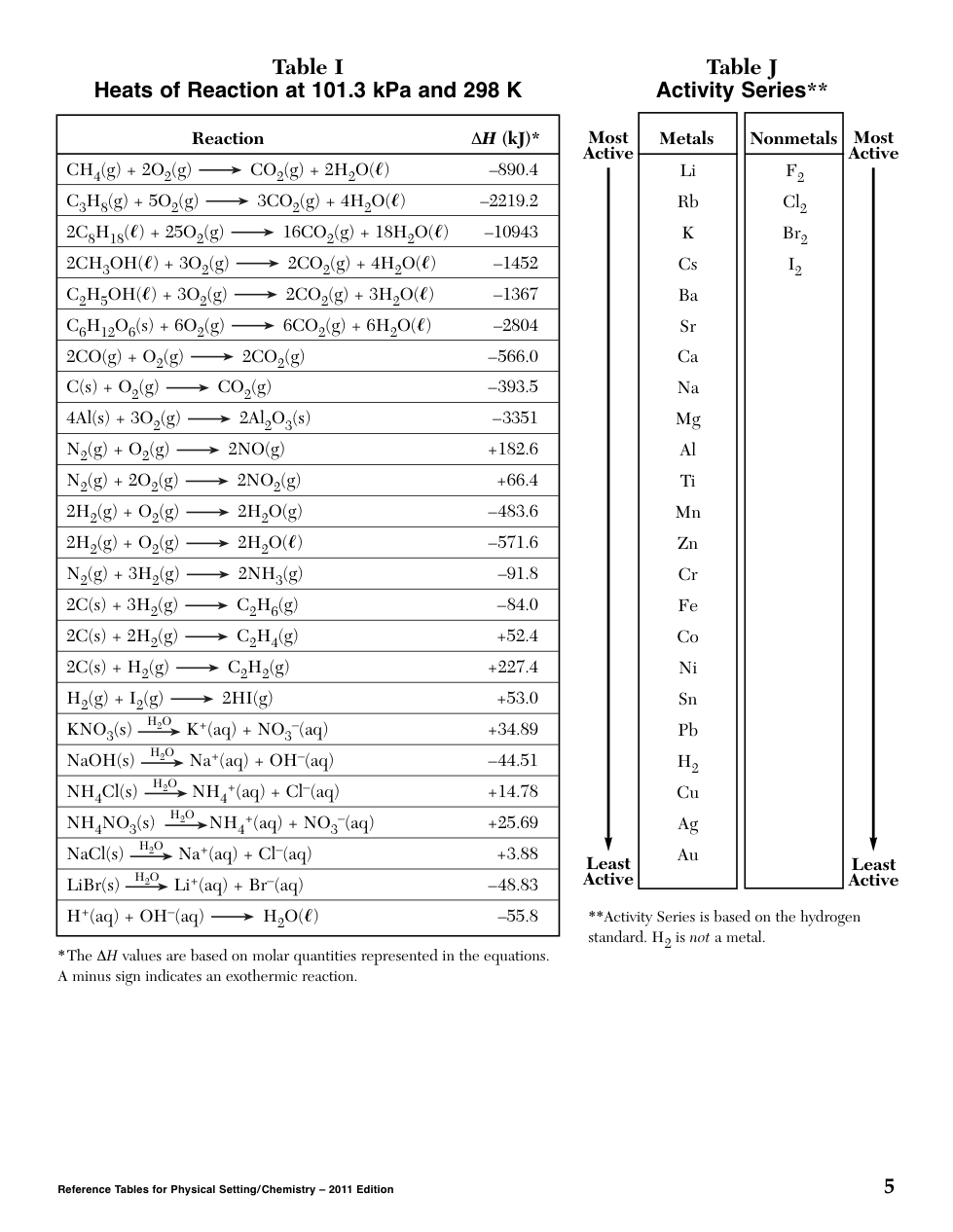
During a laboratory activity, appropriate safety equipment was used and safety procedures were followed. A student investigated the relative chemical activity of four metals by placing one piece of each metal in aqueous nitrate solutions of each of the four metals. The observations from the investigation are shown in the table below.
The student wanted to use information from this investigation to make an operating voltaic cell using a zinc electrode and a Zn(NO_3)_2(aq) solution in one of the half-cells.
1 point
1
Question 66
66.
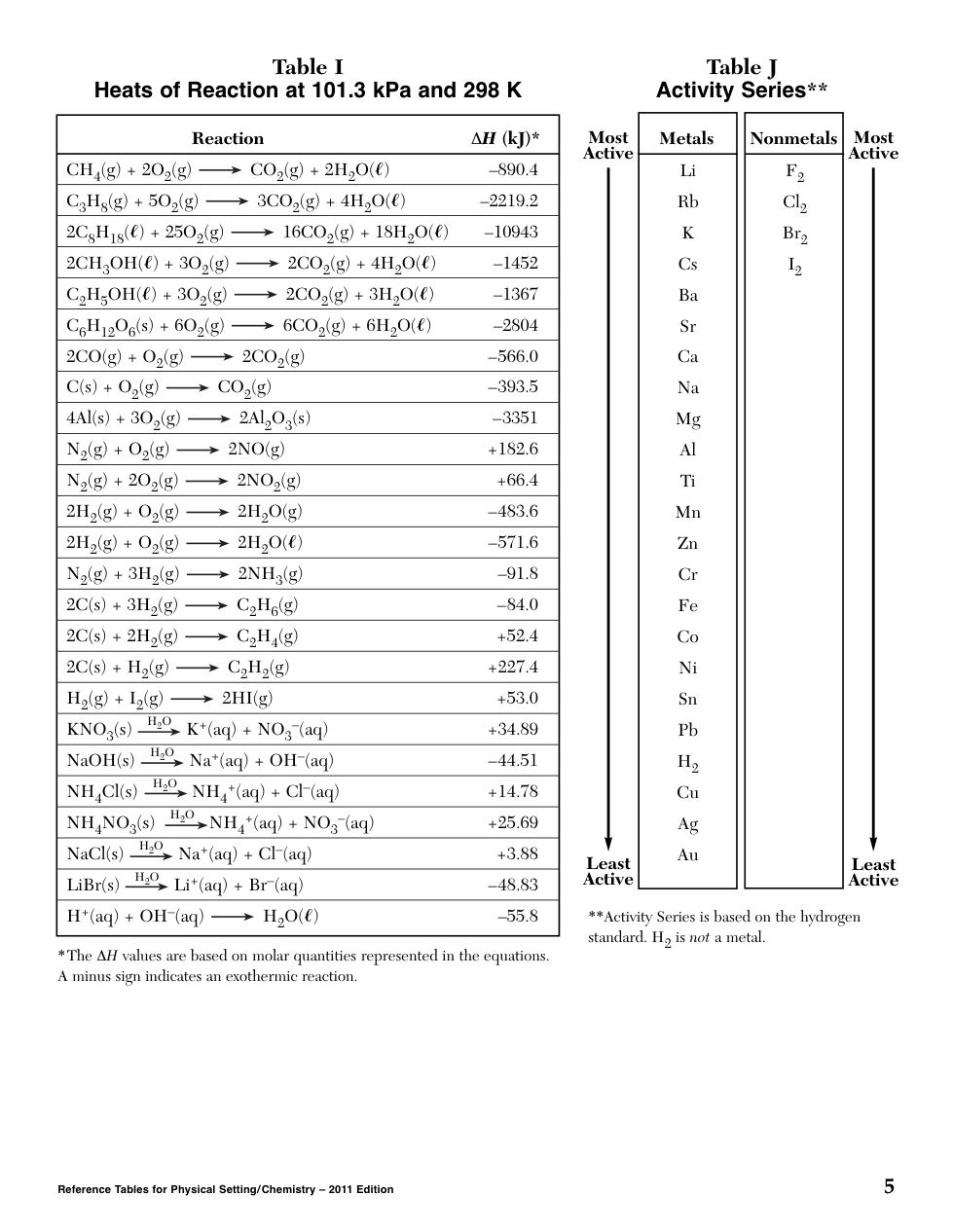
Identify the most active metal and the least active metal used in this investigation.
Most Active:_______
Least Active: _______
1 point
1
Question 67
67.
Determine the oxidation state of nitrogen in the
solution.
1 point
1
Question 68
68.
Write a balanced half-reaction equation for the oxidation of the zinc during this investigation.
1 point
1
Question 69
69.
Identify a metal, in this investigation, that could be used as the cathode in the other half-cell in the student's voltaic cell.
Base your answers to questions 70 through 73 on the information below and on your knowledge of chemistry
A student investigated the properties of solutions by dissolving 46.0 grams of NH_4Cl(s) in 200. grams of water at 20.°C. The gram-formula mass of NH_4Cl(s) is 53.5 grams per mole. The temperature of the solution decreased as the NH_4Cl(s) dissolved. During this laboratory activity, appropriate safety equipment was used and safety procedures were followed.
1 point
1
Question 70
70.
State, in terms of temperature, why the dissolving of the NH_4Cl(s) is classified as an endothermic process.
1 point
1
Question 71
71.
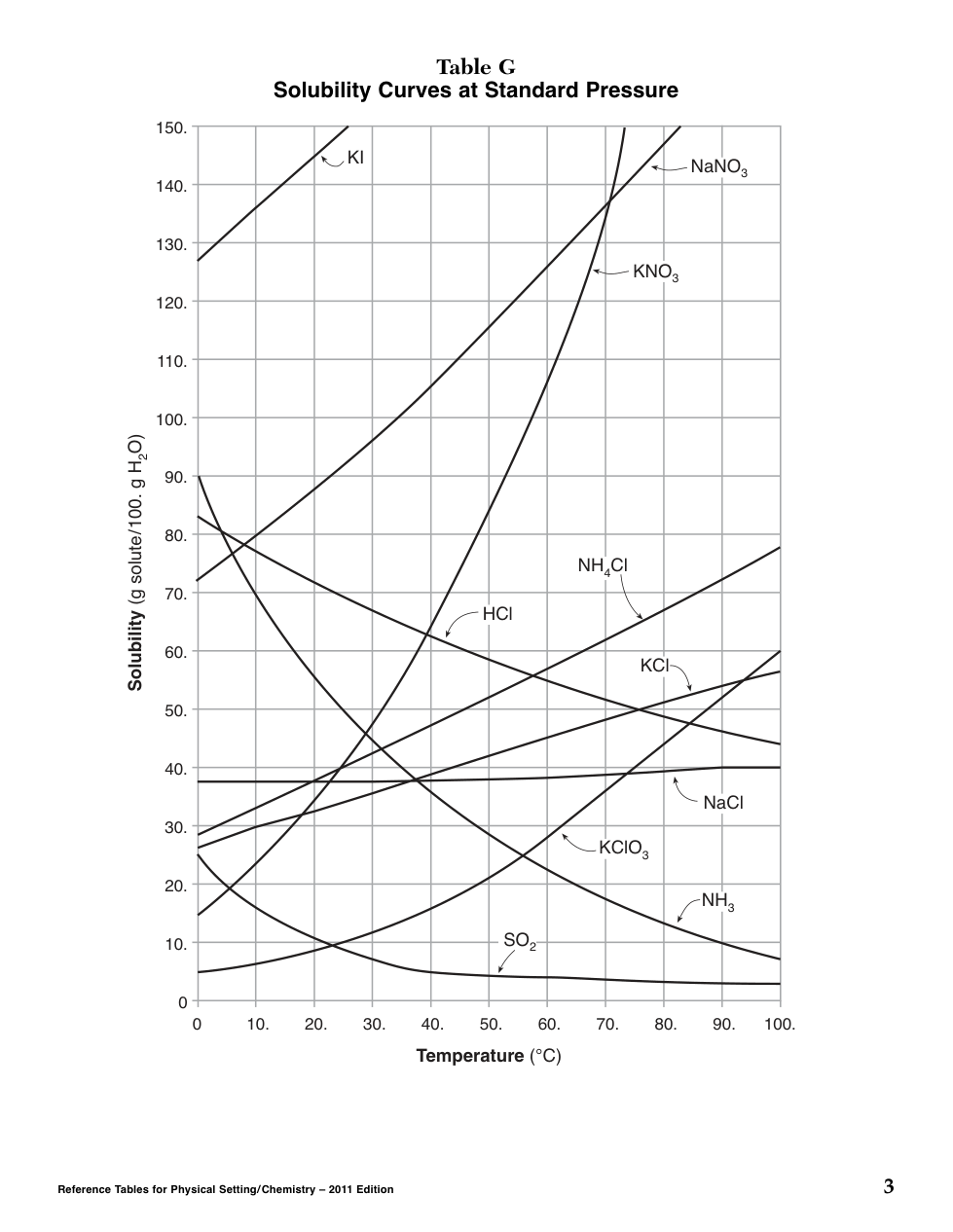
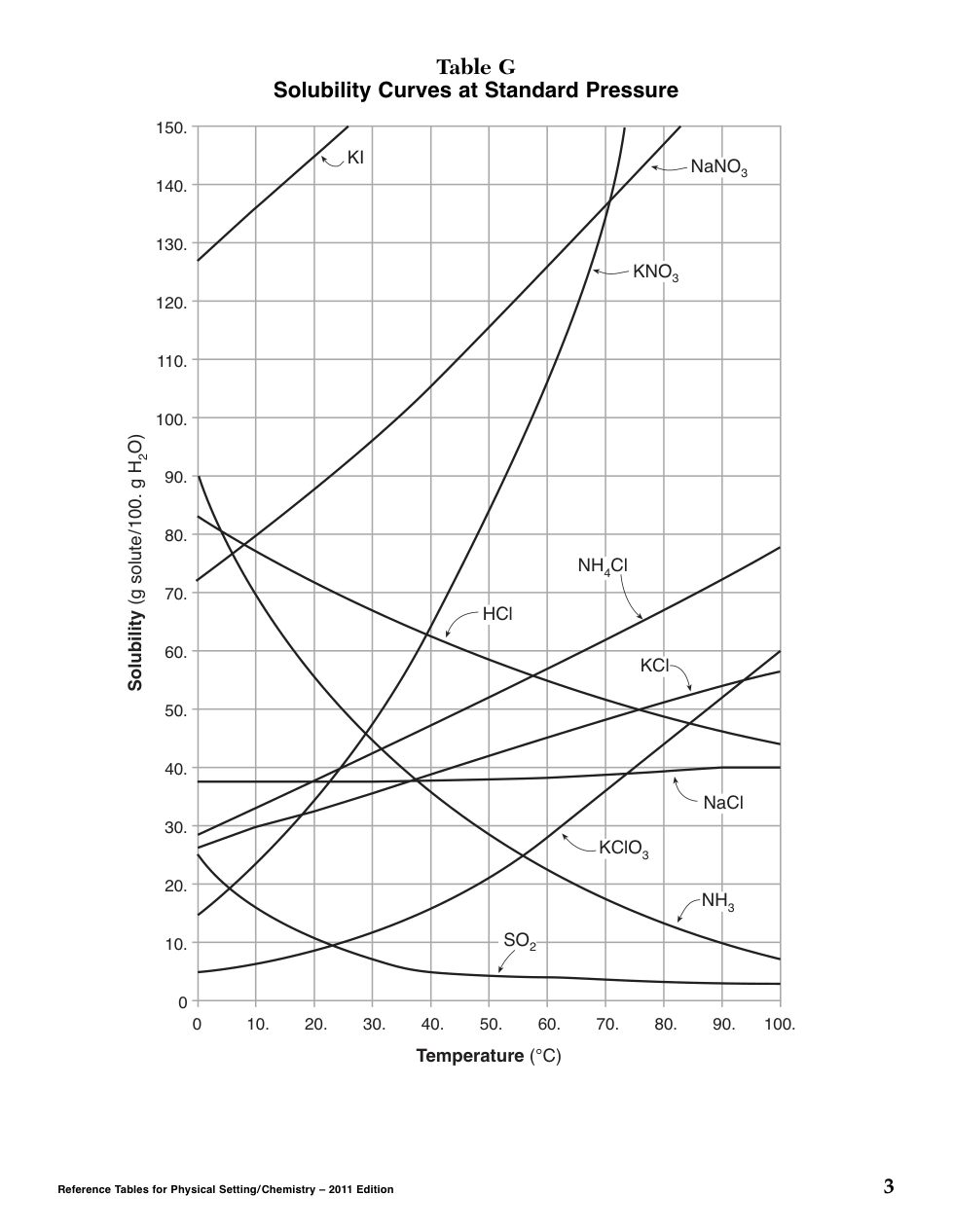
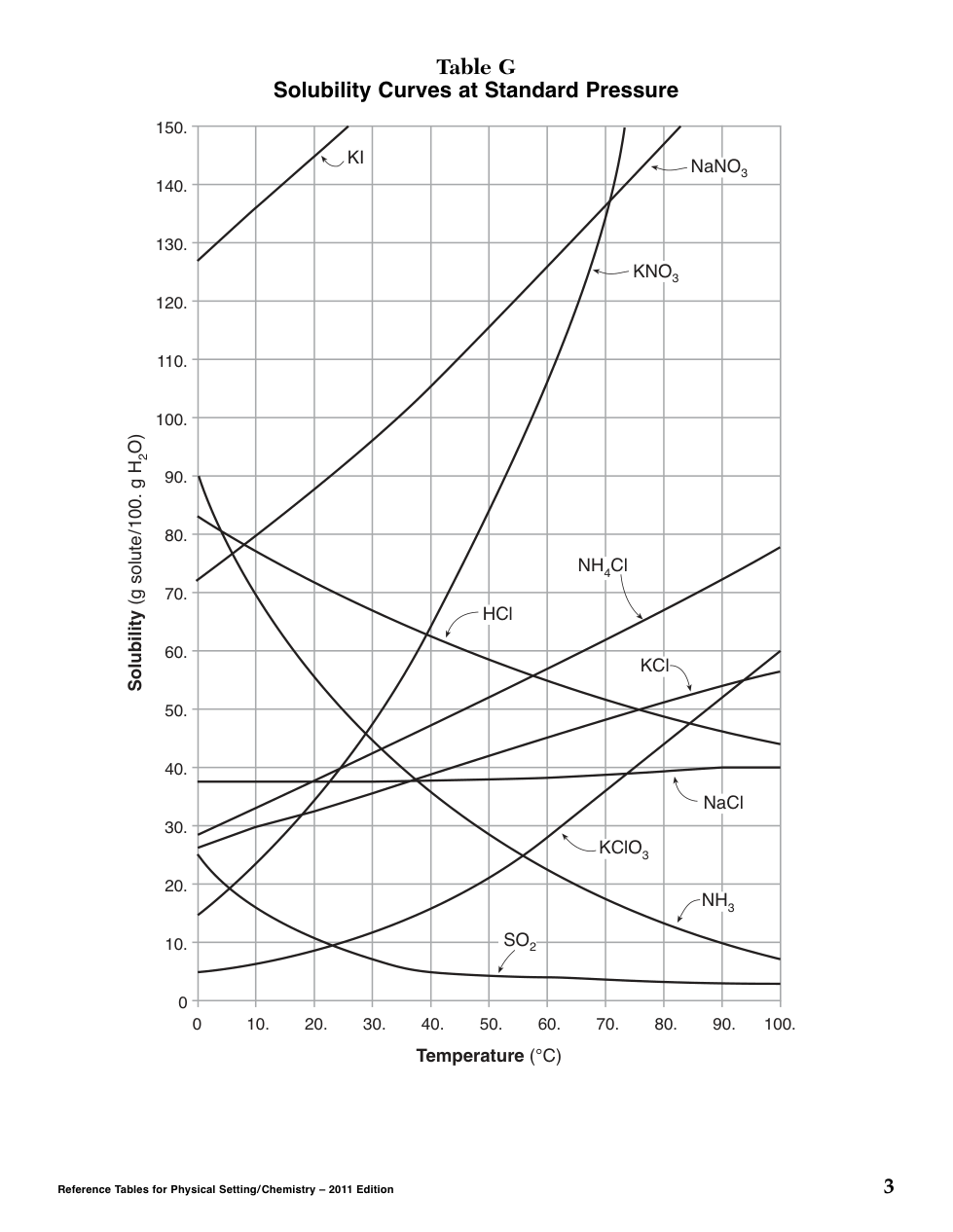
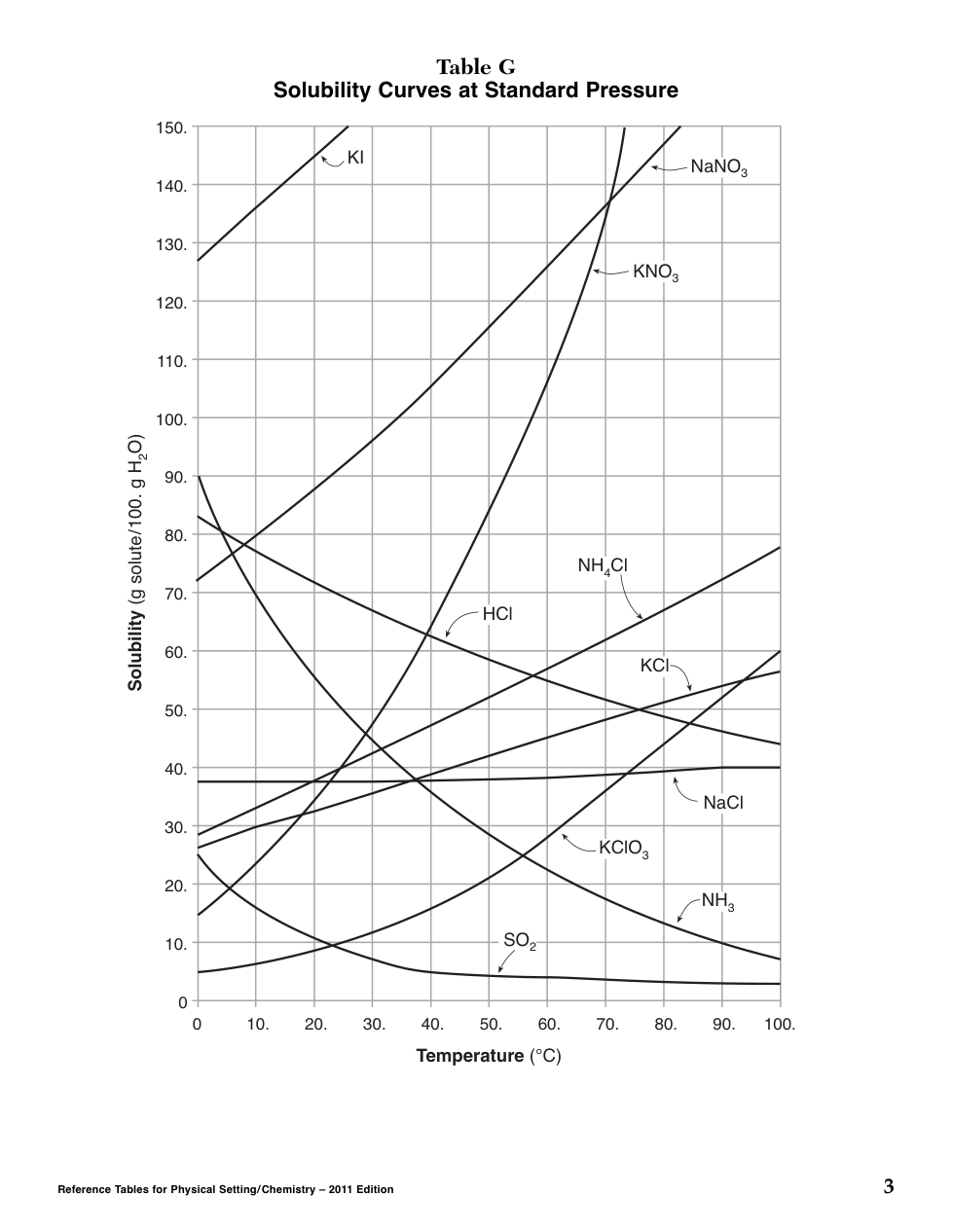
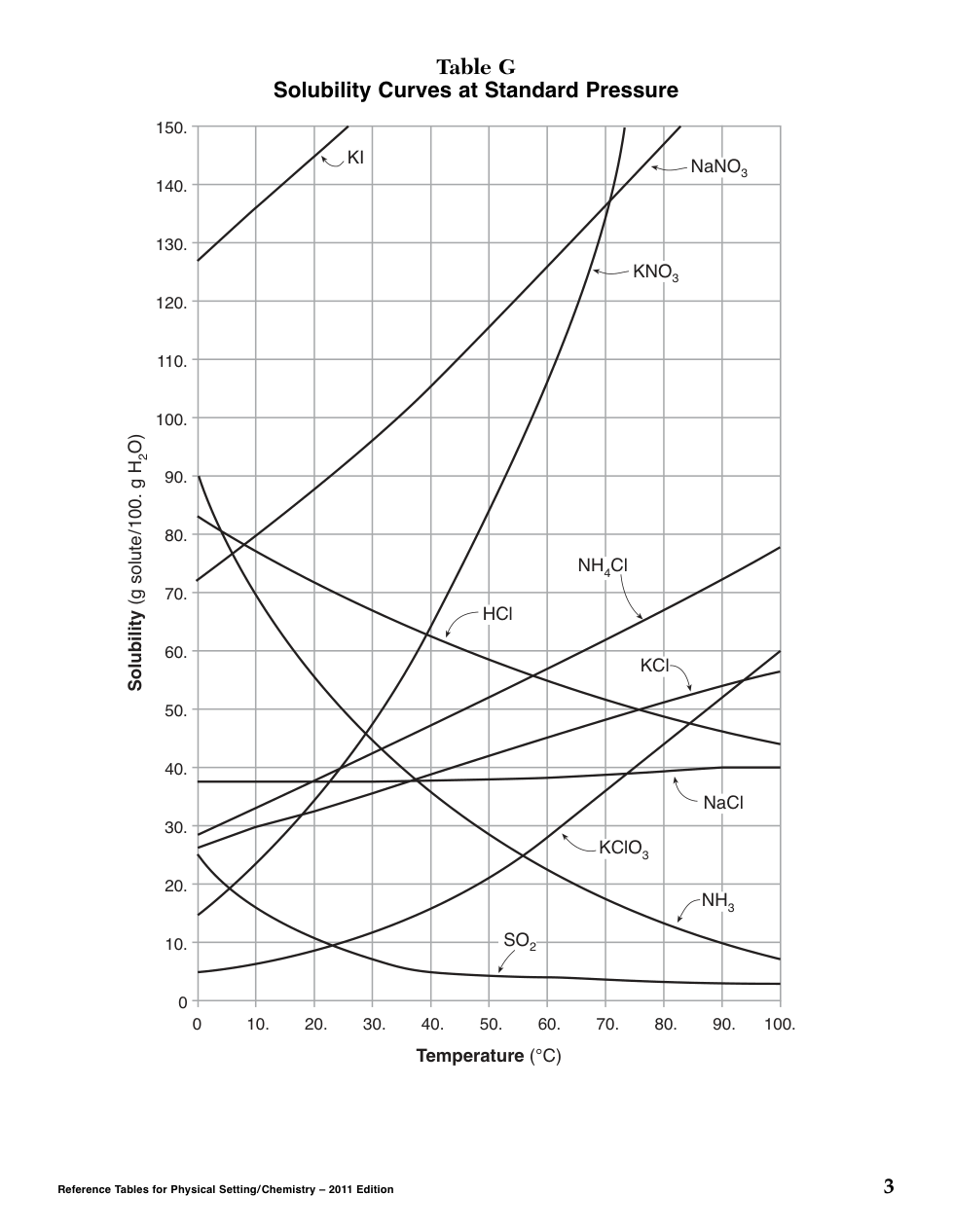
Based on Table G, identify the solute that has a solubility at 20.°C that is closest to the solubility of NH_4Cl(s) at 20.°C.
1 point
1
Question 72
72.
Classify, in terms of saturation, the type of solution produced in this investigation.
1 point
1
Question 73
73.
Determine the number of moles of NH_4Cl(s) dissolved in the 200. grams of water in this investigation.
Base your answers to questions 74 through 77 on the information below and on your knowledge of chemistry.
The process of evaporation affects the concentration of ions in a sample of seawater. The table below shows the name and concentration of four different ions in a seawater sample. The concentrations are expressed in grams per 1000. grams of seawater.
1 point
1
Question 74
74.
Determine the concentration of potassium ions, in parts per million, in the sample of seawater.
1 point
1
Question 75
75.
State what happens to the potential energy of the water molecules as they evaporate from a sample of the seawater.
1 point
1
Question 76
76.
State how the concentration of ions in a sample of the seawater changes as some of the water evaporates from the seawater sample.
1 point
1
Question 77
77.
Using the key in your answer booklet, draw at least two water molecules in the box, showing the orientation of each water molecule toward the bromide ion.
Base your answers to questions 78 through 81 on the information below and on your knowledge of chemistry.
During a laboratory activity, appropriate safety equipment was used and safety procedures were followed. A student performed three trials of a titration using 0.16 M KOH(aq) to determine the unknown concentration of a solution of hydrochloric acid, HCl(aq). The volumes of the solutions used are shown in the table below.
1 point
1
Question 78
78.
Identify the positive ion in the solution of hydrochloric acid.
1 point
1
Question 79
79.
Complete the equation in the drawing space for the reaction that occurs during this titration by writing a formula for each product.
1 point
1
Question 80
80.
Show a numerical setup for calculating the molarity of the HCl(aq) solution using the titration data from trial 2.
1 point
1
Question 81
81.
Explain, in terms of experimental design, why it is better to use data from multiple trials of a titration to determine the molarity of the acid than to use the data from only one trial of the titration.
Base your answers to questions 82 through 85 on the information below and on your knowledge of chemistry.
Scientists can produce useful radioisotopes of the lighter elements by bombarding atoms with neutrons. Tritium, 3H, can be produced by bombarding a nuclide represented by X as shown by the incomplete equation below.
1 point
1
Question 82
82.
State the neutron to proton ratio in the
product of the reaction.
1 point
1
Question 83
83.
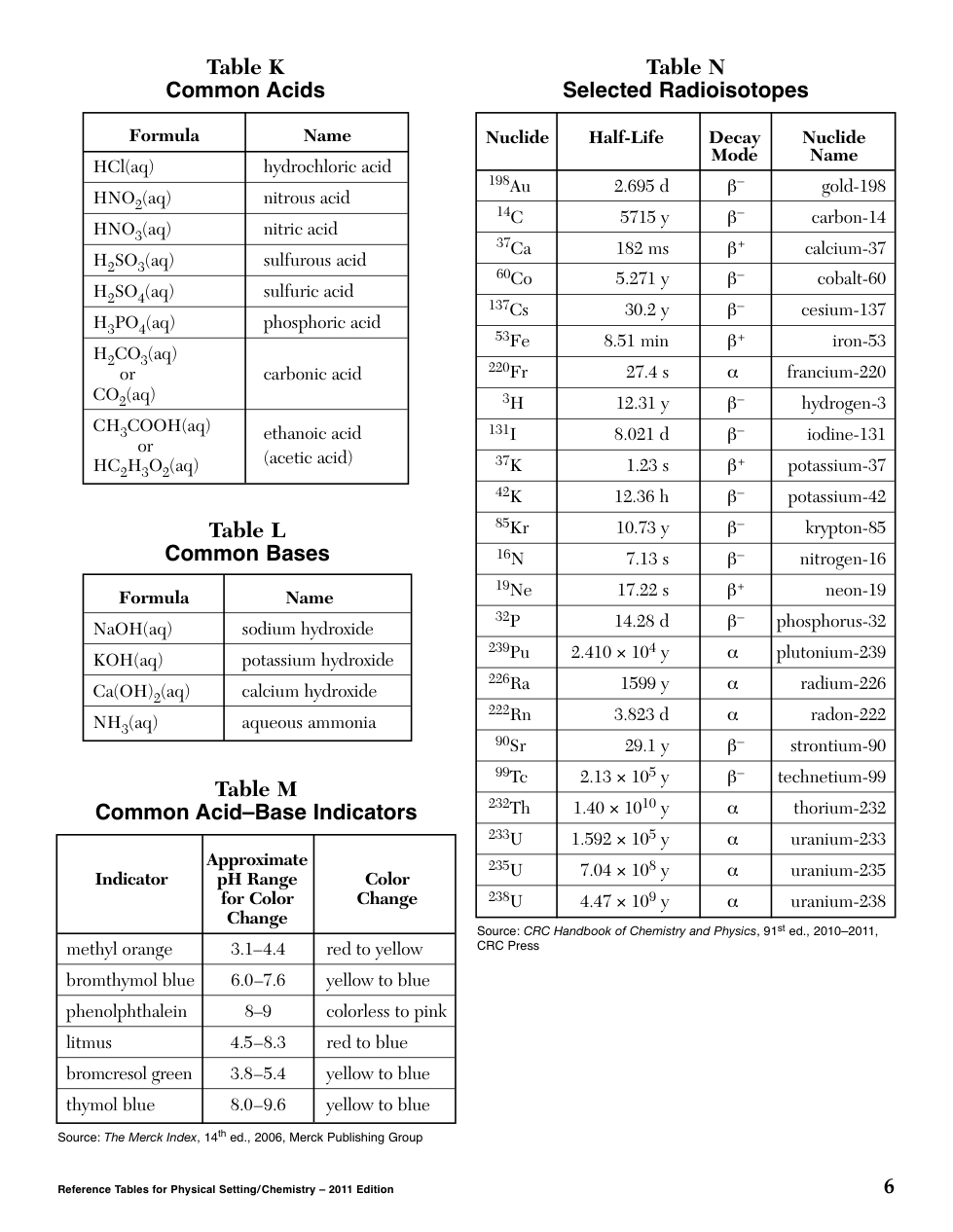
Based on Table N, state the decay mode of tritium.
1 point
1
Question 84
84.
Determine the time required for a 1.00-gram sample of the
produced to decay until 0.25-gram of the sample remains unchanged.
1 point
1
Question 85
85.
Complete the nuclear equation for this reaction by writing a notation for the missing reactant.