Log in
Sign up for FREE
arrow_back
Library

Mapping Lab: Africa

star
star
star
star
star
Last updated about 2 months ago
15 questions
Location
Required
9
Required
10
Intepreting Maps
Required
6
Required
1
Required
2
Required
3
Required
4
Required
5
Required
1
Required
3
Required
2
Think Like a Geographer
Required
15
Question 1
1.
Drag and drop each terrain feature to the correct location using the grid coordinates provided.
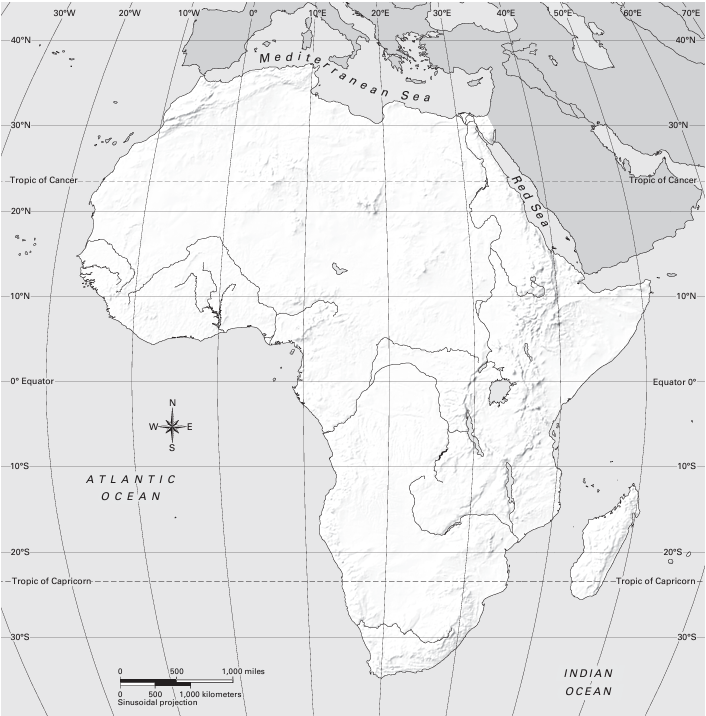
Other Answer Choices:
Kalahari Desert (23°S, 22°E)
Nile River (28°N, 31°E)
Sahara (20°N, 10°E)
Lake Victoria (1°S, 33°E)
Atlas Mountains (32°N, 5°W)
Ethiopian Highlands (10°N, 39°E)
Mount Kilimanjaro (3°S, 37°E)
Congo Basin (0°, 20°E)
Cape of Good Hope (34°S, 18°E)
Question 2
2.
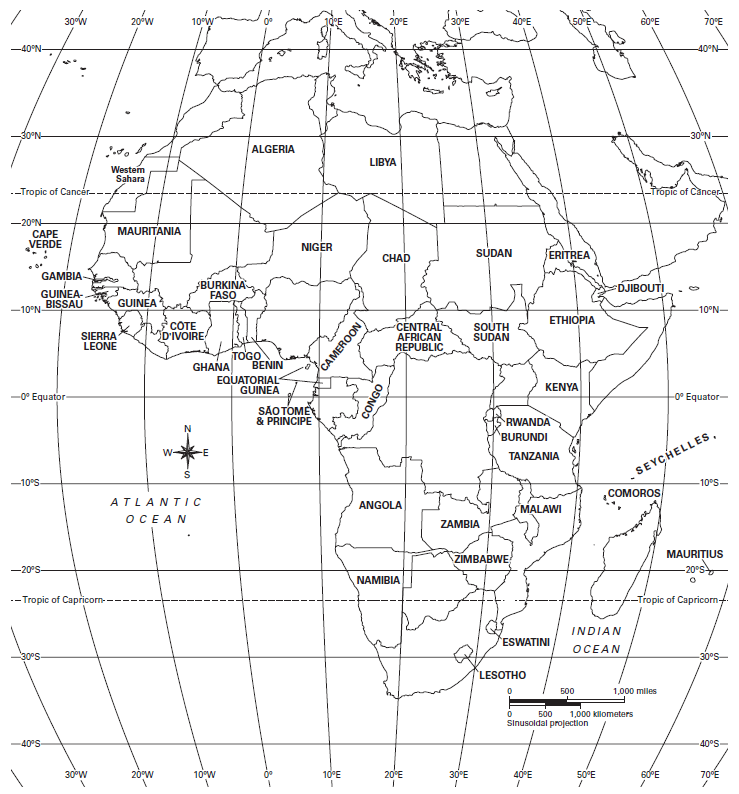
Drag and drop each country to the correct location using the grid coordinates provided.
Other Answer Choices:
South Africa (30°S, 25°E)
Somalia (10°N, 50°E)
Uganda (0°, 32°E)
Madagascar (20°S, 47°E)
Dem. Rep. of the Congo (0°, 25°E)
Mali (17°N, 0°)
Liberia (6°N, 10°W)
Egypt (25°N, 30°E)
Gabon (0°, 12°E)
Morocco (32°N, 5°W)

Use the maps to answer each of the questions

If doing this from home, use the following links:
Political
Physical
Climate
Vegetation
Economic Activity
Population
Question 3
3.

Question 4
4.
The country that contains the largest total area with a tropical wet climate is _______ .
Question 5
5.
__________ is the large island country that lies east of Mozambique. Its population density is__________.
Question 6
6.

Question 7
7.

Identify the four most highly populated cities in Africa. Drag each of these four cities into the country in which it is located. (Only four of the cities will be used)

  • Dakar
Question 8
8.

Question 9
9.

What river forms the border between Senegal and Mauritania? (Use correct spelling and capitalization)

Question 10
10.
Most people in Egypt live along the __________ River. The vegetation found near the river is __________, while the vegetation found farther away from the river is mostly__________.
Question 11
11.
Most of Northern Africa has a population density of __________. The physical feature most responsible for this population level is the __________.
Question 12
12.

Required
1
Question 13
13.

Required
3
Required
3
Which 6 African countries north of the equator have petroleum (oil) as a resource?
Egypt
Nigeria
Tunisia
Cameroon
Libya
Morocco
Democratic Republic of the Congo
Algeria
South Africa
In which three countries can a humid subtropical climate be found?
South Africa
Ethiopia
Madagascar
Mozambique
Egypt
Eswatini
Kinshasa
Algiers
Cairo
Nairobi
Johannesburg
Lagos
Abidjan
Egypt
Nigeria
Dem. Rep. of the Congo
South Africa
Besides South Africa, in which five countries can trade and manufacturing be found?
Algeria
Senegal
Nigeria
Benin
Tanzania
Libya
Cameroon
Democratic Republic of the Congo
Egypt
Use the maps to drag each description to the correct location. Each category should have 5 characteristics.
Vegetation: tropical grassland
Physical: in the Sahel, near the Niger River (elevation 0-2,000ft)
Physical: mountainous, near the Orange River (elevation 5,001-10,000ft)
Population: over 250 people per square mile-closest city Cairo
Population: 25-125 people per square mile-closest city Durban
Climate: arid
Climate: semiarid and tropical wet and dry
Vegetation: broadleaf evergreen forest
Vegetation: highlands
Economics: commercial farming, nomadic herding nearby, petroleum, natural gas, and iron nearby
Population: 25-125 people per square mile-closest city Bamako
Physical: near the Nile River, level land (elevation 0-1,000ft)
Economics: forestry, commercial farming, trade, and manufacturing nearby, coal nearby
Economics: subsistence farming, commercial farming nearby, no natural resources
Climate: marine west coast
13°N, 6°W
30°S, 29°E
28°N, 31°E
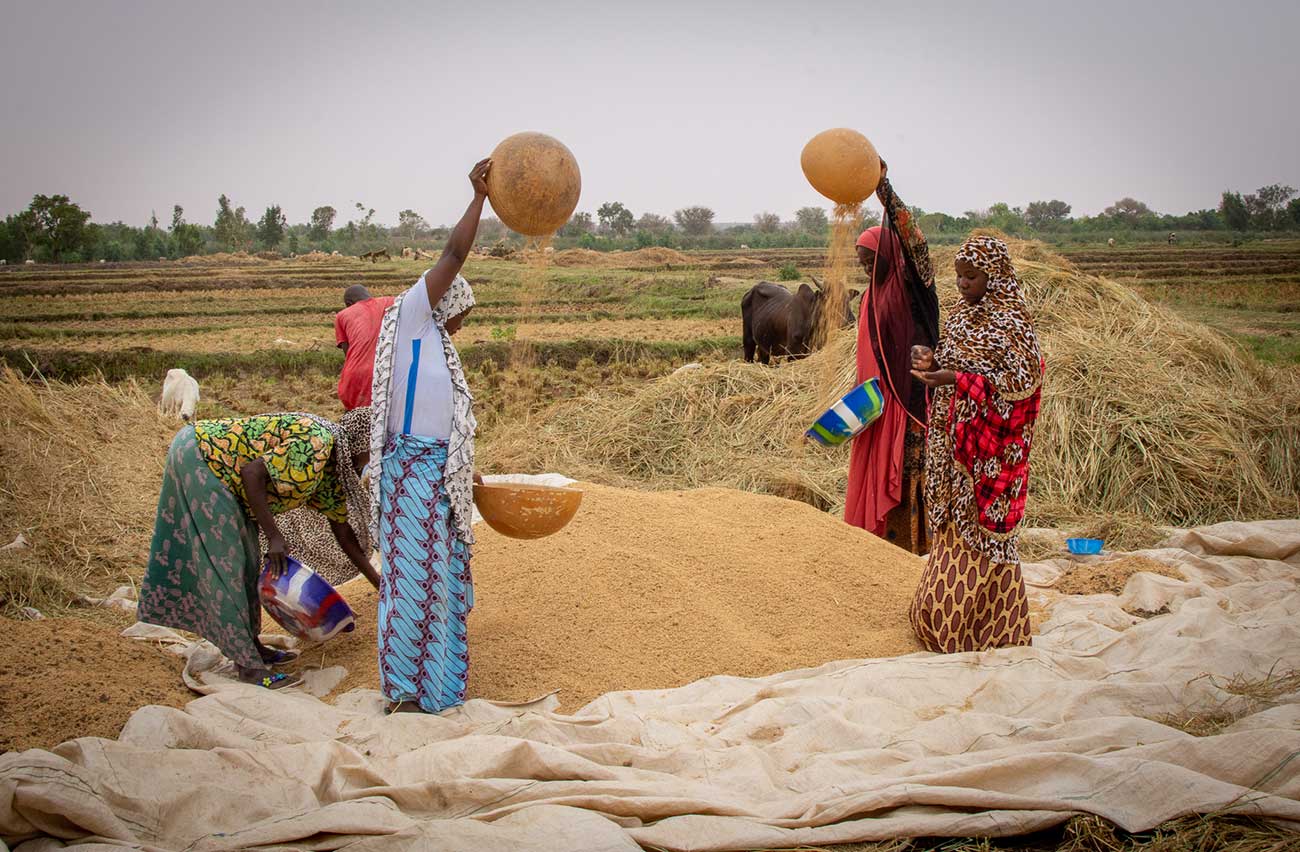
This picture was most likely taken at...
13°N, 6°W
30°S, 29°E
28°N, 31°E
Question 14
14.
Support your answer with evidence. From the _______ map we learned that is location has _______ and in the photograph we see _______
Question 15
15.
Using evidence from a different map, support your answer with evidence. From the _______ map we learned that is location has _______ and in the photograph we see _______