Twa kɔ nsɛm atitiriw so
Log in
Sign up for FREE
arrow_back
Laabri

Systems of Equations Introduction

star
star
star
star
star
Last updated 6 months ago
14 Nsɛmmisa
1
Asemmisa {{asɛmmisaAhyɛnsode}}
1.

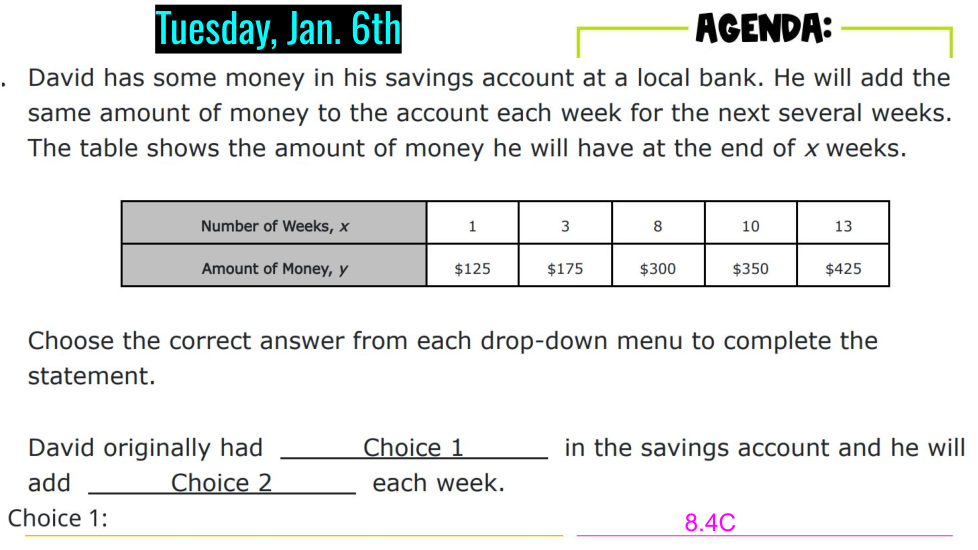
David's originally had is the starting amount or +b. Choice 1 is

1
Asemmisa {{asɛmmisaAhyɛnsode}}
2.

Adding Choice 2 each week is a positive rate or slope. Choice 2 is
1
Asemmisa {{asɛmmisaAhyɛnsode}}
3.

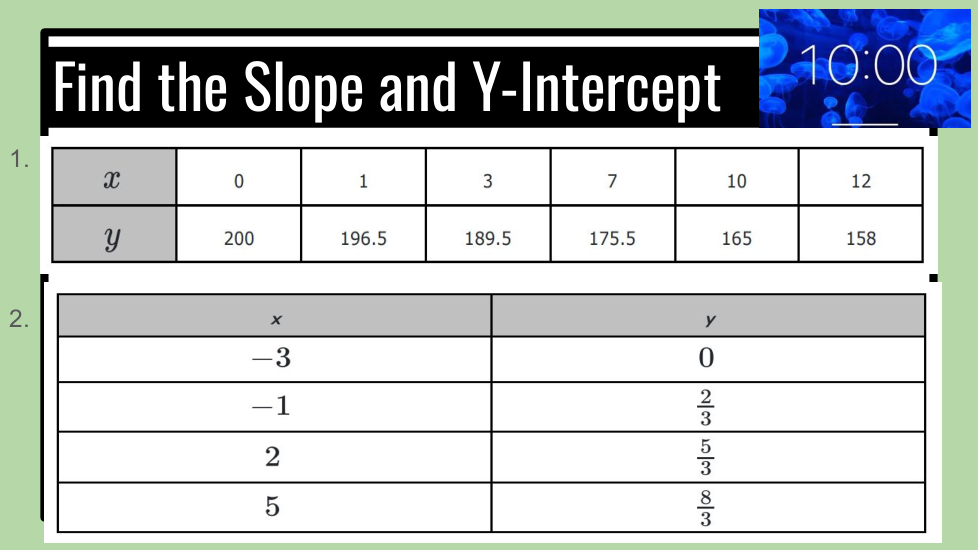
Find the slope

1
Asemmisa {{asɛmmisaAhyɛnsode}}
4.

Find the Y-intercept

1
Asemmisa {{asɛmmisaAhyɛnsode}}
5.

Find the slope

1
Asemmisa {{asɛmmisaAhyɛnsode}}
6.

Find the Y-intercept

1
Asemmisa {{asɛmmisaAhyɛnsode}}
7.

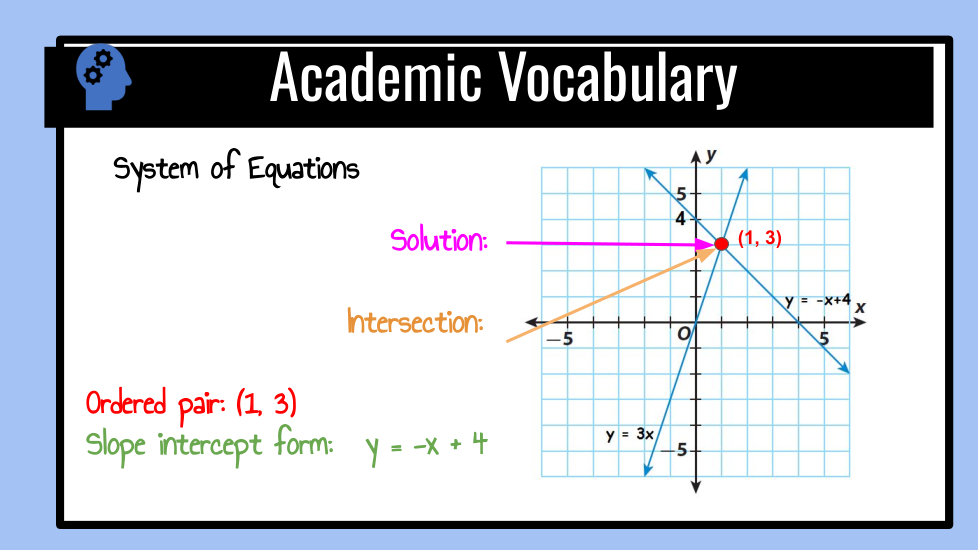
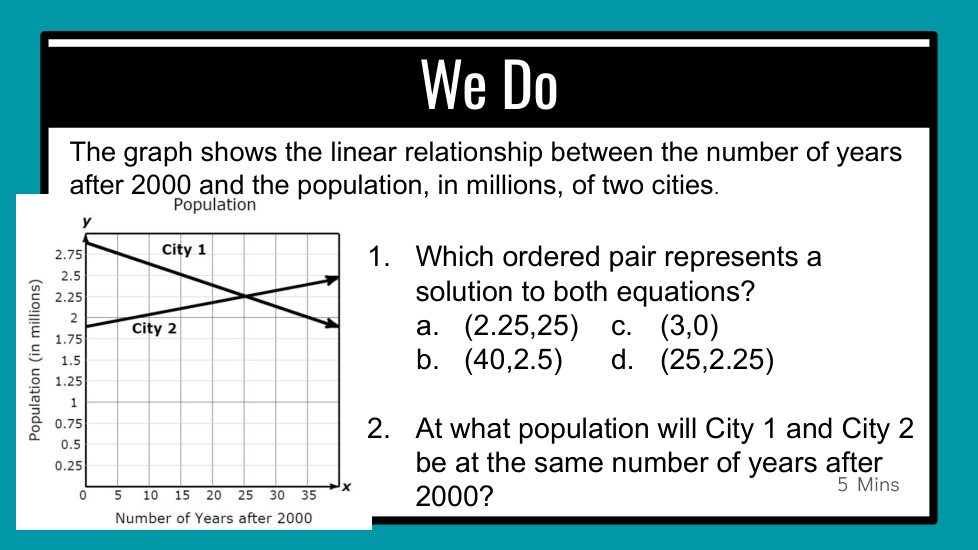
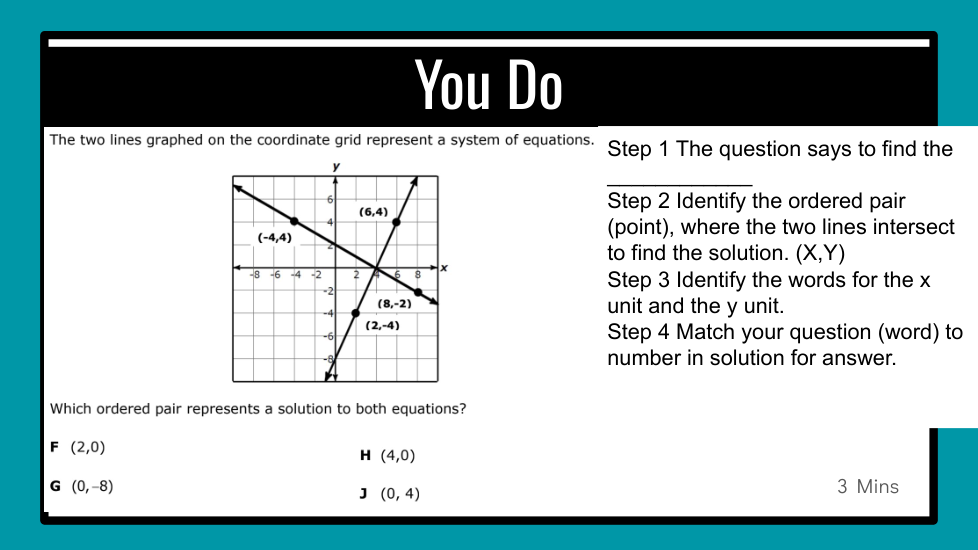
Which ordered pair represents a solution to both equations?

1
Asemmisa {{asɛmmisaAhyɛnsode}}
8.

At what population will City 1 and City 2 be at the same number of years after 2000

1
Asemmisa {{asɛmmisaAhyɛnsode}}
9.

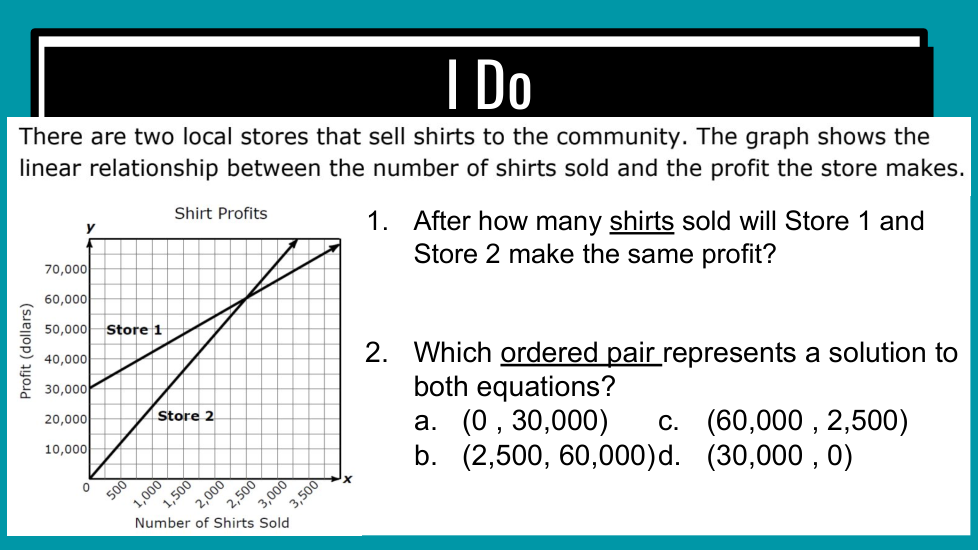
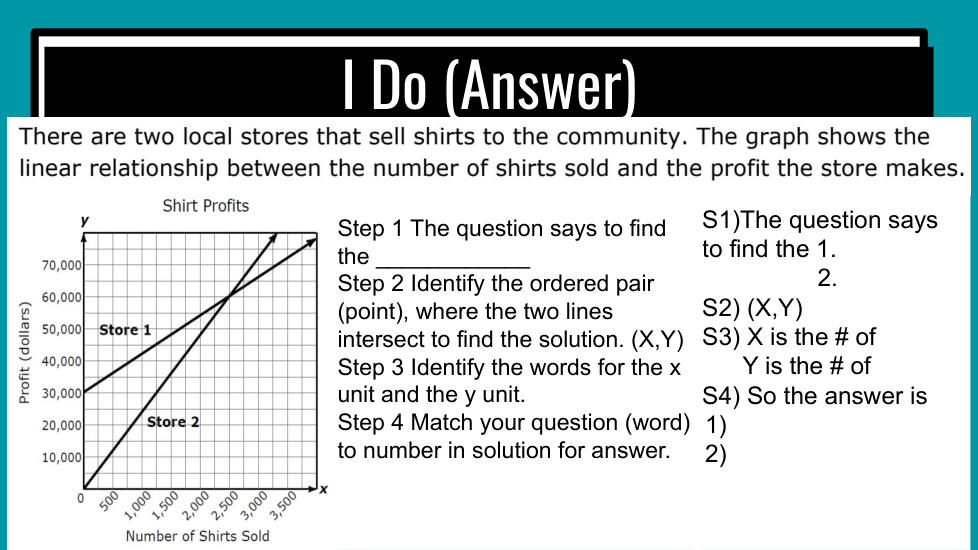
Which ordered pair represents a solution to both equations?

1
Asemmisa {{asɛmmisaAhyɛnsode}}
10.

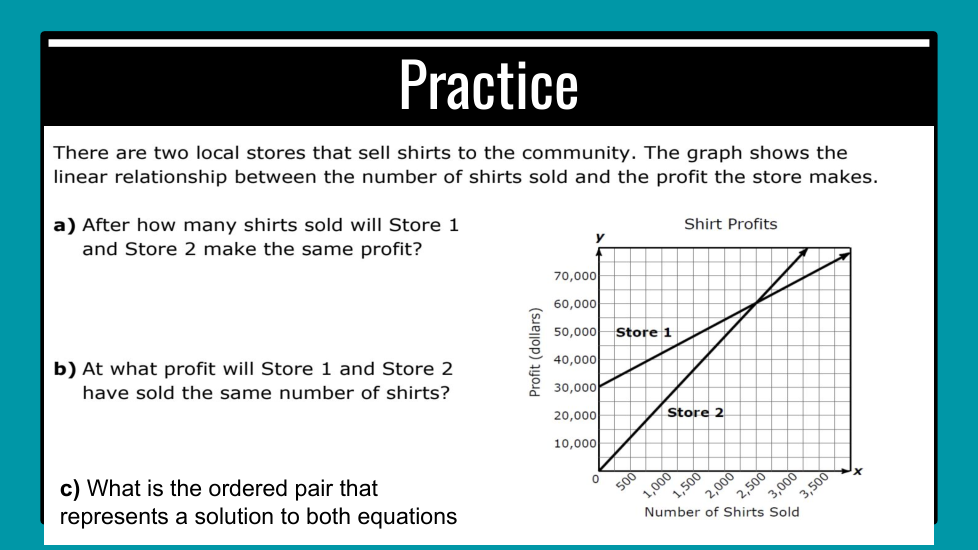
After how many shirts sold will Store 1 and Store 2 make the same profit?

1
Asemmisa {{asɛmmisaAhyɛnsode}}
11.

At what profit will Store 1 and Store 2 have sold the same number of shirts?

1
Asemmisa {{asɛmmisaAhyɛnsode}}
12.

 What is the ordered pair that represents a solution to both equations

1
Asemmisa {{asɛmmisaAhyɛnsode}}
13.

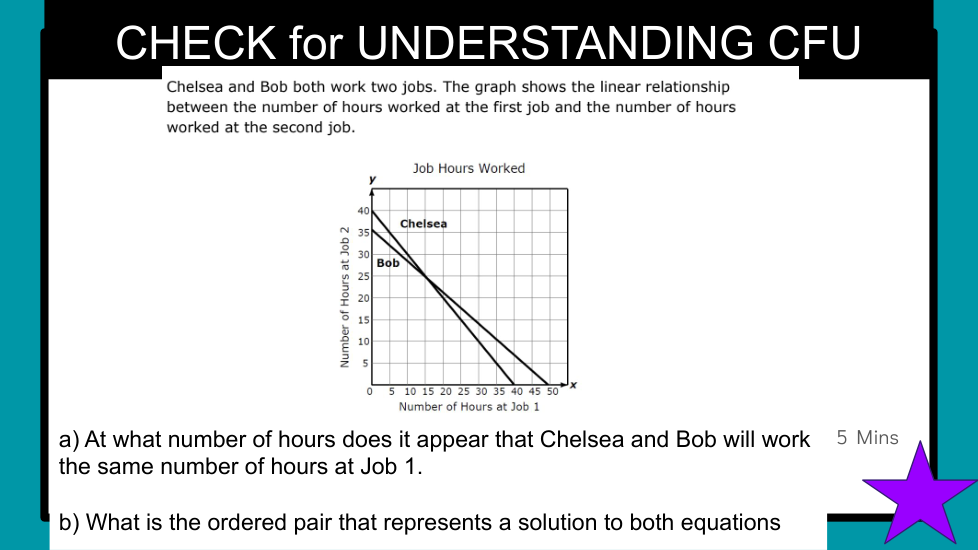
a) At what number of hours does it appear that Chelsea and Bob will work the same number of hours at Job 1.

1
Asemmisa {{asɛmmisaAhyɛnsode}}
14.

b) What is the ordered pair that represents a solution to both equations