How do weathering and erosion reshape Earth’s surface?
Move the definitions on the left up and down to match to their process.
| Draggable item | arrow_right_alt | Corresponding Item |
|---|---|---|
The movement of rocks from one place to another | arrow_right_alt | Weathering |
The constant changing and moving of Earth’s rocks | arrow_right_alt | Erosion |
The process of rock being broken into pieces over time | arrow_right_alt | Deposition |
The process of building up new rock and landforms | arrow_right_alt | Rock Cycle |
Fill in the blanks to complete the sentences.
When large rocks are by water over time, they can create deep .
Rivers carry the from these rocks many miles away until they are in a new place.
Larger pieces of rock that cannot be moved by water can be moved by .
Match each process to its example. Some processes will be used more than once.
Weathering | Erosion | Deposition | |
|---|---|---|---|
Sediment forming a river delta | |||
A boulder breaking down into pieces | |||
Wind forming sand dunes | |||
A river removing sediment to form a valley |
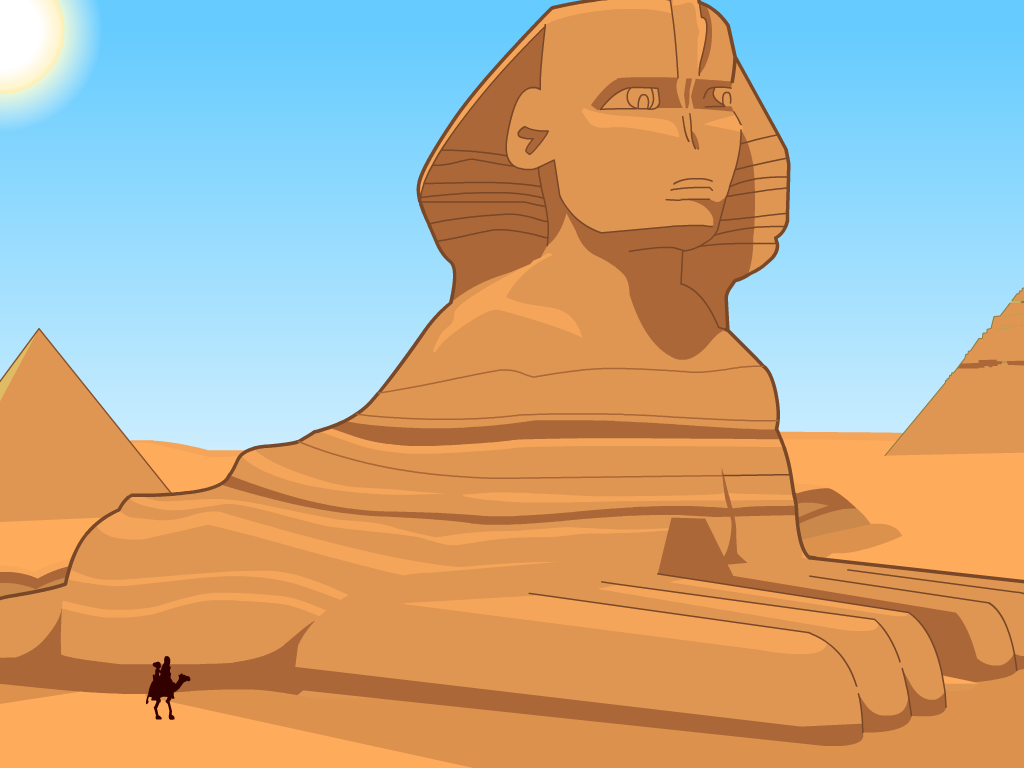
The Great Sphinx of Giza was built in Egypt thousands of years ago. Since then, many of its features have worn away. What is the most likely cause?
Fill in the blanks to complete the sentences.
Desert sand dunes are formed by a force provided by .
On the other hand, are formed by a force.
Both processes happen very .