1
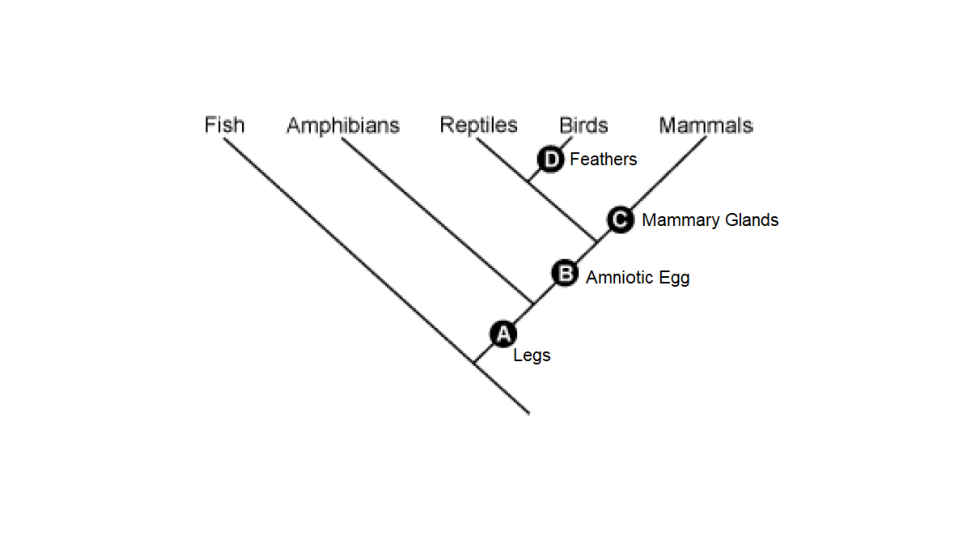
What trait is unique to mammals?
What trait is unique to mammals?
1
1
1
1
A body structure in a present day organism that no longer serves its original purpose
The change in populations over time.
A British naturalist who proposed a similar theory of evolution but did not get much credit for his work.
Evidence of Evolution.......
Structural features with a common evolutionary origin
Evolution occurs in......
What is the term for a feature that allows an organism to survive better in its enviroment?
When the DNA of an organism is altered it is referred to as...
An example of a acquired trait would be
The ability of an organism to survive and reproduce in its specific enviroment
If two species have similar DNA sequences, it would indicate that they
What trait is unique to mammals?
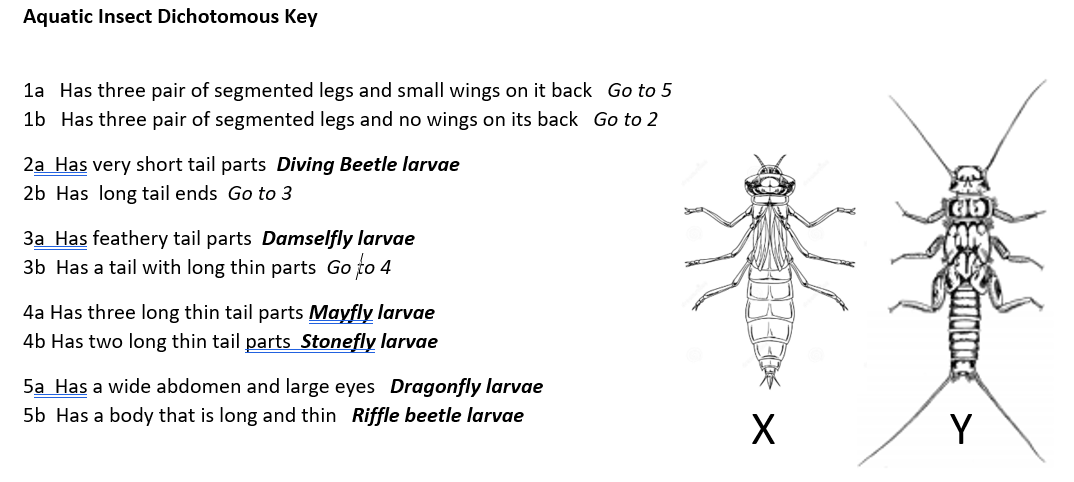
Use the dichotomous key to determine the correct classification of the insect in the diagram Y. (Y does not have wings)
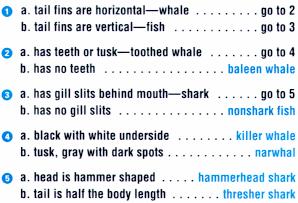
Which organism has a vertical tail fin, gill slits behind the mouth, and his tail is half the length of the body?
The branch of zoology studying the early development of living things.
What is the process that allows the artic fox to acquire a thick winter coat?
What is the name of the diagram used to distinguish animals from protists, plants,
and/or fungi?
What is the name of a branching diagram depicting the successive points of species
divergence from common ancestral lines without regard to the degree of deviation?
Who proposed the theory of the inheritance of acquired characteristics; this theory has now been discredited, but it served as an important influence on the theory of
evolution
How does the scientific meaning of “theory” differ from the common vernacular meaning?
6. How did James Hutton's views on geology influence Darwin's theory of evolution?
A change in populations over generations is called
The study of the geographical distribution of living things
Fill in the blanks: _____ structures are those that are present in two organisms of common
ancestry and are still functional, while _____ structures are those found in an organism that
no longer serve a purpose
Who observed that finches in the Galápagos Islands had different beaks than finches
in South America; these adaptations equipped the birds to acquire specific food sources.
The process by which a species with similar traits become groups that are
tremendously different from each other over many generations
What trait separates fish from amphibians?
What trait is unique to birds?
According to the cladogram birds are most closely related to
Scientists compared the embryos of fish, amphibians, reptiles, birds, and mammals to construct this cladogram. Comparing embryos can be used as evidence for evolution.