"How the Other Half Lives" The Photographs of Jacob Riis
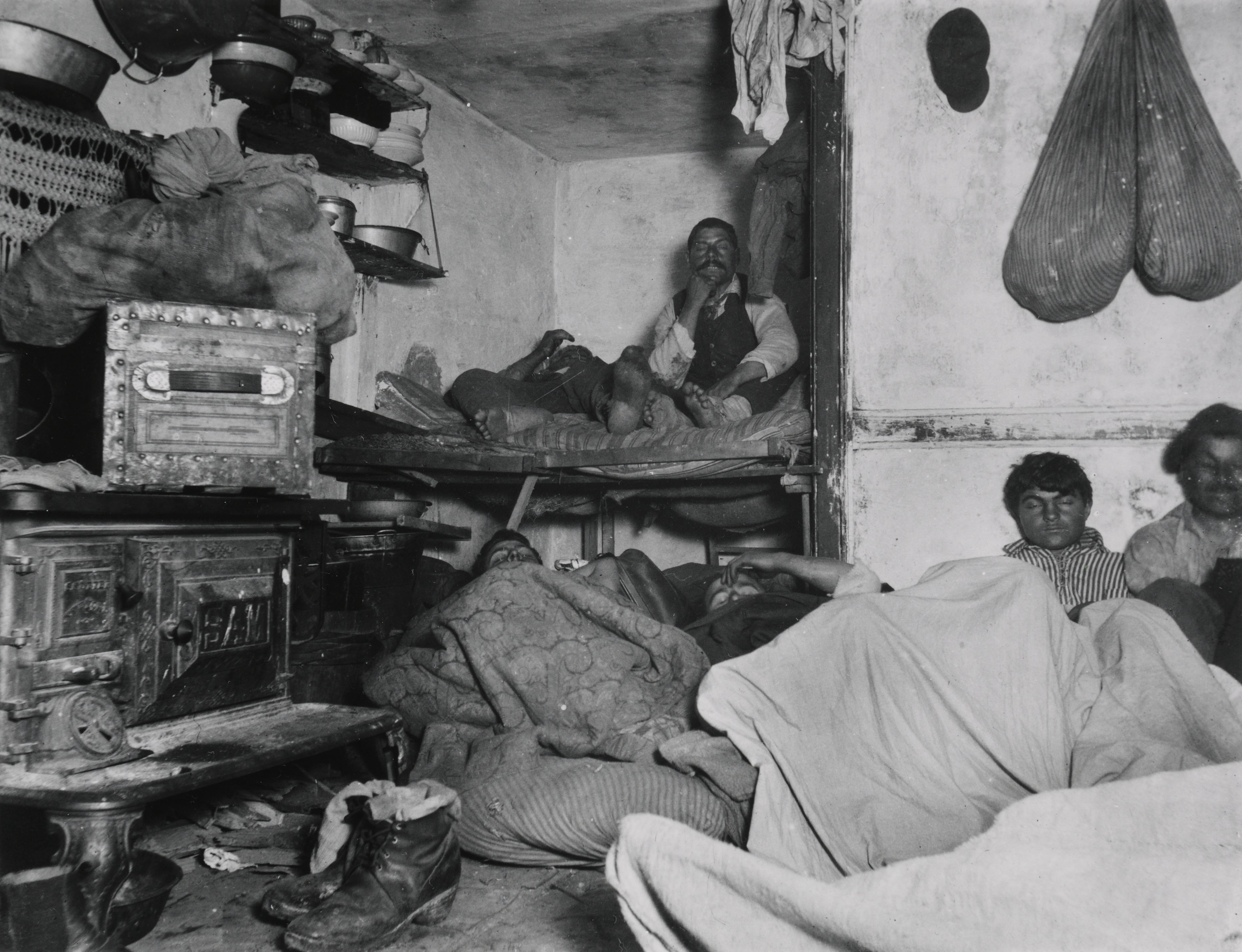
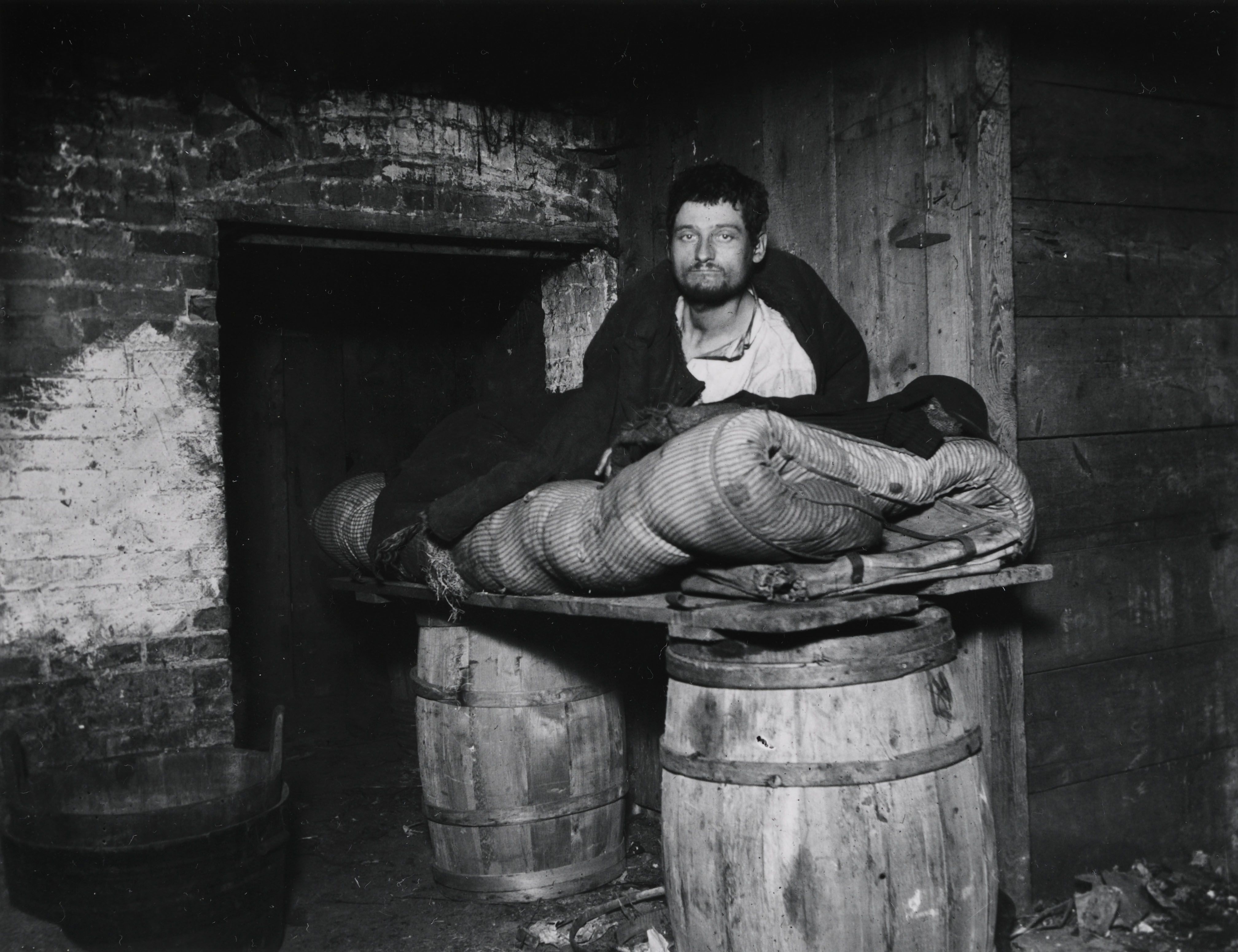 Jacob Riis took these photographs to expose...
"How the Other Half Lives" The Photographs of Jacob Riis
Jacob Riis took these photographs to expose...
Which of the following statements best summarizes the main idea of lesson 1.1 -- The Expansion of Industry?
Which of the following statements best summarizes the main idea of lesson 1.2 -- The Age of Railroads?
Which of the following statements best summarizes the main idea of lesson 1.3 -- Big Business?
Which of the following statements best summarizes the main idea of lesson 1.4 -- The Rise of the Labor Movement?
The Power of Electricity
In 1876 Thomas Alva Edison became a pioneer on the new industrial frontier when he established the world's first research laboratory in Menlo Park, New Jersey. There Edison and his associates worked to perfect the incandescent light bulb, applying for a patent for his version of the bulb in 1879. Lewis H. Latimer, an African American inventor, played a key role in improving the light bulb when he invented a carbon filament in 1881. This filament lasted longer than filaments made from other materials that had been used in the past. Latimer later went to work for Edison's company. Eventually, Edison and his team improved the light bulb even further by using tungsten filaments, which are still used today. Thomas Edison also invented an entire system for producing and distributing electrical power. Another inventor, George Westinghouse, along with Edison, added innovations that made electricity safer and less expensive. The harnessing of electricity completely changed the nature of business in America. By 1890 electric power ran numerous machines, from fans to printing presses. This inexpensive, convenient source of energy soon became available in homes and spurred the invention of time-saving appliances. Electric streetcars made urban travel cheap and efficient and also promoted the outward spread of cities. More important, electricity allowed business owners greater freedom in deciding where to locate their plants.
Many factories in the past, including textile mills, were powered by water. That meant they had to be located near rivers or streams. The availability of electric power meant that manufacturers could consider other factors such as population and the availability of natural resources when determining where to locate their plants. Many automobile manufacturers, for example, chose to locate their plants in Detroit, Michigan. There rail and water shipping routes were easily accessible and coal and iron mines were nearby. Greater flexibility enabled industries to grow as never before.
Which of the following best explains the significance of electricity?
Interstate Commerce Act
The Grangers' triumph was short lived, however. In 1886 the Supreme Court ruled, in Wabash v. Illinois, that a state could not set rates on interstate commerce, railroad traffic that either came from or was going to another state. This overturned their earlier decision in Munn v. Illinois. In response to public outrage, Congress passed the Interstate Commerce Act in 1887. This act reestablished the right of the federal government to supervise railroad activities and set up a five-member Interstate Commerce Commission (ICC). The ICC's objective was to make railroad rates fair for all customers by requiring rates to be "reasonable and just." However, due to poorly defined language in the act and resistance from the railroads, the ICC had difficulty regulating rates. The law had the most success in preventing the railroads from arranging special rates among themselves, which offered consumers some protection. The final blow to the commission came in 1897. After several court cases challenged the act, the Supreme Court ruled that the ICC could not set maximum railroad rates. Not until 1906, under President Theodore Roosevelt, did the ICC gain the power it needed to be effective. Still, the law was a historic milestone, marking the first time that the federal government had regulated an industry. It served as a model for later attempts.
Why was the Interstate Commerce Act ineffective?
Belief in Free Markets
The positive view of entrepreneurship grew out of the American economic system. The U.S. economy is based on a form of capitalism called free enterprise. As in any capitalist economy, individuals and private businesses run most industries. Companies in some capitalistic countries have to follow strict government policies about pricing and wages. However, those in a free enterprise system are free to set their own. Generally, their decisions are driven by such factors as competition and consumer demand.
By the late 1800s most business leaders believed in laissez-faire capitalism. The term laissez-faire is French for "to let do." Laissez-faire capitalism allows companies to conduct business without intervention by the government. Business leaders believed that government regulation would destroy individual self-reliance, reduce profits, and harm the economy. And by and large, the government maintained a hands-off attitude toward business.
Even though business owners generally wanted the government to stay away, at times they still turned to the government for help. Some railroad builders, for example, accepted grants of land and money from the government. Hoping to eliminate foreign competition, many business leaders also were in favor of protective tariffs that the government placed on imported goods.
Which of the following best describes the relationship between business and government?
A Mixed Legacy
Many Americans admired Carnegie, Morgan, Rockefeller, and other "captains of industry." They credited these entrepreneurs with using their business skills to make the American economy more productive and, in turn, stronger. Andrew Carnegie said that he and his fellow tycoons were "the bees that make the most honey, and contribute most to the hive even after they have gorged themselves full."
Carnegie and other wealthy industrialists felt they had a duty to put their fortunes towards the public good. While they generally opposed financial handouts, they supported philanthropy. In the name of Social Darwinism, they built libraries and funded colleges and other institutions. These institutions provided opportunities for the fittest to succeed, regardless of their financial background. Carnegie explained his philosophy in an 1889 article called "The Gospel of Wealth." He wrote, "This, then, is held to be the duty of the man of Wealth.... to consider all surplus revenues which come to him simply as trust funds... to produce the most beneficial result for the community." Carnegie donated about 90 percent of the wealth he accumulated during his lifetime. His fortune still supports the arts and learning today. John D. Rockefeller gave away over $500 million, establishing the Rockefeller Foundation. His foundation provided funds to found the University of Chicago and created a medical institute that helped find a cure for yellow fever.
Despite these charitable contributions, some Americans came to view industrialists more as robber barons than as revered "captains of industry." They believed that these tycoons were taking advantage of workers and consumers. Critics argued that these tycoons profited unfairly by squeezing out competitors and using other tough tactics. Their huge mansions and luxurious lifestyles seemed like ill-gotten rewards.
What was Andrew Carnegie's main point in The Gospel of Wealth?
Long Hours and Danger
One of the largest employers, the steel mills, often demanded a seven-day workweek. Seamstresses, like factory workers in most industries, worked 12 or more hours a day, six days a week. Employees were not entitled to vacation, sick leave, unemployment compensation, or reimbursement for injuries suffered on the job.
Yet injuries were common. In dirty, poorly ventilated factories, workers had to perform repetitive, mind-dulling tasks, sometimes with dangerous or faulty equipment. In 1882 an average of 675 laborers were killed in work-related accidents each week. In addition, wages were so low that most families could not survive unless everyone held a job. Between 1890 and 1910, for example, the number of women working for wages doubled, from 4 million to more than 8 million. Twenty percent of the boys and ten percent of the girls under age 15 also held full-time jobs. Some were as young as five years old. With little time or energy left for school, child laborers forfeited their futures to help their families make ends meet.
Not surprisingly, jobs for women and children paid the lowest wages. The pay was often as little as 27 cents for a child's 14-hour day. In 1899 women earned an average of $267 a year, nearly half of men's average pay of $498. In contrast, the very next year Andrew Carnegie made $23 million—with no income tax.
Working conditions were...
Which of the following are examples of how nativism influenced the United States' policy on immigration? (pick two answers)
"How the Other Half Lives" The Photographs of Jacob Riis
Jacob Riis took these photographs to expose...
"How the Other Half Lives" The Photographs of Jacob Riis
The problems exposed in these photographs are most directly a result of...
The purpose of the settlement house movement was to...
An example of patronage would be...?
An organized group that controlled the activities of a political party to make sure city governments worked to their advantage
 Who is the intended audience for Emma Lazarus' poem "The New Colossus?"
What is Emma Lazarus is saying about the United States, as compared to other countries at the time?
"New York City, 1910"
 Which of the following statements is best represented by the information on the map "New York City, 1910?"
"New York City, 1910"
Which of the following statements is NOT a reason why immigrants often settled in cities?

Mark Twain described this period of American history as "The Gilded Age" because...