Atmospheric Concentrations of Greenhouse Gases
Key Points
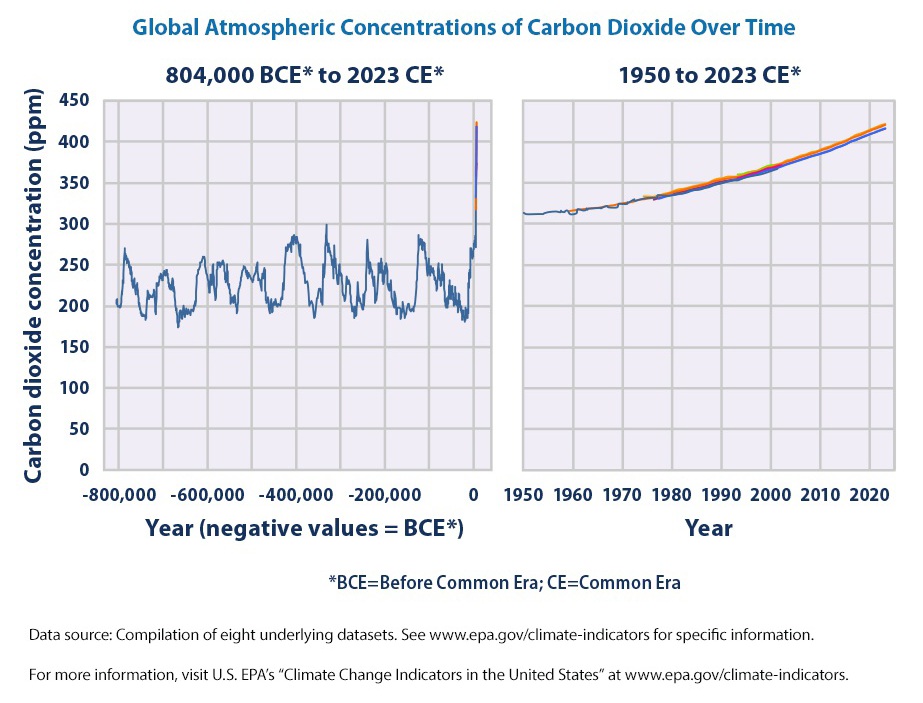
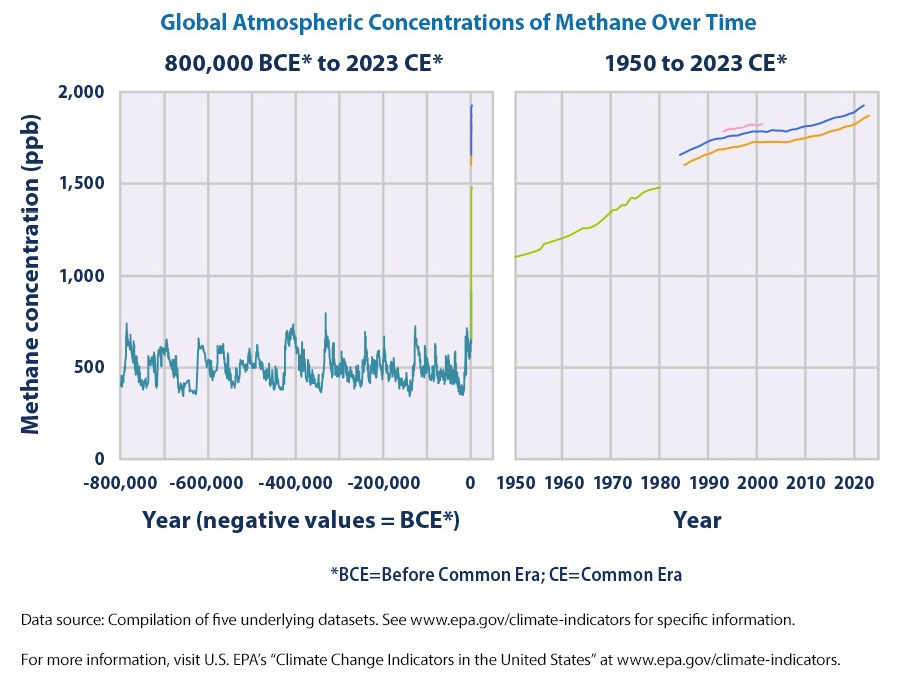
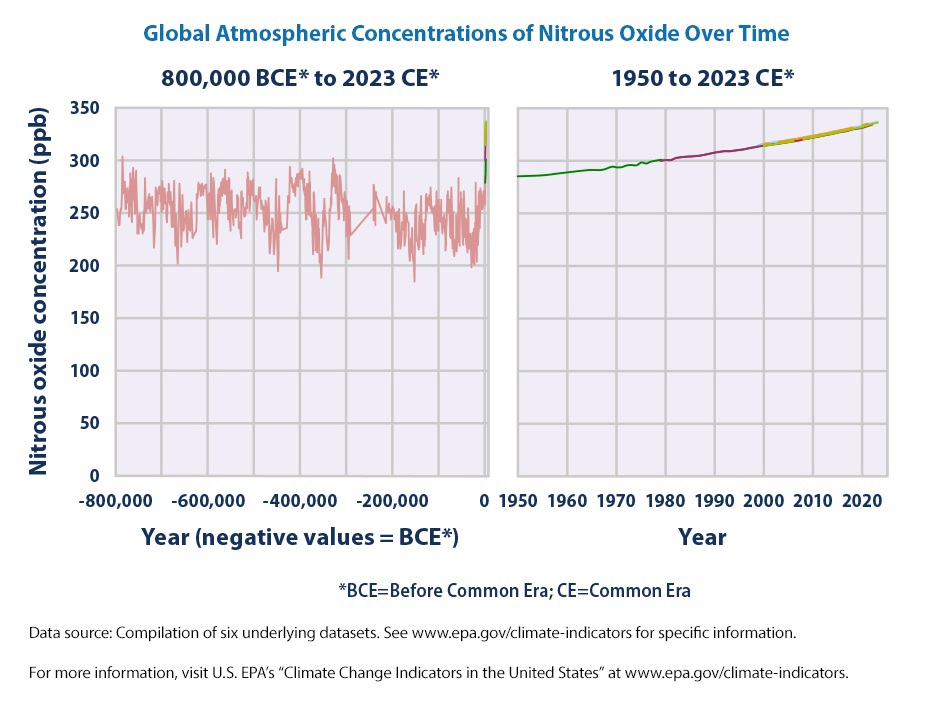
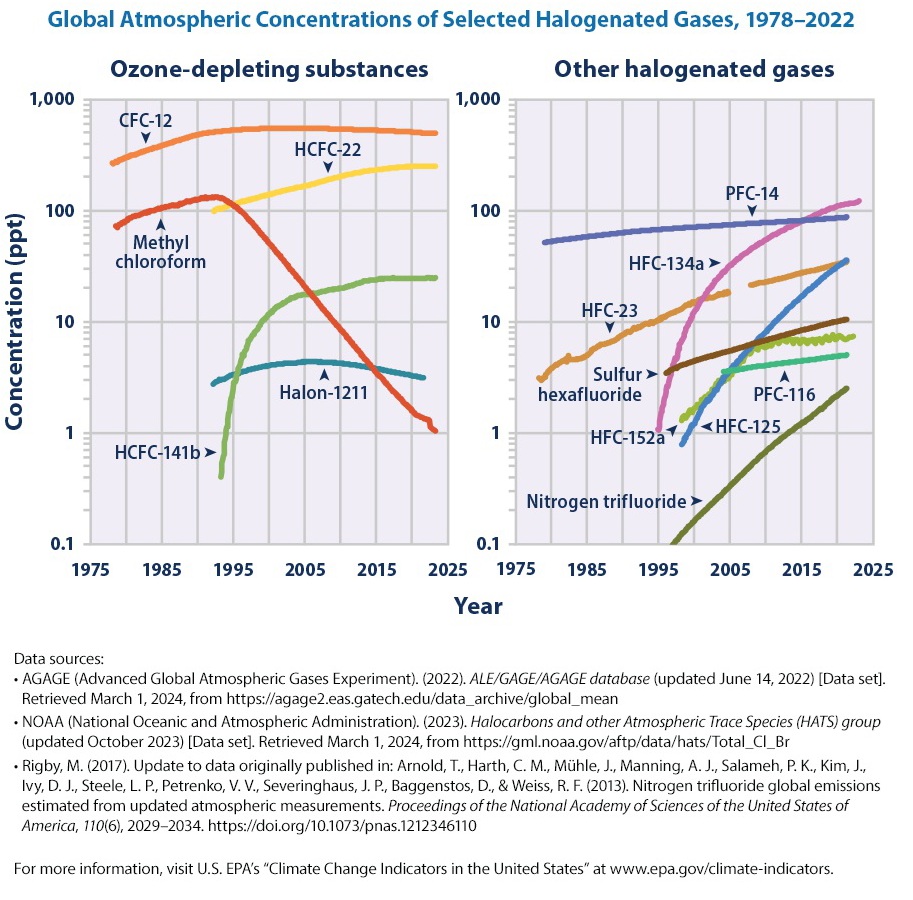
Global atmospheric concentrations of carbon dioxide, methane, nitrous oxide, and certain manufactured greenhouse gases have all risen significantly over the last few hundred years (see Figures 1, 2, 3, and 4).
Historical measurements show that the current global atmospheric concentrations of carbon dioxide, methane, and nitrous oxide are unprecedented compared with the past 800,000 years (see Figures 1, 2, and 3).
Carbon dioxide concentrations have increased substantially since the beginning of the industrial era, rising from an annual average of 280 ppm in the late 1700s to 419 ppm in 2023 (average of five sites in Figure 1) - a 49 percent increase. Almost all of this increase is due to human activities.
The concentration of methane in the atmosphere has more than doubled since preindustrial times, reaching over 1,800 ppb in recent years (see the range of measurements for 2020 through 2023 in Figure 2). This increase is predominantly due to agriculture and fossil fuel use.
Over the past 800,000 years, concentrations of nitrous oxide in the atmosphere rarely exceeded 280 ppb. Levels have risen since the 1920s, however, reaching a new high of 336 ppb in 2022 (average of four sites in Figure 3). This increase is primarily due to agriculture.
Concentrations of many of the halogenated gases shown in Figure 4 were essentially zero a few decades ago but have increased rapidly as they have been incorporated into industrial products and processes. Some of these chemicals have been or are currently being phased out of use because they are ozone-depleting substances, meaning they also cause harm to the Earth’s protective ozone layer. As a result, concentrations of many major ozone-depleting gases have begun to stabilize or decline (see Figure 4, left panel). Concentrations of other halogenated gases have continued to rise, however, especially where the gases have emerged as substitutes for ozone-depleting chemicals (see Figure 4, right panel).
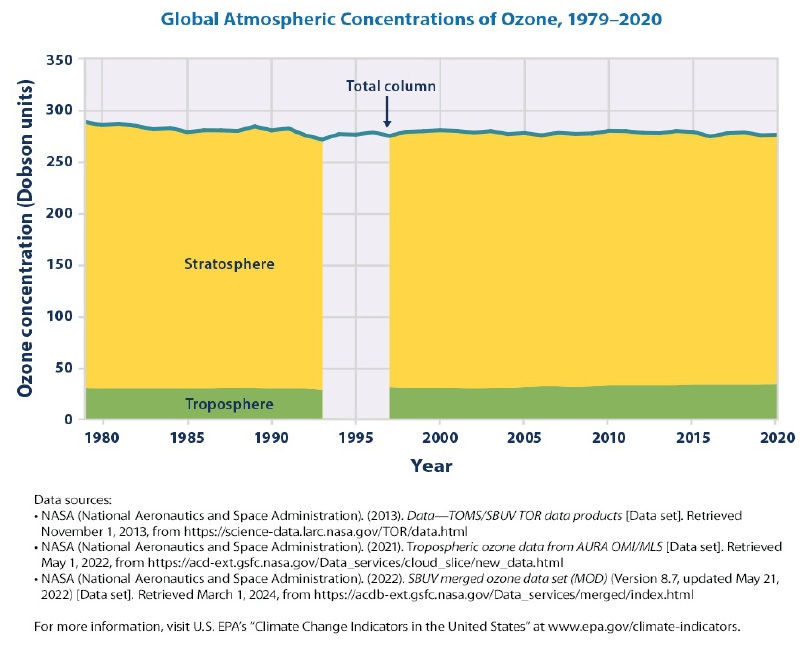
Overall, the total amount of ozone in the atmosphere decreased by about 4 percent between 1979 and 2020 (see Figure 5). All of the decrease happened in the stratosphere, with most of the decrease occurring between 1979 and 1994. Changes in stratospheric ozone reflect the effect of ozone-depleting substances. These chemicals have been released into the air for many years, but recently, international efforts have reduced emissions and phased out their use.
Globally, the amount of ozone in the troposphere increased by about 12 percent between 1979 and 2020 (see Figure 5).